Why swim together?

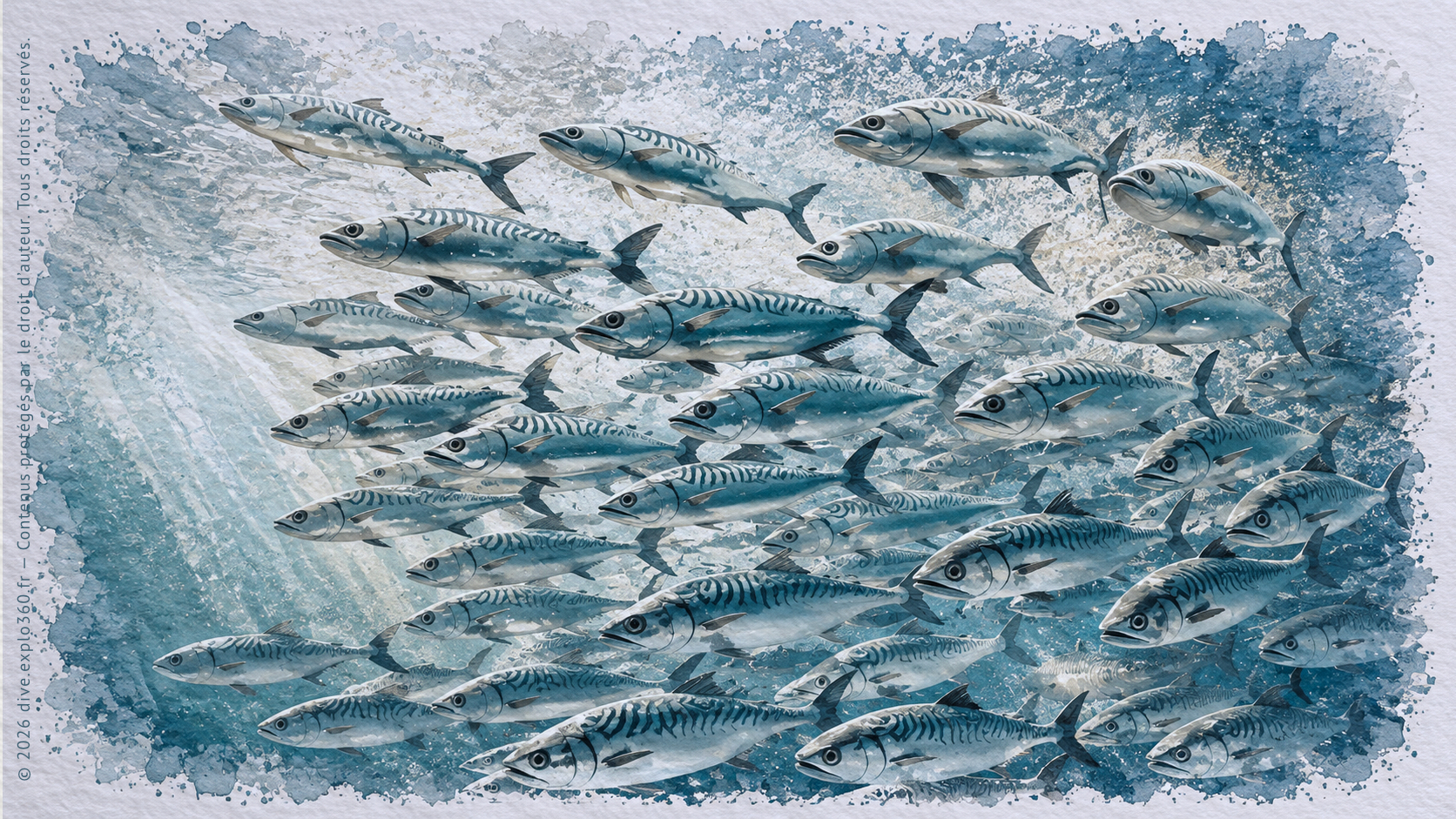
School of fish
Swimming in a school can help fish protect themselves, find food and meet other fish. © dive.explo360.fr — All rights reserved. Reproduction prohibited without permission.
Many fish swim together in groups called schools. Almost all of them move in the same direction, as though they were one large group.

Living in a school mainly helps fish protect themselves from predators. When many fish move at once, a predator finds it harder to choose which one to catch. Fish can also spot danger more easily and escape together.

A school can also help fish find food. When one fish discovers a place to feed, others can follow it.

Finally, living in a group makes it easier for males and females to meet and reproduce.

Staying together therefore helps fish protect themselves, feed and reproduce.

1

To protect themselves

Imagine a predator facing hundreds of fish all changing direction.

It may find it harder to follow a single fish.

Staying in the group can therefore help a fish avoid being caught.

2

To find food

In a large group, many fish are looking for food.

If some find it, the others can join them.

3

To meet one another

A school brings together many fish of the same species.

This can also help them find a mate to reproduce.

Schools in all shapes
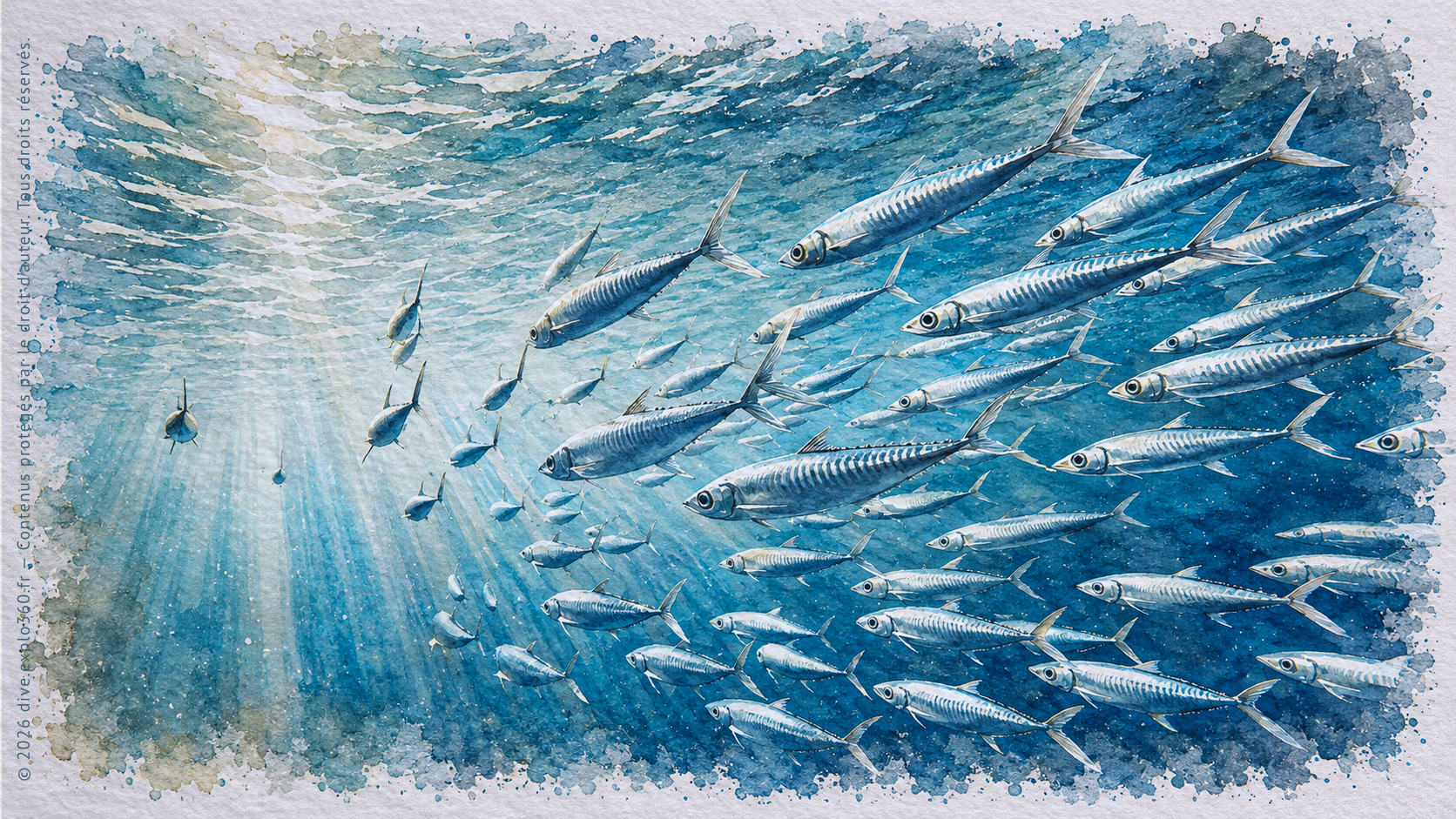
A school of fish fleeing
© dive.explo360.fr — All rights reserved. Reproduction prohibited without permission.
A group of fish may stretch out, tighten or turn. Its shape changes with neighbours’ movements, currents and predators. Each shape does not have just one function.

The vortex

Fish may turn together to form a swirl. This organisation depends on how they follow neighbours and on conditions around the group.
Vortex
The vortex: fish turn together as if in a whirlpool. © dive.explo360.fr — All rights reserved. Reproduction prohibited without permission.

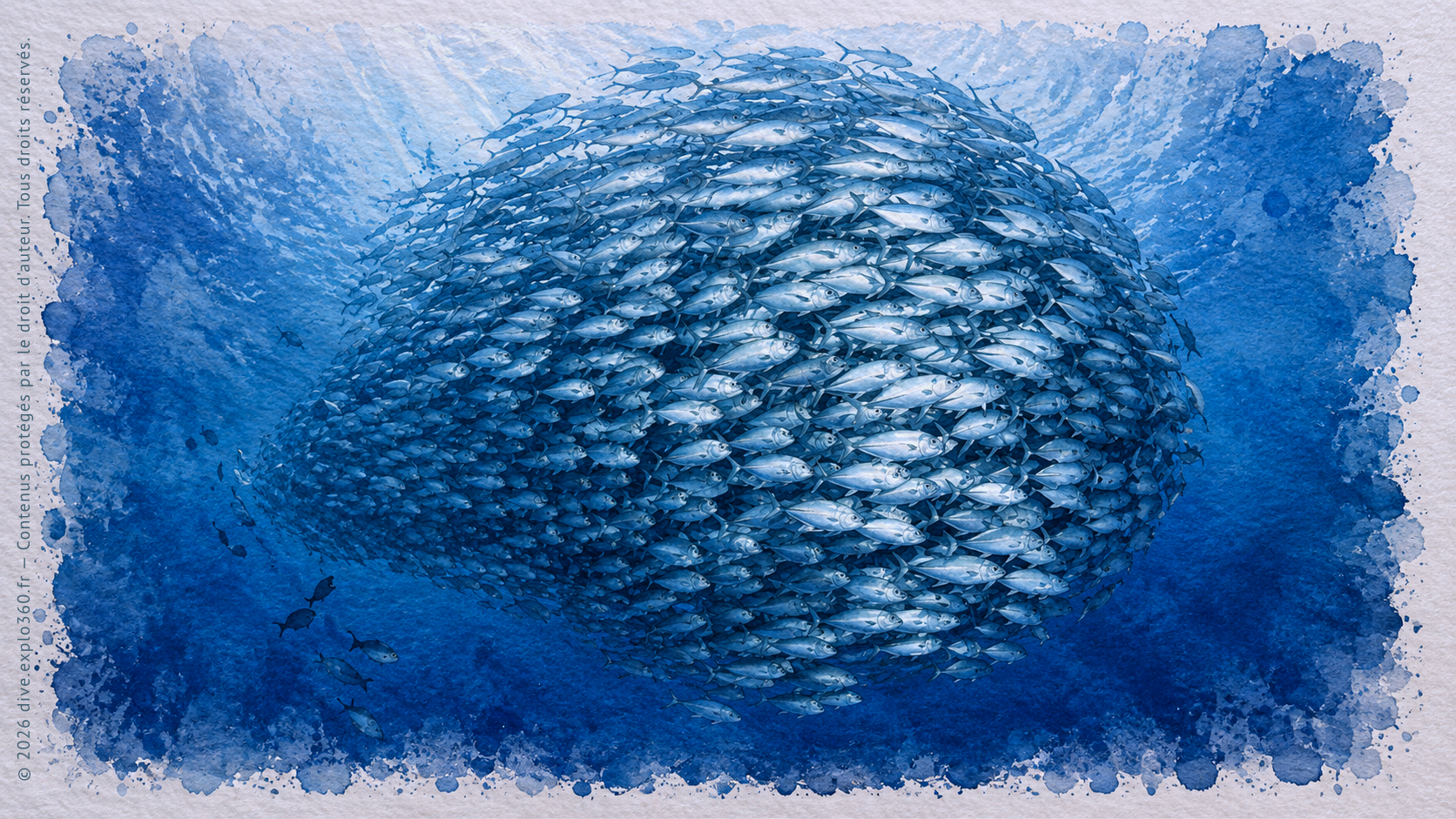
The ball

Ball
The ball: fish crowd close together. © dive.explo360.fr — All rights reserved. Reproduction prohibited without permission.
Under attack, fish may bunch into a ball. This may make choosing a target harder, but the group remains exposed to predators.

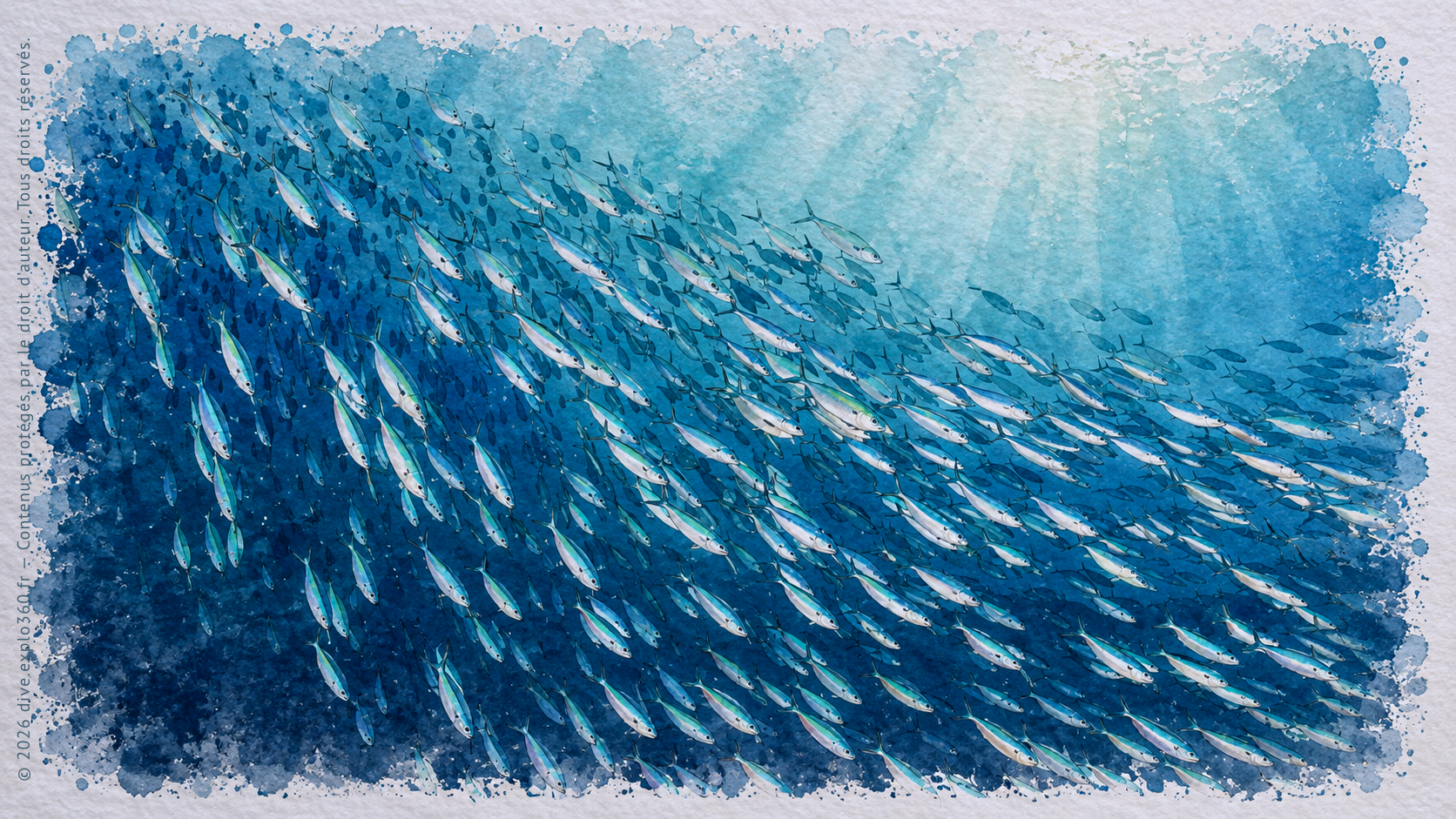
The elongated school

Fish can also swim together in a long, stretched-out group.

This shape allows them to travel while staying together.
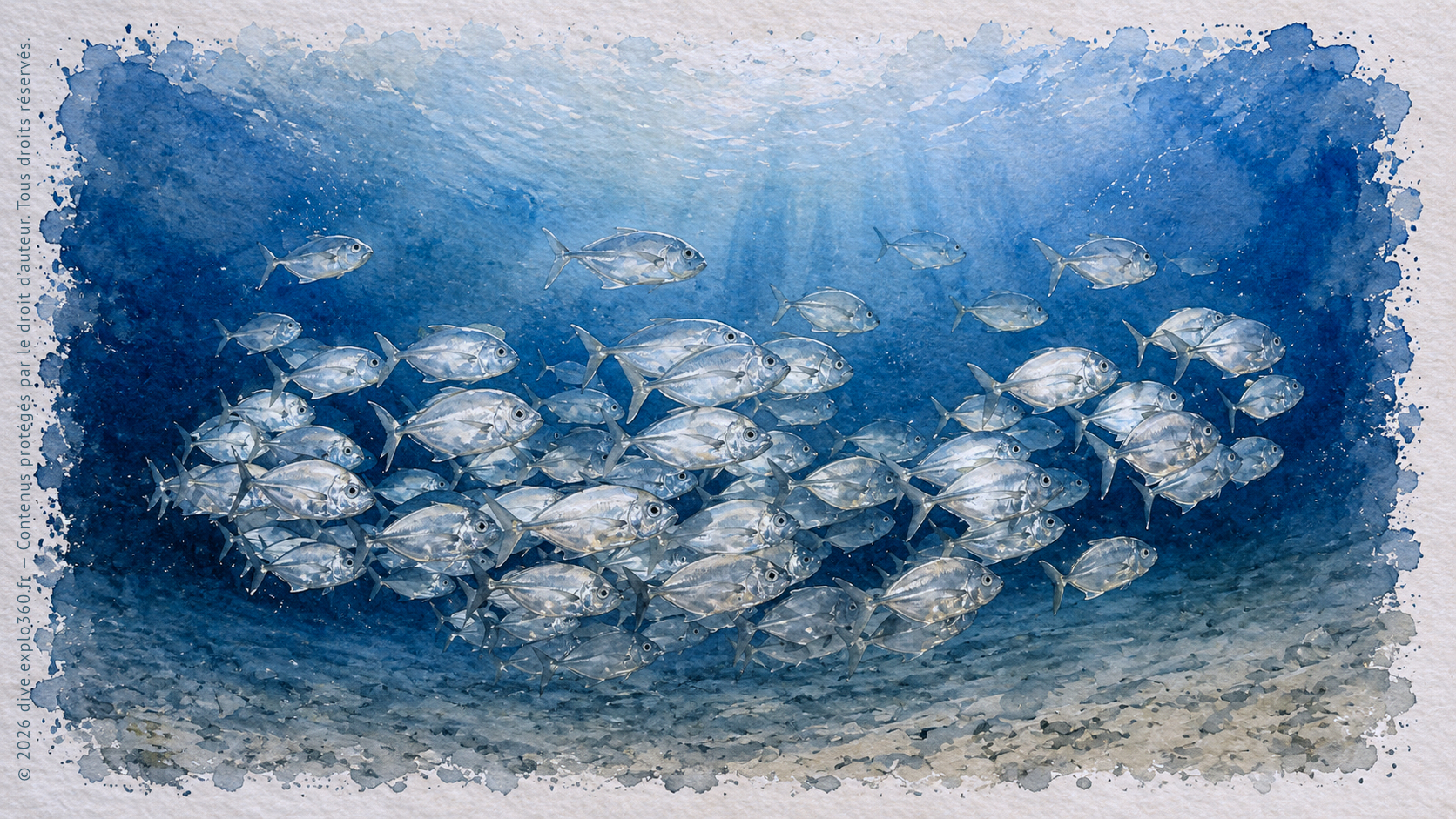
Linear school
The elongated school: fish move together in the same direction. © dive.explo360.fr — All rights reserved. Reproduction prohibited without permission.

The fountain

Fountain
The fountain: fish swim up and then down as a group. © dive.explo360.fr — All rights reserved. Reproduction prohibited without permission.
A group may split around an obstacle or predator and then form again behind it. This movement can resemble a fountain.

They watch and sense

Fish can see the fish swimming around them.

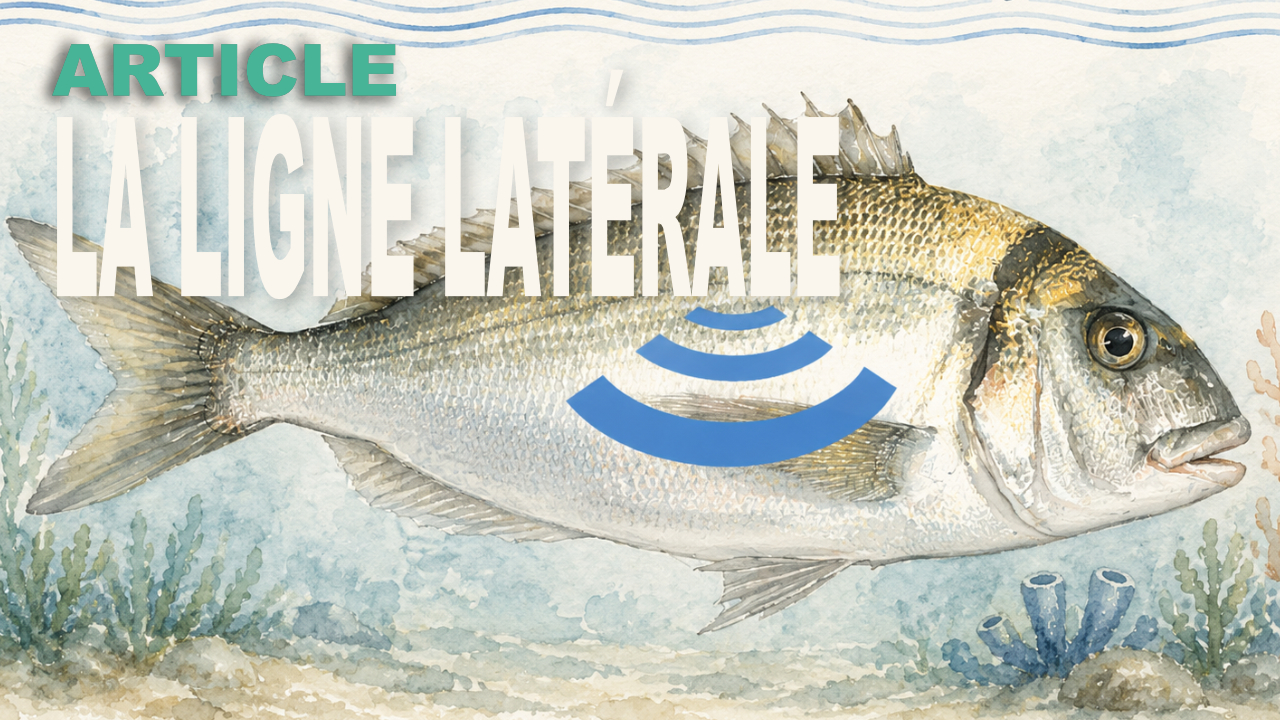
They also have a special sense called the lateral line. It helps them sense water movements around their body.

They can thus tell when a neighbour is approaching or changing direction.
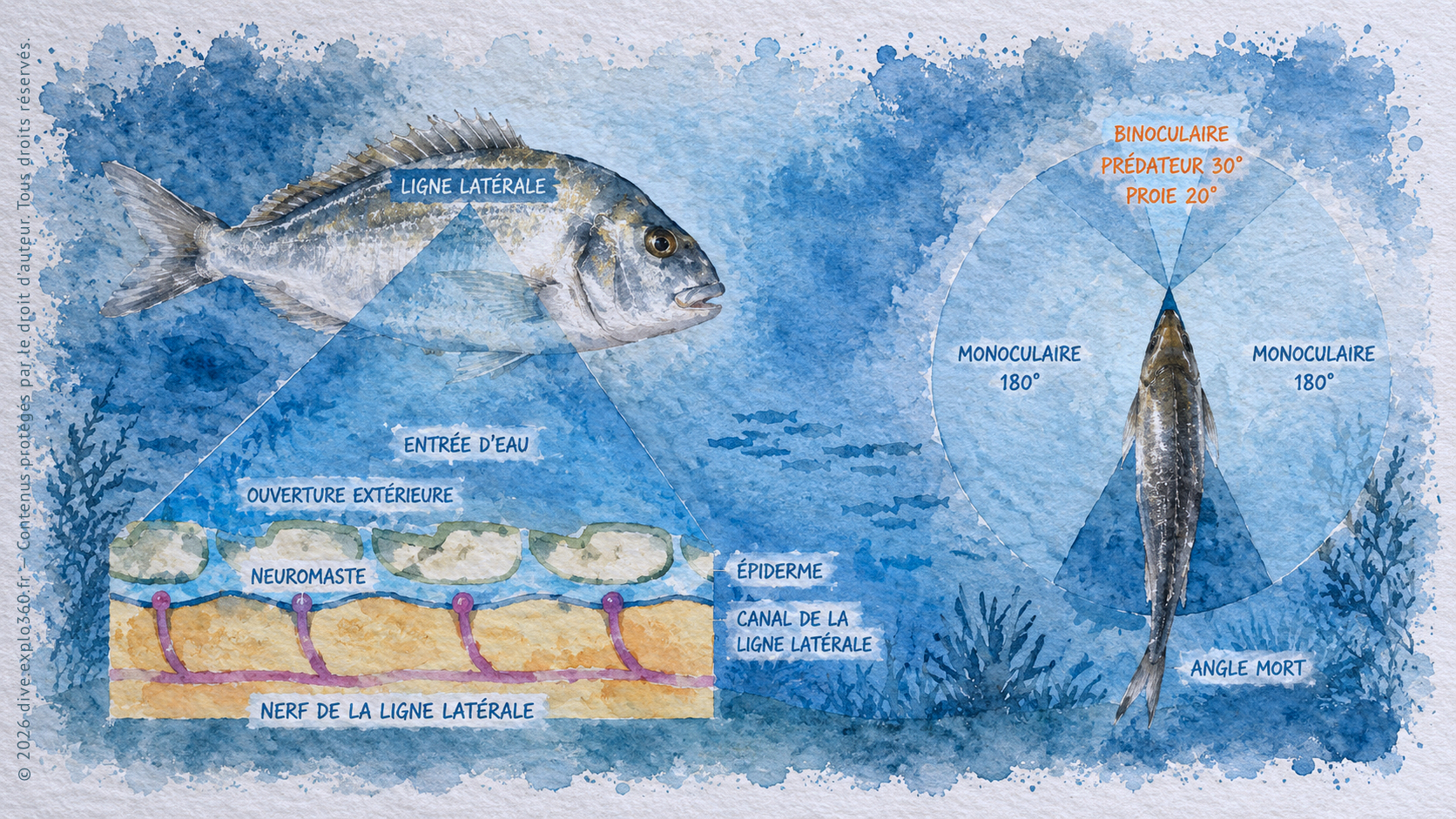
Lateral line and vision
Fish use their eyes and lateral line to follow their neighbours’ movements. © dive.explo360.fr — All rights reserved. Reproduction prohibited without permission.

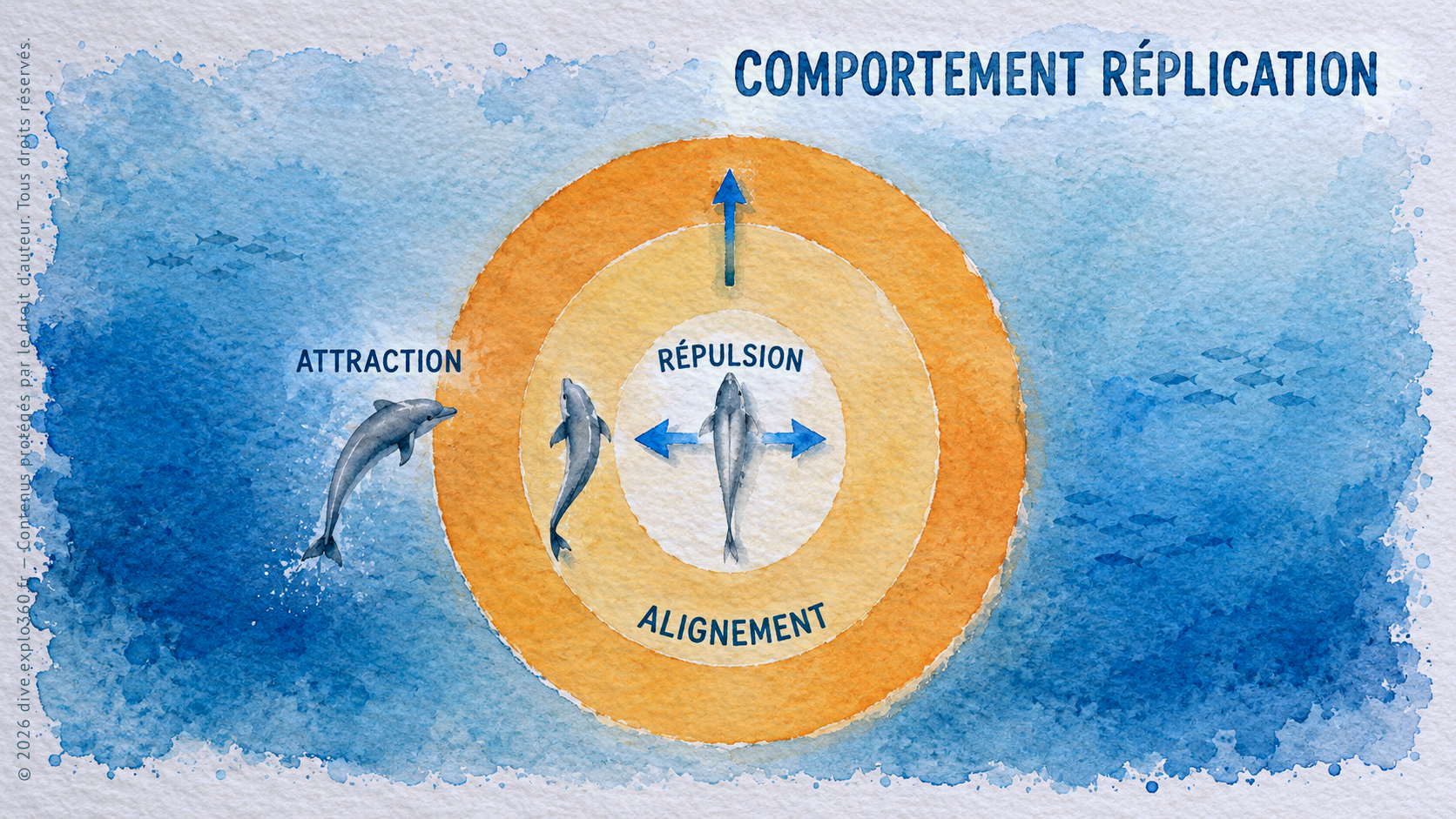
Three rules for staying together

Schooling behaviours
Moving closer, following the same direction and keeping a little space allow fish to swim together. © dive.explo360.fr — All rights reserved. Reproduction prohibited without permission.
In the simulator, fish approach the group, follow neighbours and avoid collisions. These are simplified rules for reproducing collective movement, not instructions fish give themselves.

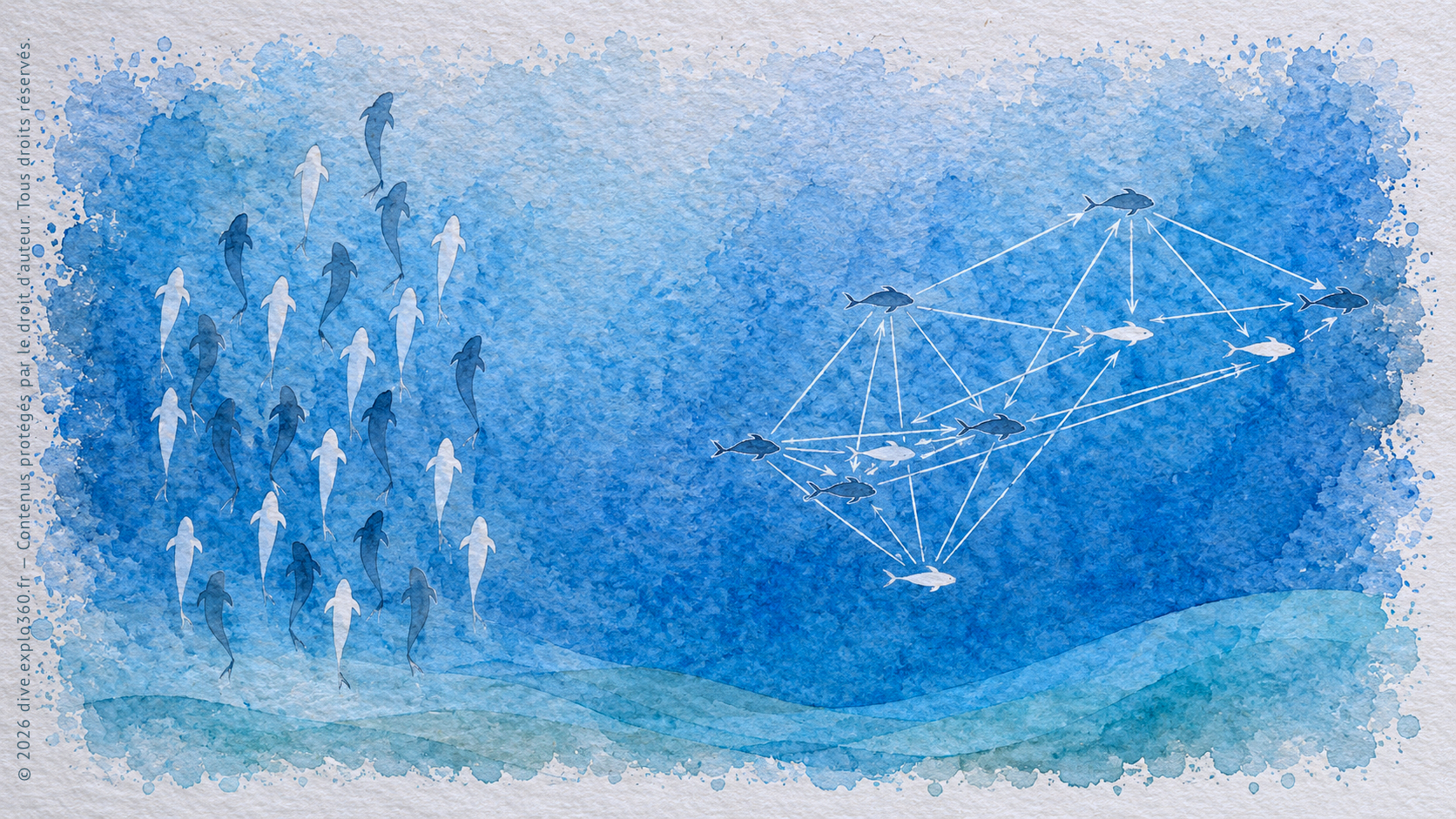
Movement passes from one fish to another
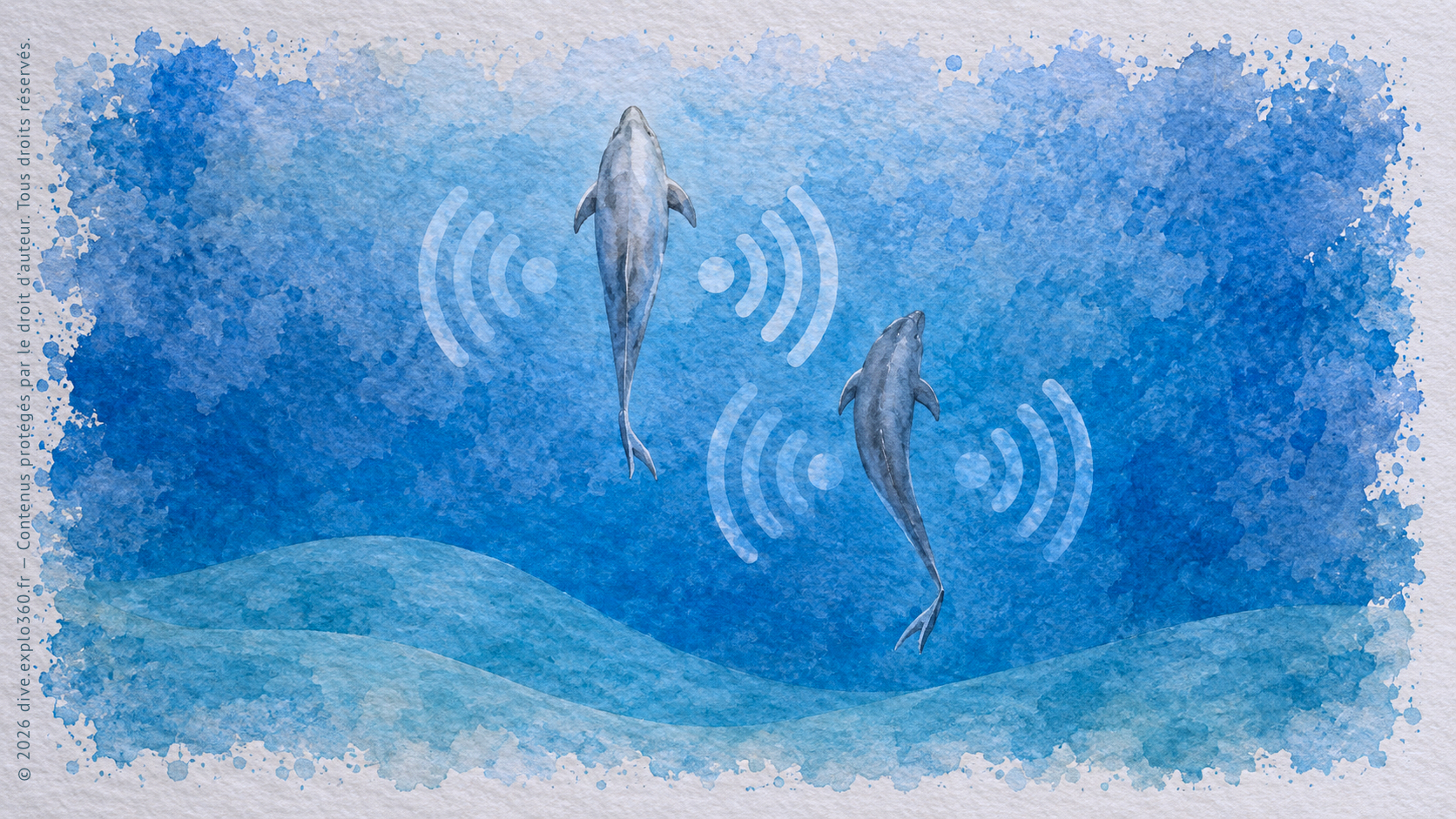
Fish see their neighbours’ movements and may sense the water they displace through the lateral line. They do not need to exchange a deliberate message to respond together.
Lateral line communication
A change of direction can spread very quickly through the whole school. © dive.explo360.fr — All rights reserved. Reproduction prohibited without permission.

Where is the leader?

School leader
Each fish follows its neighbours: the school can therefore move without needing a leader. © dive.explo360.fr — All rights reserved. Reproduction prohibited without permission.
There is not always one!

Each fish mainly pays attention to those nearby.

All these small changes made by each fish allow the whole school to move together.

Interactive quiz

Test your knowledge

Choose the correct answer. Some questions may have more than one correct answer.

Conclusion

A school of fish may seem to work like one large animal, but it consists of many fish reacting to one another.

They watch their neighbours, sense their movements and adjust their direction.

By following a few simple rules, hundreds of fish can thus swim together without bumping into one another.

Sources and references

This section is intended for teachers, parents and educators who wish to check or explore the information in the article further. It is not part of the reading expected of the child.