The reef fills up
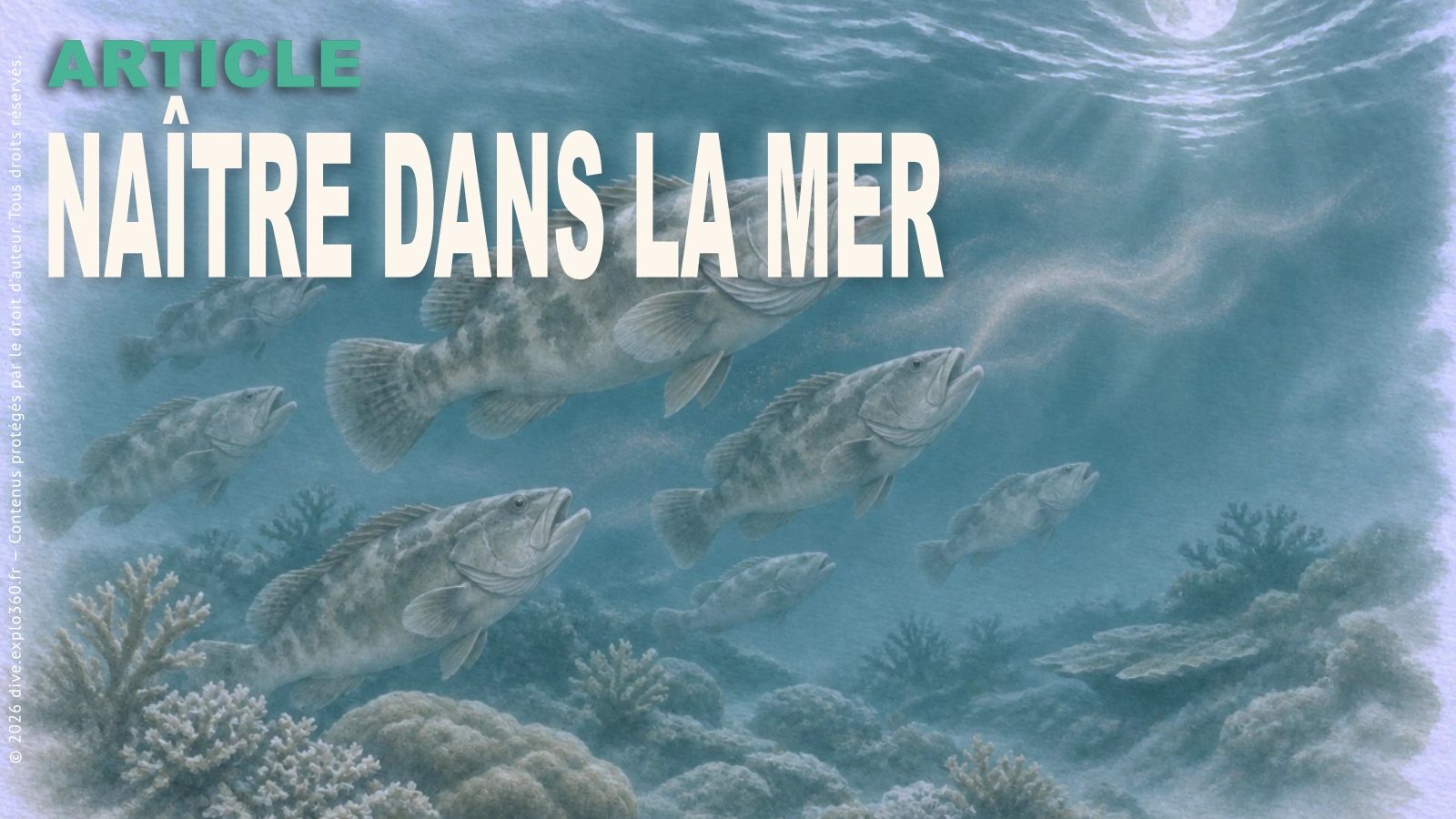
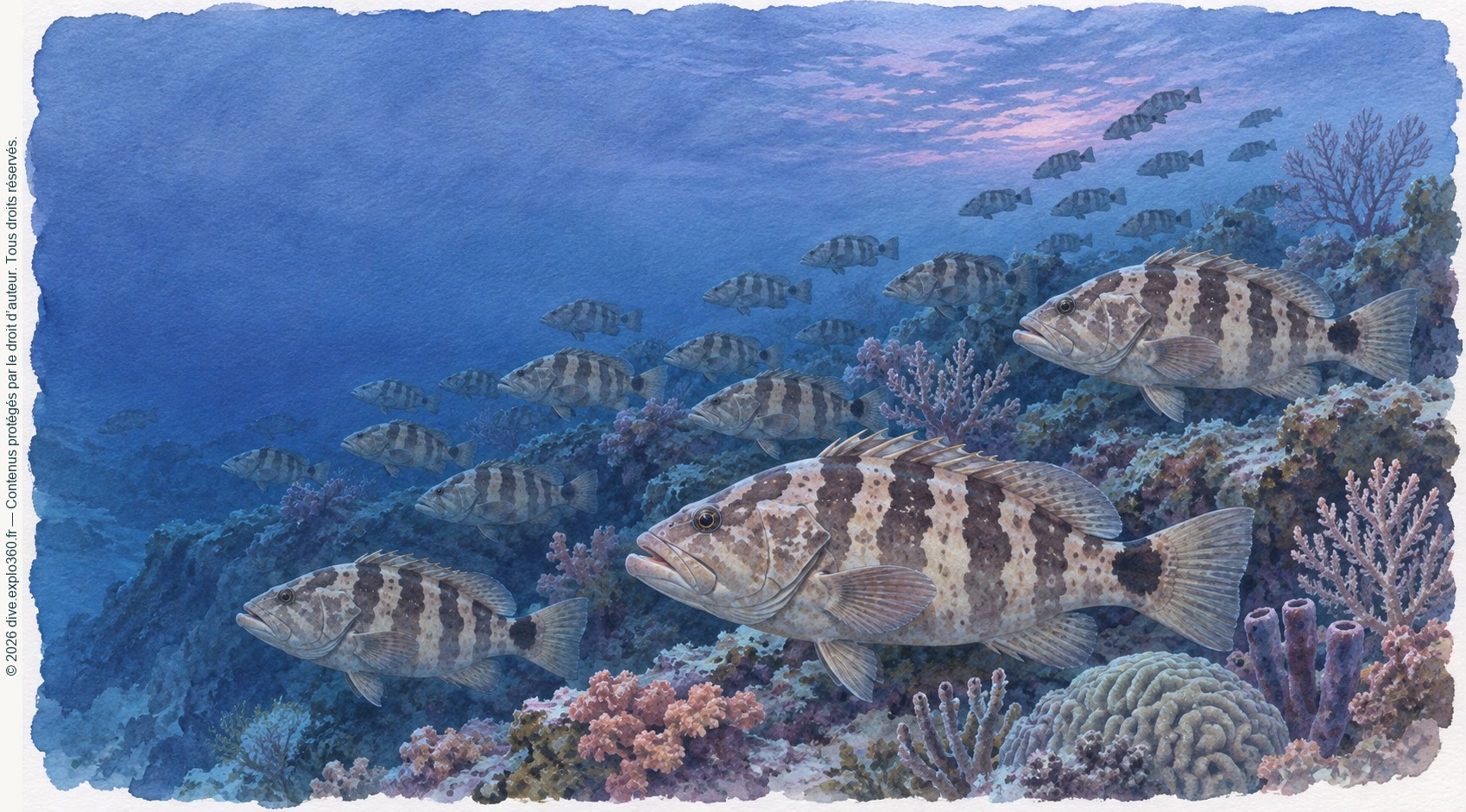
In the Caribbean, some Nassau groupers, Epinephelus striatus, make an unusual journey each year. For most of the year, adults are scattered across reefs and rocky habitat. But when the breeding season comes, their behaviour changes. In the breeding season, they converge on particular sites, often near the outer edge of a reef or a drop-off.
Distances travelled can reach several tens of kilometres, sometimes more. As fish arrive from different directions, the aggregation grows. Dozens of fish become hundreds. In the large historical aggregations, several thousand groupers could occupy the same area.
Fish cross paths above the seabed, and some change colour during courtship. The adults can arrive well before they begin to spawn. The groupers can stay together for several days. As more fish arrive, encounters become more frequent.
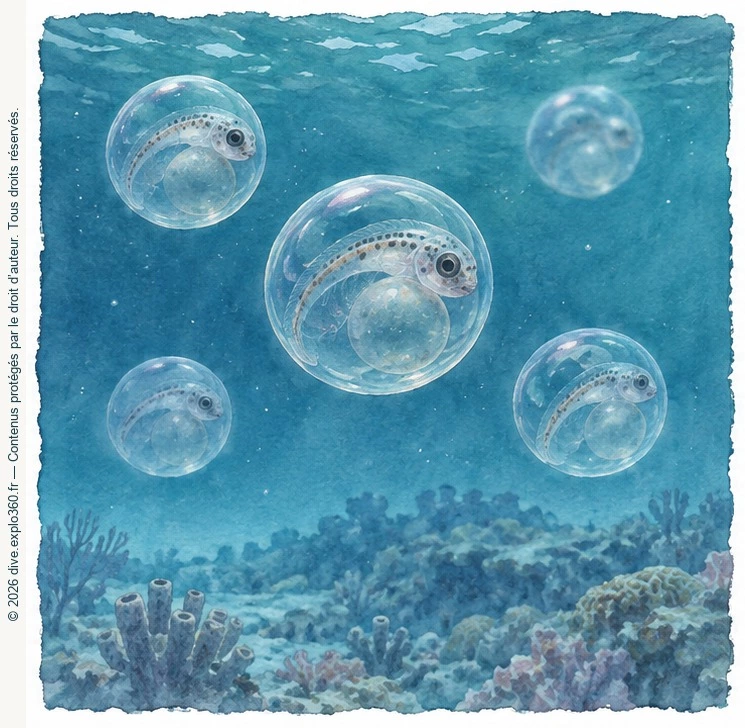
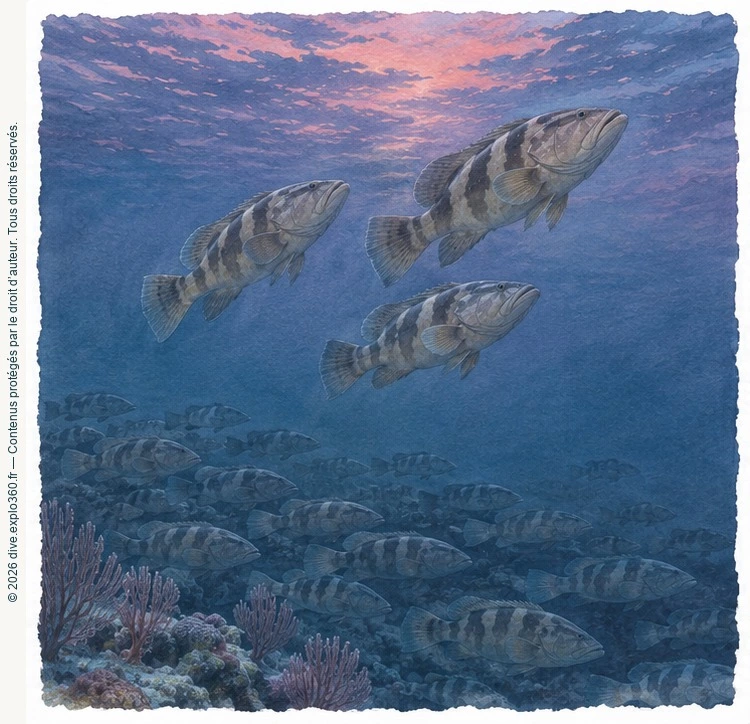
Then, at dusk, activity changes. Small groups break away and rush upwards. They release eggs and sperm during the ascent. The fertilised eggs then disperse into the water.
Spawning can recur over several evenings, in a relatively short time window.
Why don't the groupers just breed where they live the rest of the year?
The gathering allows many adults to meet for a limited period of time. Simultaneous release of gametes increases the chances of fertilisation. However, the location of the sites and the timing of spawning suggest that other factors are involved. At many sites, the dates of these gatherings follow a lunar pattern.
The Moon as a calendar
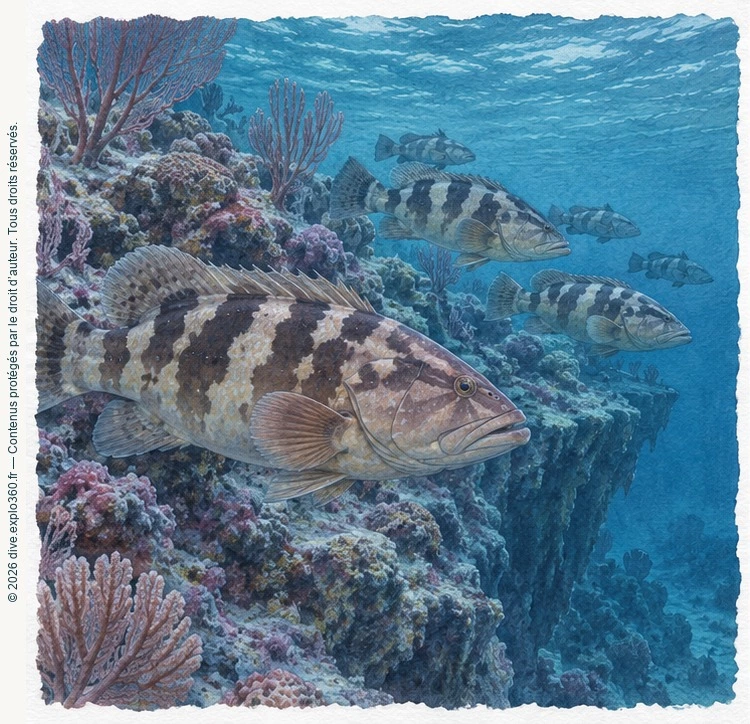
Nassau grouper spawning aggregations often form near a full moon in winter. The exact timing varies by region and year. But the relationship with the lunar cycle is regular enough to help predict when some aggregations will form. The lunar pattern helps narrow the dates on which observers are likely to find fish.
It is part of a set of environmental variations. Lunar phase tracks changes in night-time light and in the tidal cycle. Both changes could provide cues. Season, water temperature and local conditions can also influence reproductive timing.
In fish, physiological reproductive preparation begins well before spawning. Gonads develop, gametes mature and hormone levels change. By the time adults meet, weeks or months of preparation may already have passed. The lunar cycle may help synchronise adults that are already ready to spawn.
The phase of the Moon narrows the window to a few nights. The time of day can narrow it further. In several reef fish, most spawning takes place around sunset.
The last minutes of daylight
The sun is setting. On the reef, the shadows lengthen. Diurnal fish begin to change their movements while nocturnal species become more active. On many reefs, some fish release their gametes in this short window. In some species, spawning occurs in open water.
A male and a female, or several fish together, rise rapidly above the reef. The release of the eggs and sperm occurs during this ascent. Seconds later, the adults swim back down. Eggs remain in the water, where they can be transported by currents.
Meanwhile, conditions above the reef are changing. Light is rapidly decreasing. Predator behaviour is changing. Visibility conditions are no longer those of the day, but not those of the night. Adults leaving cover and gametes drifting in open water can both encounter predators. A brief ascent limits the time the adults spend above the reef.
The advantages of spawning at dusk can vary by species and site. Predator activity may be one influence on the timing. Water movement, physiological rhythms and the presence of mates may also play a part. The moment chosen is probably the result of several constraints that combine.
The state of the tide can narrow the window further. In some species, the timing of spawning also coincides with a particular phase of the tide.
The current carries the next generation
Some spawning sites lie beside channels, headlands or reef edges where currents can be strong. This apparent choice is intriguing.
Why gather in a place where the water might take the eggs immediately?
In the Cayman Islands, tracking eggs and water movement helped researchers examine when offspring could remain near the islands and when they might be carried away. In species that spawn in open water, gametes are released into the water column. After fertilisation, eggs and larvae can be transported by currents. This movement helps disperse their offspring.
Where the water takes them can affect their chances of survival. Eggs or larvae may stay near the reef, reach other suitable habitat or be swept into less favourable water. Effects depend on local circulation, depth, larval behaviour and many other factors. In some species, the time of spawning is associated with particular phases of tides.
Synchronization with currents can then influence the fate of eggs. Those outcomes can differ even at the same site from one spawning event to the next. A gathering by a channel establishes where the fish spawned. Measuring the flow helps establish where their eggs might go. Topography, migration routes and repeated use of the same site may all help explain where fish congregate.
Tagged fish can turn up at a site they used in a previous year.
How to find a specific site after months spent elsewhere?