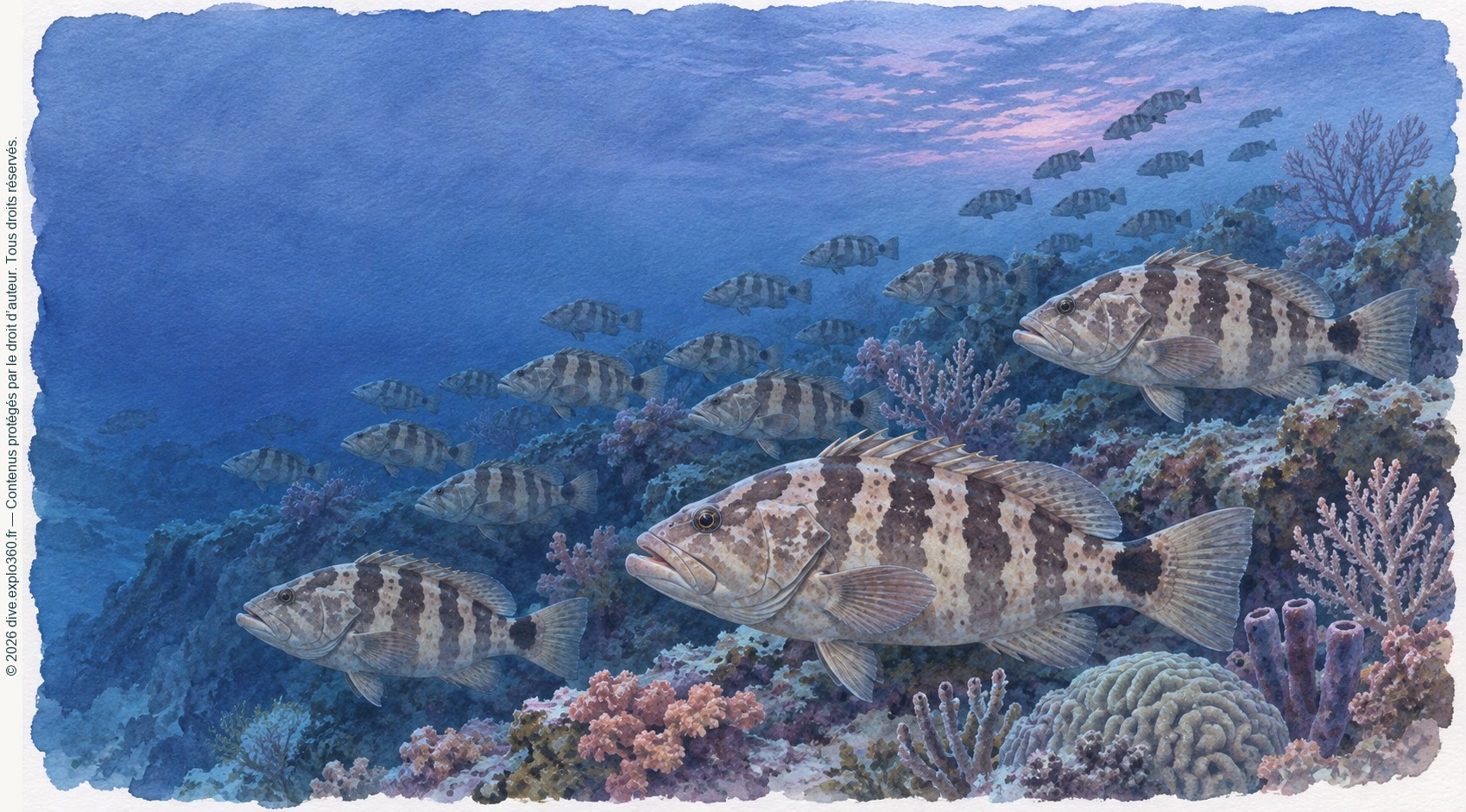
Migration to a recurring site
Acoustic tracking has recorded Nassau groupers travelling tens of kilometres to spawn. When many mature fish concentrate at one site for a short period, they can also become more vulnerable to fishing.
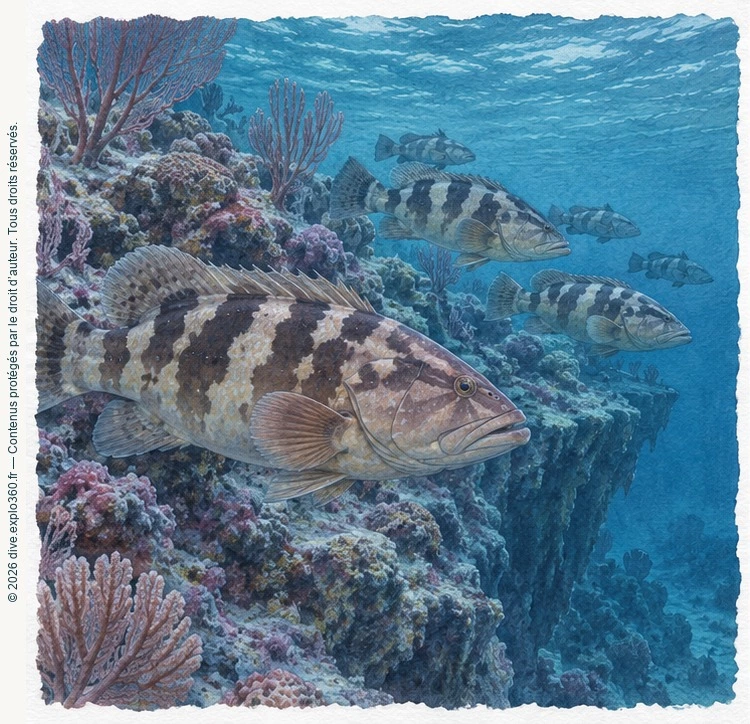
Several timescales
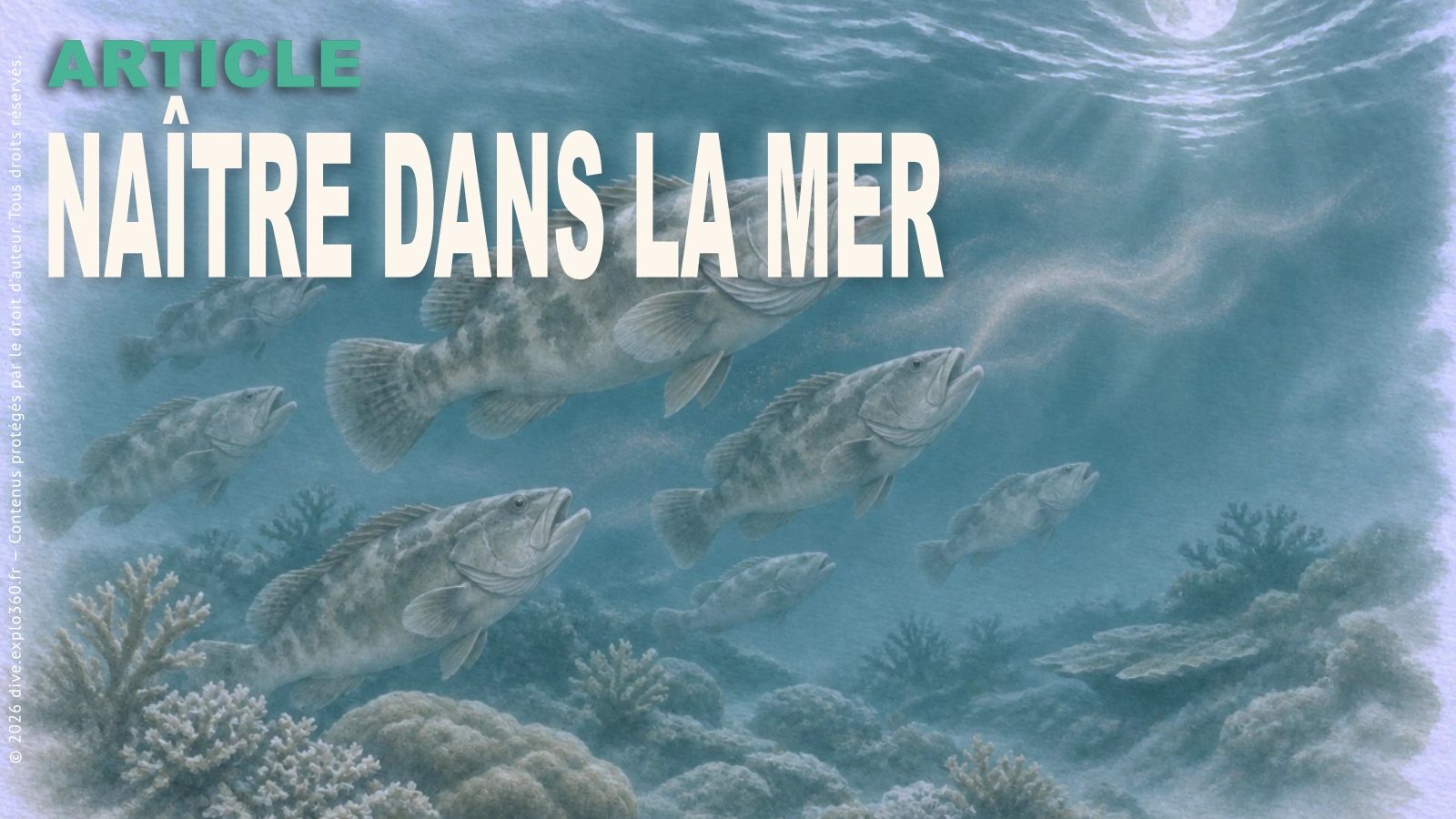
In many Caribbean populations, gatherings occur around the full moon in winter. Gametes mature before adults arrive, and the adults may wait several days before spawning. Lunar phase helps predict the event, while the cues that trigger it remain harder to identify.
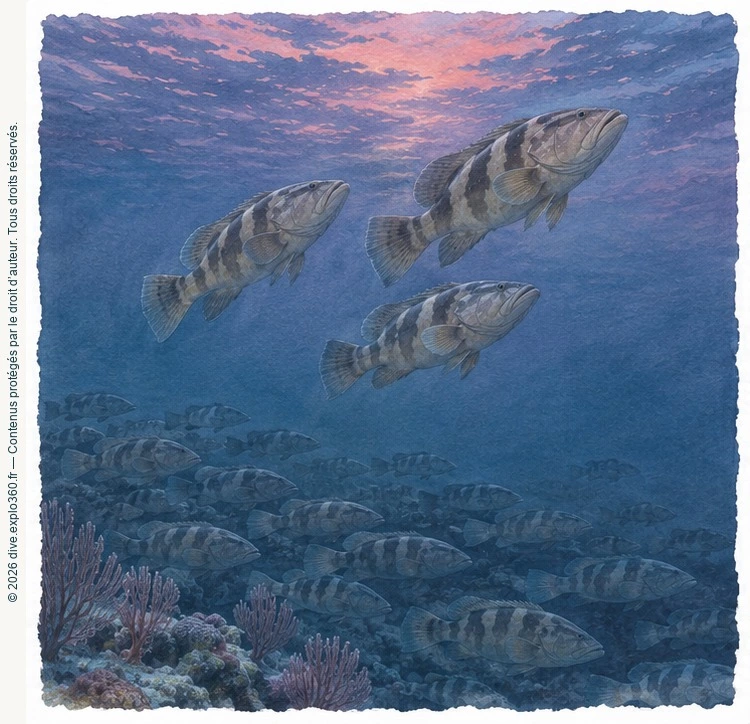
The last light
At some sites, groups of Nassau groupers rise above the reef and spawn around dusk. Timing can vary by species and location, alongside changes in light, predator activity and water movement.
Transport of eggs and larvae
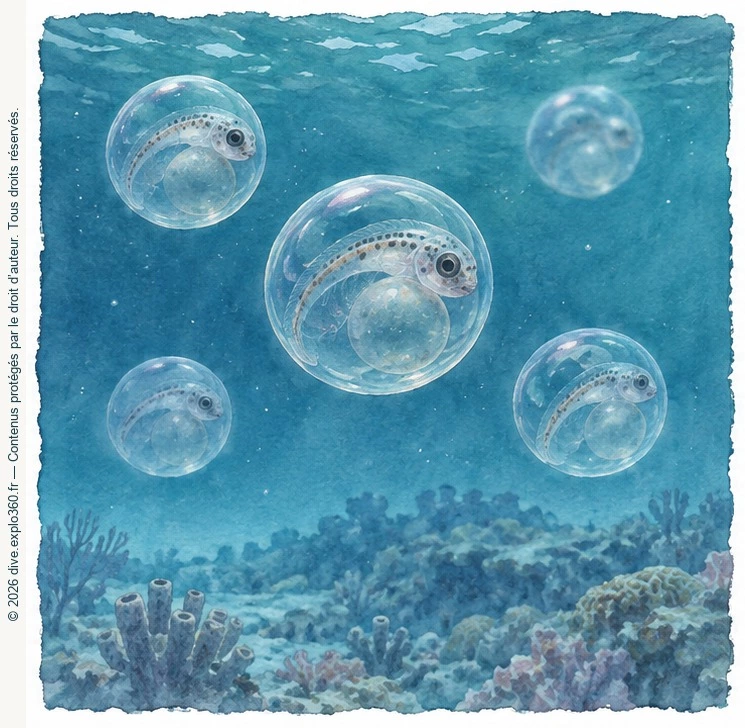
After external fertilisation, pelagic eggs are carried by currents. Work in the Cayman Islands documented conditions that could retain some offspring near the islands. At other times, local circulation can carry them towards other reefs.