SWIM BLADDER?
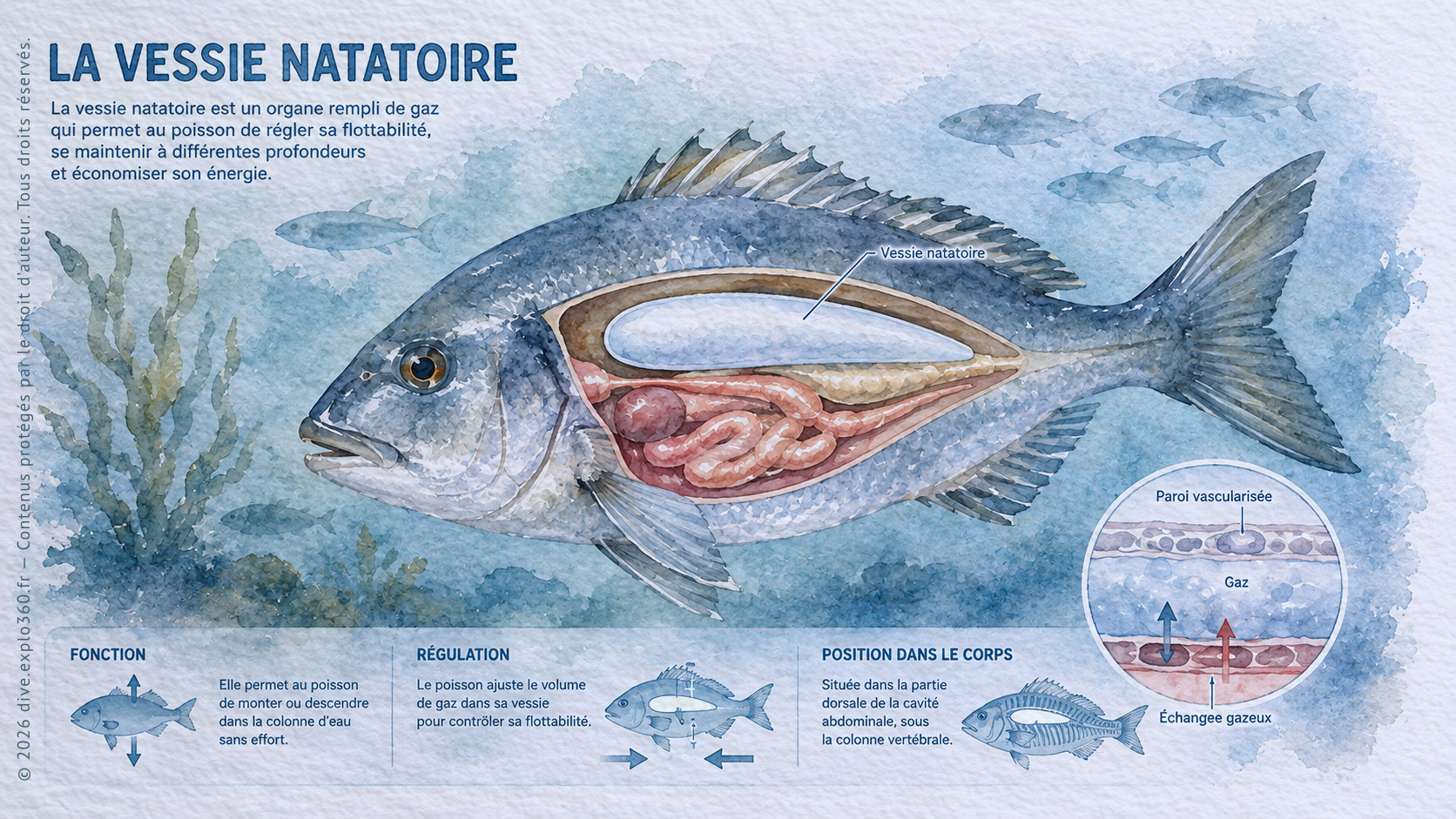
Gas occupies space inside the fish while adding very little mass. The bladder therefore lowers the animal’s average density, meaning its mass relative to its volume. When that density is close to the density of water, the fish can remain suspended with less effort.
How does it work?
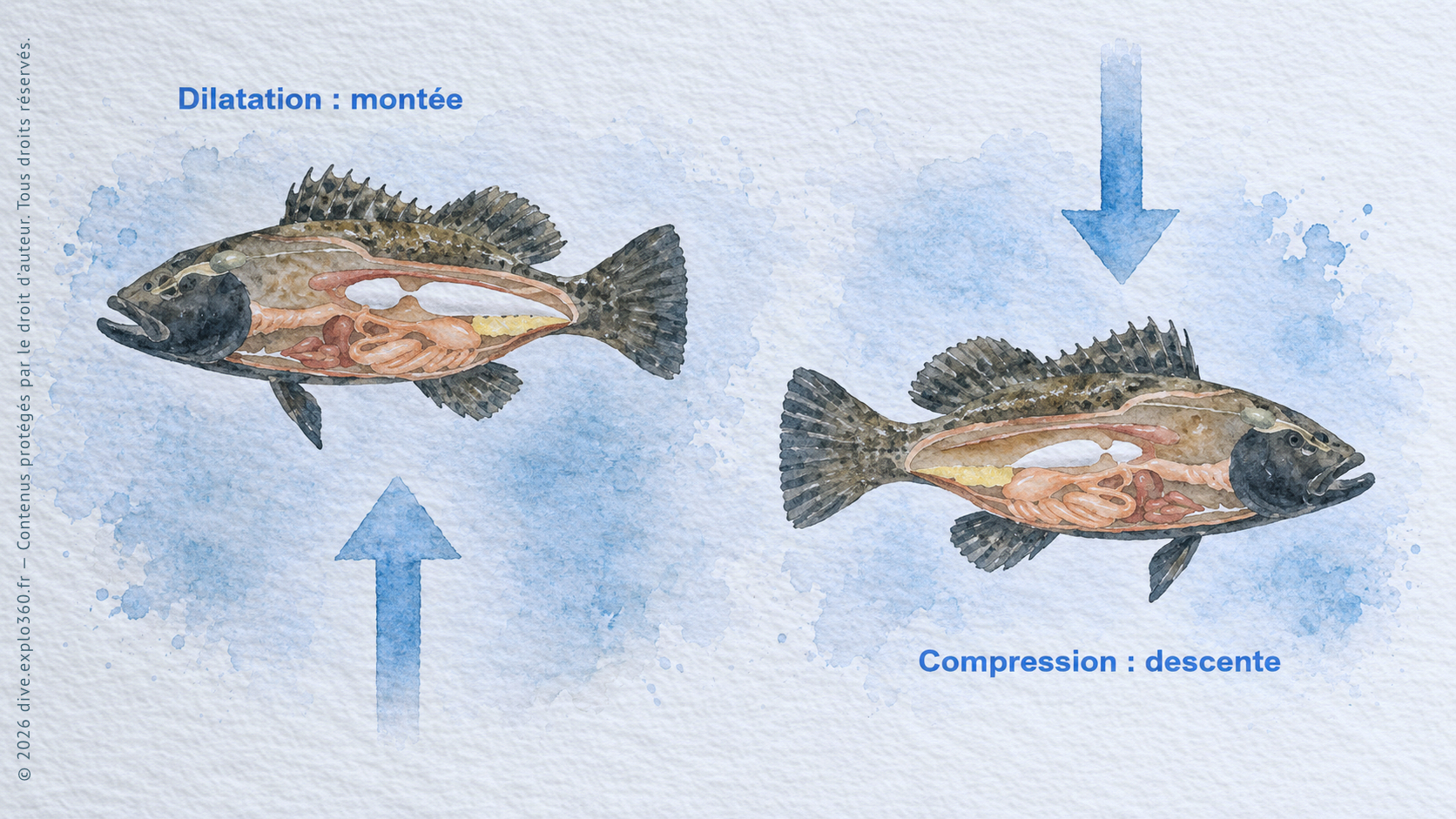
When the gas sac expands, the fish’s volume increases much more than its mass: its average density falls and the water provides more buoyant support. The fish does not simply “become lighter”.
Pressure increases during descent and compresses the gas; it decreases during ascent and the gas expands. The fish must adjust the amount of gas to compensate. This adjustment is not instantaneous.
Explore the same world