SWIM BLADDER?
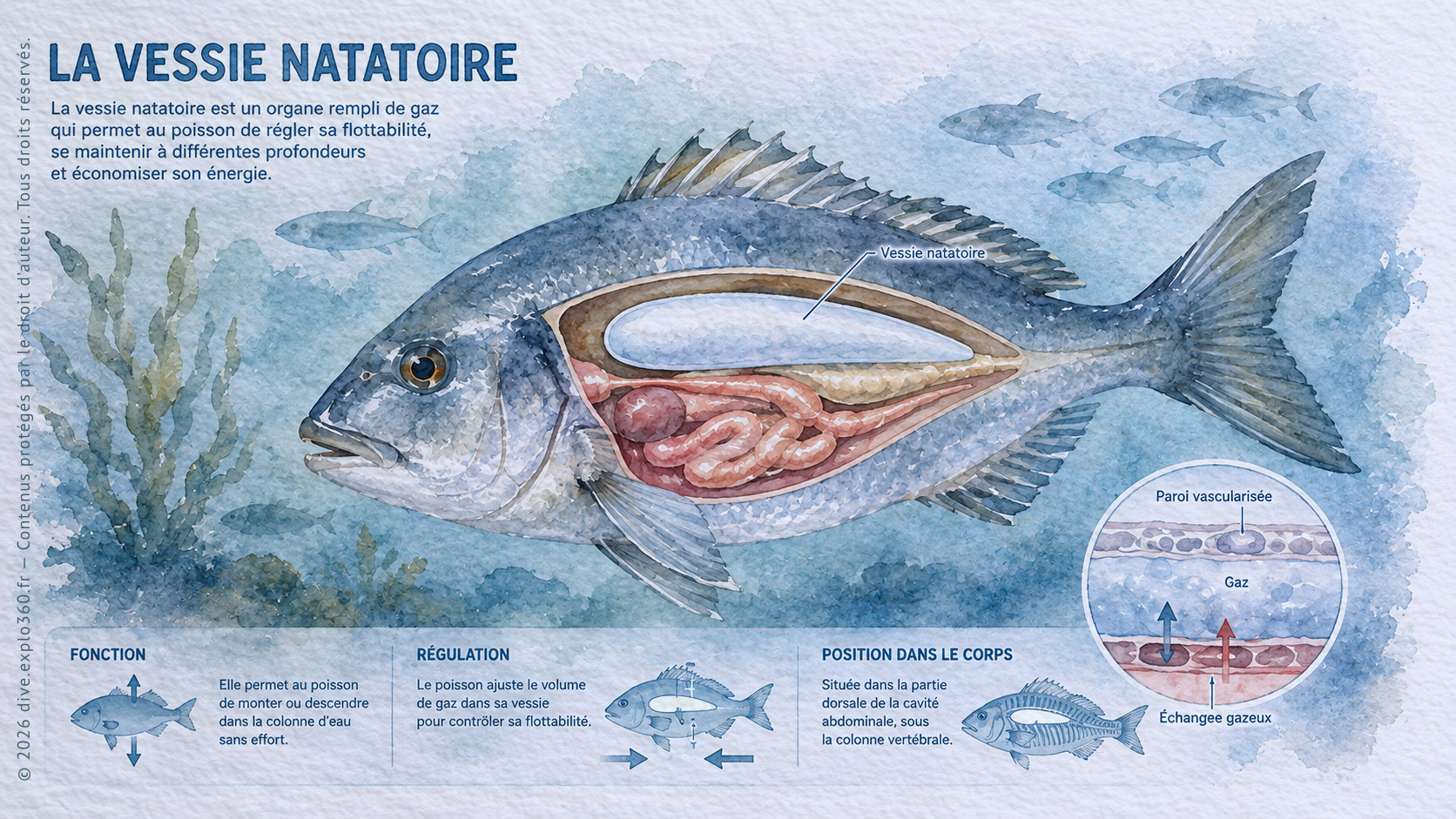
Gas adds volume with little increase in mass, reducing the fish’s average density. When that density approaches the density of the surrounding water, the upward buoyant force nearly balances the fish’s weight. It can then hold its depth with less swimming effort.
How does it work?
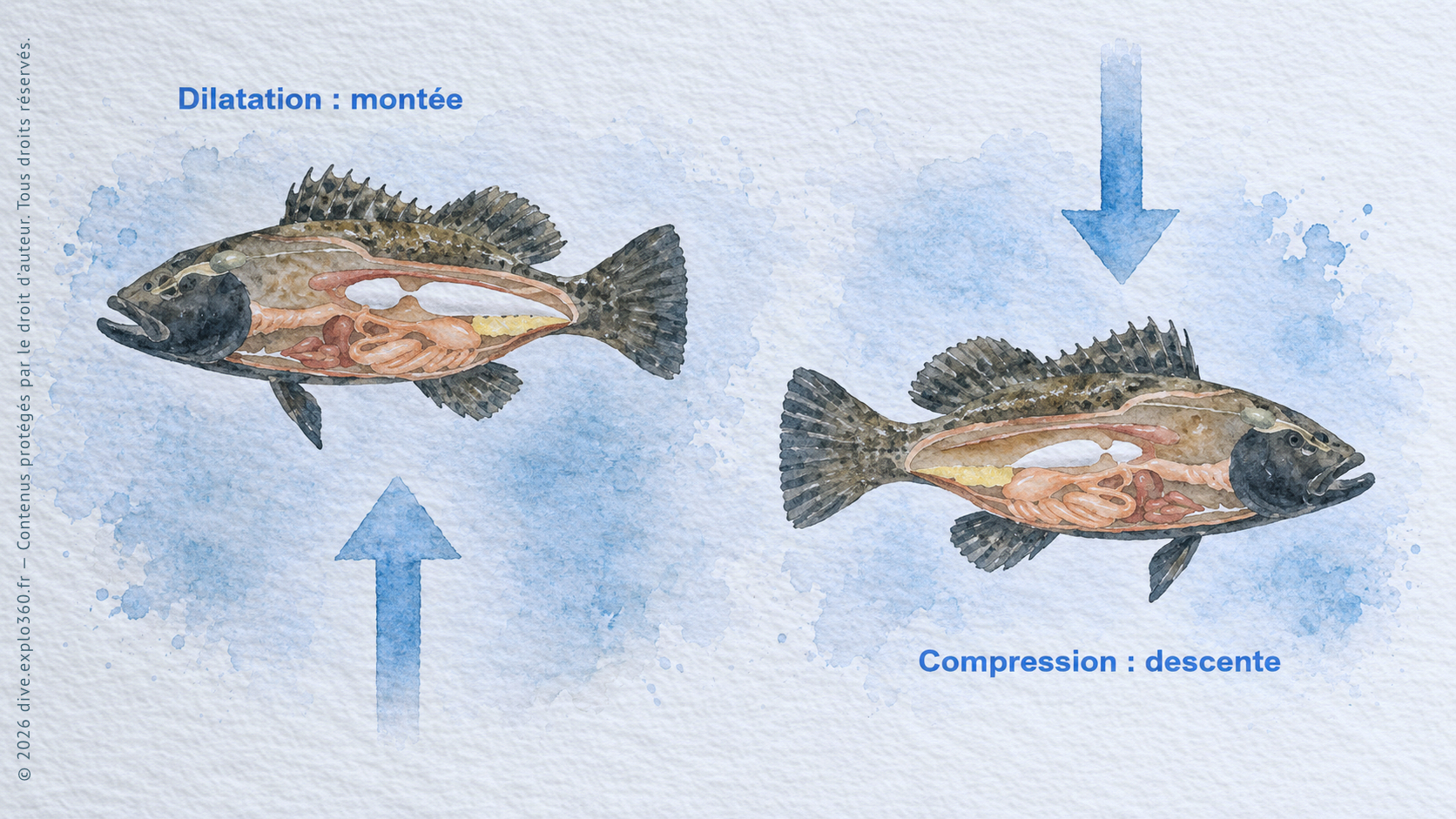
When the swim bladder expands, the fish displaces a greater volume of water with little change in mass. Its average density decreases and the buoyant force increases.
Higher pressure during descent compresses the gas. Lower pressure during ascent allows it to expand. A fish can compensate by adjusting the amount of gas in the bladder, but the adjustment takes time.
Explore the same world