Seeing how the roles fit together
Sunlight helps plants and algae grow. When a grazer eats a leaf, some of the leaf becomes part of the animal. Other animals may eat the grazer, and still others feed on what is left behind. A meadow or reef can also give these animals a place to live. A species can play several roles in the same habitat.
Primary producers make organic matter
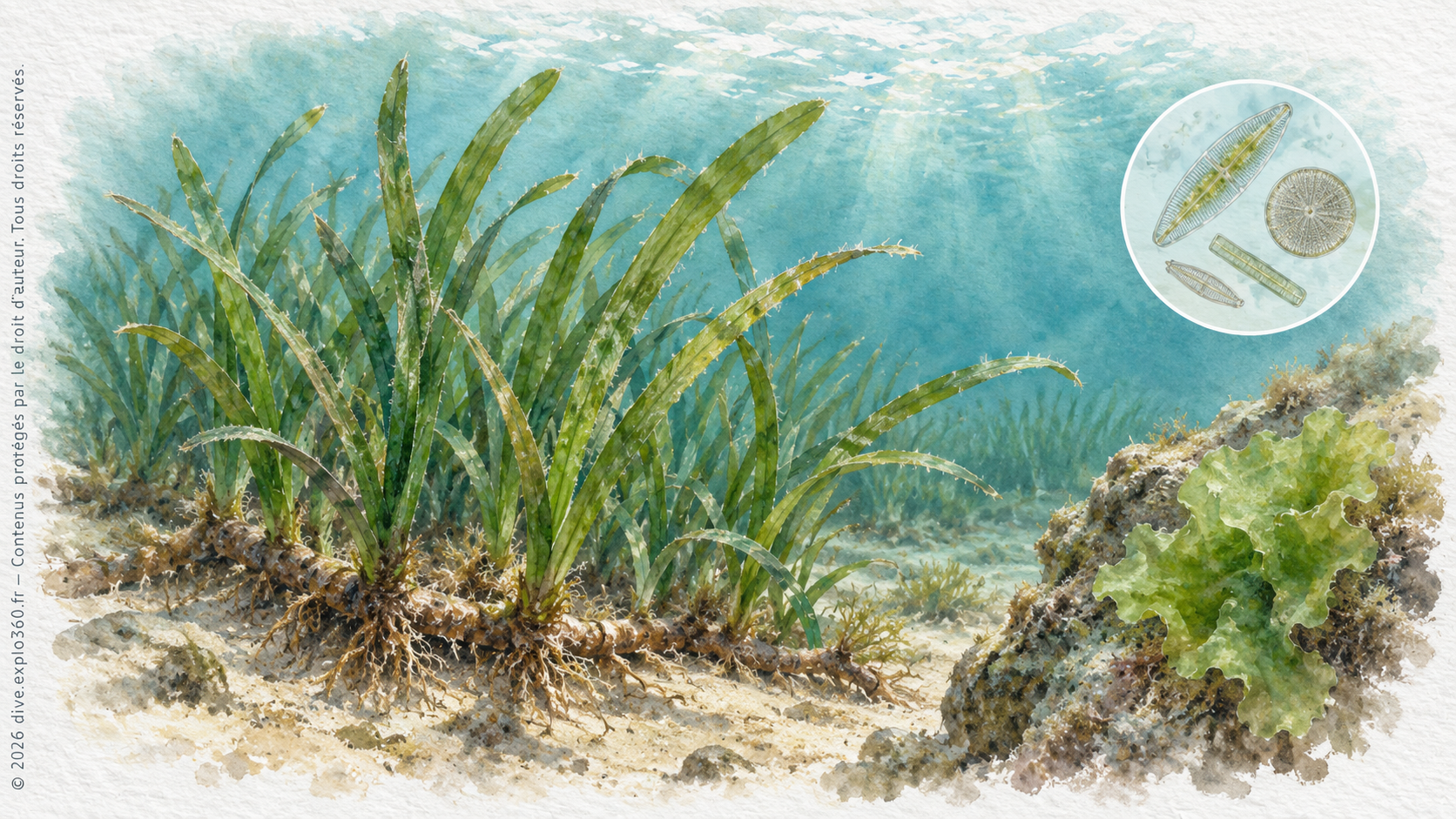
Neptune grass and algae make sugars through photosynthesis: the production of material from water and carbon dioxide using light. They also use nutrients, substances obtained from their surroundings, to grow.
They are primary producers: they bring material into the food web that can feed other organisms. This material may be eaten while alive, released into the water or become debris after death. Phytoplankton, microscopic photosynthetic organisms suspended in the water, also perform this function. Some combine photosynthesis with consuming other organisms or organic matter: this mixed nutrition is called mixotrophy.
Marine ecosystem engineers
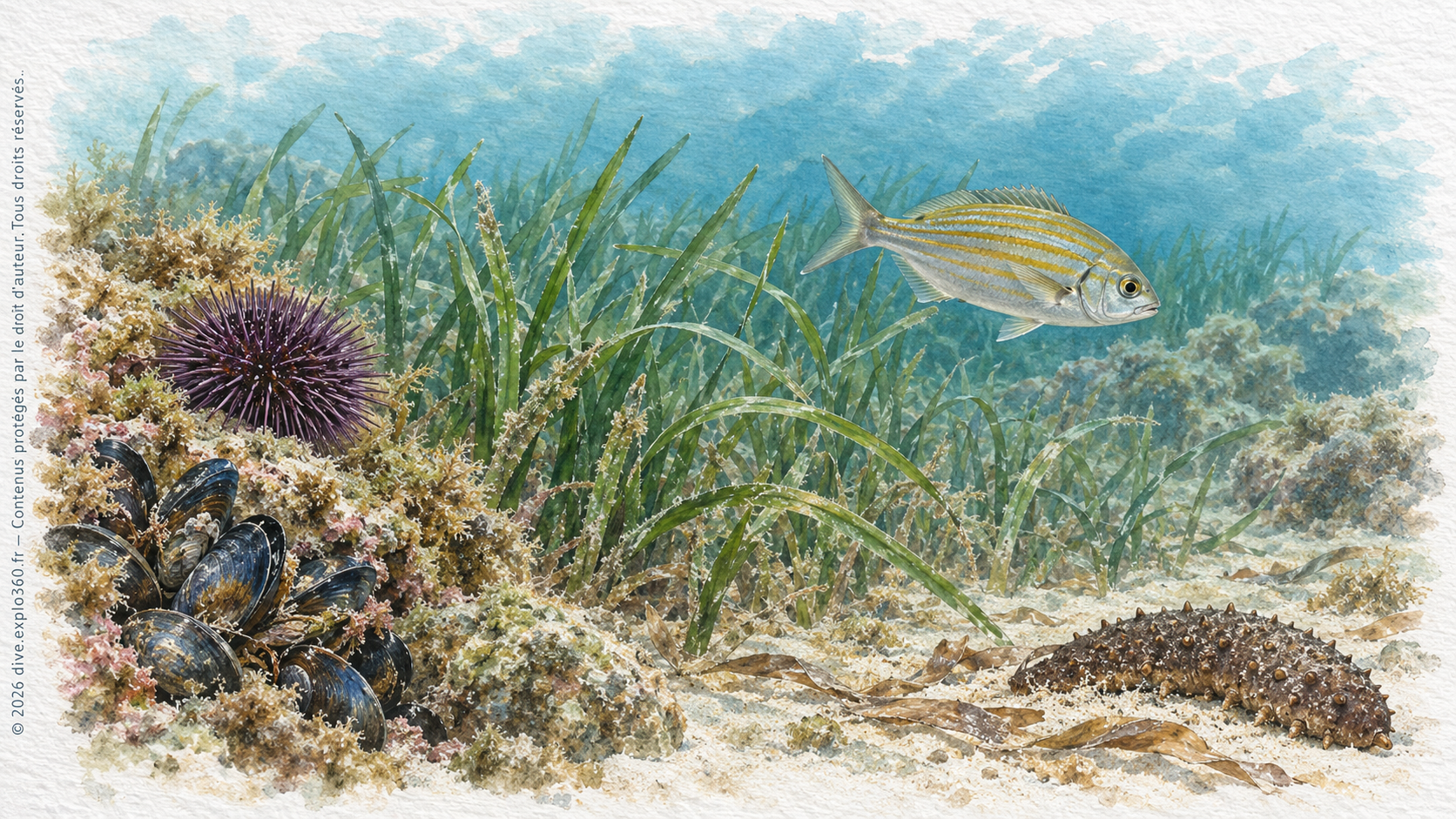
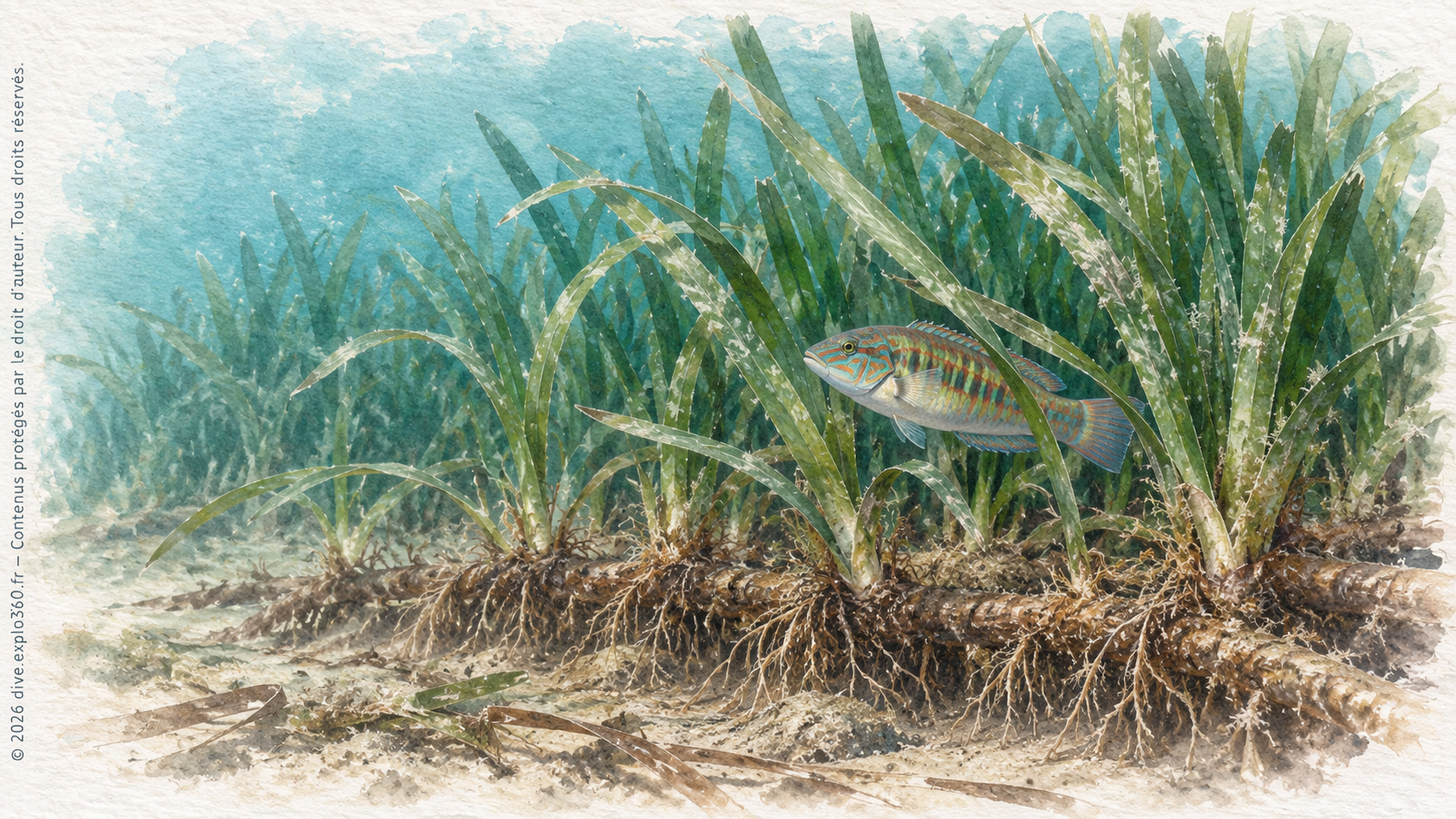
Among the leaves of a Neptune grass meadow, animals find spaces to move or hide. Small attached organisms also grow on the leaves. Beneath the surface, rhizomes, stems extending through the sediment, and roots help hold it in place.
Organisms are called ecosystem engineers when they physically modify their surroundings and create conditions used by others. In growing, Neptune grass makes food and changes the habitat around it.
Corals that build tropical reefs create a structure where other organisms live. In some temperate waters, large brown seaweeds form underwater forests. These habitats differ from a seagrass meadow, but their structure also provides places to live.
Marine herbivores and vegetation
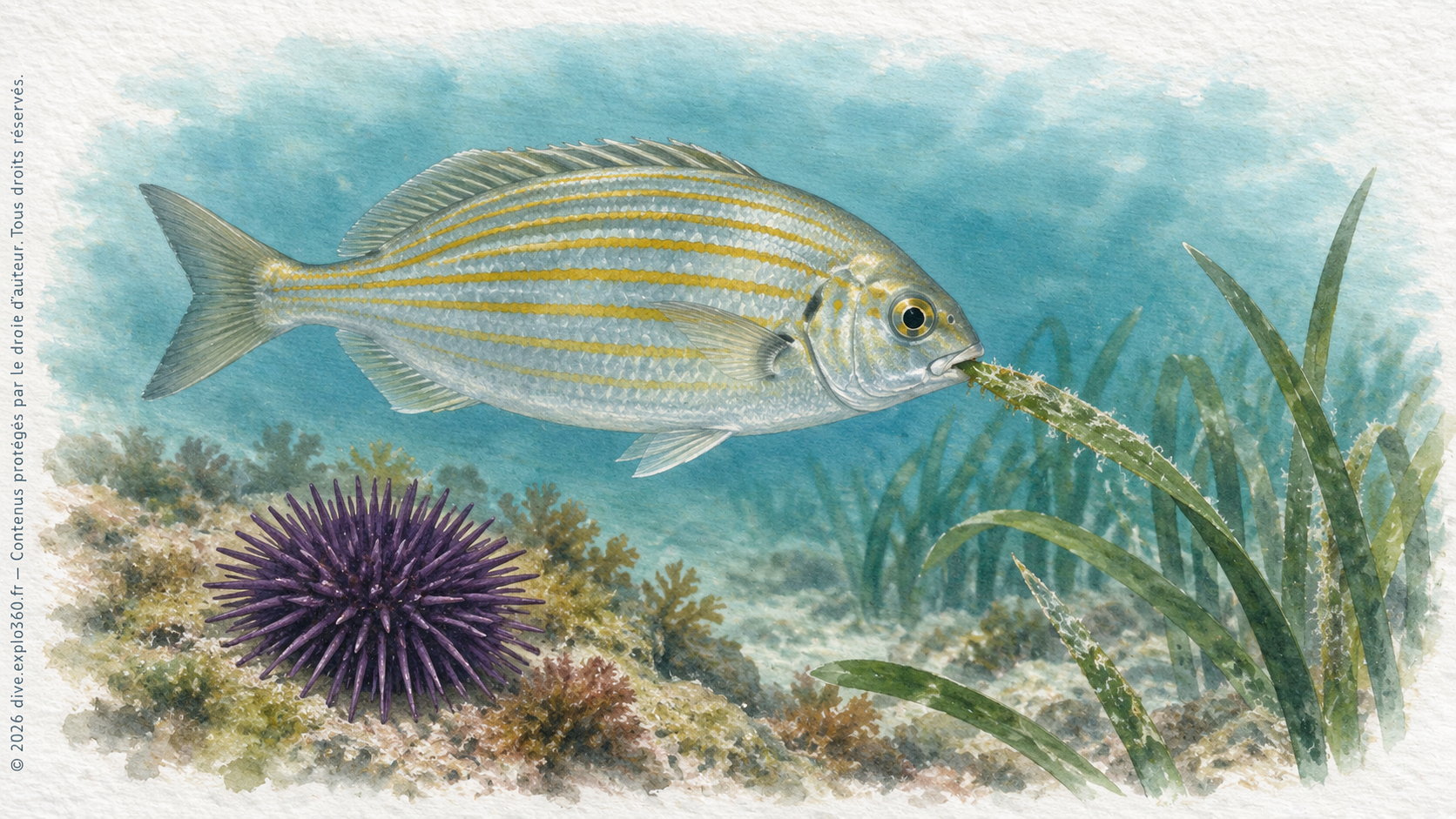
Adult salema graze on algae and Neptune grass leaves. Purple sea urchins eat algae, among other food. These are examples of herbivory: animals eating plants or algae.
Some plant material therefore enters consumers’ bodies. Grazing may also change the amount of algae or the space available to other organisms. Its effects vary with feeding intensity and the growth of vegetation.
Filter-feeding organisms
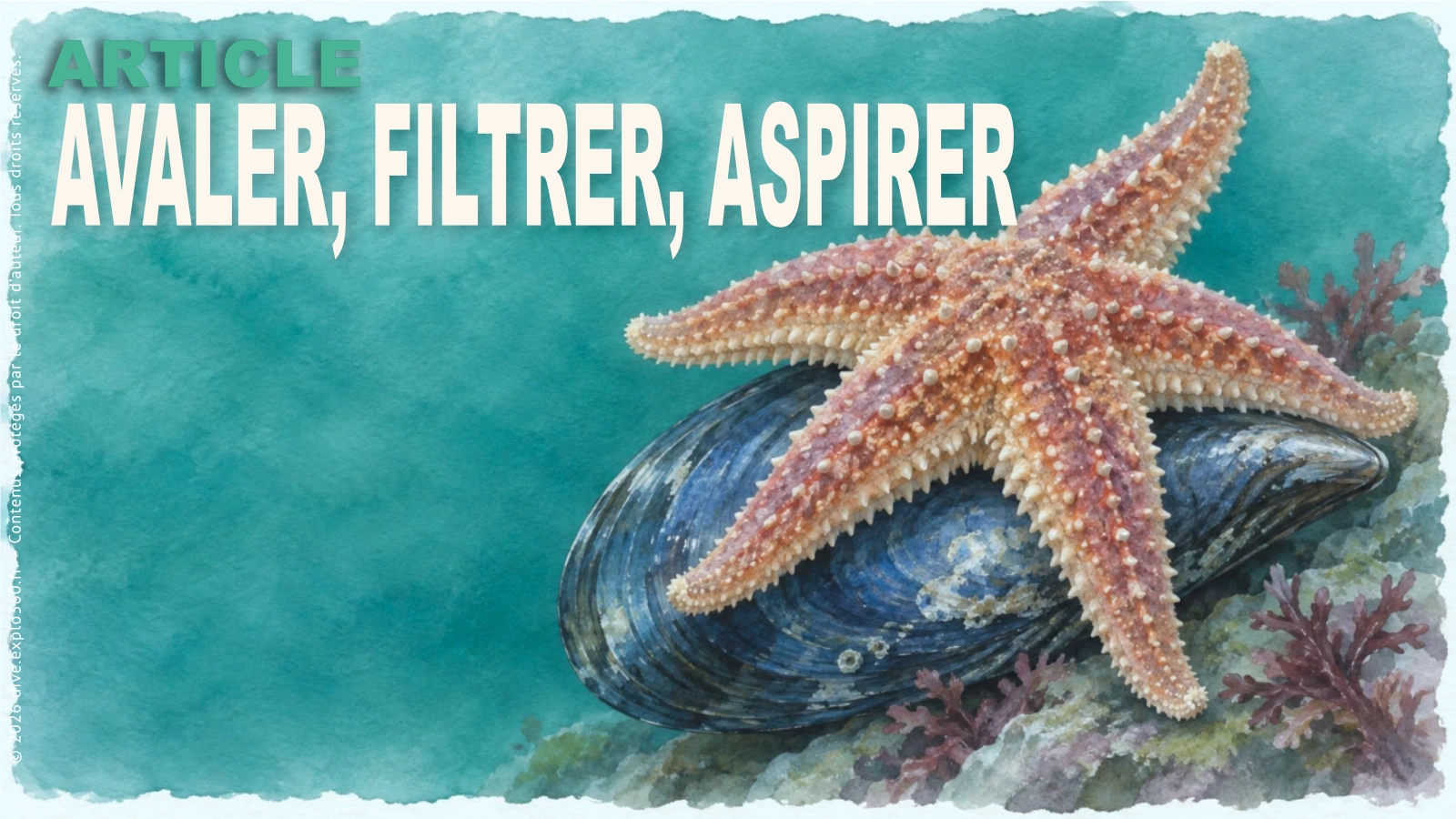
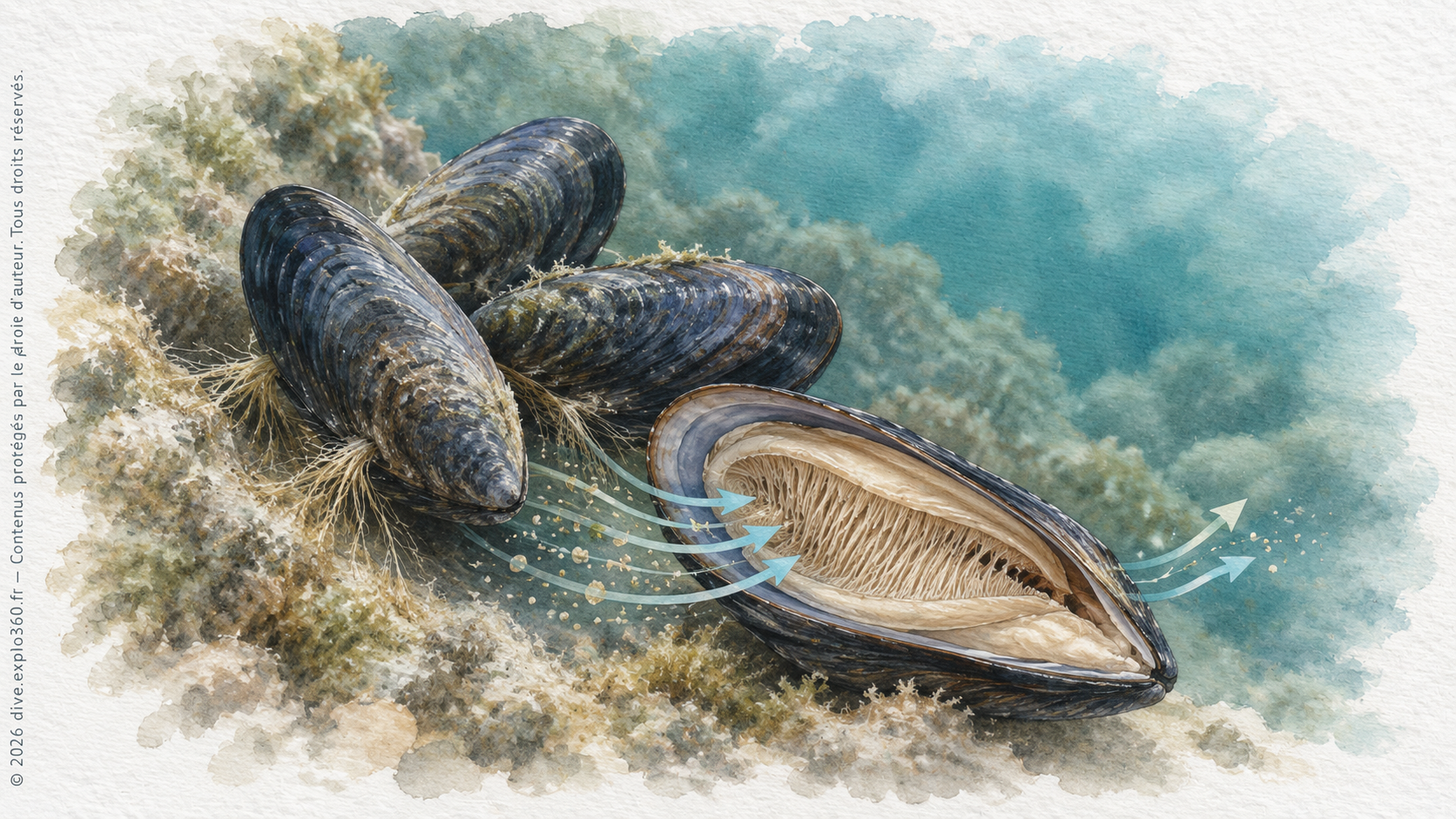
A Mediterranean mussel catches tiny particles carried by water. This is filter feeding. The particles are suspended, which means they are carried in the water instead of lying on the bottom.
Food from the water column, the water above the seabed, can thus reach a mussel fixed to a rock. Some of that material may pass to a predator that eats the mussel. Some may settle on the seabed in the mussel’s waste. Sponges also filter food from water, using different structures.
Predators and their prey
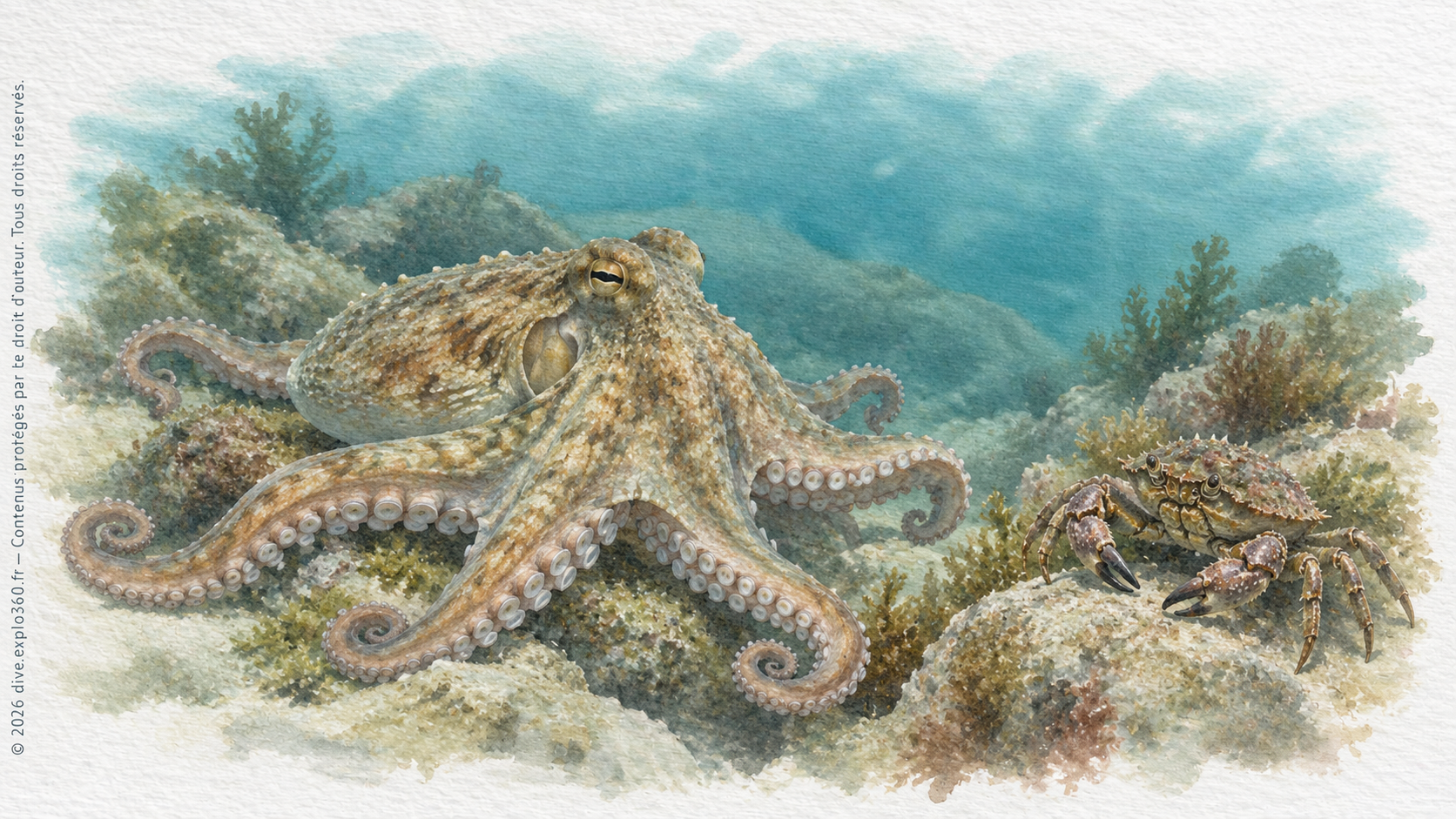
The common octopus catches crustaceans, among other prey. Crustaceans include crabs, animals with an external covering and jointed legs. Predation is the capture and consumption of prey. It feeds the predator and removes individuals from the prey population.
Prey numbers also depend on reproduction, other predators and the environment. Watching one capture is not enough to measure a predator’s effect on a whole population. A predator may itself become prey.
Top predators in the food web
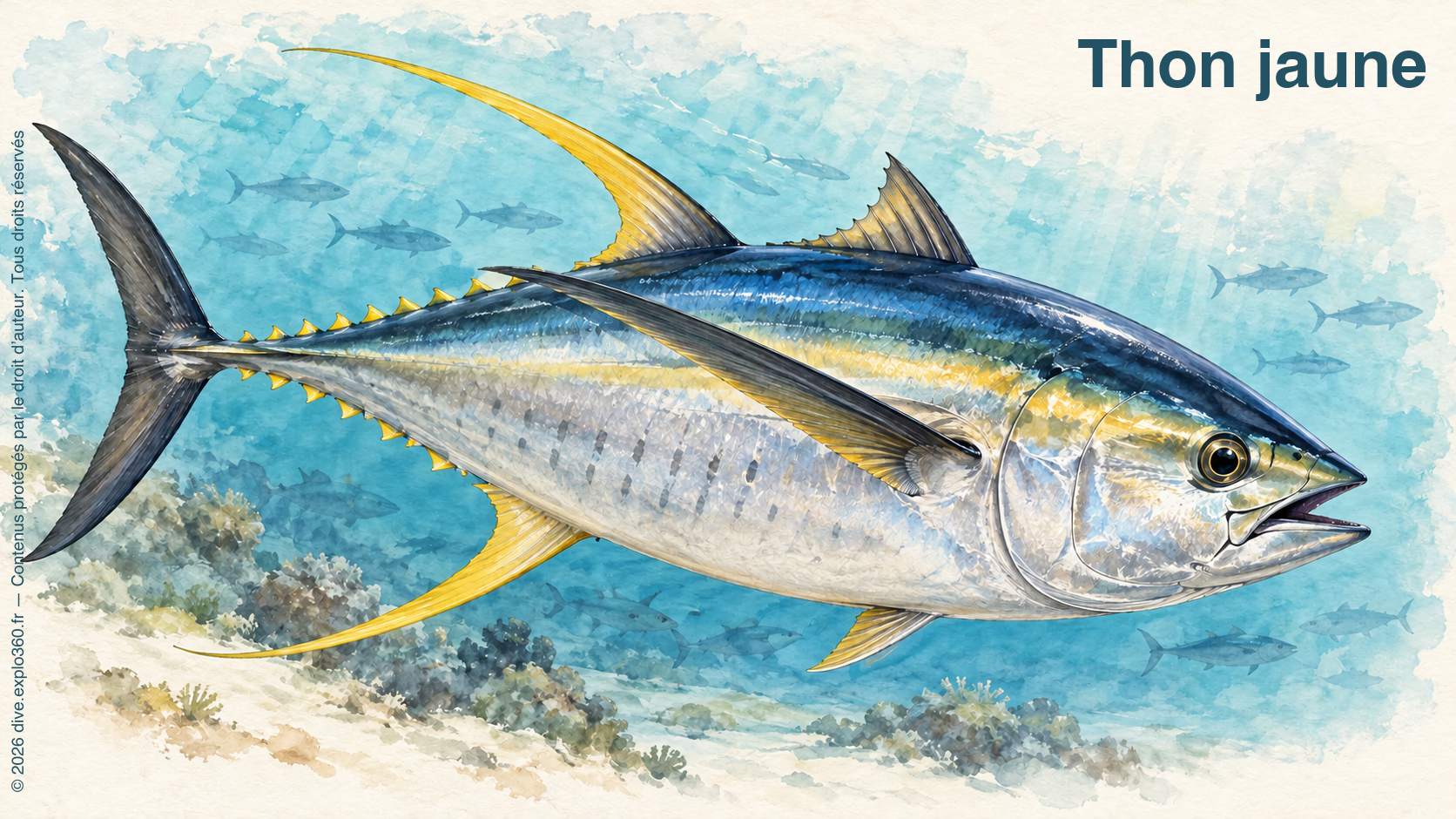
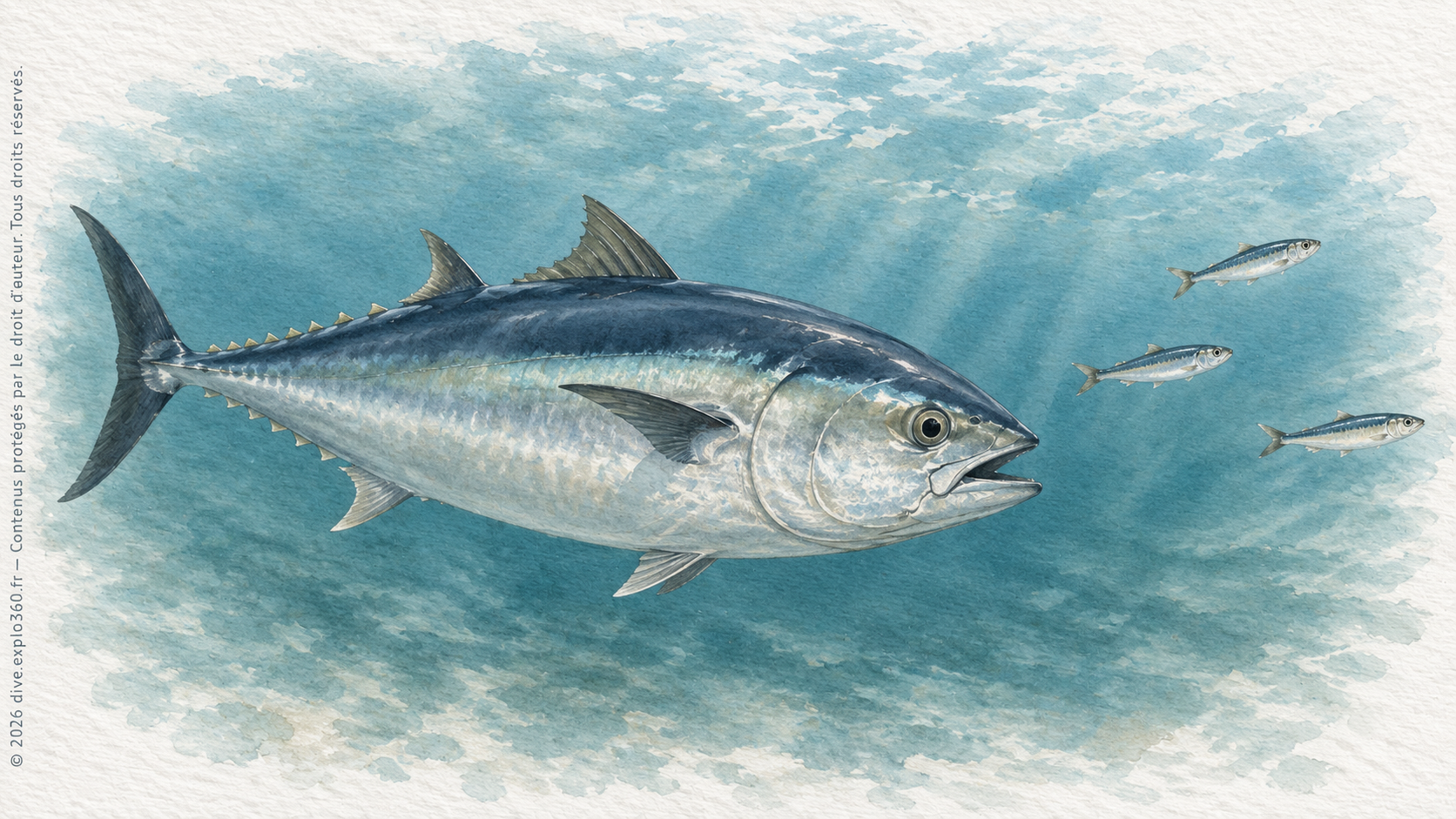
Atlantic bluefin tuna eat fish and other animals, depending on their size and the food available. To understand their position, we can follow what their prey ate beforehand.
A trophic level is a position in feeding relationships. Large predators often occupy high positions, but position depends on diet. A species does not necessarily eat the same food throughout its life. Real relationships form a branching web rather than a single chain.
Detritivores and decomposers
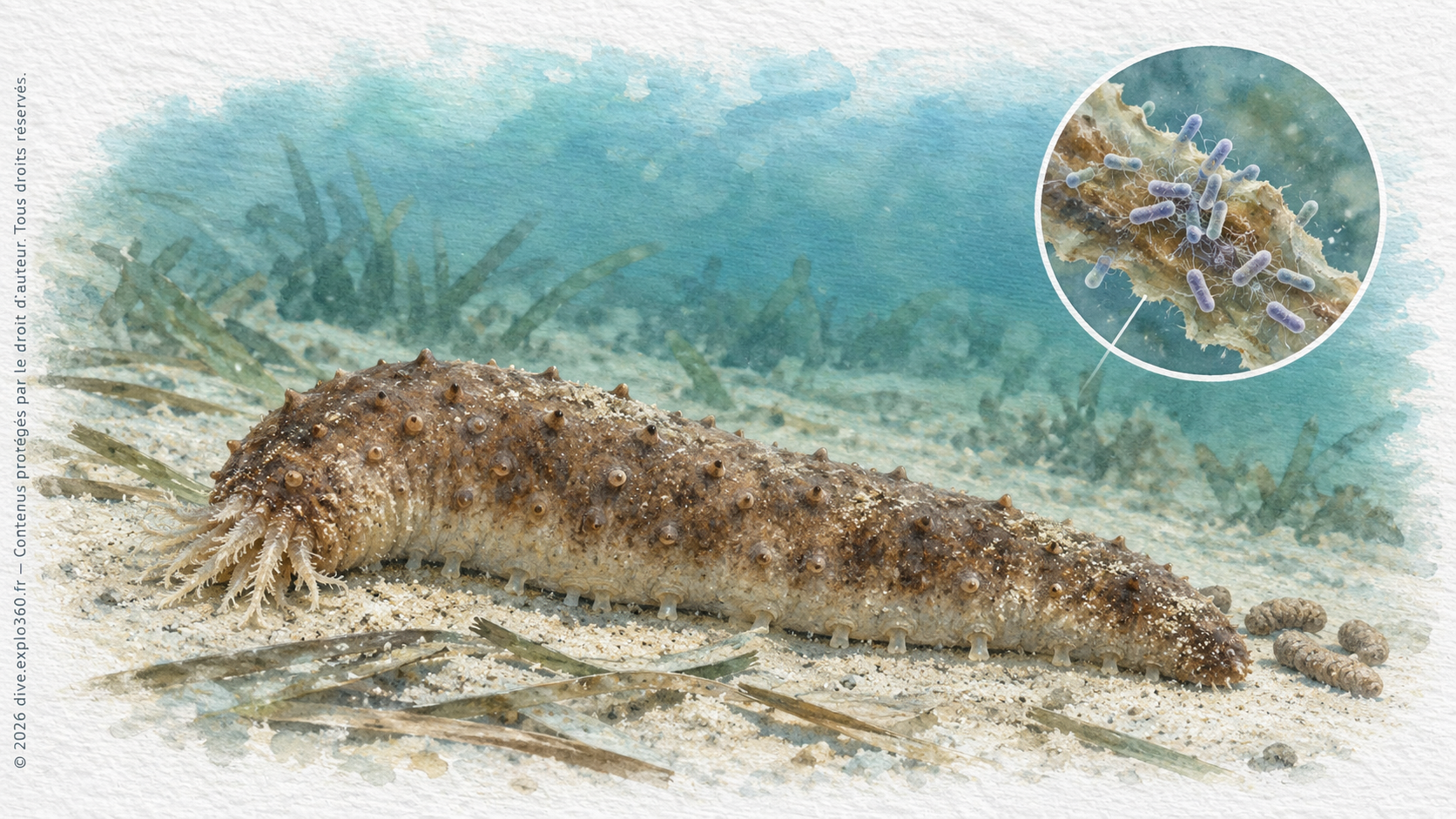
The tubular sea cucumber swallows sediment and feeds on particles within it. It is an example of a detritivore: an animal that consumes material from remains, together with associated organisms.
Some bacteria and other microorganisms, living things too small to see with the naked eye, break down substances from organisms. As the remains break down, some elements are released in mineral forms that producers can use. This step, called mineralisation, happens over time. A sea cucumber eating debris and a bacterium breaking it down chemically play different parts in that process.
How are ecological roles connected?
A seagrass meadow provides food and shelter. Fallen leaves become debris, while filter feeders capture food that was floating in the water. Predators and decomposers carry that material further along the food web. One species can play more than one part.
Matter can be used again. Energy passes between organisms in food, and some escapes as heat as they feed and grow. The web needs a fresh supply of energy, often from sunlight.
Interactive quiz
Connect the roles
Five questions about functions and their connections. Choose one answer per question.
Interactive quiz
Connect the roles
Question 1 out of 5Score: 0
What connection does a primary producer establish in a food web?
Why can Neptune grass have several roles?
Which pathway of matter can filter feeding create?
What should be examined to describe a large fish’s feeding position?
Which difference between matter and energy is correct?
Final result
Quiz completed
correct answers
Understanding the relationships we observe
Sources
Natural history accounts and references used to check the mechanisms and examples.
Explore the same world