The parrotfish’s secret
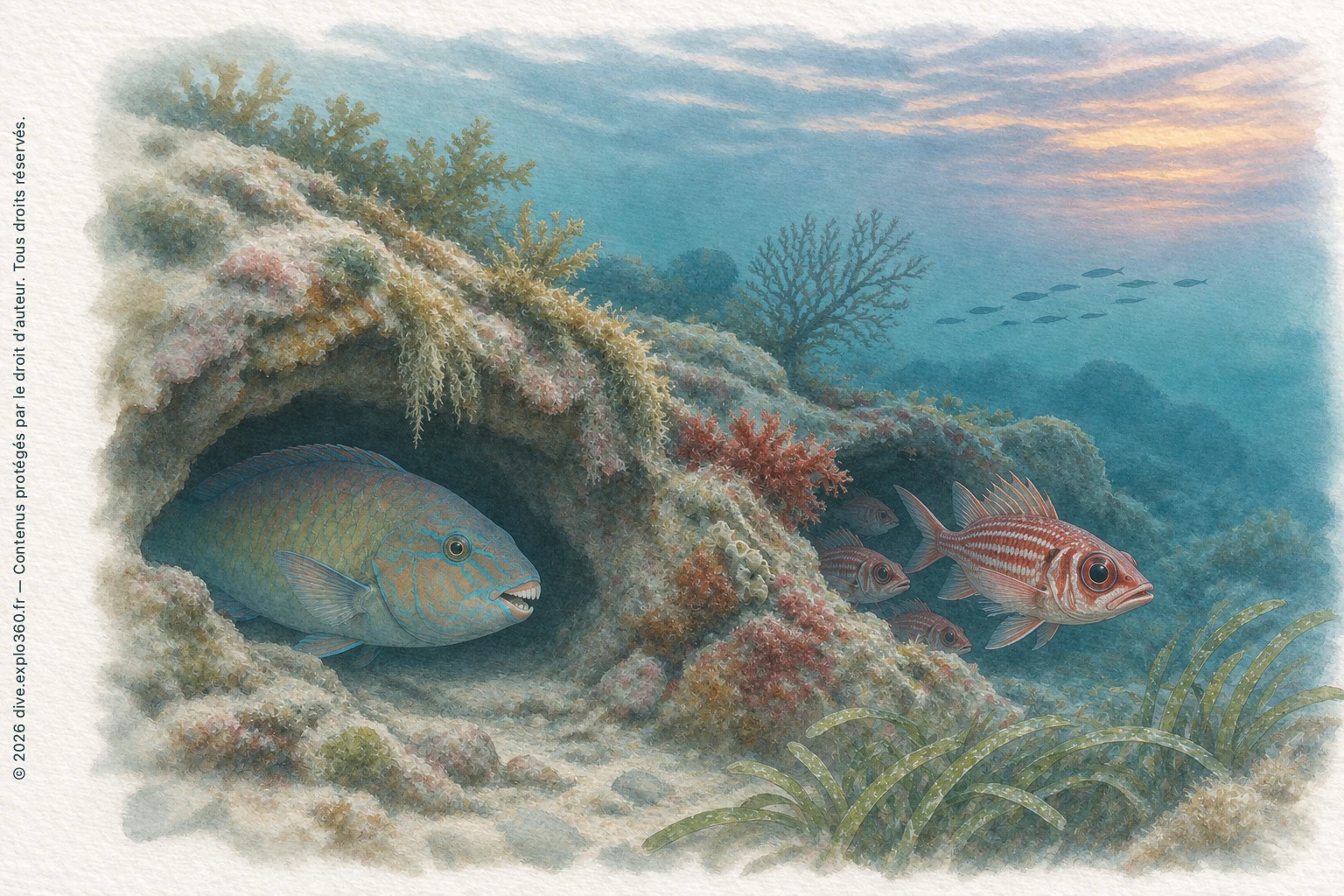
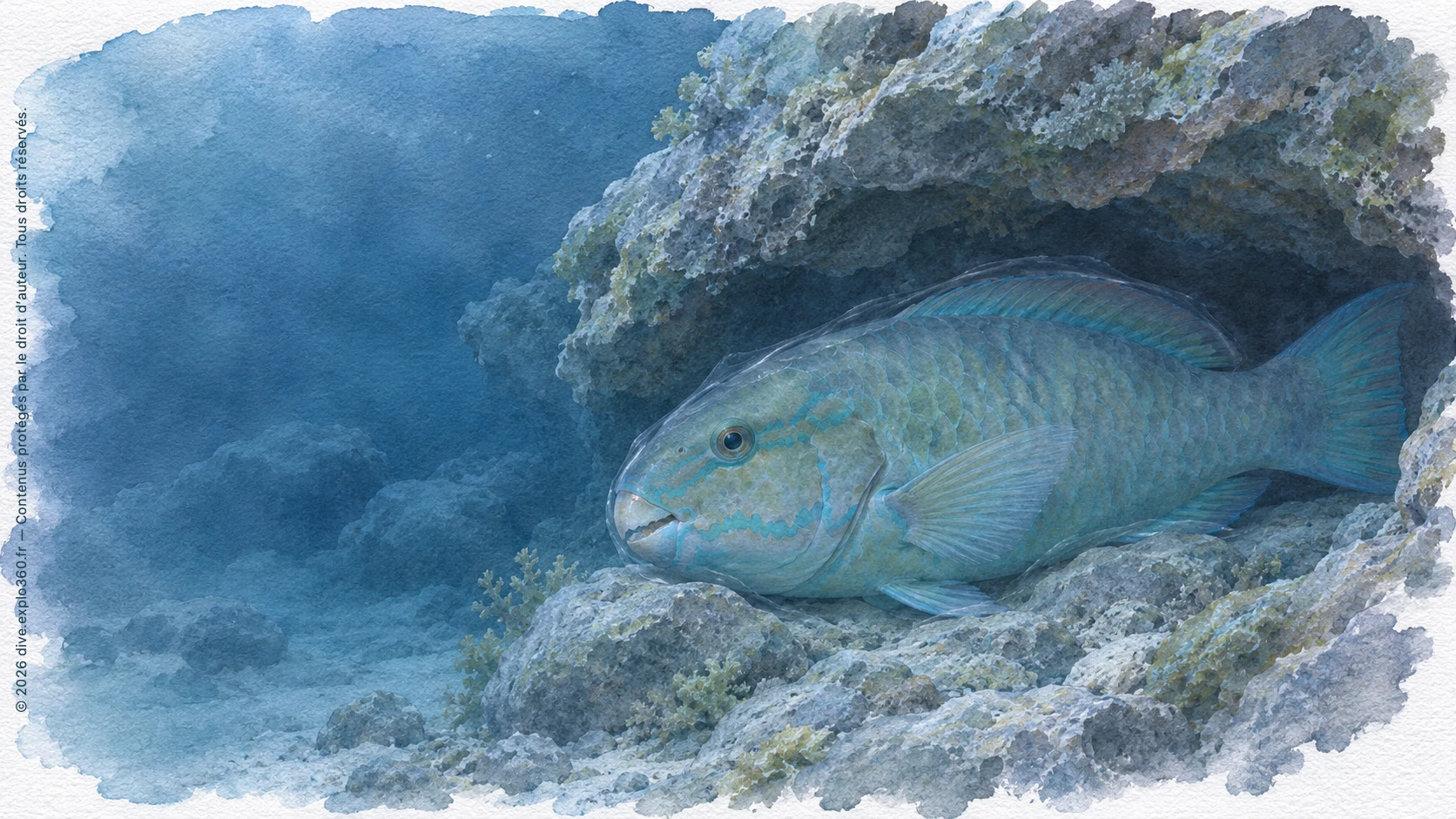
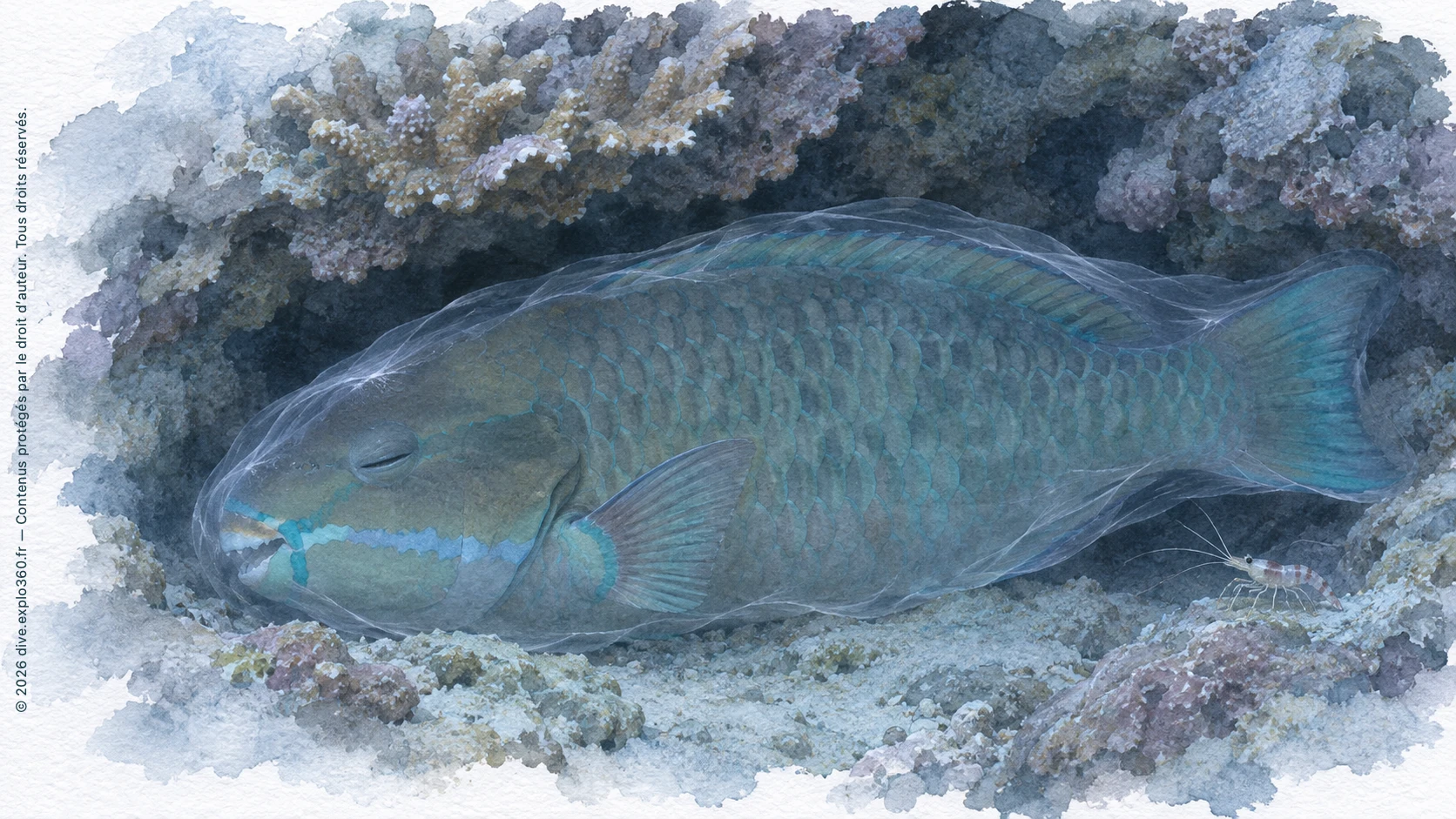
Night falls over the reef. Fish that were active by day begin to disappear from view. Some slip into cracks, while others retreat beneath rocky overhangs. Gradually, a different set of animals takes over the reef. A parrotfish settles in a shelter. It stops grazing on algae and moves less. Then mucus begins to gather around its body. Some parrotfish secrete enough to form a translucent cocoon. It will spend much of the night inside. Why take this unusual precaution? Does it mask the fish’s scent, conceal it from predators, or protect it from a much smaller enemy?
Biologists tested one of those possibilities in the parrotfish Chlorurus sordidus, a species with a well-documented night-time cocoon. The experiment focused on a much smaller threat than sharks or morays: tiny parasitic crustaceans called gnathiids. Gnathiids can feed on a fish’s blood while it rests.
The researchers removed the cocoon from some fish and left the others inside their cocoons. By the next morning, gnathiids had attacked 10% of the fish whose cocoons were intact and 94.4% of those whose cocoons had been removed. The cocoon provided effective protection against these parasites under the conditions studied.
When the researchers removed the cocoon during the night, six fish out of ten made another one. Producing a cocoon takes energy, and the experiment shows what the fish gets in return. But how could we tell whether a parrotfish inside one was asleep?
The puzzle of open eyes
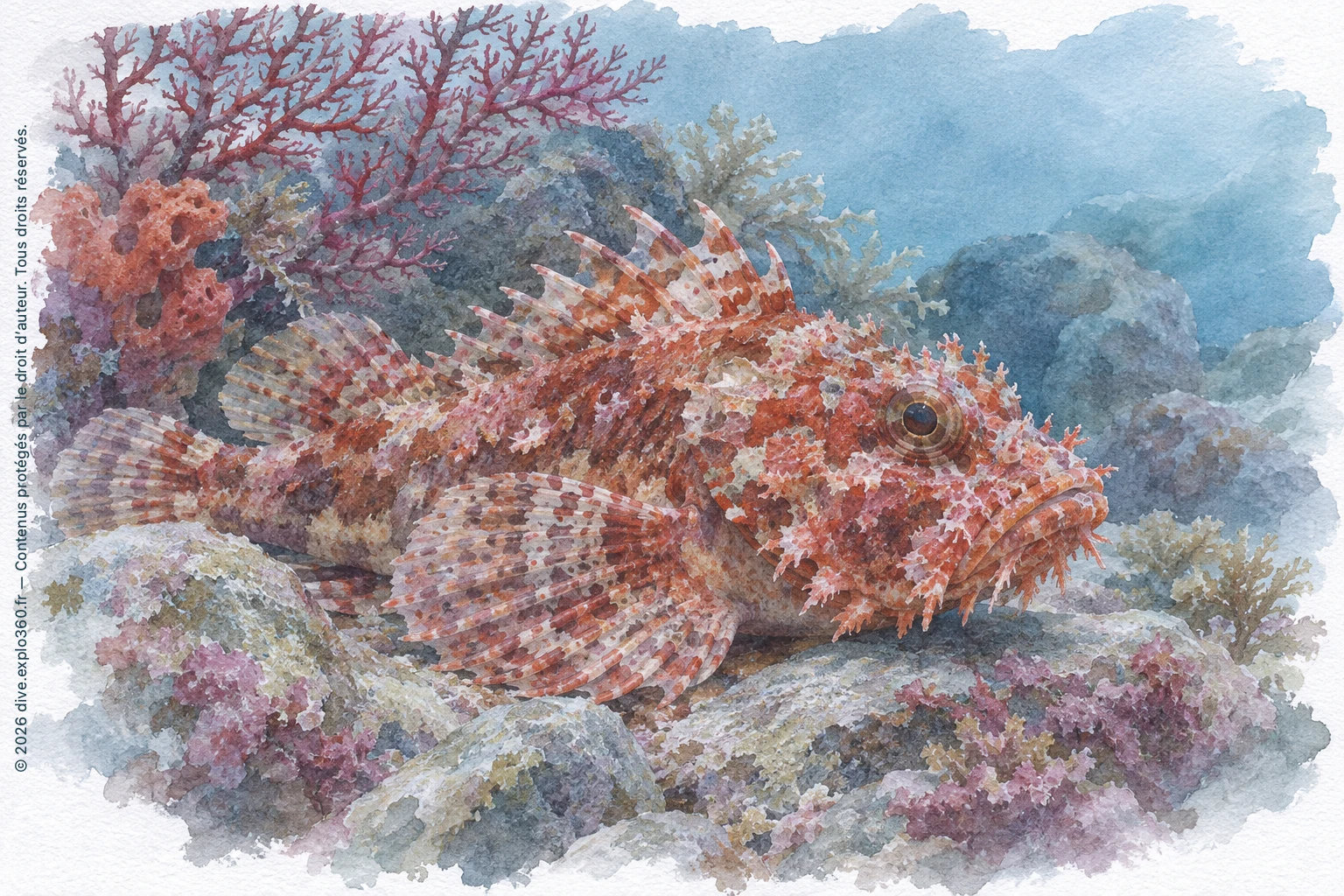
A scorpionfish can remain motionless for long periods as it waits for prey to come within reach of its mouth. A moray can stay almost completely still in a crevice while monitoring its surroundings. Both can be fully alert. Most fish lack movable eyelids like ours, so an open eye is little help in telling a sleeping fish from one in ambush or taking shelter.
Biologists start by looking for a drop in activity. They then test how readily the fish responds.
Researchers also check whether the animal responds less readily to its surroundings. A sleeping fish can still react to a strong enough stimulus, but it generally takes a stronger signal than when it is awake.
Does the zebrafish make up for lost sleep?
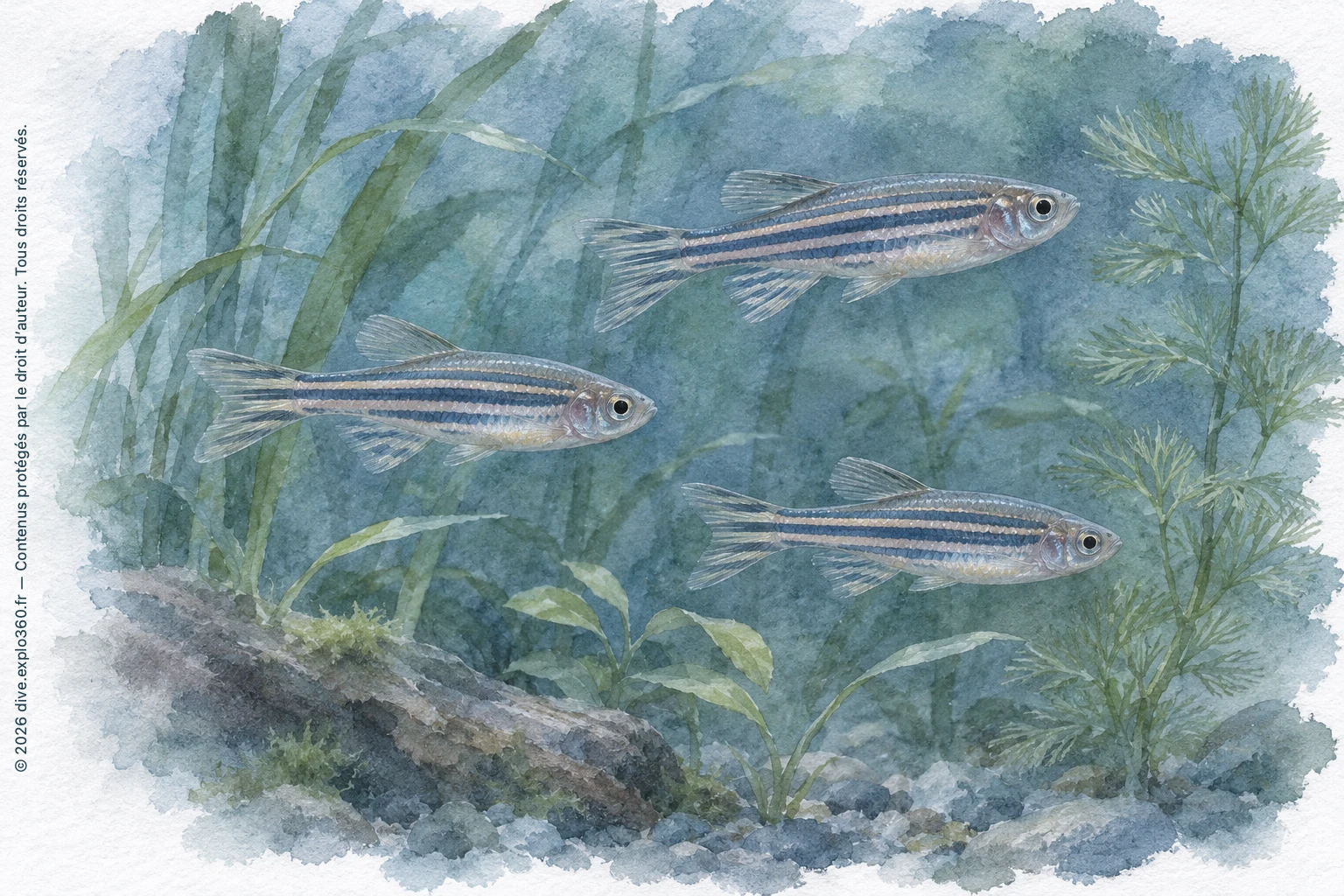
What happens when a fish gets less sleep than usual? Some species make up for part of the lost sleep. This is called sleep rebound. This phenomenon has been observed in zebrafish, Danio rerio.
This small freshwater fish has become a valuable model for studying how the brain works. In the laboratory, researchers can track its movements for several days and measure its reactions to different stimuli.
After some forms of experimental sleep deprivation, zebrafish slept more once they could rest again. How much they slept depended on how their rest had been interrupted and on the conditions during recovery. That rebound suggests an internal process tracks the need for sleep. To see what happened during sleep itself, researchers turned to the brain.
The night the brain gave up its secret
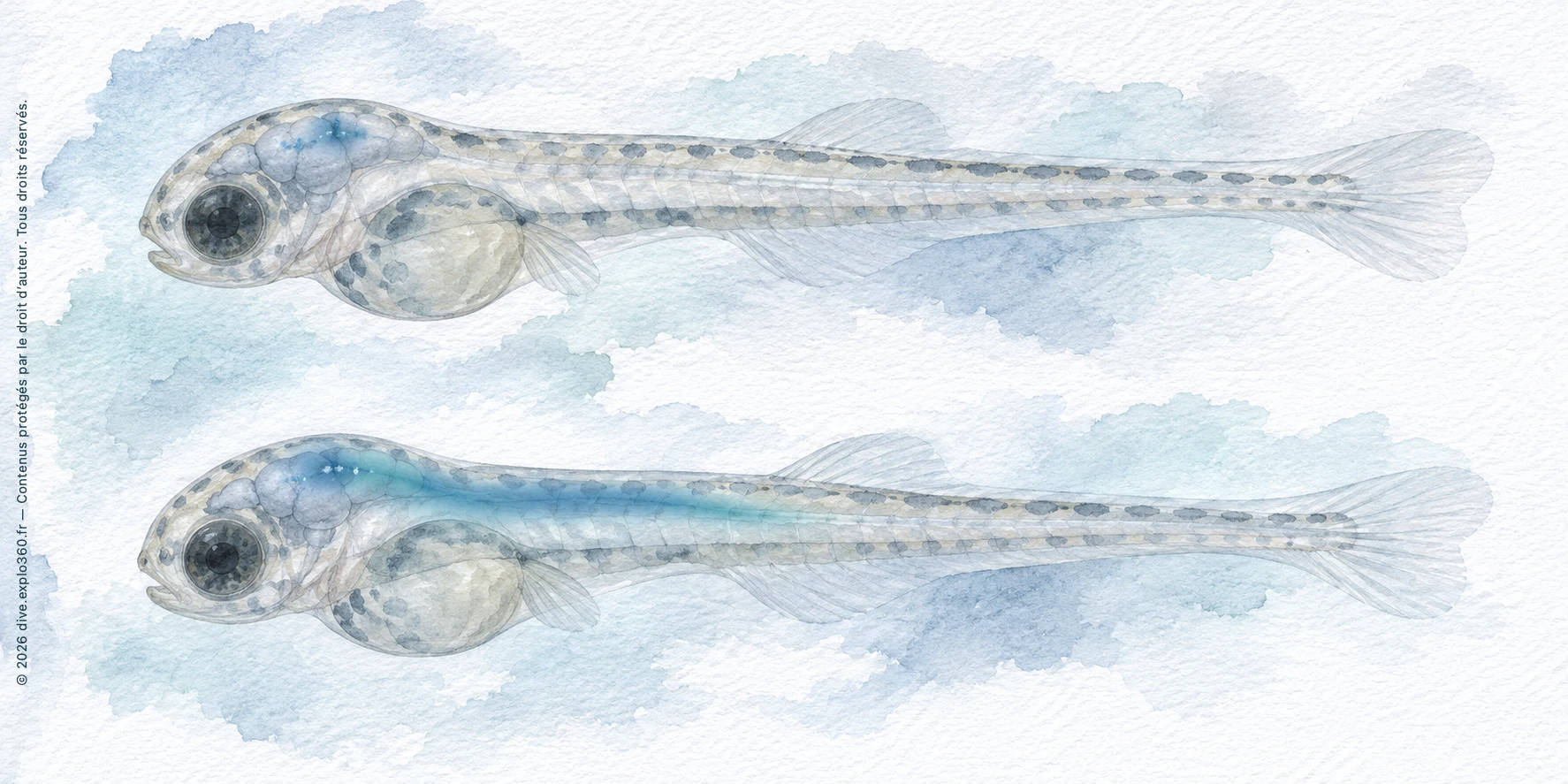
In 2019, researchers reported in Nature the results of an experiment on zebrafish sleep. Using imaging techniques, they tracked the activity of many nerve cells during rest periods. They also recorded eye movements, muscle activity and heart rhythm. In young zebrafish, the recordings revealed two distinct sleep states.
The researchers distinguished two patterns of neural activity. In one, bursts of activity recurred slowly. In the other, waves of activity spread through the nervous system. These states shared some features with slow-wave sleep and REM sleep in mammals.
The parallels are partial. Even so, the discovery of distinct neural sleep states in fish and mammals, whose lineages diverged hundreds of millions of years ago, suggests that some features of sleep may go back to their common ancestors. Finding sleep in a still fish is one thing. How might researchers recognise it in a fish that seems unable to stop swimming?