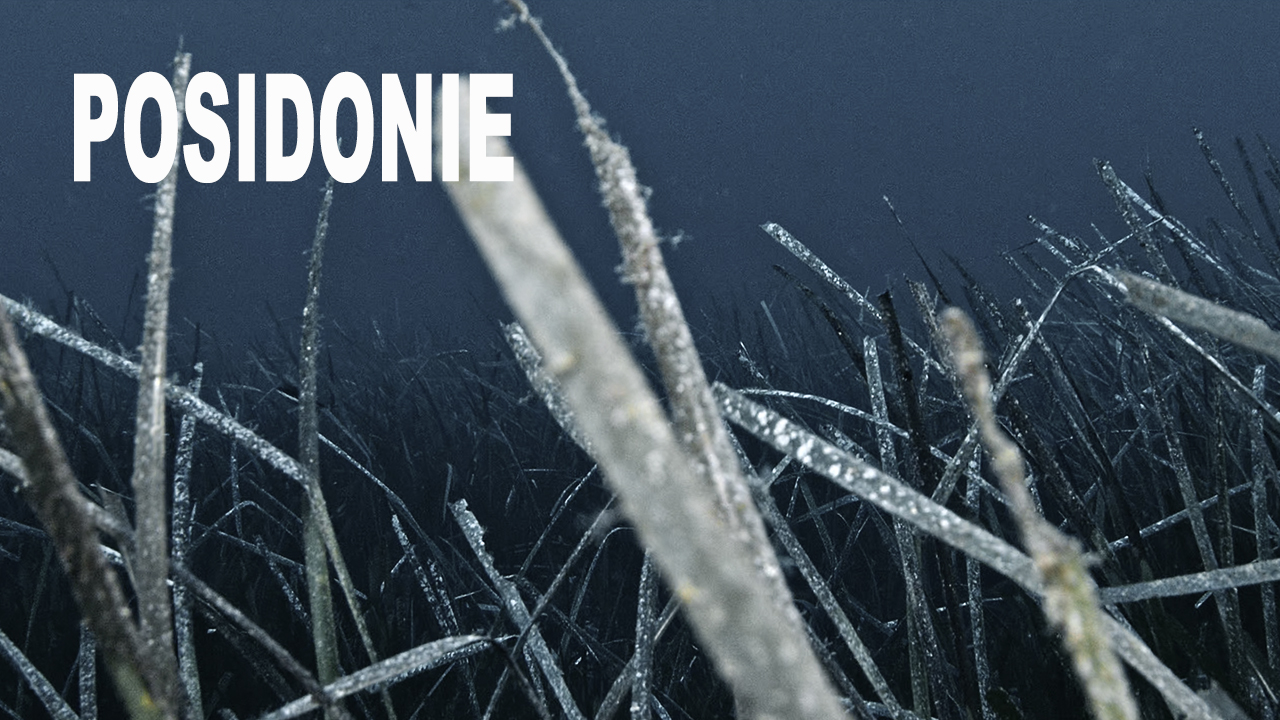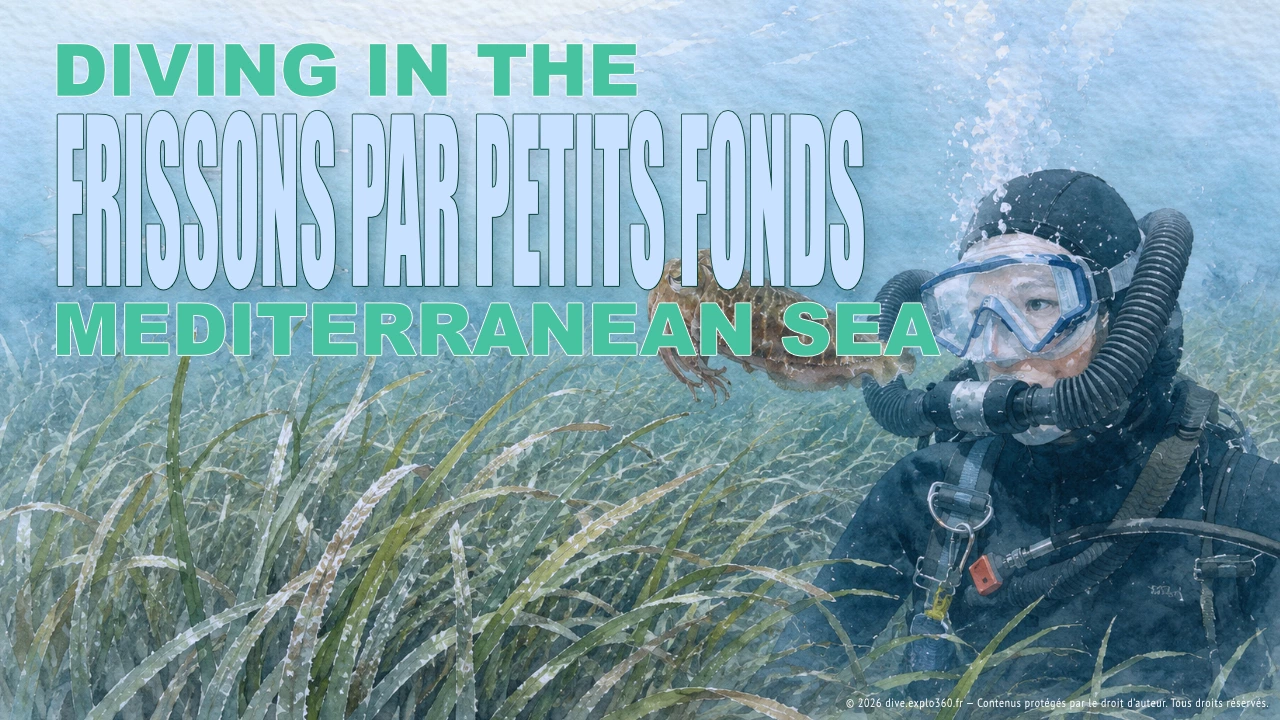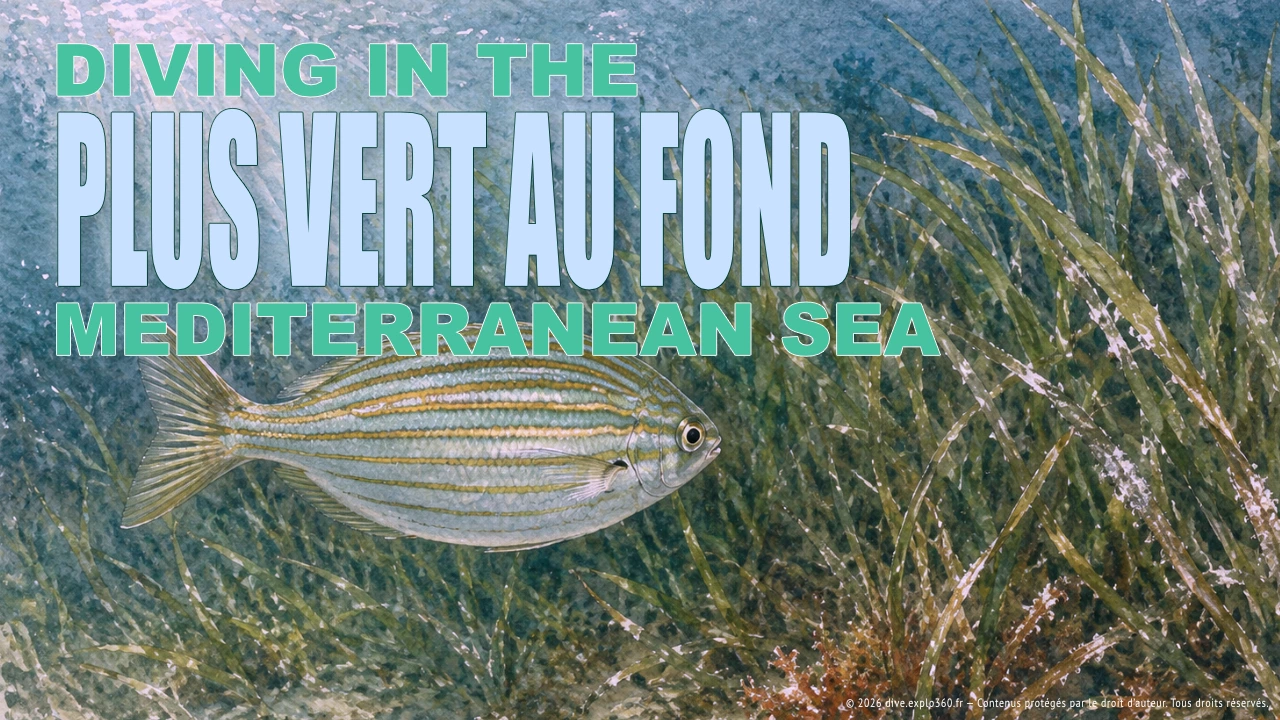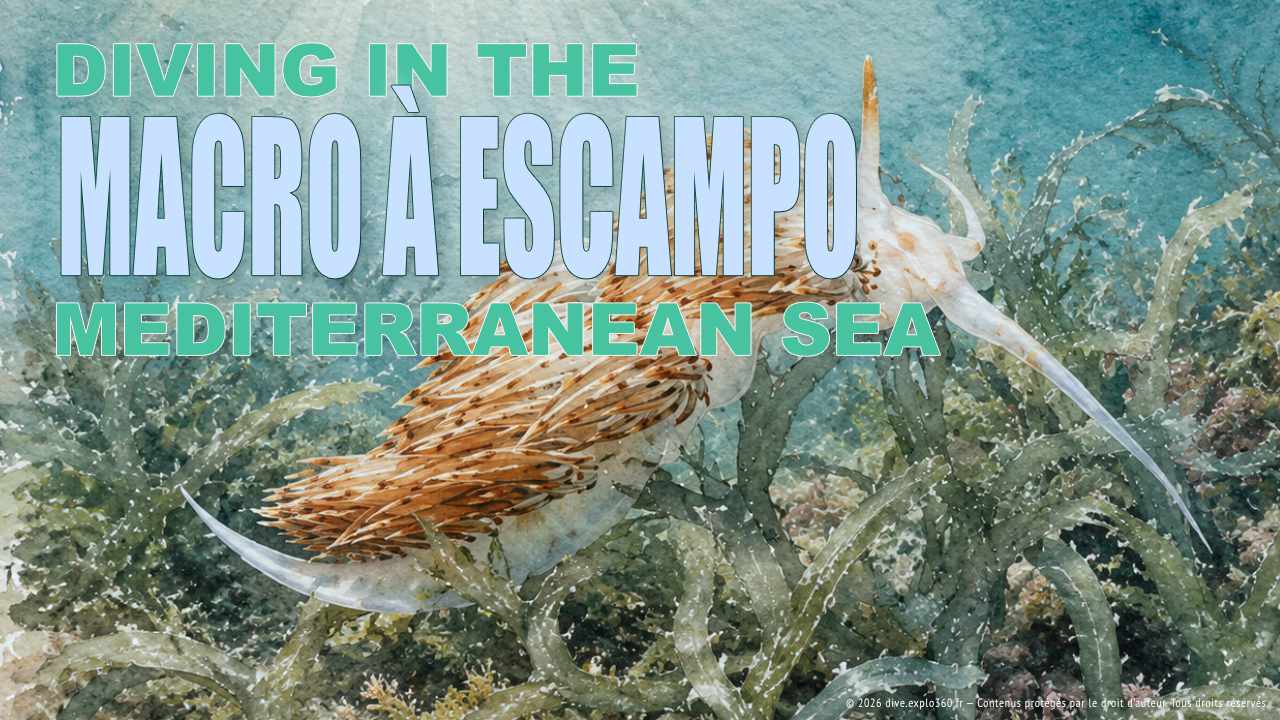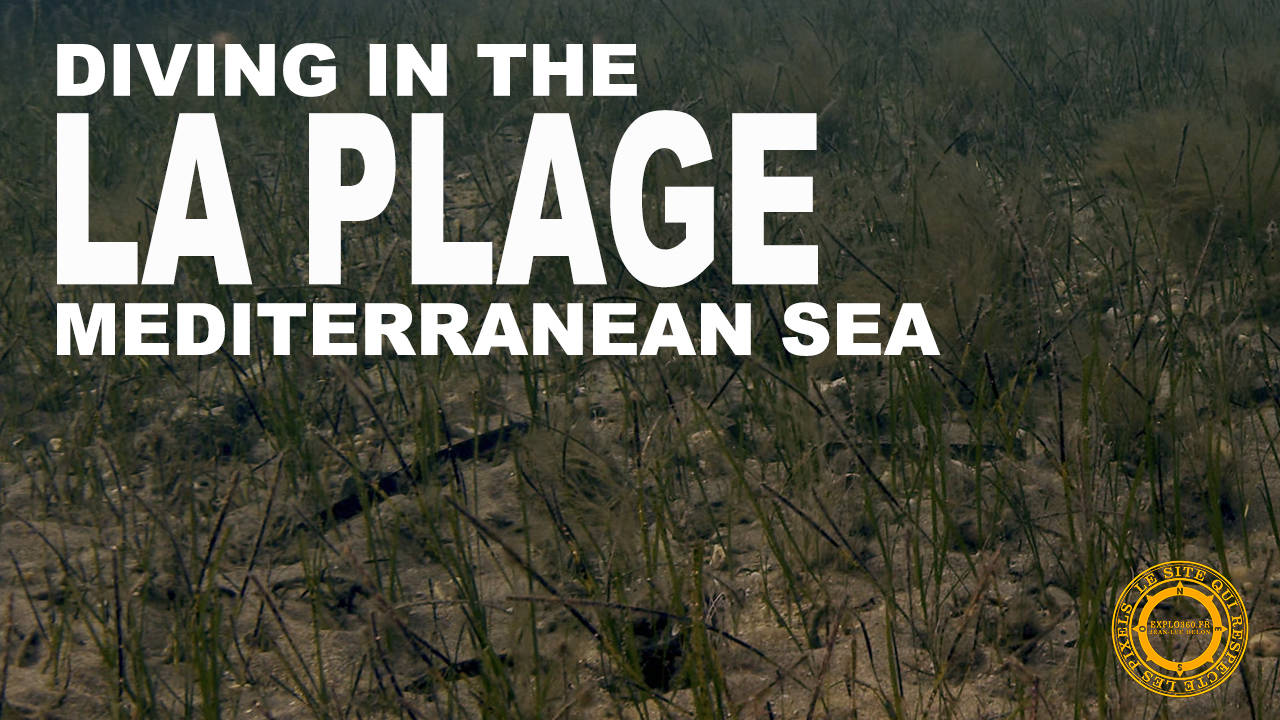

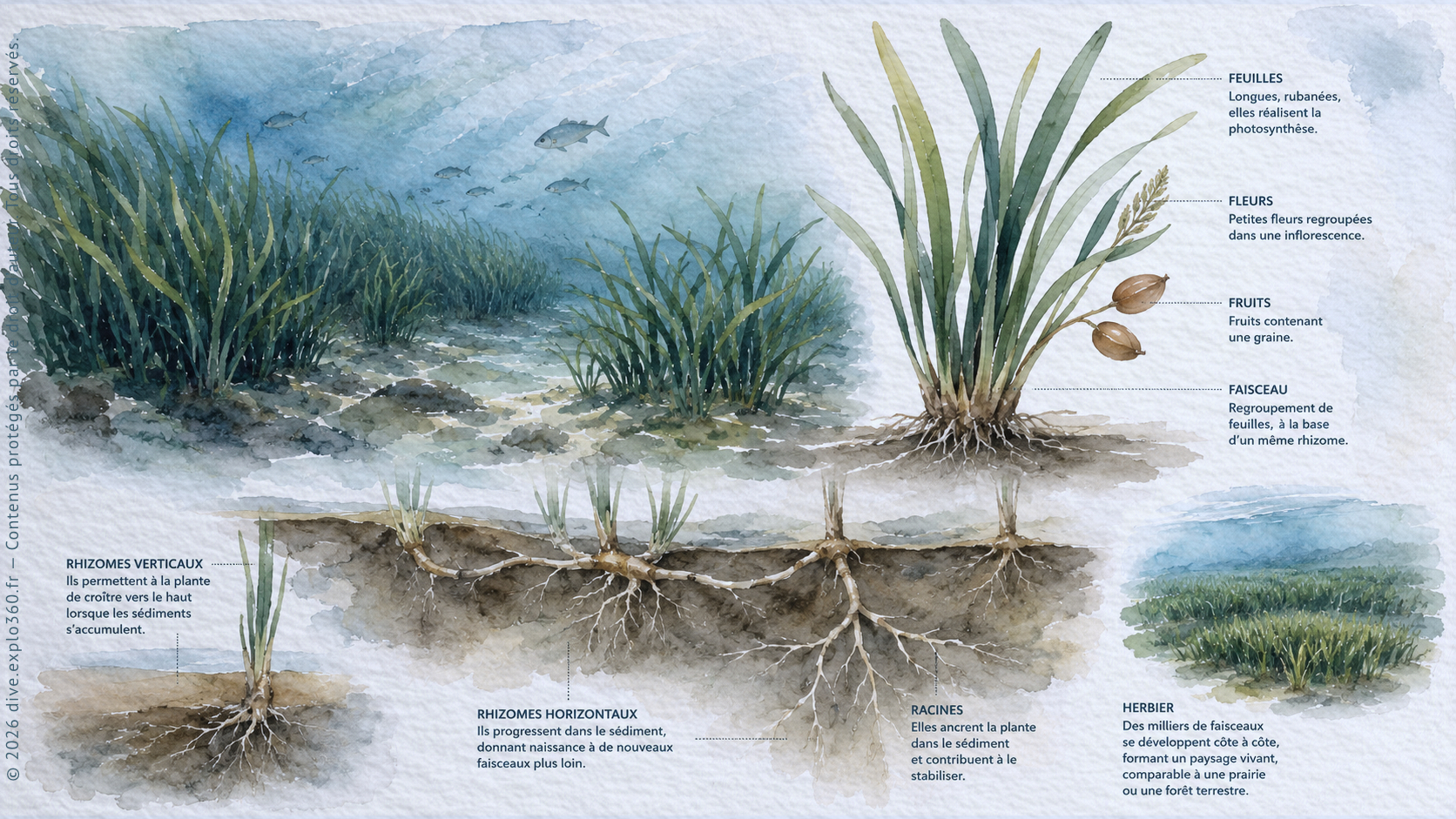
It has roots, rhizomes, leaves, flowers and fruits.
Its leaves are grouped into shoots. Beneath the seabed, rhizomes allow the plant to spread.
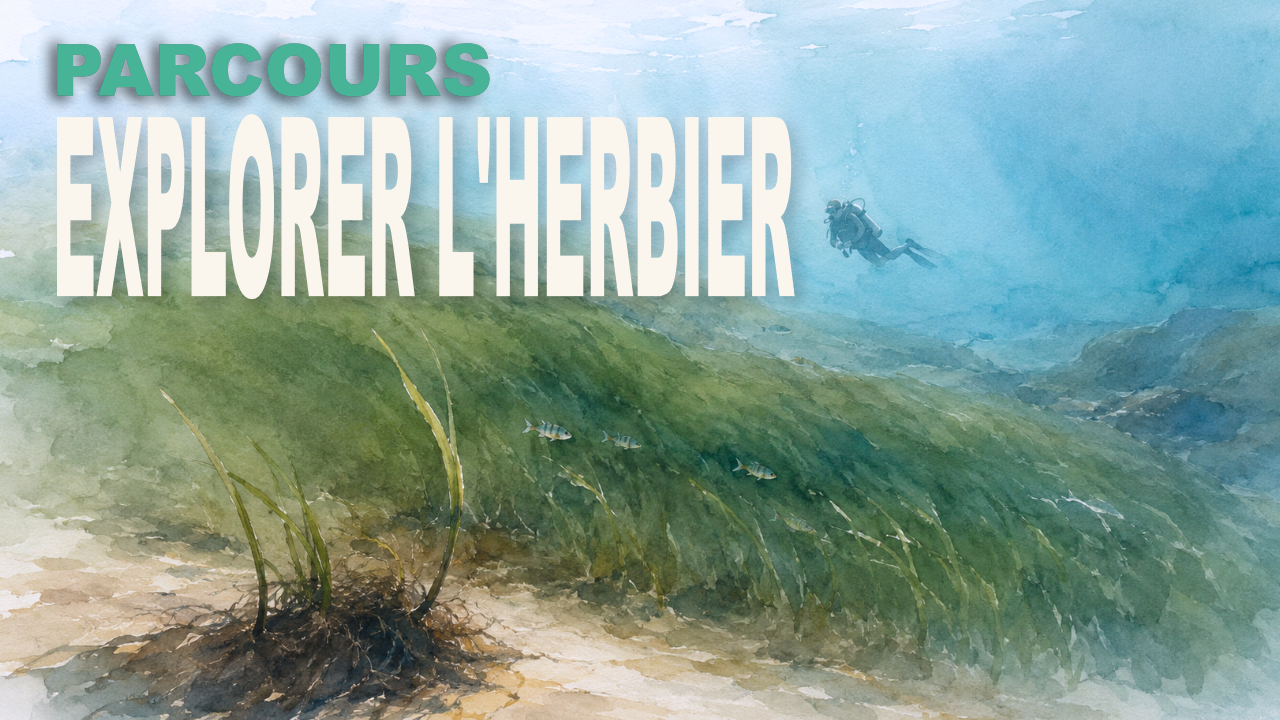
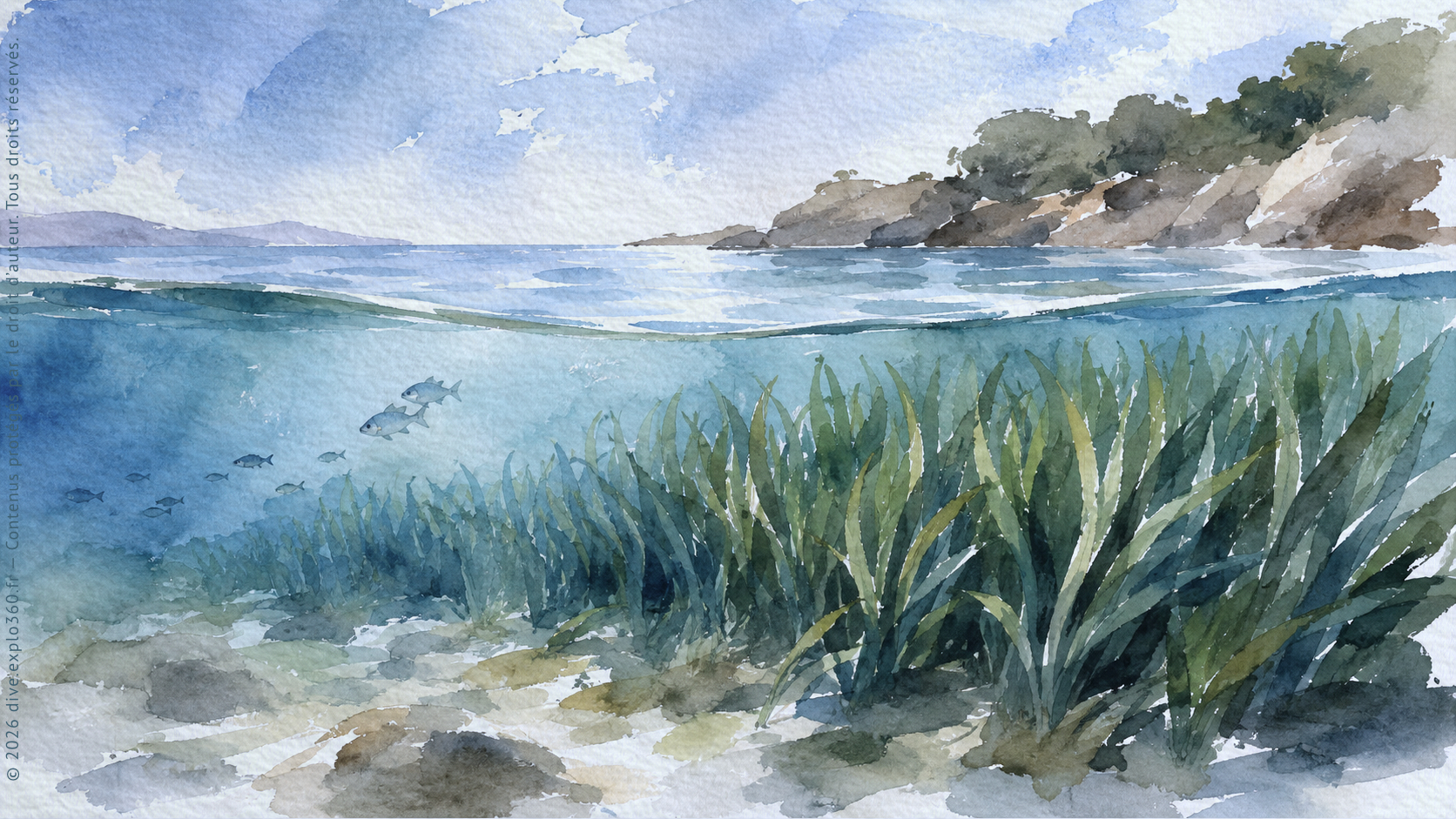
When thousands of shoots grow side by side, they form a meadow.
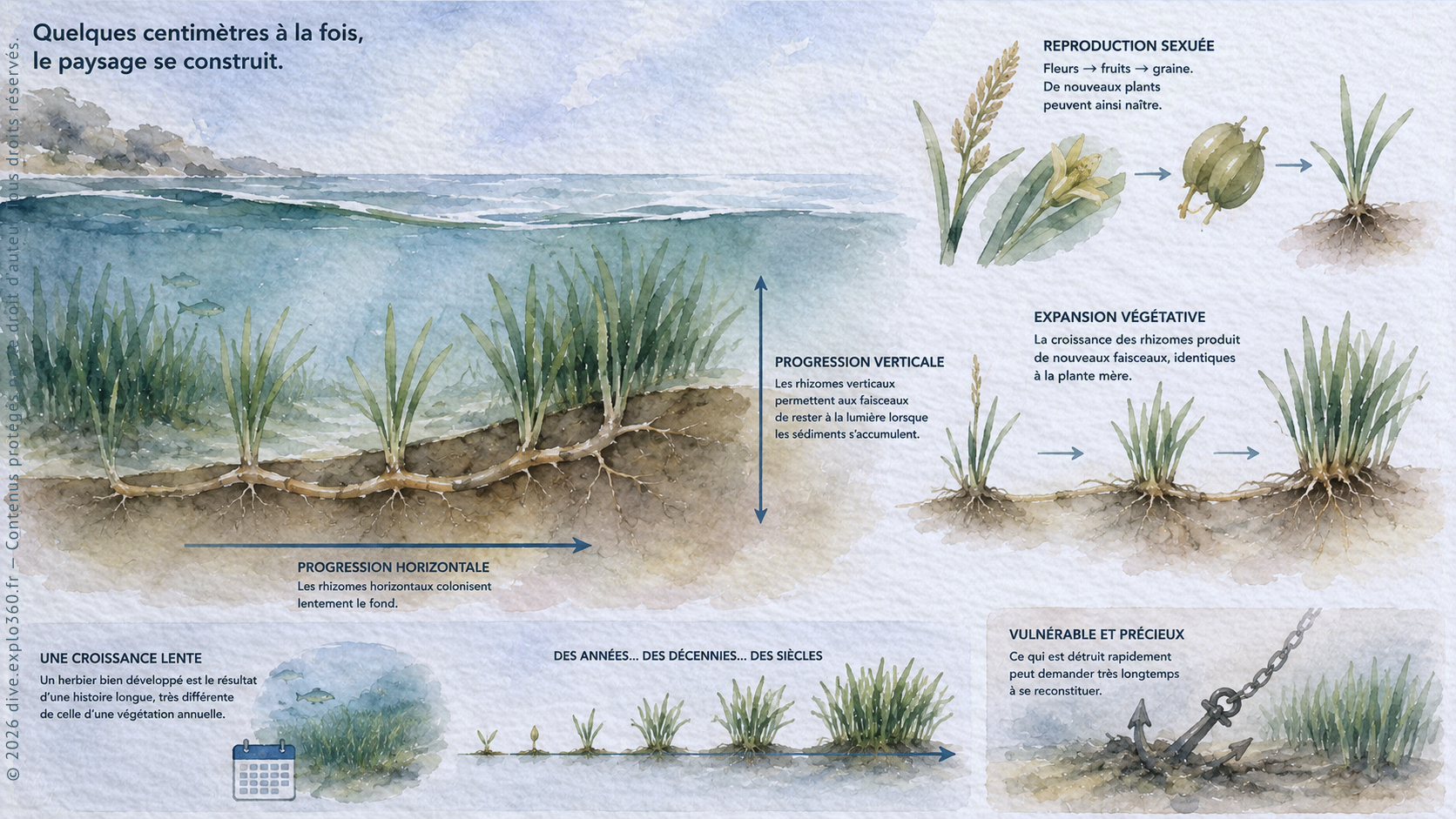
It can also spread through its rhizomes.
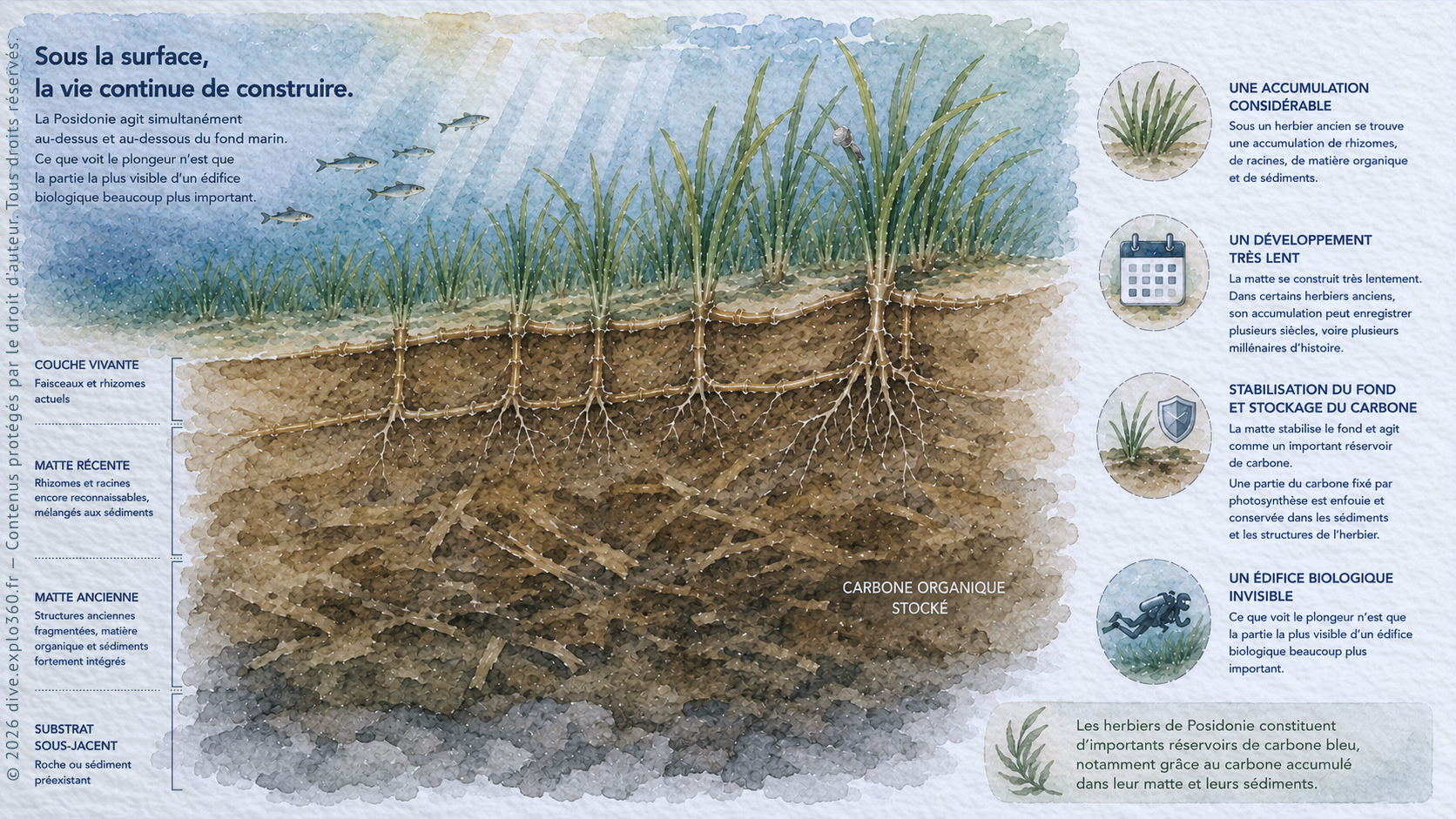
Horizontal rhizomes allow the plant to cover new ground. Vertical rhizomes let it keep growing as sediment accumulates.
This growth is very slow. A meadow may therefore be the result of decades or centuries of development.
Damage caused quickly may thus take a very long time to repair naturally.
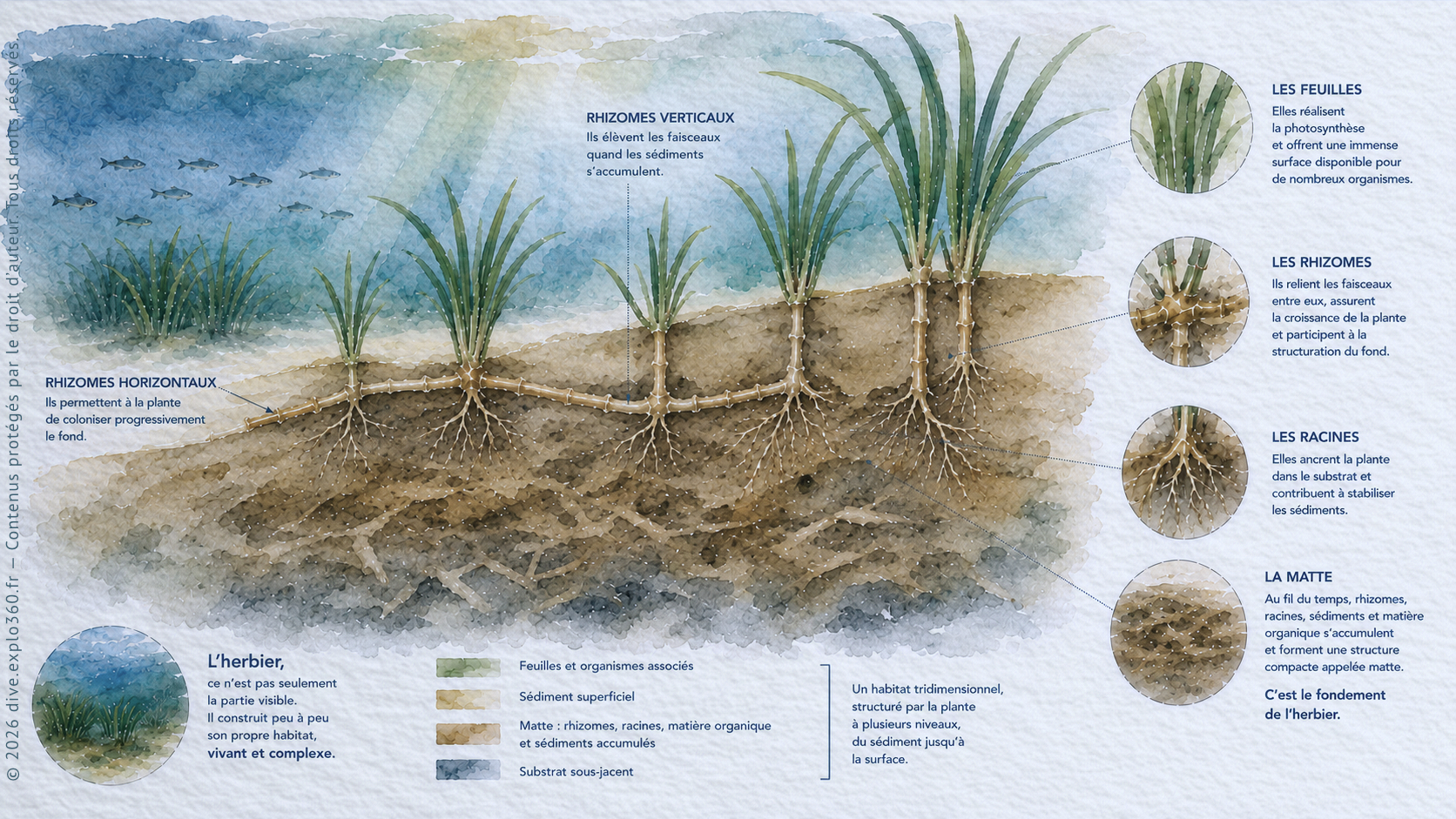
The leaves carry out photosynthesis and support many small organisms.
The rhizomes connect the shoots and allow the plant to grow.
The roots anchor the plant and stabilise the seabed.
Beneath the meadow, the accumulation of rhizomes, roots, sediment and organic matter forms a structure called the matte.
It consists of rhizomes, roots, organic matter and sediment that have accumulated over time.
It stabilises the seabed and can also store carbon for long periods.
A large part of the meadow therefore lies below what a diver can directly see.
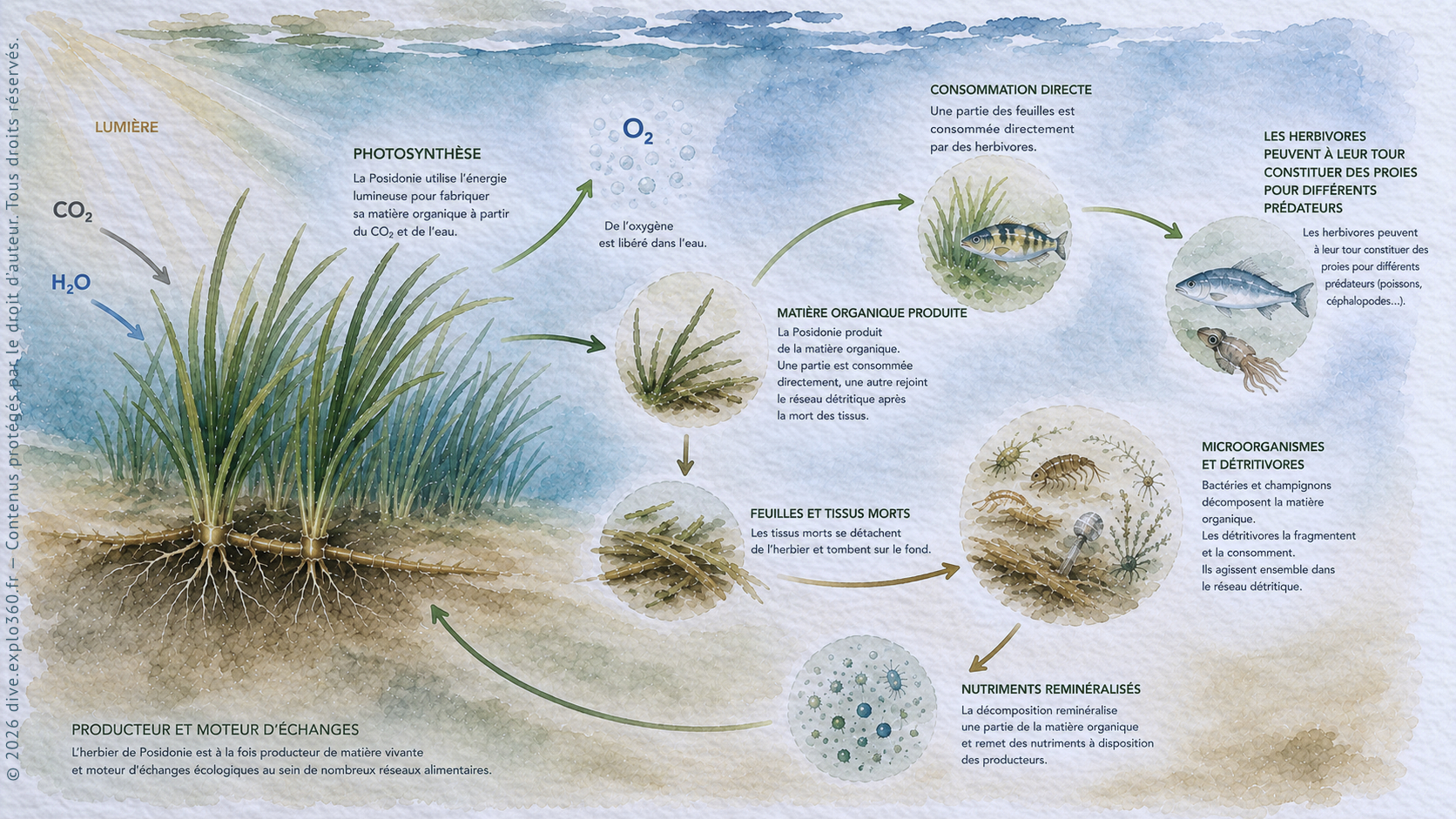
Using light, it makes organic matter from carbon dioxide and water, among other things. It also releases oxygen.
This matter can then feed other organisms.
When a leaf dies, it can also break down and provide food for many small organisms.
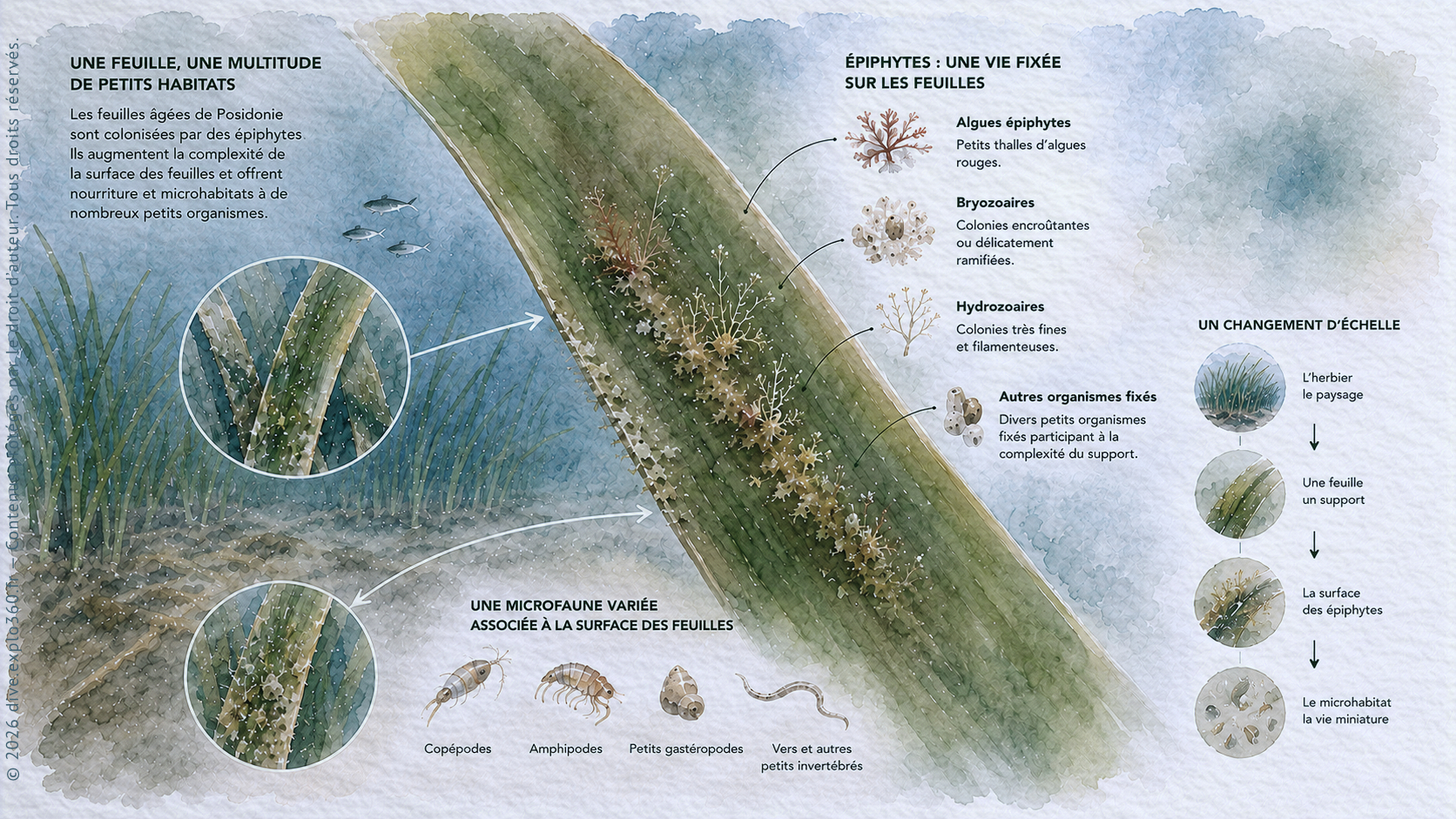
Some are called epiphytes: algae, bryozoans, hydrozoans and other attached organisms.
They in turn attract small animals.
A single leaf can therefore support a whole little world.
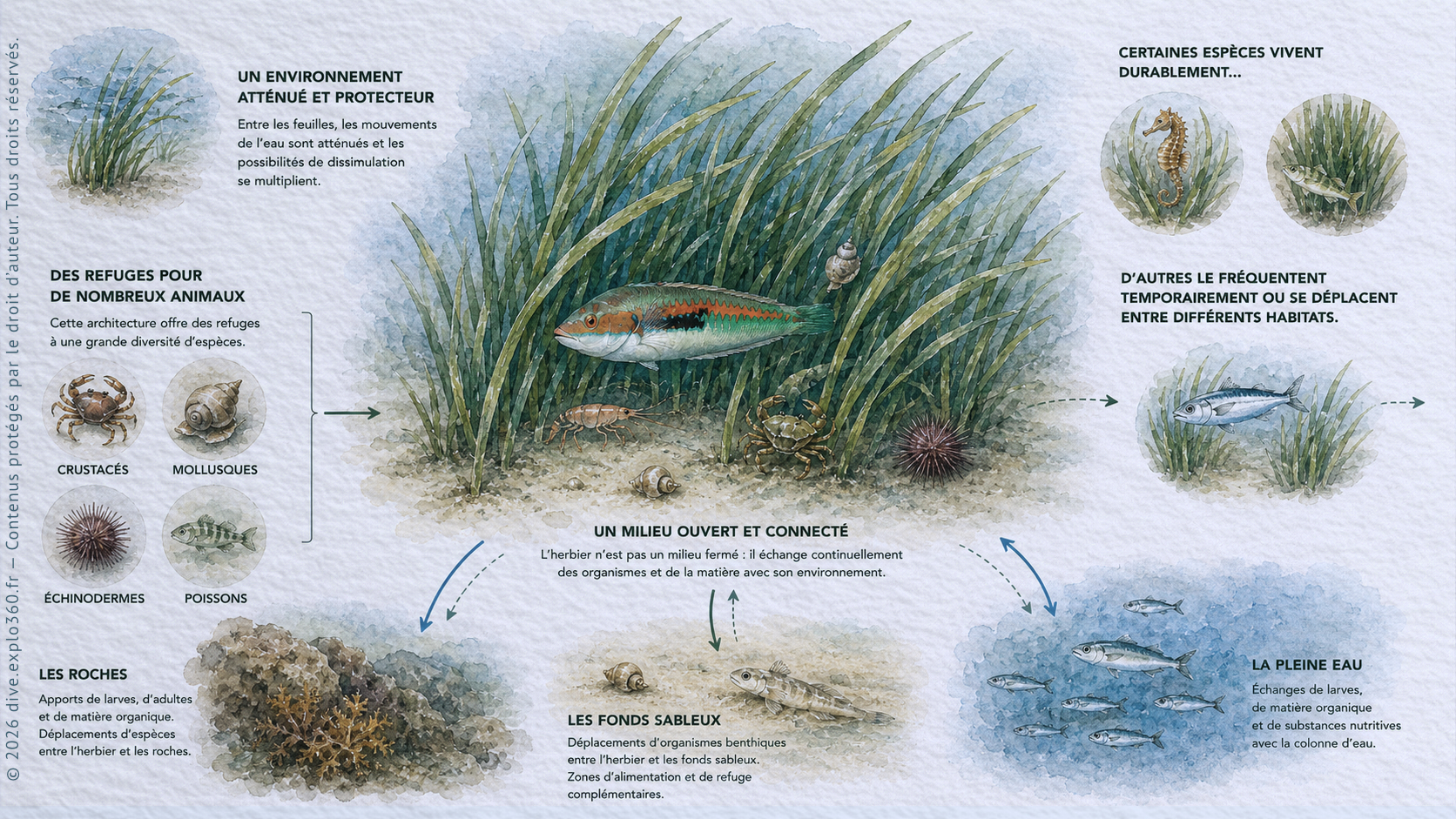
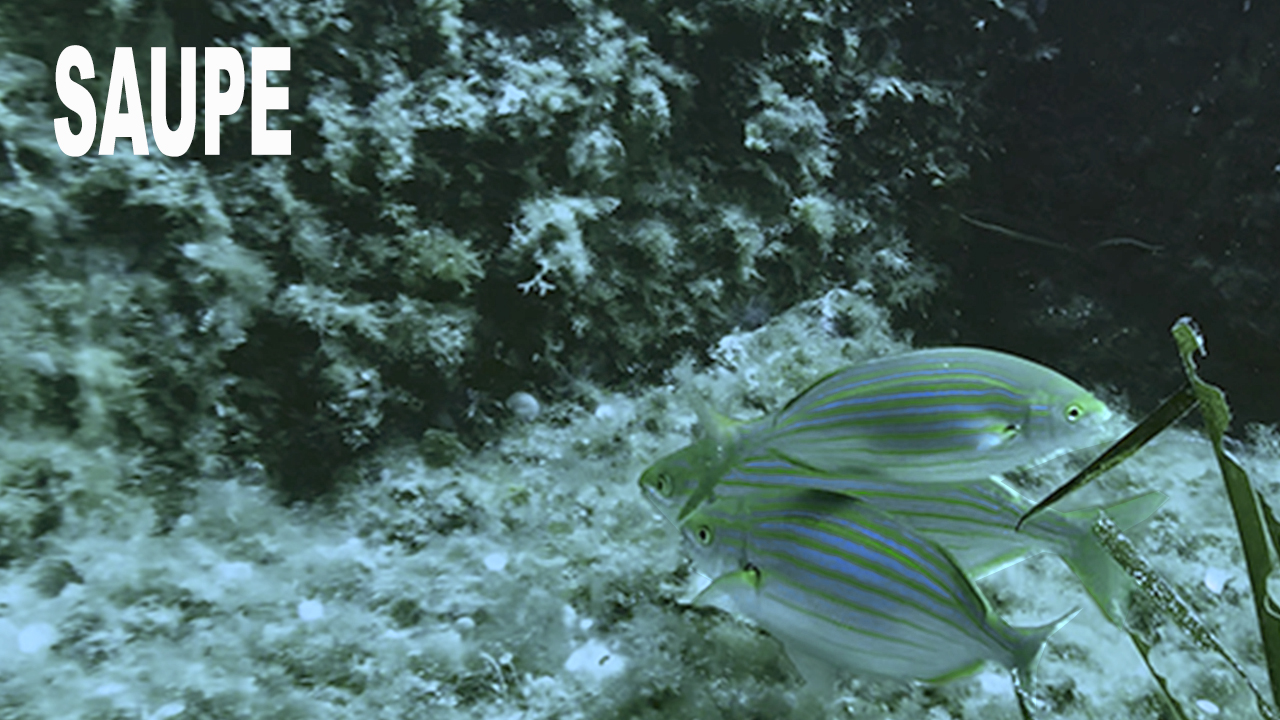
Fish, crustaceans, molluscs and echinoderms may come to shelter, feed or hunt there.
Some live there; others simply pass through.
The meadow remains connected to rocks, sandy seabeds and open water.
AMIGANSEAU CONTENT
The rest of this article is for subscribers
Log in with your AMIGANSEAU licence to continue reading.
All active AMIGANSEAU licences give access to the full article.Explore the same world