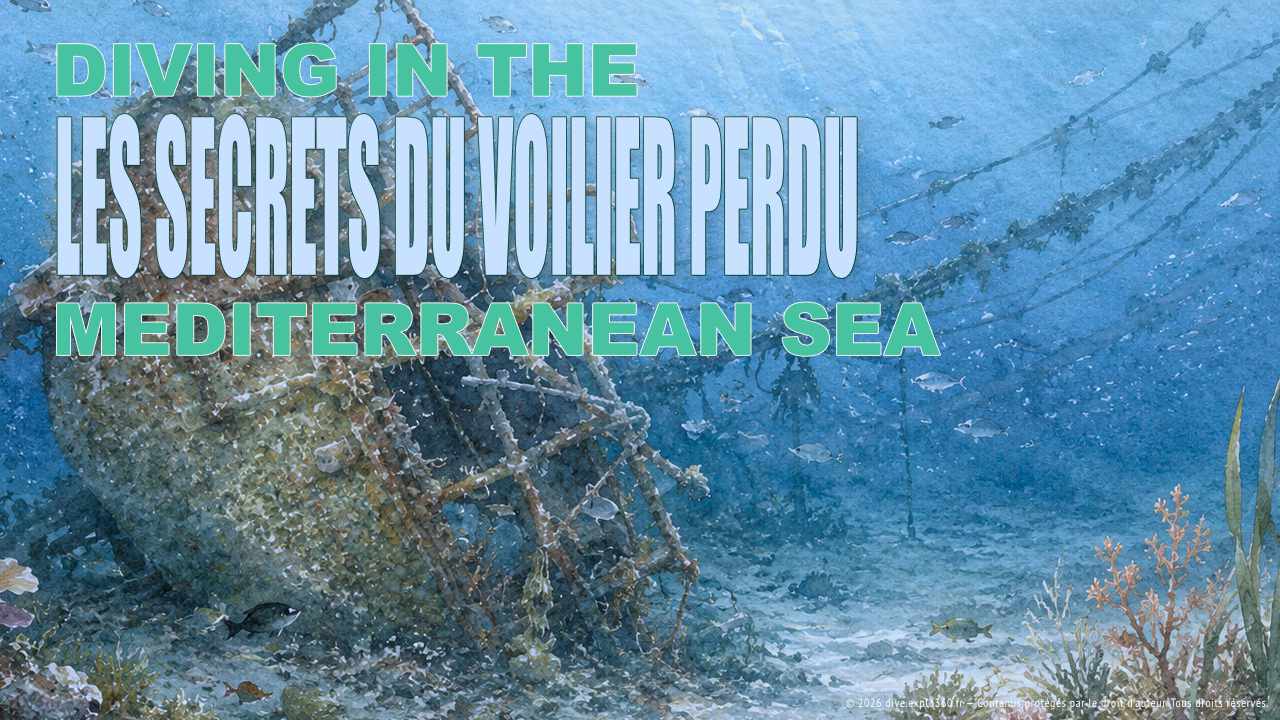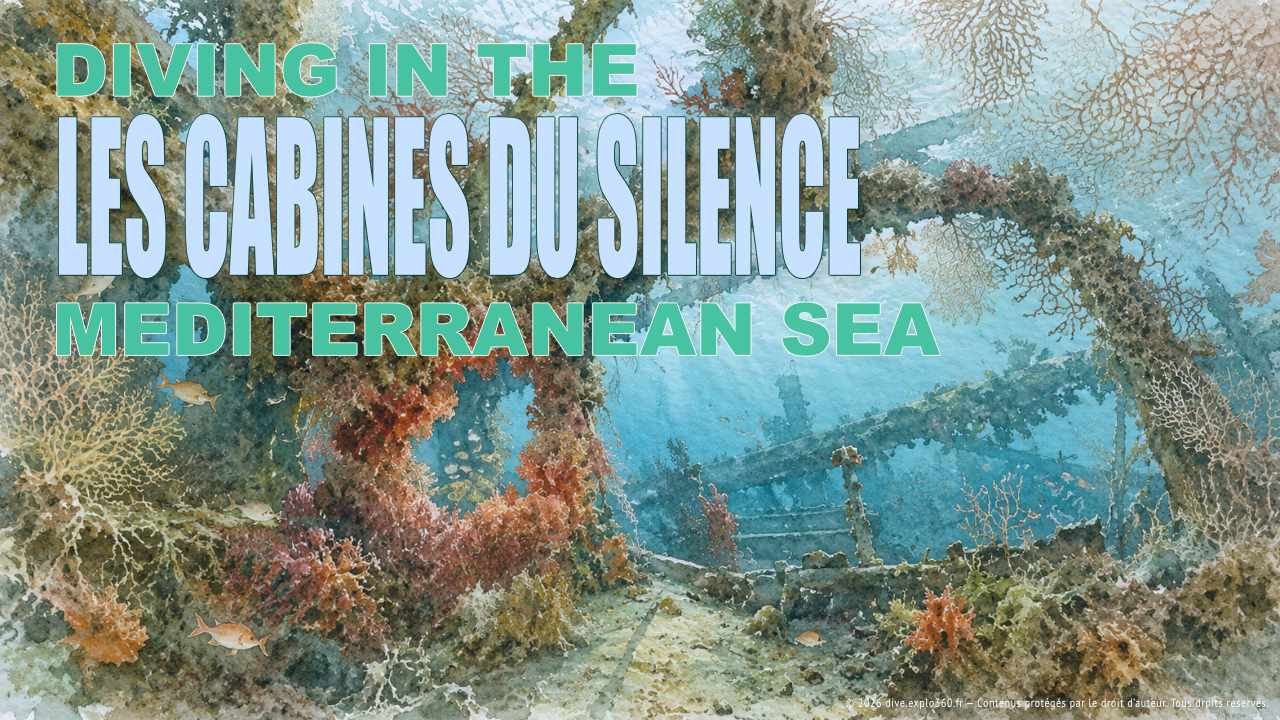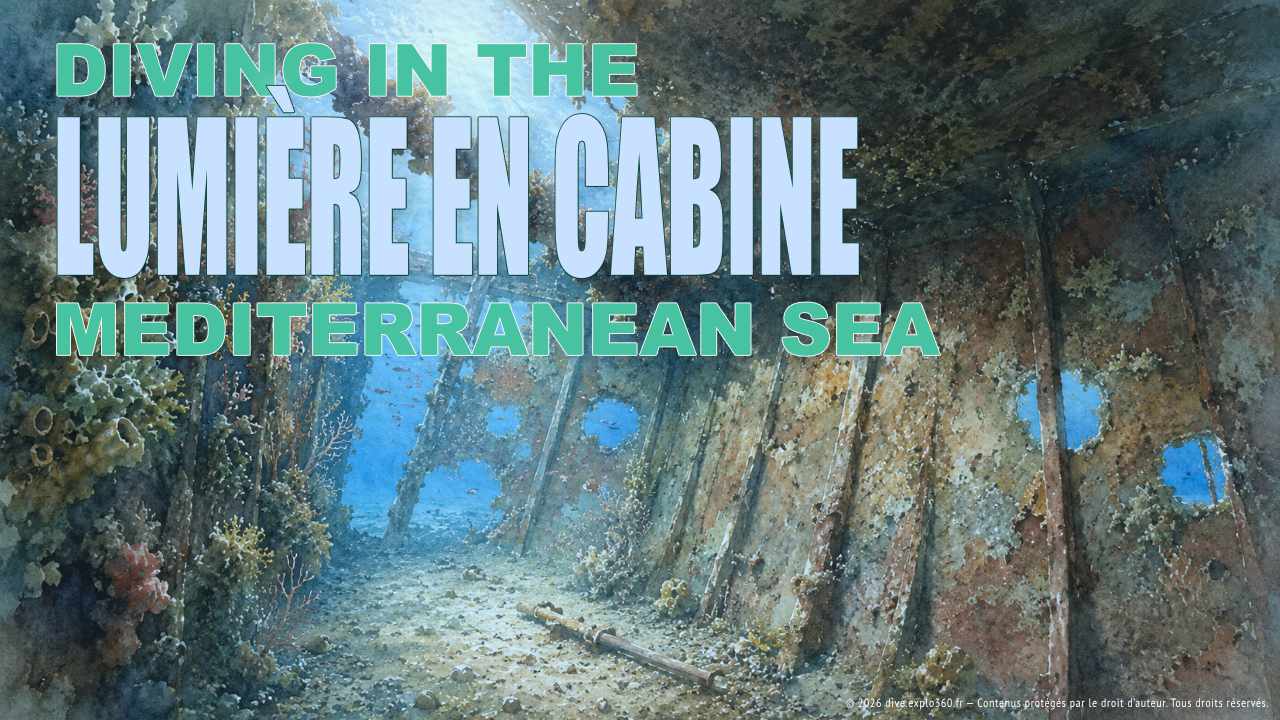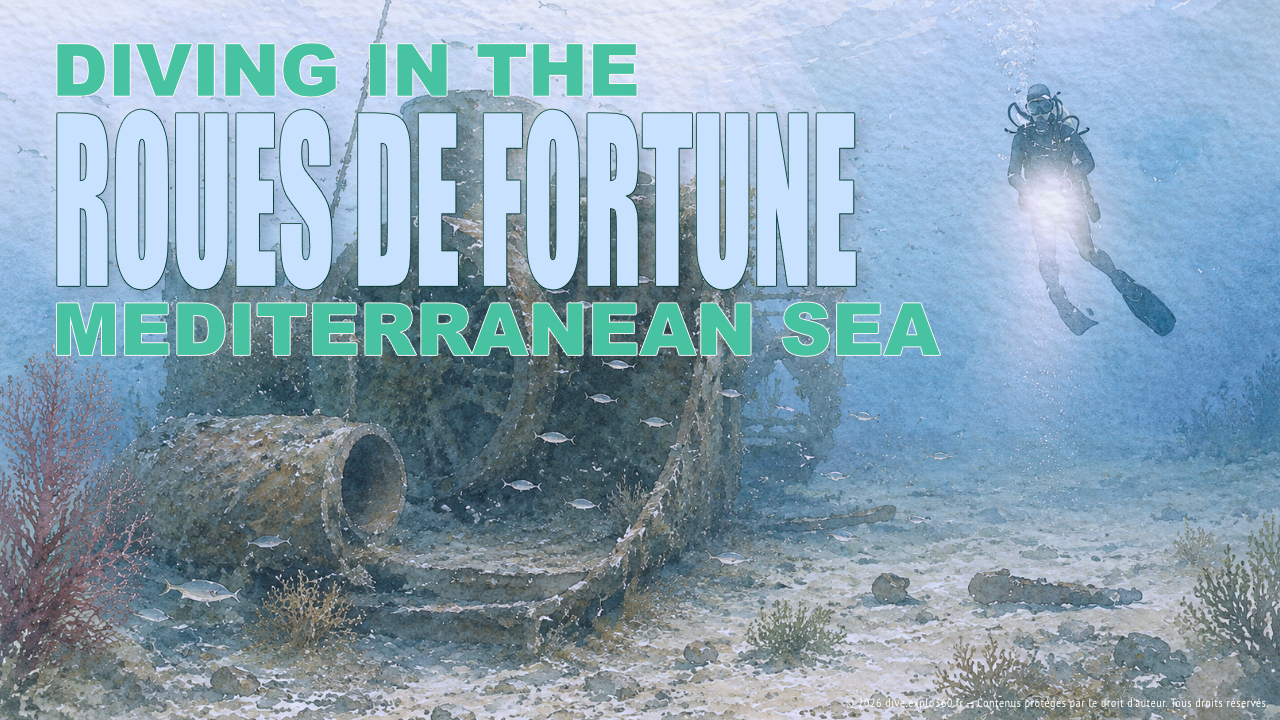

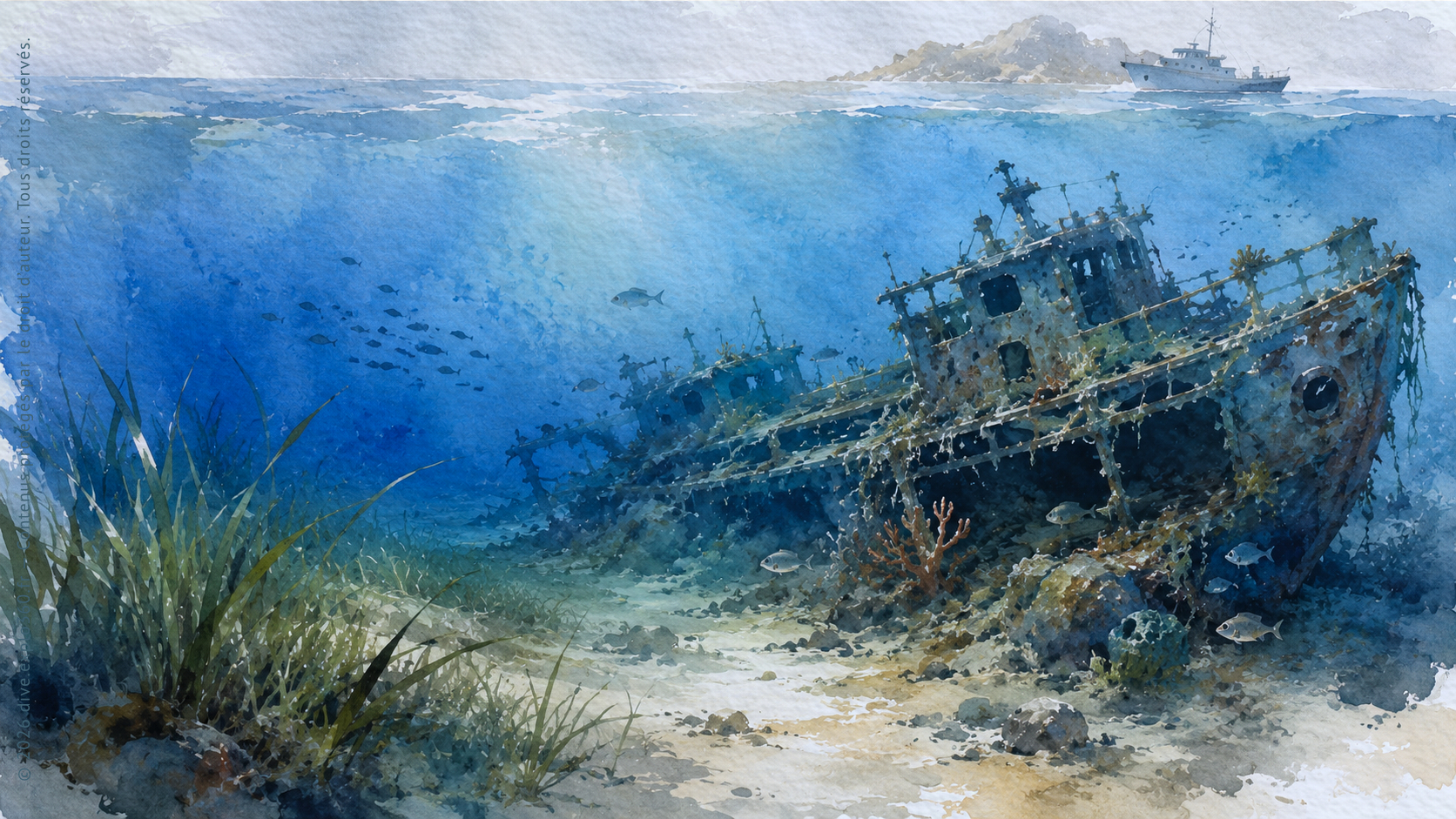
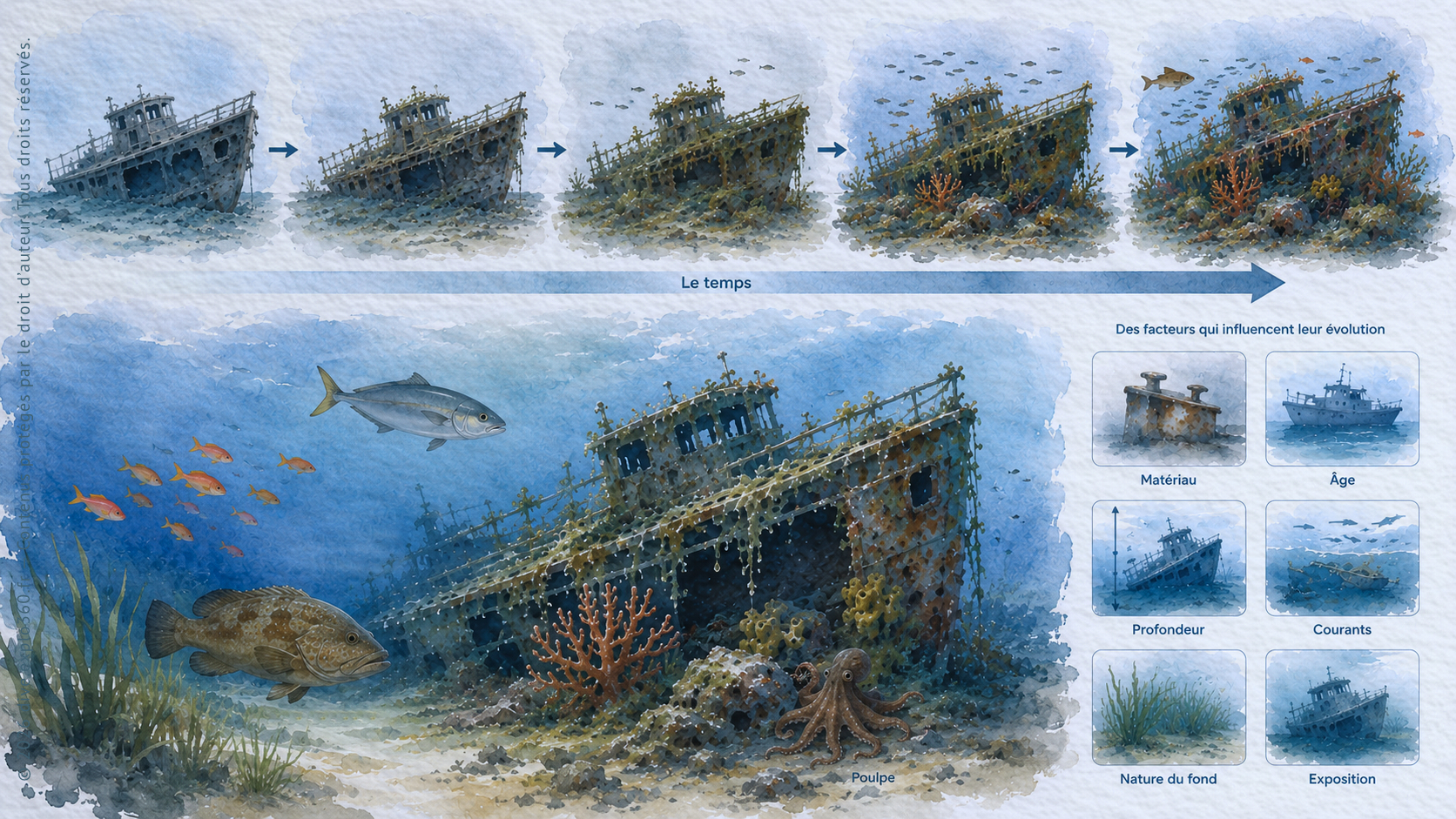
Soon after sinking, microorganisms begin to colonise the surfaces. Microalgae and various attached organisms then appear.
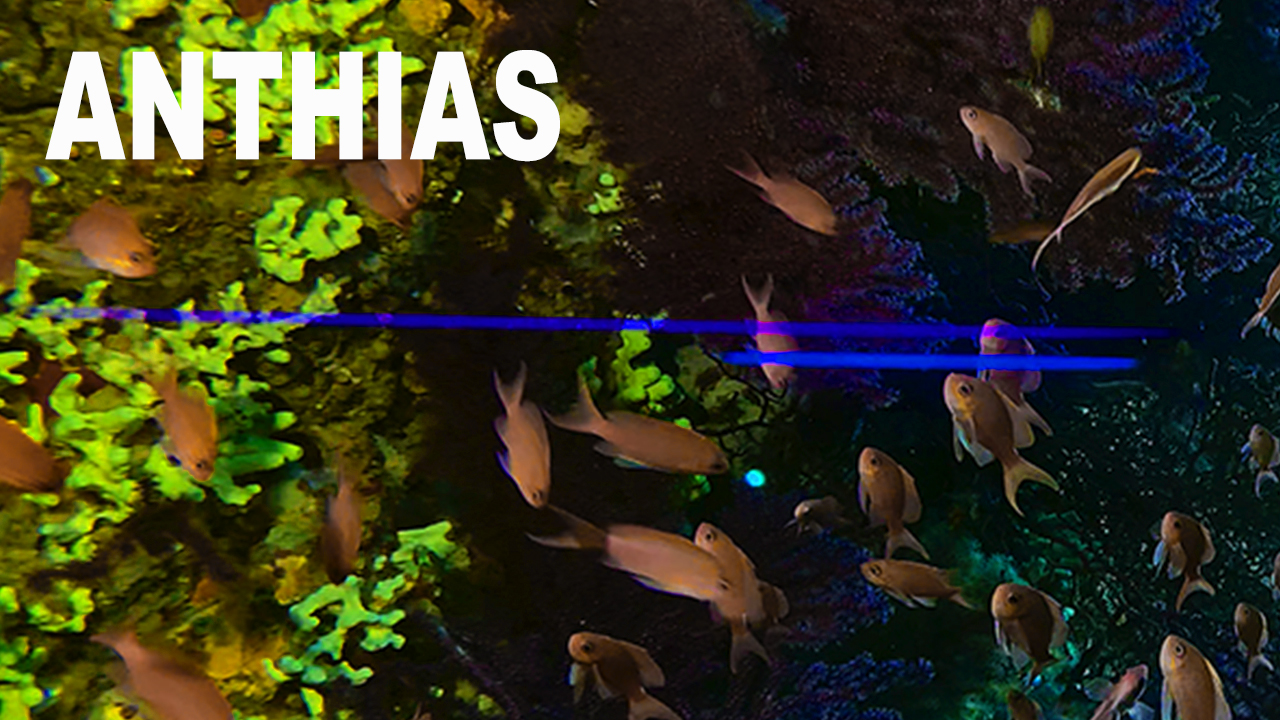
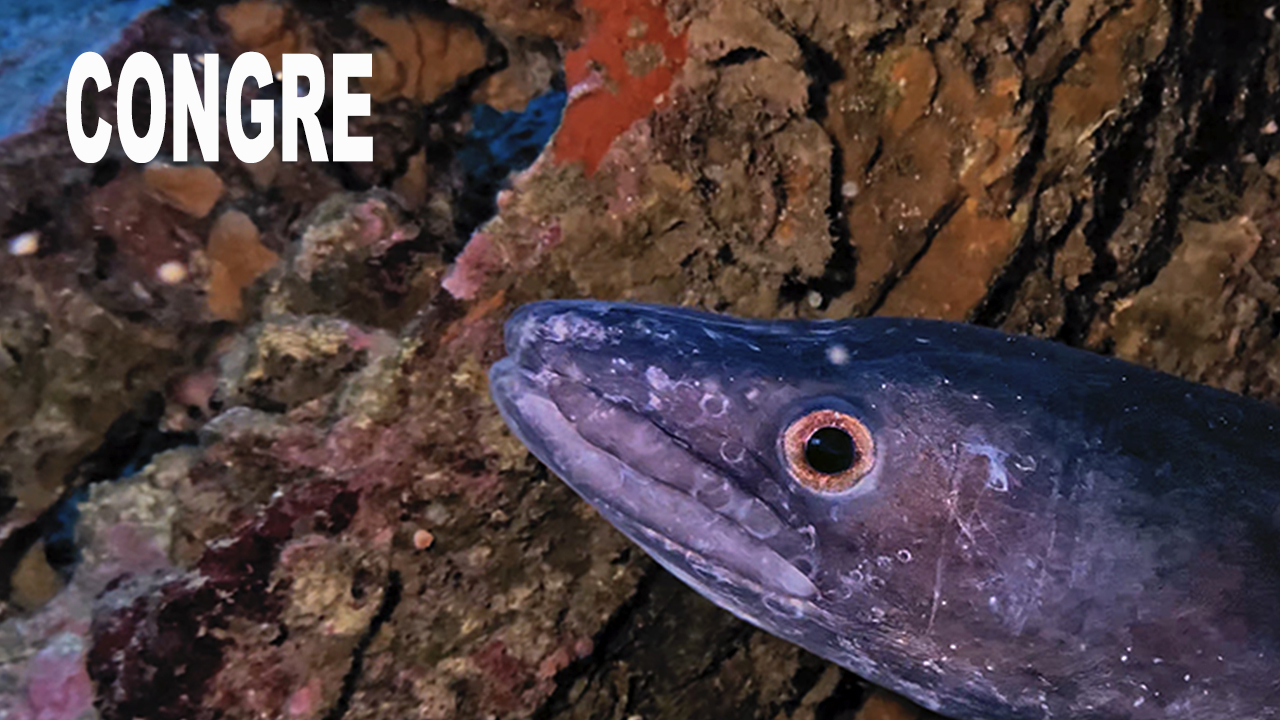
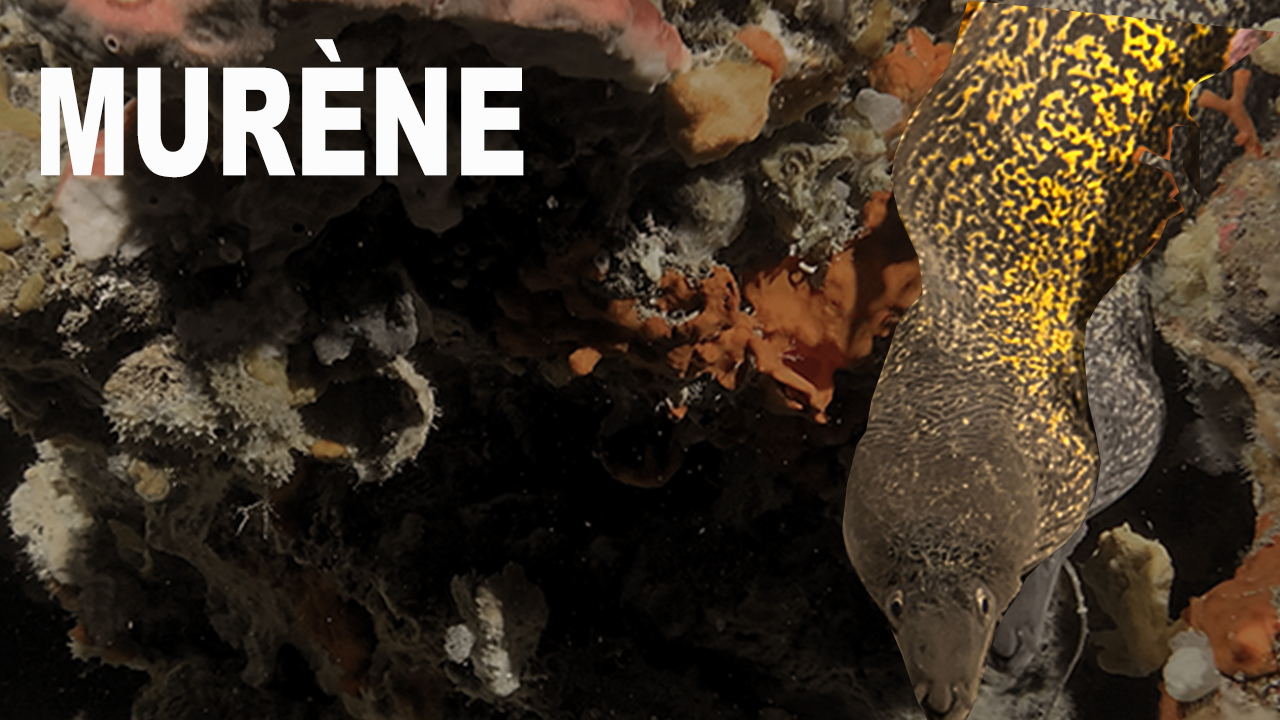
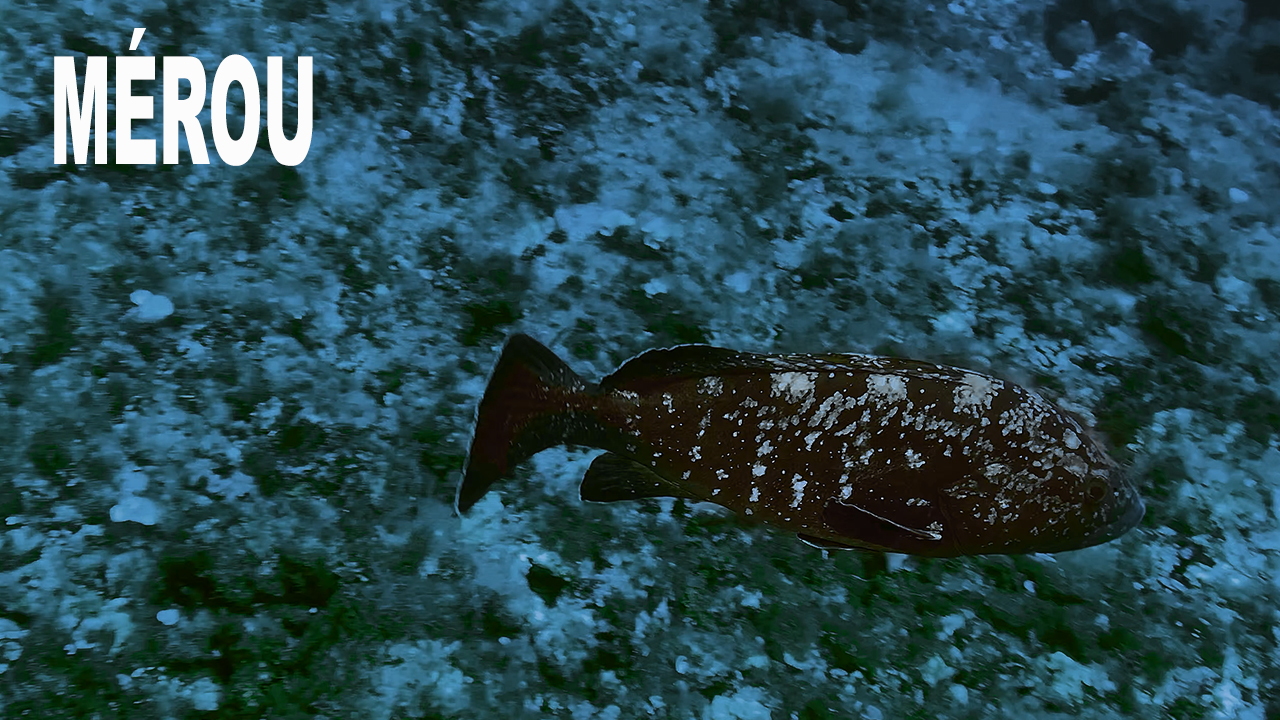
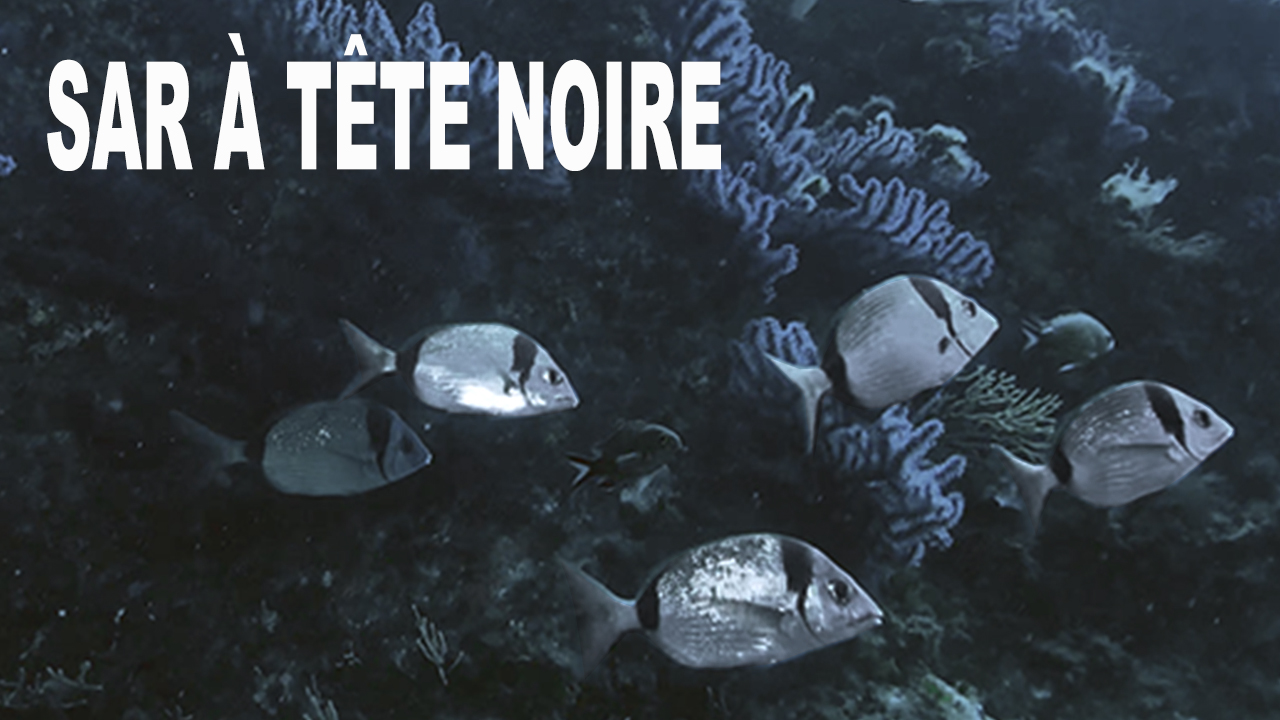
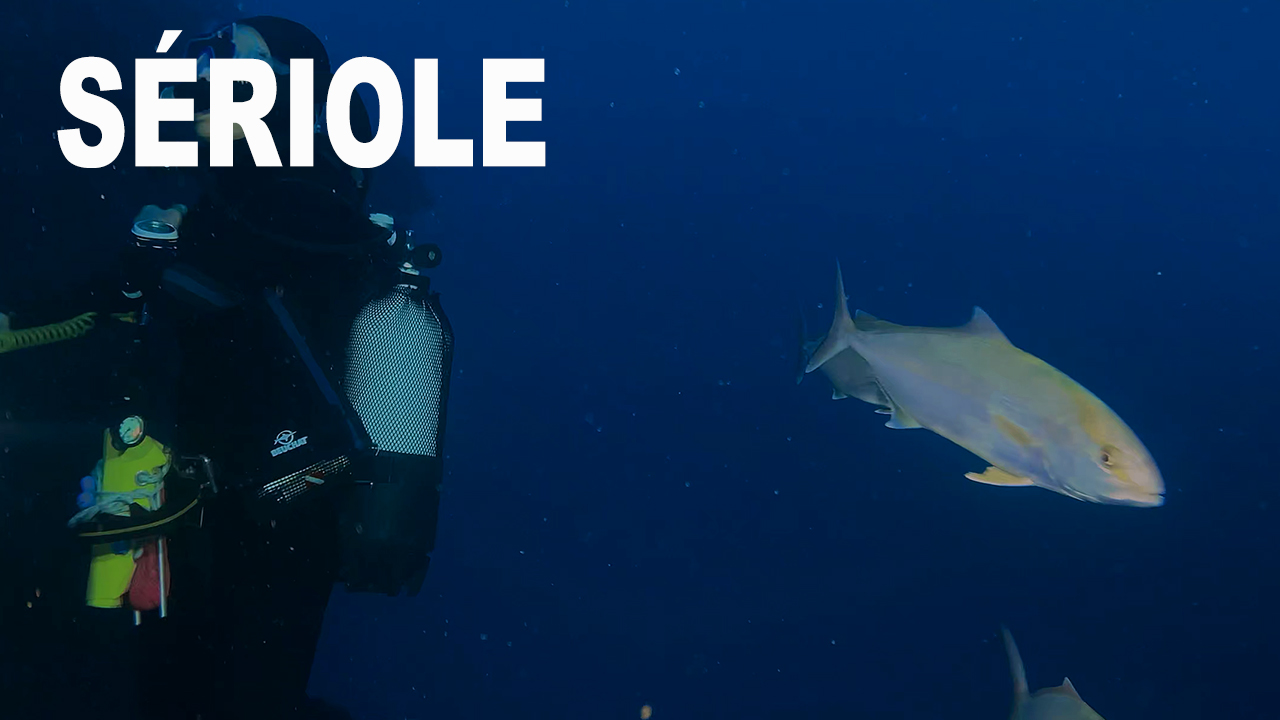
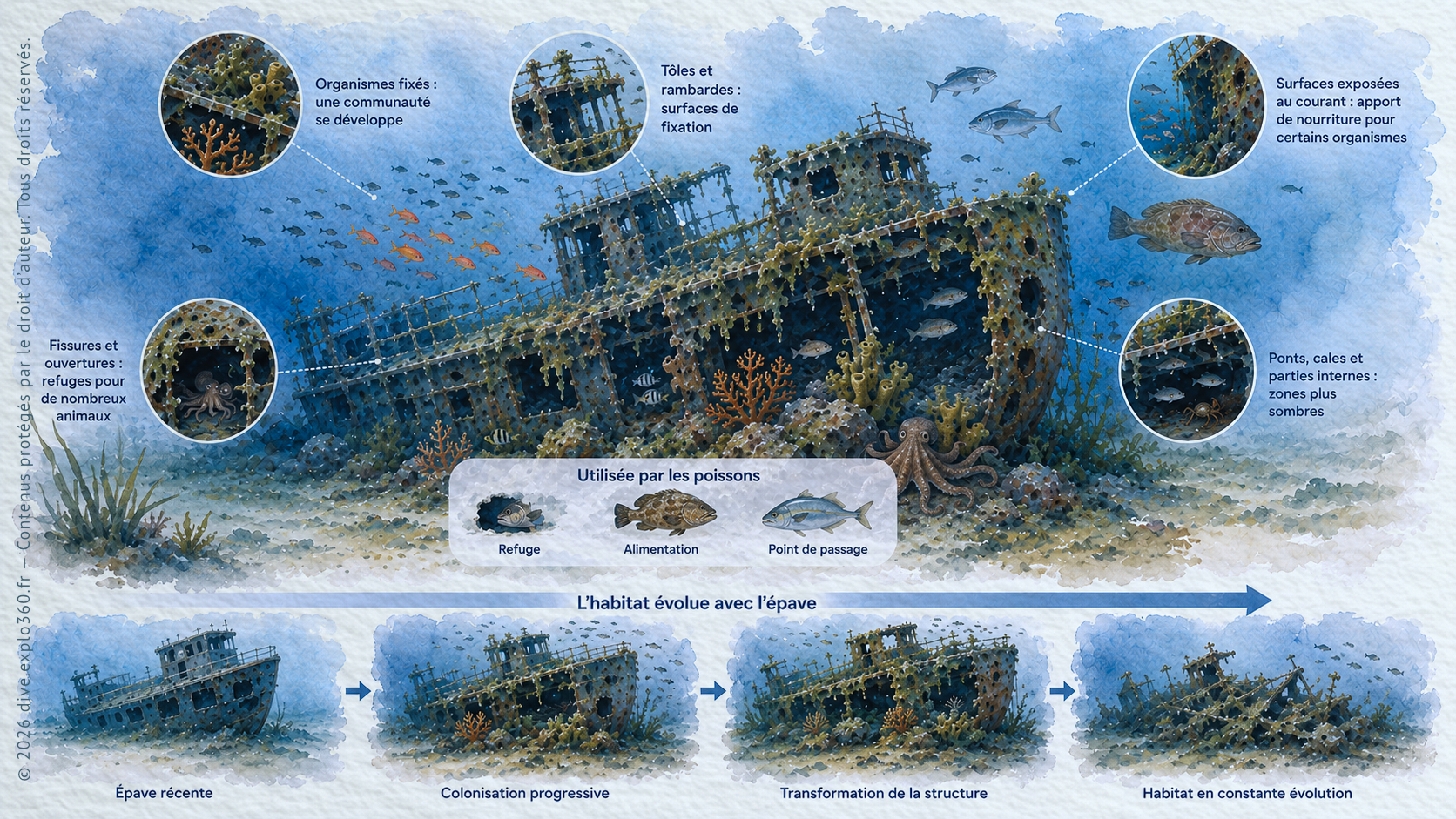
The openings provide shelter for some animals. Fish also come around the wreck to shelter, find food or move through the area.
However, not all wrecks become the same. Their development depends in particular on their material, age, depth, currents and the seabed.
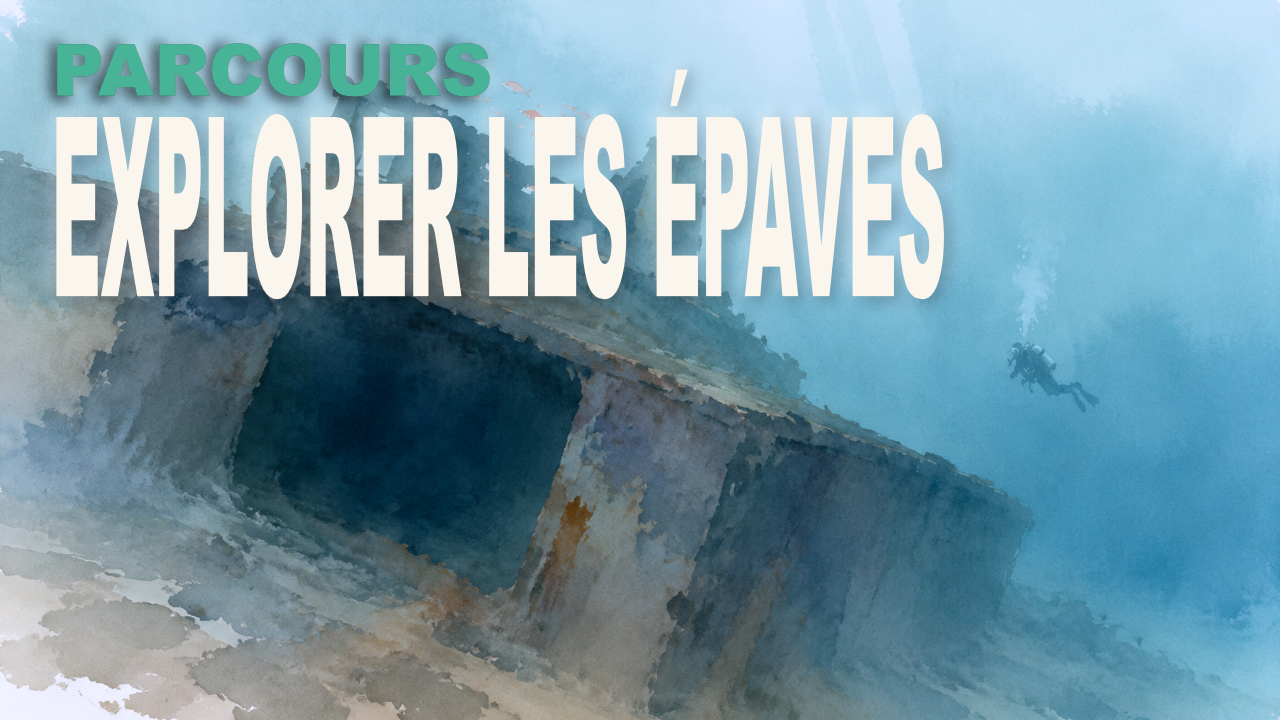
Imagine a large ship resting on an almost flat stretch of sand. It suddenly creates a prominent structure with walls, openings and dark areas.
On rock, the difference is smaller because the environment already has raised features and cavities.
The wreck is therefore part of its surroundings, and its development depends on local conditions.
A BREAK IN THE LANDSCAPE
STEEL
In seawater, steel corrodes. The plates gradually become weaker and may develop holes or collapse.
WOOD
Marine organisms can bore into and break down wood. Parts buried in sand or mud may sometimes be preserved for longer.
ALUMINIUM
Aluminium behaves differently from steel. However, seawater can cause localised attack, making small, deep pits in the metal.
COMPOSITES
Hulls made of resin and fibreglass do not rust. Nevertheless, they gradually age in contact with water and may become weaker.
SINKING
the ship reaches the seabed.
BIOFILM
microorganisms colonise its surfaces.
VISIBLE COLONISATION
microalgae and attached organisms appear.
DIVERSIFICATION
more and more animals use the available surfaces, openings and shelters. The speed of this transformation varies greatly from one wreck to another.
A wreck has many different places.
Plates and railings offer surfaces where organisms can attach. Cracks and openings provide shelters. Holds and internal spaces create darker areas.
Fish can use the wreck to hide, find food or move through.
As it ages, the structure changes: some openings appear and others disappear.
AMIGANSEAU CONTENT
The rest of this article is for subscribers
Log in with your AMIGANSEAU licence to continue reading.
All active AMIGANSEAU licences give access to the full article.Explore the same world