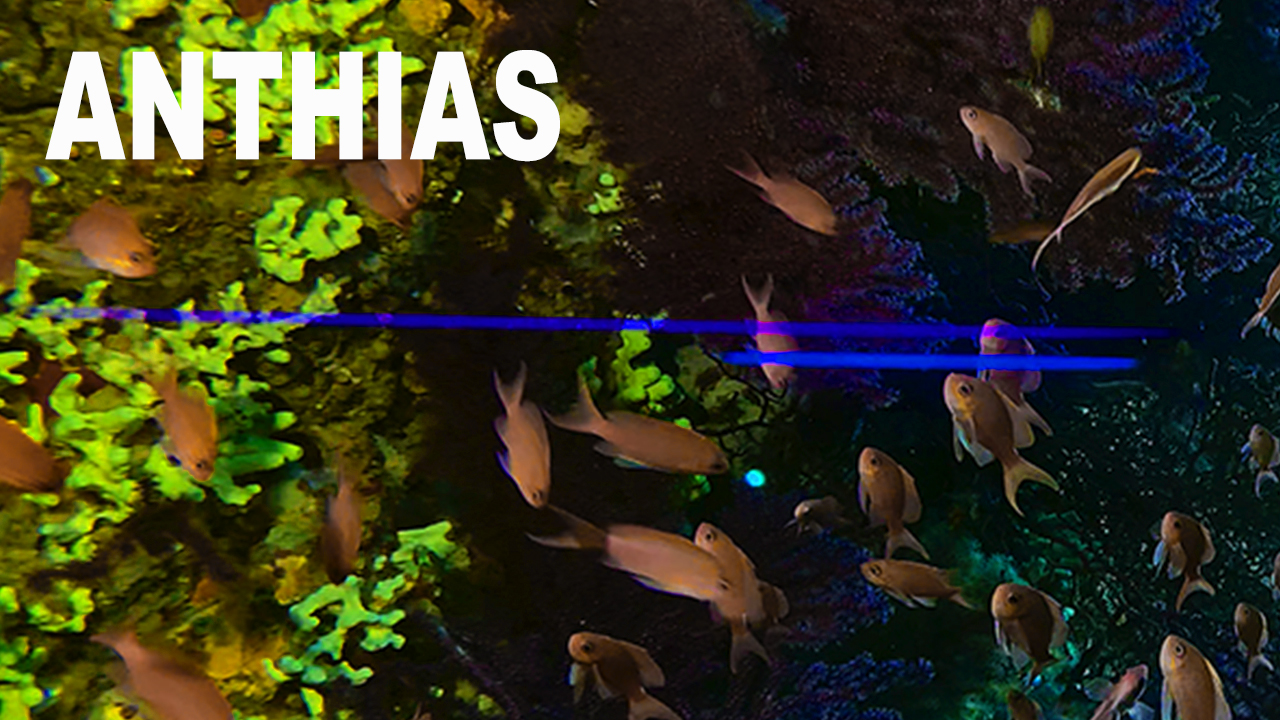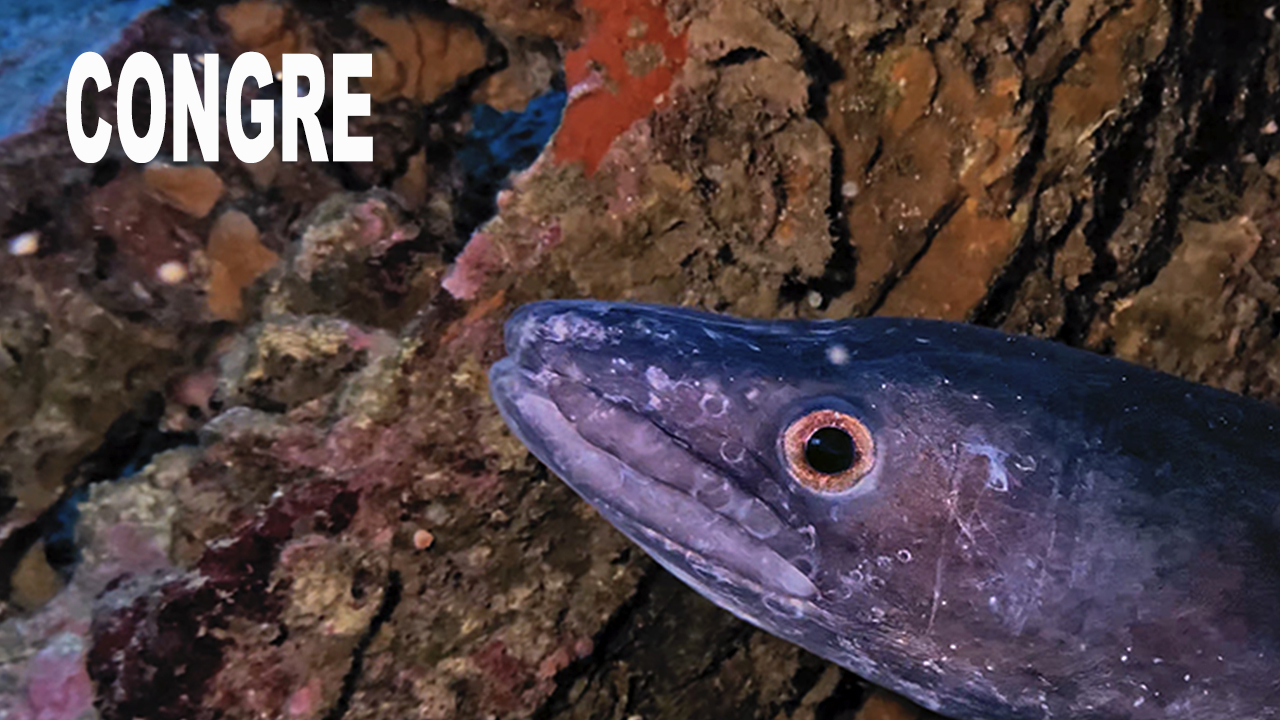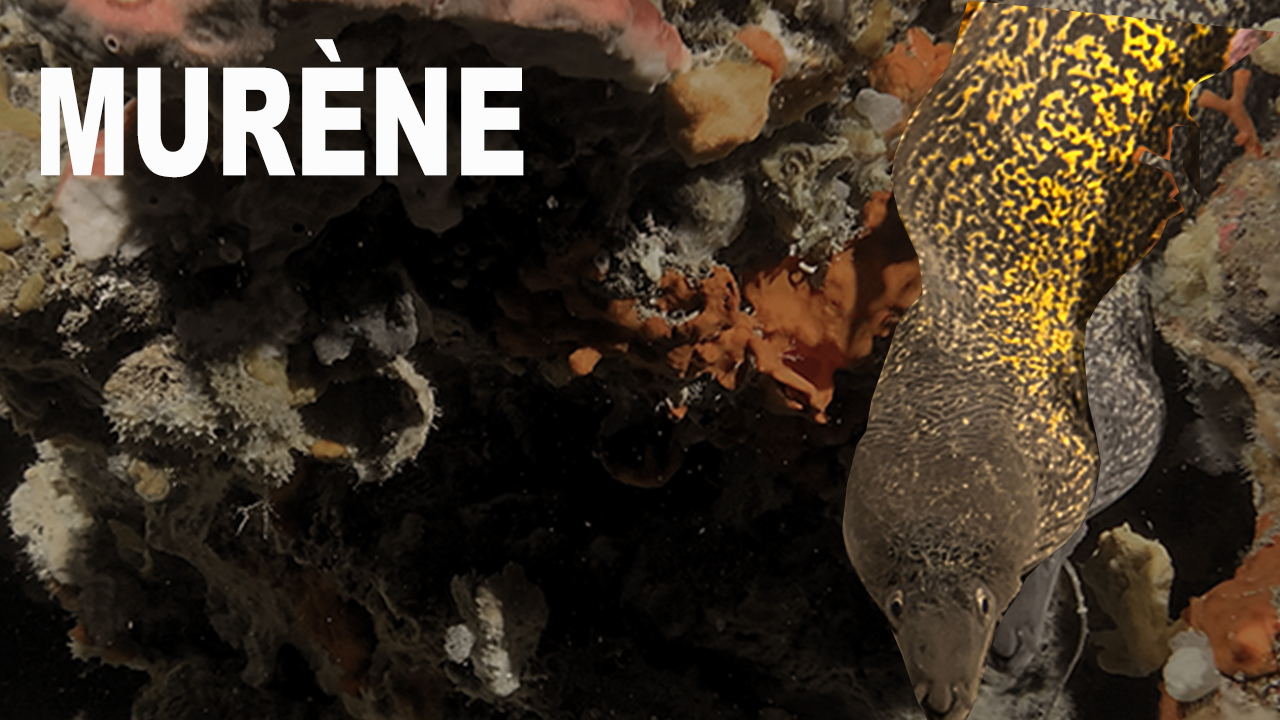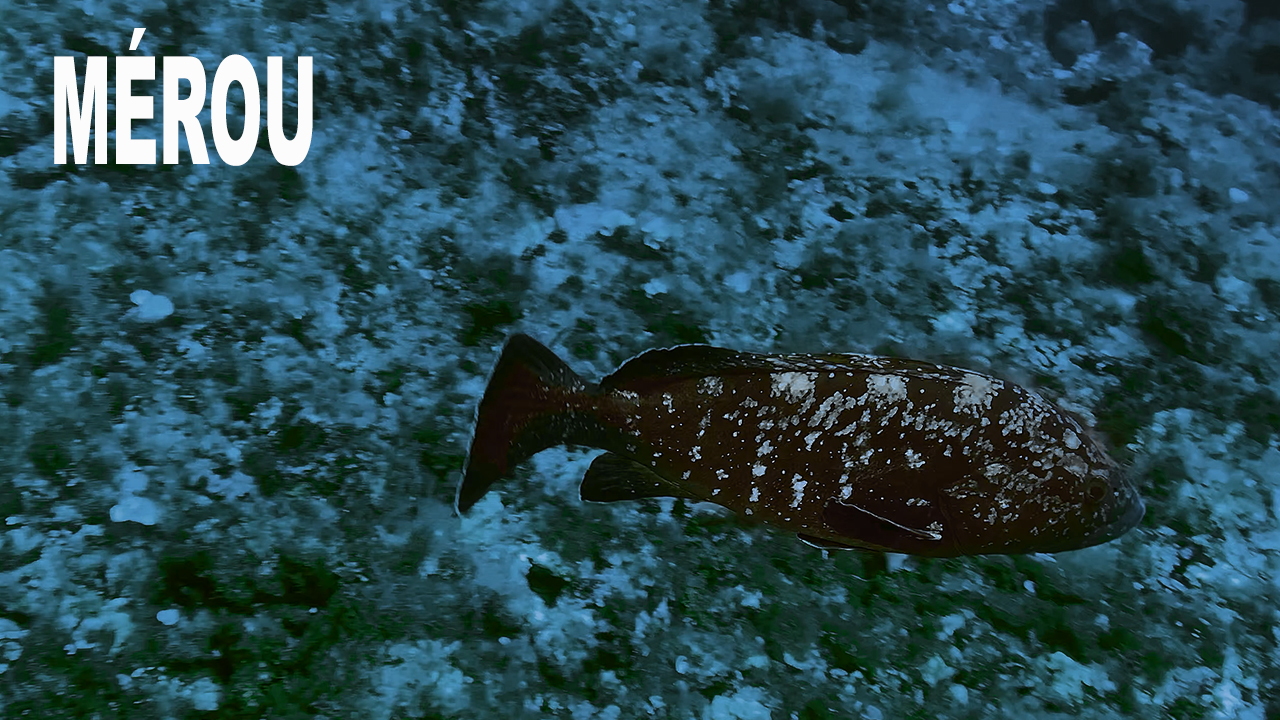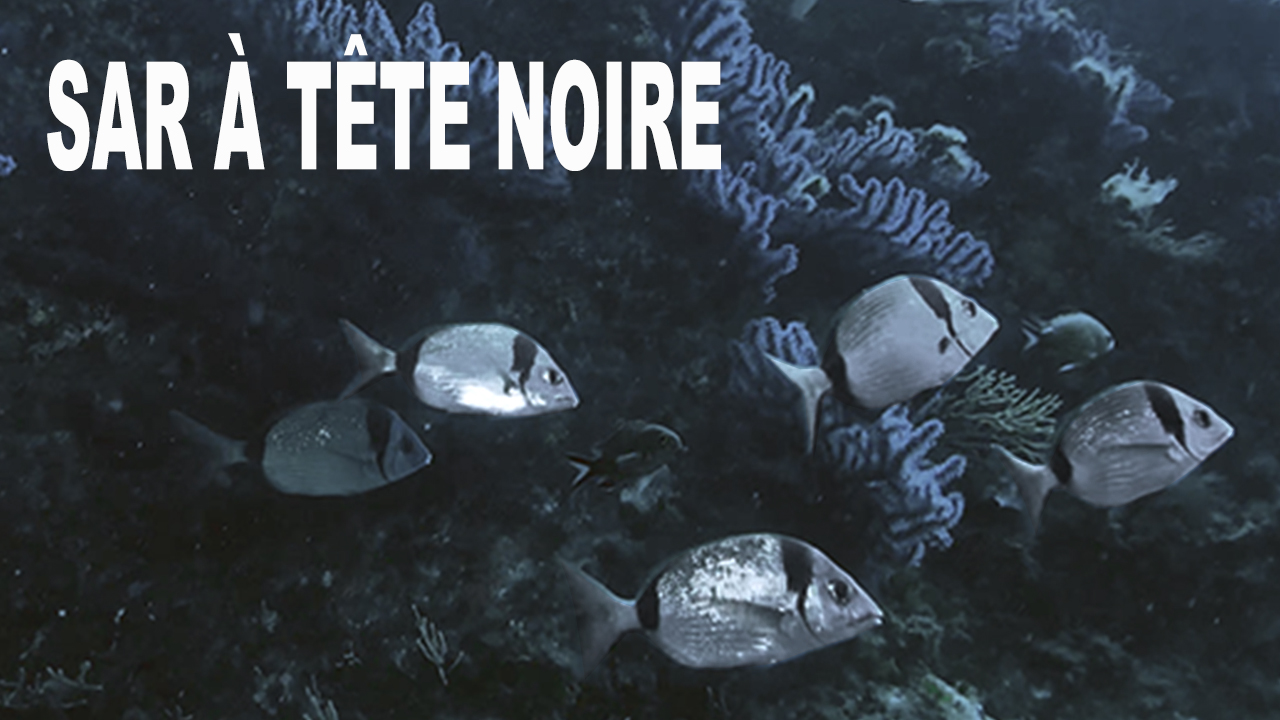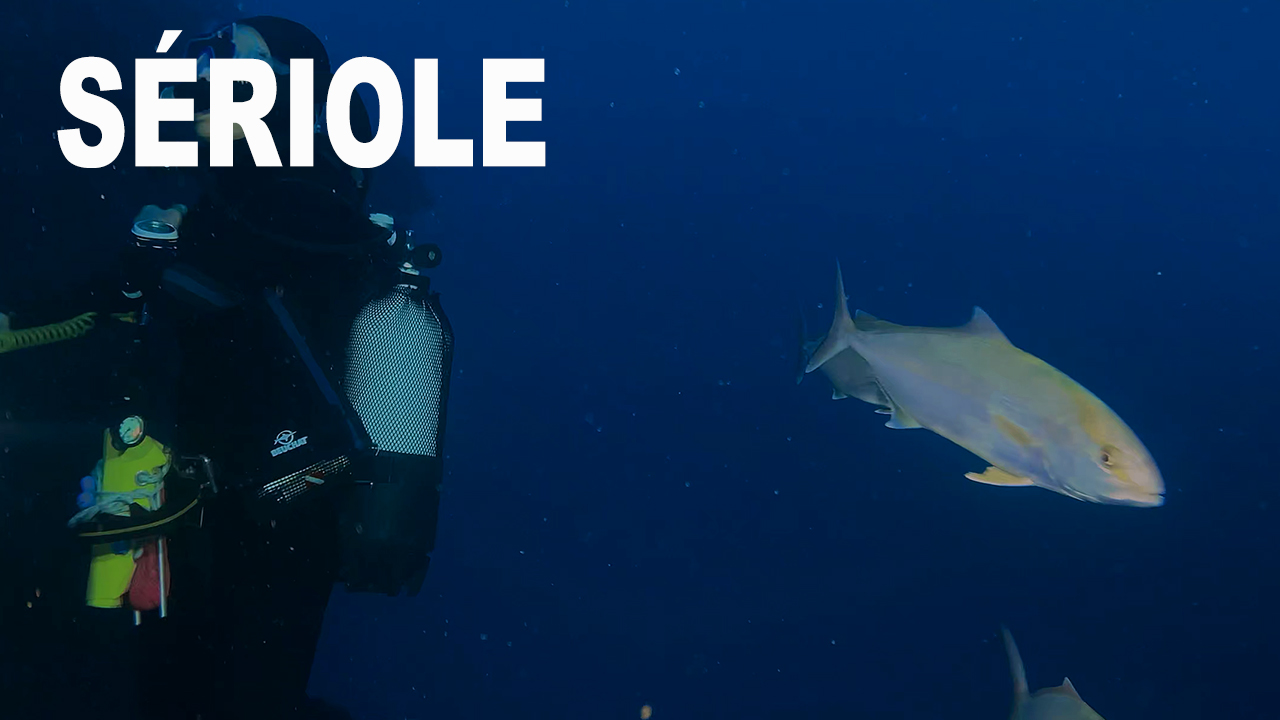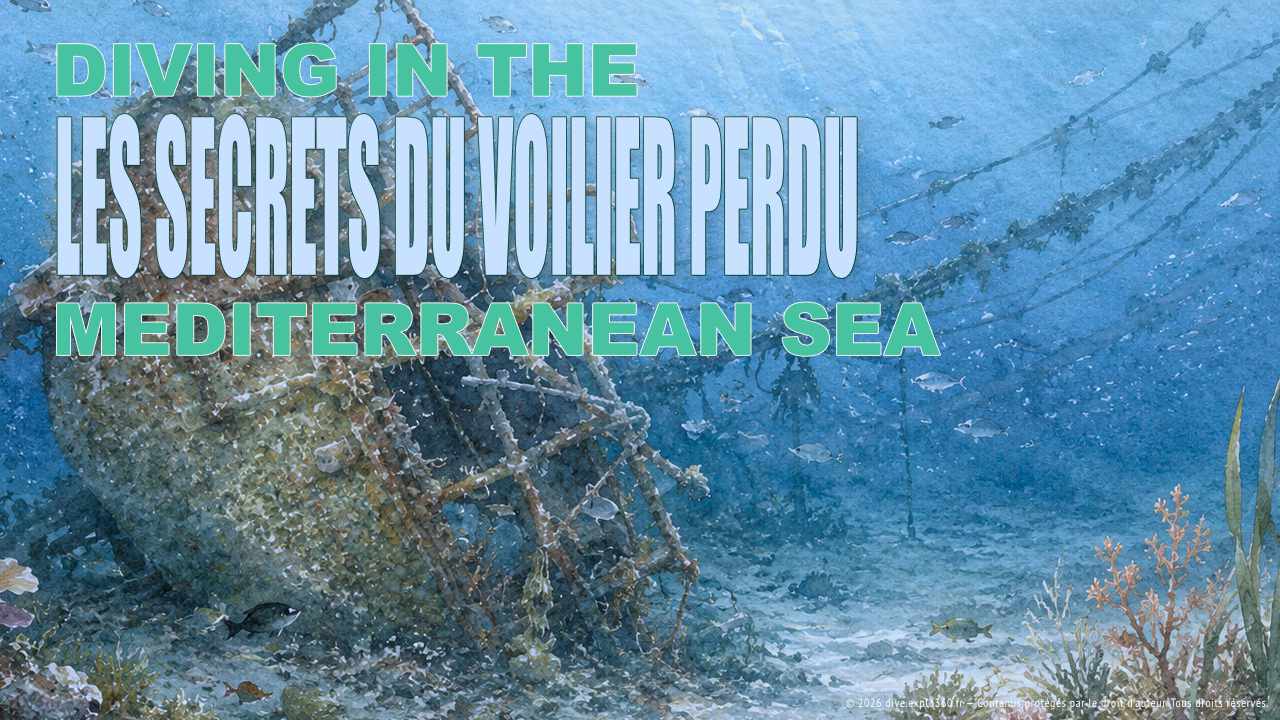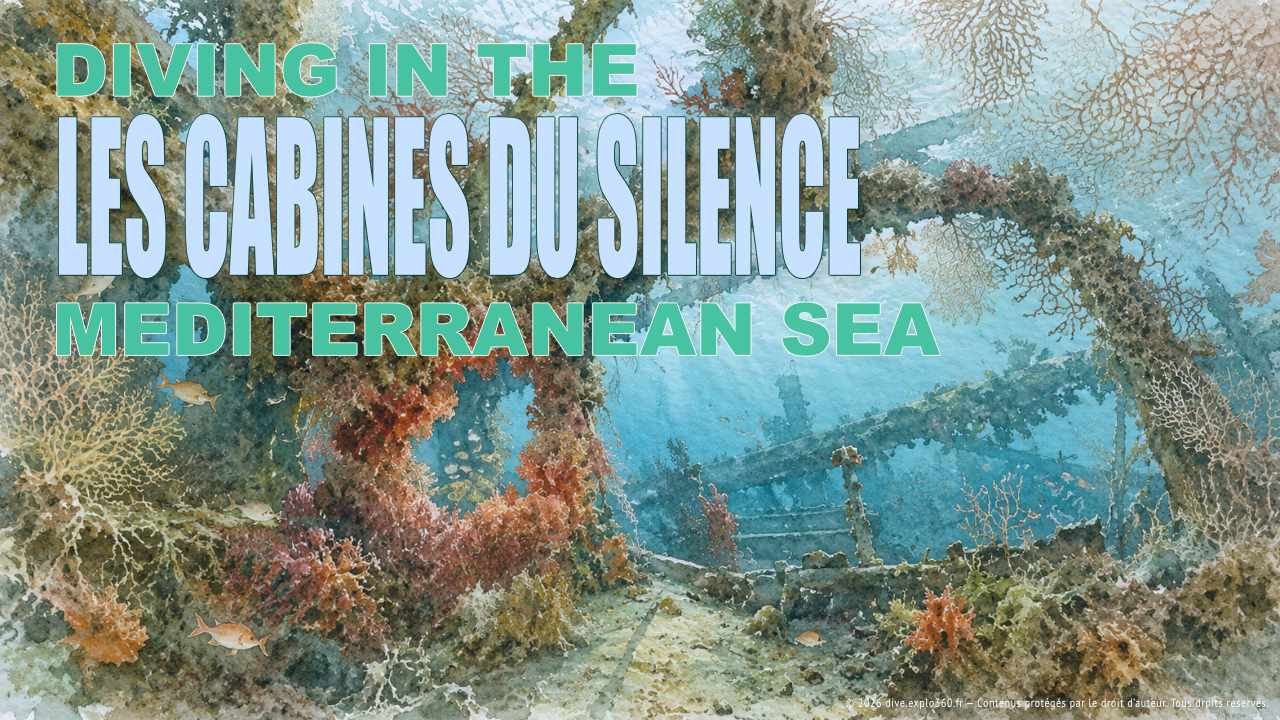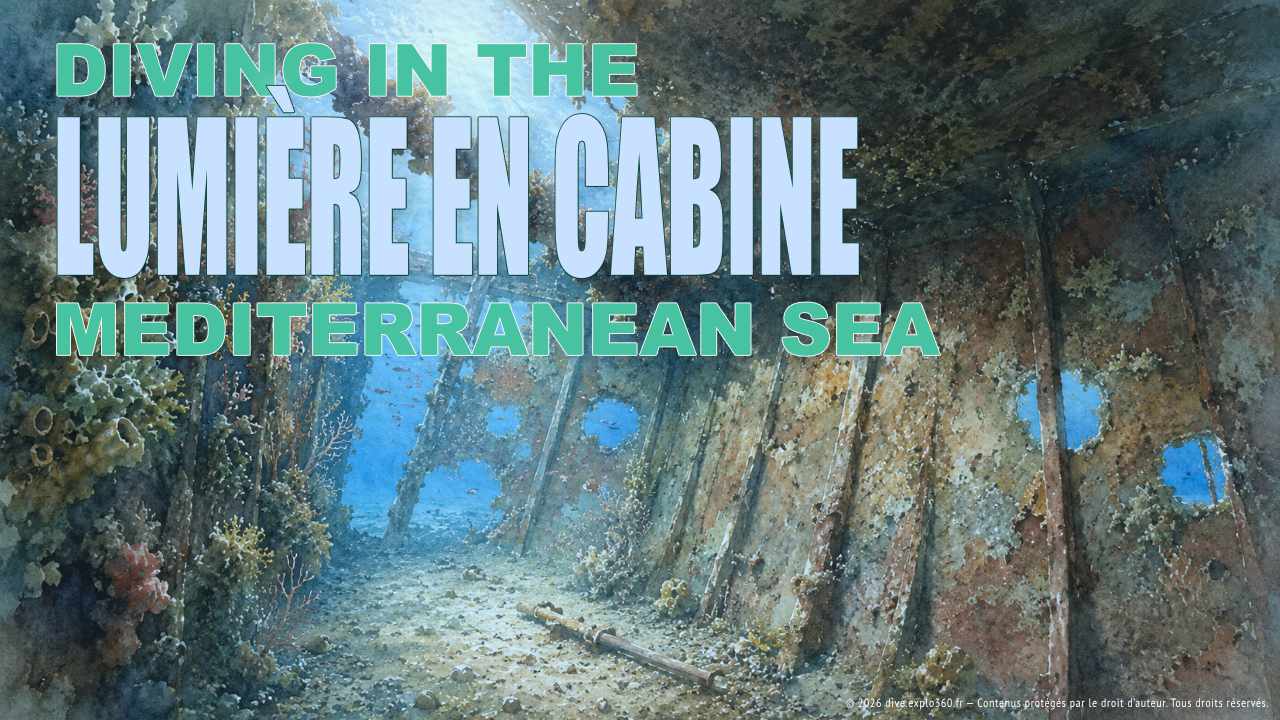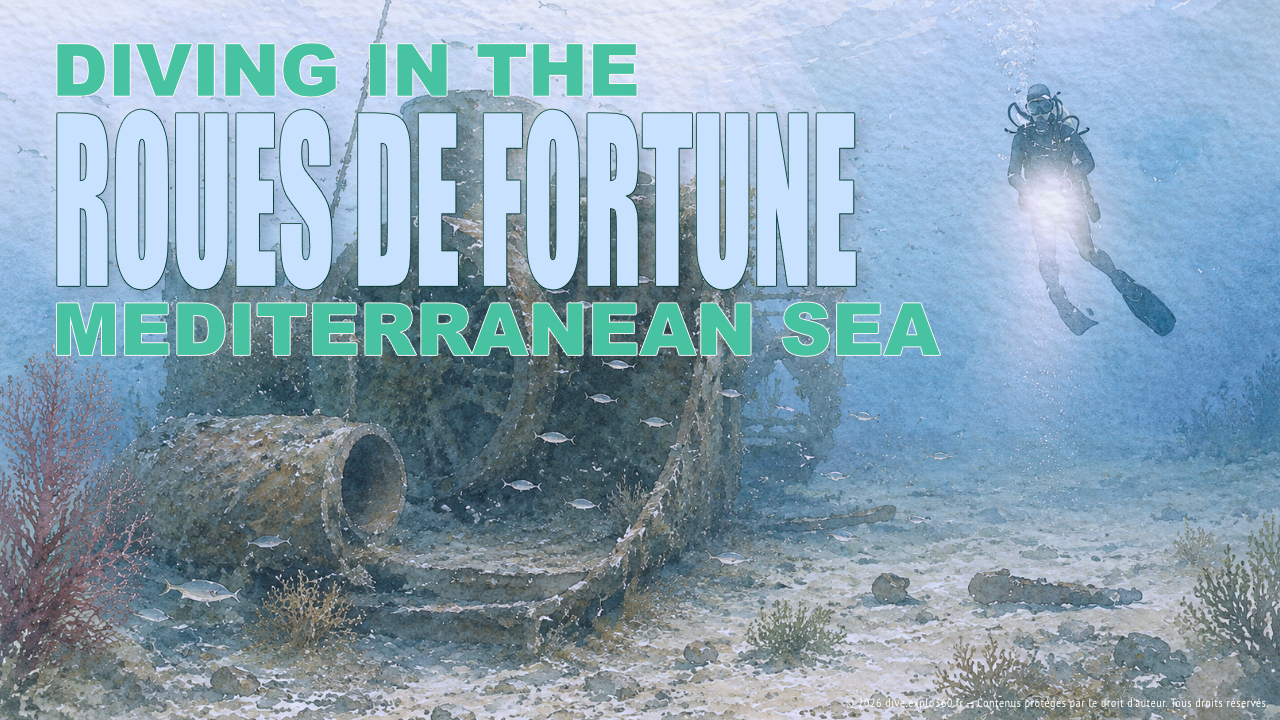

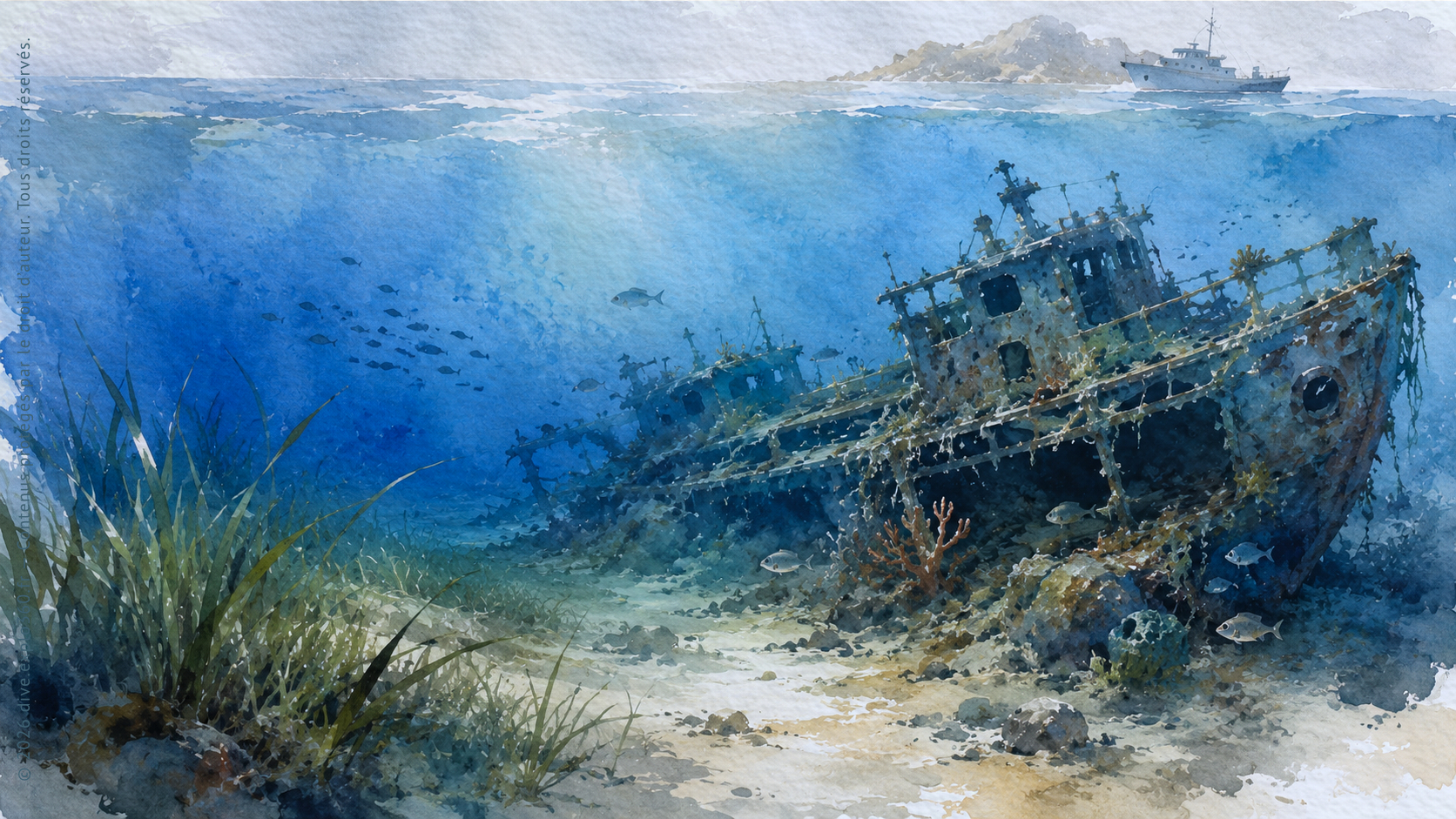
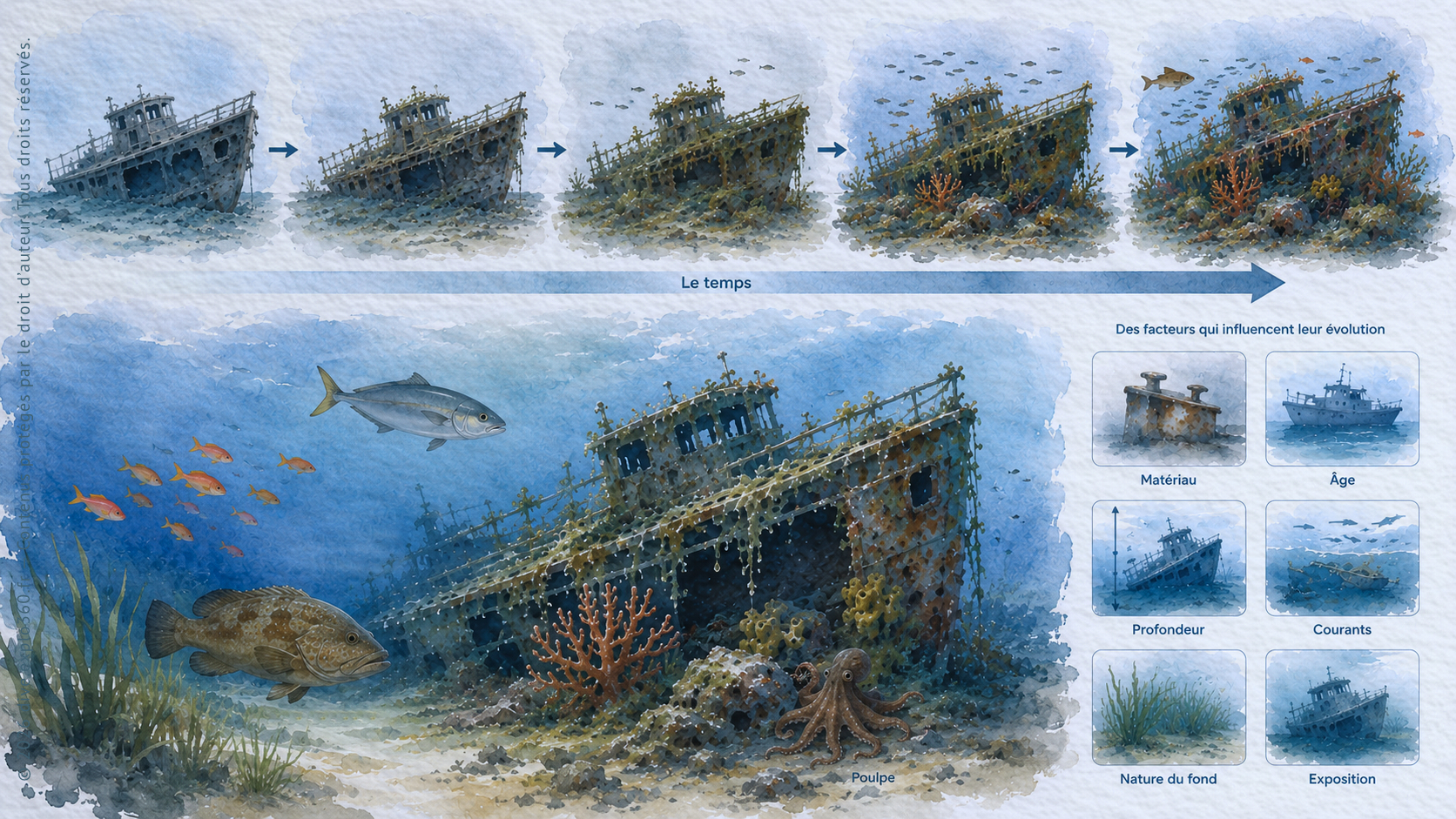
Bacteria and microalgae begin to colonise the surfaces. Little by little, other organisms attach themselves. Invertebrates occupy the openings, while fish use the wreck as shelter, a feeding area or a place to pass through.
However, not all wrecks develop in the same way. Material, age, depth, currents and especially the type of seabed influence their transformation.
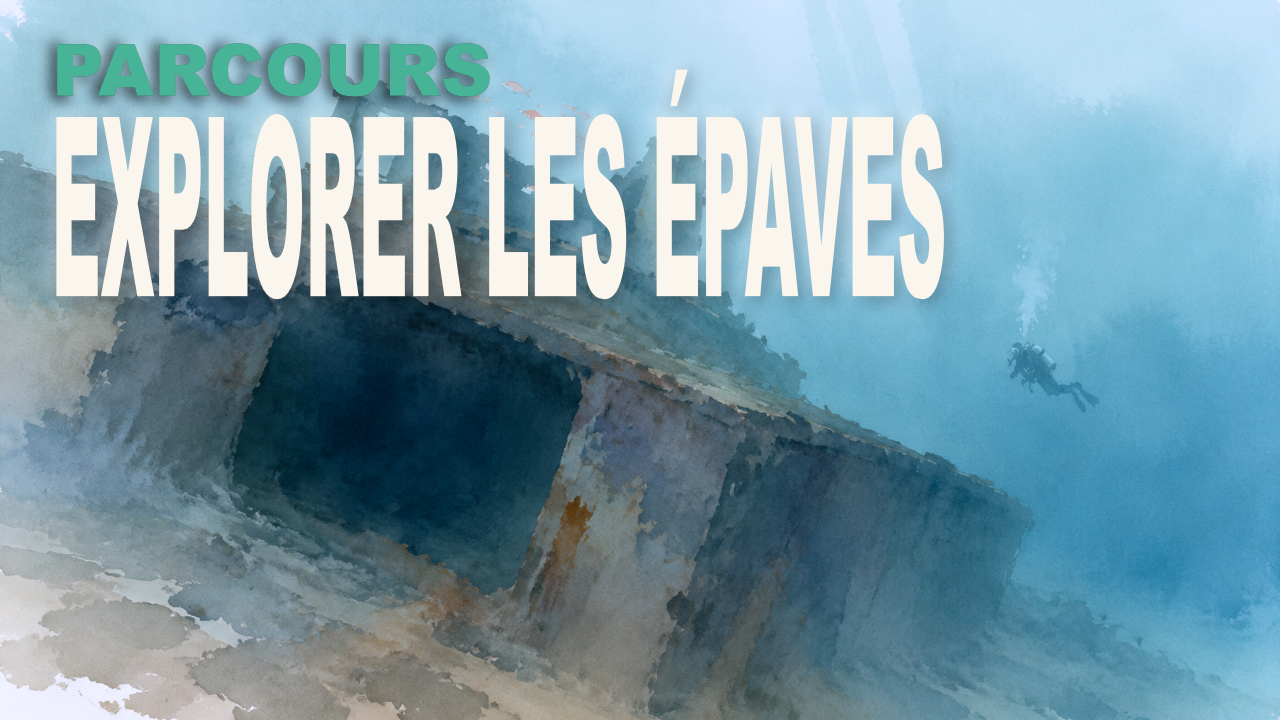
A wreck changes the landscape that existed before it arrived. On an almost flat sandy seabed, a ship suddenly adds several metres of height. On a rocky seabed, the change is smaller because walls, cracks and cavities were already present.
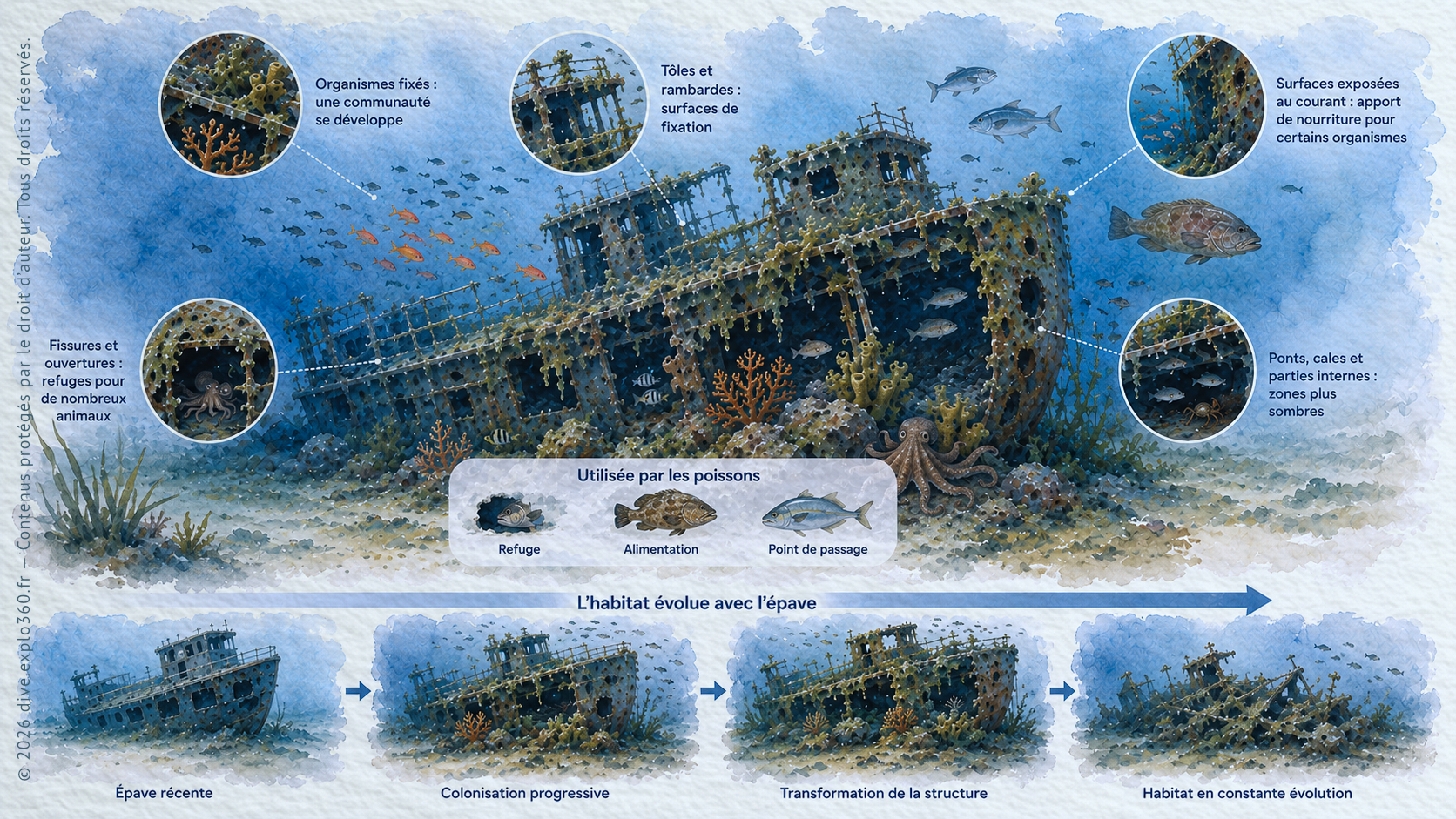
The wreck creates horizontal and vertical surfaces, areas exposed to or sheltered from currents, and spaces receiving different amounts of light.
It is therefore not an isolated ecosystem. Its functioning depends on the surrounding environment: depth, light, currents, temperature and seabed characteristics.
A BREAK IN THE LANDSCAPE
STEEL
Steel gradually corrodes in seawater. Material loss weakens the plates, creates openings and may cause collapses. As the wreck ages, the habitats it provides therefore change too.
WOOD
Exposed wood can be attacked by marine wood-boring organisms, including certain molluscs capable of tunnelling into it. However, parts buried in oxygen-poor sediment may be preserved for much longer.
ALUMINIUM
Aluminium has a thin oxide layer that provides some protection. In seawater, localised attack may nevertheless cause corrosion pits that can sometimes be deep.
COMPOSITES
Composite materials, such as fibreglass-reinforced resins, do not rust like steel or get consumed like wood. Nevertheless, they can absorb water and gradually lose some of their mechanical properties.
SINKING
the surface comes into contact with molecules in the water.
BIOFILM
microorganisms, especially bacteria, begin to colonise the surfaces.
VISIBLE COLONISATION
microalgae and attached organisms gradually settle.
DEVELOPMENT
each wreck develops differently depending on light, depth, currents, temperature, nutrients, material and nearby communities.
Over time, the shape of the wreck itself becomes important. Plates, railings and superstructures provide attachment surfaces for sessile organisms. Cracks and openings form shelters. Decks, holds and internal spaces offer darker areas.
Fish can use this structure to shelter, feed or simply move through.
Corrosion, wood degradation and mechanical stresses continually transform the structure. Some cavities appear while others disappear.
AMIGANSEAU CONTENT
The rest of this article is for subscribers
Log in with your AMIGANSEAU licence to continue reading.
All active AMIGANSEAU licences give access to the full article.Explore the same world