MAERL
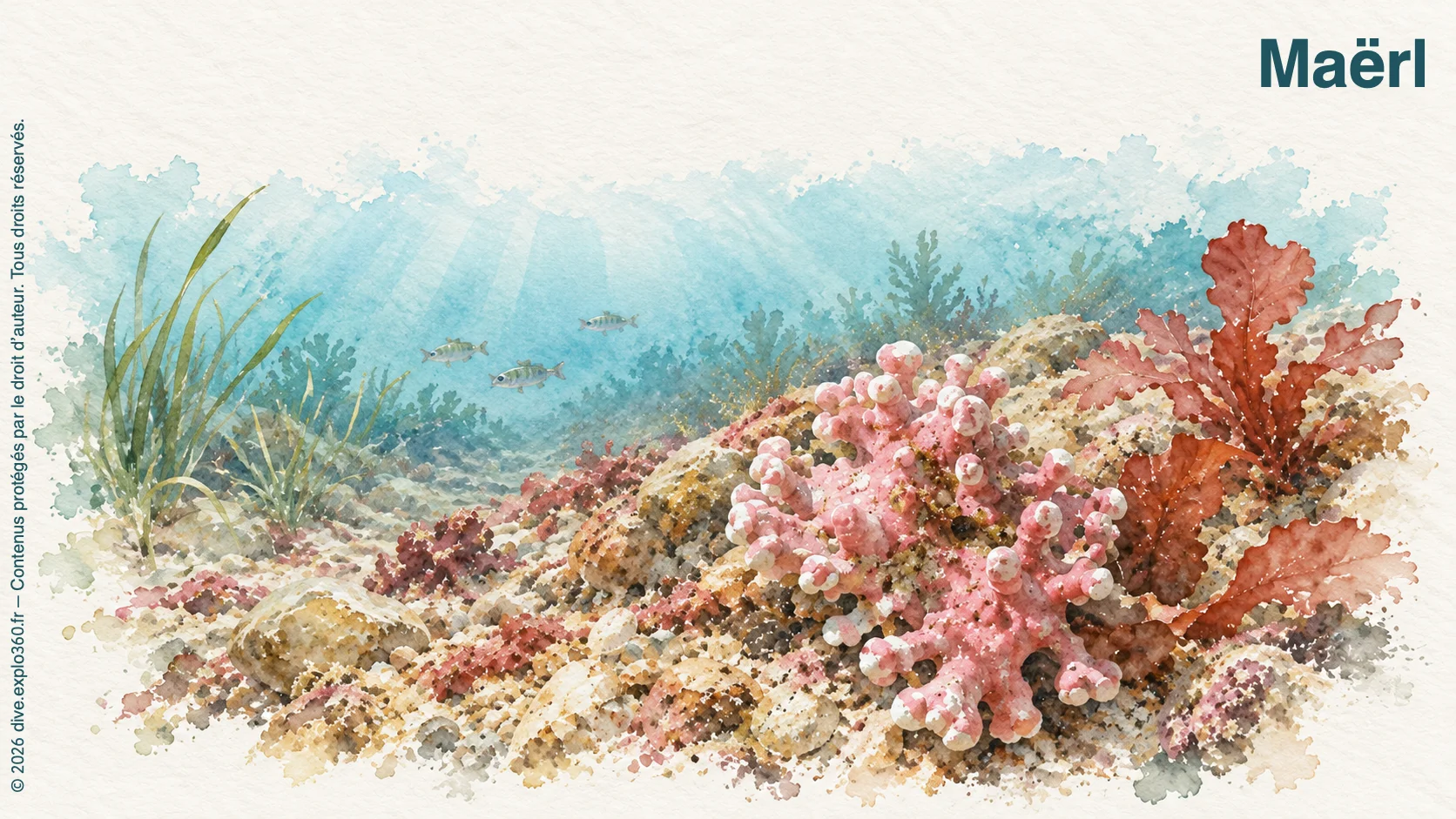
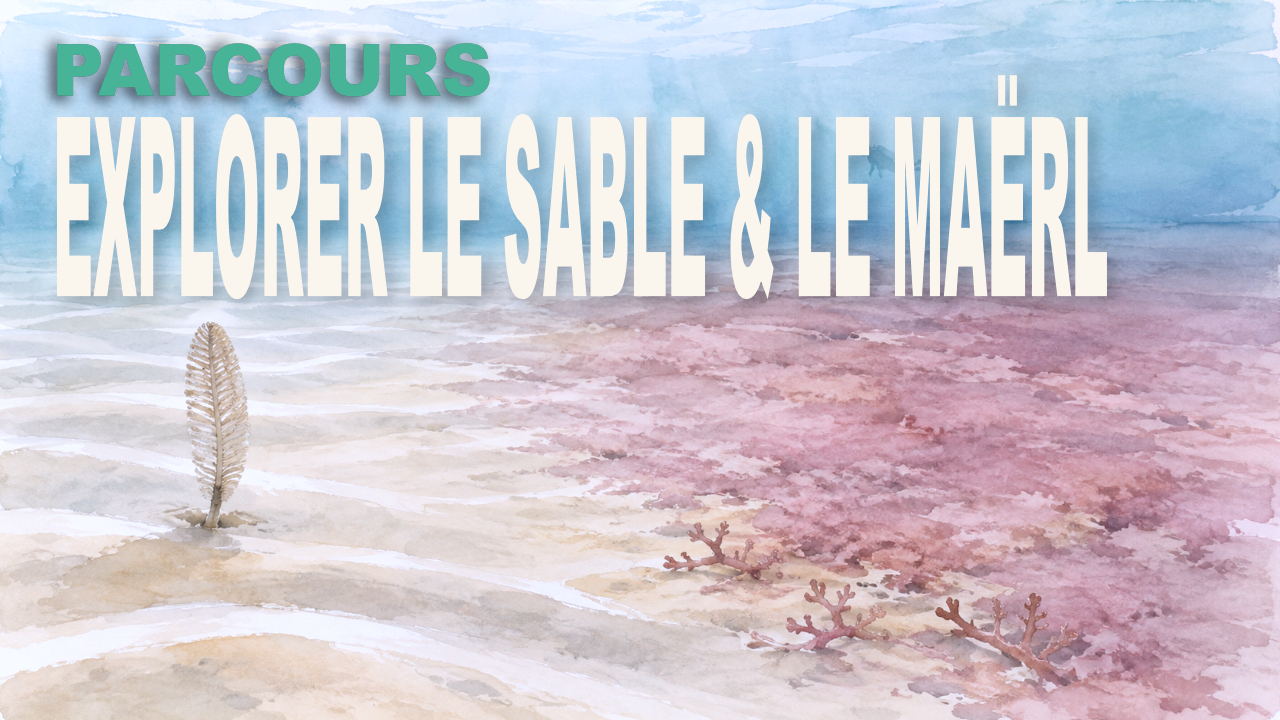
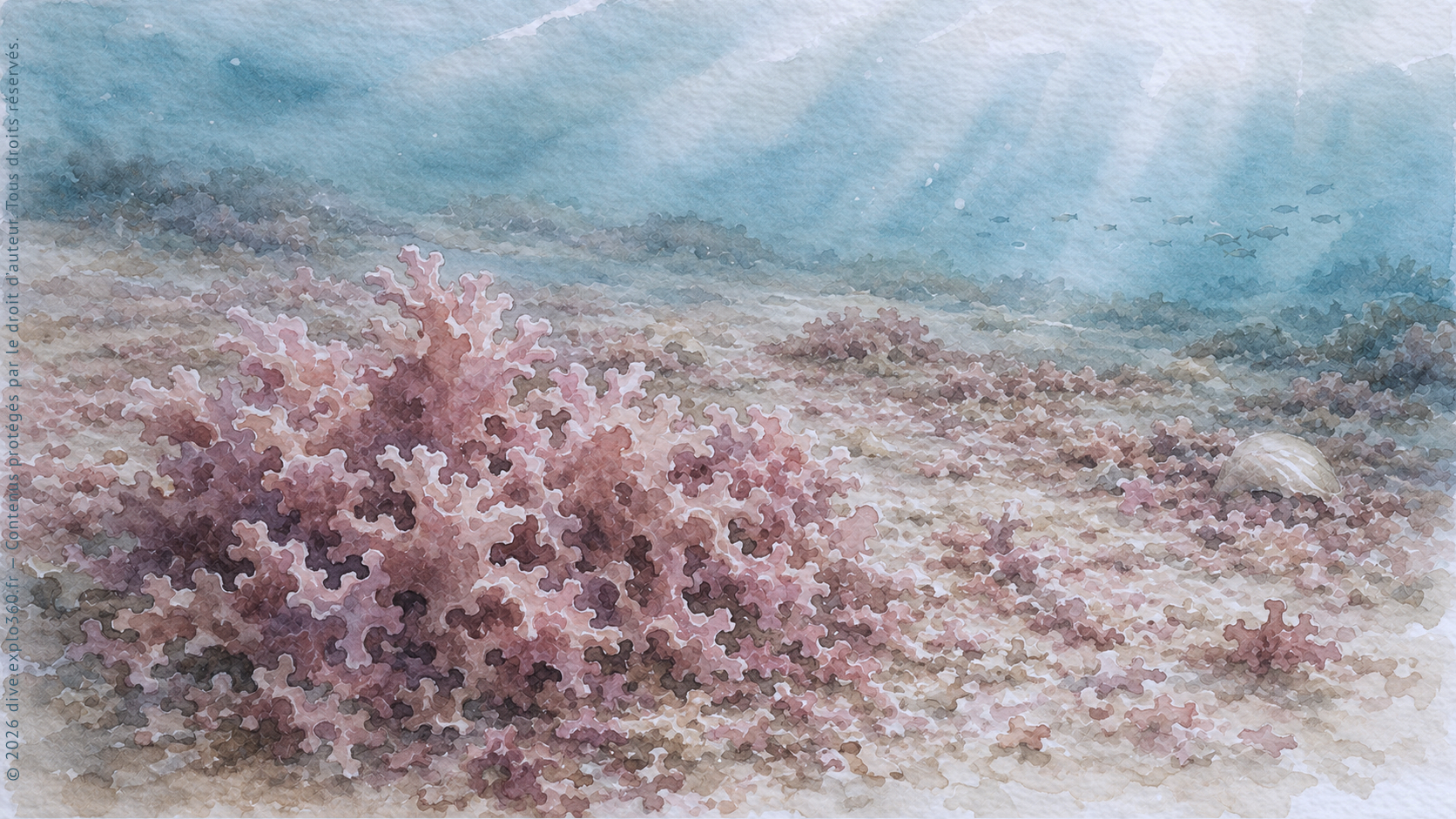
Maerl forms where unattached coralline red algae grow and accumulate on the seabed.
Their hard branches build up over the sediment. The spaces between them give small animals places to shelter and surfaces to settle on.
Over time, living algae can give a stretch of bare sand the texture and relief of a bed of loose stones.
A CARPET OF CALCAREOUS ALGAE
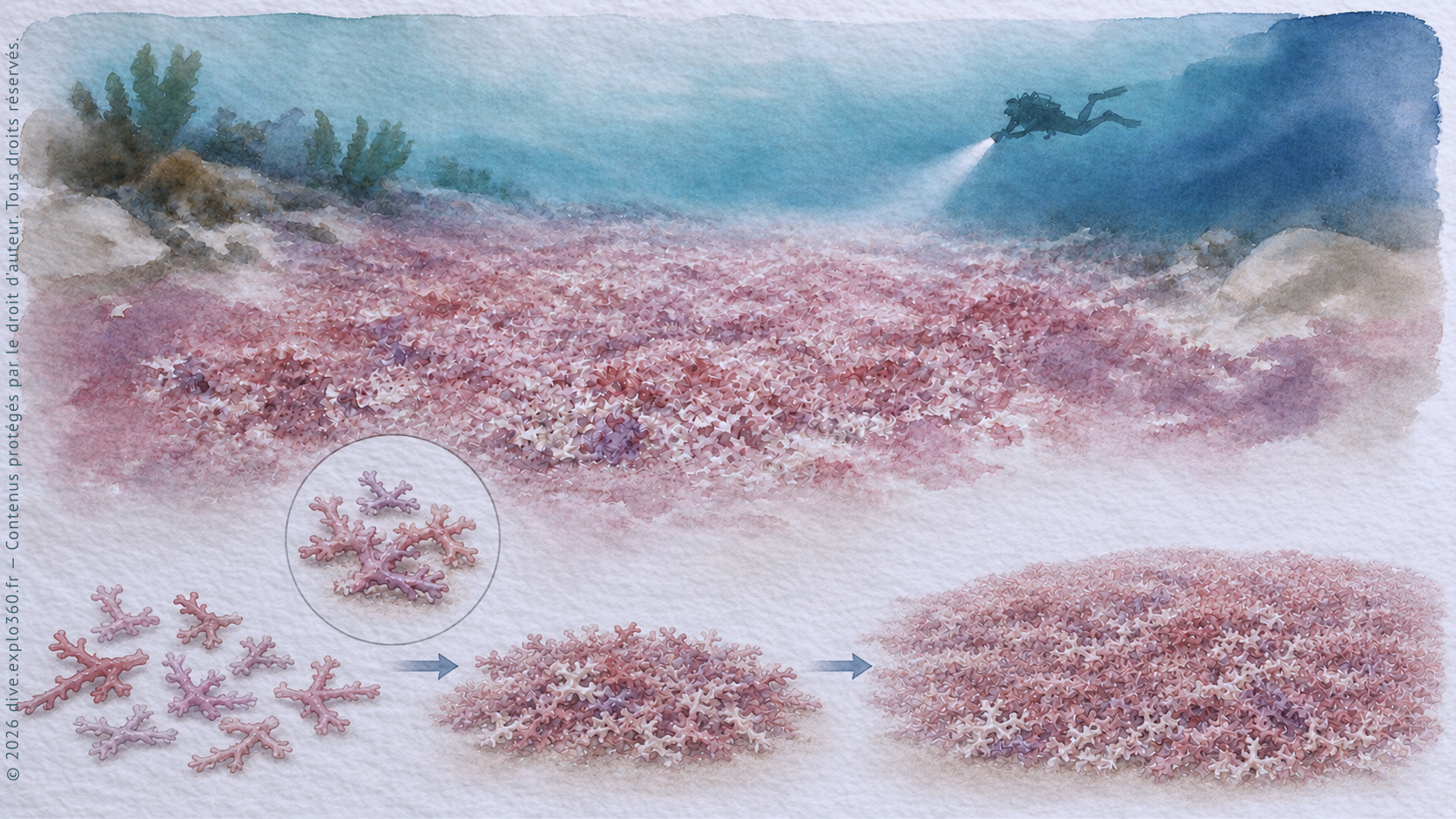
In places, the seabed can look pink, red, purple or almost white.
The colours come from a layer of small calcareous pieces.
Some look like gravel at a distance.
Among them are living coralline red algae.
They grow loose on the seabed, without attaching to rock.
As the algae branch and build up, they can form broad maerl beds.
AN ALGA THAT LOOKS LIKE A STONE
Maerl’s appearance is misleading.
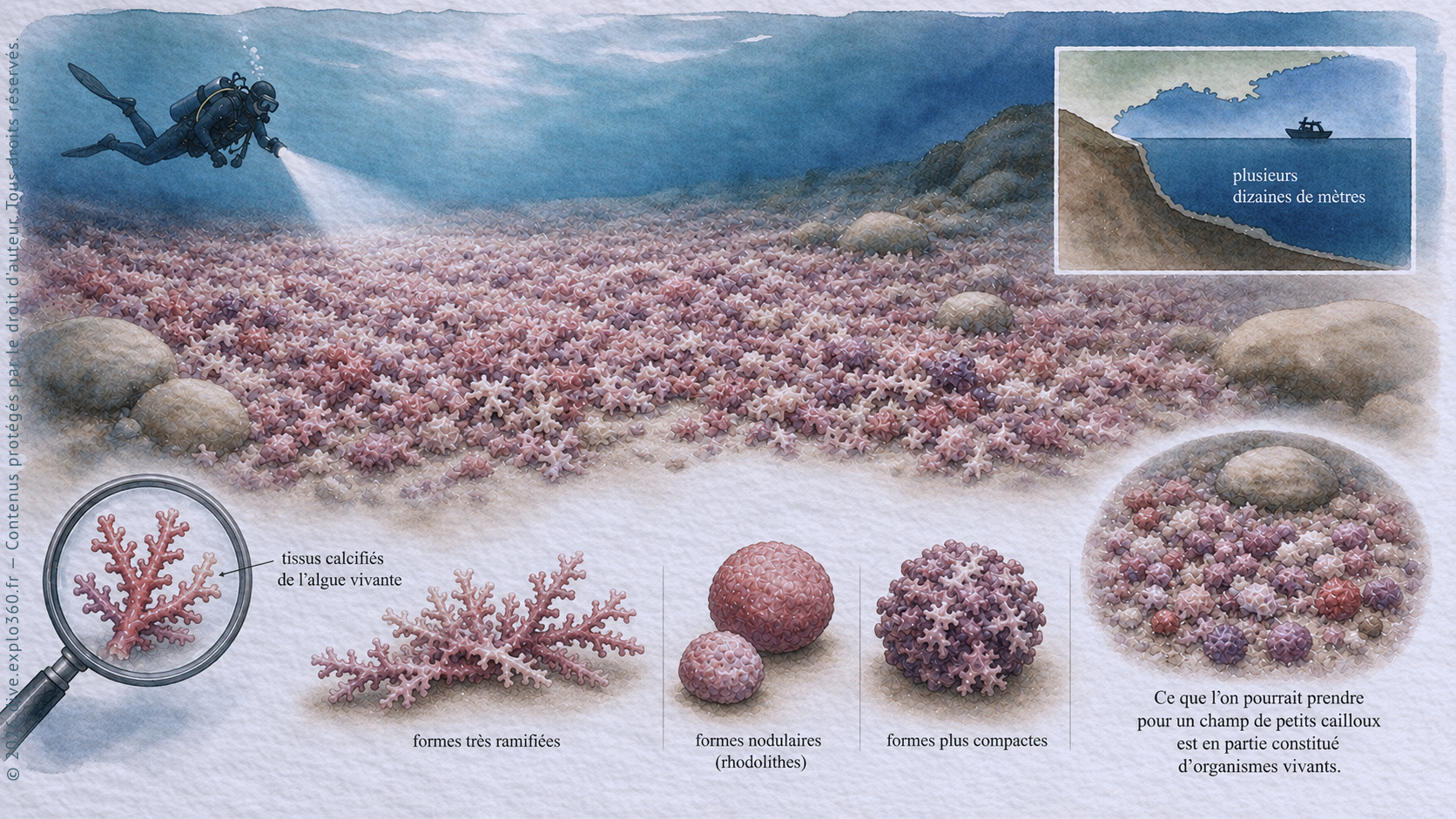
The algae forming it deposit calcium carbonate in their tissues. They become rigid and take on the appearance of small branches, nodules or concretions.
The rounded nodules these algae form are generally called rhodoliths.
Their shape depends in particular on the species present and environmental conditions. Some are highly branched. Others form more compact structures.
In the Mediterranean, these formations can occur on soft seabeds of the continental shelf, often several tens of metres deep.
What might be taken for a field of small pebbles partly consists of living organisms.
Explore the same world