MAERL
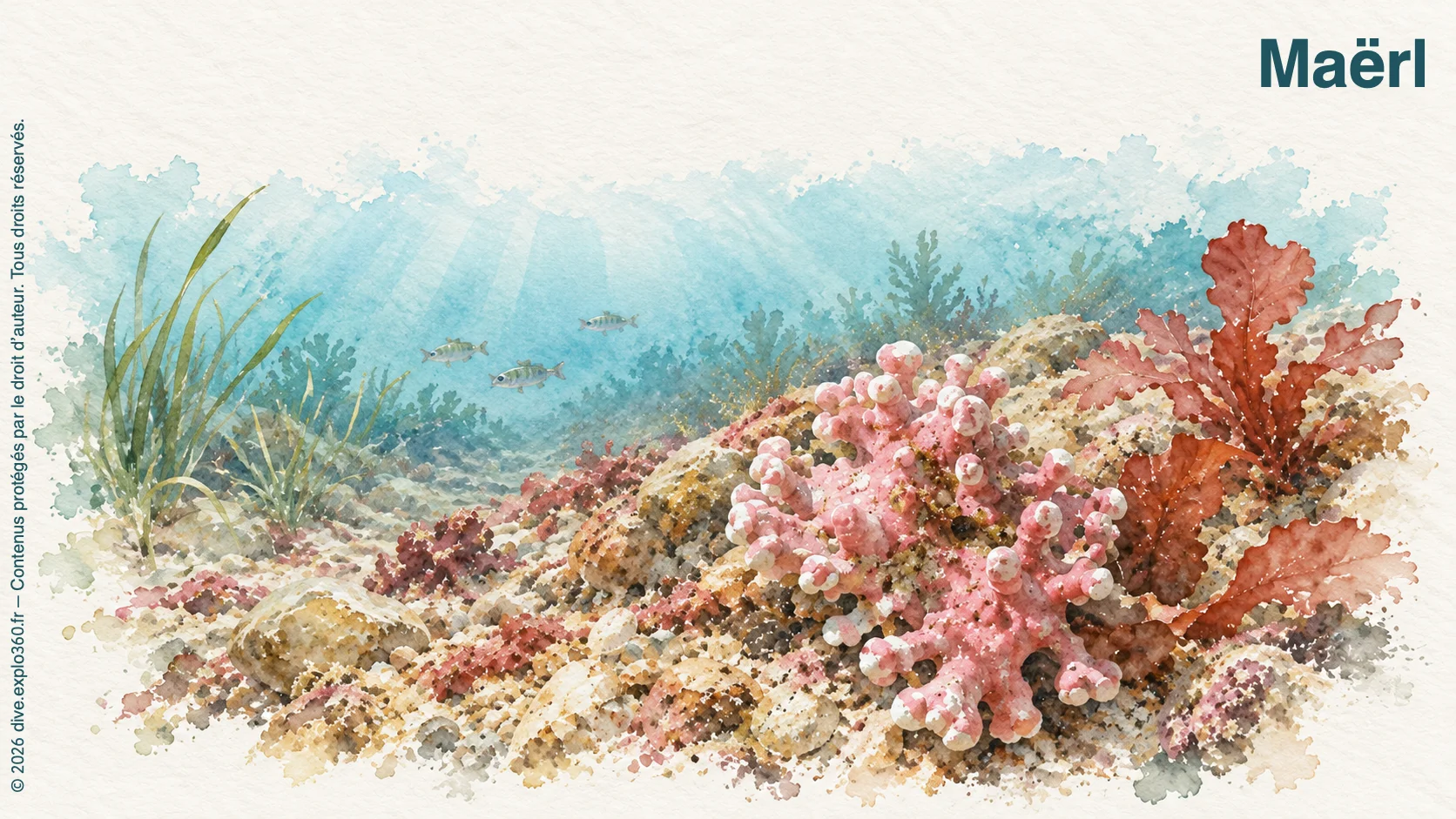
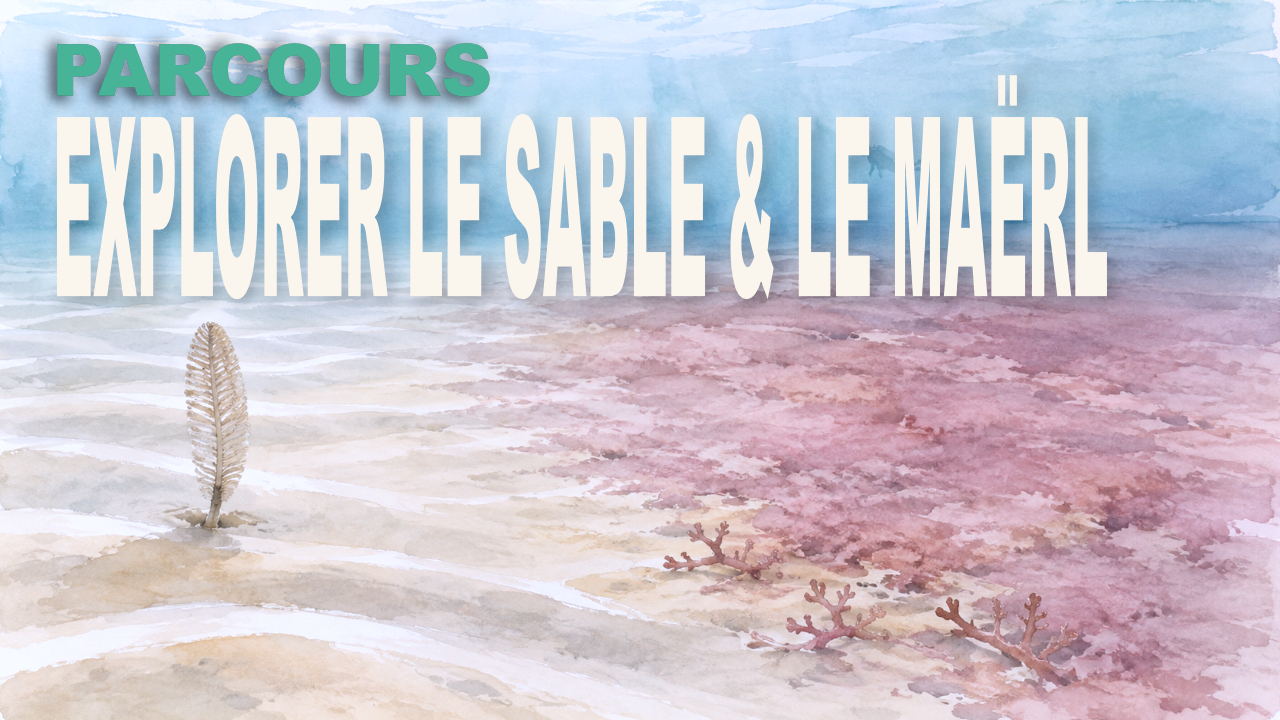
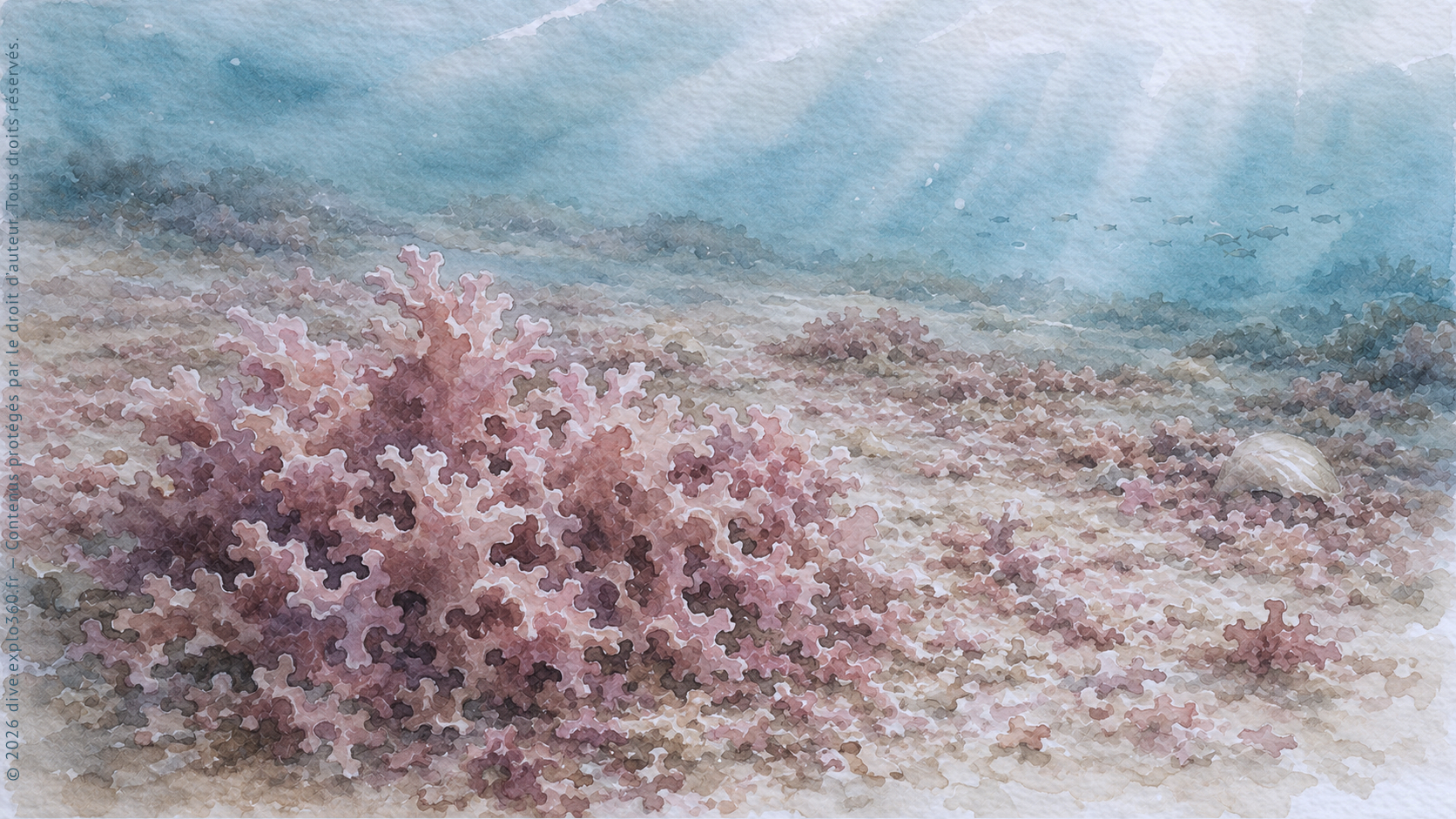
Maerl transforms a soft seabed into a very different habitat. It consists of an accumulation of calcareous red algae that grow slowly on the seabed without being attached to rock. Their calcareous branches form an uneven carpet on the sediment surface and create many small spaces where organisms can live or find shelter. Maerl thus provides a structure and complexity absent from a bare sandy seabed.
This environment shows that a landscape which seems mineral can actually be built by living organisms.
A CARPET OF CALCAREOUS ALGAE
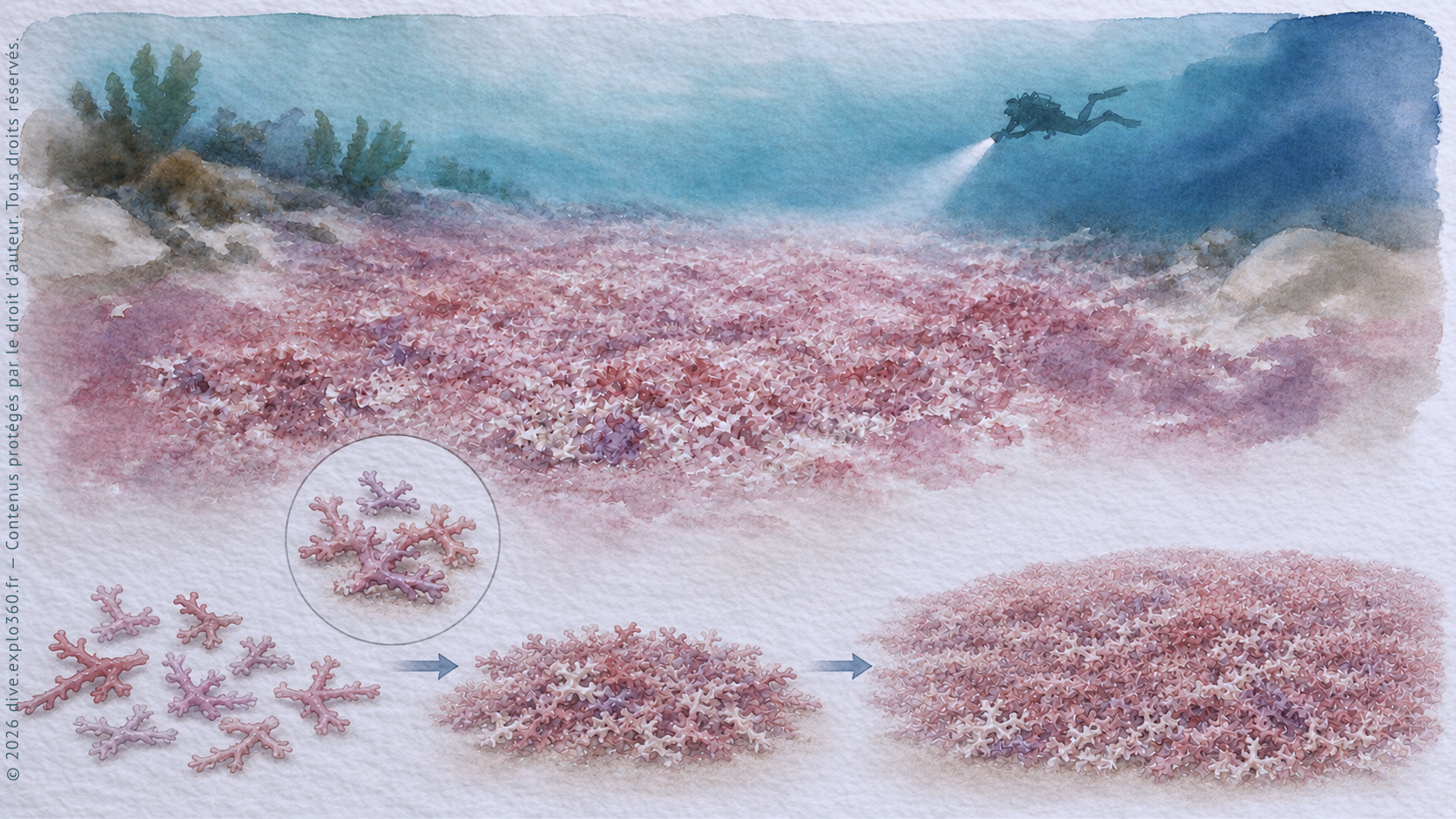
At certain depths, divers may encounter an unusual landscape. The seabed takes on pink, reddish, purple or whitish hues and seems to consist of countless small calcareous fragments. Yet it is not simply gravel. Some of these pieces are calcareous red algae living freely on the seabed, without being attached to rock. As they grow, branch and accumulate, they can form extensive areas called maerl beds.
AN ALGA THAT LOOKS LIKE A STONE
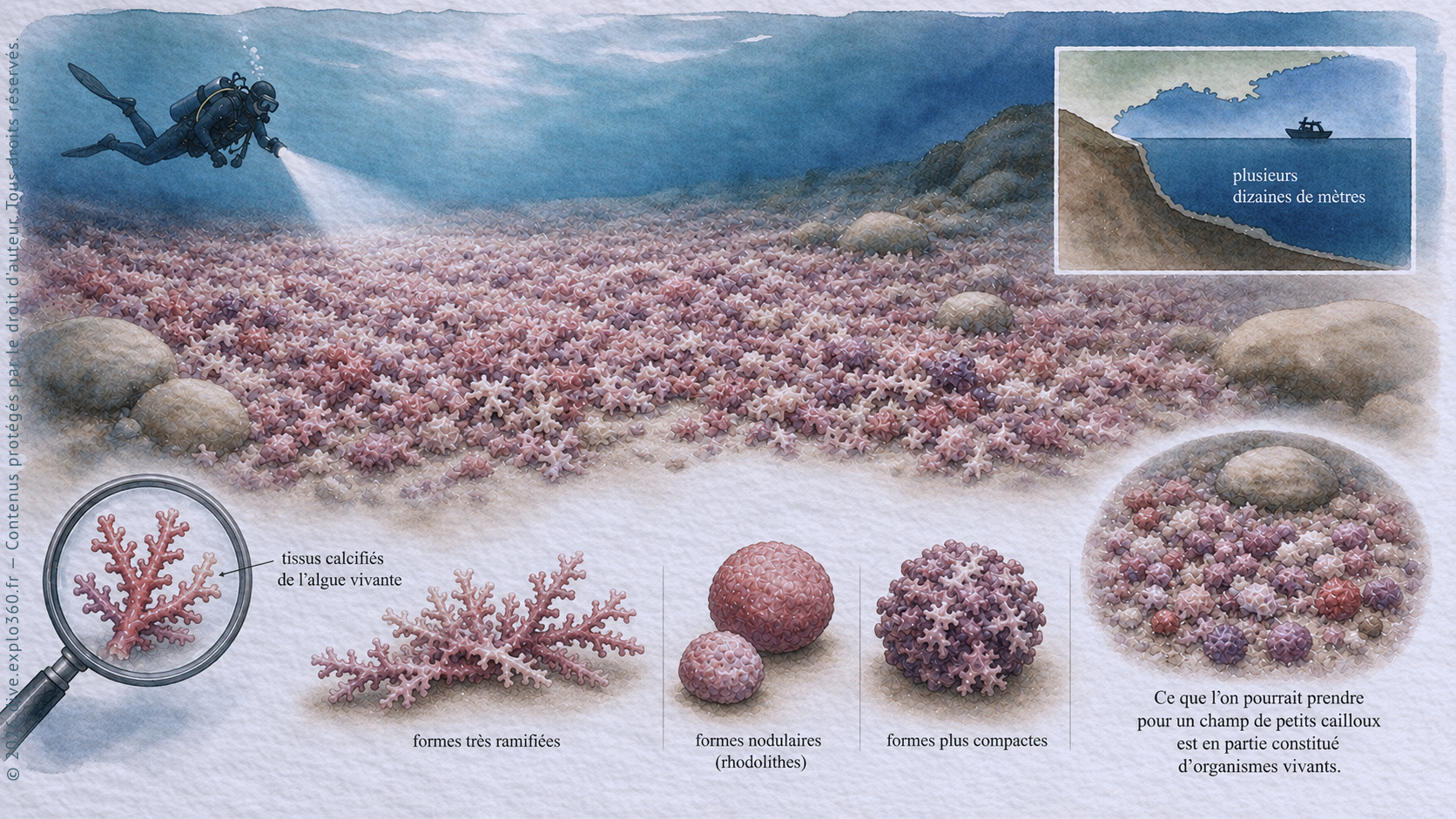
Maerl can be mistaken for mineral fragments. The algae deposit calcium carbonate in their tissues, which gives them the rigidity to form branches and nodules. The nodules formed by free-living coralline algae are known as rhodoliths. Species and environmental conditions influence their form. Some are intricately branched, while others are compact.
Mediterranean beds can occur on soft sediment on the continental shelf, often several tens of metres down. A patch that looks like scattered stones can be partly alive.
Explore the same world