
SAND
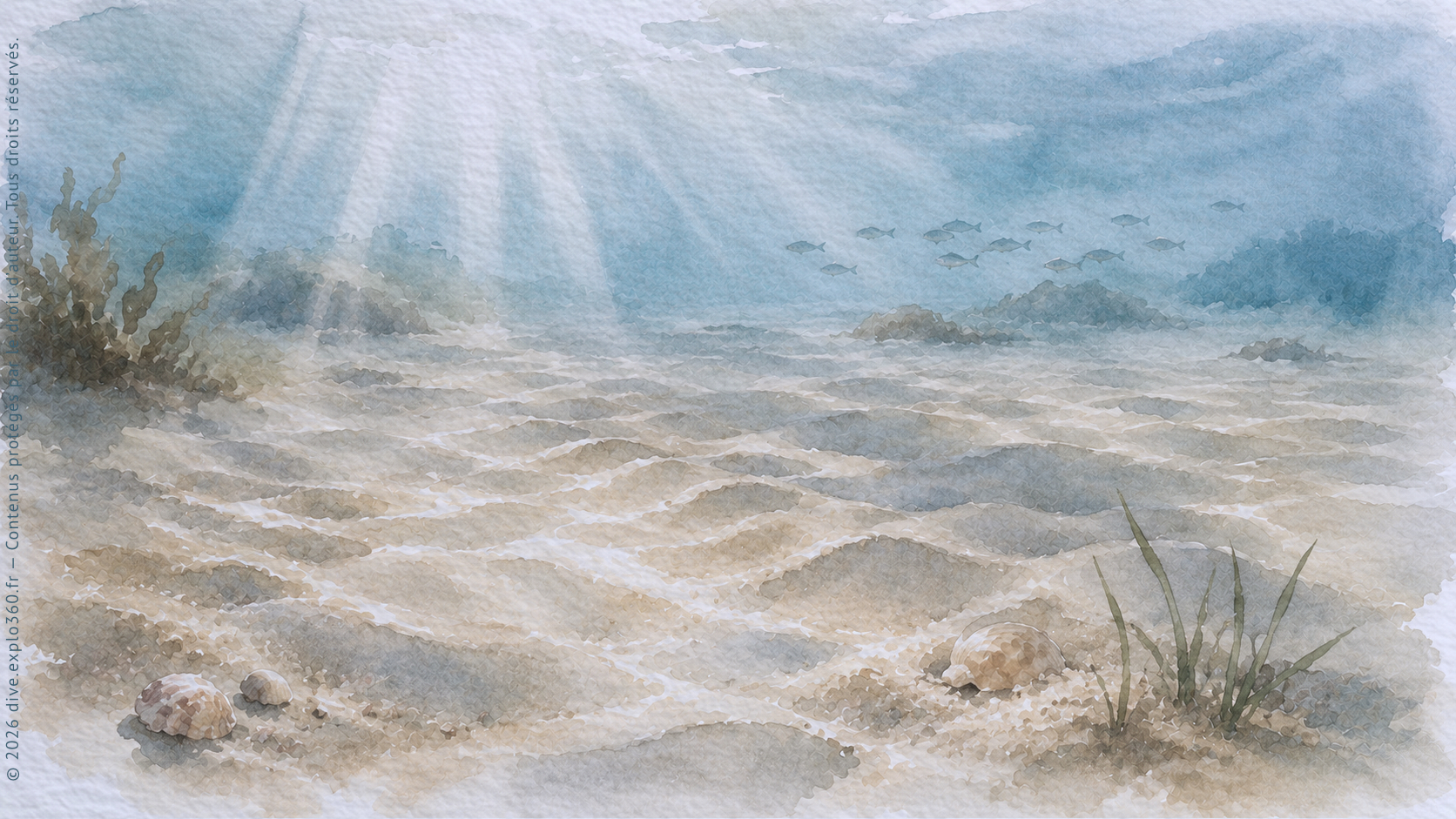
Sand is a landscape, a refuge and a living environment extending downwards. Much of its biodiversity remains invisible to divers: some animals live on its surface, others bury themselves or move between the grains.
Understanding sandy seabeds therefore means learning to look differently at a landscape where most life does not always reveal itself directly.
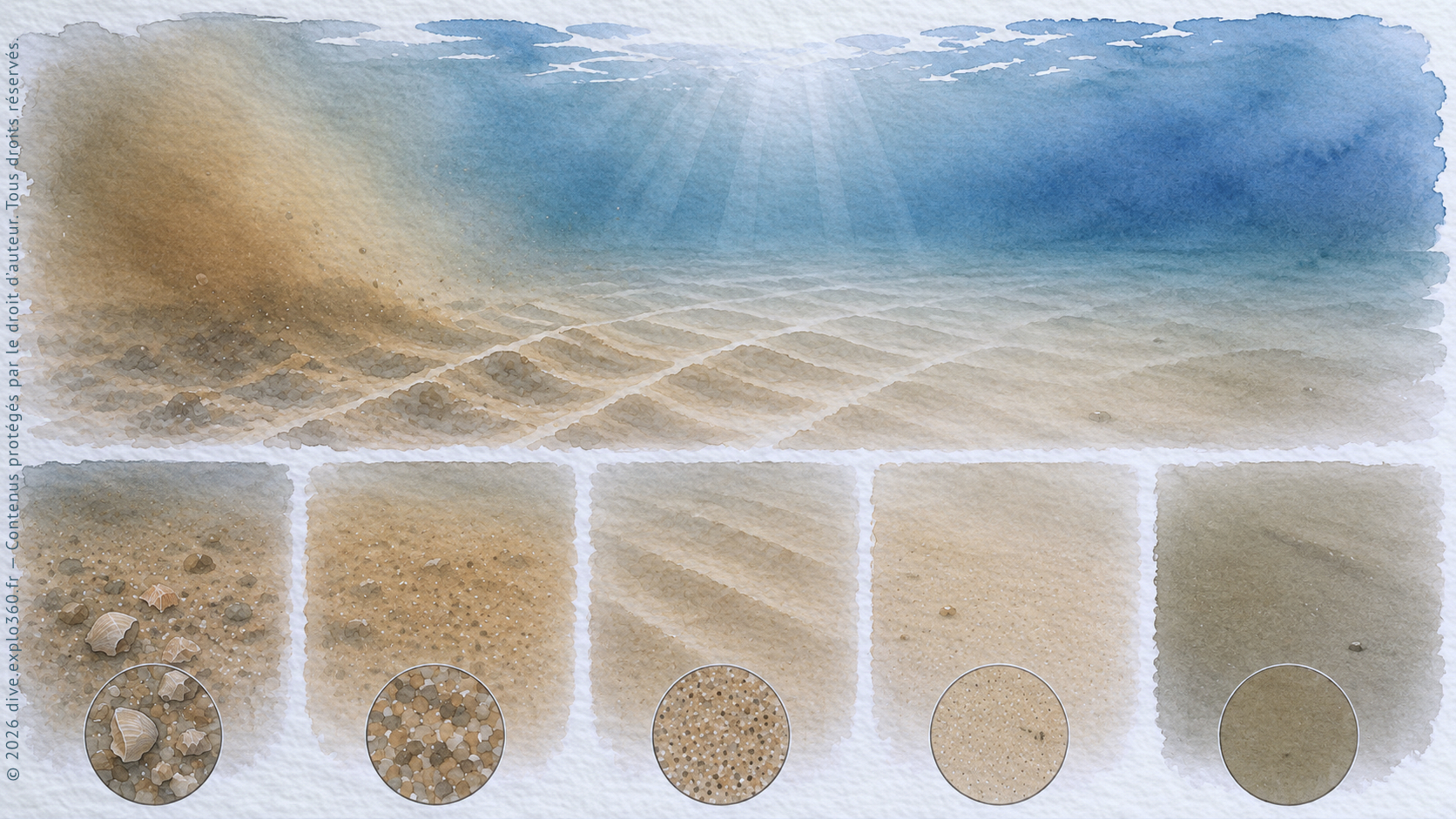
Every grain can be moved by waves and currents. When the water becomes rough, the surface changes: ripples appear, disappear or shift. A storm can reshape in a few hours a landscape that seemed perfectly still.
But not all soft seabeds are identical.
Grain size, origin, depth, the amount of mud mixed with the sand and the strength of currents determine the nature of the seabed.
Coarse sand regularly stirred by water therefore does not support the same communities as fine, relatively stable sand.
Sand is not simply scenery: it is a habitat whose physical characteristics determine which organisms can live there.
On sand, these refuges are rare.
The species living there have developed other solutions.
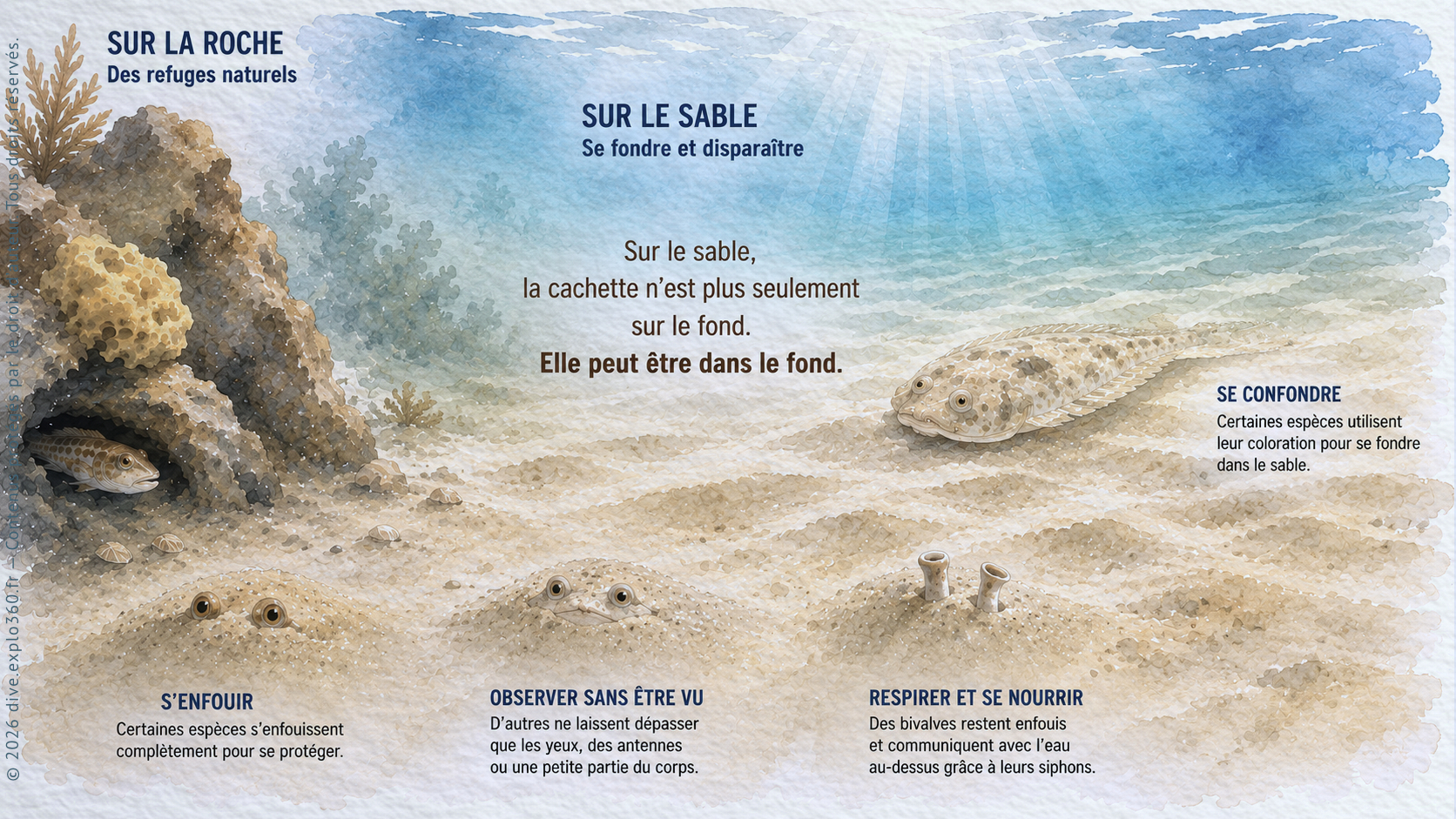
Some bury themselves completely. Others leave only their eyes, antennae or the tip of a siphon sticking out. Some fish use their colouring to blend into the seabed, while others spend much of their existence beneath the surface.
The hiding place is no longer necessarily on the seabed.
It may be within it.
AT THE SURFACE: EPIFAUNA
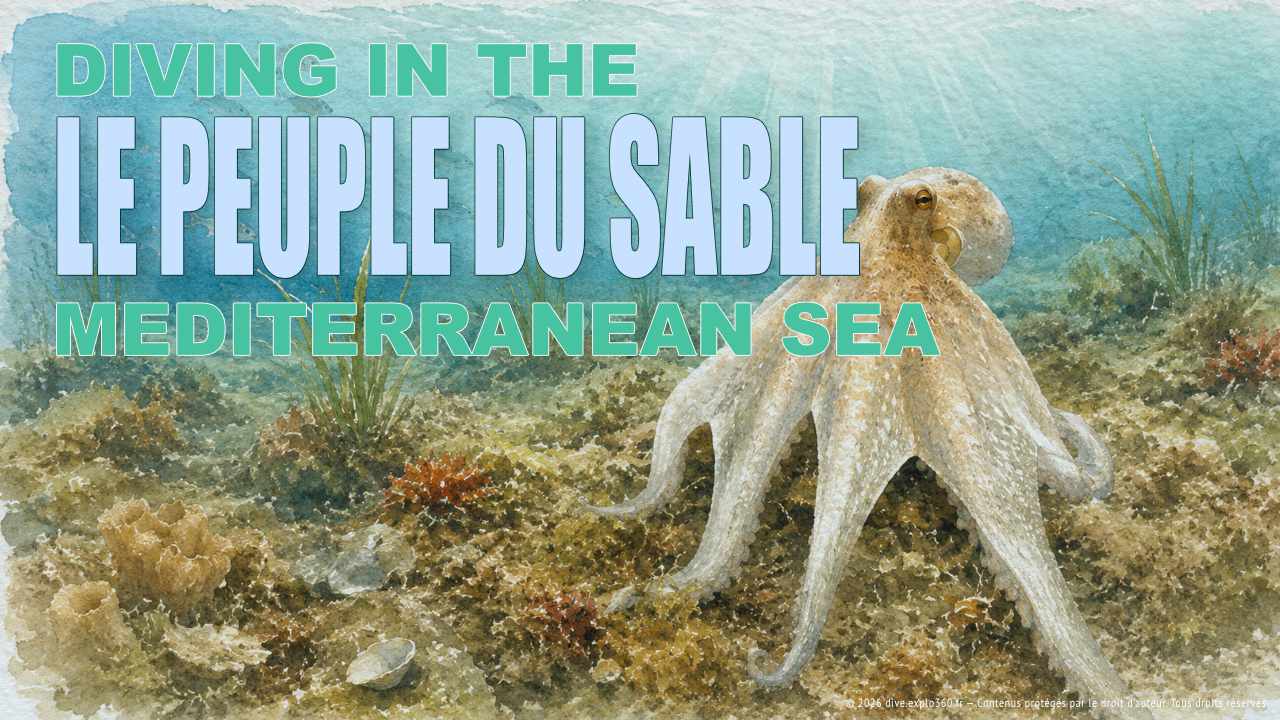
These animals belong to the epifauna, meaning organisms living on the seabed surface.
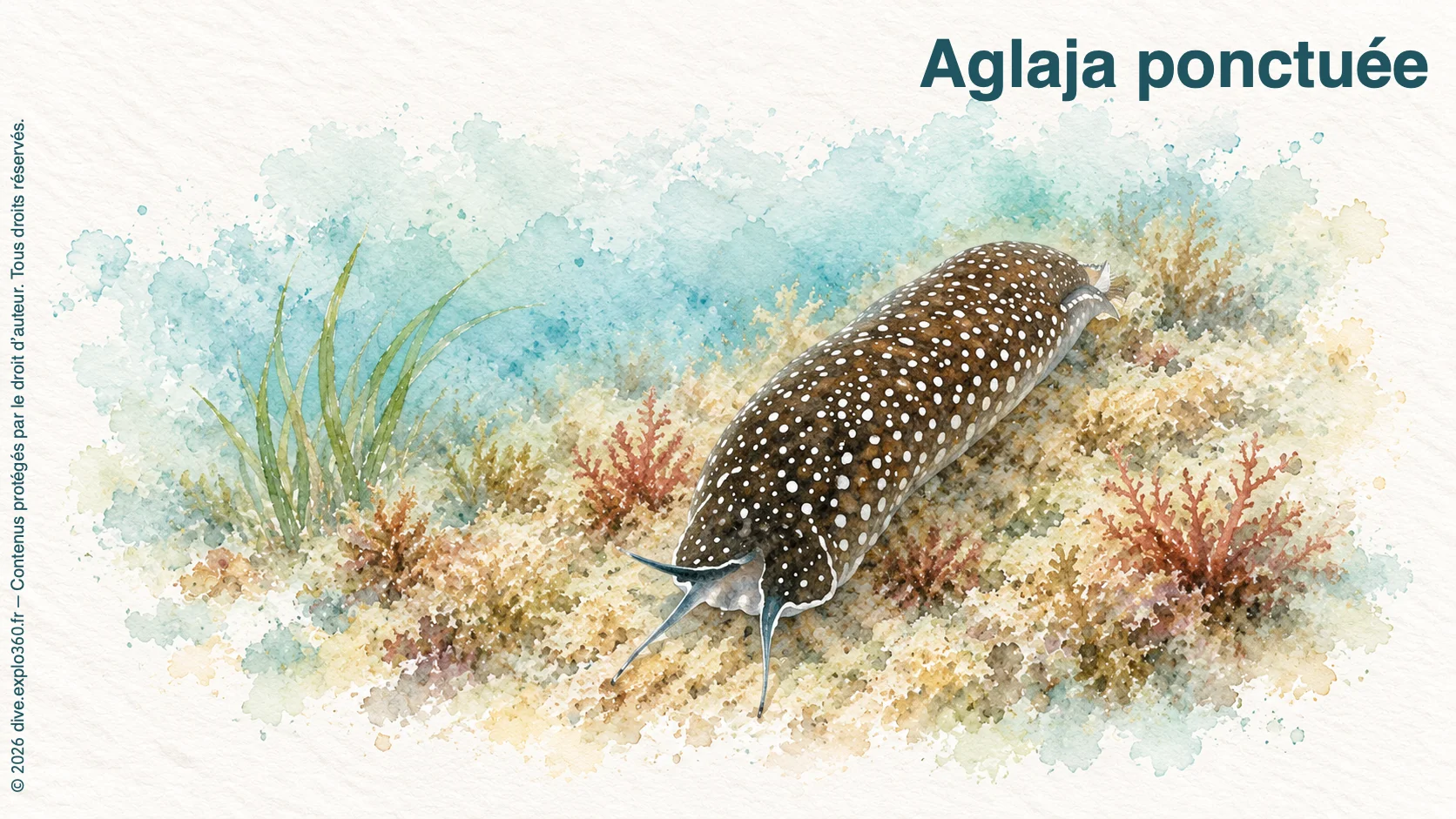
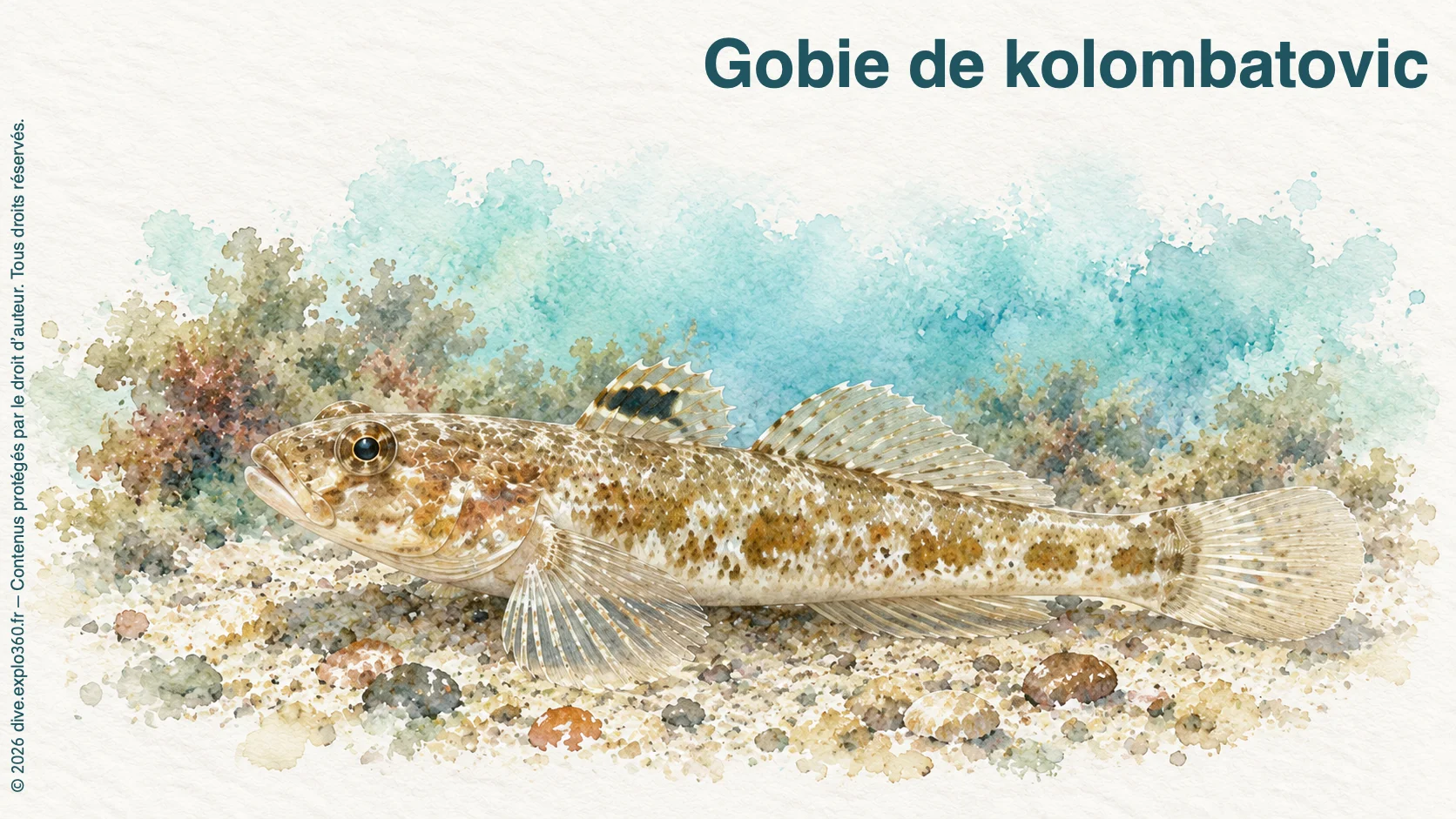
In such an exposed area, many use camouflage, stillness or proximity to the sediment to go unnoticed.
AT THE BOUNDARY: LIVING HALF HIDDEN
Bivalves, for example, can stay beneath the surface and use their siphons to communicate with the open water.
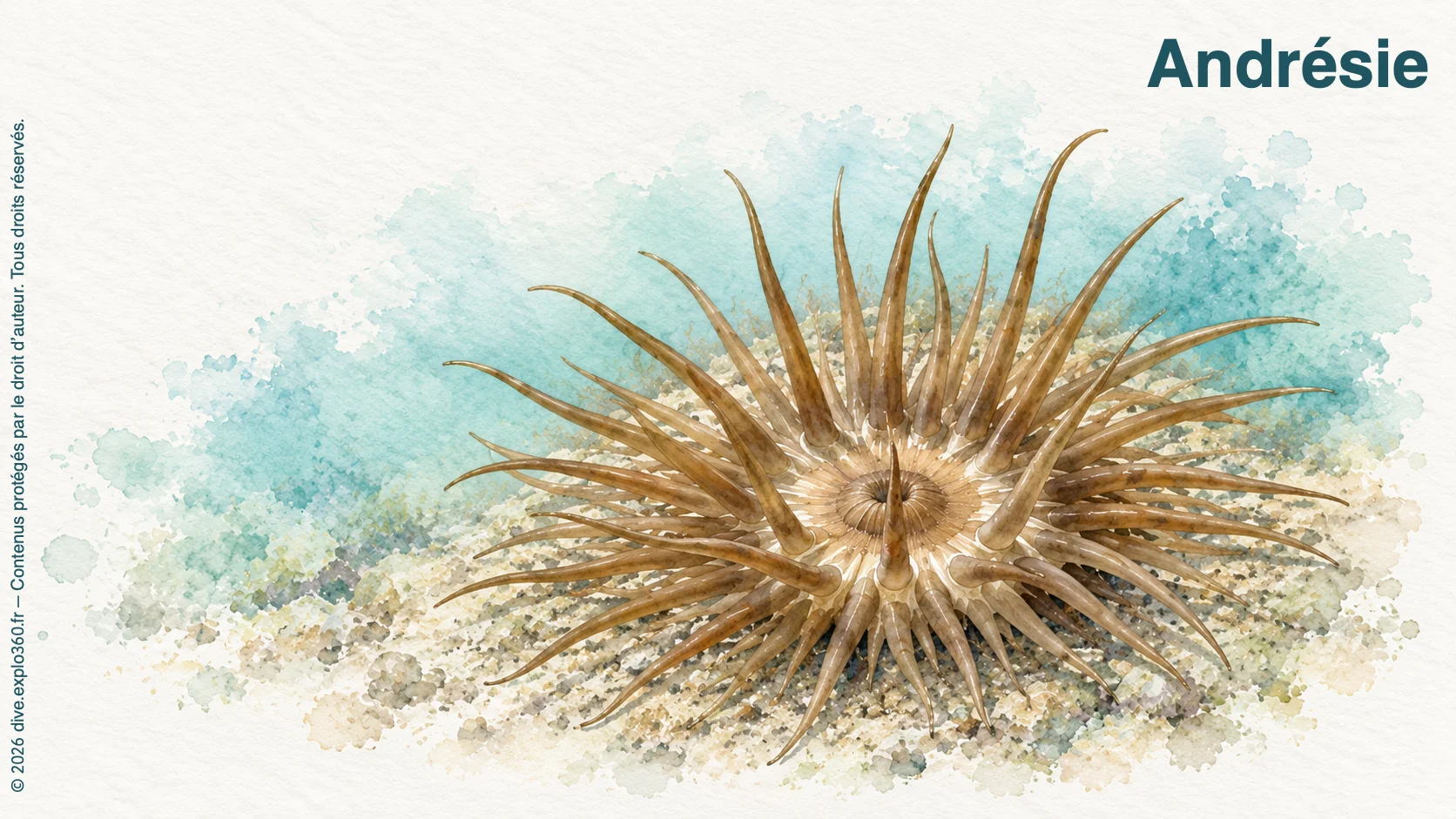
Other organisms reveal only a small part of their body: eyes, antennae or the entrance to a tunnel.
A few surface clues can thus reveal almost entirely invisible life.
BENEATH THE SURFACE: INFAUNA
Some dig tunnels, others bury themselves or move between the grains.
Sand is therefore not just a surface on which animals live. It is itself a habitable volume.
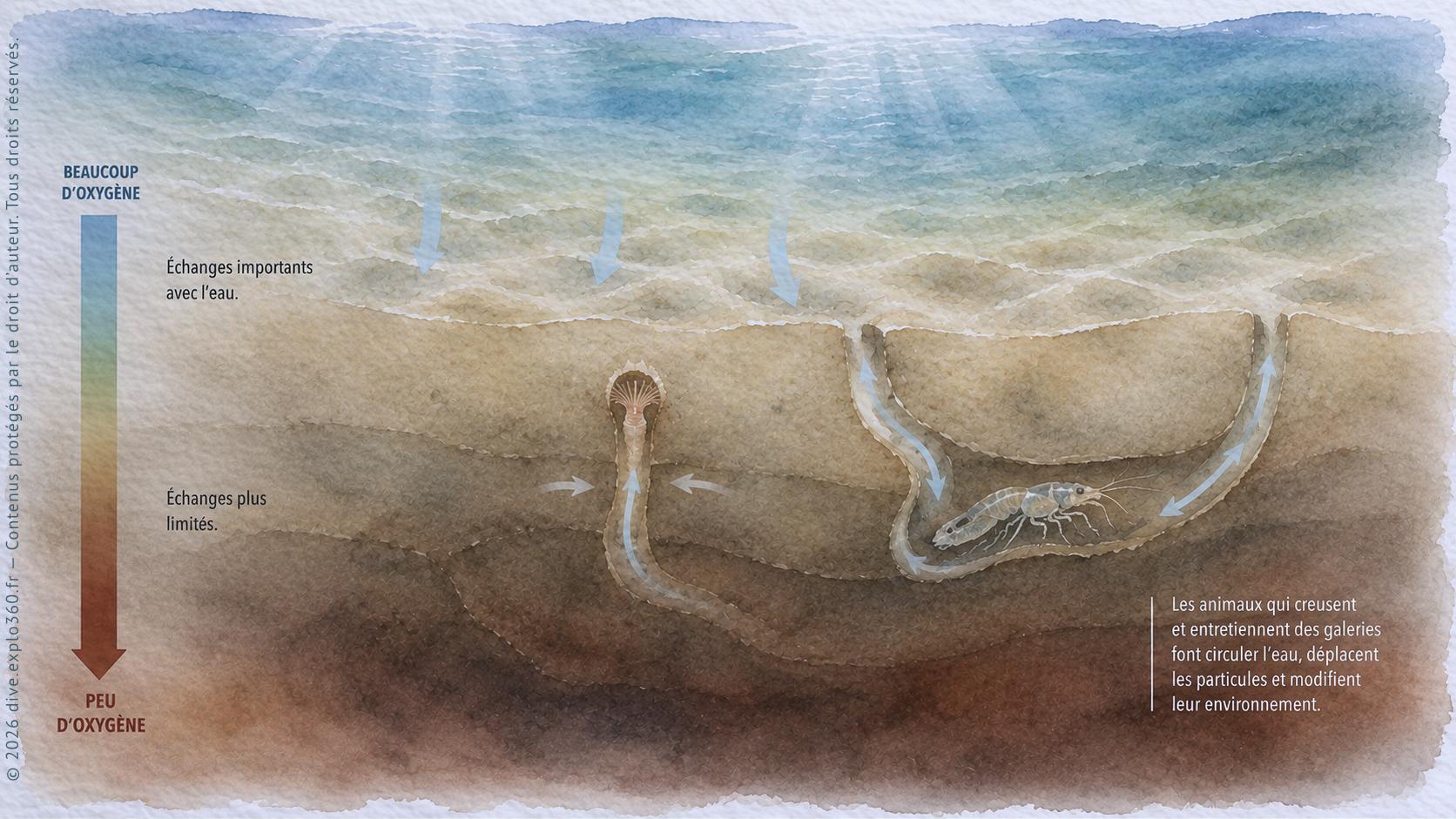
But deeper down, exchanges with the water above become more limited.
The amount of oxygen then gradually decreases.
Sediment is therefore not uniform: its first few centimetres may have very different conditions from those found deeper down.
Animals that dig and maintain tunnels themselves contribute to these exchanges. By moving particles and circulating water through the sediment, they alter their environment.
Sand is constantly stirred by the sea, but also by the organisms inhabiting it.
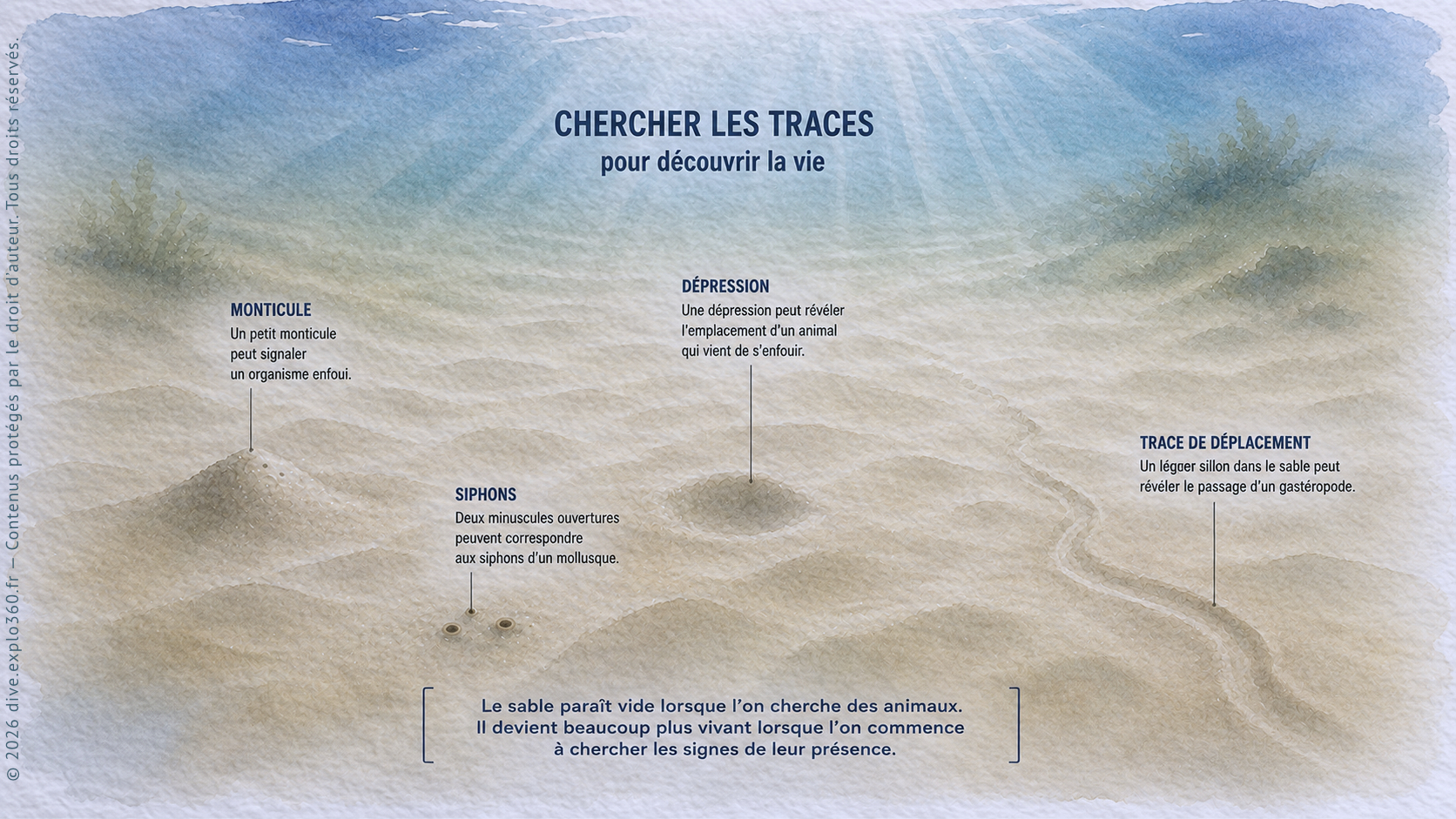
Sometimes we need to look for their tracks. A small mound may indicate a buried organism. Two tiny openings may correspond to a mollusc’s siphons. A depression may reveal the location of an animal that has just buried itself. A series of marks in the sand may betray the movement of a gastropod or crustacean.
These clues gradually transform our perception of the landscape.
Sand seems empty when we look for animals. It becomes much more alive when we start looking for signs of their presence.
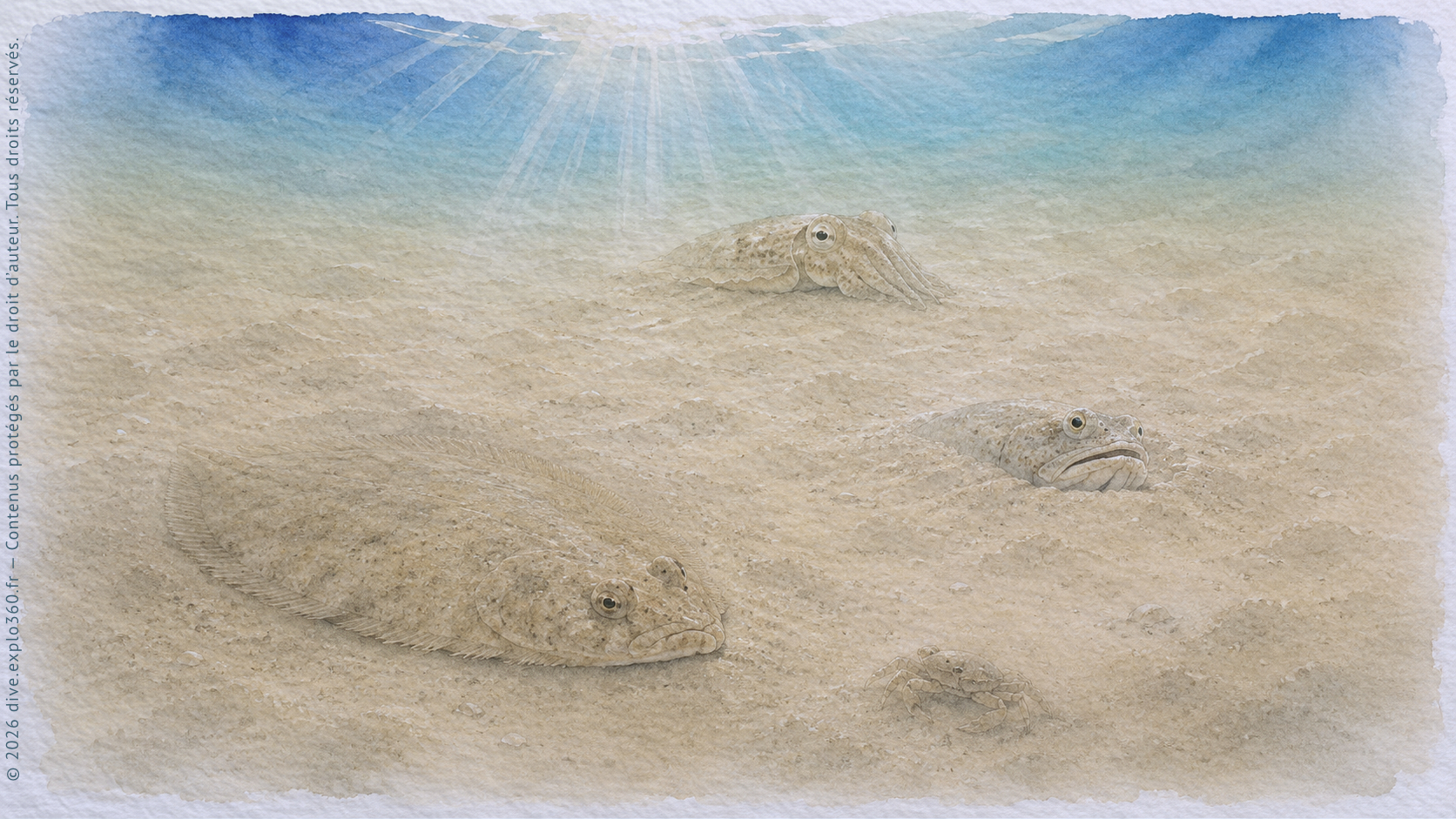
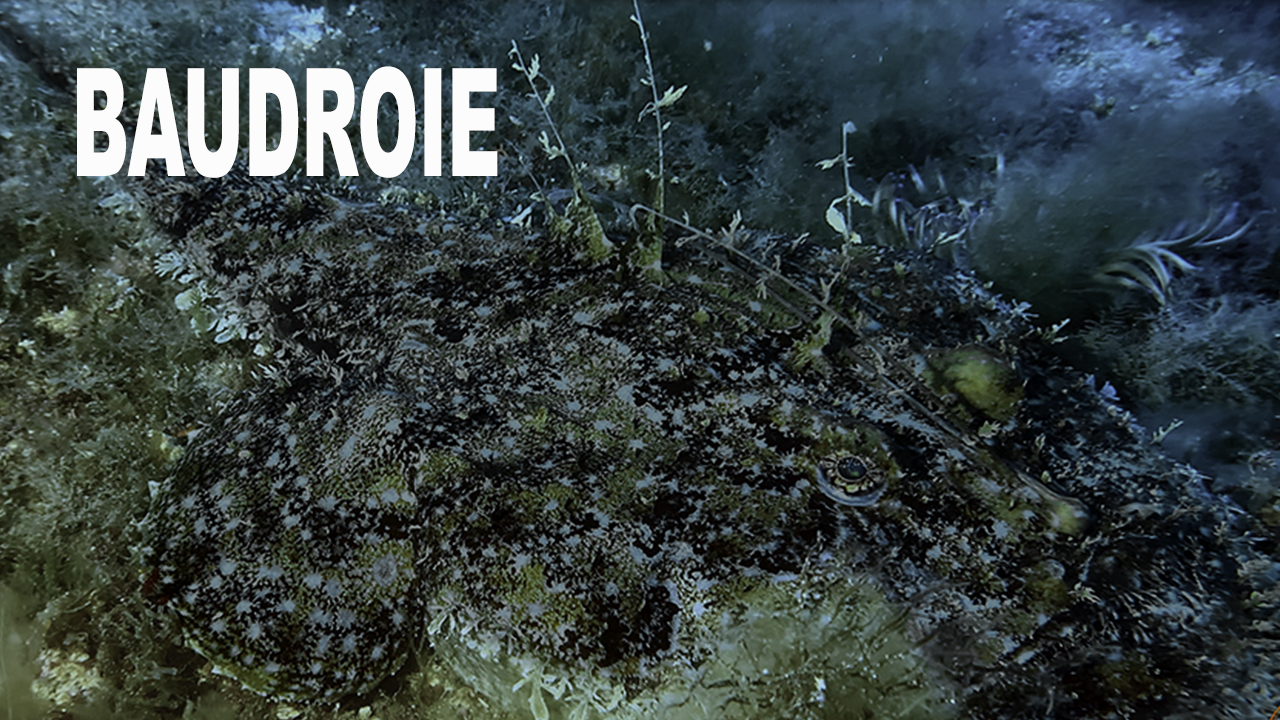
Camouflage is therefore particularly important.
Sole provide a striking example. Their flattened body rests directly on the seabed and both eyes lie on the same side of the head. Their colouring helps make them difficult to distinguish from the substrate.
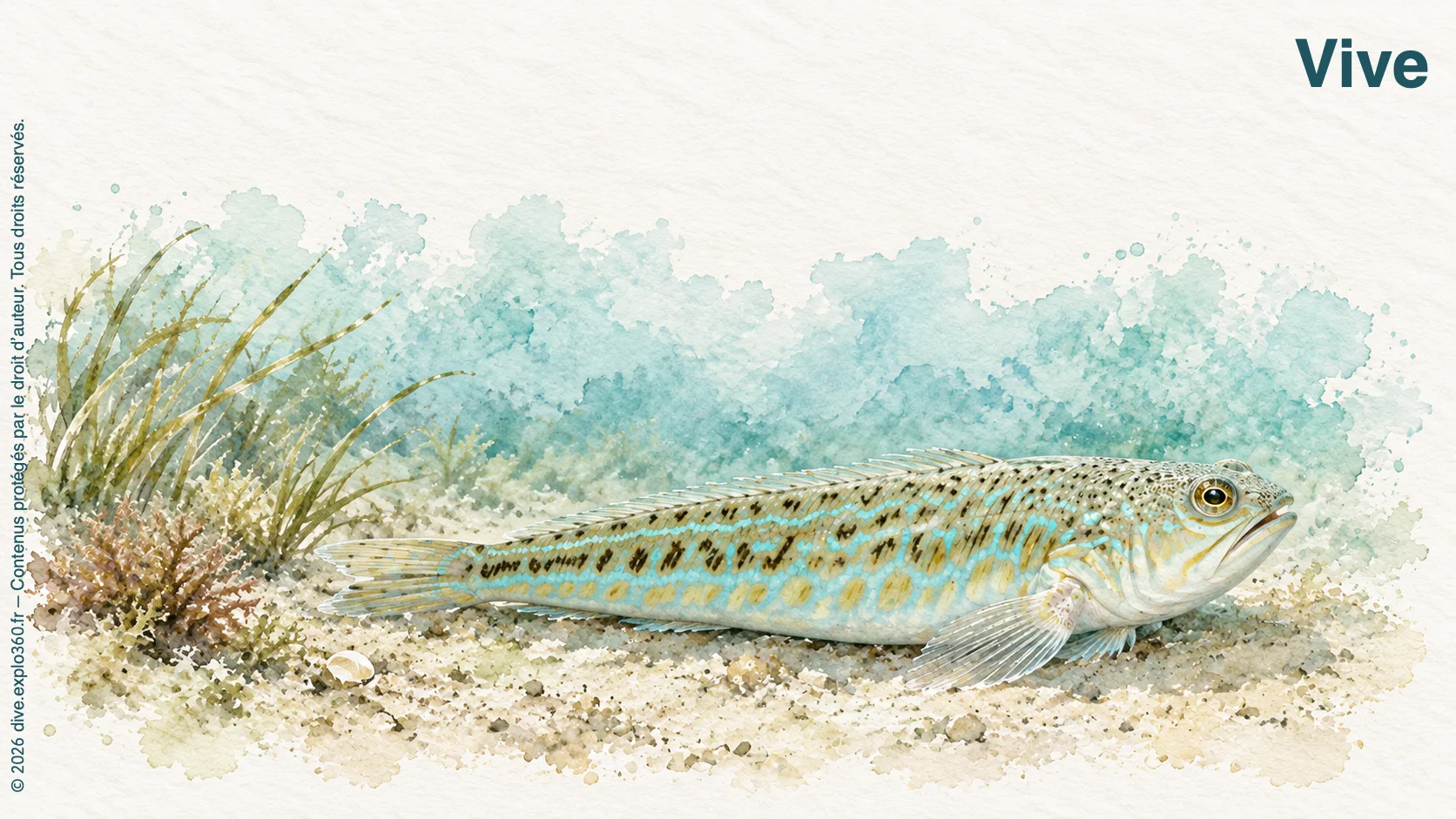
Weever fish adopt another strategy: they can bury themselves almost entirely and wait for prey to pass nearby.
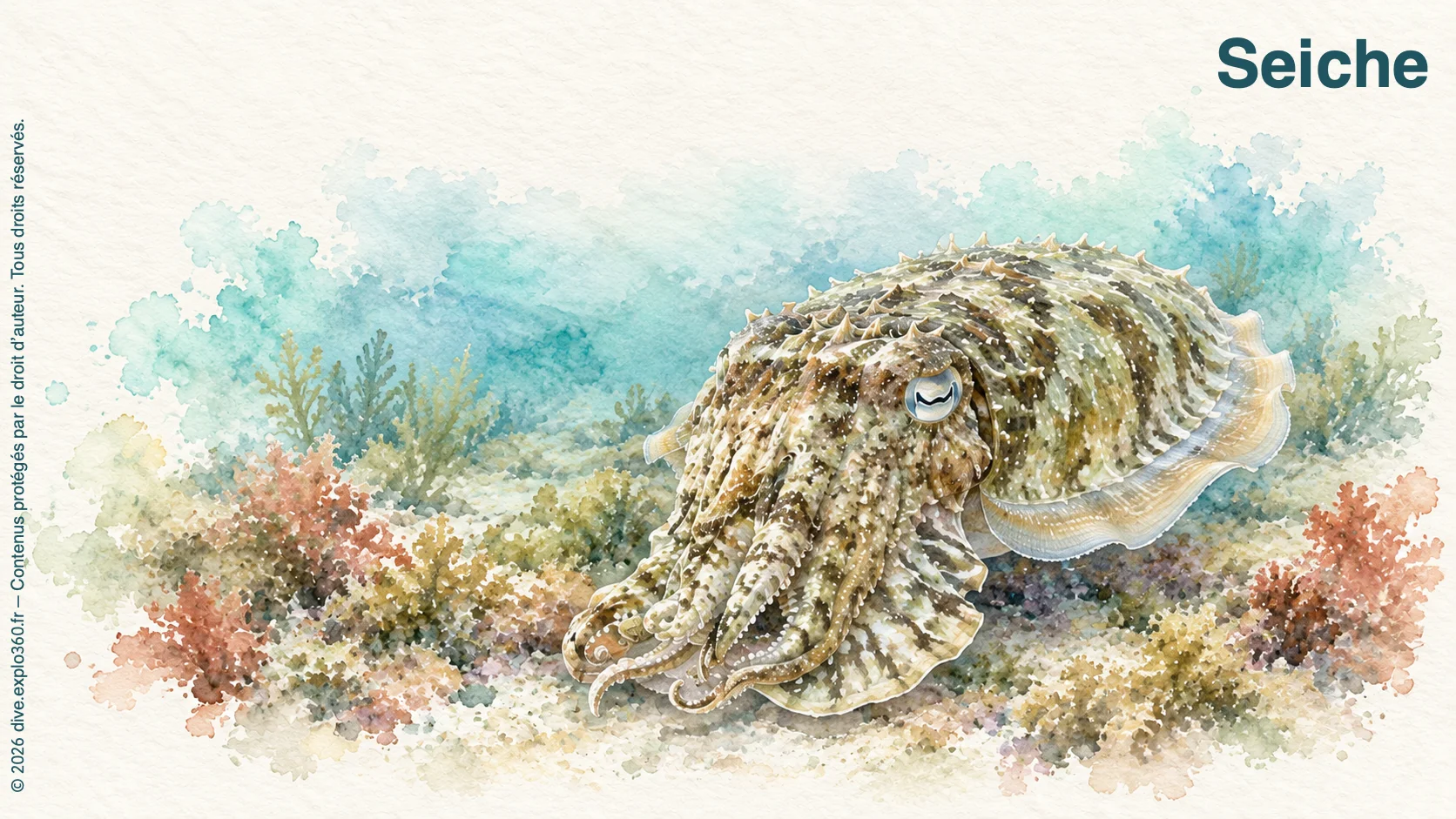
Cuttlefish, small crustaceans and many other animals also use colouring, stillness or burial.
Here, the boundary between habitat and camouflage can sometimes be difficult to perceive.
Sand protects those that can resemble it or disappear within it.
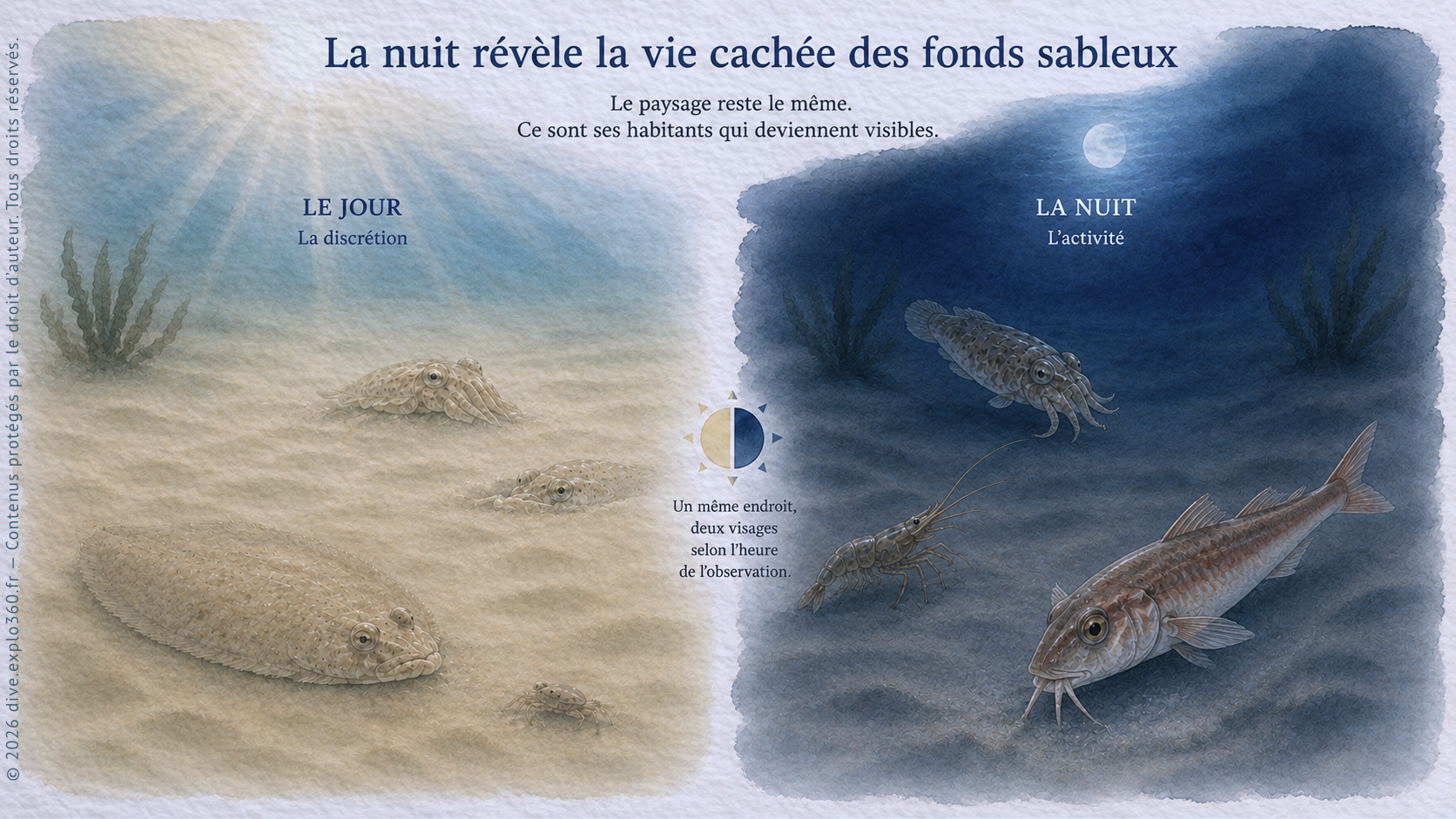
Animals buried during the day come to the surface. Some crustaceans become active. Predators roam the seabed in search of prey.
The same place can thus present two very different faces depending on the time at which we observe it.
The landscape has not changed.
Its inhabitants have become visible.
Interactive quiz
Test your knowledge
5 question(s) to test your knowledge.
Interactive quiz
Test your knowledge
Question 1 out of 5Score: 0
Why can two sandy seabeds support different communities?
Which strategies allow animals to live on or in a sandy seabed? More than one answer is possible
What are organisms living directly inside the sediment called?
Which clues can reveal animals hidden beneath the sand? More than one answer is possible
What generally happens deeper in the sediment?
Final result
Quiz completed
correct answers
Conclusion
Observing sand therefore means learning to change scale and look differently. The surface is only the visible part of a habitat extending downwards, where many organisms bury themselves, move, breathe and continually transform the sediment.
For the naturalist diver, a seabed that seemed empty then becomes a genuine field of observation.
Sources
Explore the same world