SAND
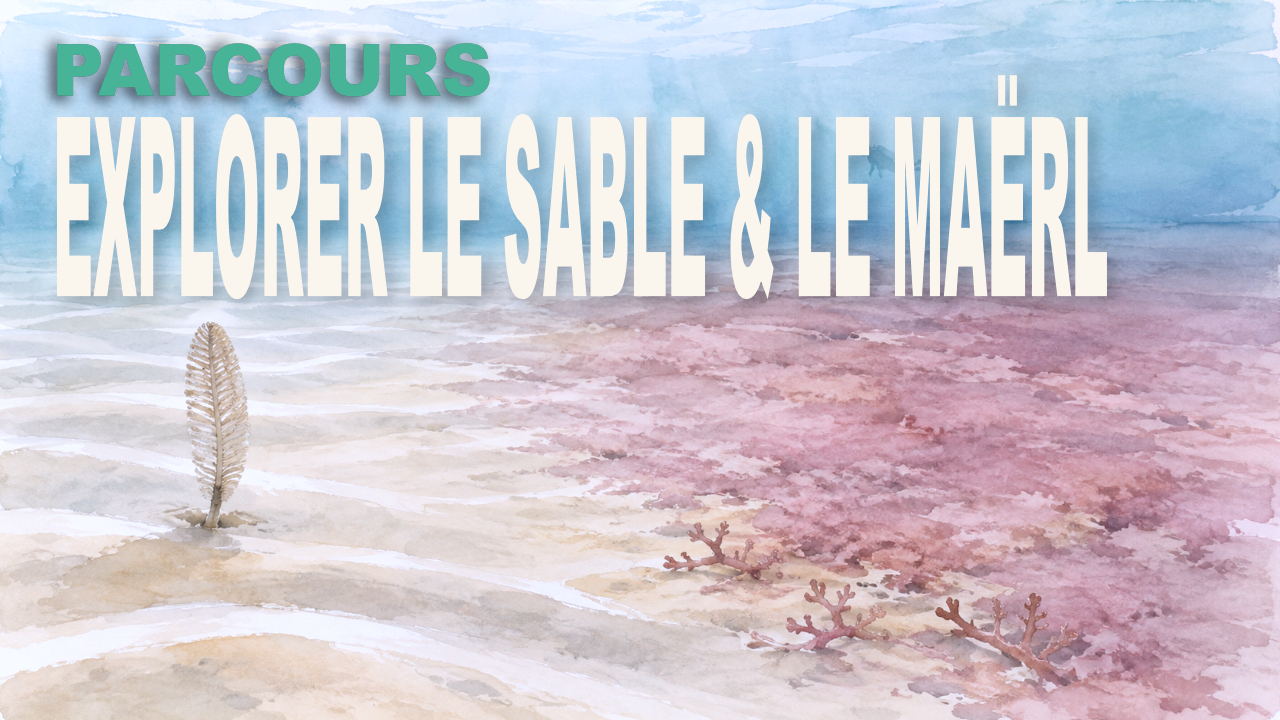
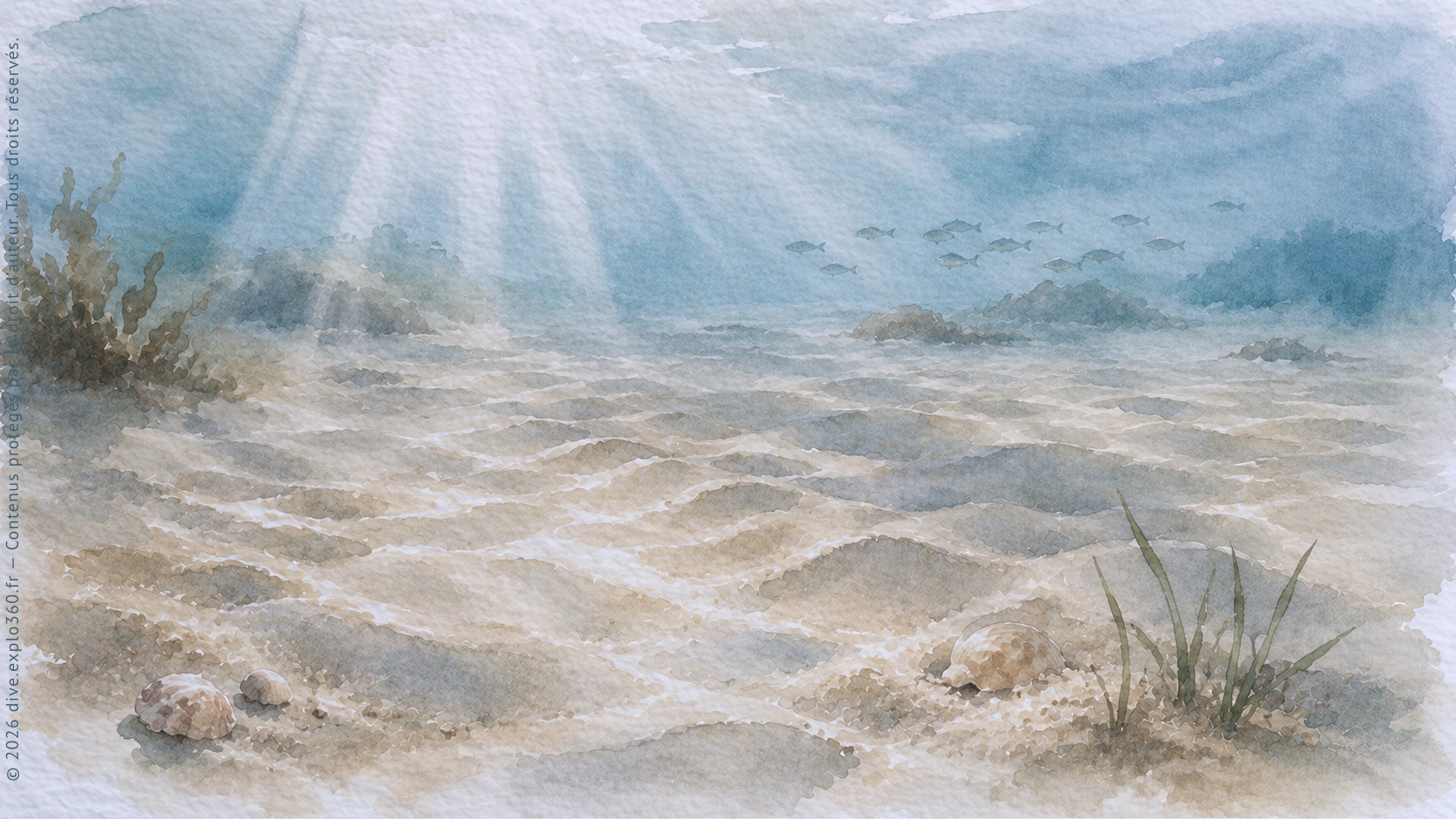
At first glance, a sandy seabed may seem almost empty. Yet beneath this mobile surface lies a complex habitat, constantly shaped by waves, currents and the organisms living there.
Some animals live on the surface. Others burrow into the sediment or move between the grains, beyond a diver’s view.
The surface is where a diver starts looking. Much of the habitat lies below it.
A MOVING LANDSCAPE
Unlike rock, sand does not provide a stable support.
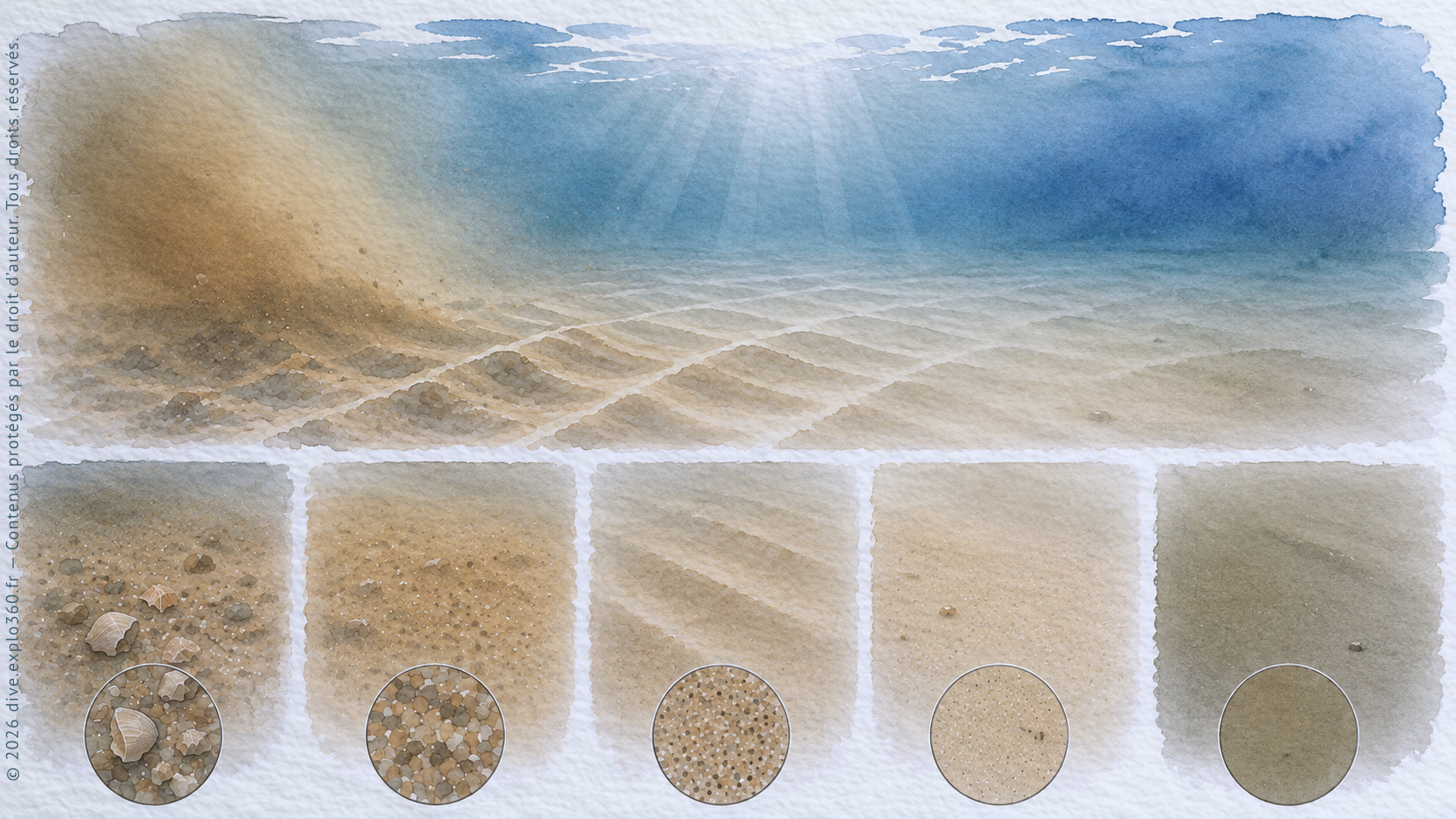
Every grain can be moved by waves and currents. As the water moves the grains, ripples form, shift and disappear. A storm can reshape in a few hours a landscape that seemed perfectly still.
But not all soft seabeds are identical.
Grain size, origin, depth, the amount of mud mixed with the sand and the strength of currents determine the nature of the seabed.
Coarse sand regularly stirred by water therefore does not support the same communities as fine, relatively stable sand.
Those physical differences help determine which species can live in the sediment.
LIVING WITHOUT ROCKS
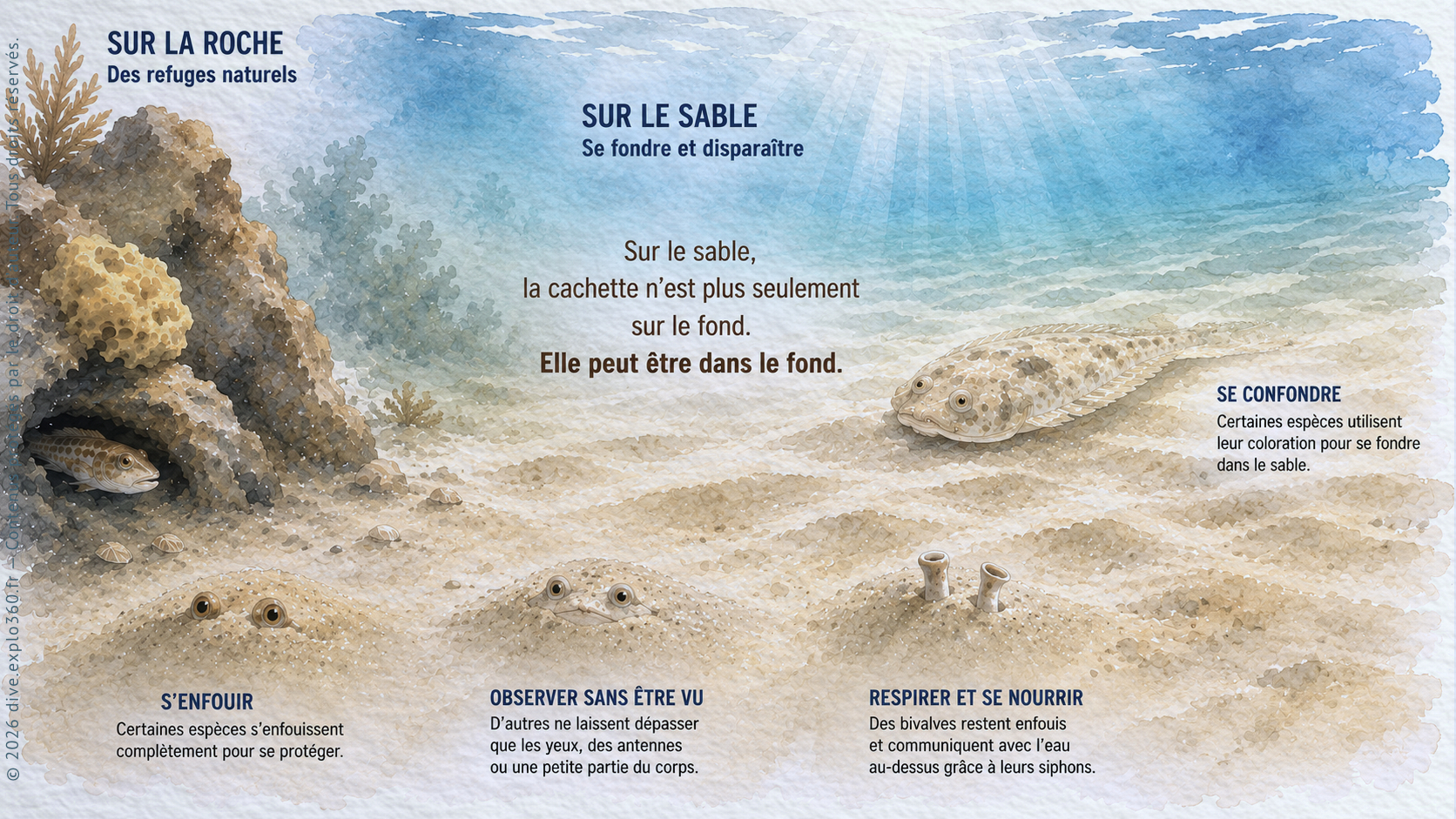
On a rocky wall, an animal can attach itself, shelter in a crack or hide behind a sponge.
On sand, these refuges are rare.
The species living there have developed other solutions.
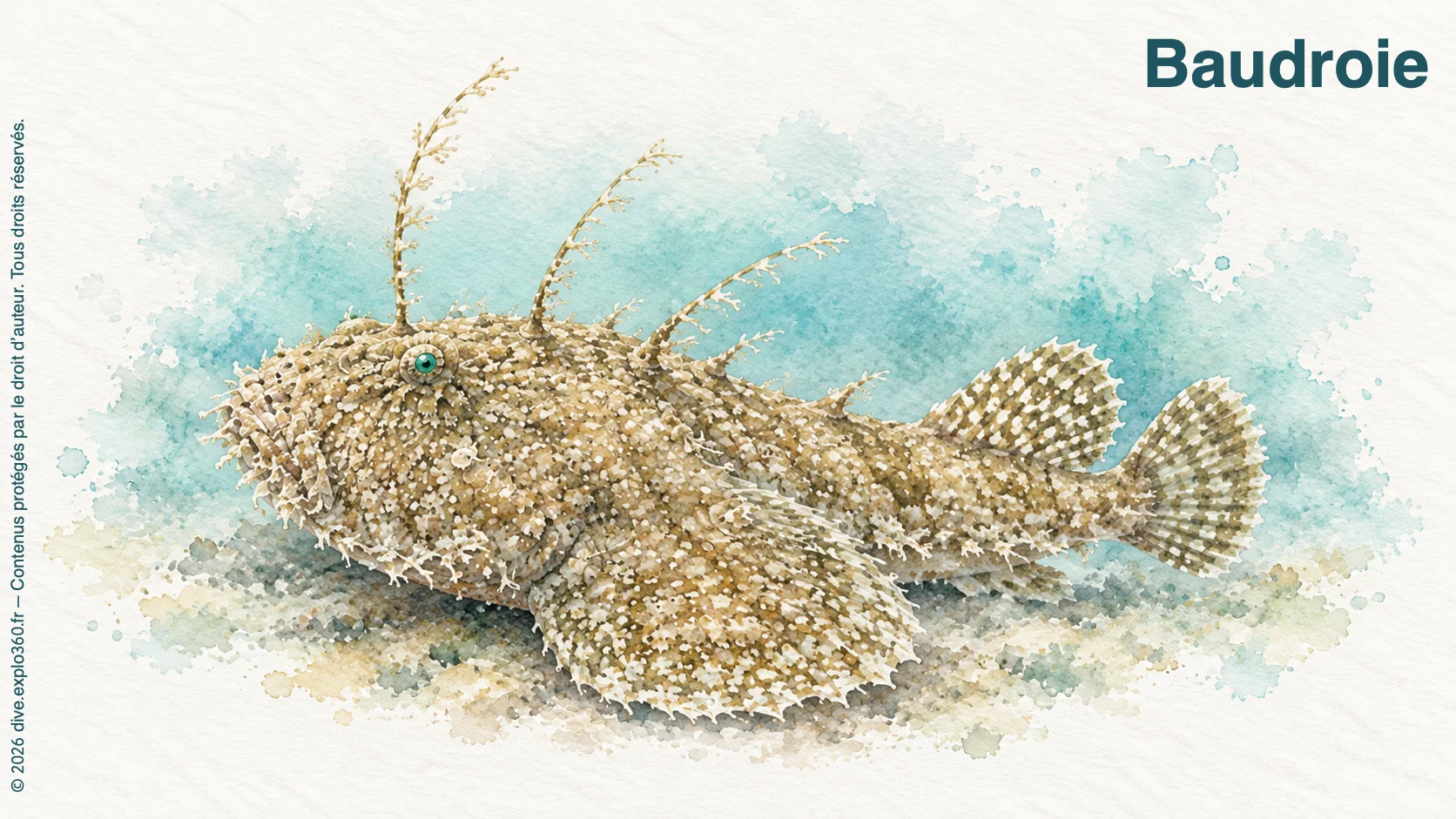
Some bury themselves completely. Others leave only their eyes, antennae or the tip of a siphon sticking out. Some fish use their colouring to blend into the seabed, while others spend much of their existence beneath the surface.
On open sand, the surface can give little away.
The animal may be hidden inside the seabed itself.
BREATHING BENEATH THE SAND
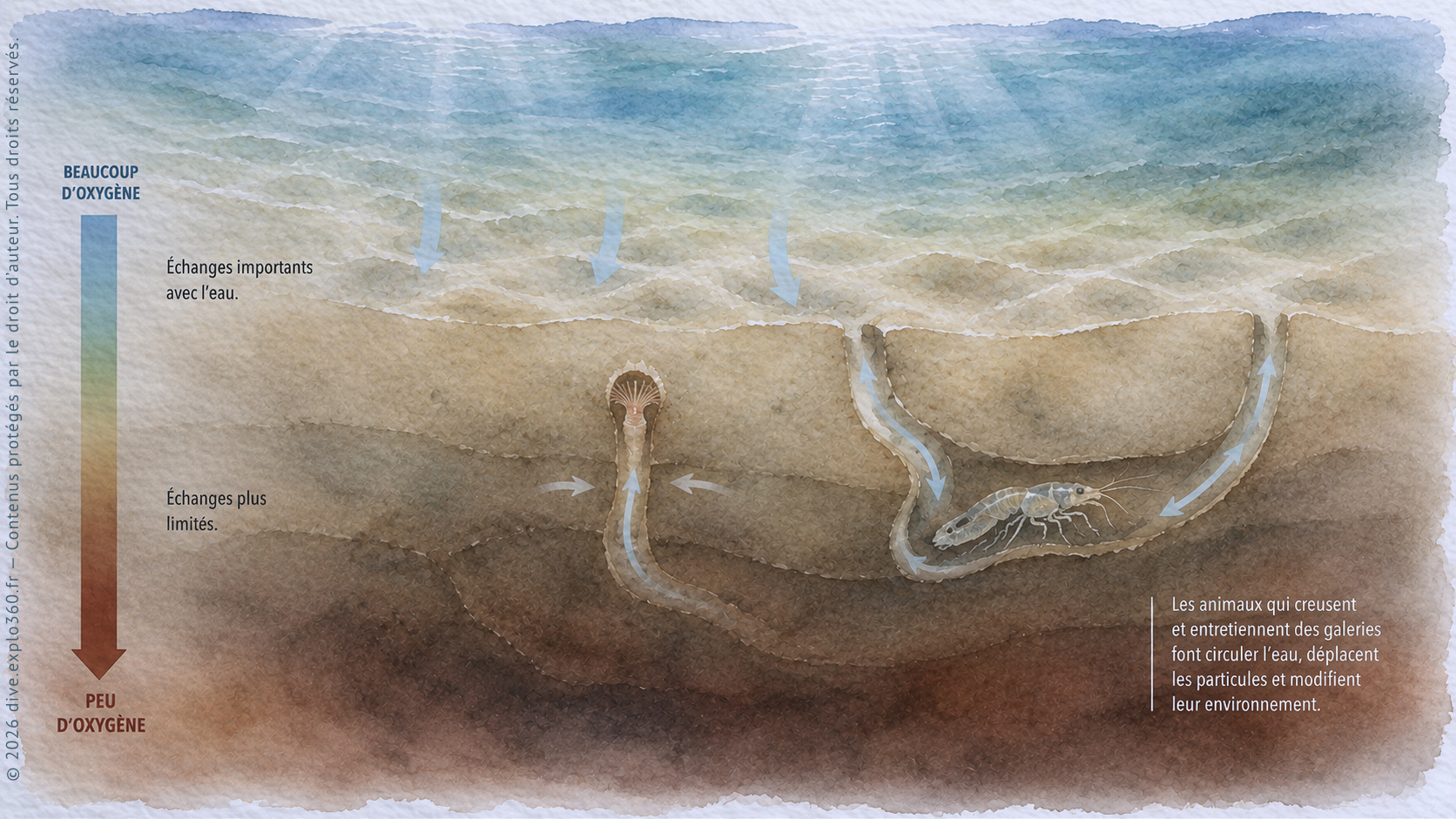
Oxygen reaches the sediment by diffusion and as water flows between the grains. How far it penetrates depends on grain size, mixing and how much oxygen organisms use. Animals that pump water through their burrows can change the oxygen supply near the burrow. How much oxygen reaches the surrounding sediment still depends on local conditions.
TRACKS THAT TELL A STORY
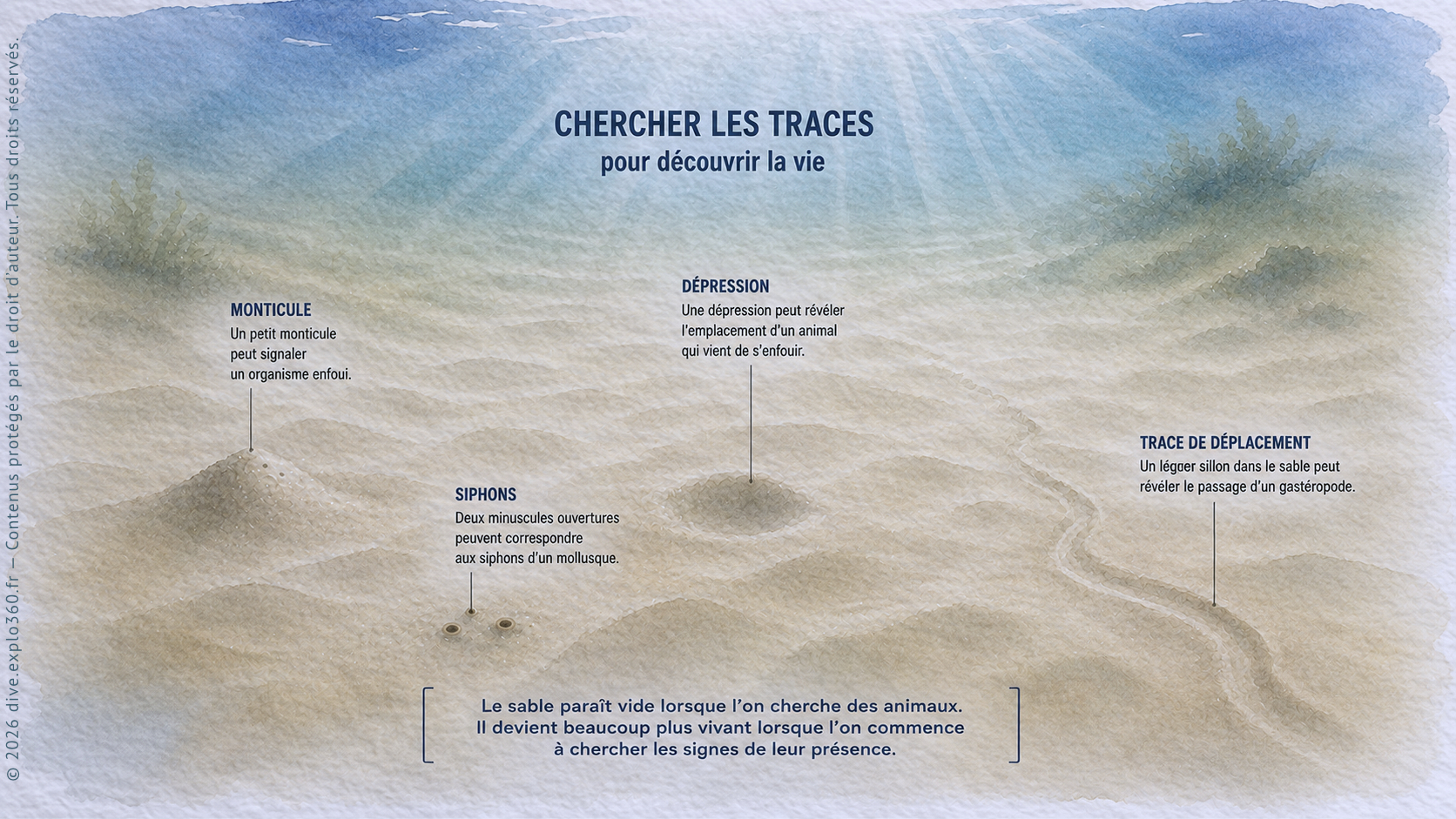
The first sign of life on a sandy seabed may be a change in its surface.
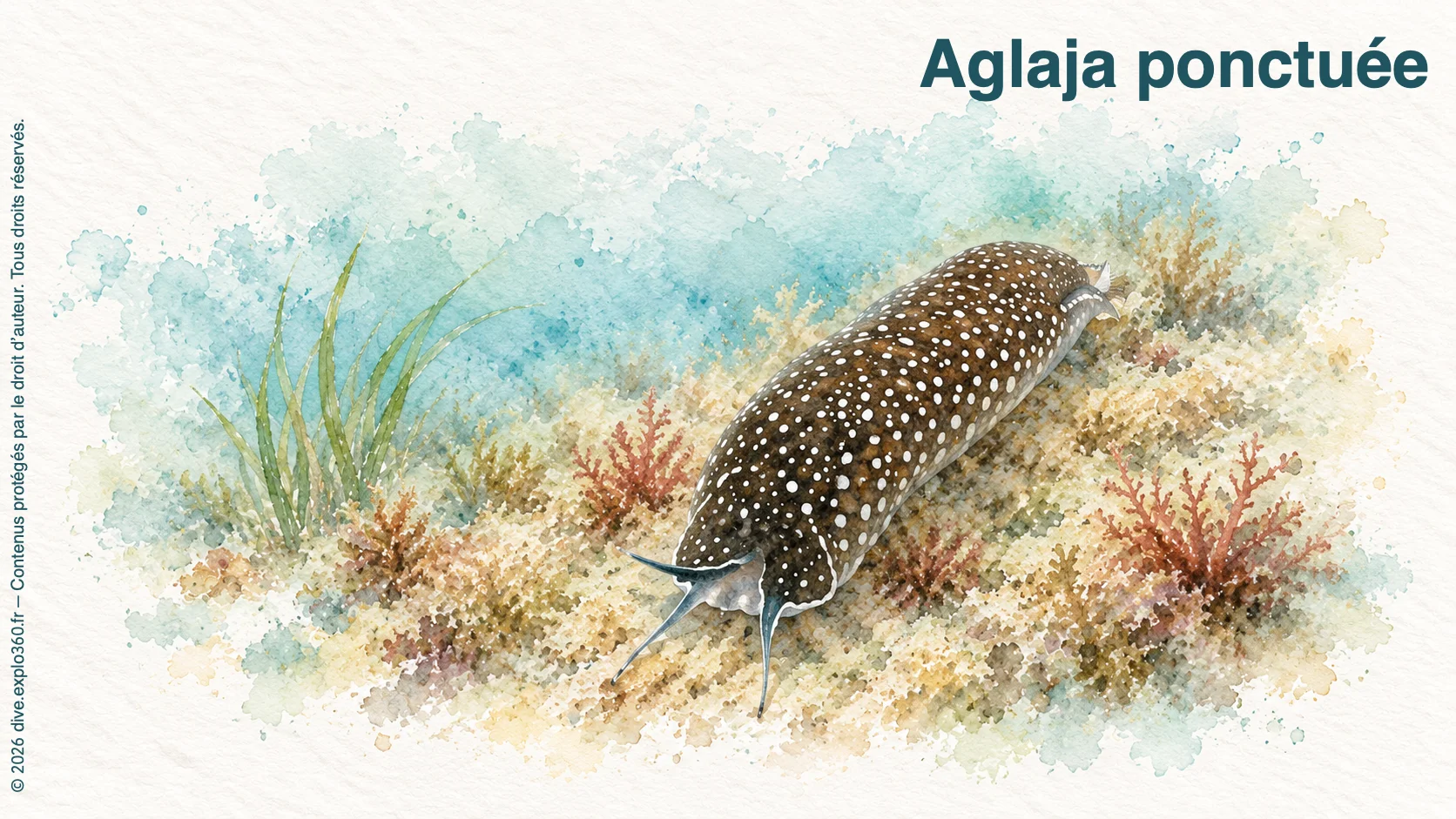
Sometimes we need to look for their tracks. A small mound may indicate a buried organism. Two tiny openings may correspond to a mollusc’s siphons. A depression may reveal the location of an animal that has just buried itself. A line of marks may trace the route of a sea snail or a crustacean.
The longer you look, the more signs of activity emerge.
A patch that seemed empty can turn out to be full of tracks and burrow entrances.
DISAPPEARING TO SURVIVE
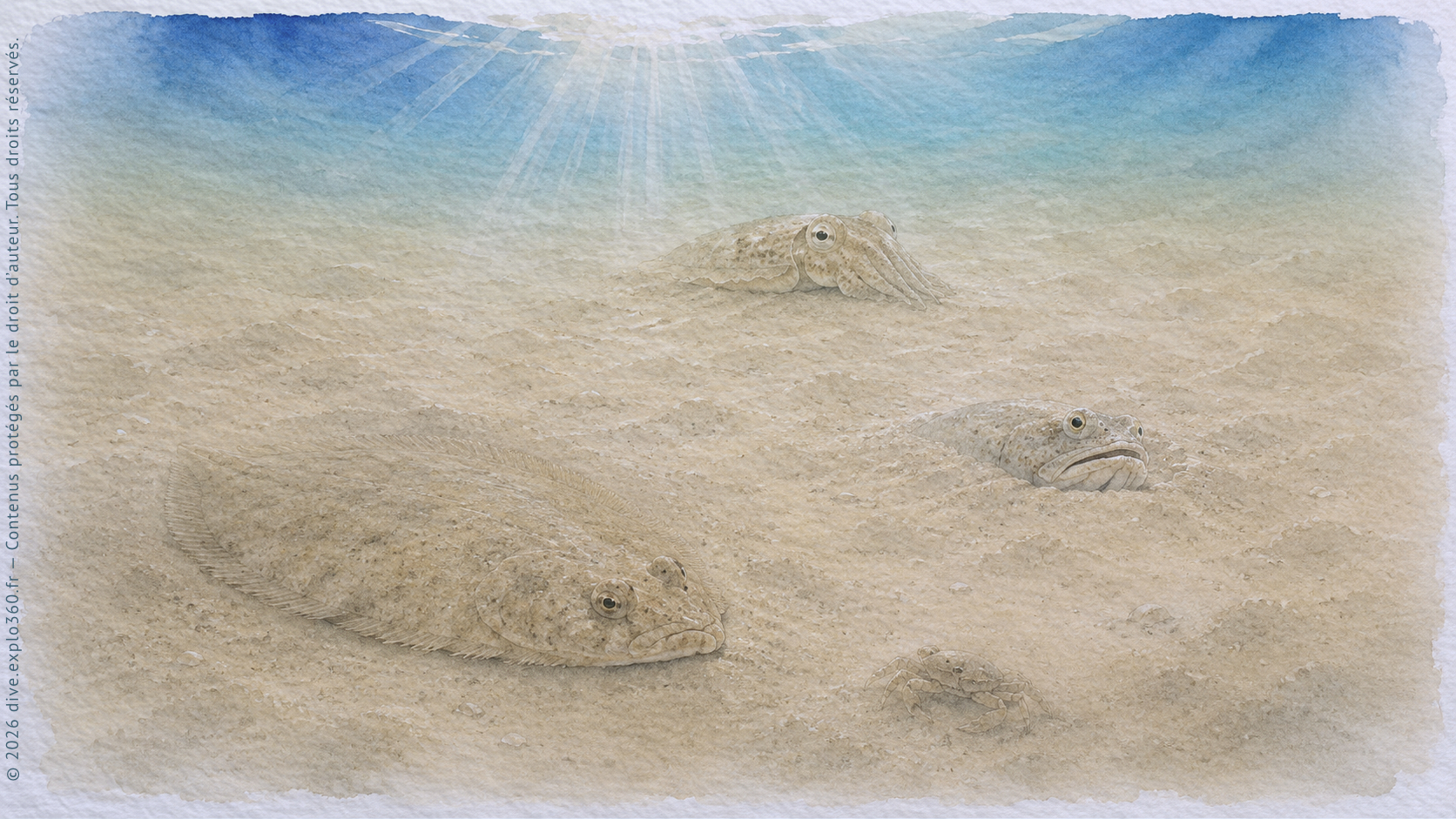
In an open space, being visible can be dangerous.
Camouflage is therefore particularly important.
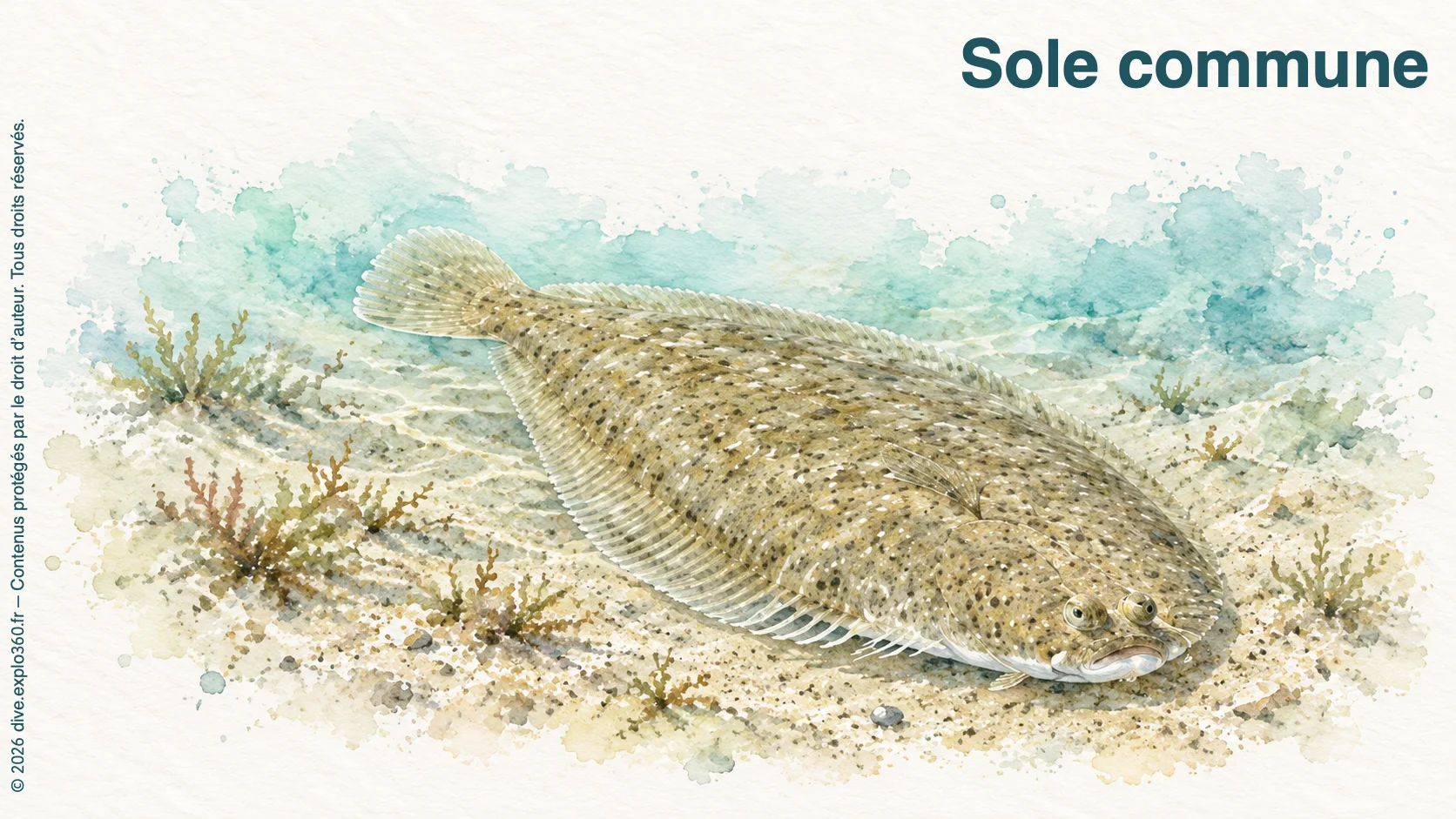
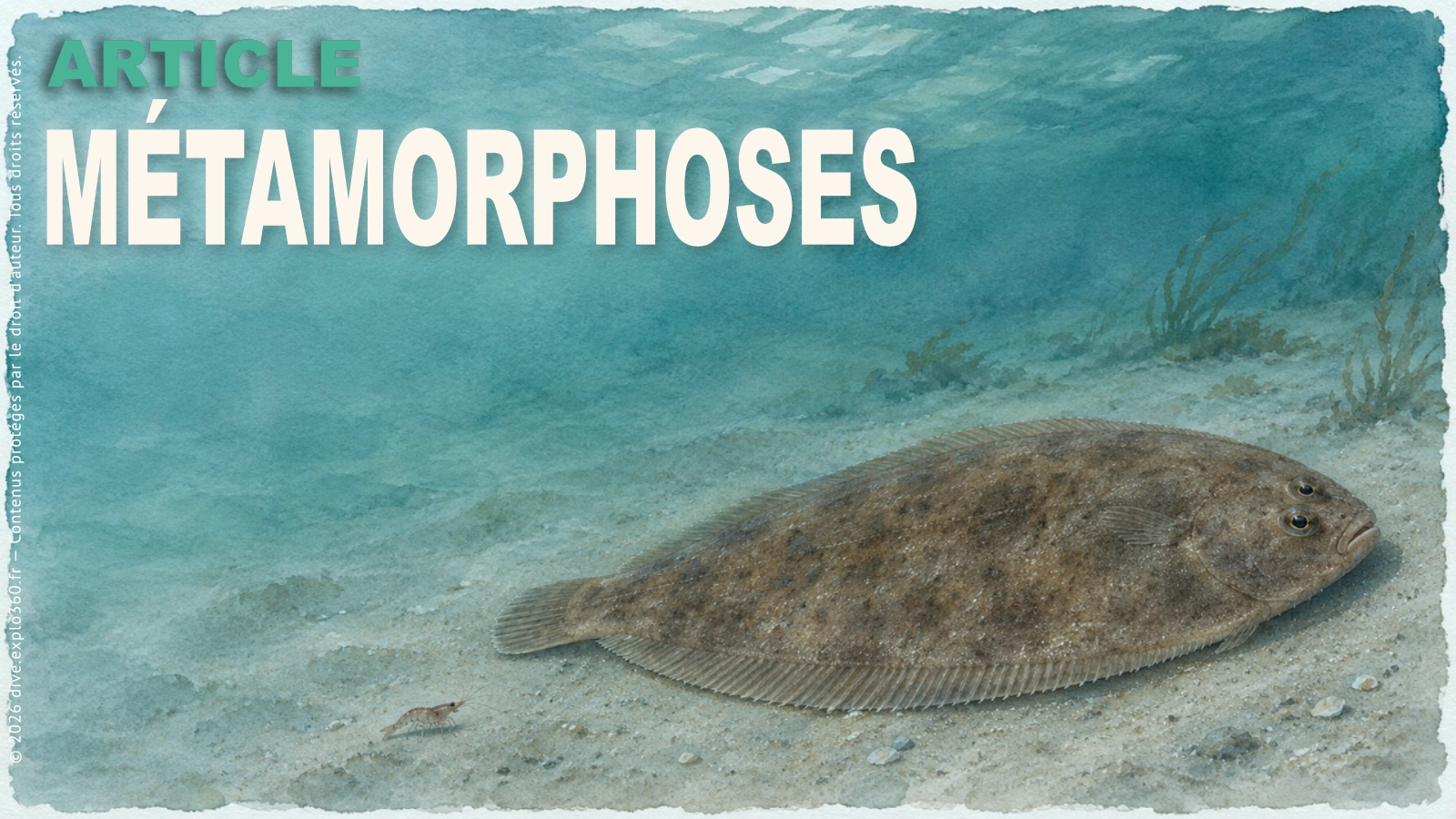
A sole lies flat against the bottom with both eyes on the same side of its head. Its colouring helps it blend into the sand.
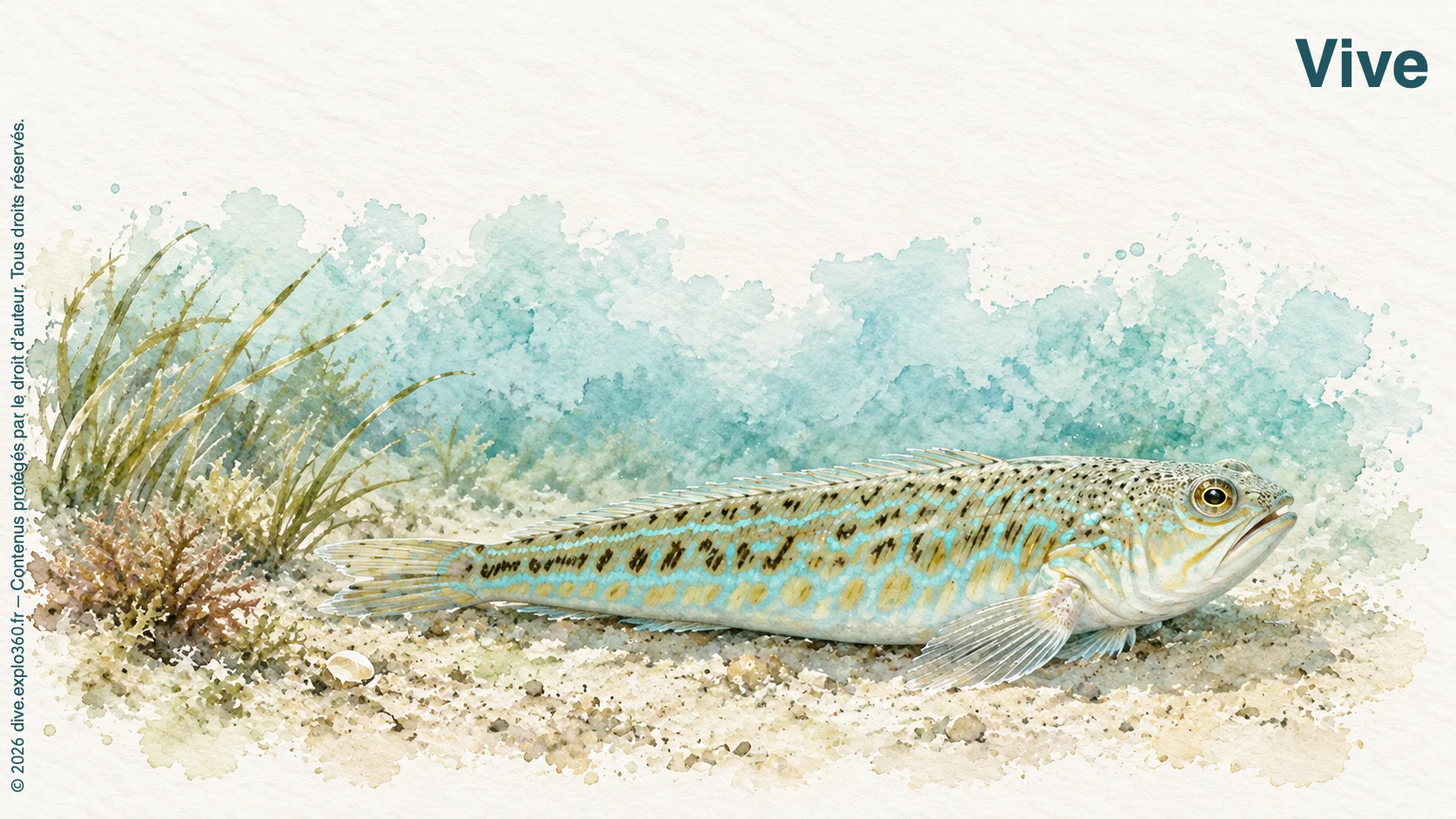
A weever fish can bury itself almost completely and wait for prey to pass within reach.
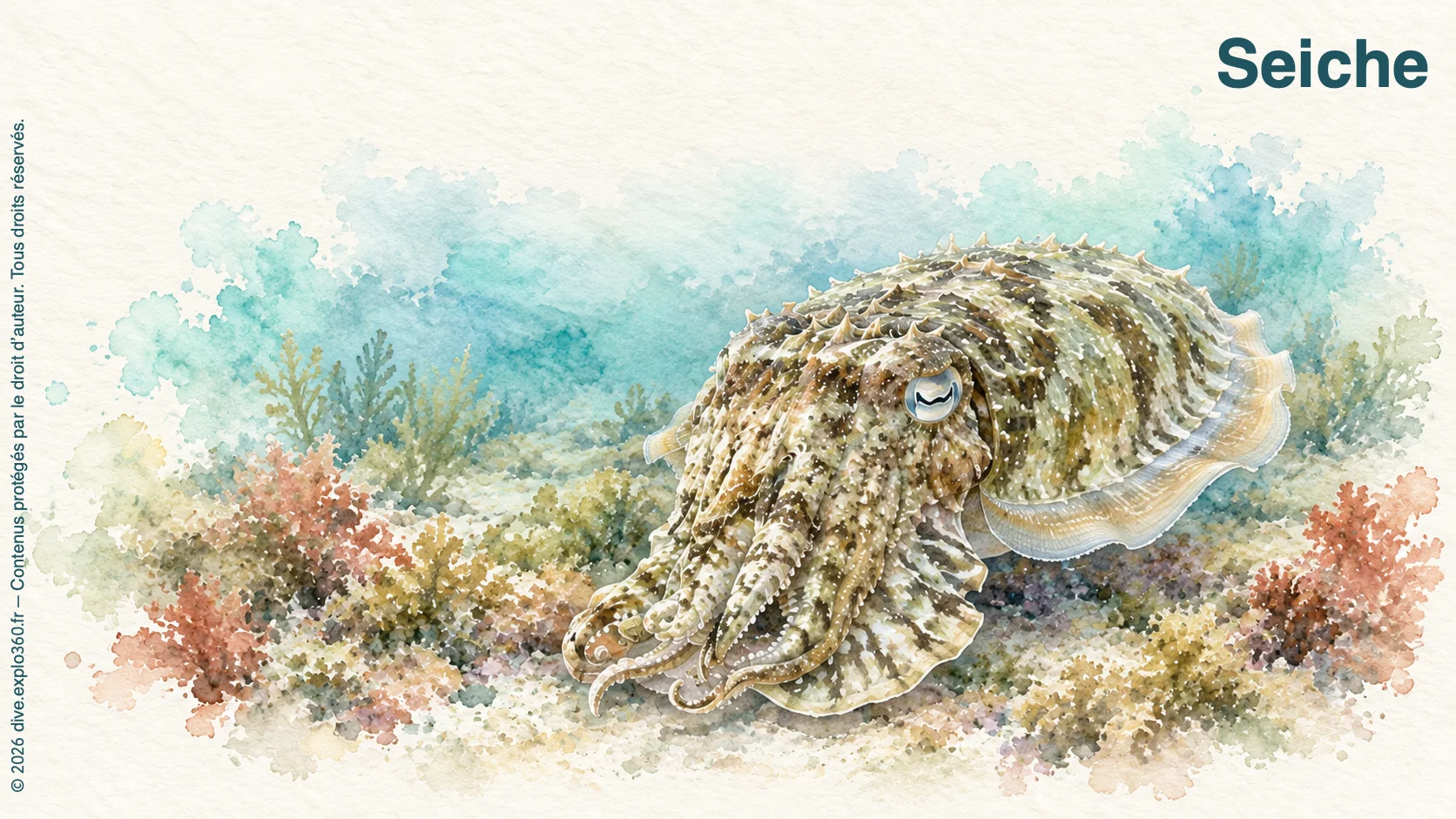
Cuttlefish, small crustaceans and many other animals also use colouring, stillness or burial.
On a sandy bottom, camouflage can make the outline of an animal hard to pick out.
Sand protects those that can resemble it or disappear within it.
AT NIGHT, THE LANDSCAPE CHANGES
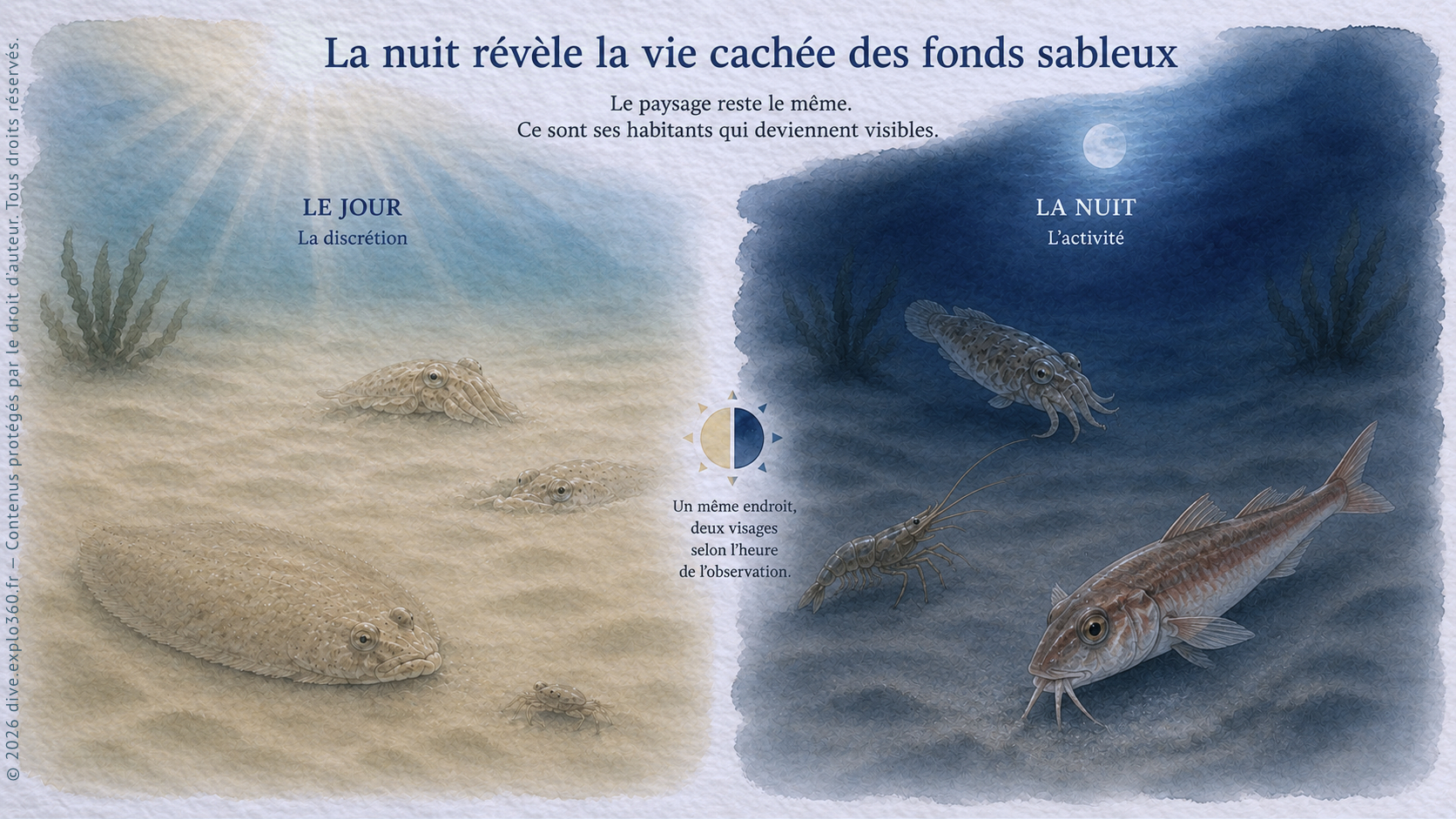
After dark, a familiar stretch of sand can look newly occupied.
Some animals that stayed buried by day emerge, and some crustaceans become more active. Predators roam the seabed in search of prey.
Return to the same patch after dark and you may see a different set of animals.
The landscape has not changed.
Its inhabitants have become visible.
Interactive quiz
Test your knowledge
A brief introduction presents the main idea of this slide.
Interactive quiz
Test your knowledge
Question 1 out of 5Score: 0
Why can two sandy seabeds support different communities?
Which strategies allow animals to live on or in a sandy seabed? (Choose all that apply.)
What are organisms living directly inside the sediment called?
Which clues can reveal animals hidden beneath the sand? (Choose all that apply.)
What generally happens deeper in the sediment?
Final result
Quiz completed
correct answers
Conclusion
Look closer and the surface becomes the entrance to a habitat in its own right. Organisms bury themselves, move and breathe in the sand, changing the sediment as they go.
A small patch of seabed can keep a diver occupied long after the first glance.
Sources
Explore the same world