
SAND
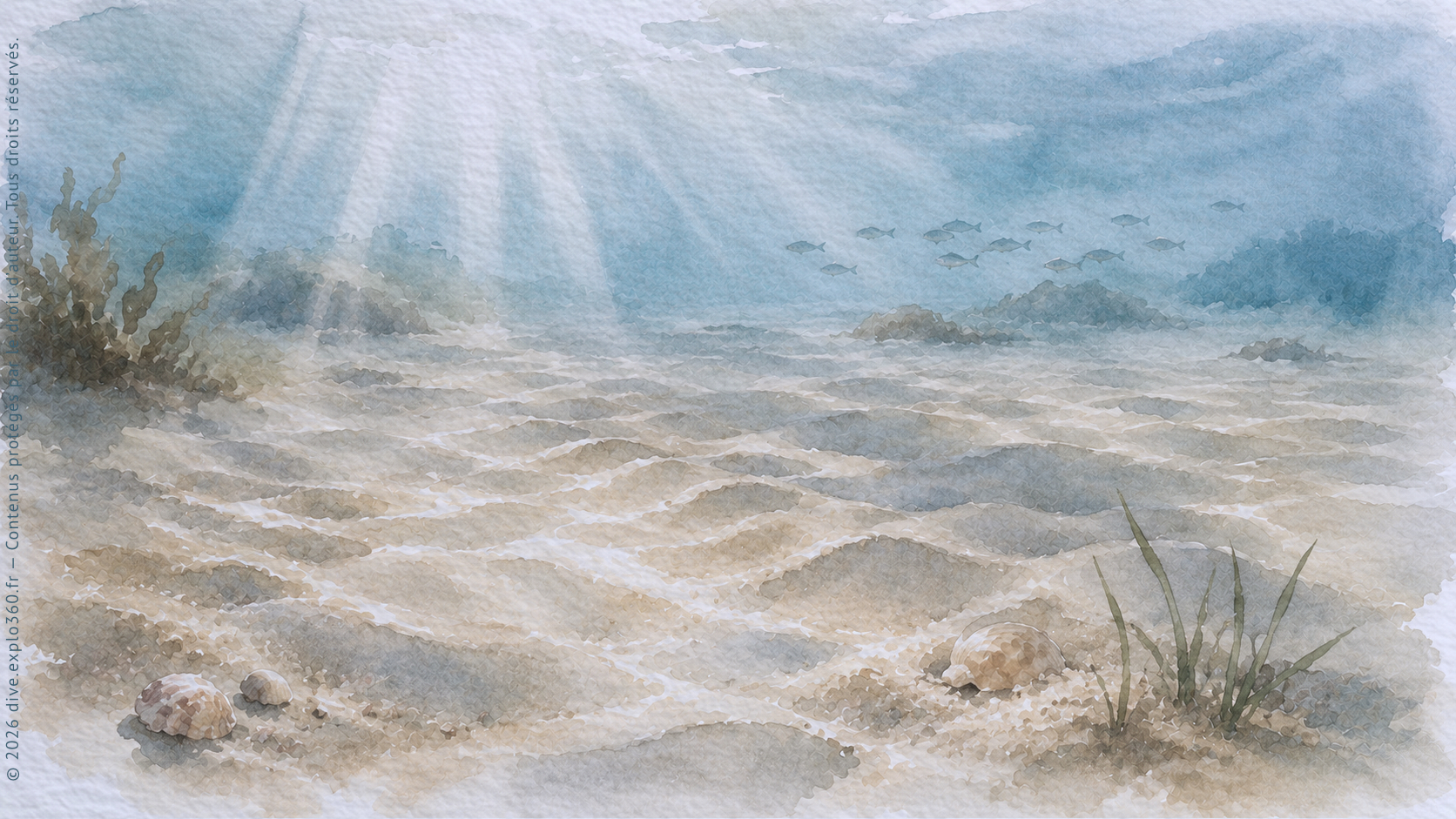
Sand is a landscape, a refuge and a living environment all at once. Some animals live on its surface, while others bury themselves or move through the sediment.
Understanding sandy seabeds therefore means looking beyond what is immediately visible.
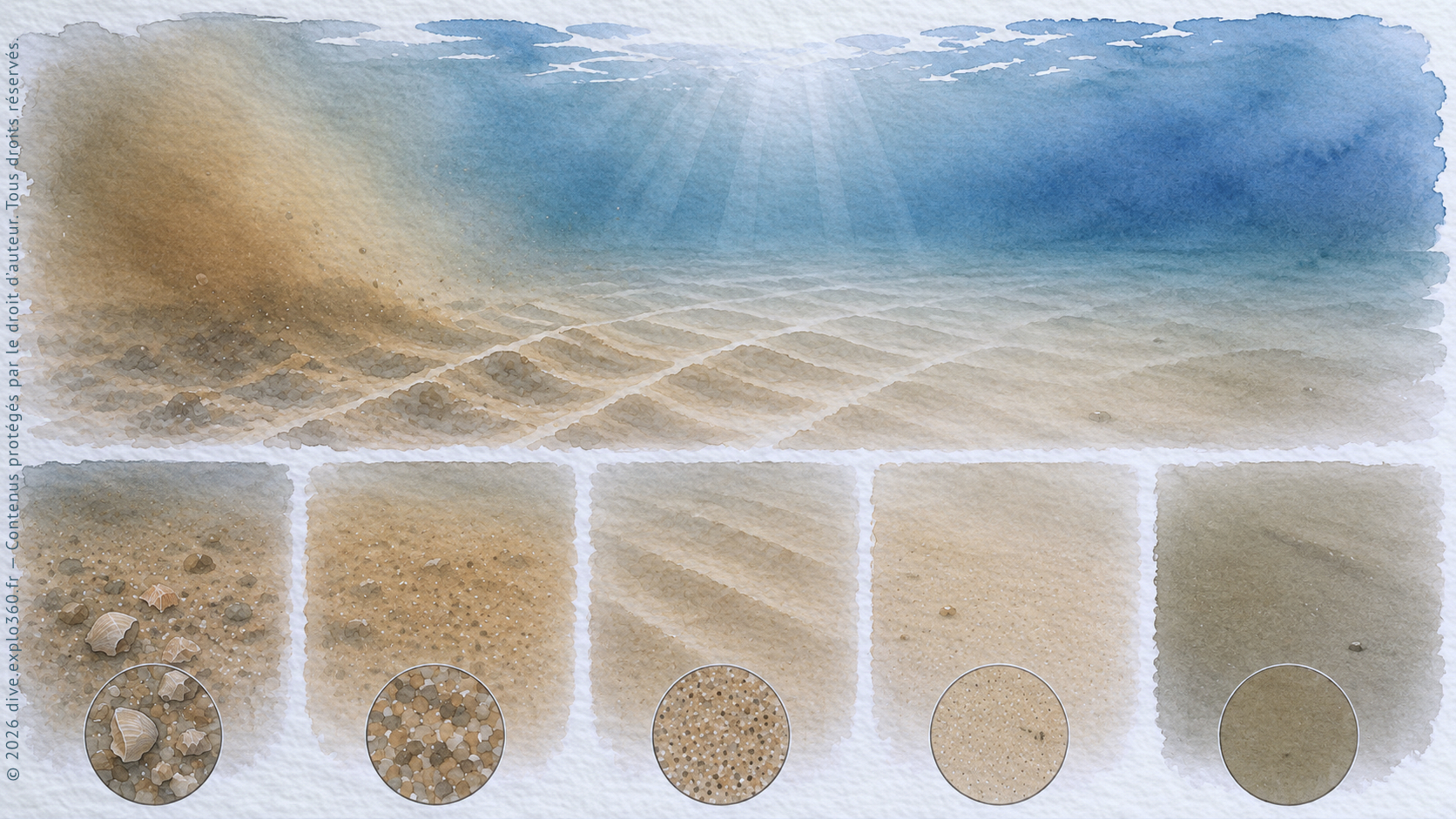
However, not all sandy seabeds are identical. Grain size, origin, depth, the presence of mud and the strength of currents determine the characteristics of the seabed.
Coarse sand that is regularly stirred up therefore does not support exactly the same organisms as finer, more stable sand. The physical characteristics of the environment directly influence which species can live there.
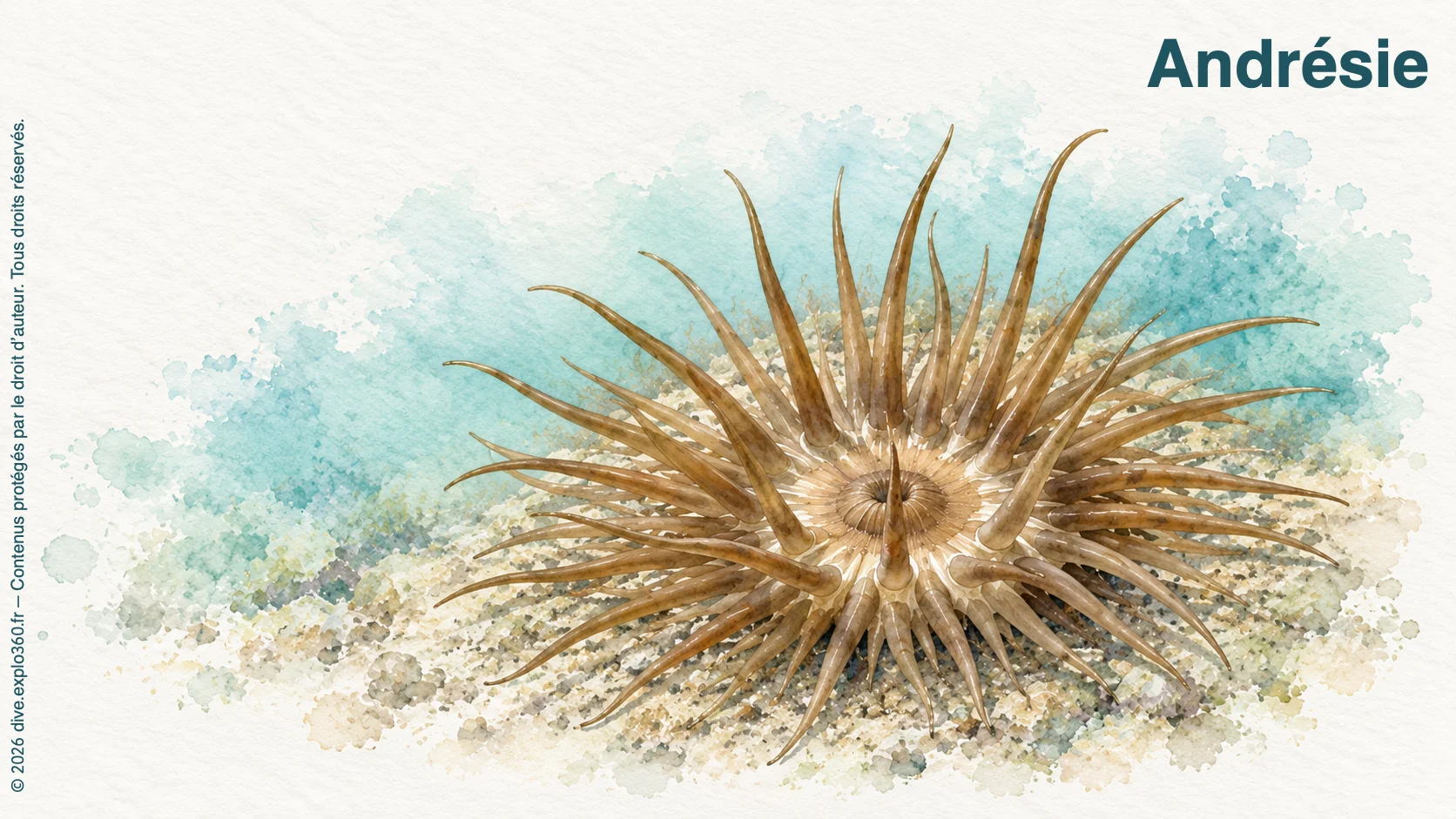
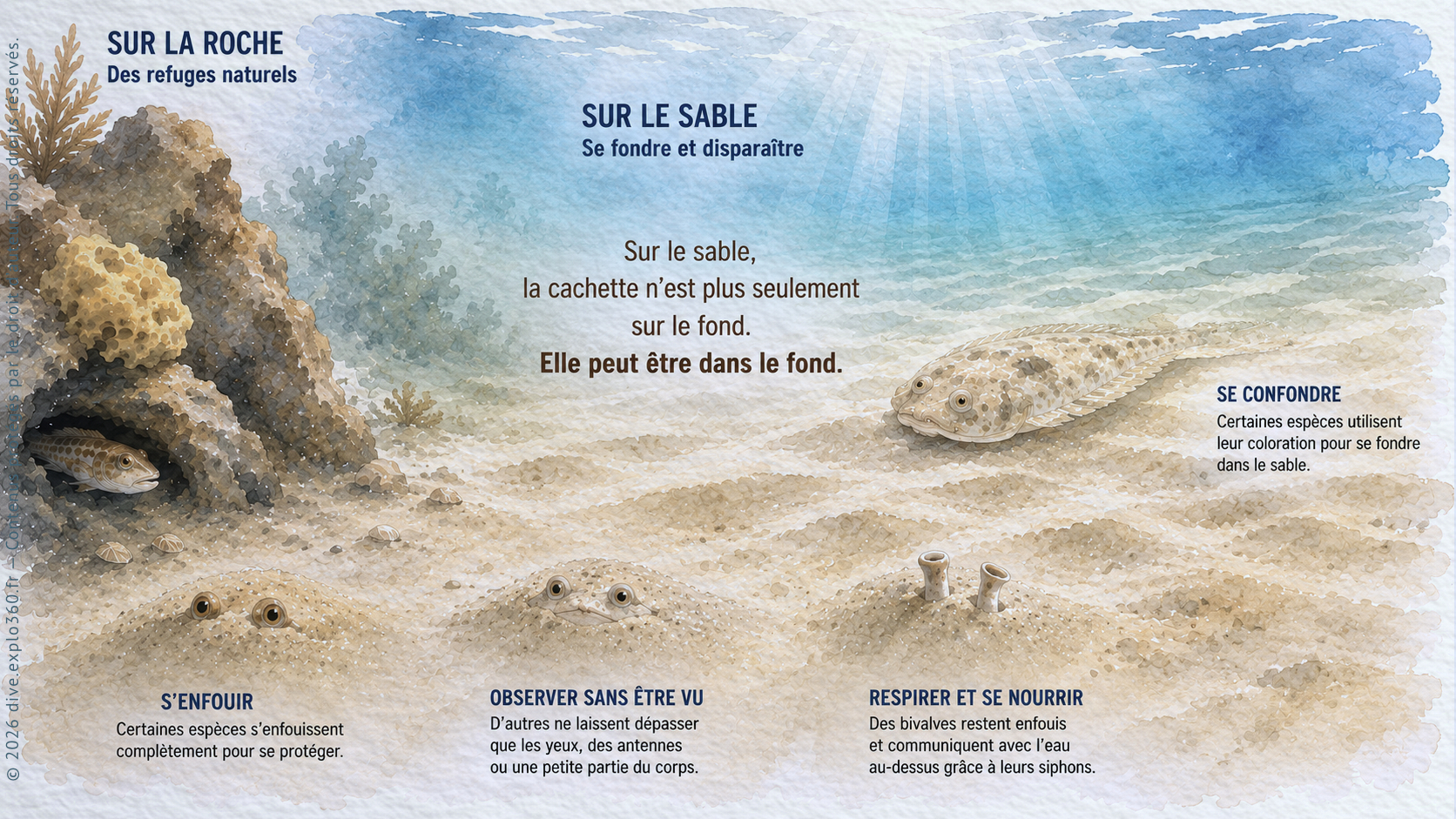
Species have developed other strategies. Some bury themselves completely. Others leave only their eyes, antennae or a siphon extending out to maintain contact with the water.
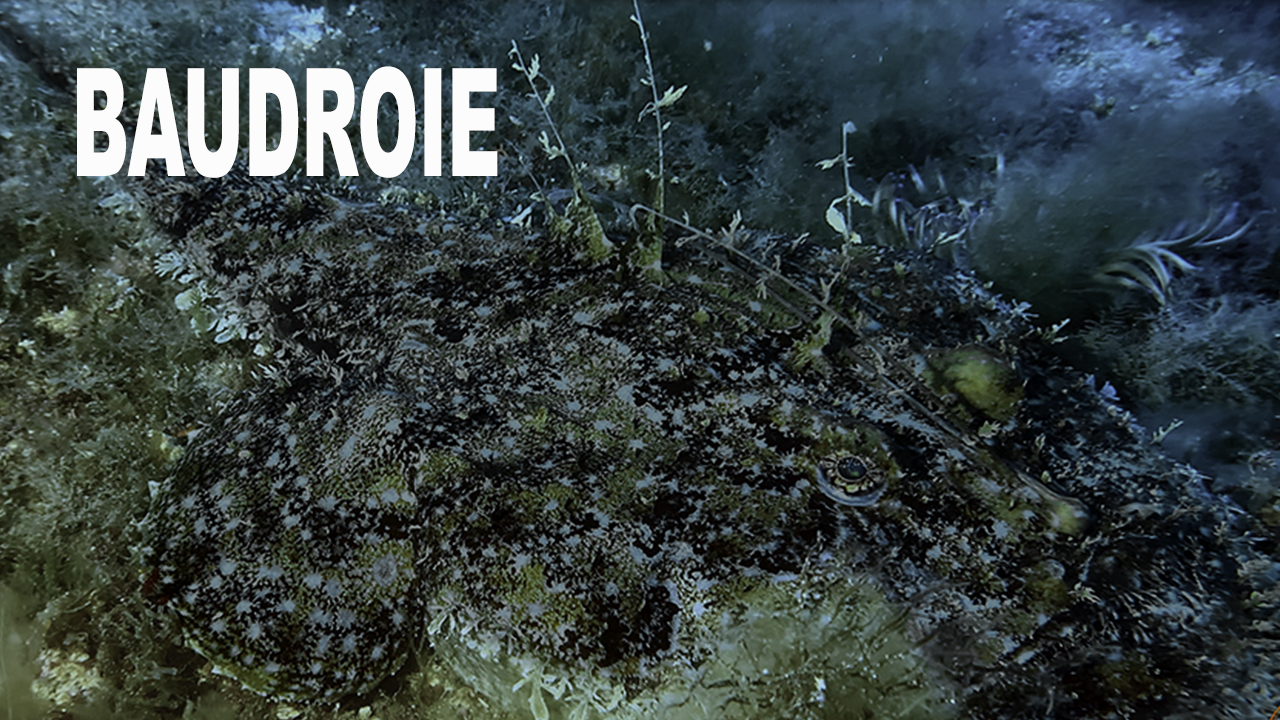
Colouring can also allow an animal to blend into the seabed.
On a sandy seabed, a refuge is therefore not necessarily on top of the bottom: it may be directly within the sediment.
AT THE SURFACE: EPIFAUNA
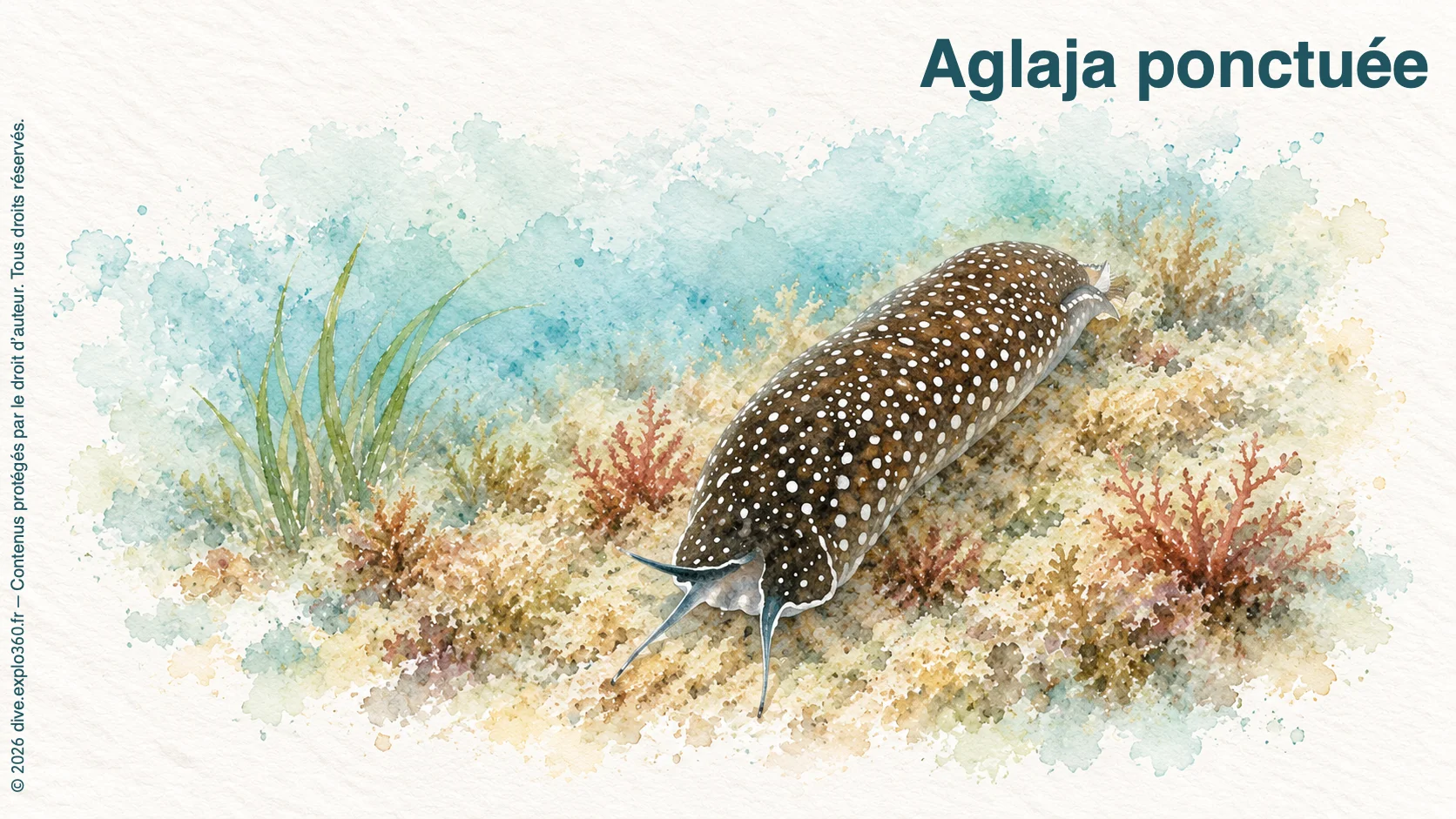
They are generally the easiest to observe, although their colouring or behaviour may make them very inconspicuous.
AT THE BOUNDARY: LIVING HALF HIDDEN
Bivalves, for example, can remain beneath the surface and use their siphons to circulate water.
This position allows them to benefit from the sediment’s protection without being completely isolated from the marine environment.
BENEATH THE SURFACE: INFAUNA
Some dig tunnels, while others move directly between the grains. This hidden life represents an important part of sandy seabed biodiversity, even though it remains difficult to observe directly.
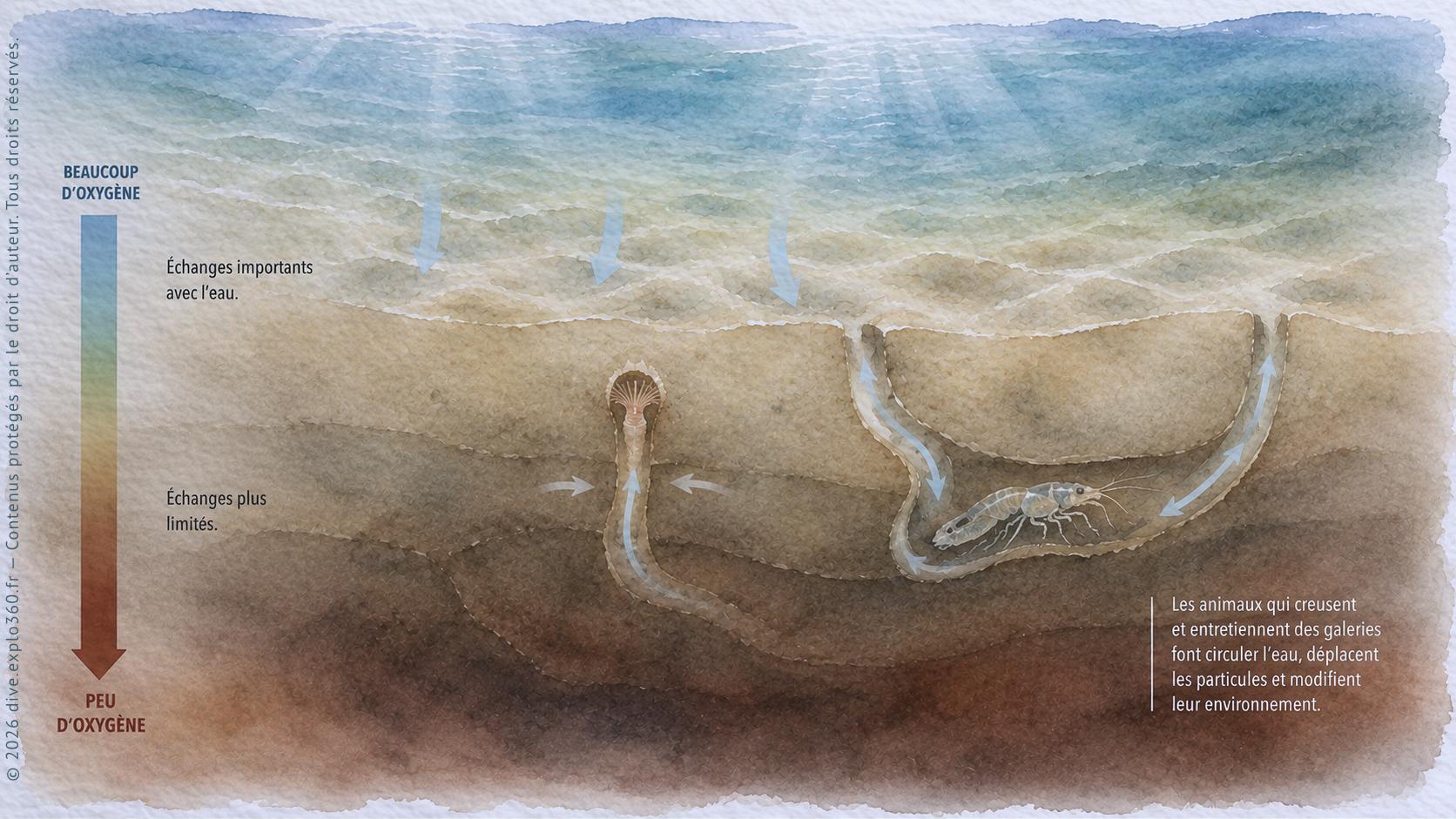
The deeper we go into the sand, the more limited exchanges with the water above become, and the less oxygen is available.
Animals digging tunnels themselves contribute to these exchanges. By moving grains and circulating water through their burrows, they alter their environment.
Sand is therefore continually reworked by the sea but also by the organisms living in it.
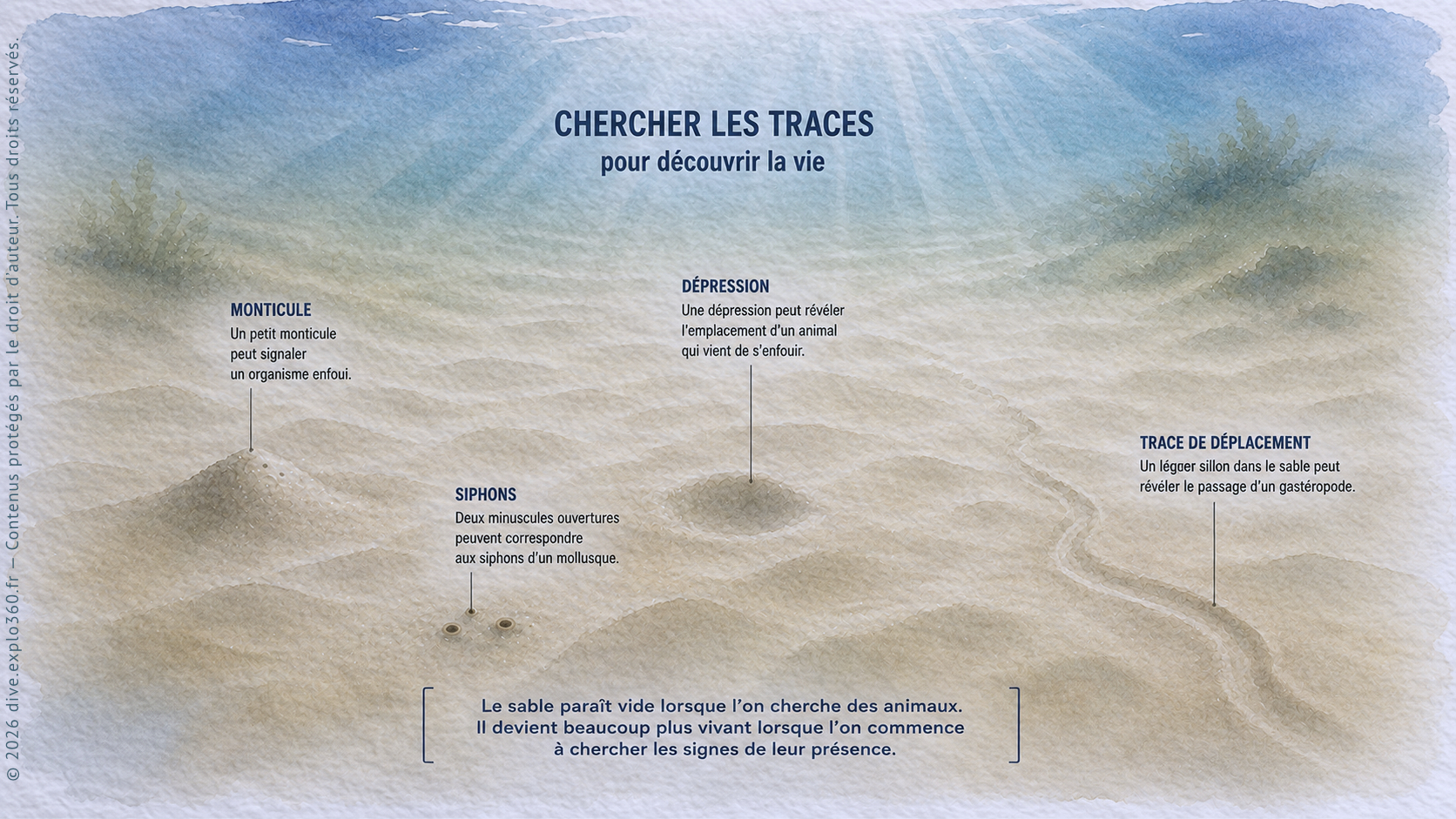
A small mound may indicate a buried organism. An opening may correspond to a burrow or a siphon. A depression may reveal where an animal recently lay. Tracks or furrows may show that an organism has moved across the seabed.
Observing sand therefore also means looking for these clues left by often invisible animals.
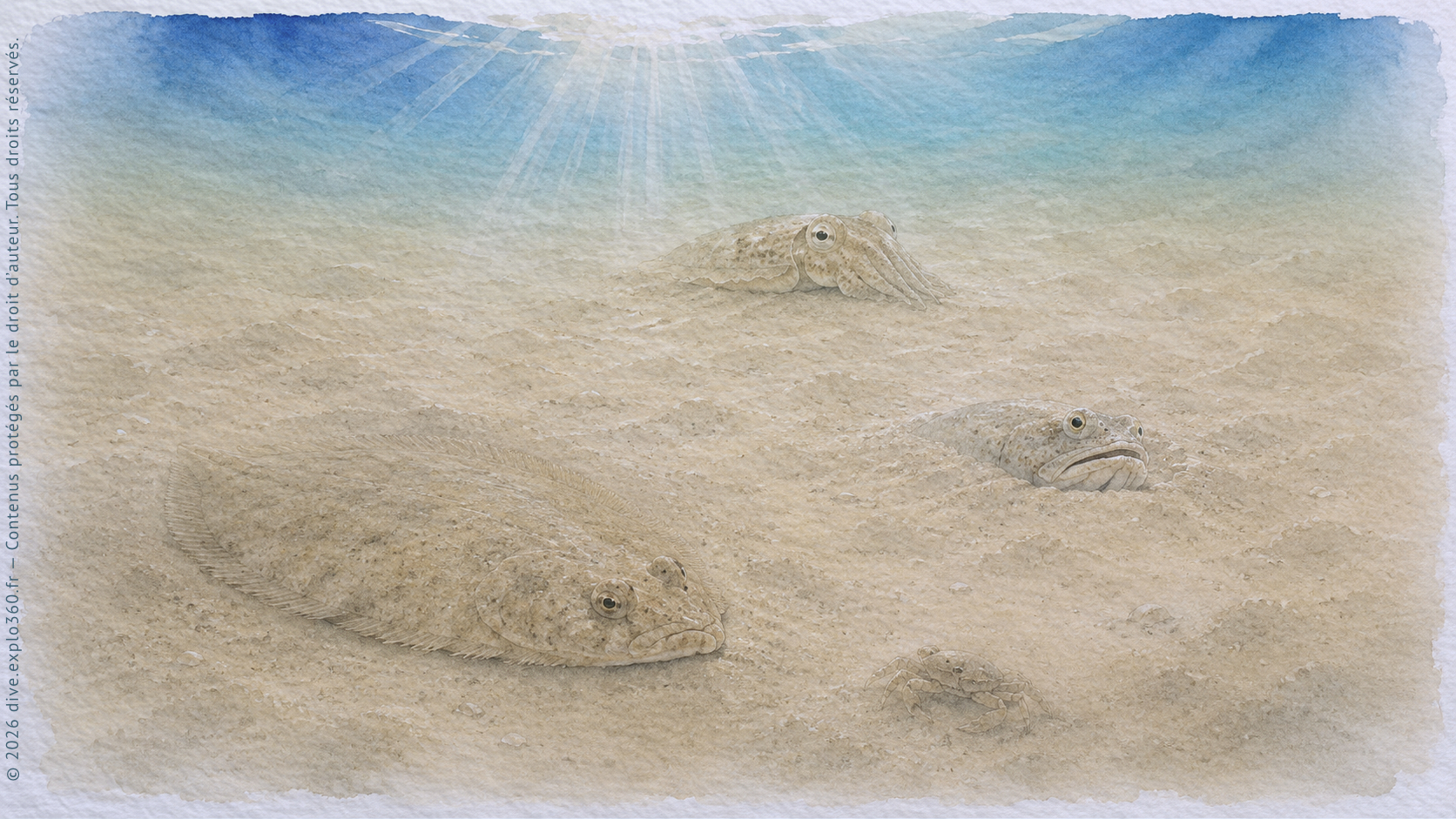
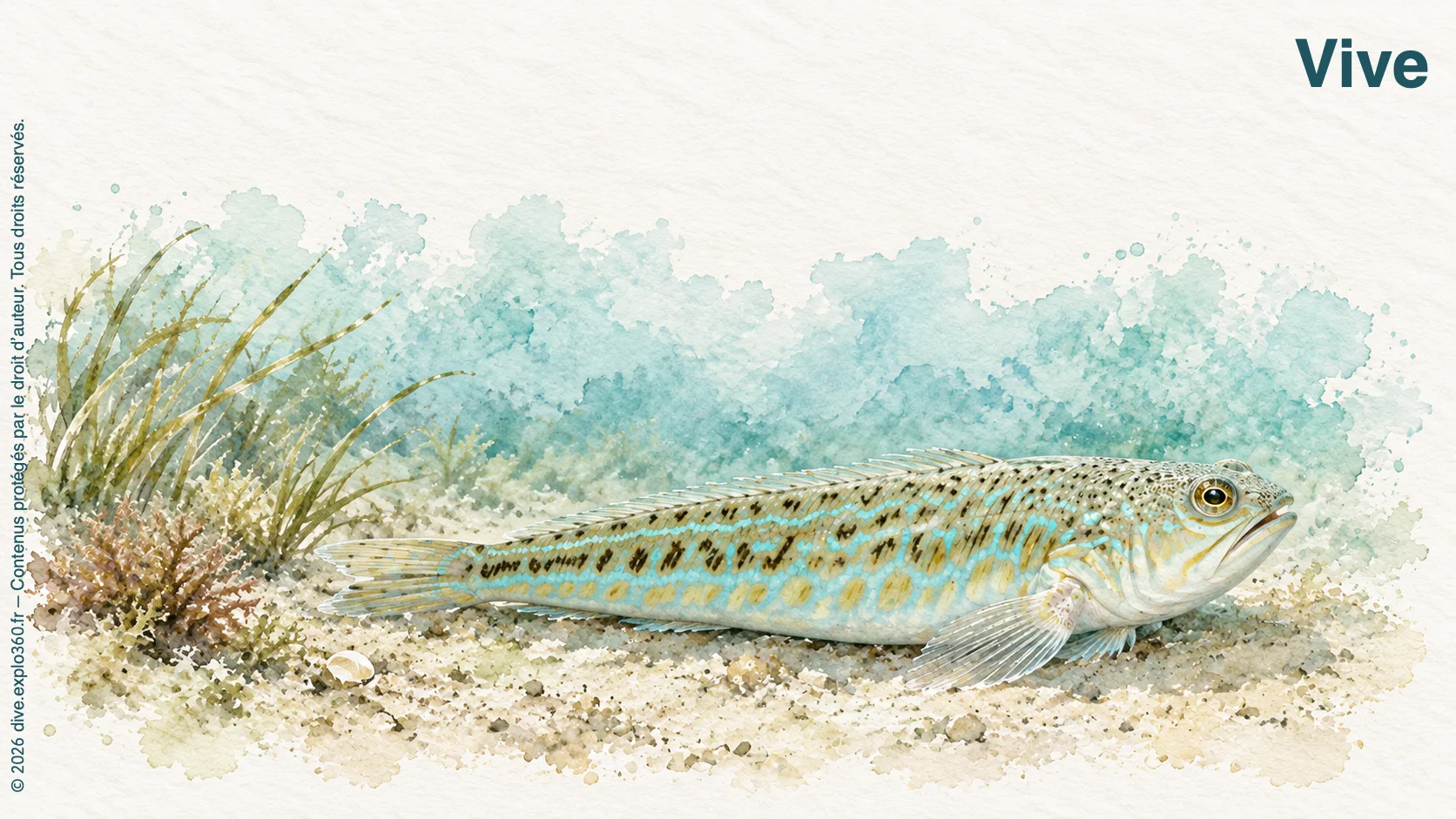
Sole have a flattened body and colouring that allow them to blend into the seabed. Weever fish can bury themselves almost completely and wait for prey to pass.
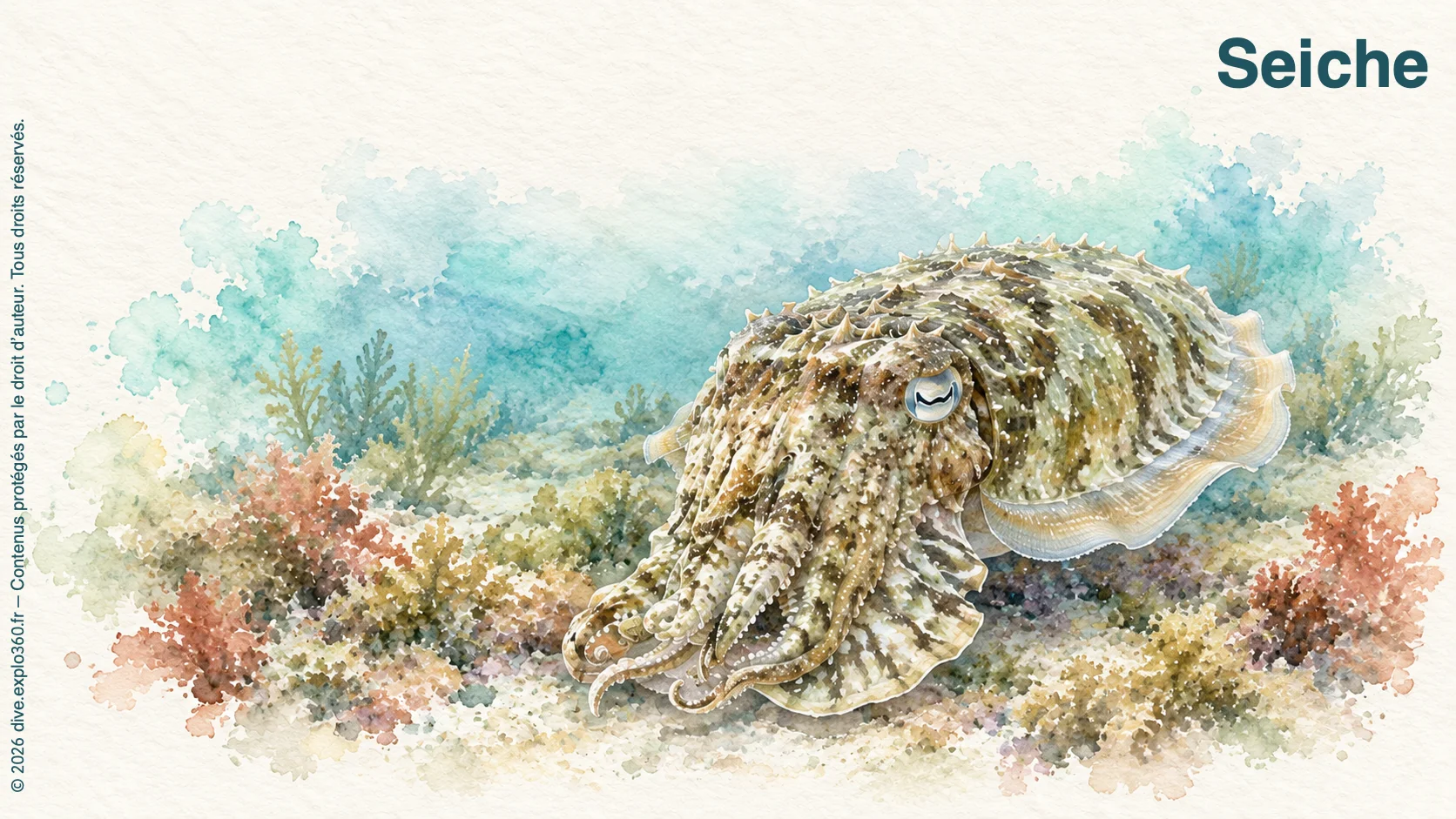
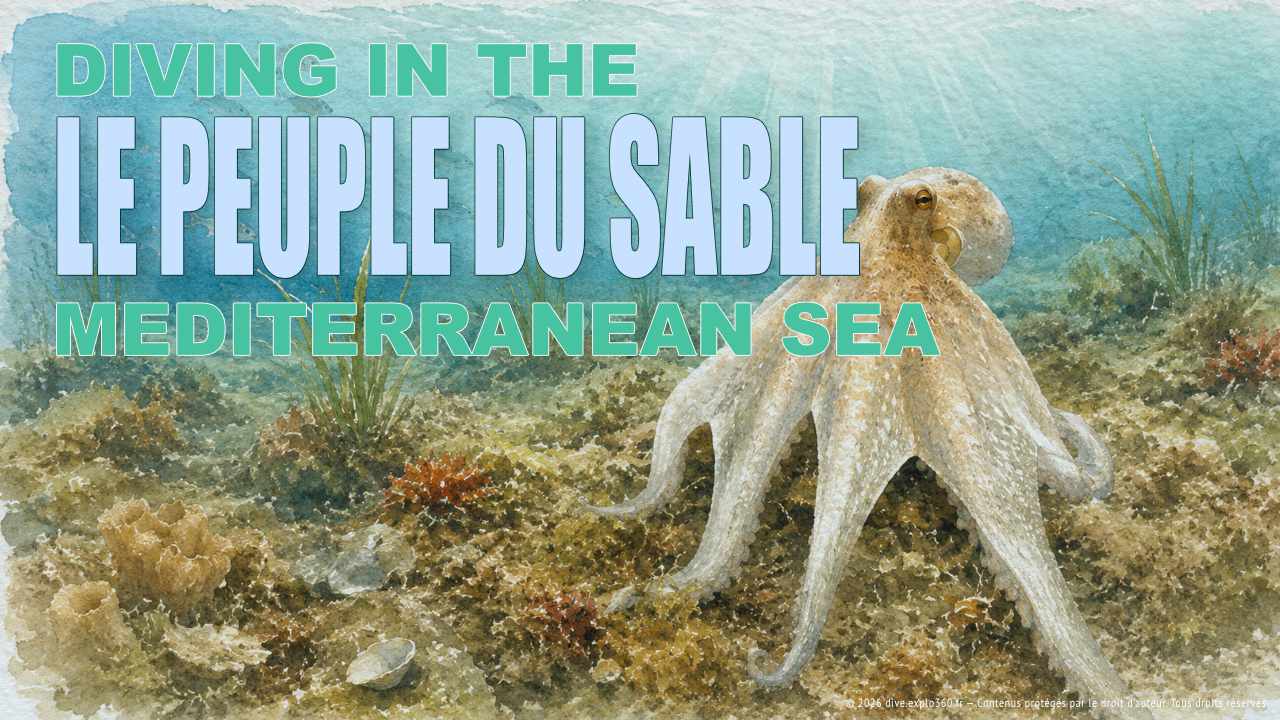
Cuttlefish and some small crustaceans also use their colouring, stillness or burial to become difficult to spot.
Sand thus provides both a habitat and a means of concealment.
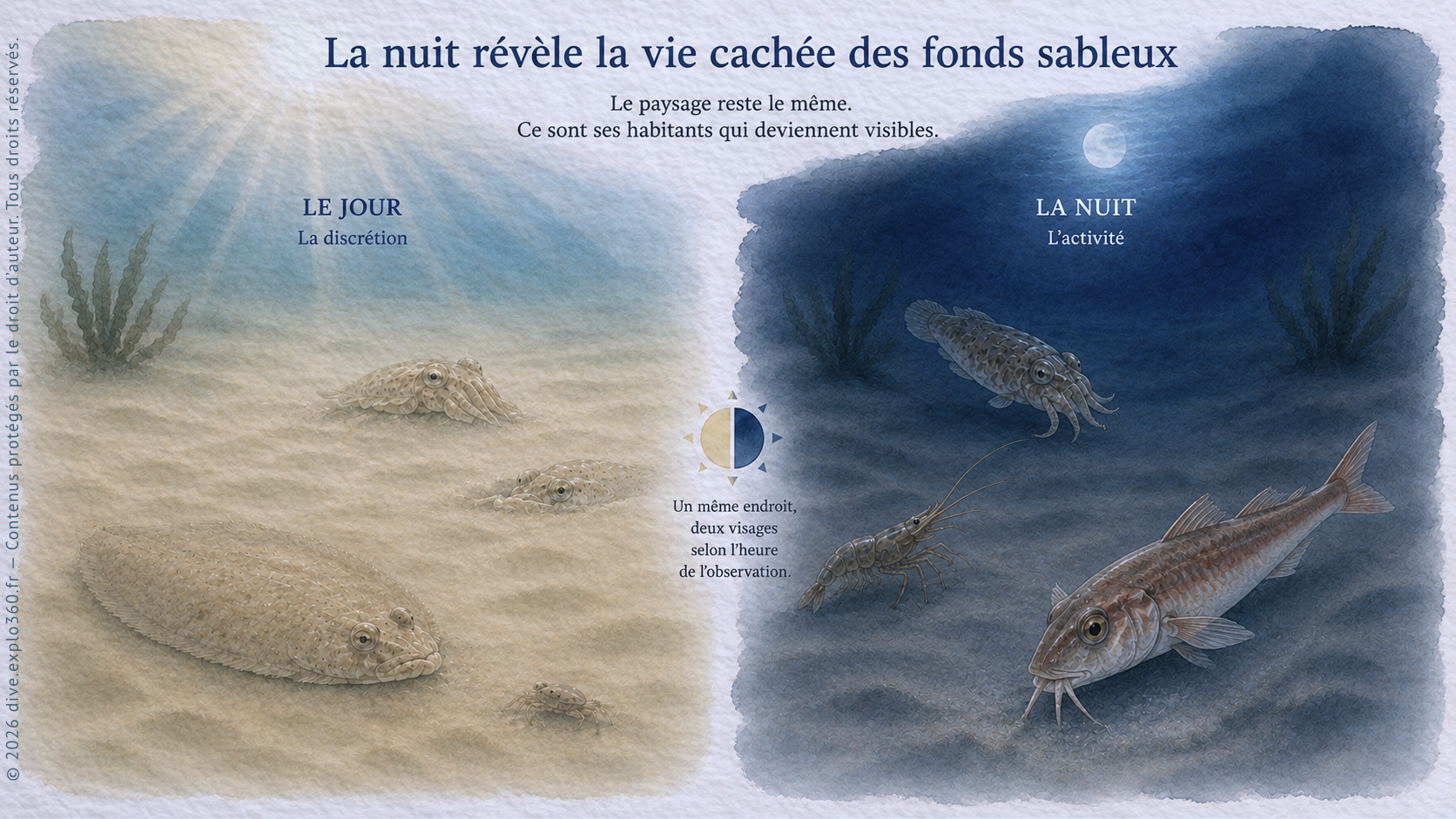
Previously buried animals may emerge, crustaceans roam the surface more, and predators come to search for prey.
The seabed itself has not changed, but the visible species and their behaviour can be very different.
Observing the same sandy seabed by day and by night therefore reveals two complementary aspects of it.
Interactive quiz
Test your knowledge
5 question(s) to test your knowledge.
Interactive quiz
Test your knowledge
Question 1 out of 5Score: 0
Why can two sandy seabeds support different communities?
Which strategies allow animals to live on or in a sandy seabed? More than one answer is possible
What are organisms living directly inside the sediment called?
Which clues can reveal animals hidden beneath the sand? More than one answer is possible
What generally happens deeper in the sediment?
Final result
Quiz completed
correct answers
Conclusion
Observing raised features, burrows, openings and movements reveals this hidden life.
Sand is therefore not just a bottom on which organisms live: it is a habitat extending downwards, continually transformed by the sea and its inhabitants.
Sources
Explore the same world