What is the lateral line?
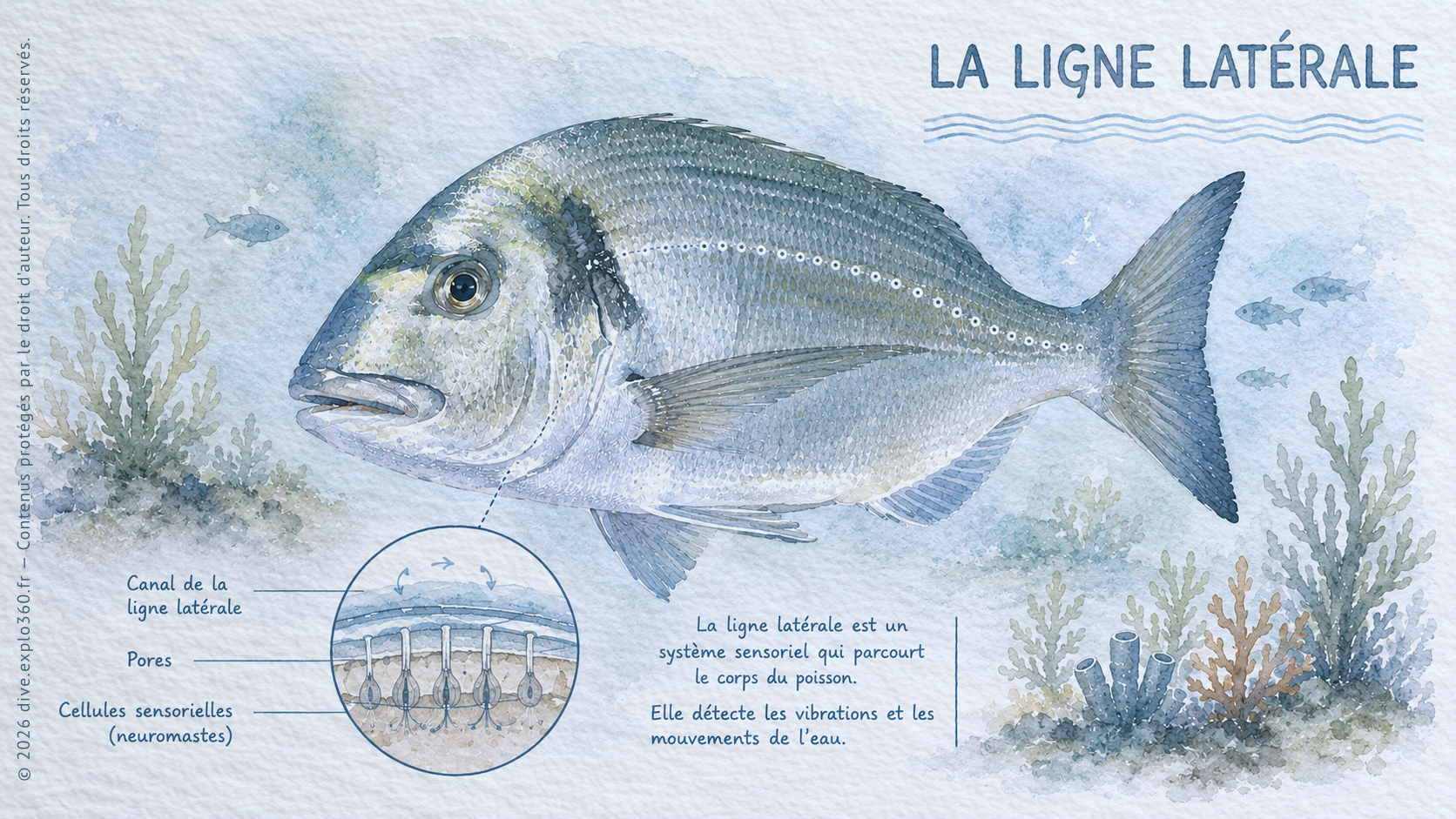
Along the head and body are tiny sensory organs called neuromasts. Each contains hair cells whose projections sit in a gelatinous cap. Moving water deflects the cap and bends the projections, stimulating the cells.
Some neuromasts sit on the skin and respond to local flow. Others lie in canals that open to the water through pores. Pressure differences between neighbouring pores drive flow past the canal neuromasts. Together, the two kinds of receptor help detect nearby disturbances. Fish and some aquatic amphibians have this system.
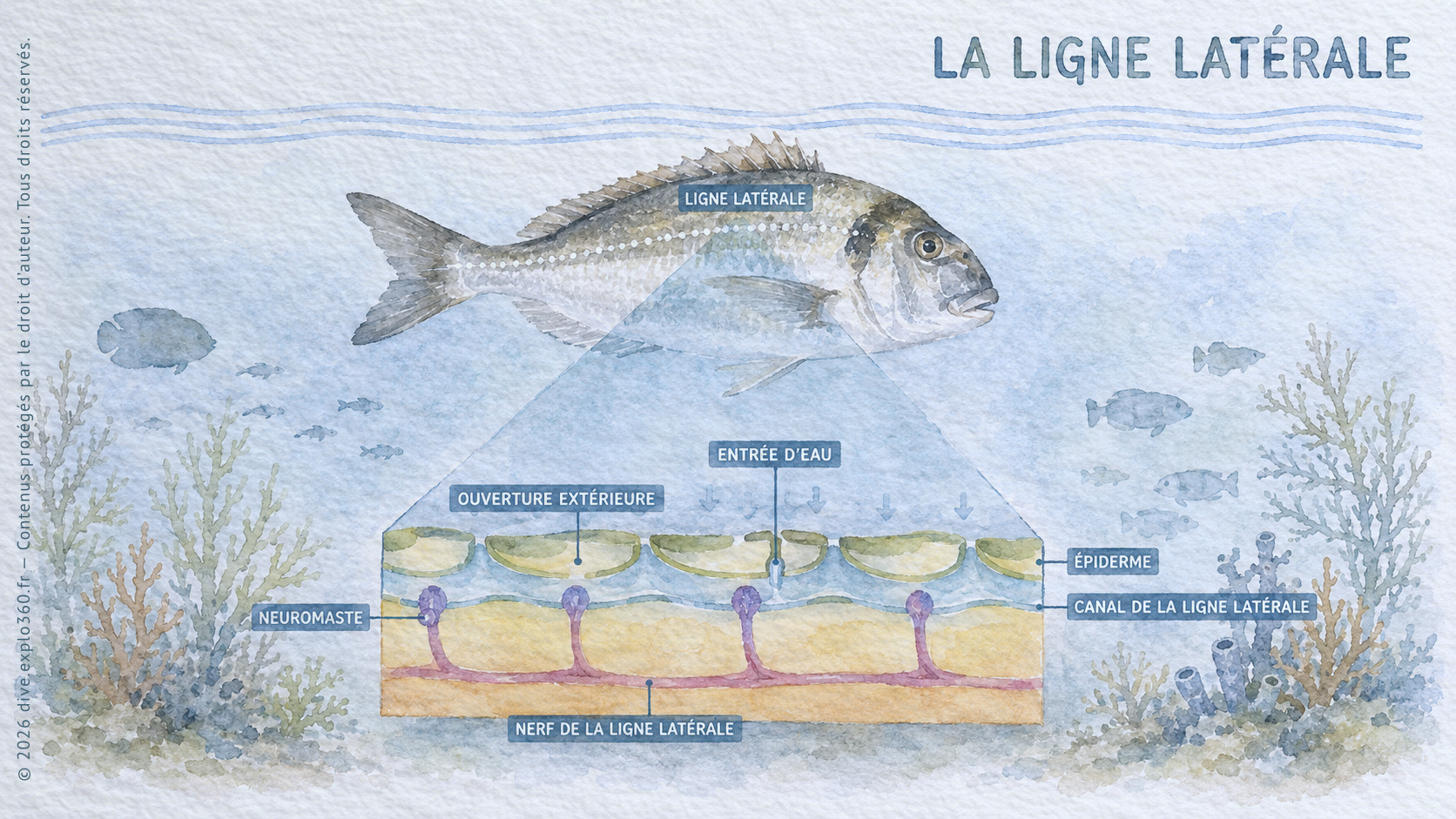
How does the lateral line work?
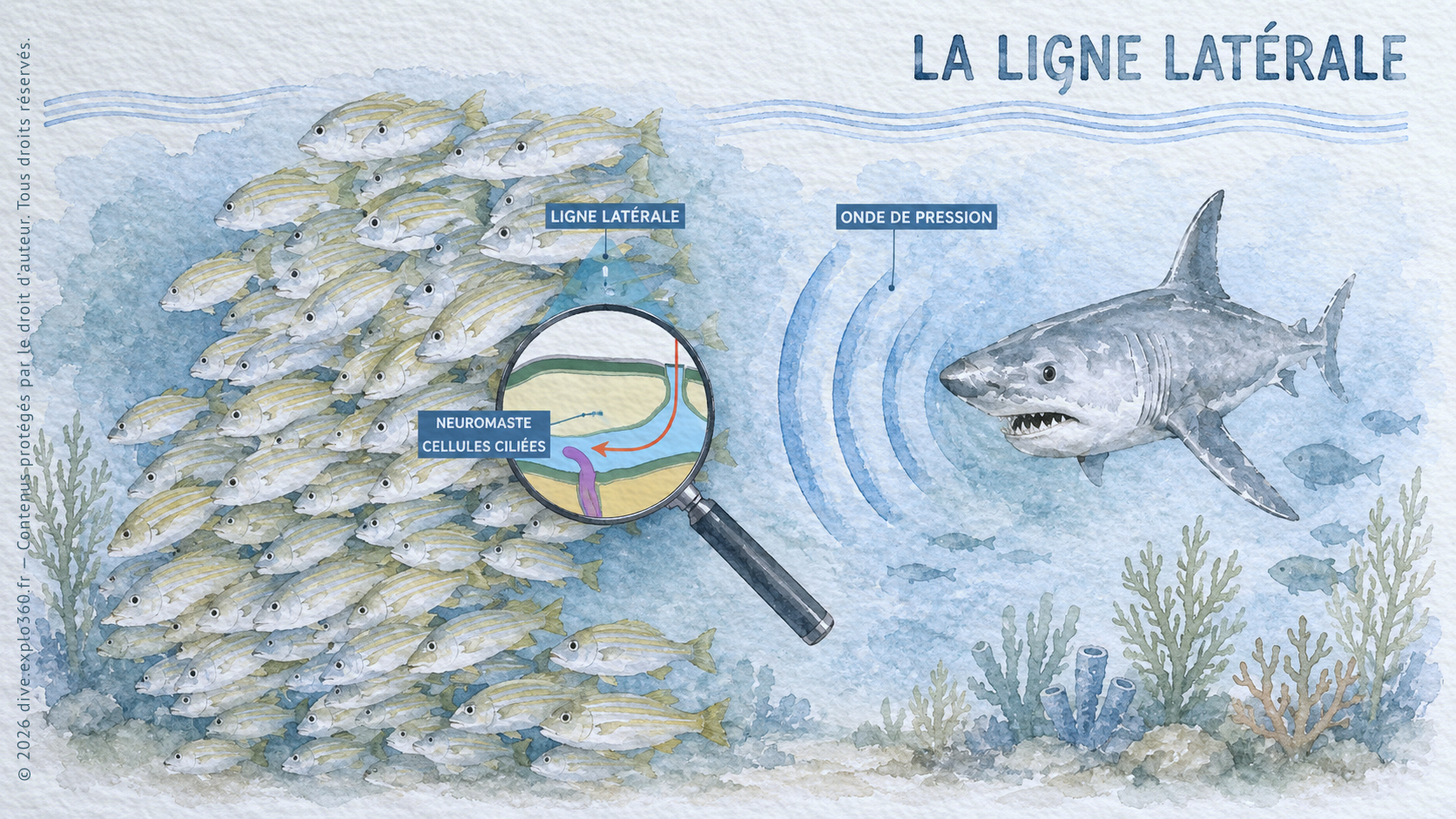
An animal moving through water disturbs the flow around it. If that disturbance reaches a fish’s neuromasts, it can give away the movement even in darkness.
Depending on the situation, the fish may dart away, turn towards the disturbance or carry on as before. The lateral line supplies one clue. Sight and hearing can help the fish respond to a threat.
Explore the same world