
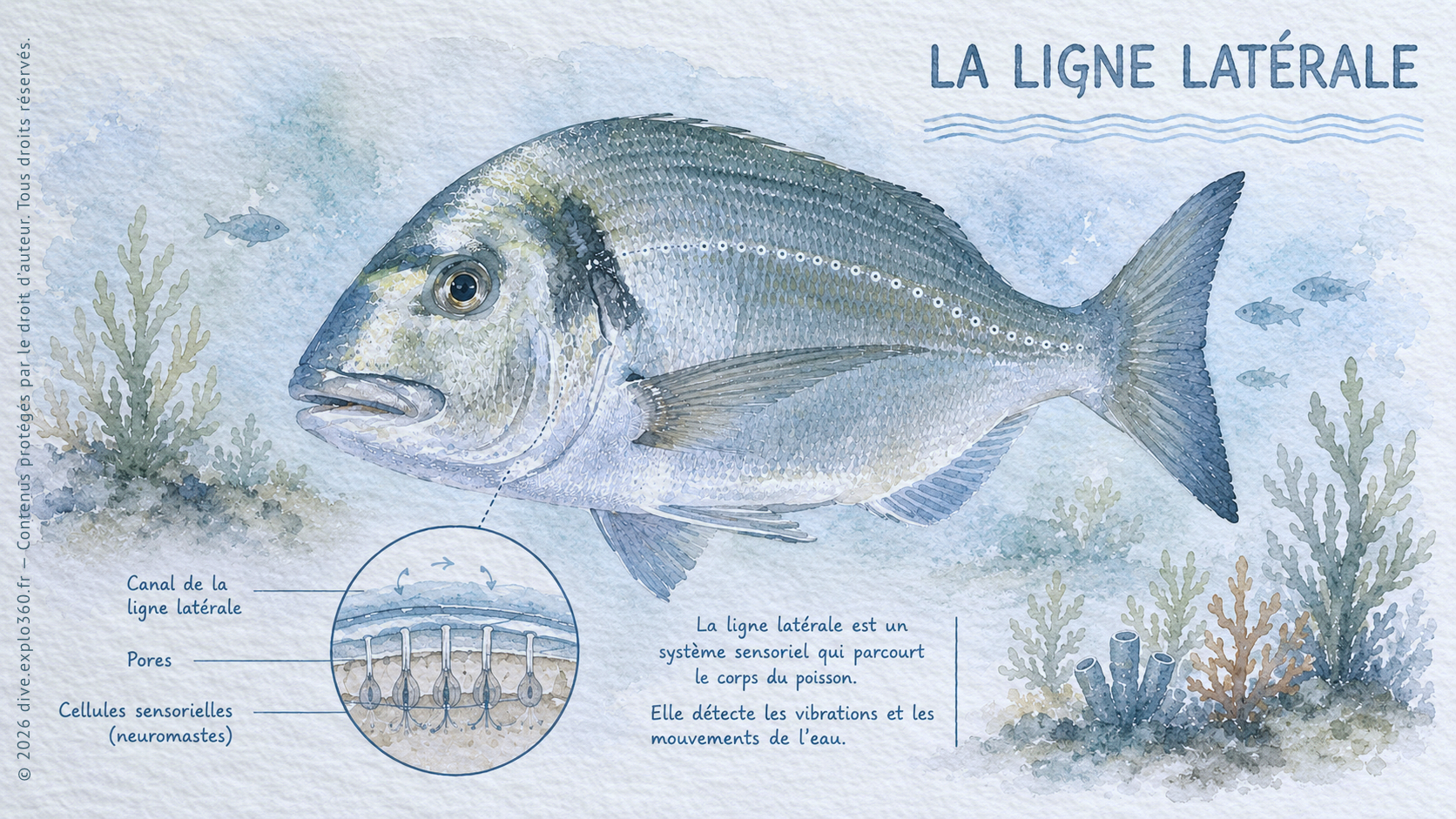
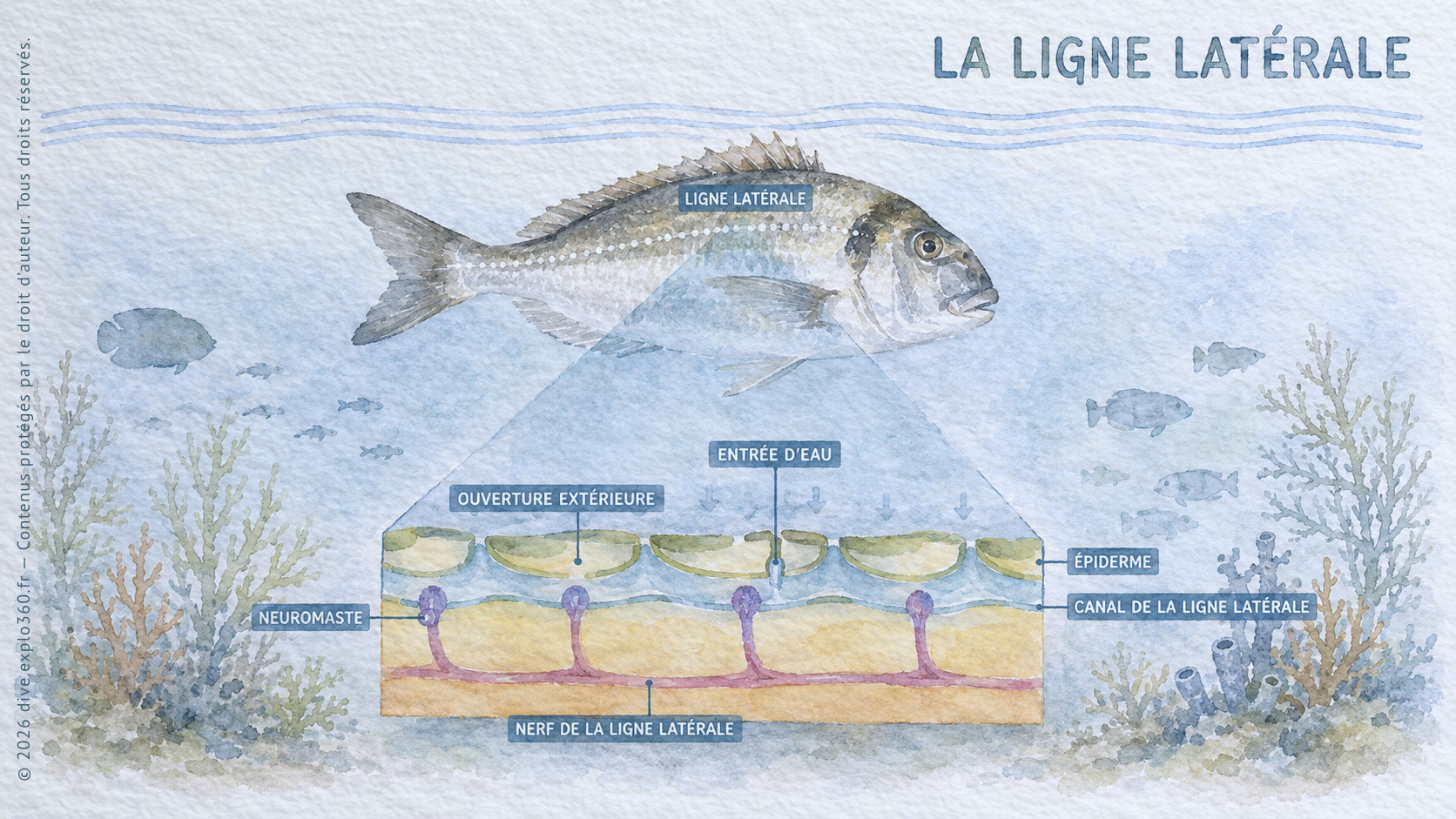
When the water moves, these structures move too.
The cells detect this movement and produce a nerve signal that is sent to the brain.
Some neuromasts lie in small canals beneath the skin, while others may be located more directly on its surface.
They allow the fish to sense water movements around its body.
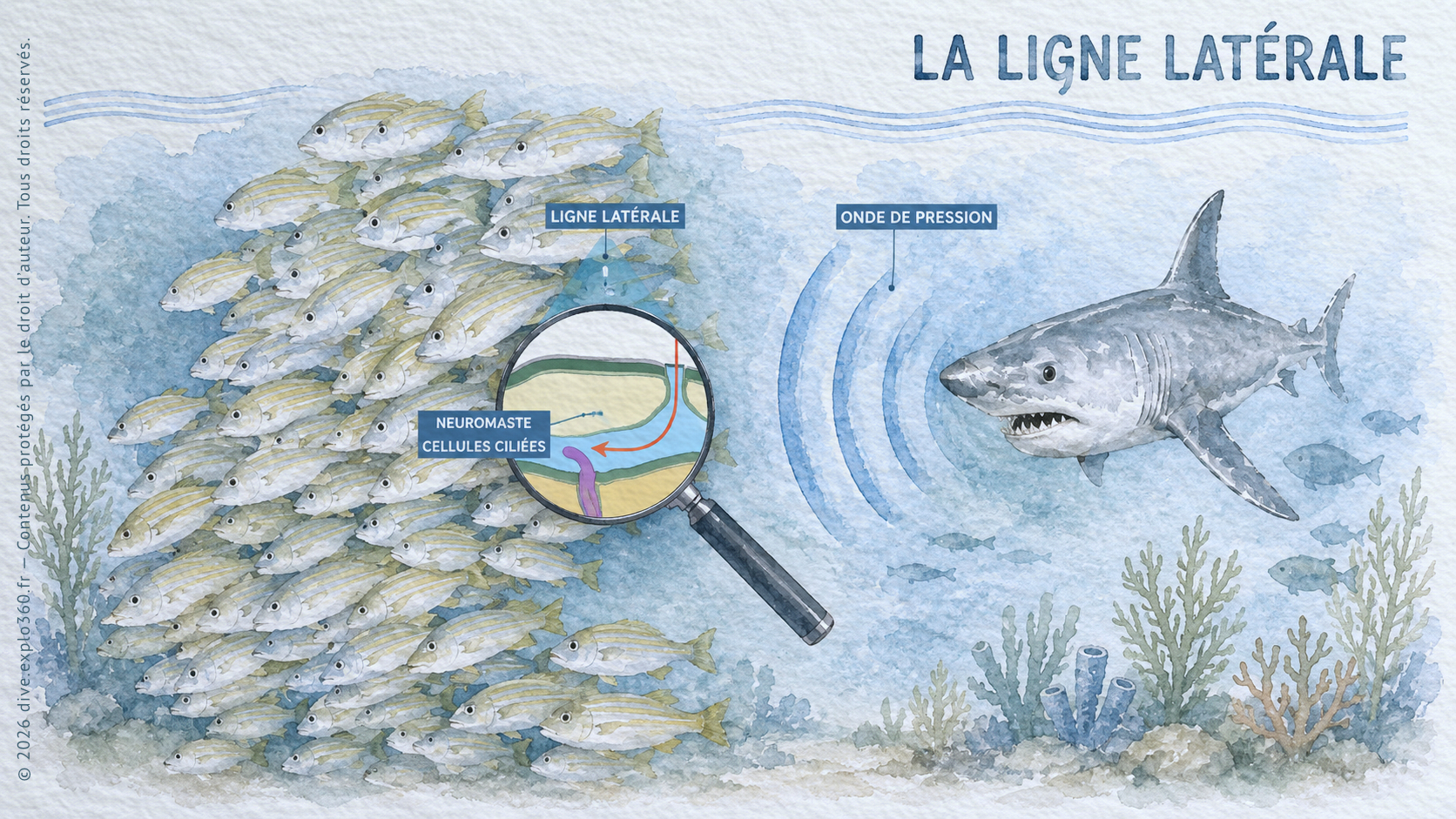
As it advances, the predator pushes water ahead of it and creates a disturbance.
Even if the fish cannot yet see the danger, its lateral line can detect these water movements.
The neuromasts then transmit information to the nervous system. The fish can react quickly and change direction to try to escape.
The lateral line is therefore an important warning system.
AMIGANSEAU CONTENT
The rest of this article is for subscribers
Log in with your AMIGANSEAU licence to continue reading.
All active AMIGANSEAU licences give access to the full article.Explore the same world