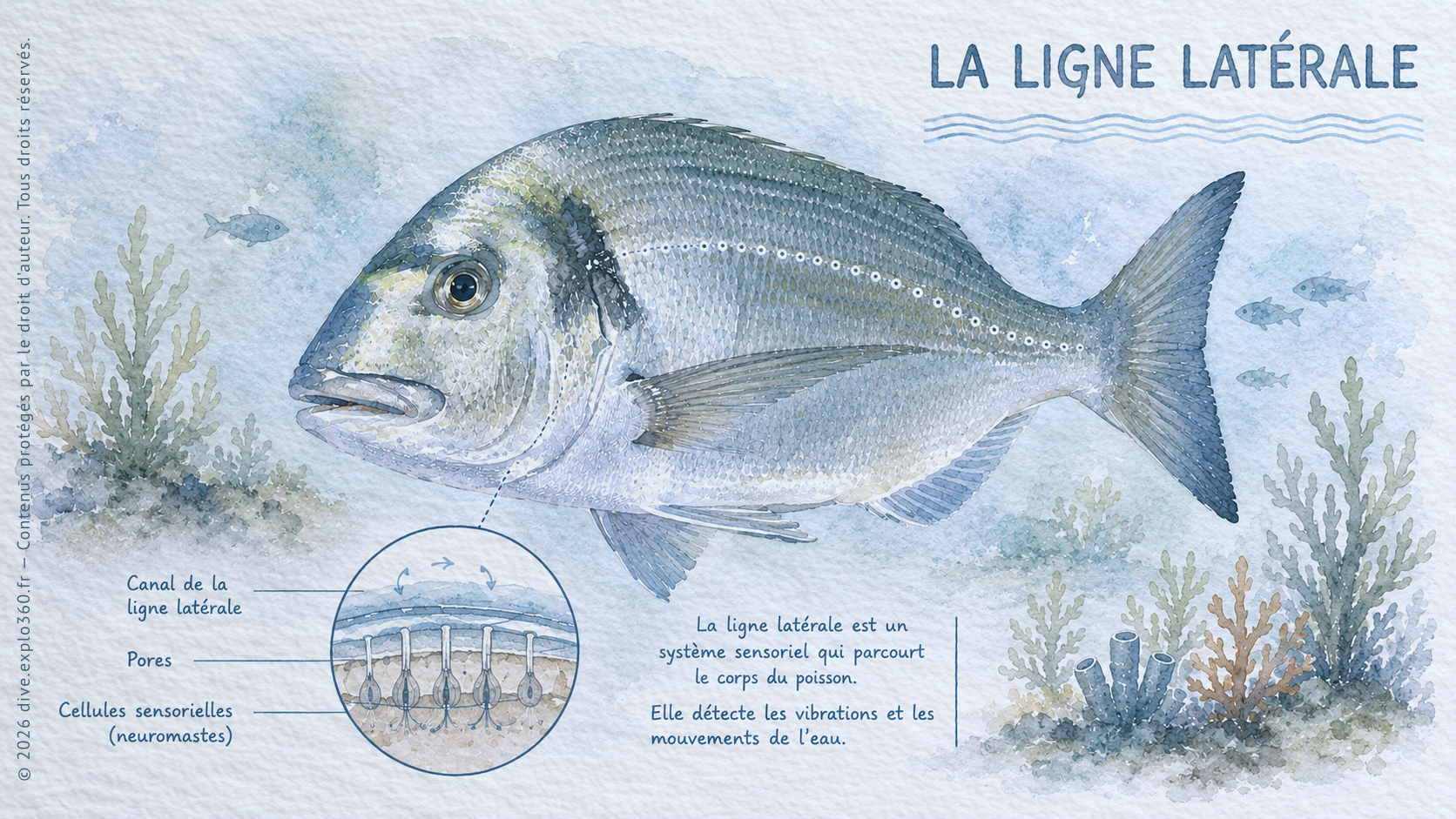
THE LATERAL LINE
The lateral line is made up of tiny sensors called neuromasts. In each one, sensory cells have tiny hair-like tips that sit in a soft, jelly-like cap. Moving water pushes the cap and bends those tips. The cells respond to that movement.
Some of these sensors sit on the skin. Others lie in small canals. Both help the animal detect movements in the water nearby. Some amphibians that live in water have them too.
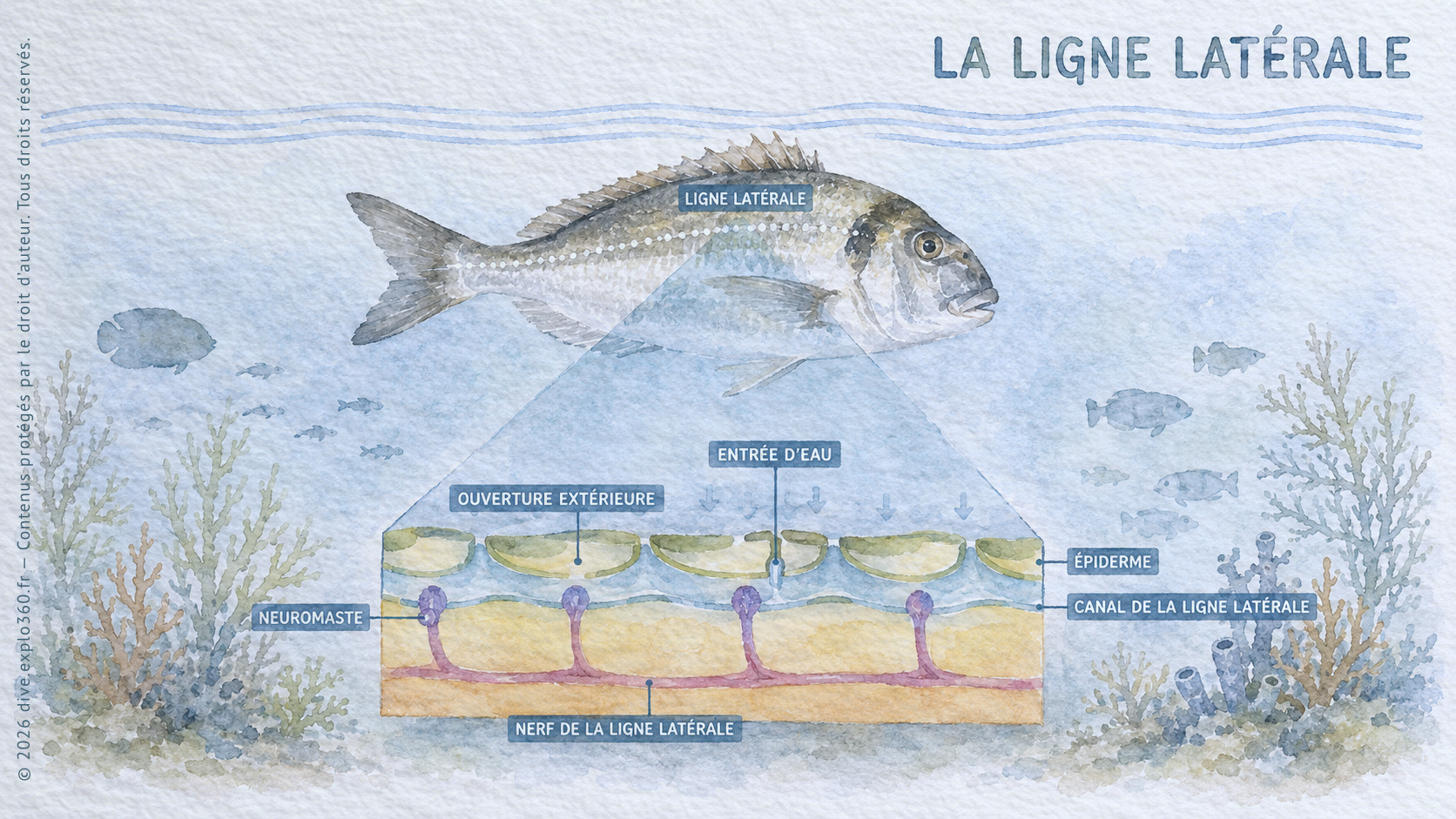
HOW IT WORKS
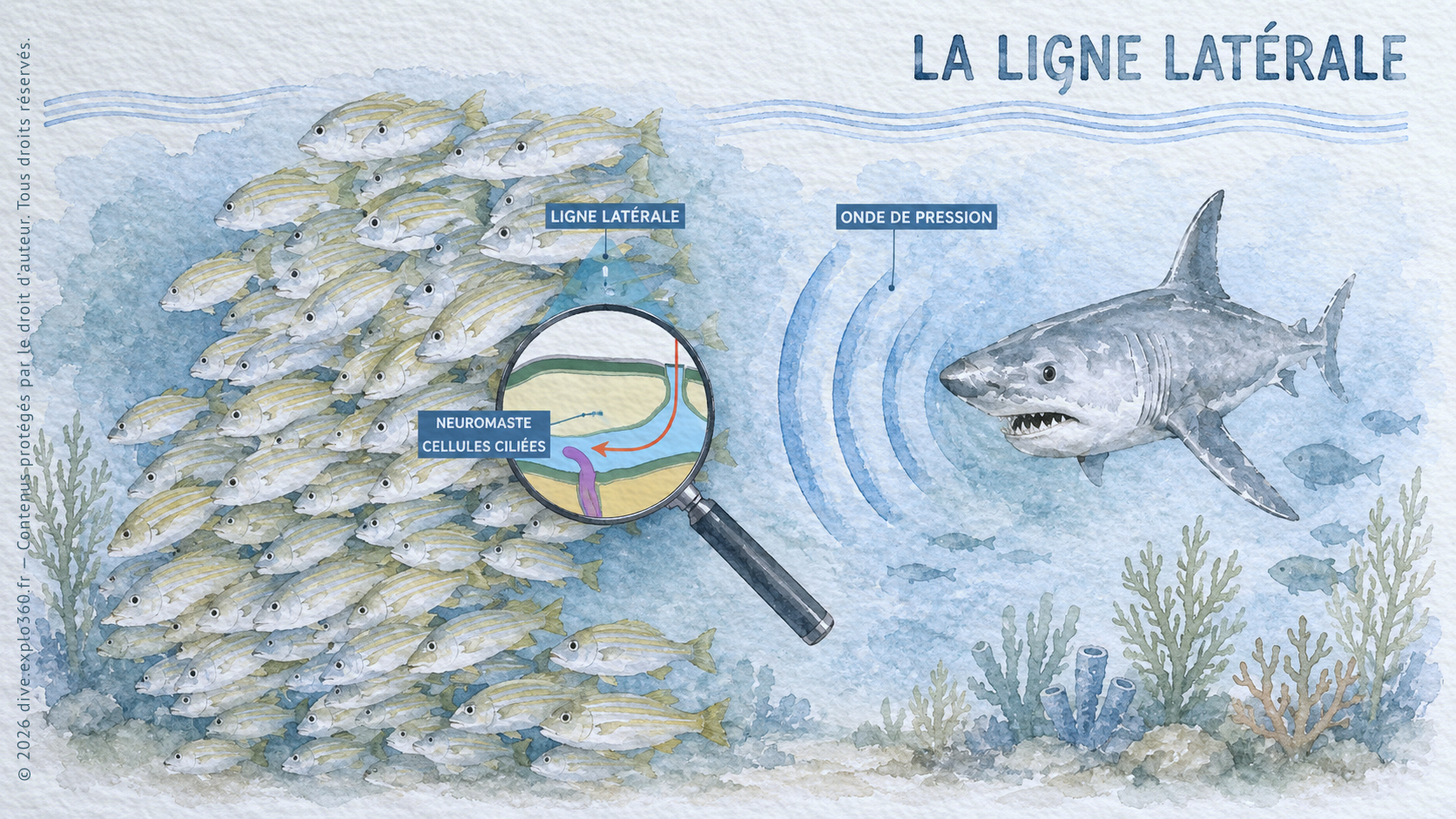
A swimming animal pushes water aside. If that movement reaches another fish’s neuromasts, the fish can sense it even in the dark.
The fish might turn, swim away or keep going. What it does depends on the situation. What it can see or hear can help it respond to danger too.
Explore the same world