
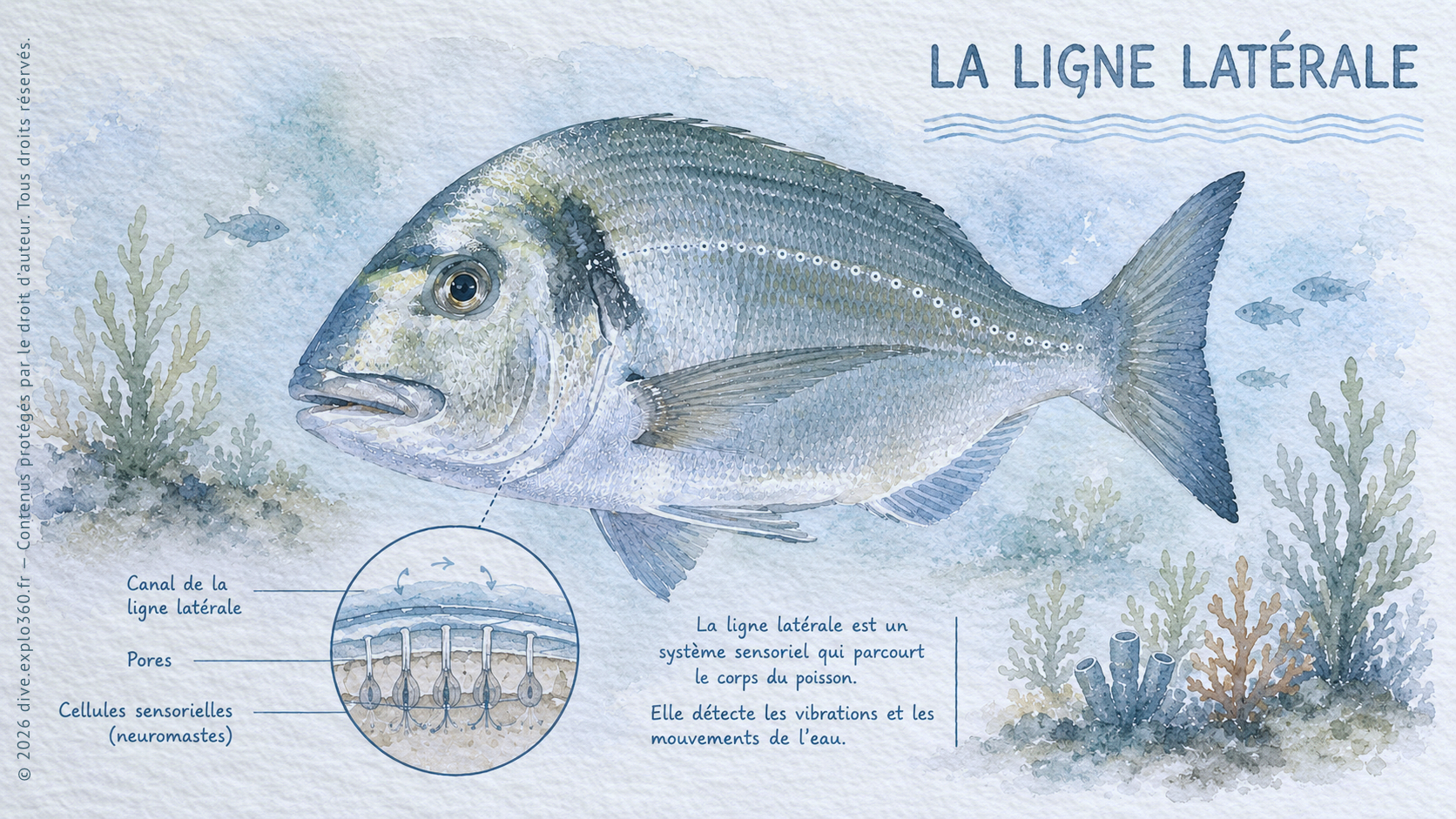
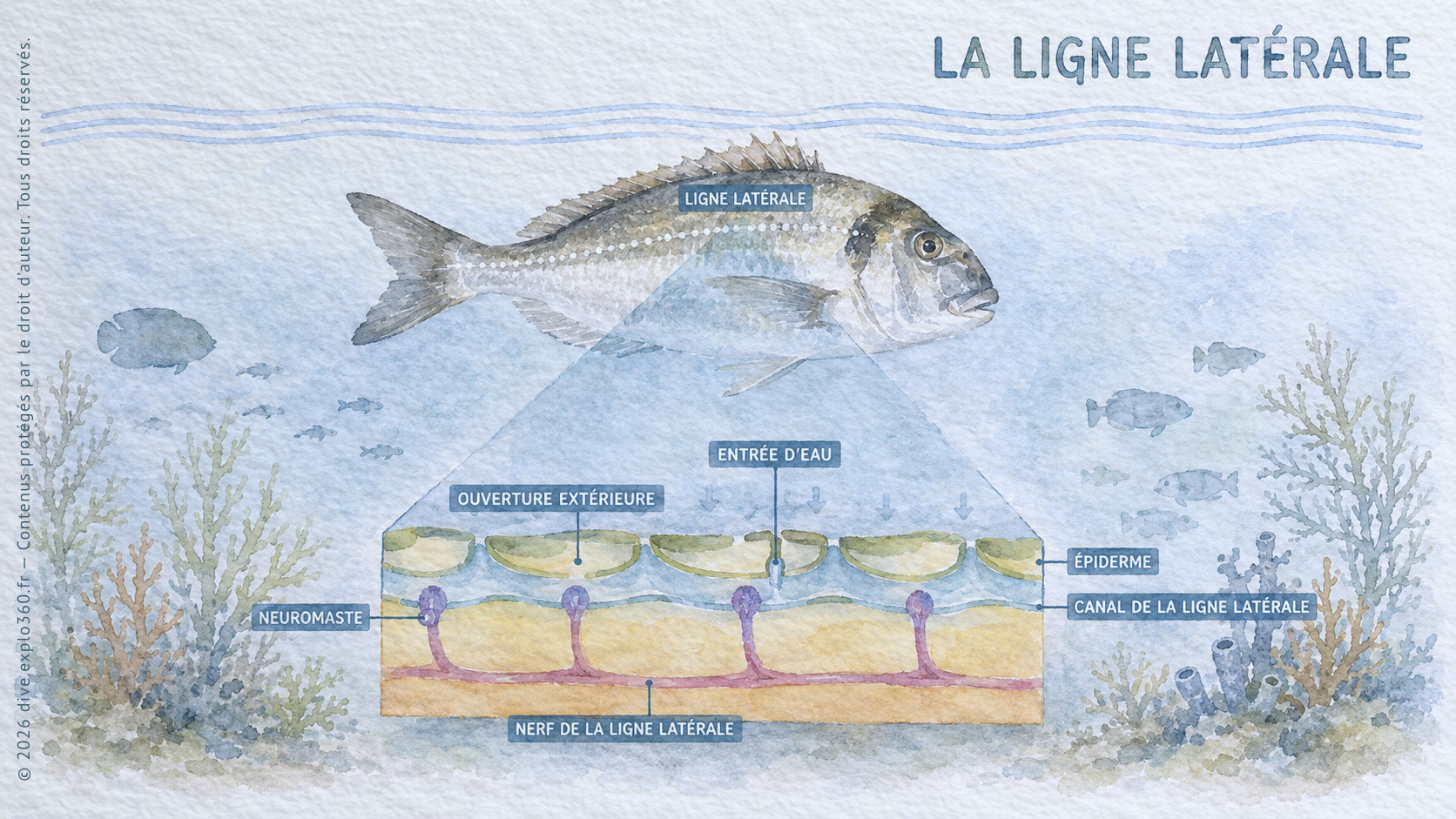
Each neuromast contains sensory cells with hair-like structures. Water movements displace these structures and stimulate the sensory cells.
This stimulation is converted into a nerve signal and sent to the brain.
Some neuromasts lie in canals beneath the skin’s surface, while others are located more directly on the surface.
These different receptors allow the fish to detect variations in the water movements around it.
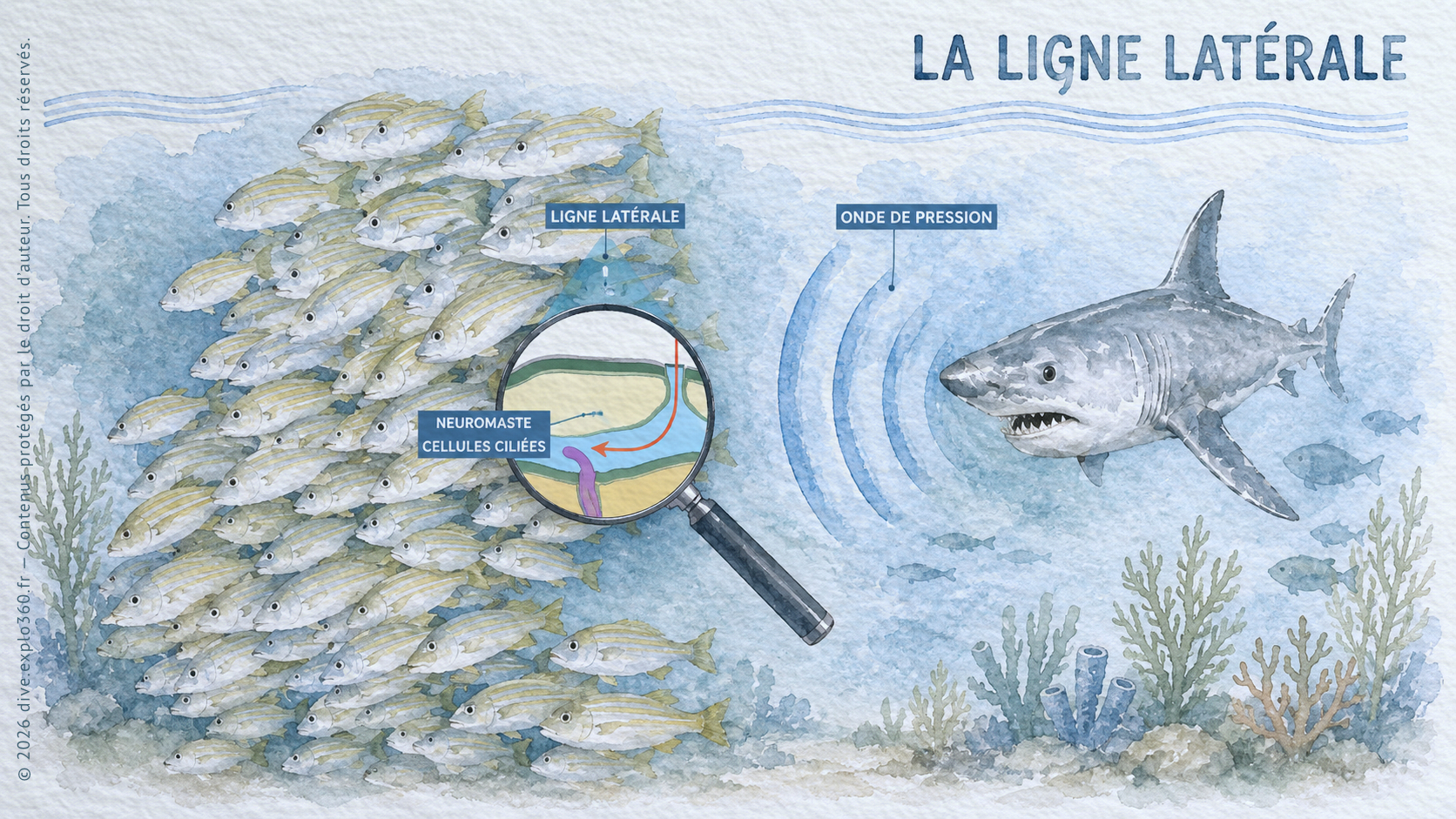
An approaching predator, for example, displaces a mass of water ahead of it. Even if the fish cannot see the predator, its lateral line can detect some of these disturbances.
Water movements deform the sensory structures of the neuromasts. The hair cells then convert this mechanical stimulation into a nerve signal.
The nervous system uses this information to determine certain characteristics of the disturbance and allow the fish to adjust its behaviour quickly.
In the presence of danger, this perception can help trigger an escape response.
AMIGANSEAU CONTENT
The rest of this article is for subscribers
Log in with your AMIGANSEAU licence to continue reading.
All active AMIGANSEAU licences give access to the full article.Explore the same world