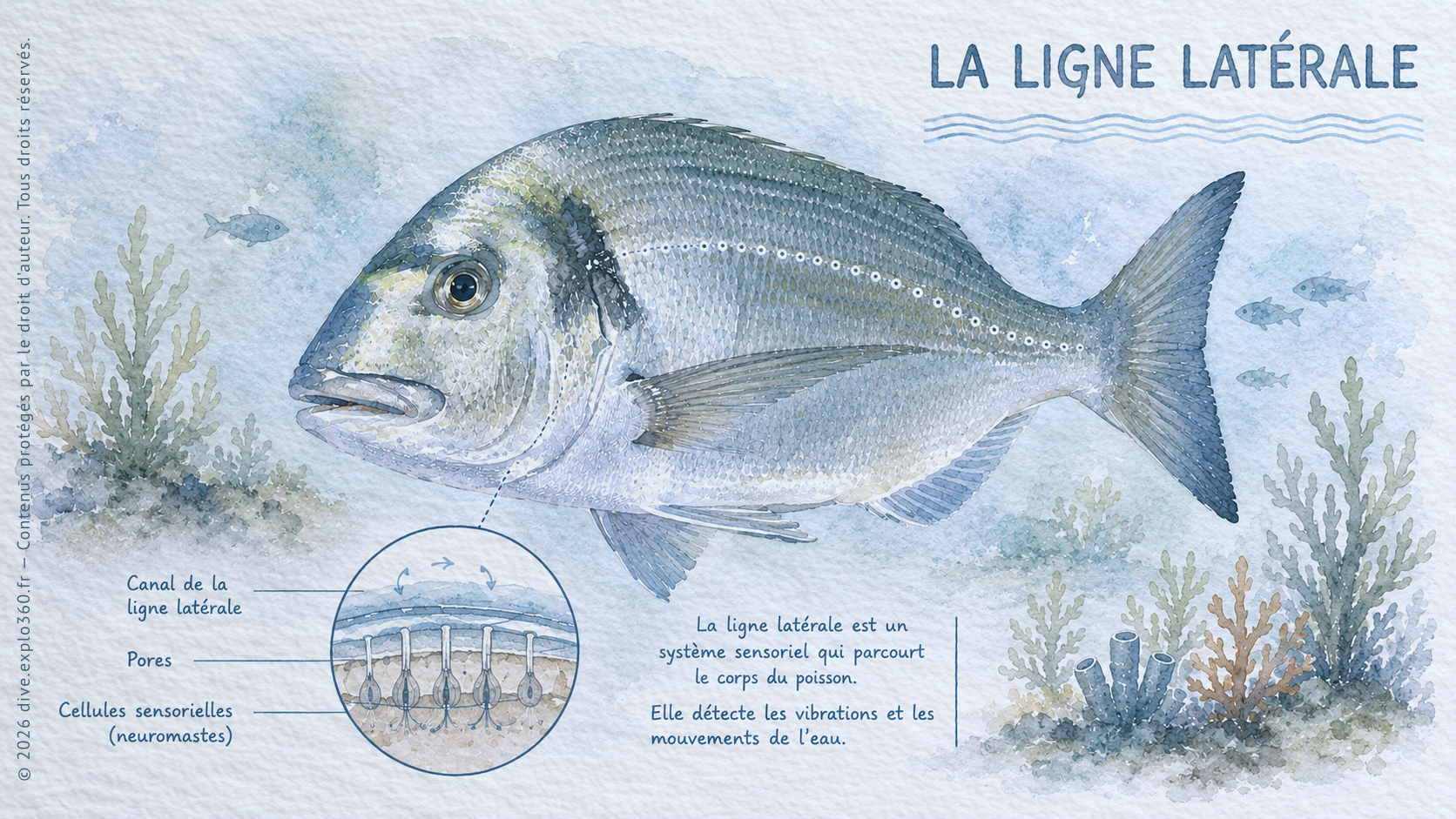
THE LATERAL LINE
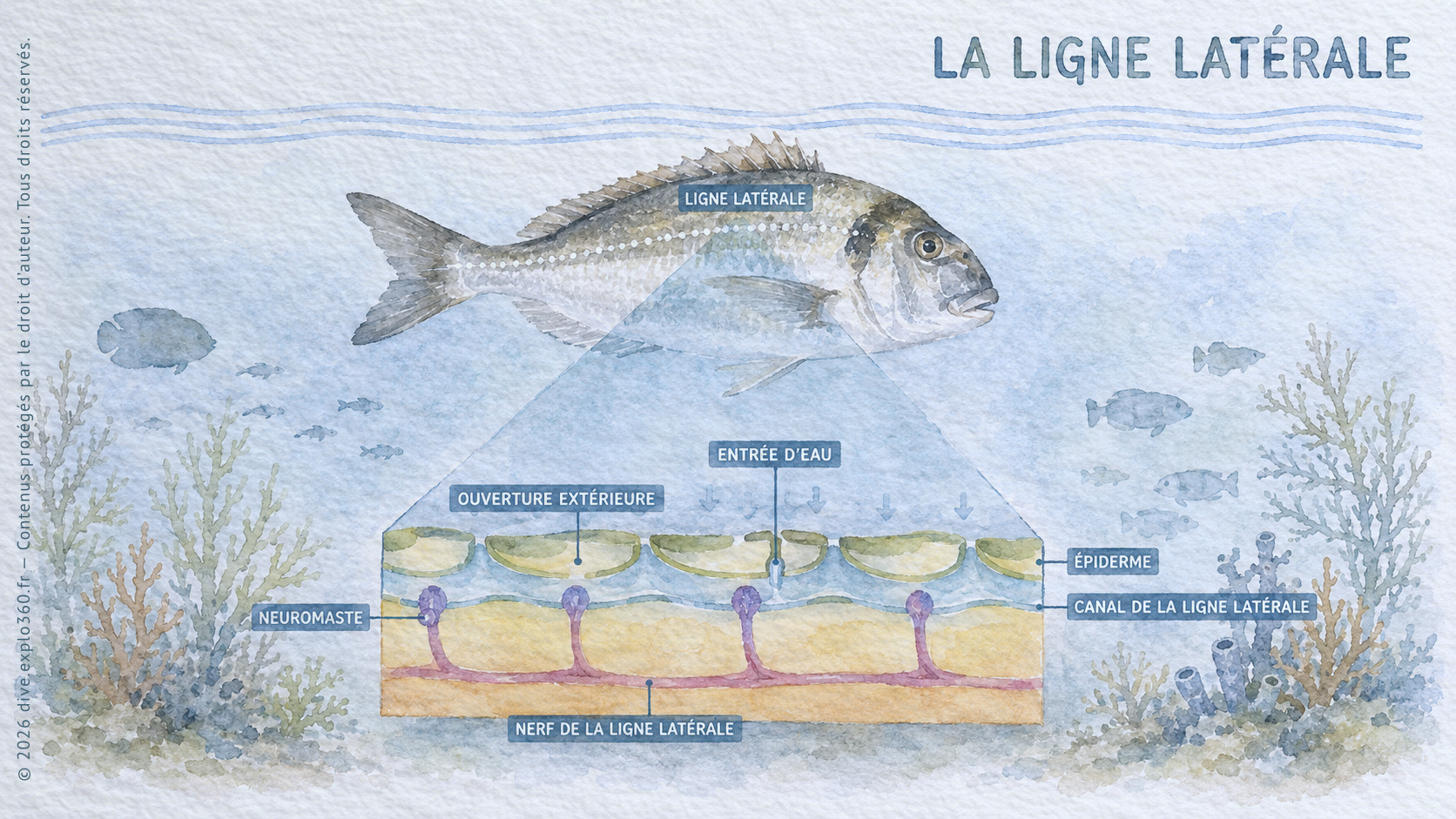
The lateral line contains neuromasts: small organs with sensory cells bearing hair-like projections. Water movement bends a jelly-like material covering them, stimulating these cells.
Some neuromasts lie on the skin; others sit in canals connected to the water through pores. The former detect local flow, while the latter detect pressure differences between openings. Both contribute to sensing nearby disturbances. This system occurs in fish and in some aquatic amphibians.
HOW IT WORKS
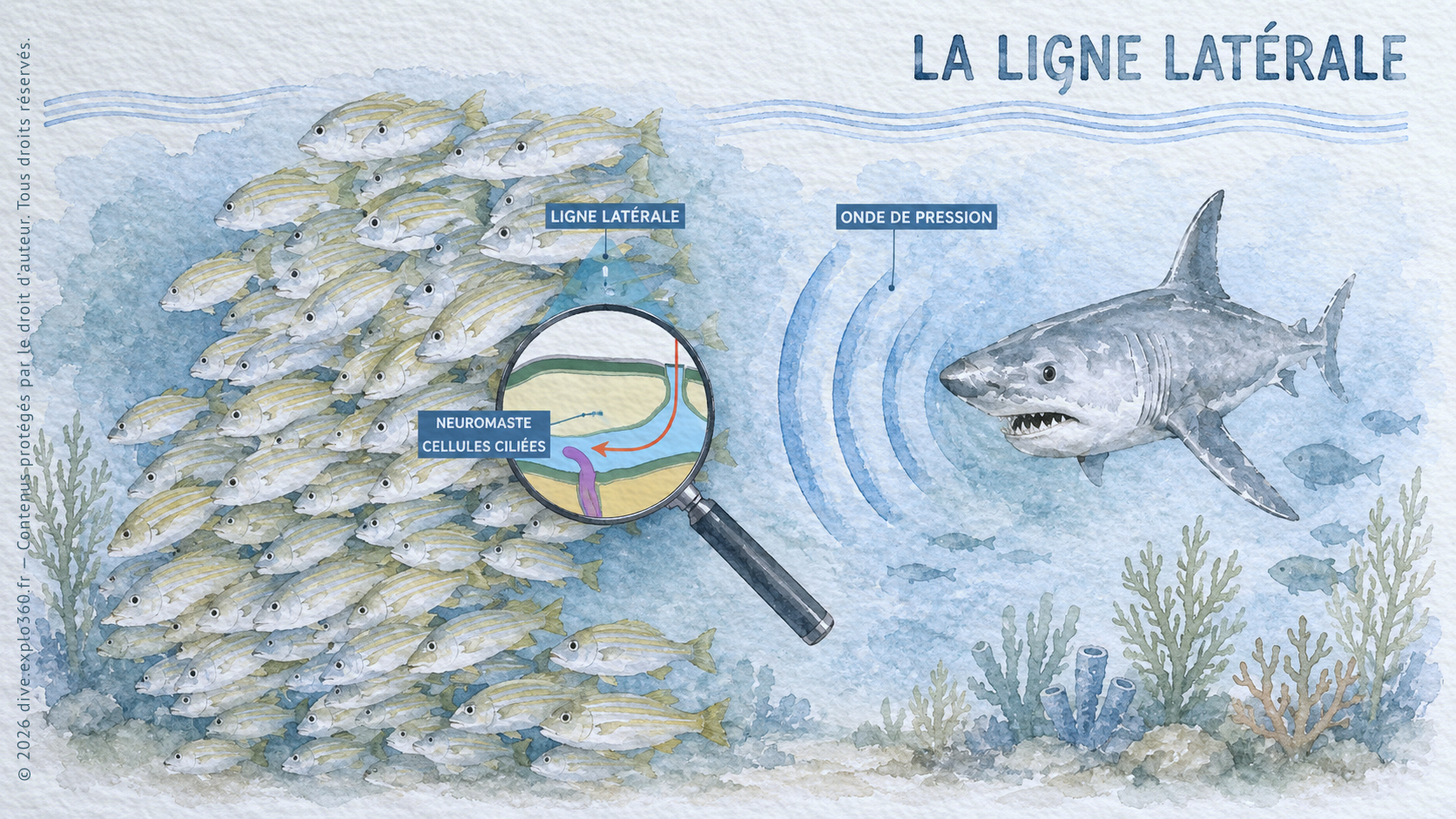
A moving animal displaces water and produces disturbances. If these reach the neuromasts, they can inform a fish about nearby movement, even in darkness.
The response depends on the situation. The fish may escape, turn or show no response. The lateral line alone does not identify every predator or provide an infallible alarm: vision and hearing may also contribute.
Explore the same world