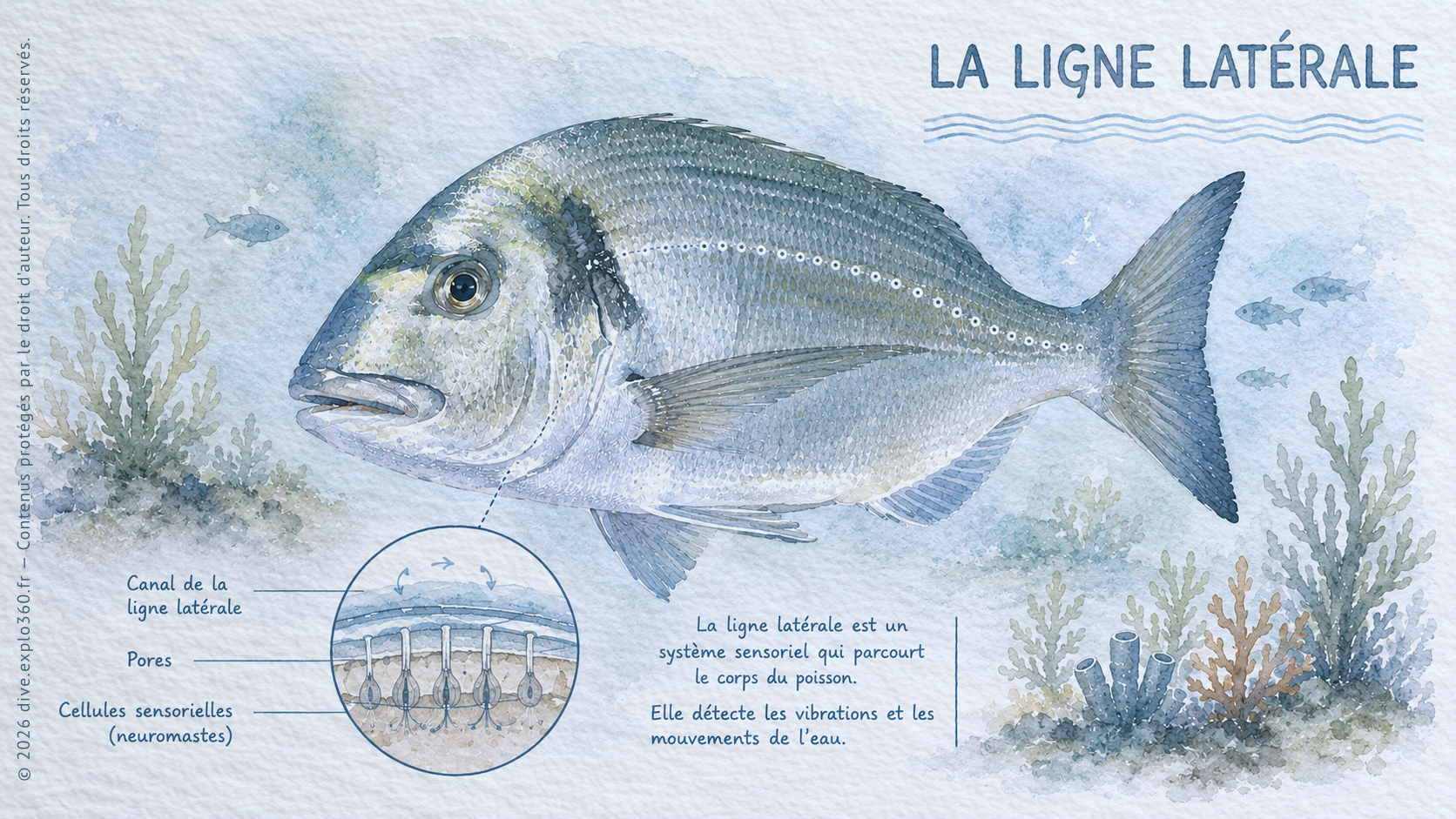
THE LATERAL LINE
Neuromasts are small sensory organs containing hair cells. The projections of those cells are embedded in a gelatinous cap. Local water movement deflects the cap, bending the projections and stimulating the cells.
Superficial neuromasts on the skin respond to local flow. In canals, a pressure difference between neighbouring pores drives water past the neuromasts inside. Both kinds help detect nearby disturbances. The system occurs in fish and some aquatic amphibians.
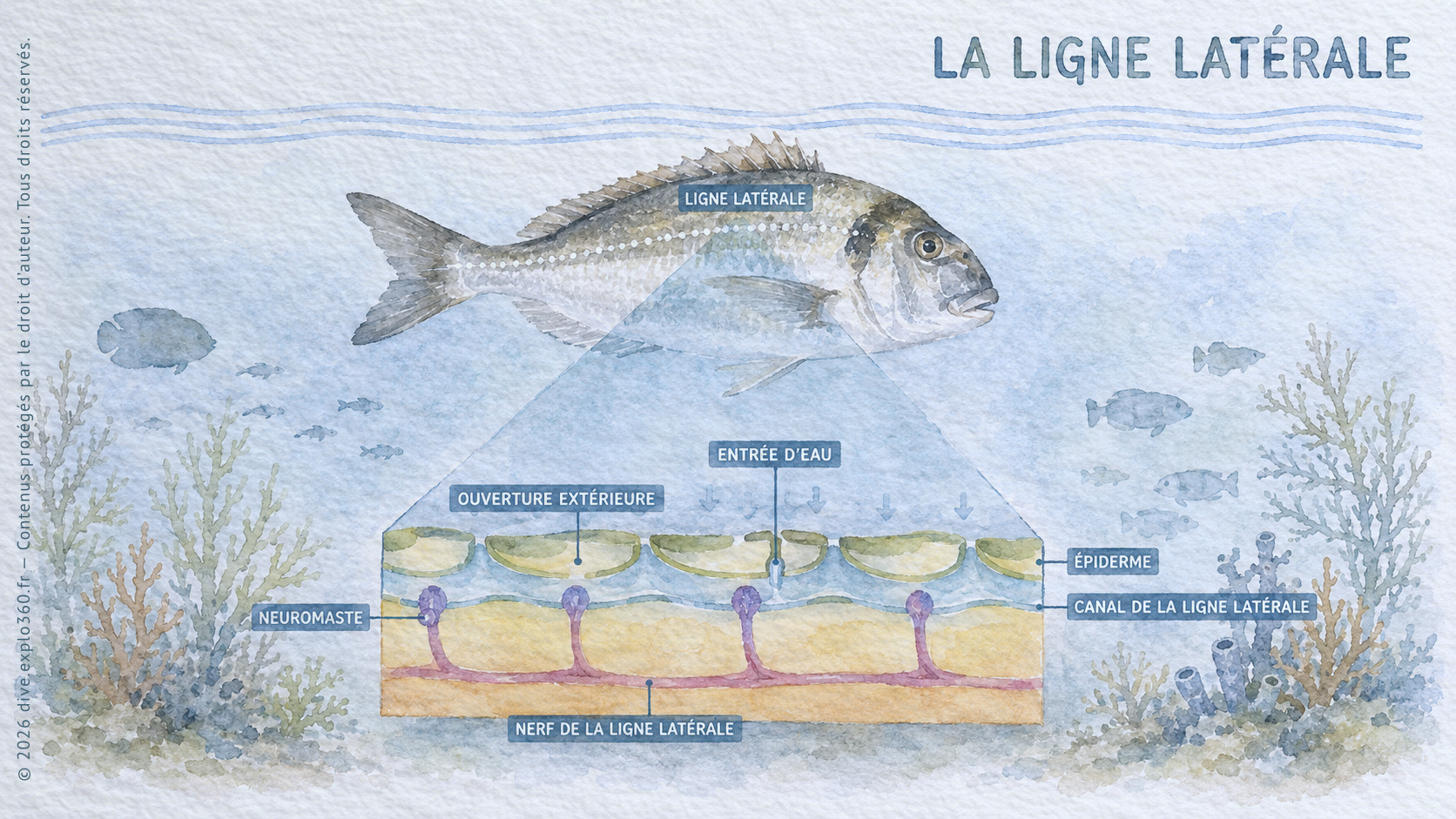
HOW IT WORKS
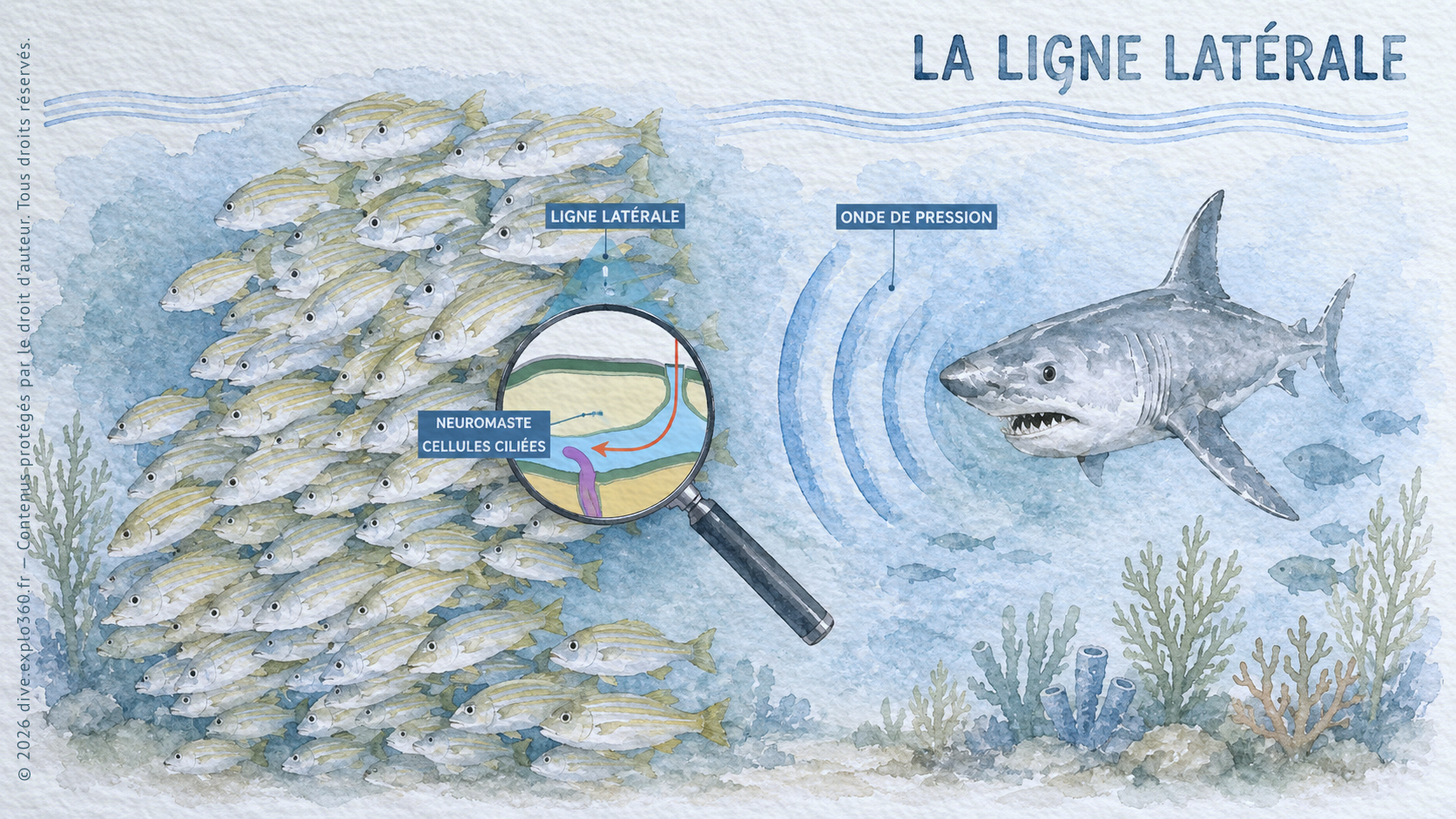
A moving animal displaces water. If the resulting disturbance reaches the neuromasts, a fish can detect the movement even in darkness.
Detection is one step. The fish may turn, flee or show no visible response, depending on the situation. Vision and hearing can supply additional information about what caused the disturbance.
Explore the same world