The worm that wasn’t
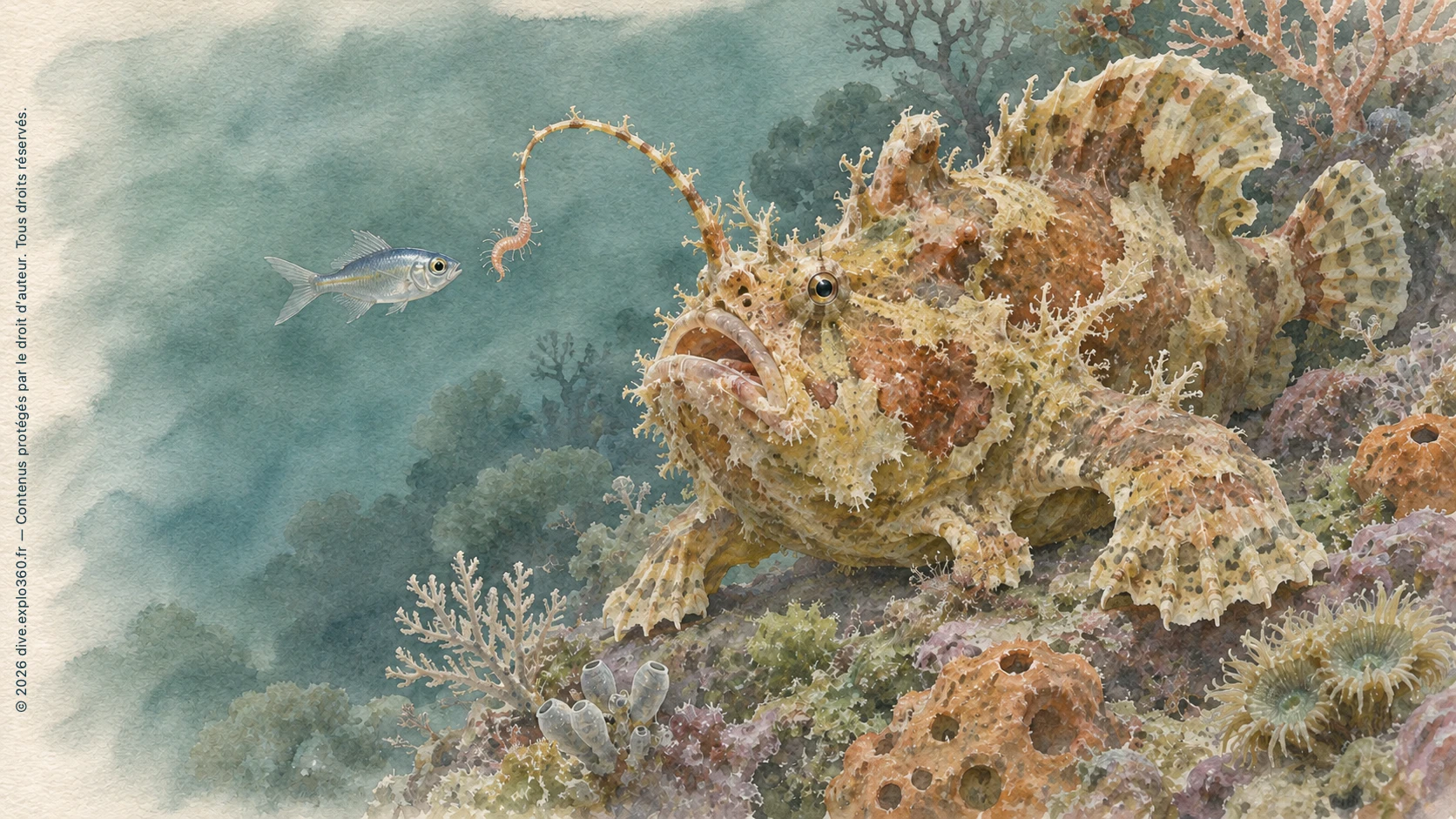
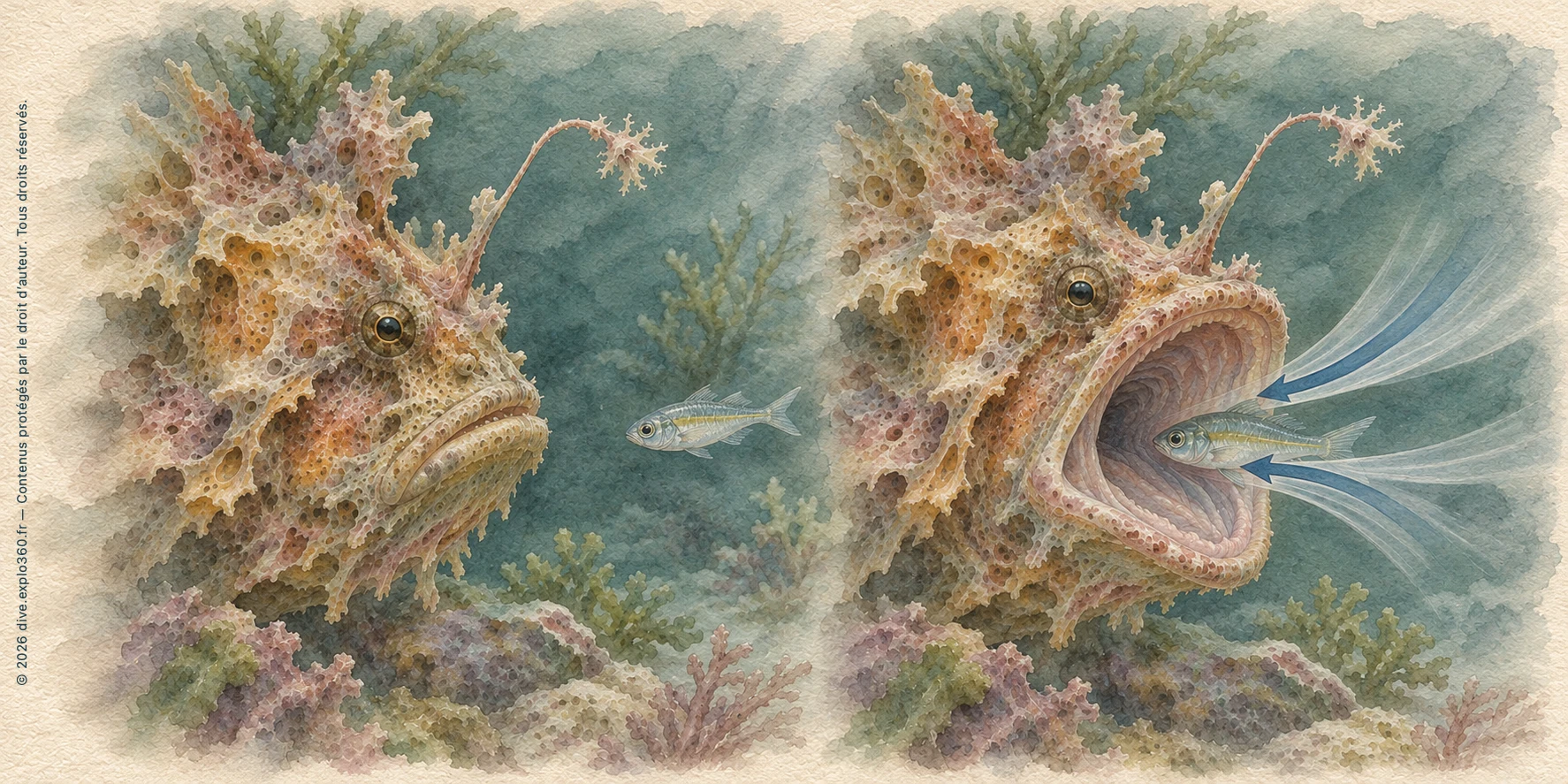
Picture a small fish nosing along a reef. A thin filament sways above the seabed like a worm, and the fish draws closer. Behind it, what looks like a piece of sponge or rock is a frogfish. Its mouth opens so fast that the rush of water sweeps the small fish inside. The frogfish has barely moved. The stalk that carries its lure is a modified dorsal fin ray. It can draw prey within range of a mouth that opens wide enough to engulf a surprisingly large fish. To see why the strike works at such close quarters, follow what happens to the water.
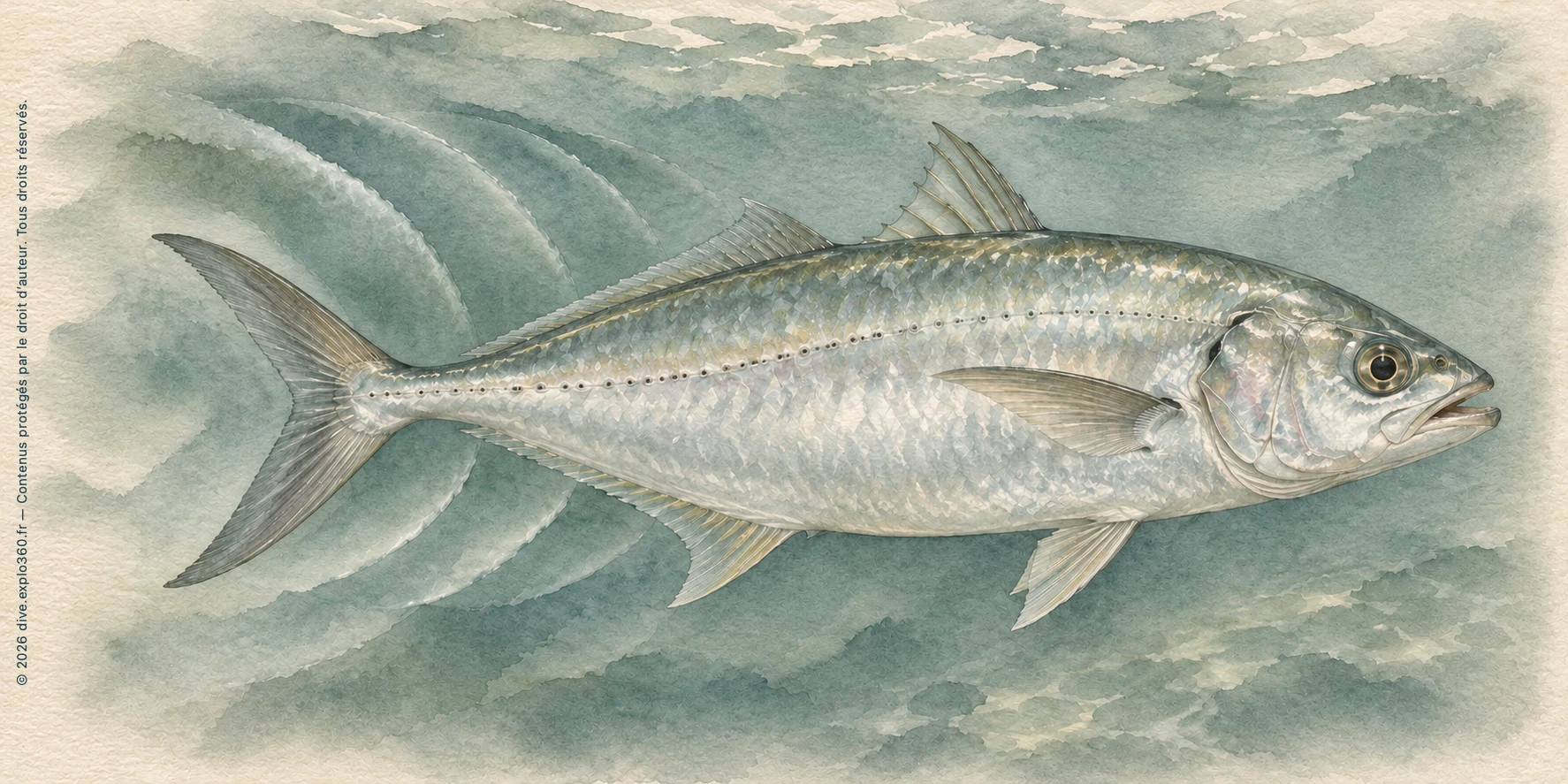
Prey can sense danger
A cheetah can push against solid ground as it chases an antelope. A fish pursues its prey through a much denser medium than air. As it accelerates, the resistance it encounters can rise sharply. Body shape, muscle power and the way it pushes water backwards all affect its ability to give chase. The water also carries a warning. Along a fish’s lateral line are sensory organs called neuromasts, whose cells respond to certain movements of water. A predator that surges forward may give itself away before the prey sees it.
Light, clarity and distance affect what the prey can see. In deep or cloudy water, a silhouette may be hard to make out. A hunter still needs to get within reach before the prey bolts. Staying still can delay a warning, while a quick strike leaves little time to react. The frogfish does both and uses the water itself to bring the prey in.
When the mouth draws water in
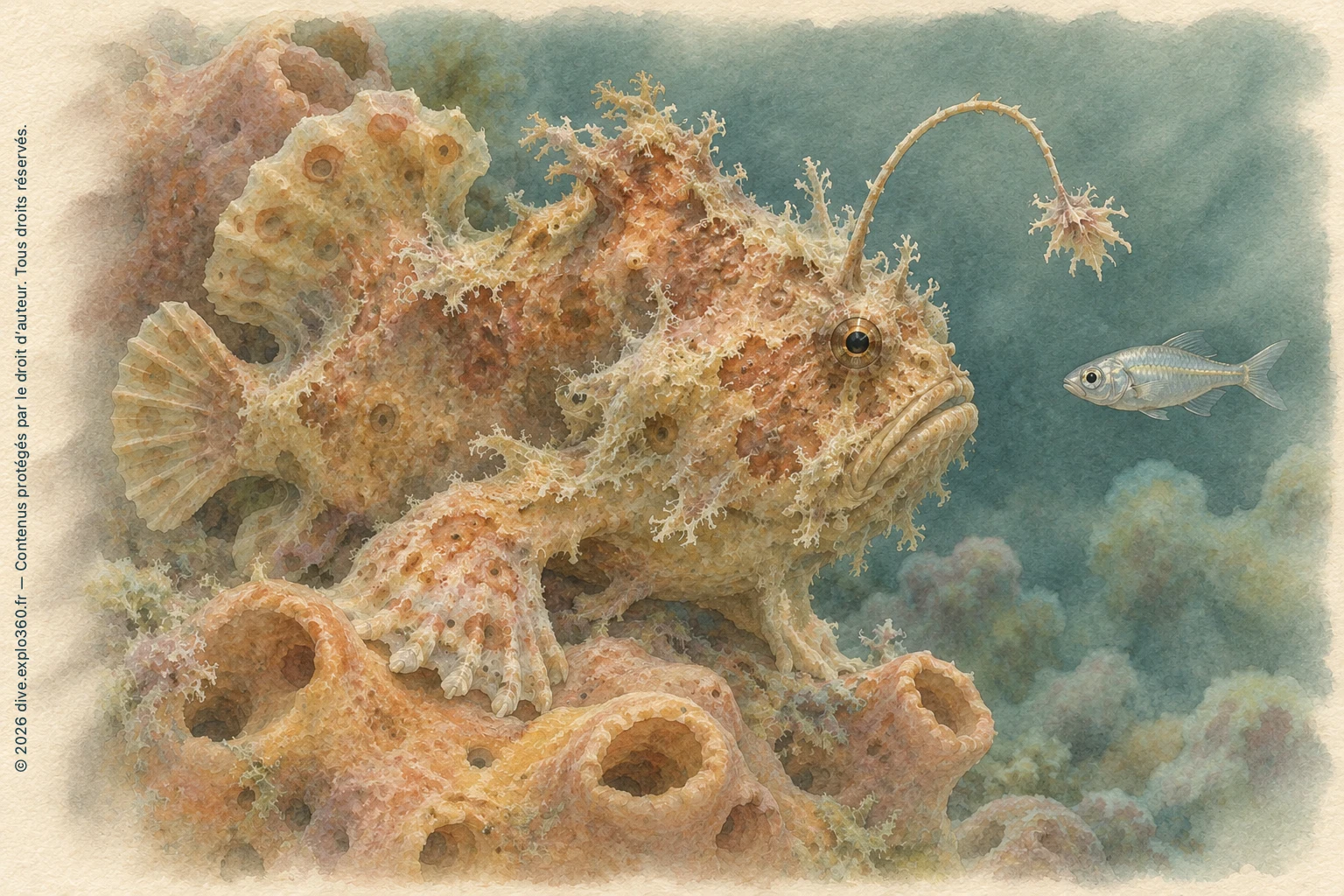
A frogfish’s irregular outline, skin projections and colouring can make it hard to pick out from the reef. Some resemble sponges, algae or pieces of rock. Above the head, a stalk called the illicium carries a lure, the esca. Its shape varies among species. Where the lure resembles a small animal, a frogfish can move it in front of its mouth while keeping the rest of its body almost still.
When a fish comes close enough, coordinated movements of the jaws and skull rapidly expand the mouth cavity. The pressure inside drops and water rushes in, carrying the prey with it. The capture can take a few milliseconds. A frogfish can stretch its mouth wide enough to swallow fish surprisingly large for its size, but suction is effective only at close range. The current weakens quickly away from the mouth. That is where the lure earns its keep: it brings the prey within reach. Many other fish use suction, including species that pursue their prey.
A predator can also wait for a fish to come close without offering it anything to investigate.
A scorpionfish blends into the seabed
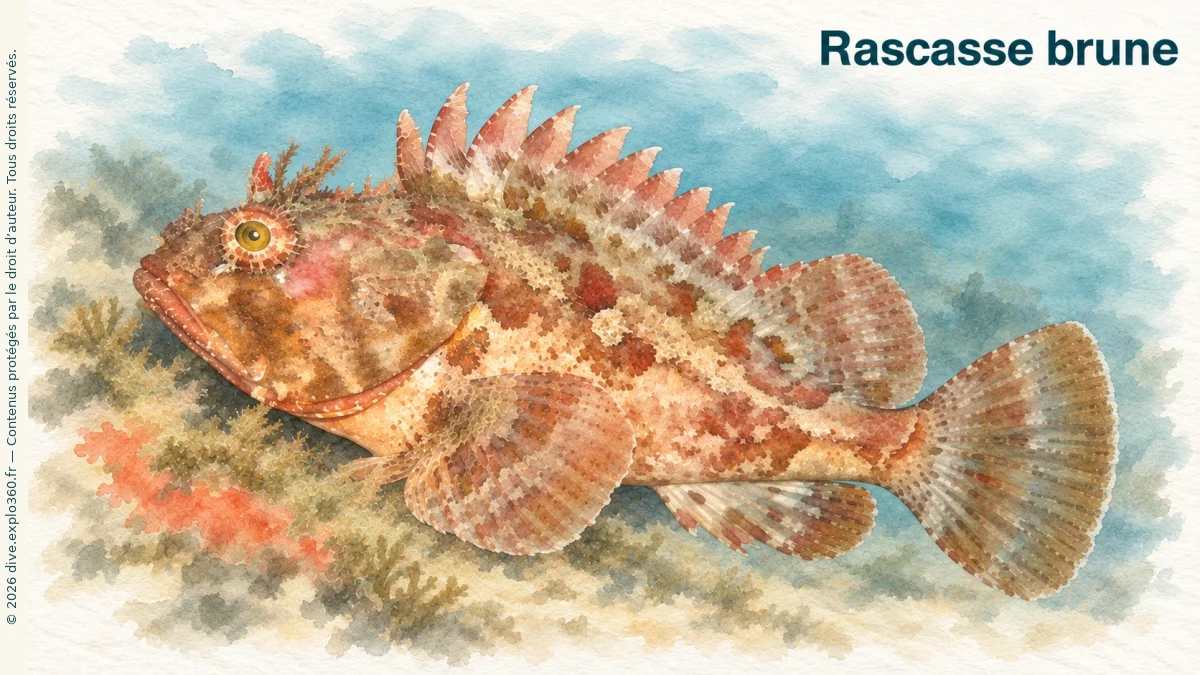
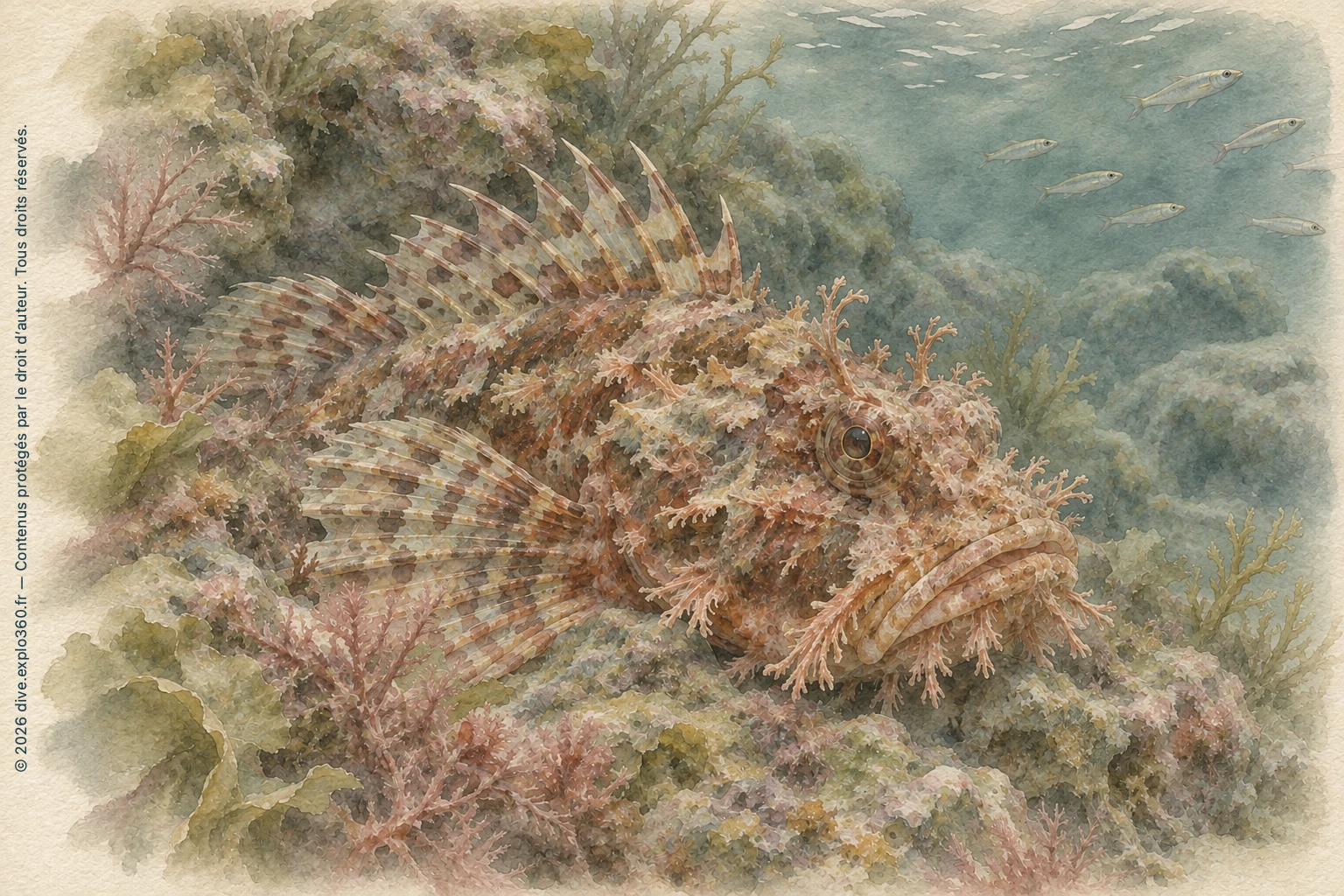
On a rocky seabed in the Mediterranean, a scorpionfish can stay still while a small fish swims past. Its uneven colouring, skin projections and outline blend into the surrounding rock. It usually hunts by waiting in ambush. When a fish or crustacean comes within reach, the scorpionfish can strike quickly and suck it into its mouth.
The scorpionfish’s spines are connected to a venom delivery system that serves mainly as a defence. A snake may inject venom into its prey before swallowing it. A scorpionfish relies on camouflage and the suction created by its mouth to catch its food. Its venomous spines can deter animals that might attack it. Some other marine predators use venom to catch prey directly, and some have a tooth that works like a projectile.
The geography cone changes the odds
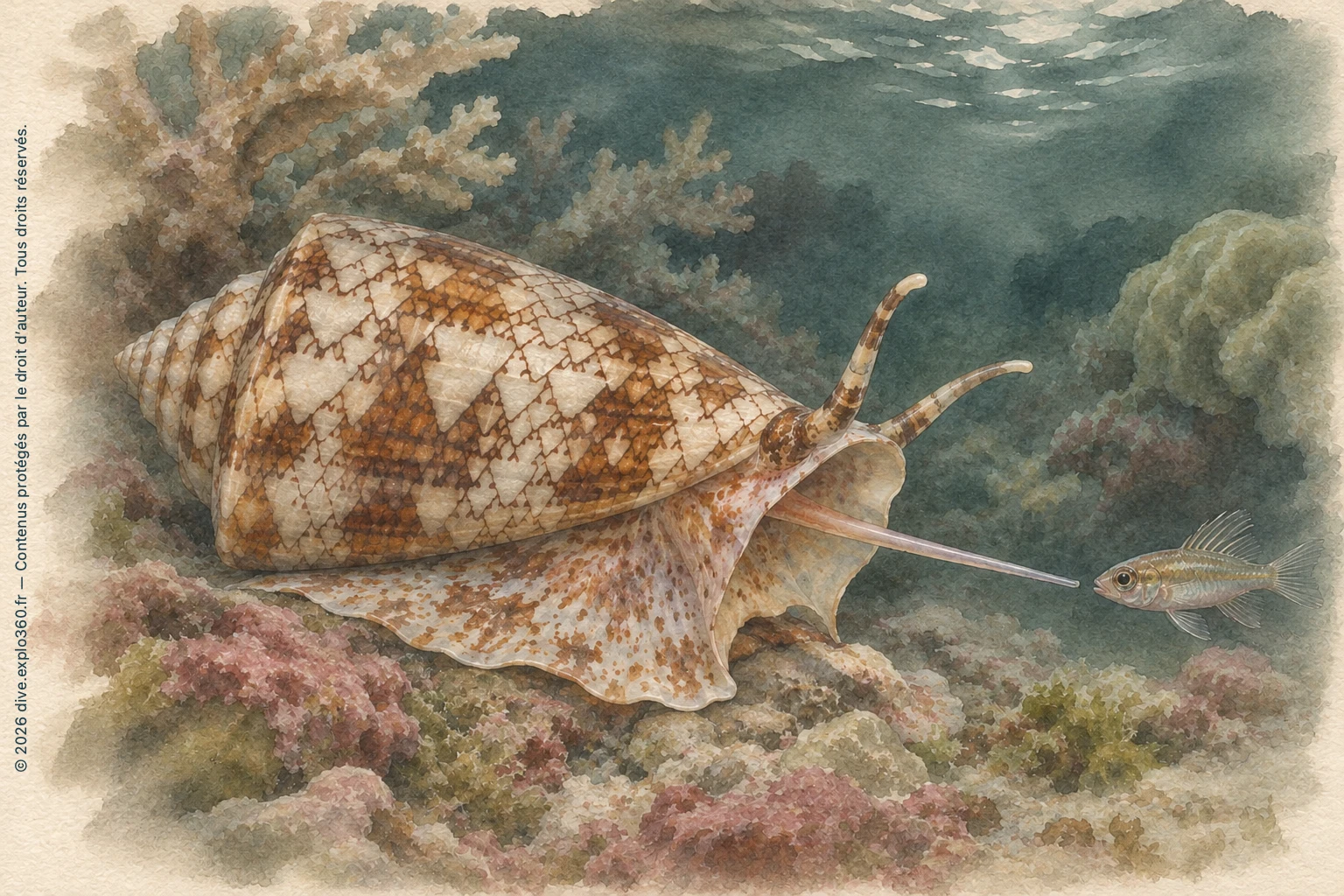
On a tropical sandy seabed, a cone snail moves slowly. Its patterned shell gives little away about its diet. The geography cone, Conus geographus, hunts fish. Fish-eating cone snails can deliver venom through a modified radular tooth. Their venom contains a mixture of peptides, some of which act on ion channels and receptors involved in nerve and muscle function. These effects can make escape harder.
The geography cone can also spread its mouthparts around small fish and engulf them. Its chemistry helps explain how a slow-moving snail can catch such quick prey.
In 2015, researchers showed that Conus geographus and Conus tulipa produce particular forms of insulin, different from those normally used by these molluscs to regulate their own metabolism. These venomous insulins are more similar to those of fish. They can cause a sharp drop in the prey’s blood glucose. The researchers suggested that their release into the water could contribute to the reduction of fish activity, facilitating their capture. In 2024, another study in the geography cone revealed a peptide imitating the action of somatostatin, a hormone that is involved in regulating metabolism. In experiments, this substance could reduce glucagon release, a hormone that normally helps to increase blood glucose levels. Together, these molecules may disrupt the fish’s glucose balance for longer. The cone, therefore, does not simply paralyse its victims with substances acting on their nerves. It also has molecules that are able to interfere with their hormonal regulation. This mechanism is an unusual example of venom evolution.
A different kind of strike comes from the long bill of a sailfish.
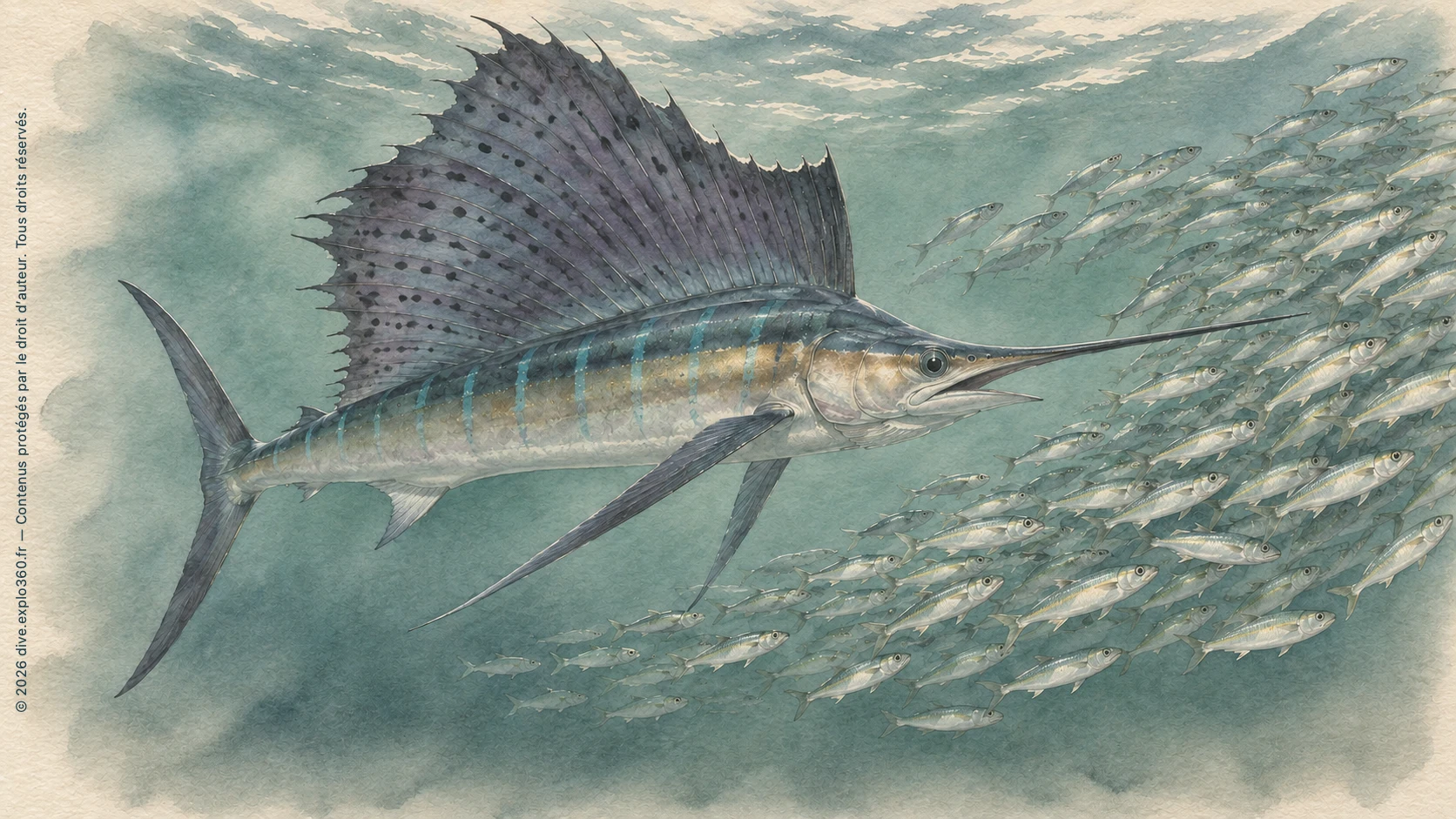
A sailfish strikes into the school
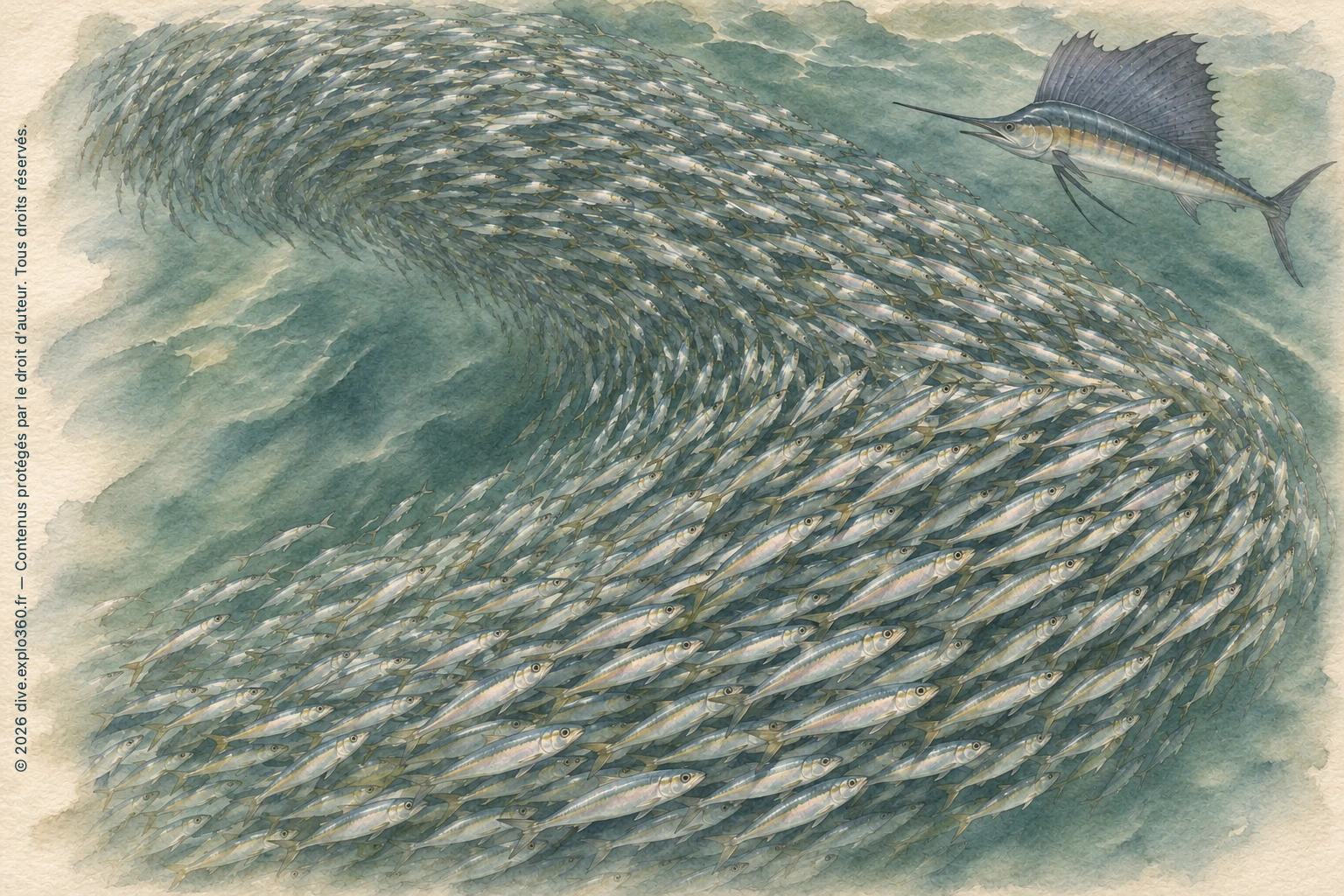
A school of sardines can tighten, change shape and re-form as its fish respond to their neighbours. The Atlantic sailfish, identified as Istiophorus albicans in the filmed study, can slip its long bill among the sardines without immediately scattering them. High-speed footage shows what happens next. The sailfish can tap an individual fish or sweep the bill sideways through part of the school, sometimes hitting several sardines. An injured or disoriented fish is easier to catch. The long bill lets the tip travel quickly without the sailfish having to swing its whole body through the same arc.
Several sailfish can take turns attacking a school. In one study, injuries built up with successive strikes and were much more frequent than catches. A strike that brings in no meal can still leave injured sardines for the next hunter. The fish can benefit from taking turns without needing to time their attacks together. On a reef, two predators can also hunt together by covering different routes.
A school on the move
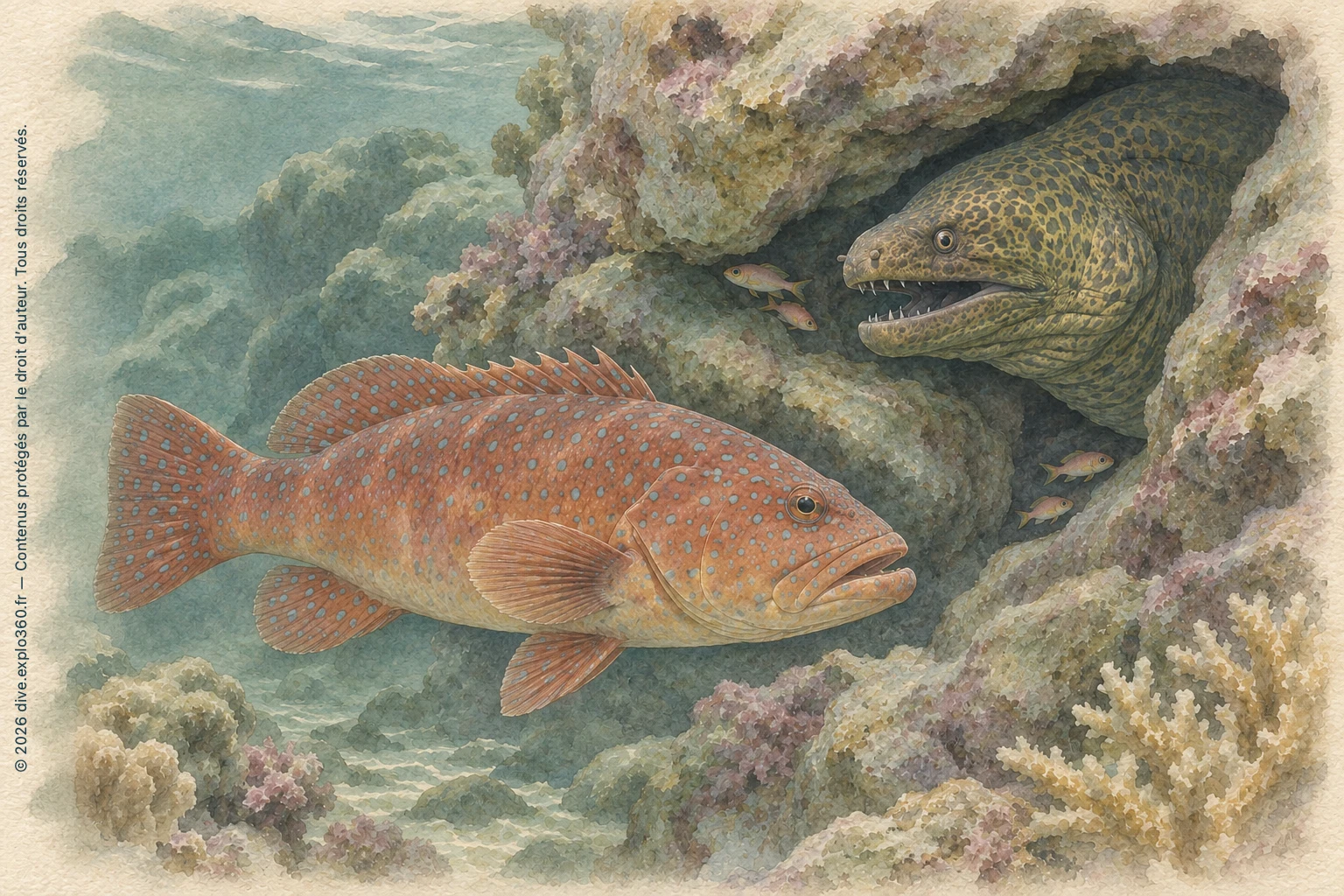
A grouper and a moray hunt together
In the Red Sea, a fish fleeing a grouper disappears into a crack in the reef. The grouper can go no farther. Its body is too large to fit deep inside the crevice. The prey seems to have found shelter. The grouper can then do something surprising. It swims to a giant moray, Gymnothorax javanicus, and shakes its head rapidly in front of it. Biologists have observed and studied this behaviour in the Red Sea. In 2006, Redouan Bshary and colleagues reported that some coral groupers, Plectropomus pessuliferus, use visual signals to recruit giant morays. In a substantial proportion of the observed encounters, the morays responded by leaving their shelters.
The predators could then move across the reef together. Their bodies suit different hunting methods. The grouper can quickly chase prey in open water. The moray’s long, flexible body lets it search the cracks where fish hide. The prey faces danger on both sides. Inside the crack, the moray can reach it. In open water, it risks encountering the grouper. Researchers also saw groupers make distinctive head and body movements near a hiding place containing prey. These signals could draw other predators’ attention to that spot. Later studies examined the gestures more closely. Some have features of referential communication because they direct a partner’s attention to a specific location. The observations show that two predator species can coordinate their behaviour. They leave open whether the animals consciously plan the hunt. Whichever predator catches the fish usually swallows it whole. Both predators gain more opportunities to catch prey without having to share a meal. If hunters can combine their abilities in this way, how far can they also take advantage of the physical properties of water itself?
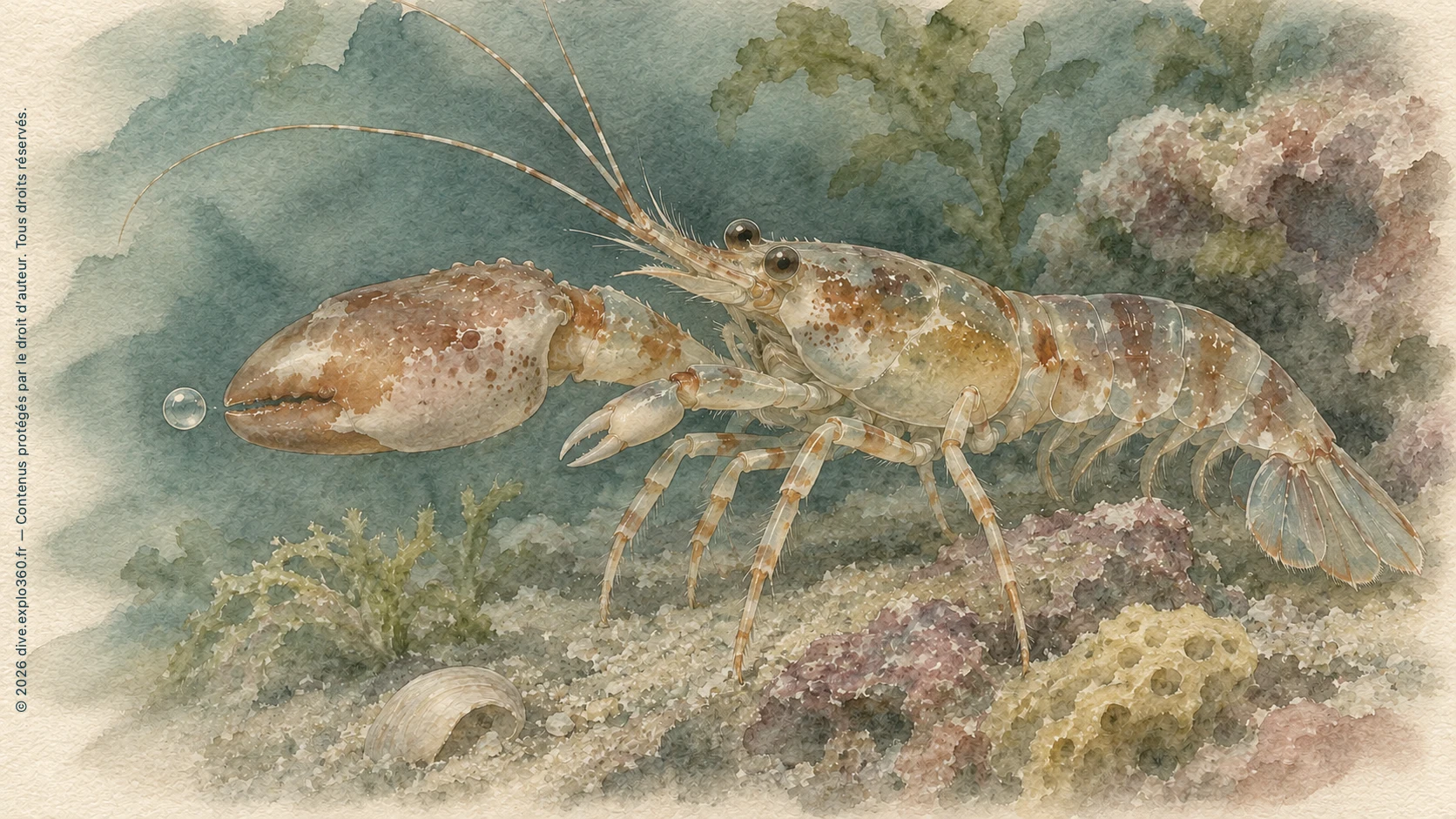
The snapping shrimp’s snap
In a burrow beneath the reef, a snapping shrimp has two very different claws. It uses one to handle objects. Its specialised snapping claw can make a remarkably loud sound.
High-speed footage and acoustic measurements showed that the sound comes mainly from a collapsing cavitation bubble. When the claw snaps shut, it shoots out a fast jet of water. The local pressure drops, forming a vapour bubble. When that bubble collapses, it produces a pressure pulse and the characteristic snap.
Some snapping shrimp can stun or kill small prey this way. The pressure pulse carries force through the water, so the claw can act at a distance. Fluid mechanics helped researchers explain how this small crustacean makes such a powerful snap.
Underwater predators can use a lure, an expanding mouth, venom, a bill or even a collapsing bubble. The prey can still escape.
The moment the hunt turns
The frogfish’s outline blends into the reef, its stillness limits the disturbances it sends through the water, and its lure draws a fish close. Timing still matters. If the mouth opens too early, the prey can stay beyond the strongest part of the flow. Wait too long and the fish may leave. The same constraint takes a different form for each hunter. A sailfish must get its bill among the sardines. A cone snail must expose the fish to its venom. A moray has to reach into the crevice, and a snapping shrimp’s pressure pulse has to reach its prey.
The prey can change the outcome too. A fish can sense a disturbance, turn sharply, join a school or take refuge. Some prey have physical or chemical defences. Those responses and the ways predators get past them have helped shape one another over evolutionary time.
Interactive quiz
Review what you learned
5 question(s) to test your knowledge.
Interactive quiz
Review what you learned
Question 1 out of 5Score: 0
Why can accelerating too early cost a predator its advantage?
What does comparing a scorpionfish with a frogfish reveal?
What distinction helps explain how the geography cone catches and subdues fish?
How can a grouper and moray benefit from hunting together without sharing the meal?
Which finding supports the cavitation explanation?
Final result
Quiz completed
correct answers
A hunt can turn before the capture
A sailfish can leave a sardine reeling with a flick of its bill. A moray can reach into a crack where a grouper cannot follow. A frogfish may stay almost motionless until the moment its prey is swept into its mouth. Each hunter changes the encounter before the catch, by shortening the time to react, delaying detection or making a refuge less effective.
The geography cone is much slower than the fish it hunts. Its venom contains compounds that mimic the prey’s hormones and can interfere with its metabolism. Experiments suggest that this can weaken a fish before the snail takes hold of it. By the time its mouth closes around the fish, the prey may already have less chance of getting away.
Scientific references
Explore the same world