The worm that wasn’t
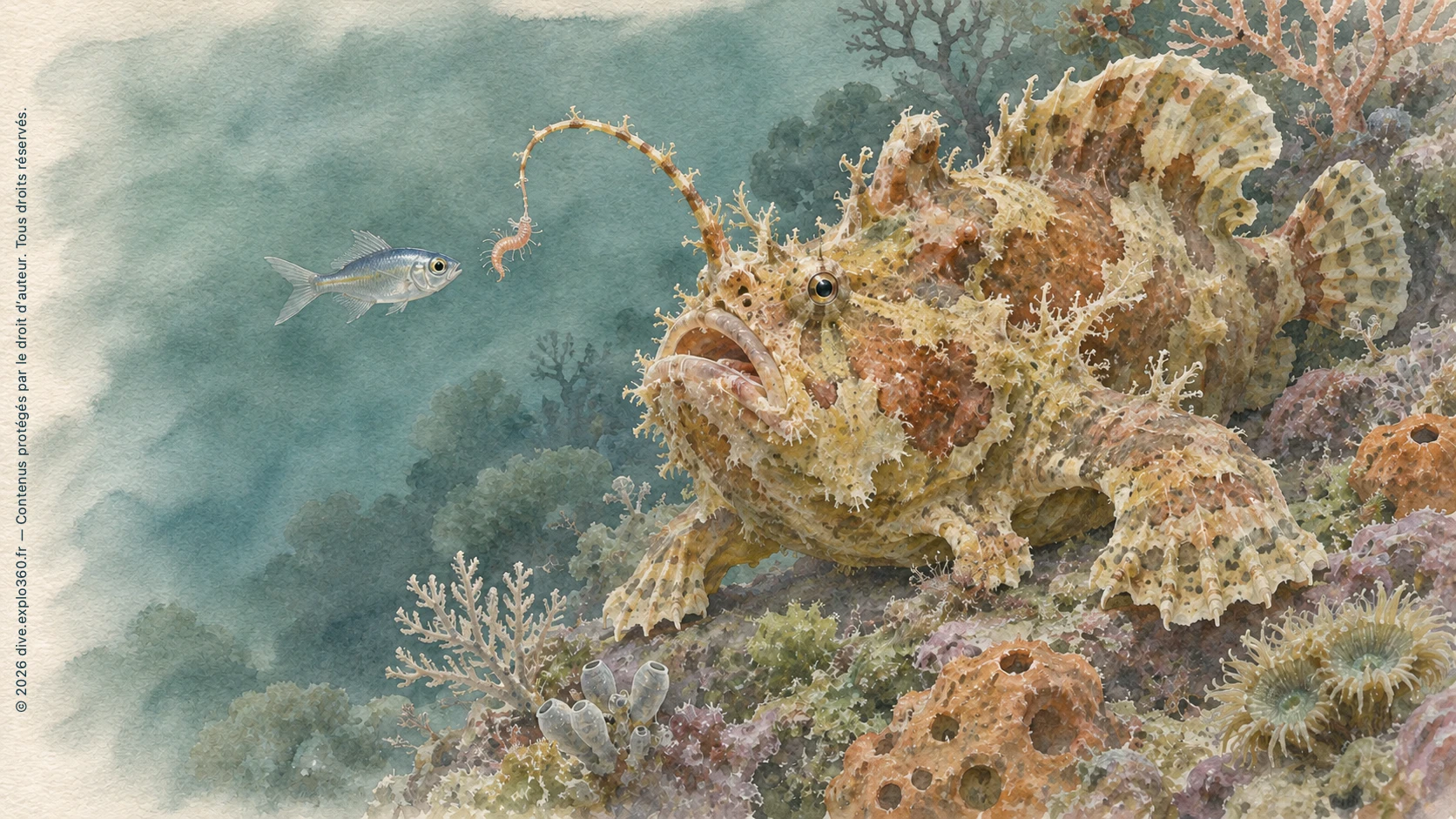
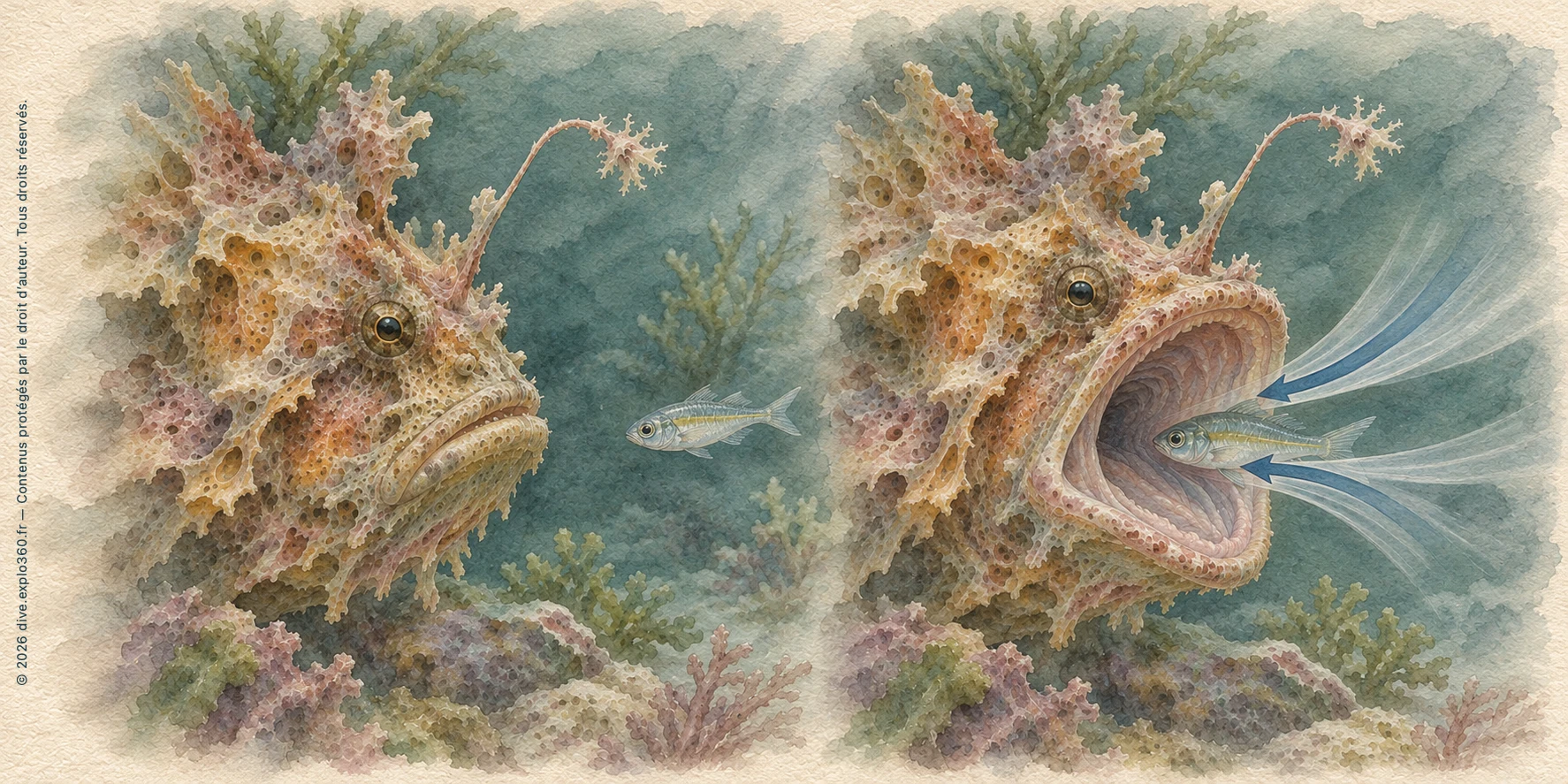
A small fish approaches what looks like prey. Behind the lure, the frogfish barely moves. A long wait can end in a capture that takes only a fraction of a second.
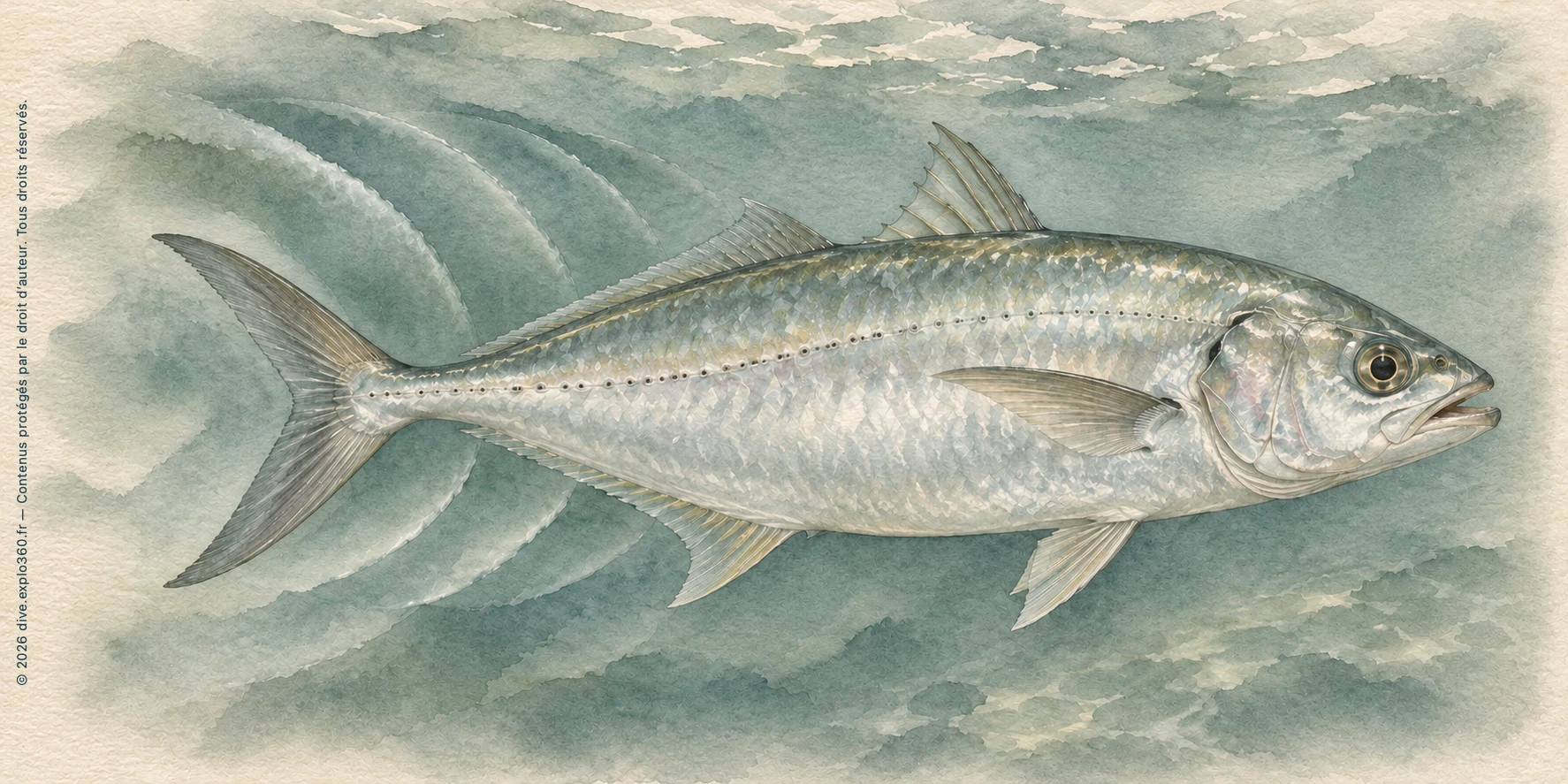
Prey can sense danger
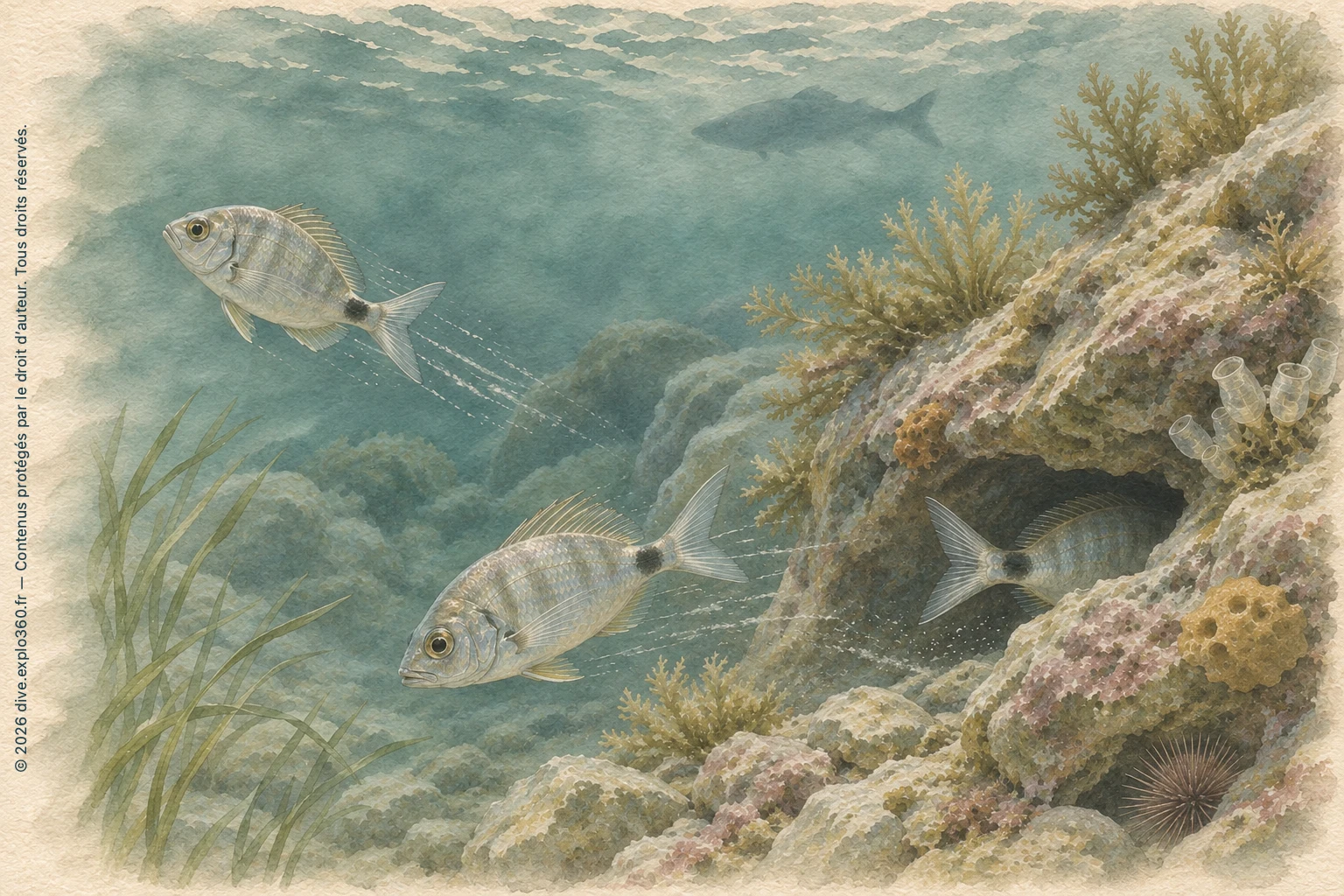
Water density and drag help determine how much effort a pursuit takes. A moving predator also disturbs the water. Sensory organs called neuromasts along the prey’s lateral line can detect some of those disturbances and trigger escape. Those cues can matter when there is too little light for the prey to see the hunter clearly.
When the mouth draws water in
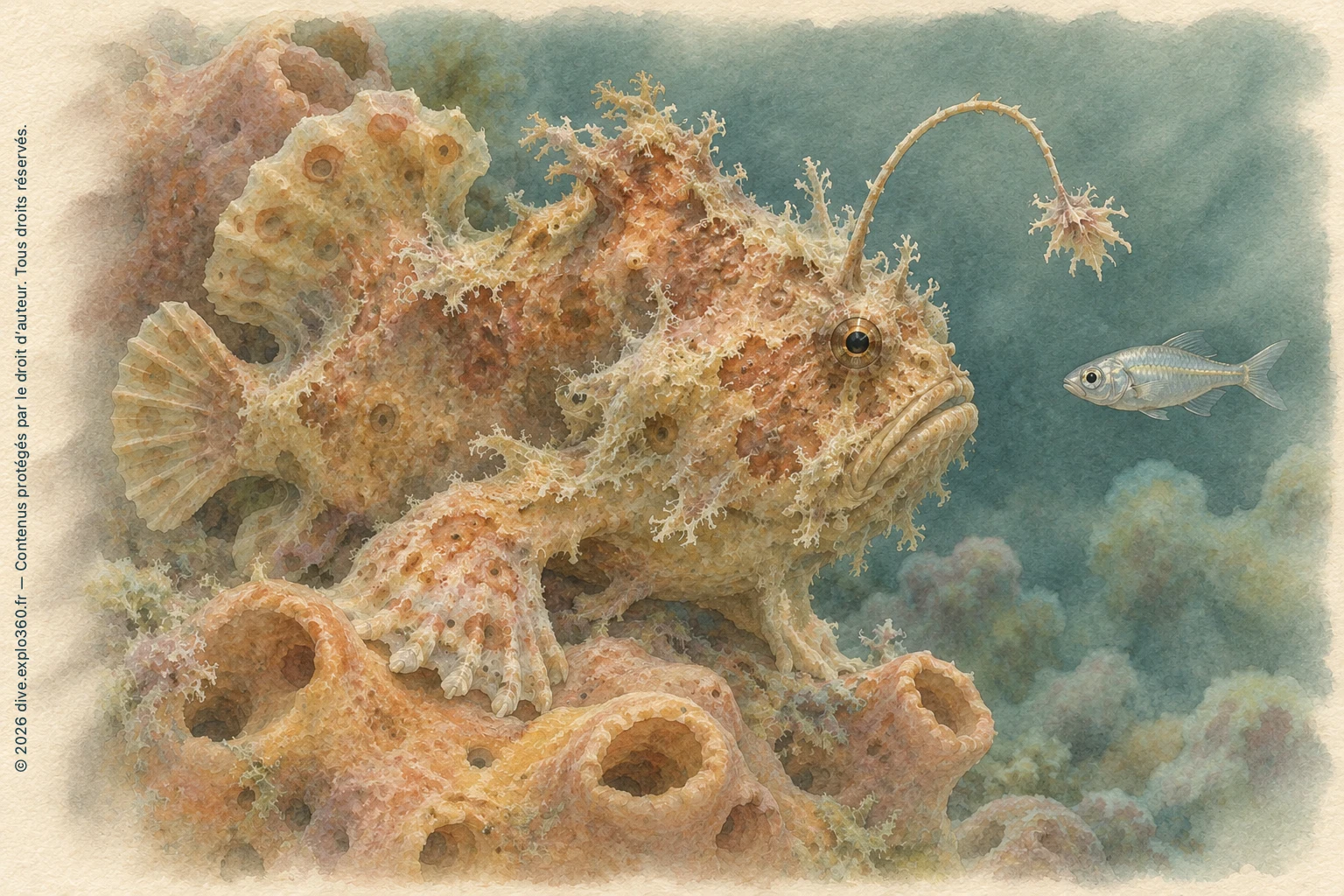
The frogfish’s lure, or esca, sits at the tip of a modified dorsal fin ray called the illicium. The lure can bring prey within range. Rapid expansion of the mouth lowers pressure inside it and drives water in. The flow weakens quickly with distance from the opening.
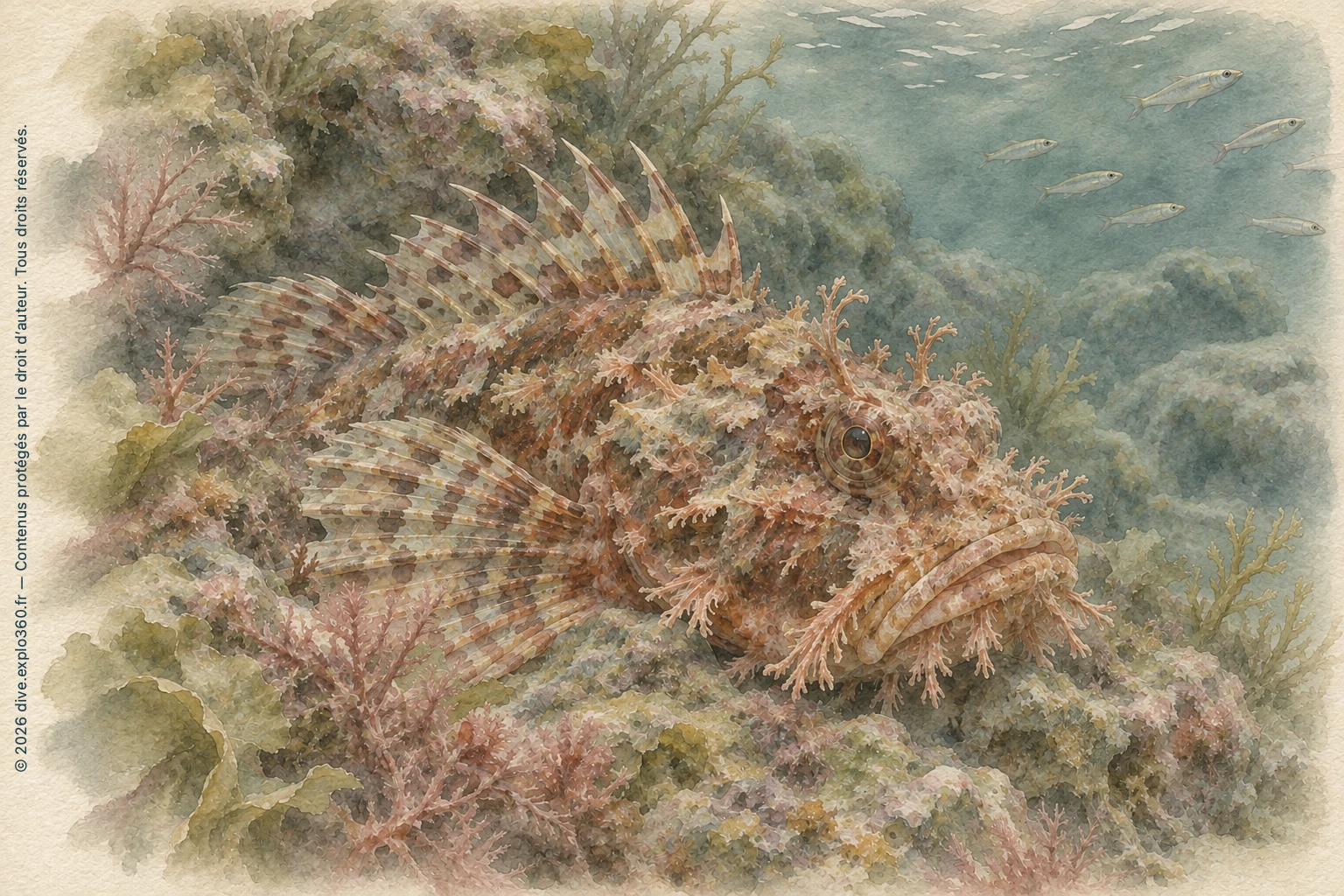
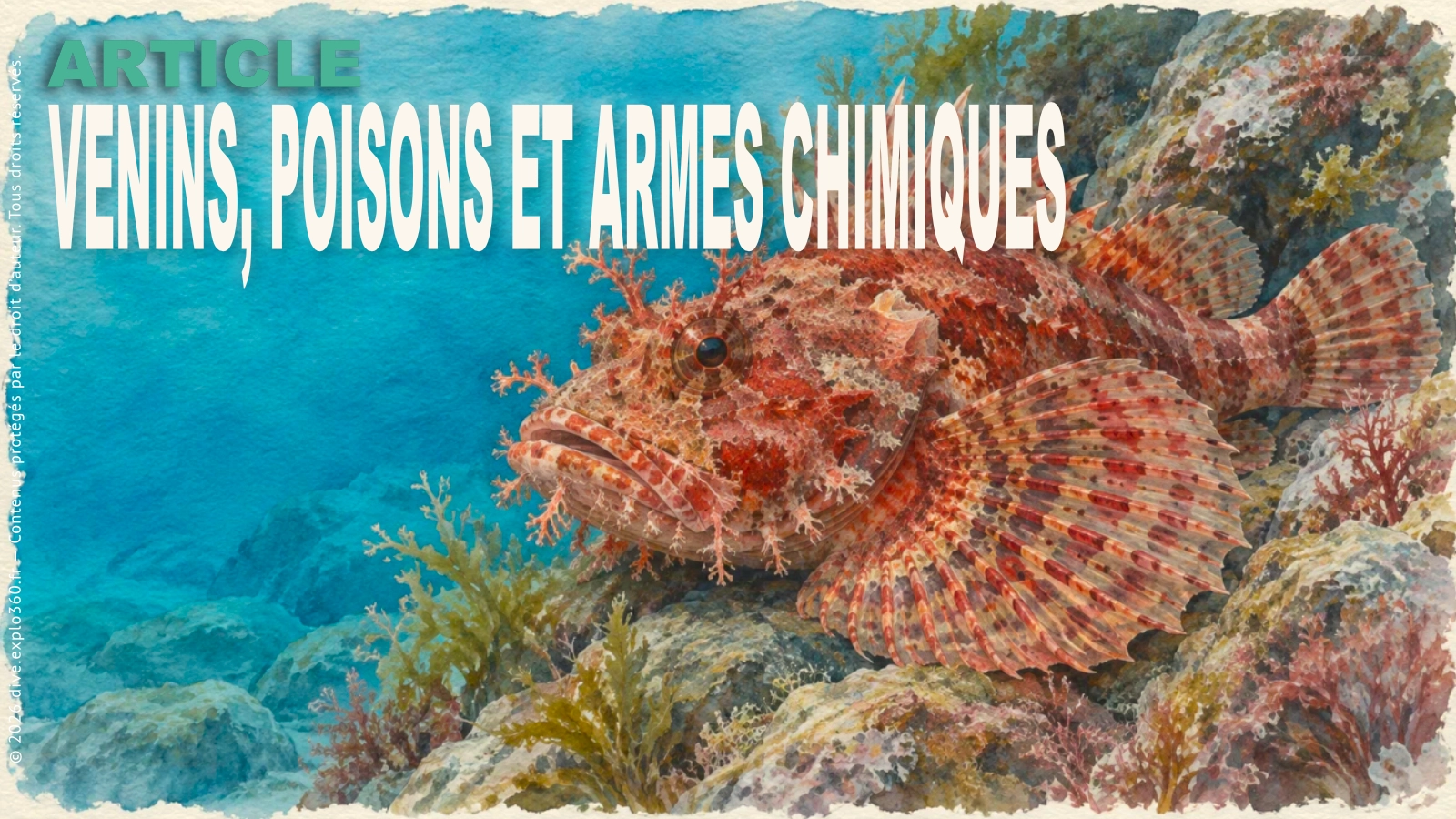
A scorpionfish blends into the seabed
A scorpionfish reduces visual and hydrodynamic cues by blending into the seabed and keeping still. Capture begins at close range. Distinguish this strategy from its mainly defensive venomous spines.
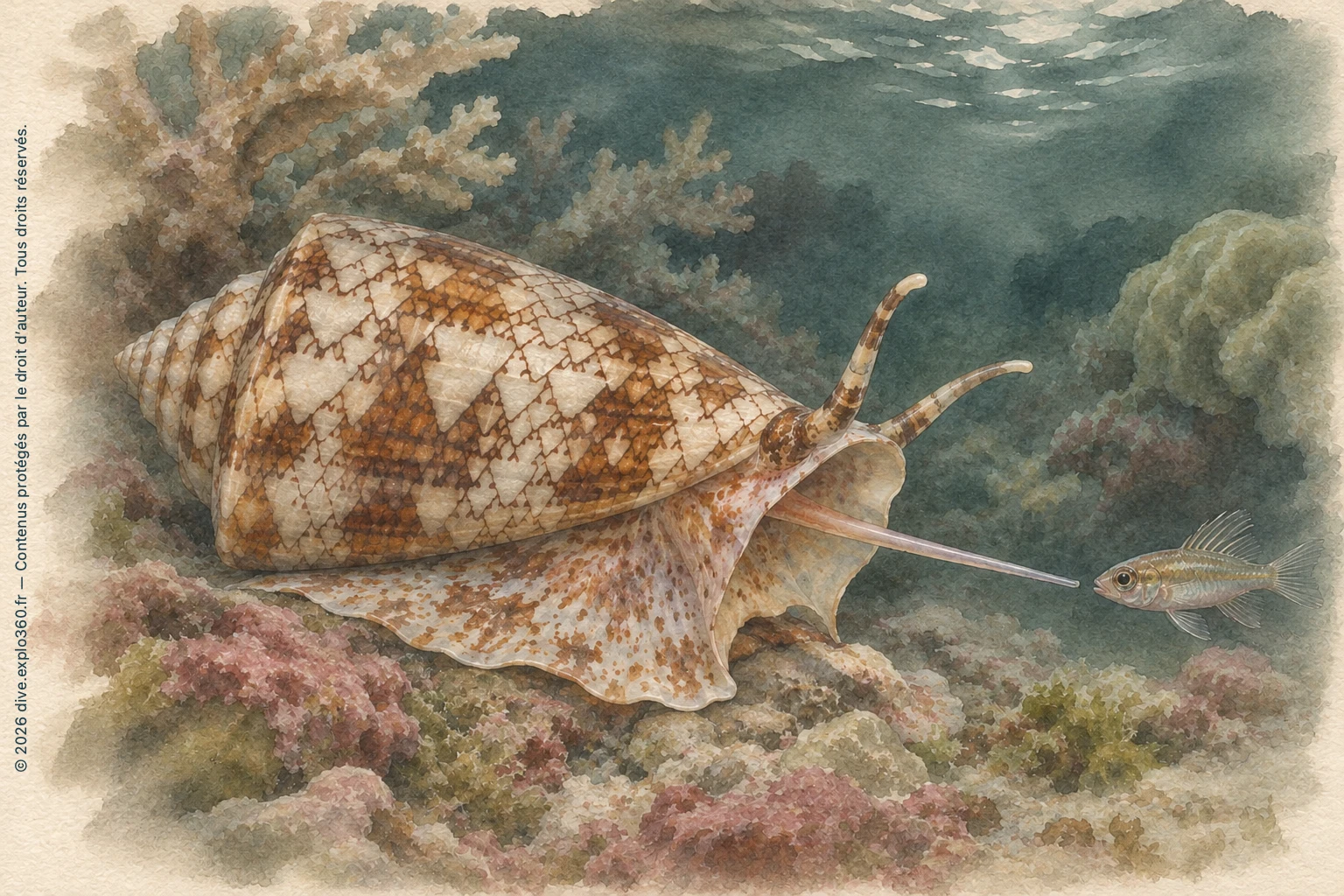
The geography cone changes the odds
In the geography cone, venom molecules affect fish physiology. Some mimic hormones involved in glucose regulation. Experiments support physiological effects, while the contribution to each capture in the wild is harder to measure.
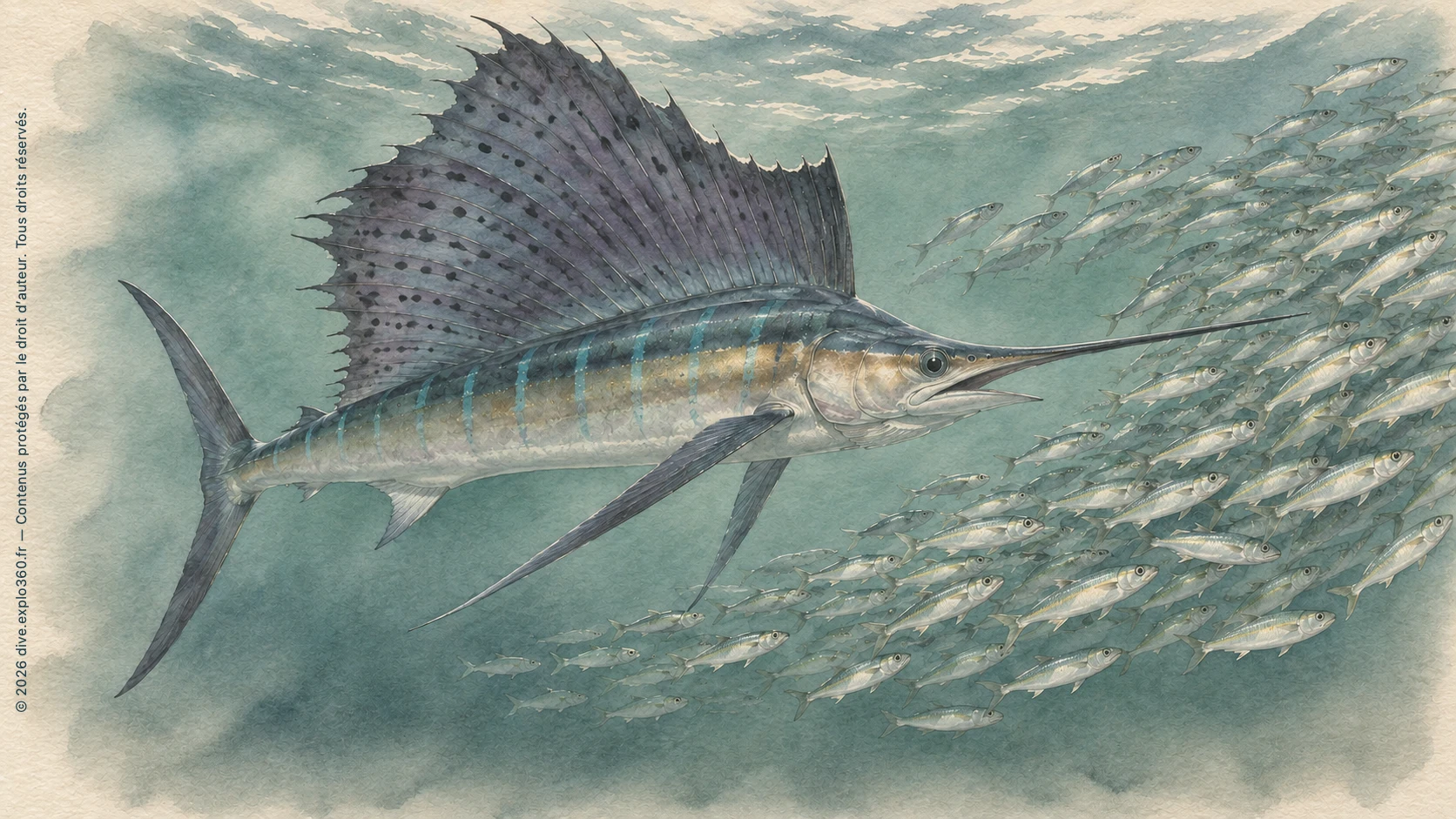
A sailfish strikes into the school
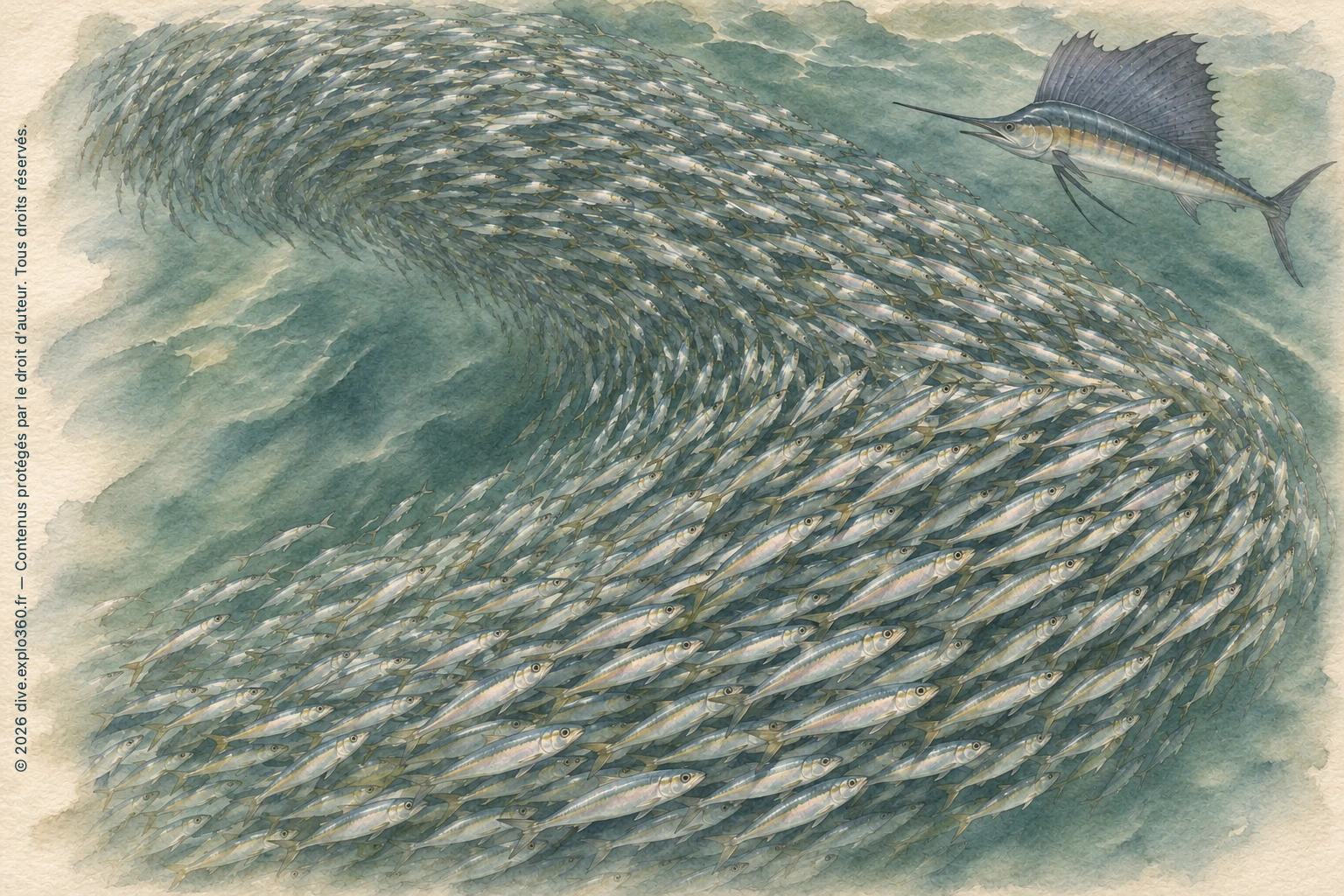
High-speed footage shows two ways a sailfish uses its bill: a tap aimed at one fish and a sideways sweep through the school. Both can injure or disorient sardines. When sailfish alternate attacks, earlier strikes can leave prey easier to catch on later passes. That benefit can arise even if each predator acts on its own.
A school on the move
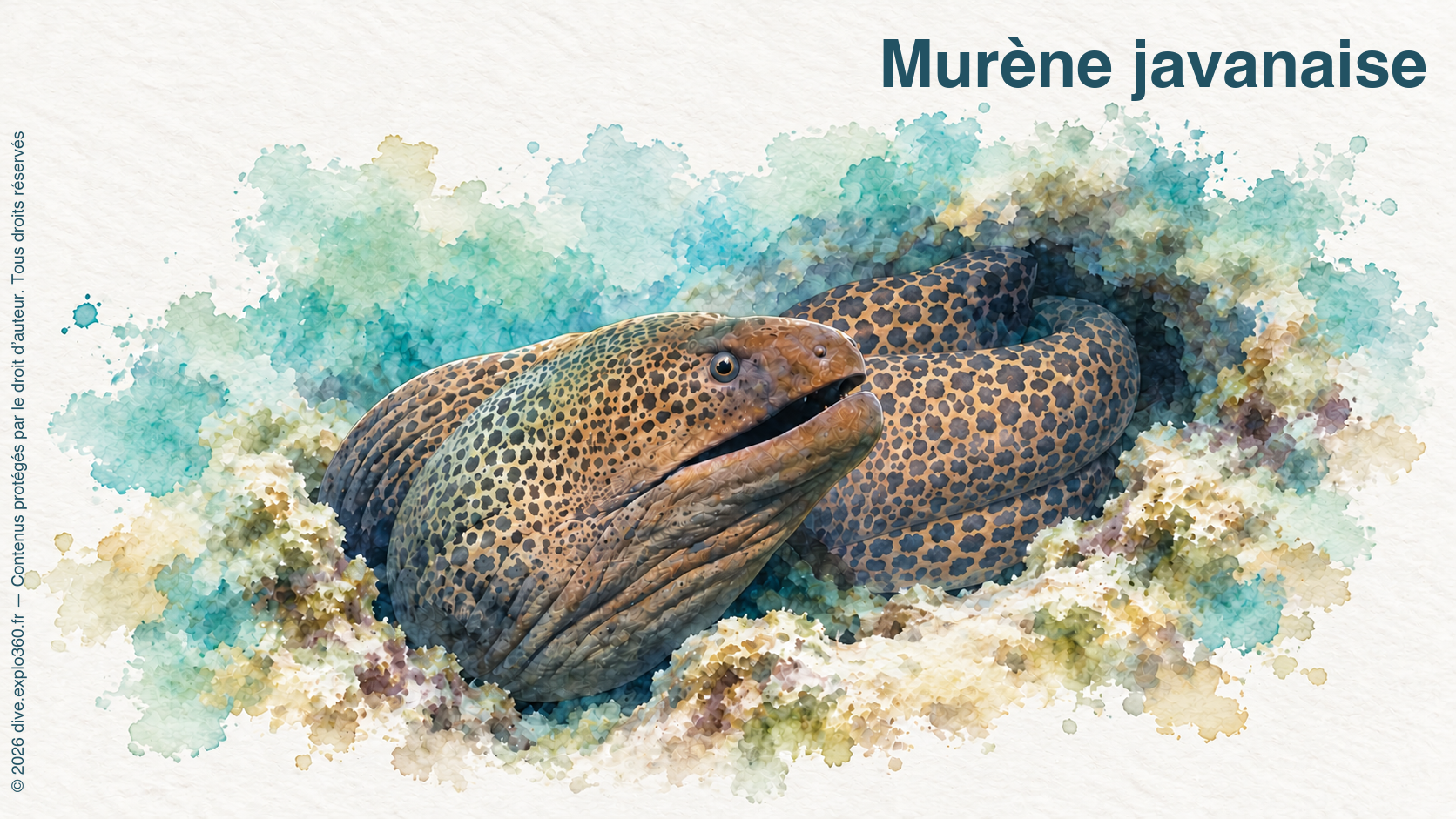
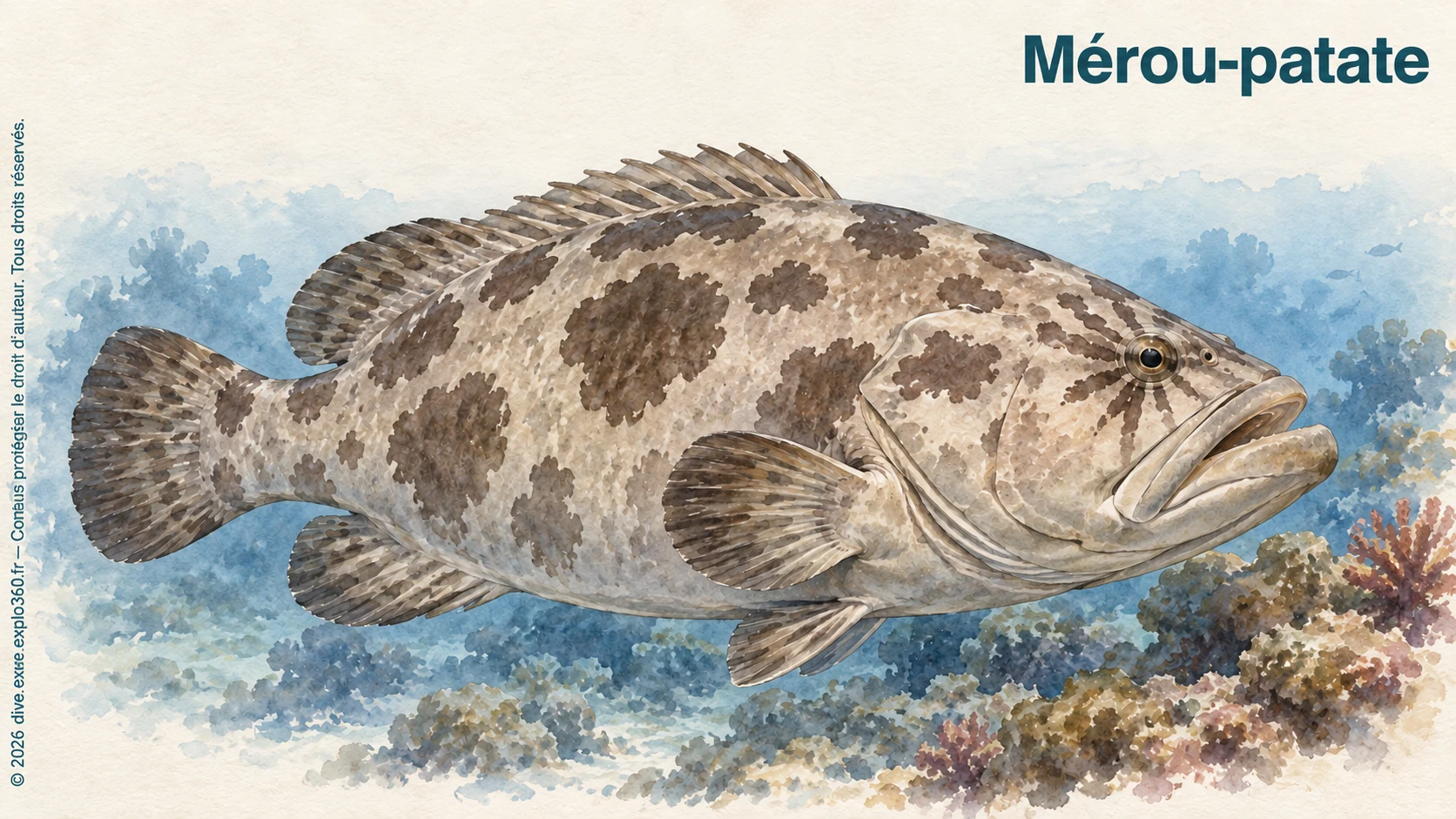
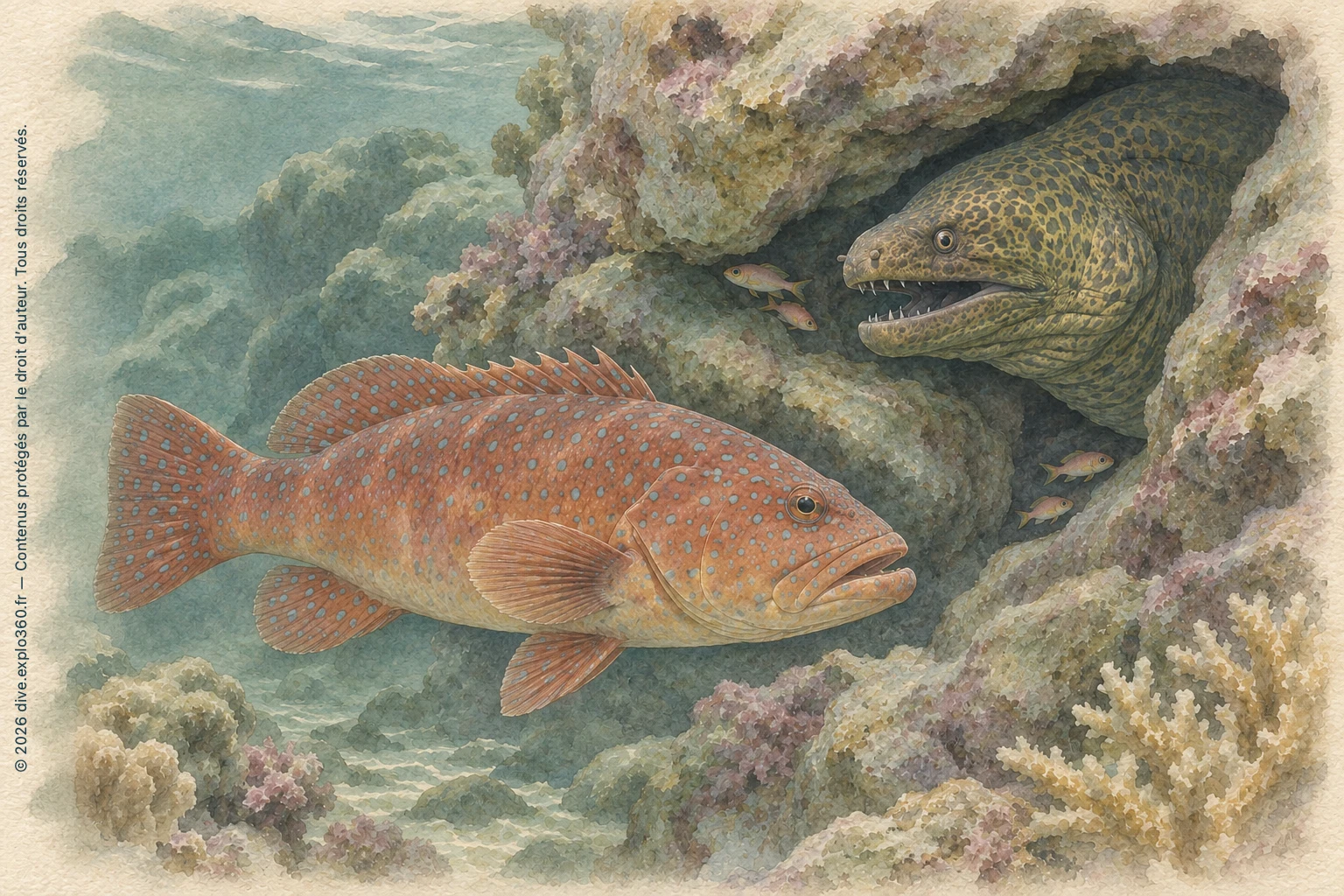
A grouper and a moray hunt together
In Red Sea observations, a grouper’s signal can recruit a moray. Their complementary abilities reduce the value of shelter: one enters cracks, the other pursues in open water. Gestures directed at a refuge can also indicate where prey is hiding.
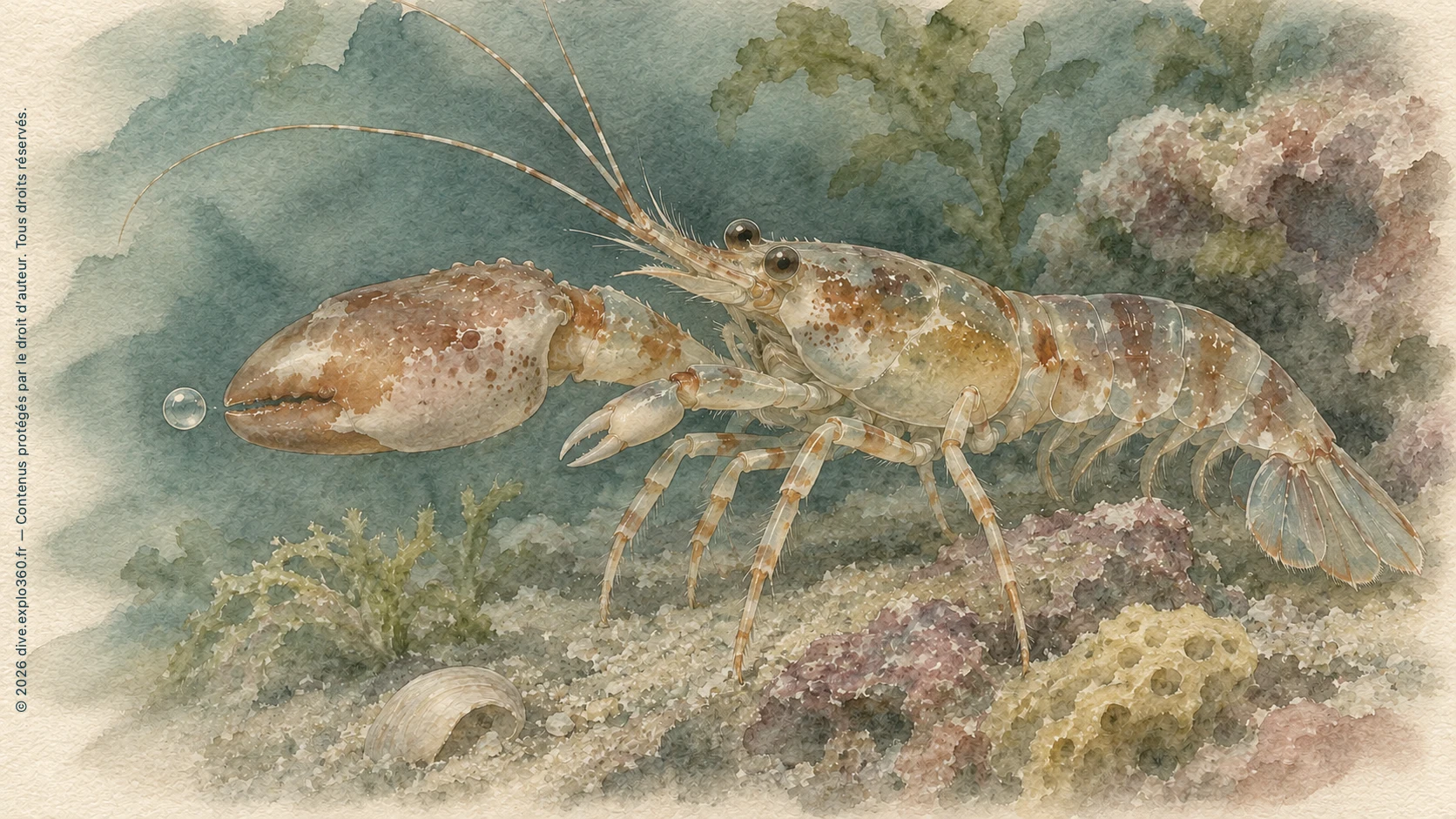
The snapping shrimp’s snap
When the claw closes, a jet of water creates a local drop in pressure. A vapour bubble forms and then collapses. The sound occurs at the collapse, as researchers found by matching high-speed footage with acoustic recordings.
The moment the hunt turns
Sensing danger early can give a fish time to turn, join a school or reach a refuge. Which response works depends on the distance to the hunter, the shape of the surroundings and how the hunter attacks.
Interactive quiz
Review what you learned
5 question(s) to test your knowledge.
Interactive quiz
Review what you learned
Question 1 out of 5Score: 0
Which sequence describes suction feeding?
Which observation relates to the lateral line?
Why distinguish laboratory results from observations of cone snails at sea?
Why might an unsuccessful attack help the next sailfish?
Which sequence describes the shrimp’s snap?
Final result
Quiz completed
correct answers
A hunt can turn before the capture
Suction brings prey into a mouth once it is close enough. Venom can interfere with its ability to escape. Two hunters can cover routes that either one would leave open. To compare the strategies, look at which stage of the encounter each one changes.
Scientific references
Explore the same world