The worm that wasn’t
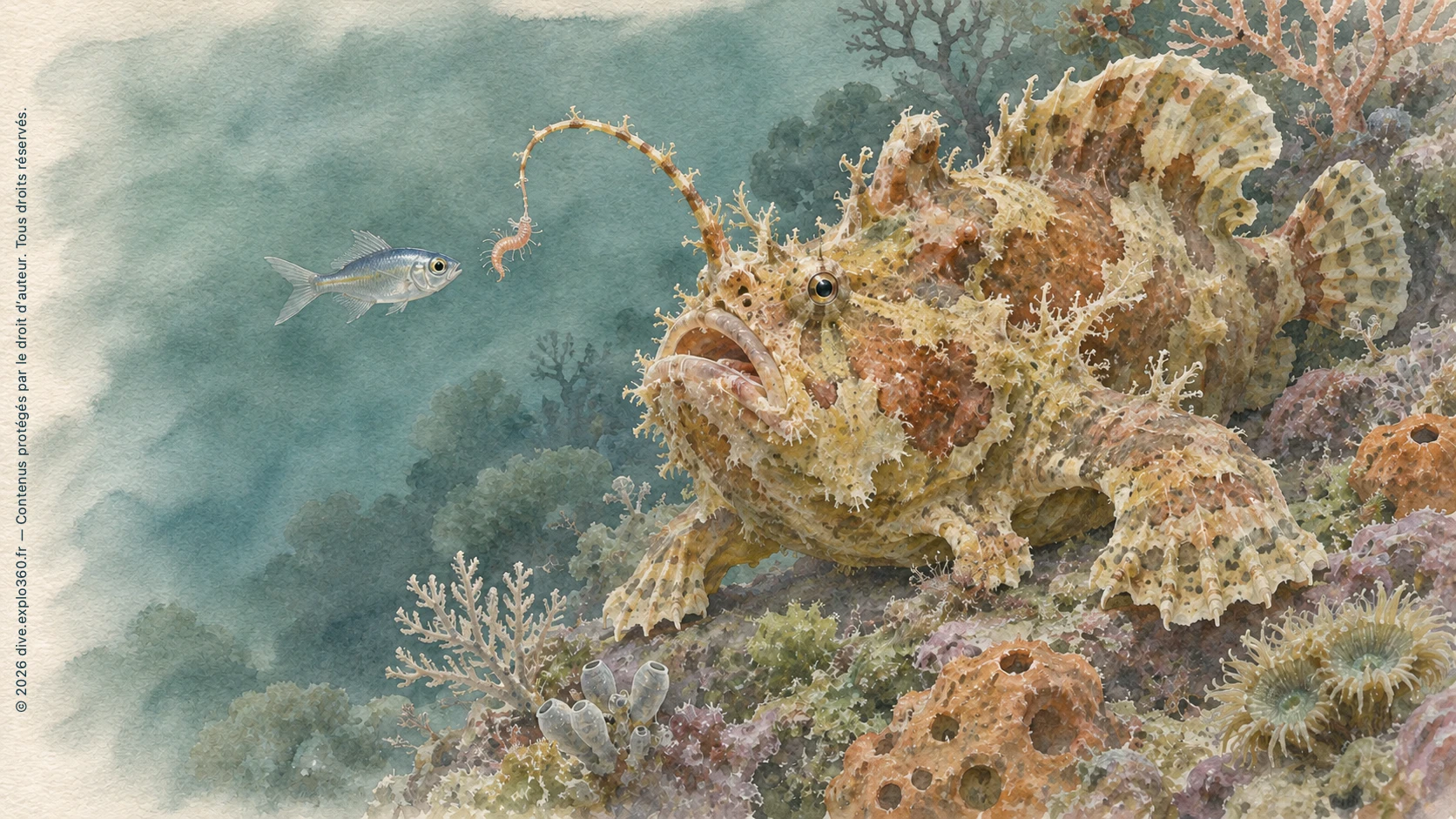
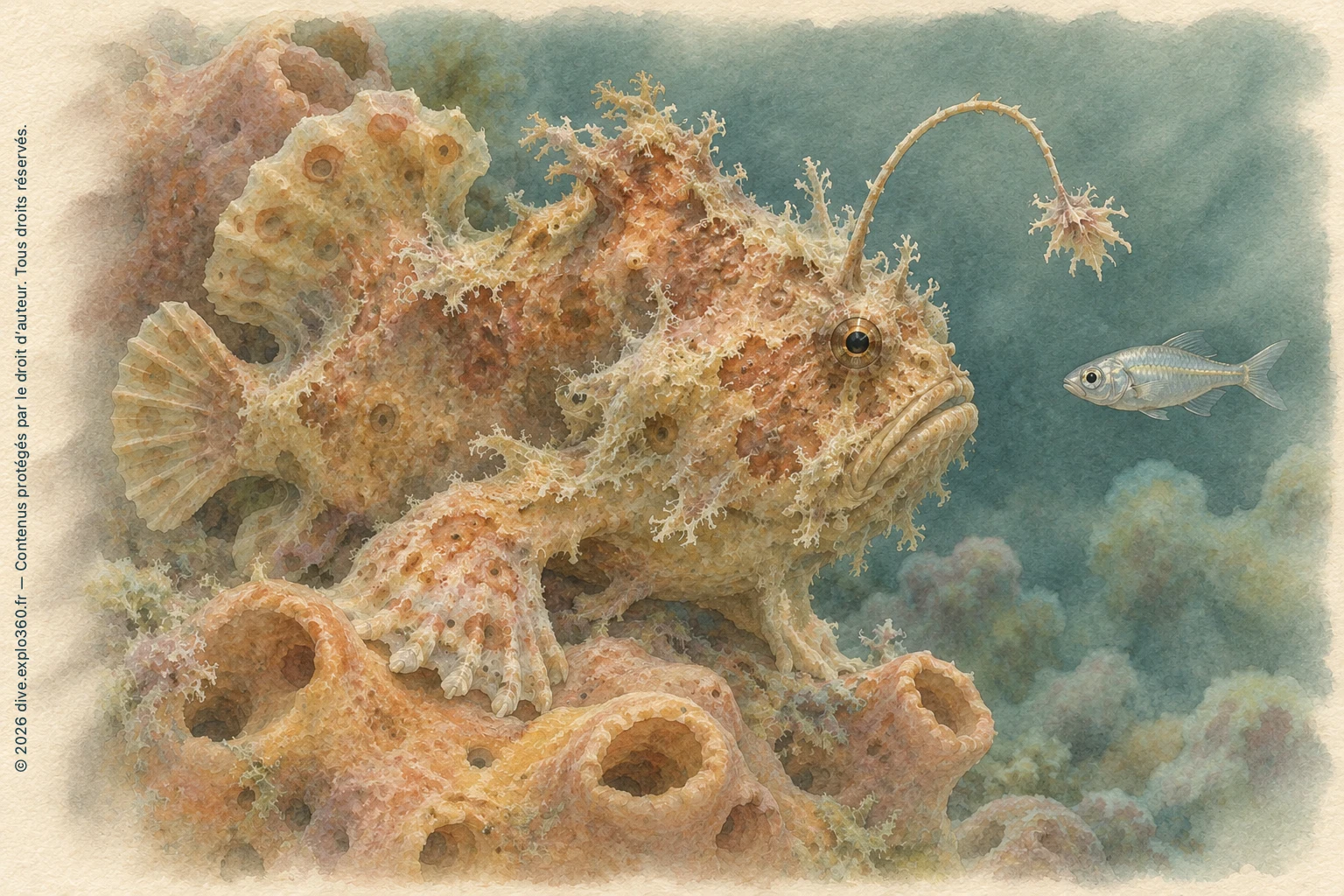
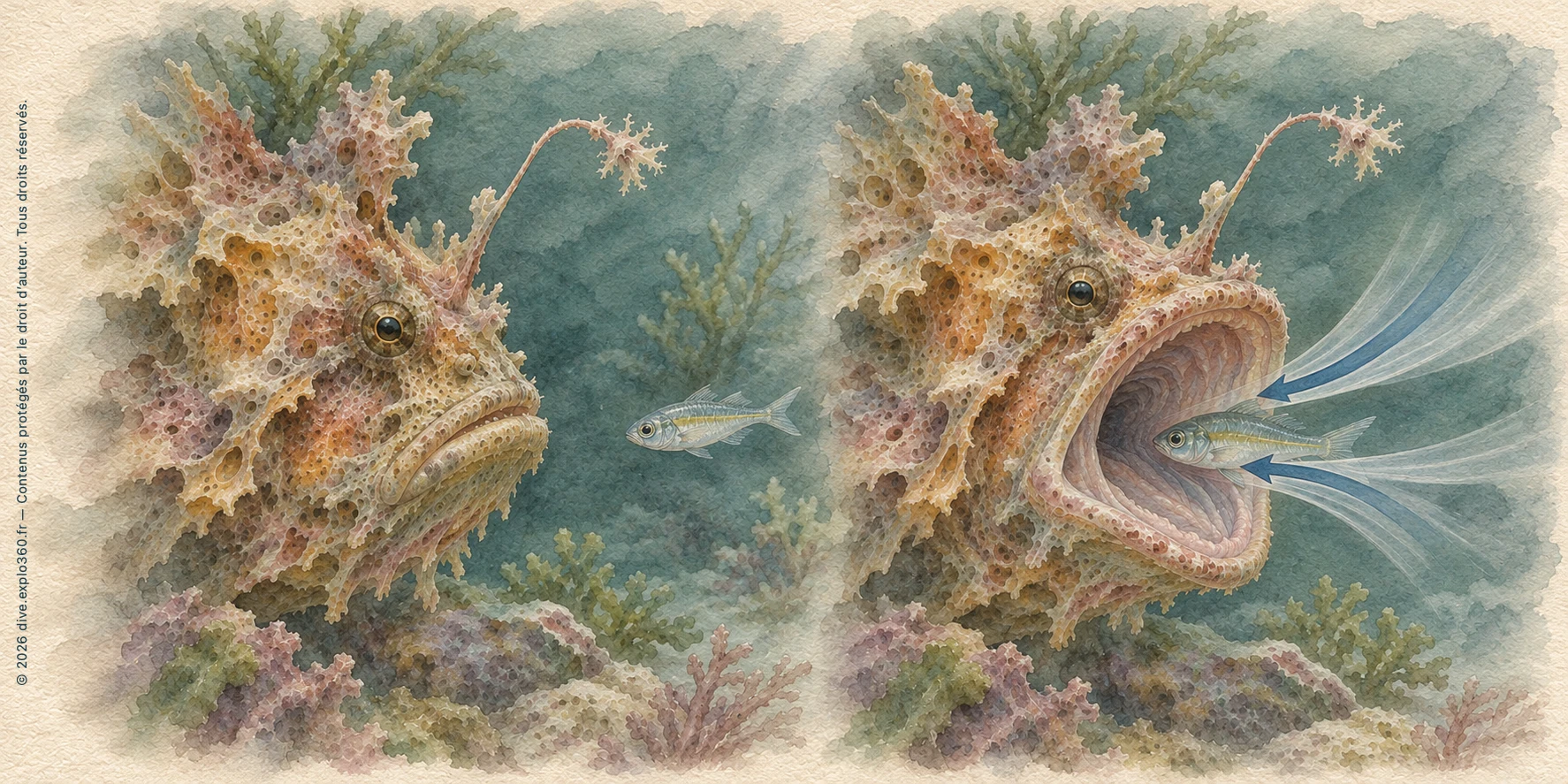
The little fish pauses in front of the lure. The frogfish blends into the reef just behind it. Its mouth opens in a flash, and the rush of water carries the little fish inside.
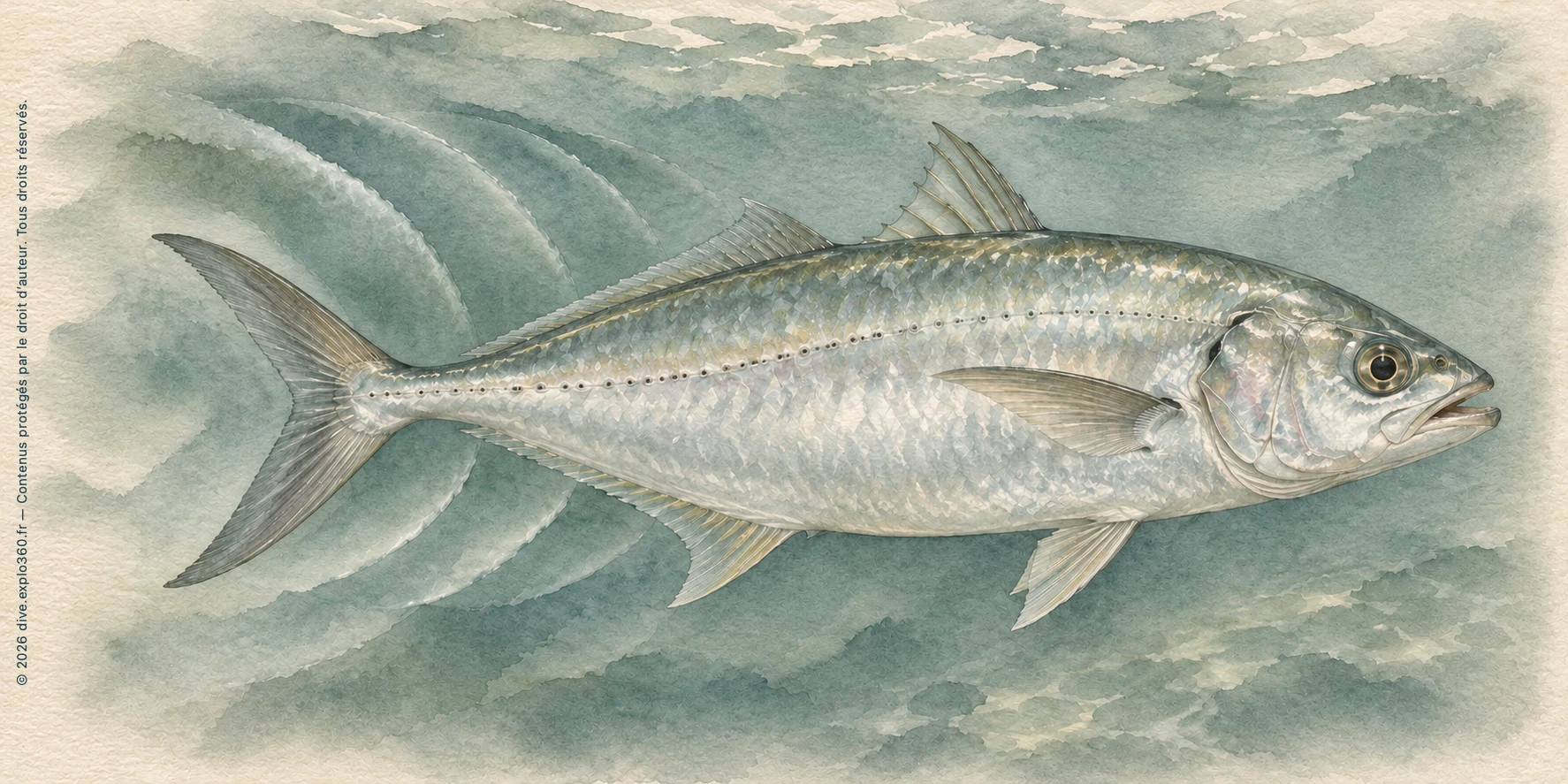
Prey can sense danger
Have you ever felt the water move when someone swims near you? A fish can sense some water movements with a sensitive line along its body. This can warn it that another animal is coming.
When the mouth draws water in
Some frogfish have lures that look like tiny animals. Watch the arrows as the frogfish opens its mouth. The water rushes in, but the little fish has to be close enough for it to get swept along.
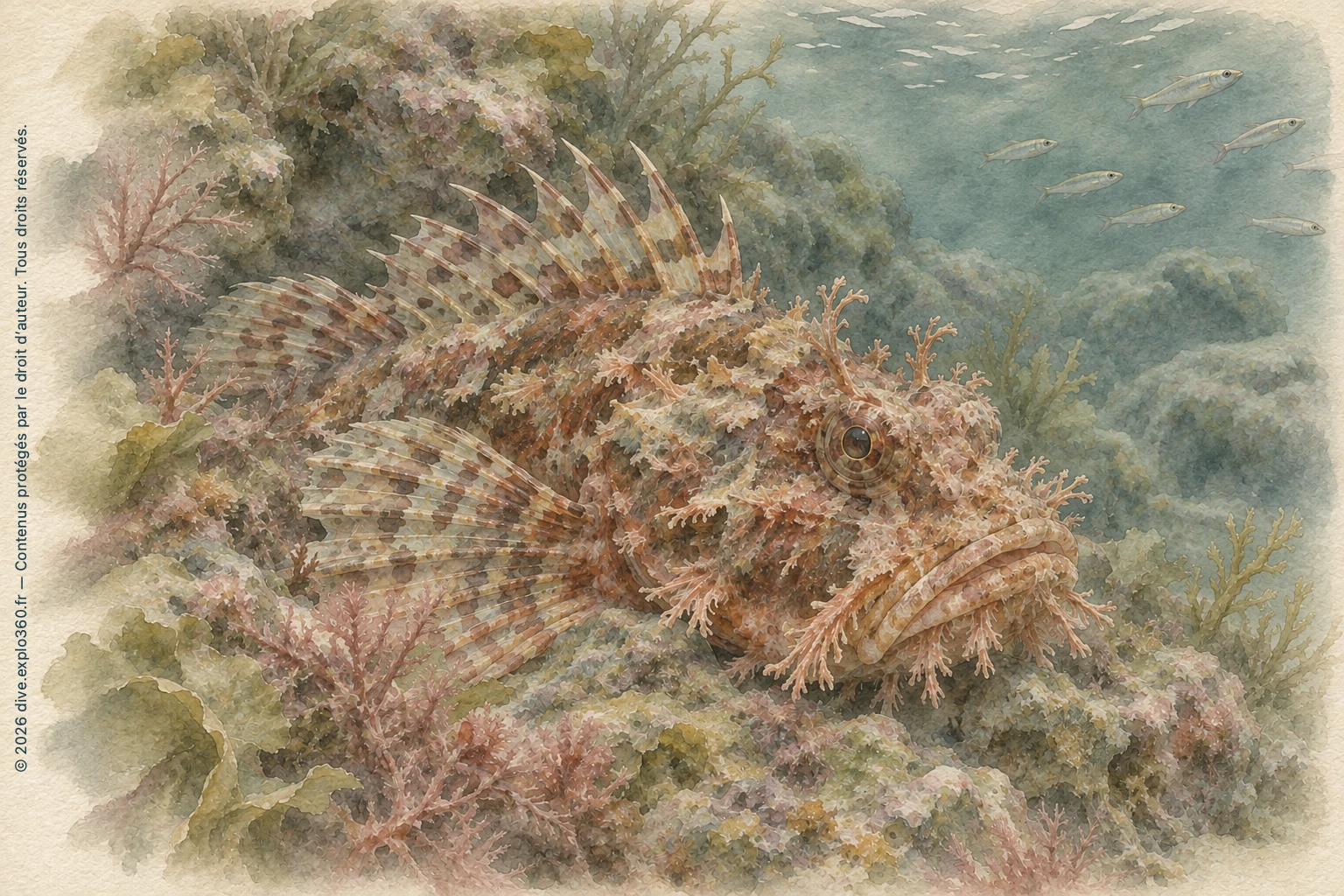
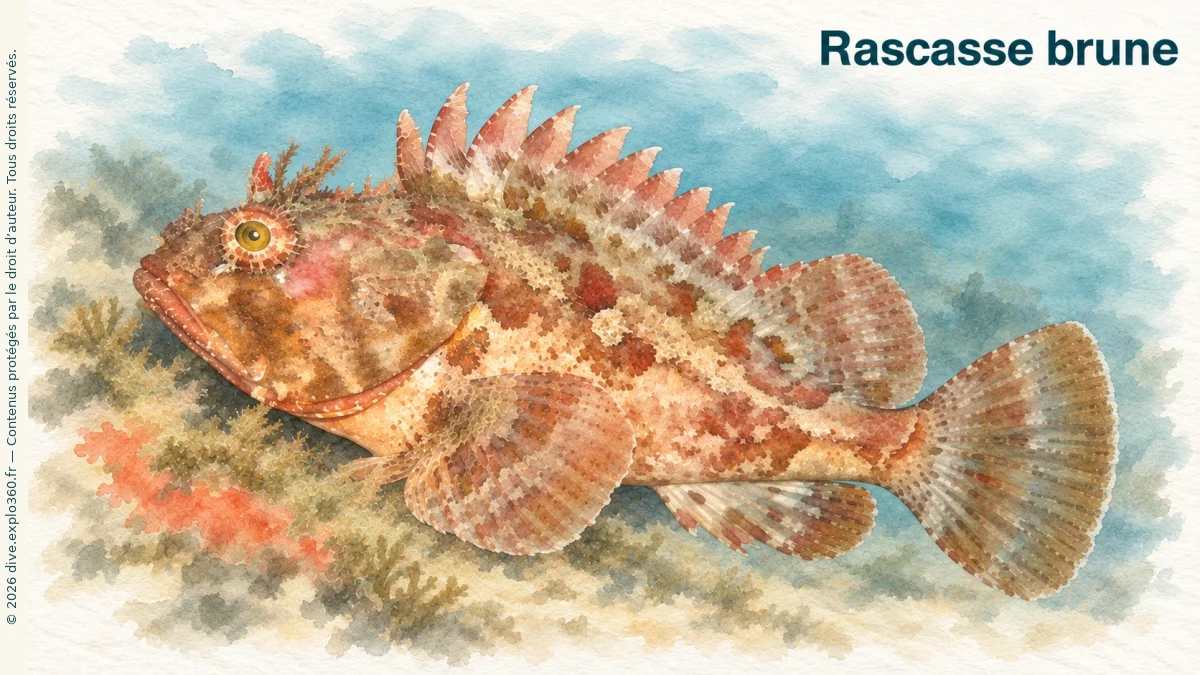
A scorpionfish blends into the seabed
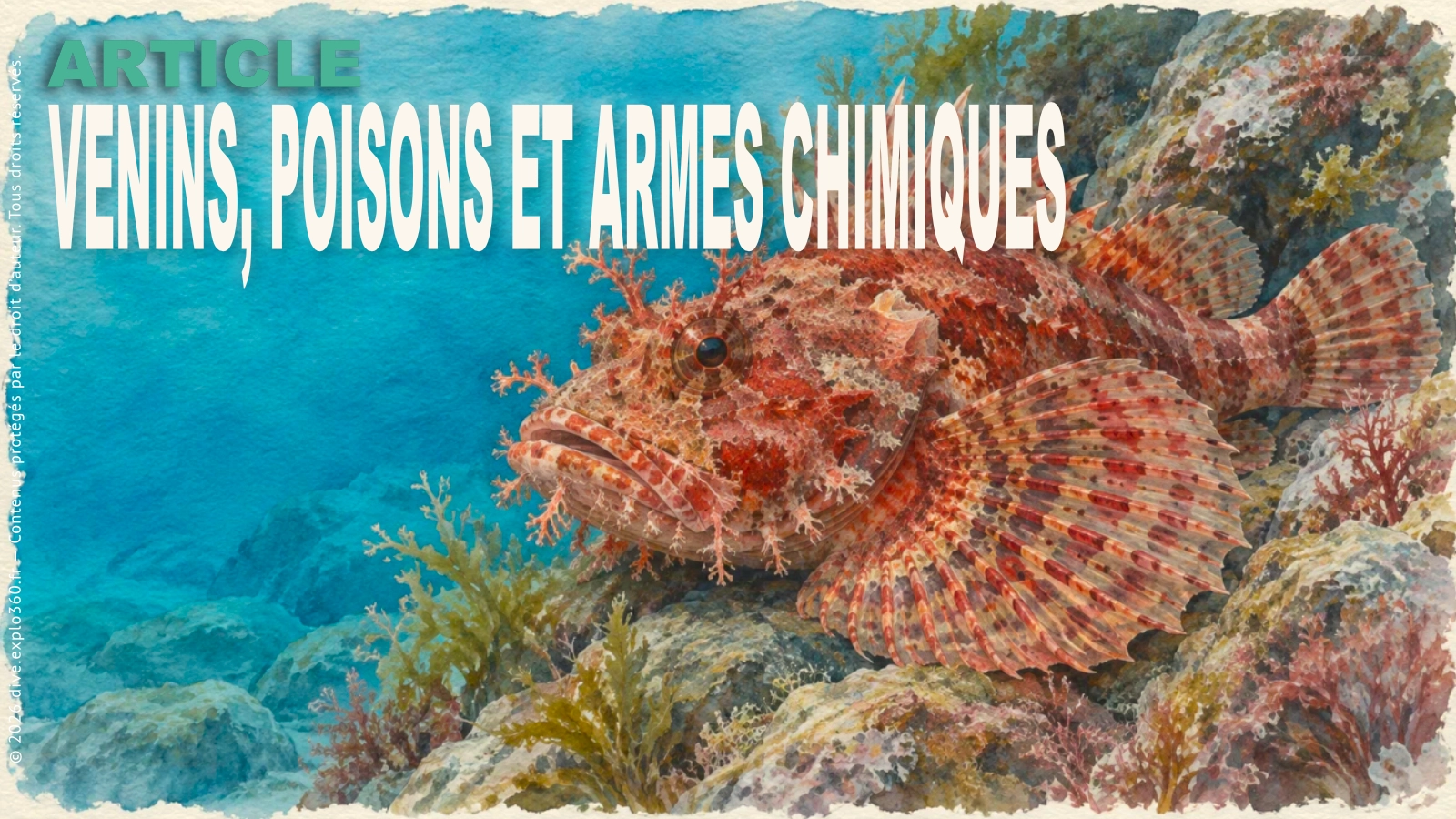
Look for the scorpionfish in the picture. Its mottled skin looks like the rocks. It waits for a small animal to come close. Its venomous spines mostly help it defend itself.
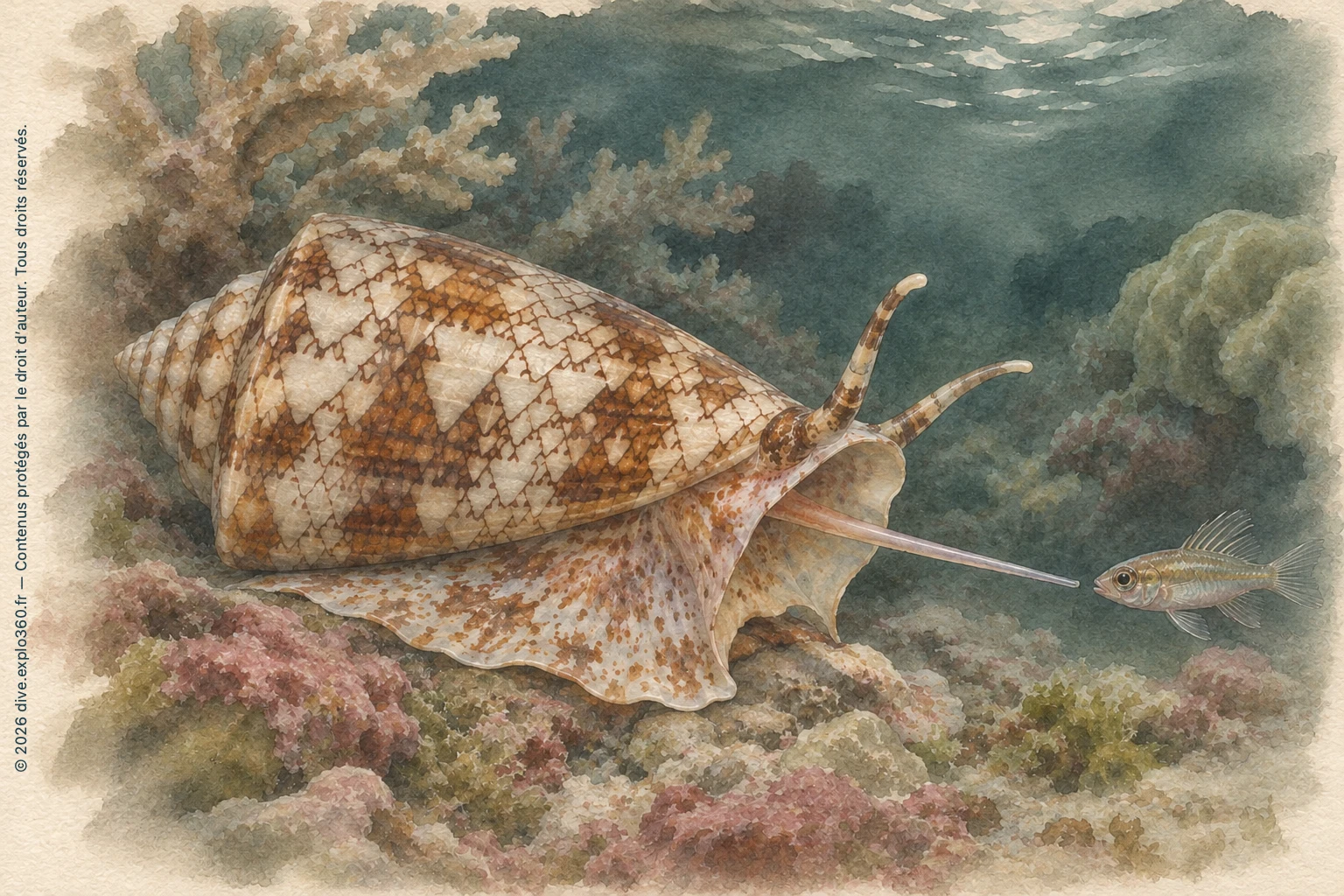
The geography cone changes the odds
A geography cone snail moves much more slowly than a fish. Yet its venom can make it harder for small fish to escape. Its mouth can widen and surround them.
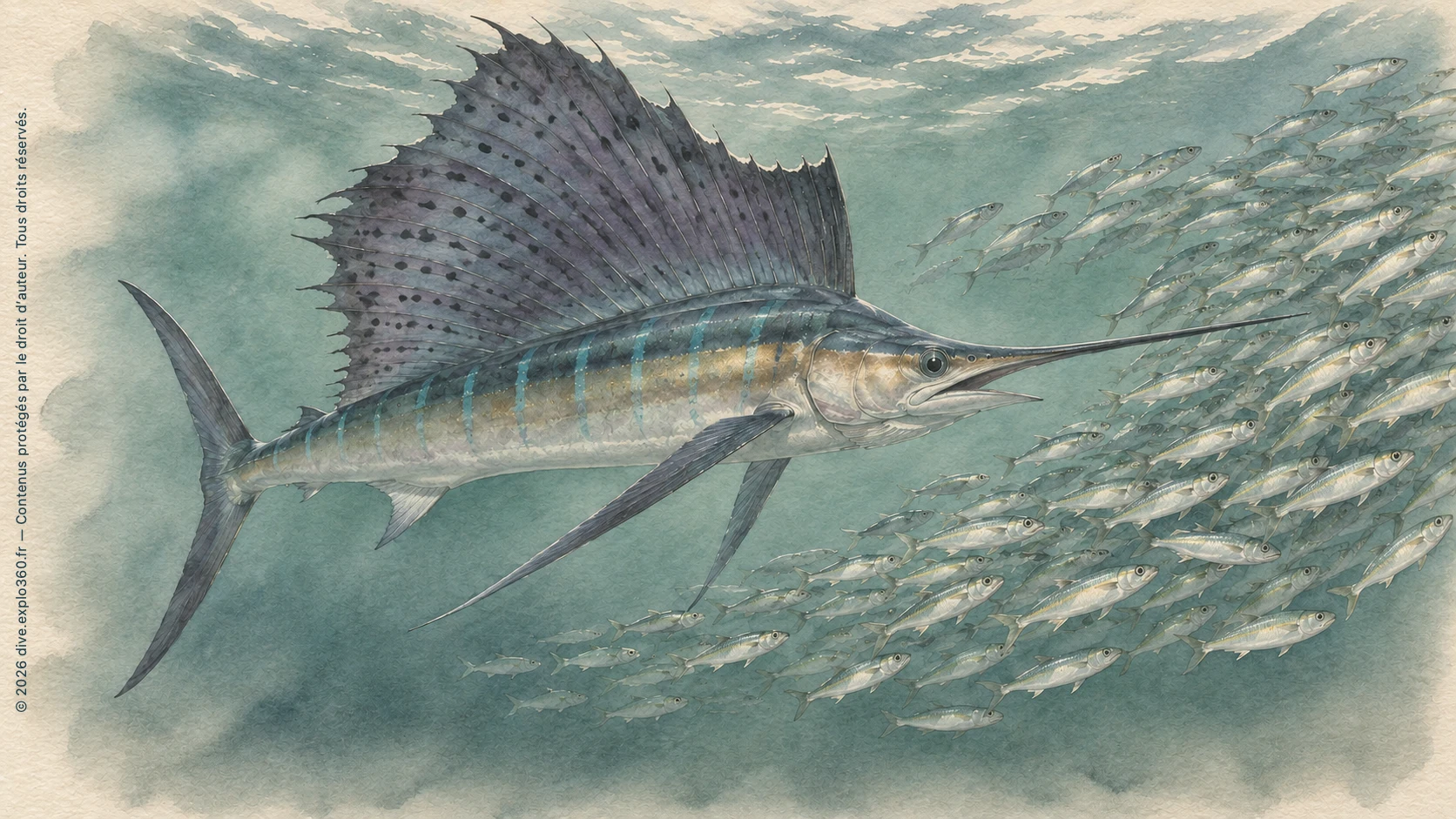
A sailfish strikes into the school
A sailfish has a long, hard bill. It can sweep the bill sideways through a school of sardines. A sardine that loses its bearings is easier to catch.
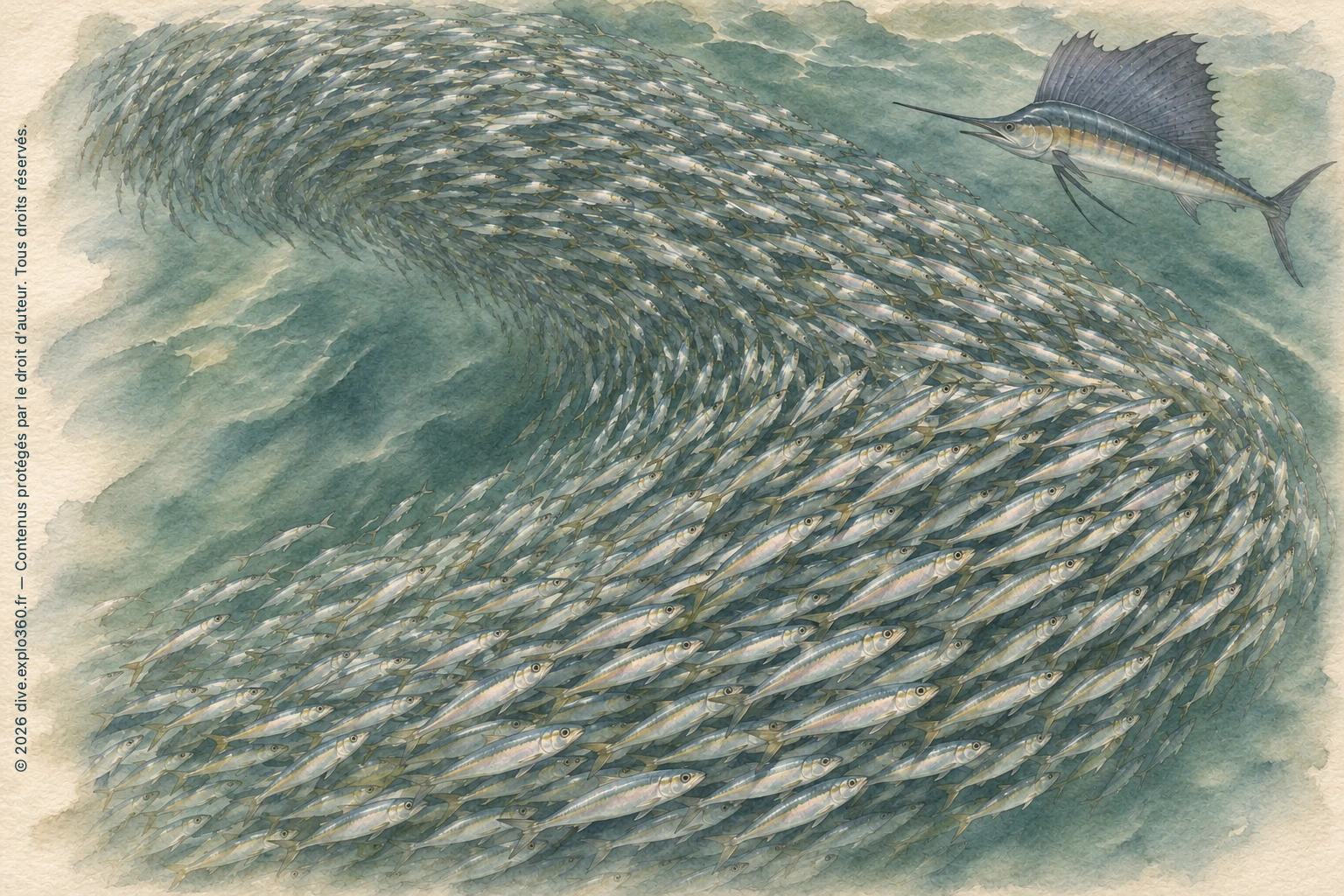
A school on the move
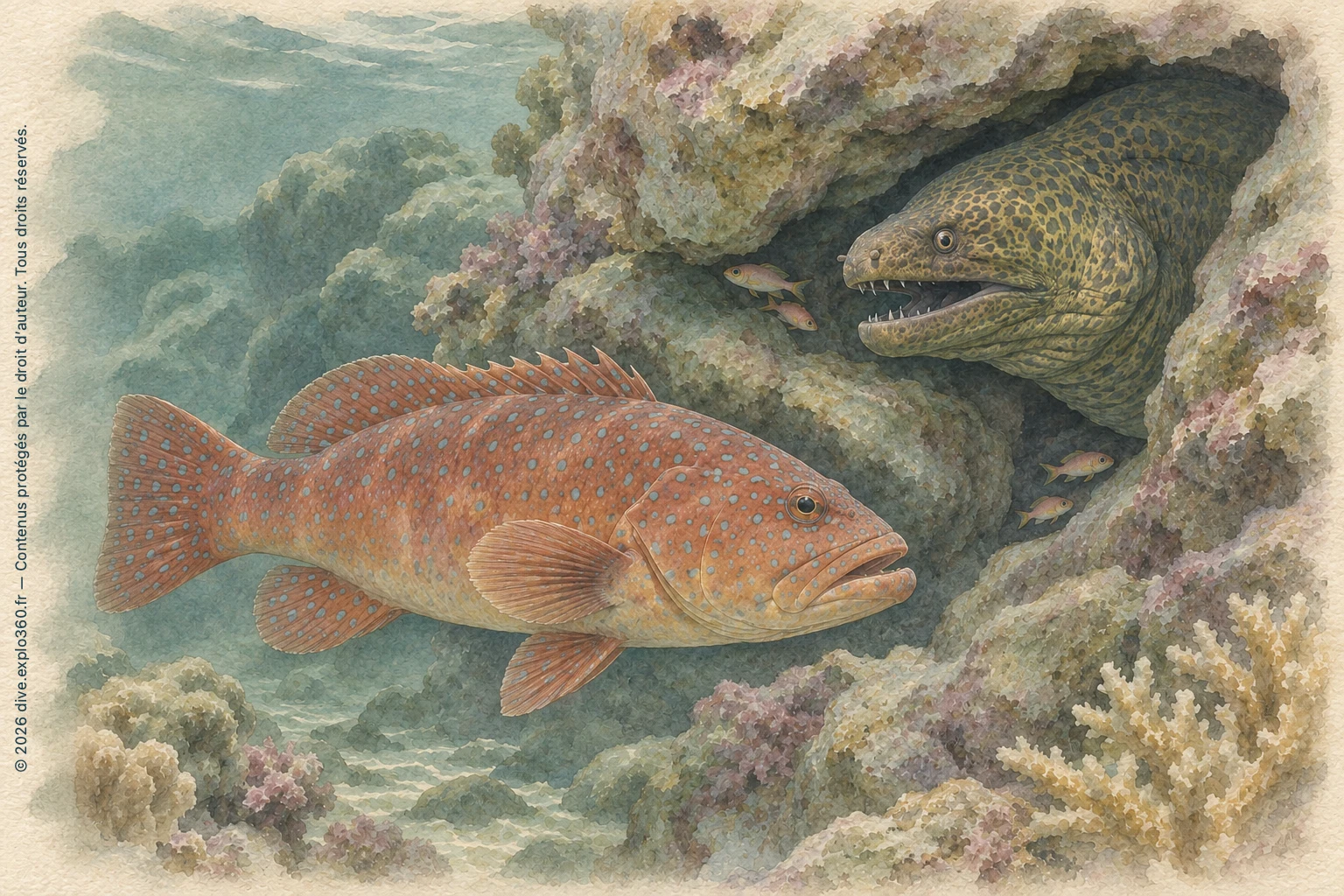
A grouper and a moray hunt together
A little fish ducks between two rocks. The grouper stays outside, but the moray can squeeze in. Where could the little fish go next?
The snapping shrimp’s snap
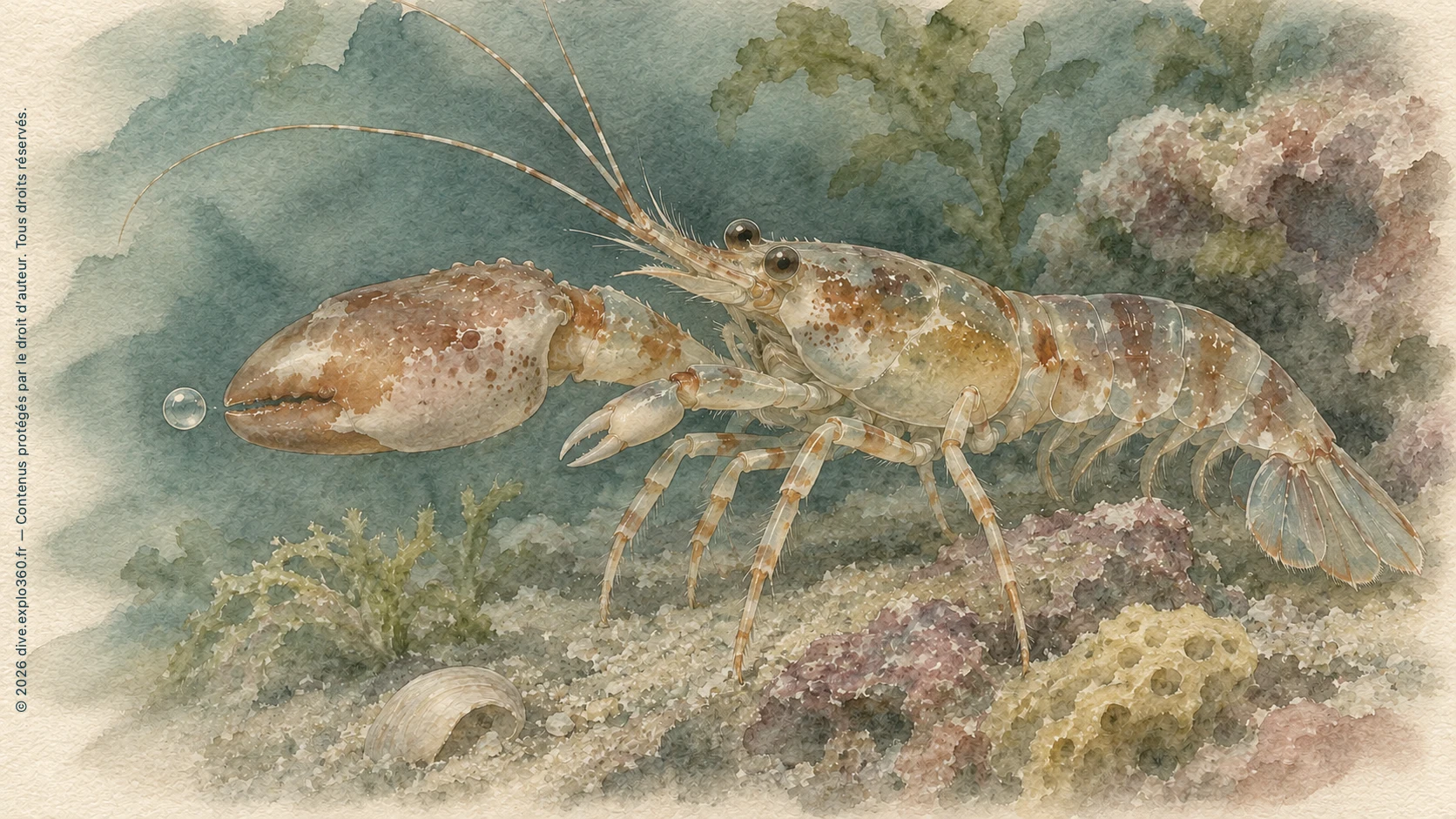
What makes the shrimp snap?
Watch the shrimp’s big claw. When it snaps shut, it sends out a jet of water and a bubble forms. The loud snap comes when the bubble collapses.
The moment the hunt turns
The little fish can hide, turn suddenly or join a school. Imagine watching the scene. What clue might give it time to get away?
Interactive quiz
Test what you learned
5 question(s) to test your knowledge.
Interactive quiz
Test what you learned
Question 1 out of 5Score: 0
What does the frogfish use its lure for?
What can a fish sense with its lateral line?
Why is a scorpionfish hard to spot?
Which animal can enter a narrow crack?
What makes the shrimp’s snapping sound?
Final result
Quiz completed
correct answers
A hunt can turn before the capture
When you look at a reef, watch for the fish that stays still and the one that suddenly darts away. A hunt can turn on what either fish notices first.
Scientific references
Explore the same world