The fish whose eyes change sides
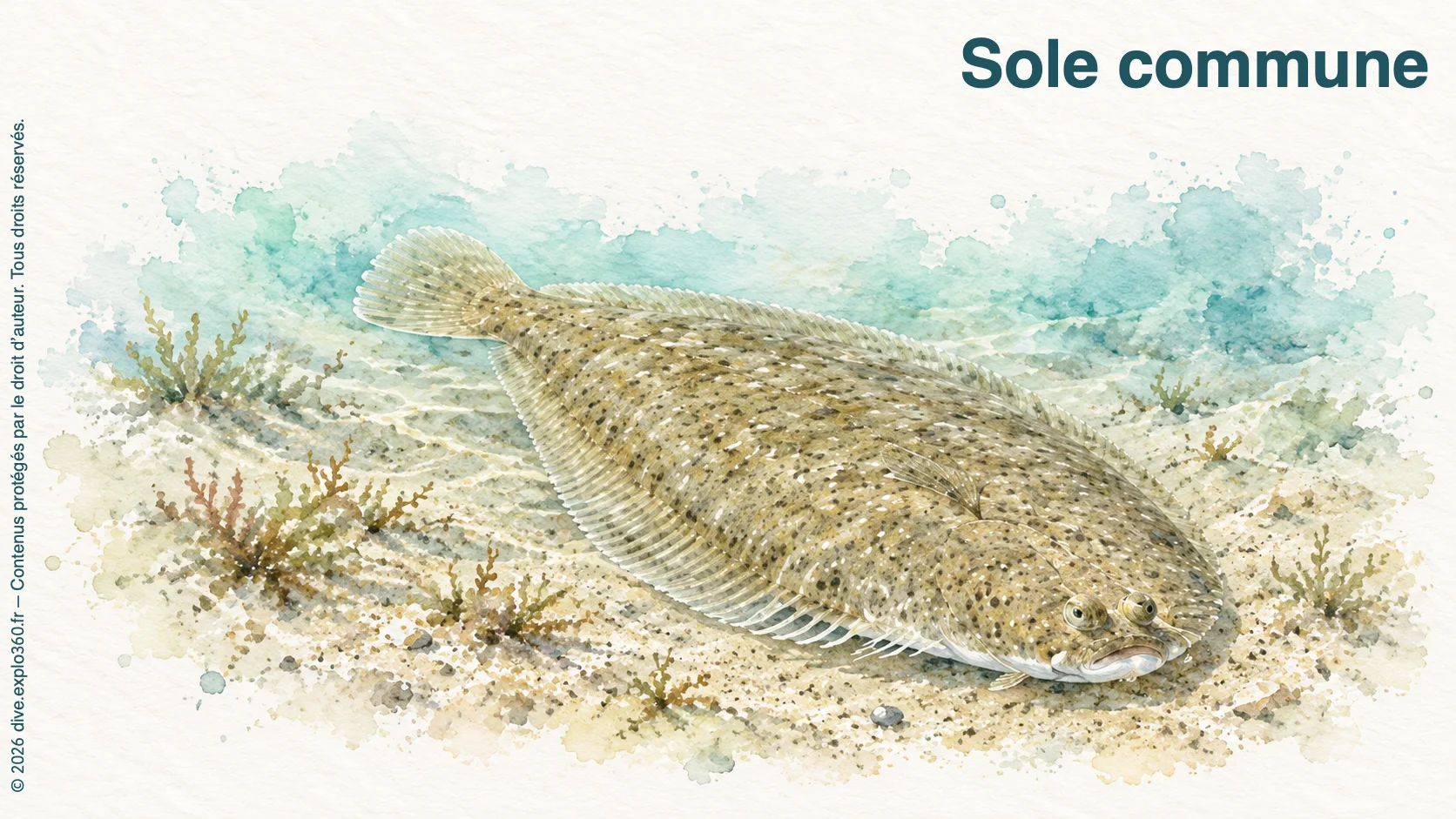
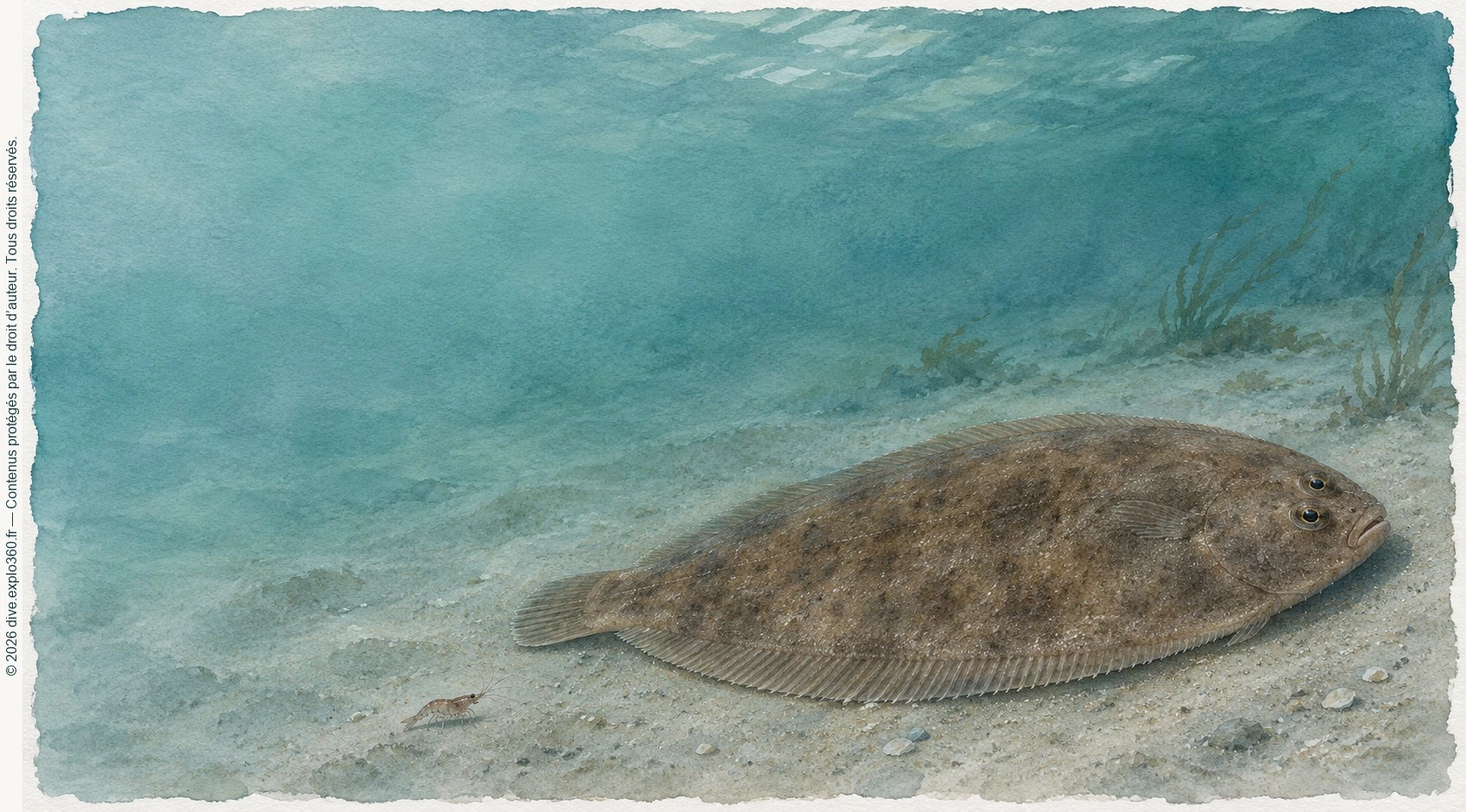
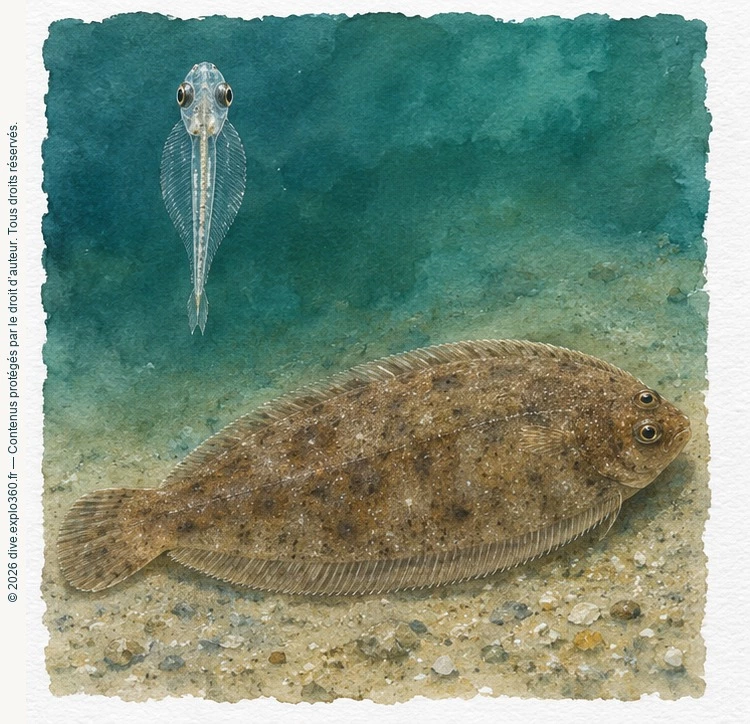
At first, a young sole looks much like any other fish larva. It swims in the water column, upright, with one eye on either side of its head. Its body is still symmetrical. Then one eye starts to shift. The skull is reshaped, the tissues are reorganised and the orbit gradually migrates to the other side. In common sole, Solea solea, both eyes end up on the right side.
As its head changes shape, the larva moves gradually out of open water and down to the seabed. It settles on its left side. From then on, it normally rests in that position. Both eyes now look up. The upper side is pigmented, while the underside usually remains pale. The fish may partly bury itself in the sediment and become difficult to distinguish.
Thyroid hormones are involved in this remodelling in flatfish. In Senegalese sole, experiments have linked their action to asymmetrical bone growth around the migrating eye. Metamorphosis also changes muscles, fins and behaviour. All the while, the young sole still has to feed and evade predators. Metamorphosis takes place gradually. Some structures still perform their functions while others change.
By the end of the process, the sole’s anatomy suits life on the seabed. Its body never regains its original symmetry. Thousands of kilometres away, another fish begins its transformation with the outline of a leaf. At that stage, it scarcely looks like a fish at all.
The transparent leaf of the Atlantic
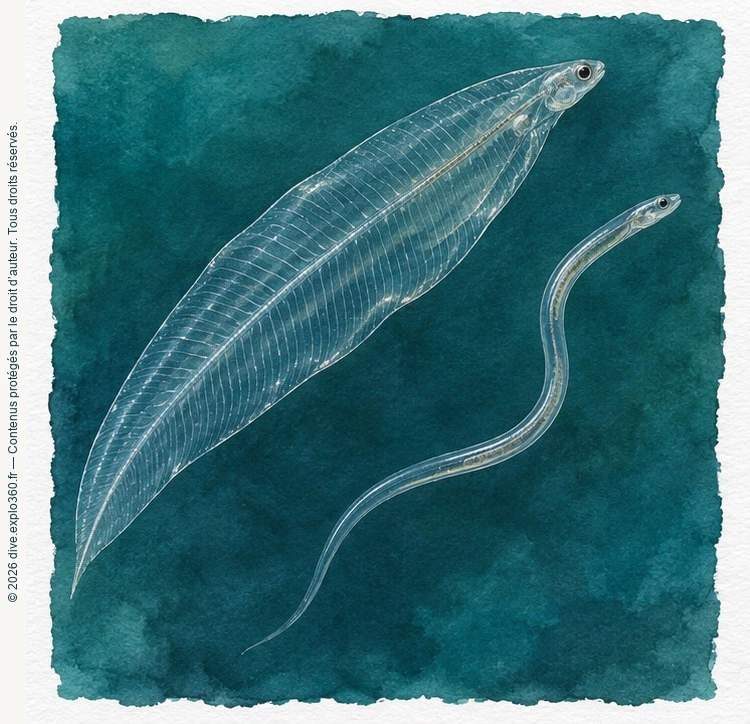
It drifts through the ocean, almost invisible. Its body is flattened and translucent, with delicate tissues. Some internal organs are faintly visible through the gelatinous body. It looks like any number of creatures drifting in the plankton. The familiar eel of European coastal waters is hardly recognisable in it. Yet it is a young European eel, Anguilla anguilla.
At this stage, it is called a leptocephalus. The evidence points to the Sargasso Sea in the western Atlantic as the European eel’s spawning area. Ocean currents help carry the larvae on their long journey towards the continental coasts. On the way, the larvae feed on organic matter in the water. As the larvae approach coastal waters, metamorphosis begins.
The body shortens and thickens. Its leaf-like shape gradually disappears. As the tissues reorganise, the body takes on the long, cylindrical shape of an eel. The leptocephalus becomes a glass eel. Still transparent, it now has the outline it will keep through the later stages of its life. Remarkably, the eel can become shorter during metamorphosis.
The body rearranges or uses up some of its tissues. Growth does not always mean getting longer. Once glass eels reach the coast, some enter estuaries and inland waters. Others remain in marine or brackish habitats. Pigmentation develops gradually. The eel then enters a long period of growth.
Several years later, another transformation accompanies its departure for the oceanic spawning grounds. The yellow eel becomes a silver eel. Its eyes enlarge and its colour changes as its digestive system gradually regresses. The journey ahead is several thousand kilometres long and depends largely on the energy the eel has stored.
Tracking tags can follow an eel across an ocean, but they leave a gap in the story. Researchers have yet to observe European eels spawning in the wild in the Sargasso Sea. The distribution of the youngest larvae points to the spawning area, and tagged adults have been tracked as far as the Sargasso Sea.
What happens when the adults meet there has yet to be seen.
The larva that stops swimming
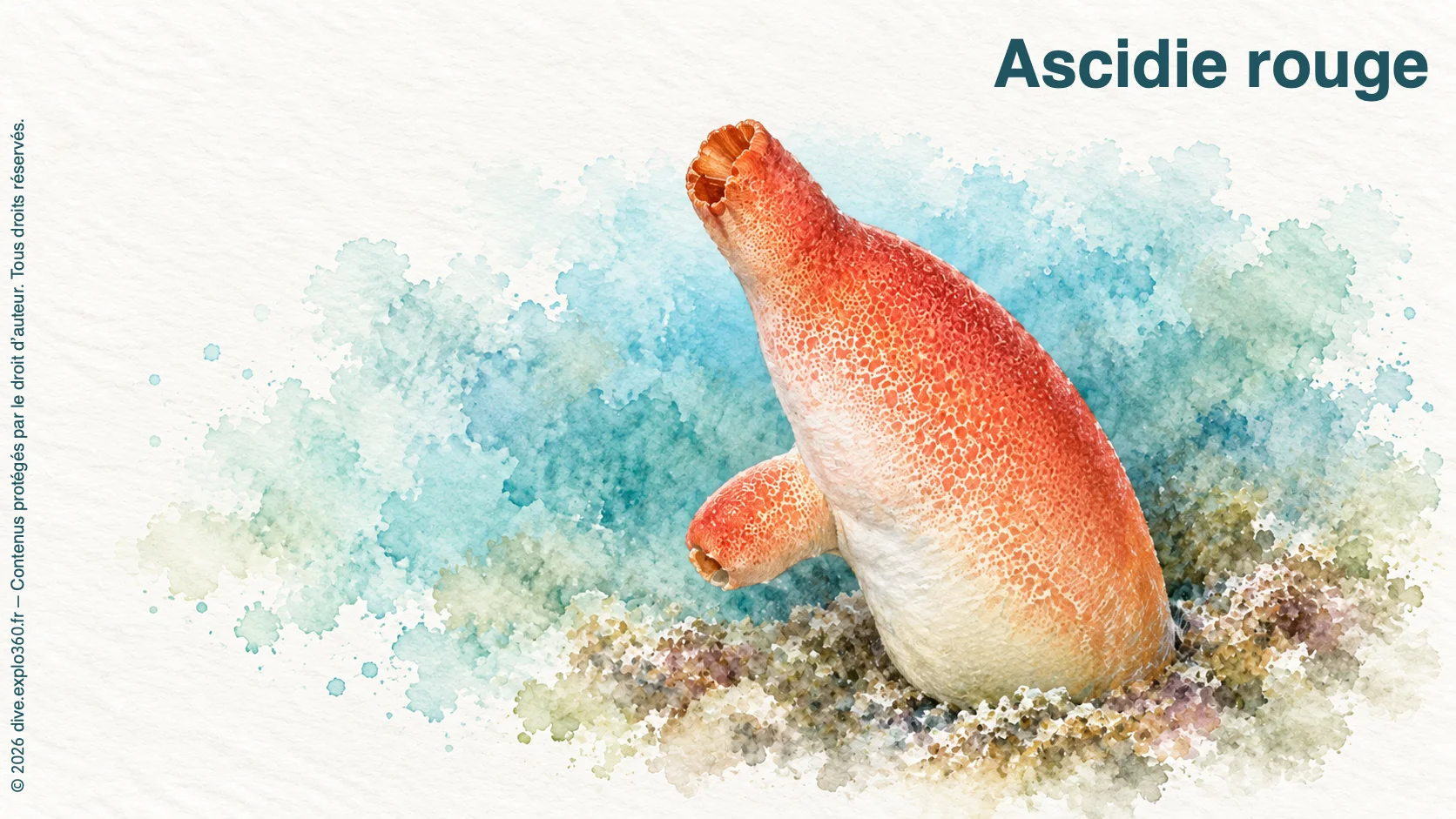
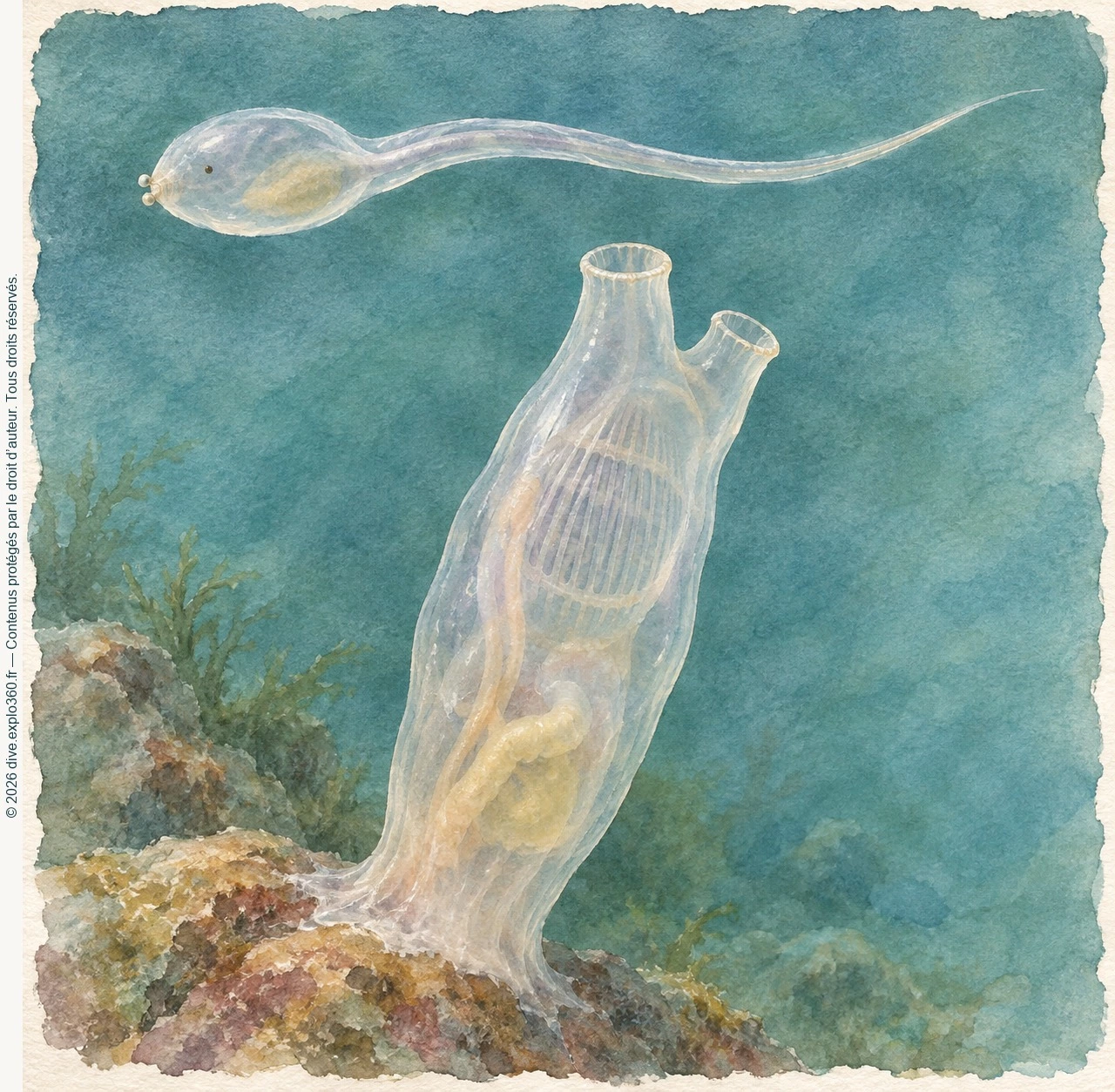
On a submerged rock, an adult sea squirt appears almost motionless. Its body looks like a small pouch. Two siphons allow water to circulate through its body. There is little about this pouch-like animal to suggest a swimming past. Yet, in many sea squirts, life begins in a very different form.
The larva looks like a tiny tadpole. It has a tail, a notochord and a dorsal nerve cord. These structures are characteristic of chordates, the group that also includes vertebrates. Its time in open water is usually brief. It swims through its surroundings or drifts with the currents. Then it finds a suitable surface.
Adhesive structures at the front of its body hold it in place. From then on, its way of life changes. The tail is resorbed. The notochord disappears with the larval structures associated with it. Much of the nervous system involved in swimming is remodelled. The pharynx develops into a filter for food particles. The siphons become functional.
Once fixed in place, the former planktonic swimmer feeds on particles carried by the current. The changes to the nervous system have given rise to the claim that a sea squirt “eats its brain”. The image is deceptive. Some larval nerve structures regress and others are reorganised. The adult retains a nervous system, including a cerebral ganglion.
Its nervous system continues to function after settlement. Structures used for swimming give way to those needed for life attached to a surface. However, not all sea squirts follow this route exactly. In some species the larva has reduced swimming structures or lacks them altogether. For those with a typical swimming larva, the transformation is particularly spectacular.
The larva travelled through the water to reach a suitable home. The adult will stay there and let the water bring it food.
The sea star before it had arms
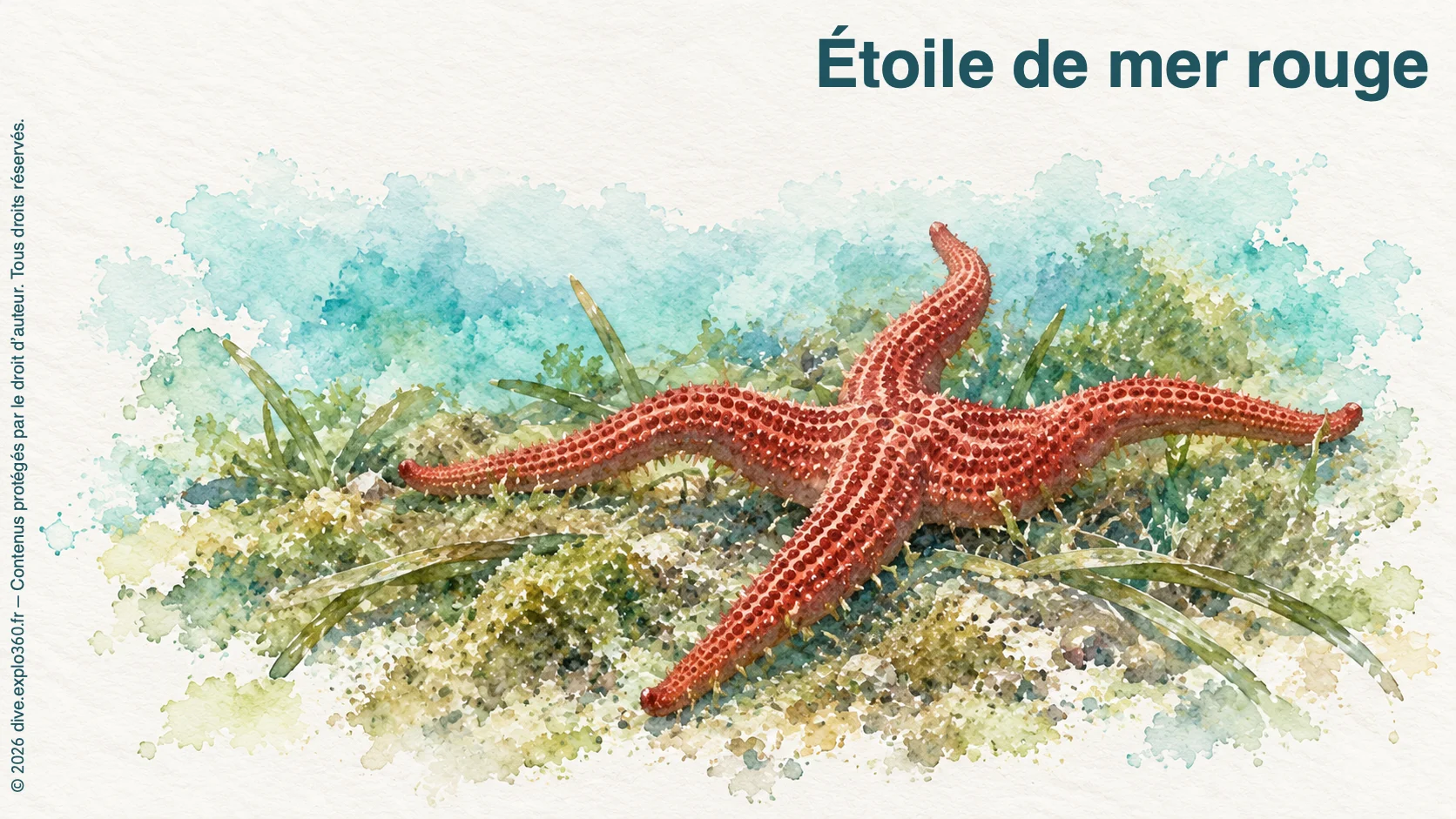
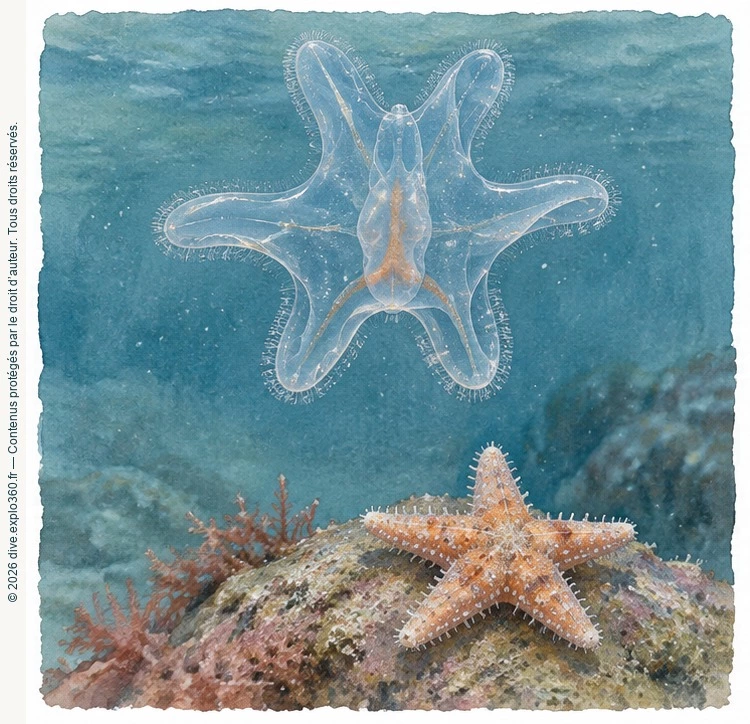
A sea star is moving slowly on the bottom. Its arms stretch around a central disc. Tube feet on its underside help it move and catch prey. Trace its life back to the plankton and the star shape disappears. In many species, the larva has bilateral symmetry: a right and left side, a front and a back.
Bands of cilia propel it through the plankton, where it can capture food particles. Its silhouette does not resemble that of a small star. Some larvae even develop extensions that facilitate swimming or feeding. Then a new structure appears.
The first outline of the juvenile takes shape while the larva is still swimming. The water vascular system begins to develop. Future arms are taking shape. Meanwhile, many larval structures regress. A bilaterally symmetric swimming organism becomes a benthic animal whose body generally has pentaradiate symmetry.
The shift involves the whole body. As the larval structures recede, the juvenile takes shape around a central disc. Sea urchins, brittle stars and other echinoderms also undergo profound transformations between the larval and adult stages. In these animals, too, the adult’s radial symmetry develops from a bilaterally symmetrical body plan.
The sea star starts life with a very different shape.
Explore the same world