Inside the egg
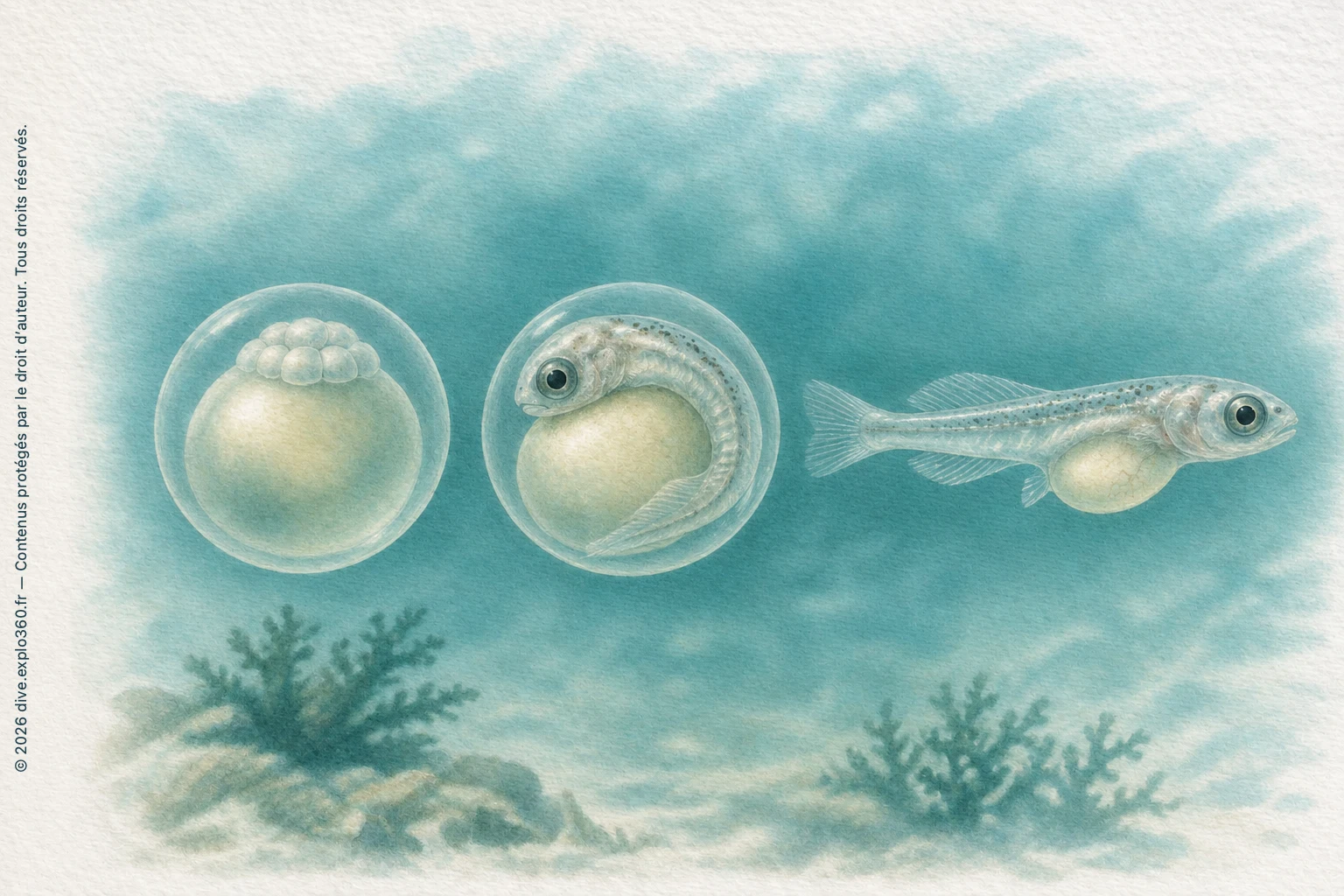
A fish egg sometimes appears to be a little translucent sphere.
Inside, however, the transformations quickly follow one another.After fertilisation, the initial cell begins to divide. Two cells become four, then eight, then more. As the cells continue to divide, the embryo begins to take shape.The first body structures appear. The body axis takes shape and the nervous system begins to form, followed by the earliest outlines of the eyes, muscles and internal organs.All this takes place in a tiny volume.The embryo draws on the nutrients stored in the yolk.But its development also depends on external conditions.The temperature influences the rate of biological reactions and the duration of incubation. The water must stay within the species’ tolerance for salinity, and dissolved oxygen must reach the embryo.Pelagic eggs, which drift in the water column, are transported by currents. Their destination depends in part on physical phenomena that their parents do not control.One current may keep them in suitable water. Another may carry them somewhere the larvae are less likely to survive.Even before the egg hatches, its chances depend on how its development coincides with the movement of the water.Then comes a decisive step.The egg membrane breaks.A larva appears.Hatching brings a new set of risks.The first meal
In many species, the newly hatched larva is almost transparent. Its body is fragile, its fins are still developing and it can swim only weakly.
Sometimes it only very vaguely resembles the adult that it could become.The larva still draws on the yolk sac, a food reserve it began using as an embryo.But these reserves are running out.As the yolk runs out, the larva has to start catching its own food.Many marine fish start by eating tiny planktonic organisms, including young crustaceans.First, the larva has to encounter its prey, recognise it and catch it.A larva that begins to feed has a tiny mouth. Its prey has to fit into that tiny mouth and be within its ability to catch.If suitable prey is scarce when the yolk runs out, the larva is less likely to survive.This is one of the major problems in the ecology of young fish.The match–mismatch hypothesis proposes that recruitment, the addition of young fish to a population, depends in part on whether suitable prey is abundant when larvae first need it.Even a large batch of eggs may yield few survivors.The young need to hatch at a time and in a place where they can find food.Once a larva has found its first meal, it still has to avoid becoming one.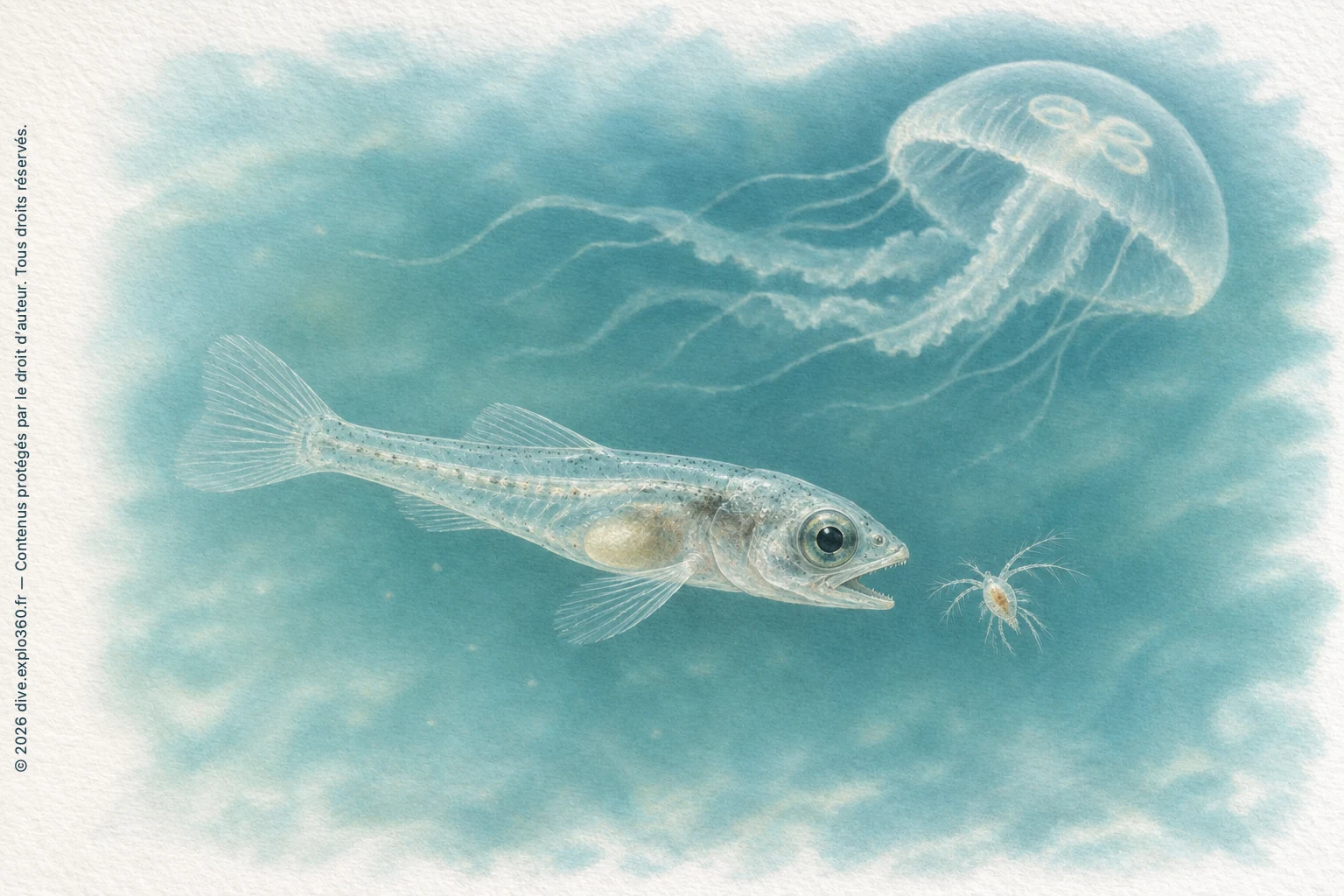
Finding shelter in an unfamiliar habitat
After a period in the water column, some larvae must reach the bottom.
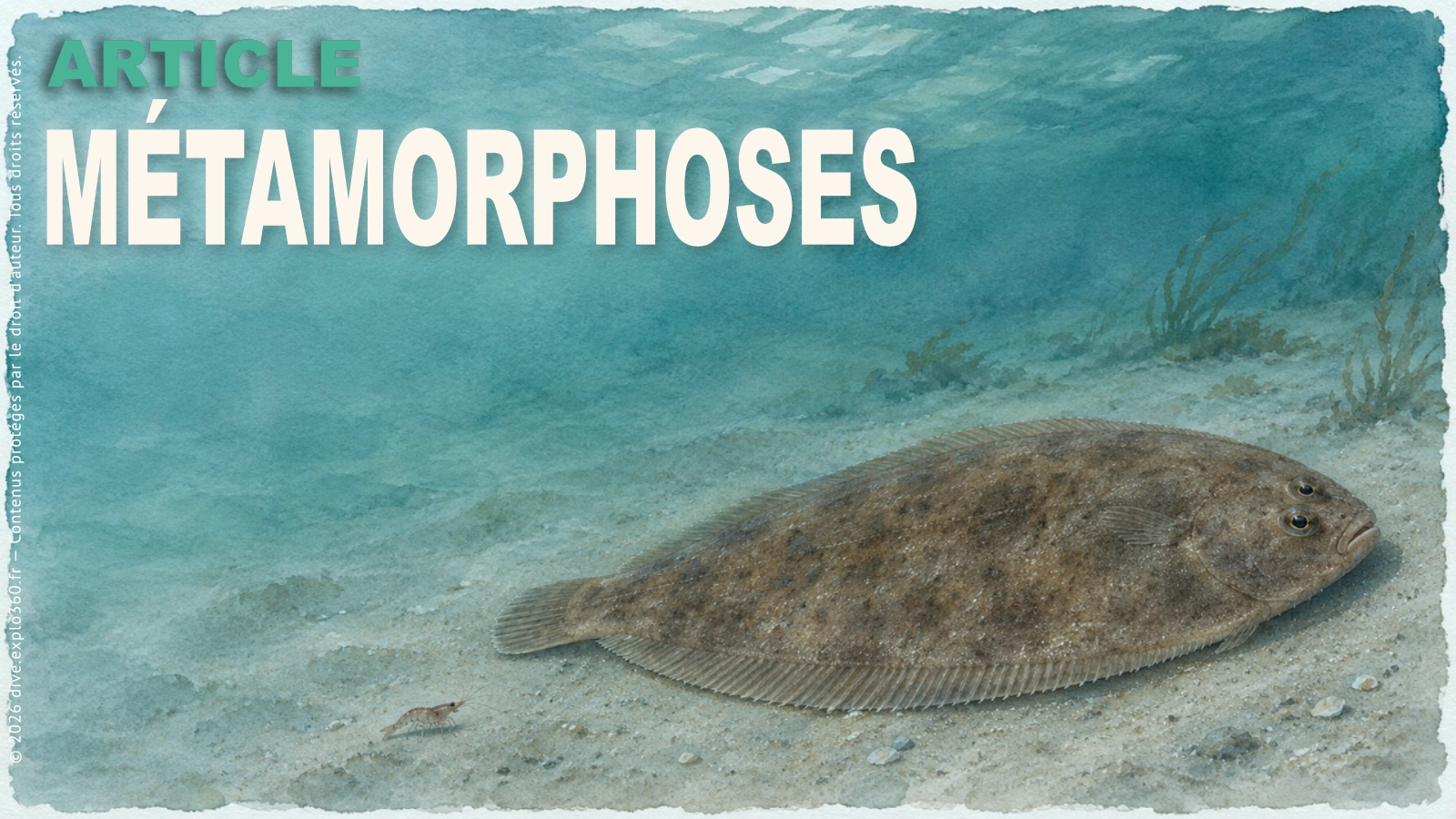
For fish associated with reefs, this move into juvenile habitat is called settlement.It changes how and where a young fish lives.The animal that lived in the plankton must now find a habitat where it can feed, hide and continue to grow.Some sites offer much more protection than others.A young fish that settles in the open can quickly be eaten. A crevice, a clump of seaweed, or a coral formation can offer more shelter.The cues vary by species. Some fish seek out particular structures, while others respond to chemical, visual or acoustic signals.Settlement can also coincide with metamorphosis.Morphology, pigmentation and behaviour change. The animal gradually acquires the characteristics of its juvenile way of life.In flatfish, the transformation is easy to see.The larva initially has an eye on either side of the head and swims in the water column.During metamorphosis, one of the eyes migrates to the other side of the skull. The body flattens and the young fish gradually adopts an existence on the bottom.Transformation also involves skeleton, muscles, pigmentation and sensory function.An animal swimming in open water becomes a fish that can lie on one side, with both eyes facing upwards.For a young flatfish, settling involves a change in the layout of the body as well as a move to the seabed.But not all young marine animals begin their lives with a long drift.Some parents keep their eggs close as they develop.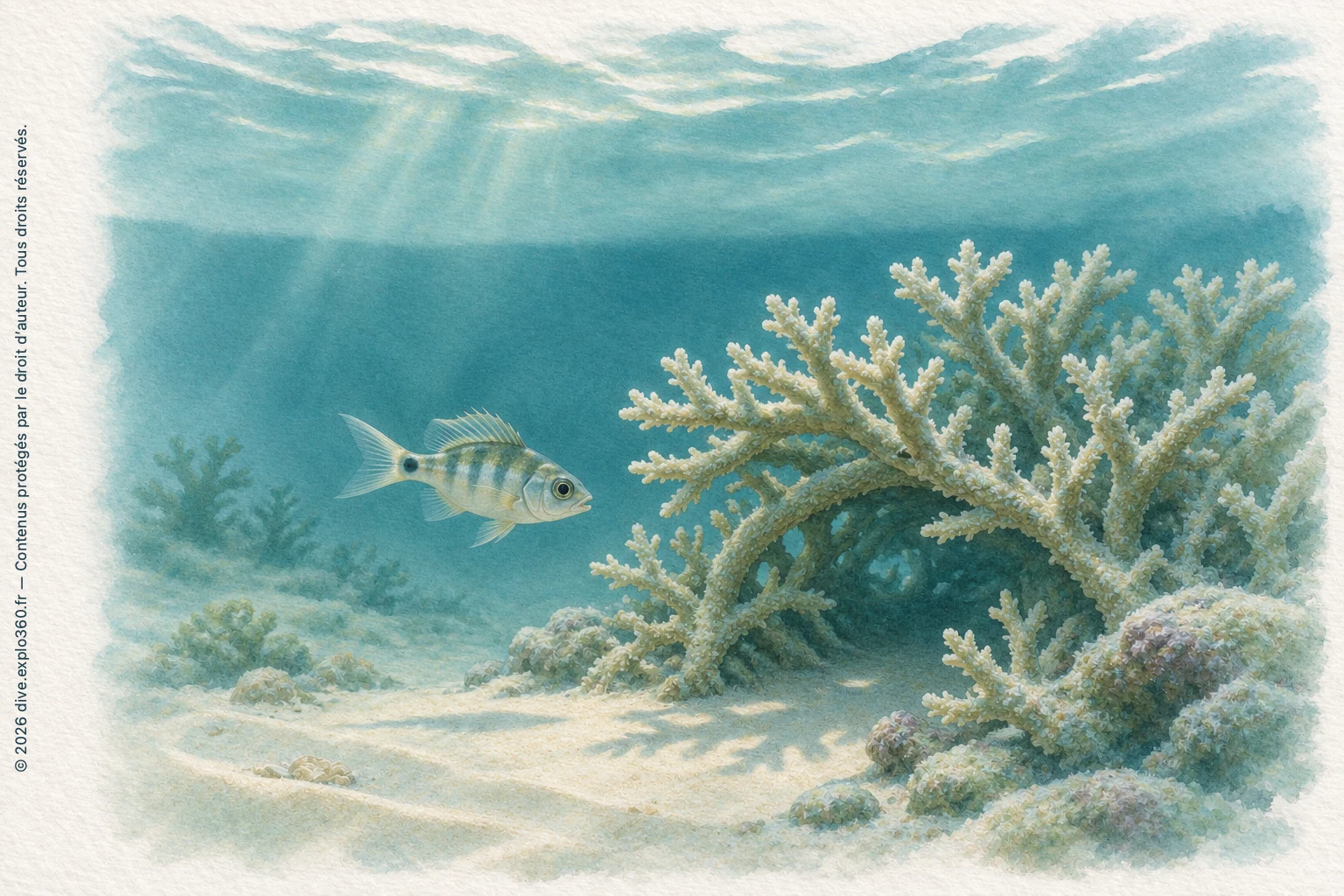
Explore the same world