Why release so many eggs?

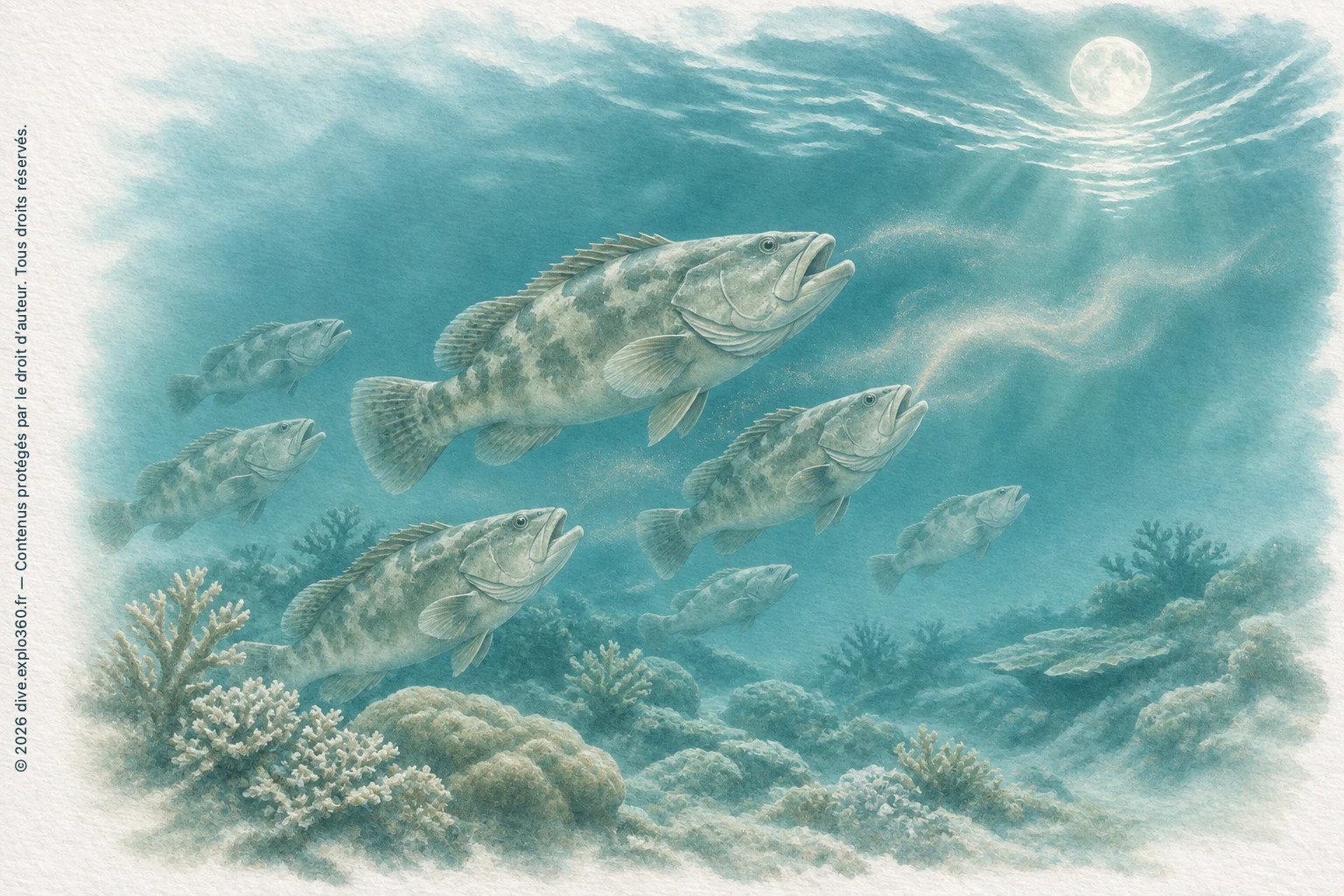
In many bony fish, eggs and sperm meet in the water. Releasing them together can help fertilisation. A large clutch gives some offspring a chance, but resources have to be shared among the eggs.

Follow the egg. Its fate depends on what it carries and where the water takes it.
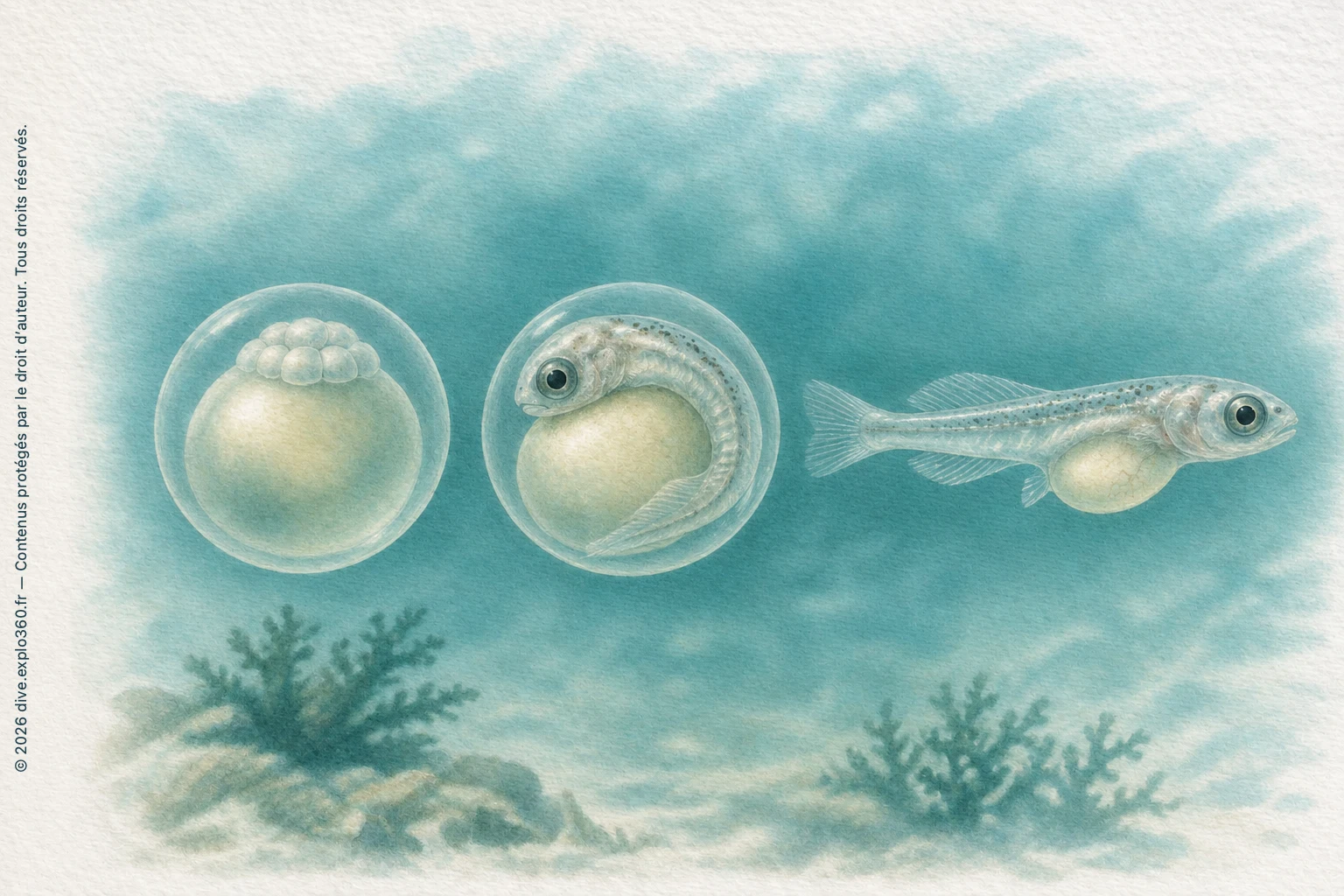
Three stages from fish egg to larva.
The larva grows inside the egg. At hatching, it still carries a food reserve. The sequence runs from the first cell divisions to the hatching of a larva with a yolk sac. © dive.explo360.fr — All rights reserved. Reproduction requires permission.

Inside the egg

Cells in the fertilised egg divide, and the body begins to take shape. Yolk feeds the embryo. Temperature affects how fast it develops, and it needs enough oxygen and the right level of salt in the water to survive.

The first meal

As the yolk sac empties, the larva must find small enough prey, such as early planktonic crustaceans. If these prey become abundant too late in the season, larvae may run short of food.
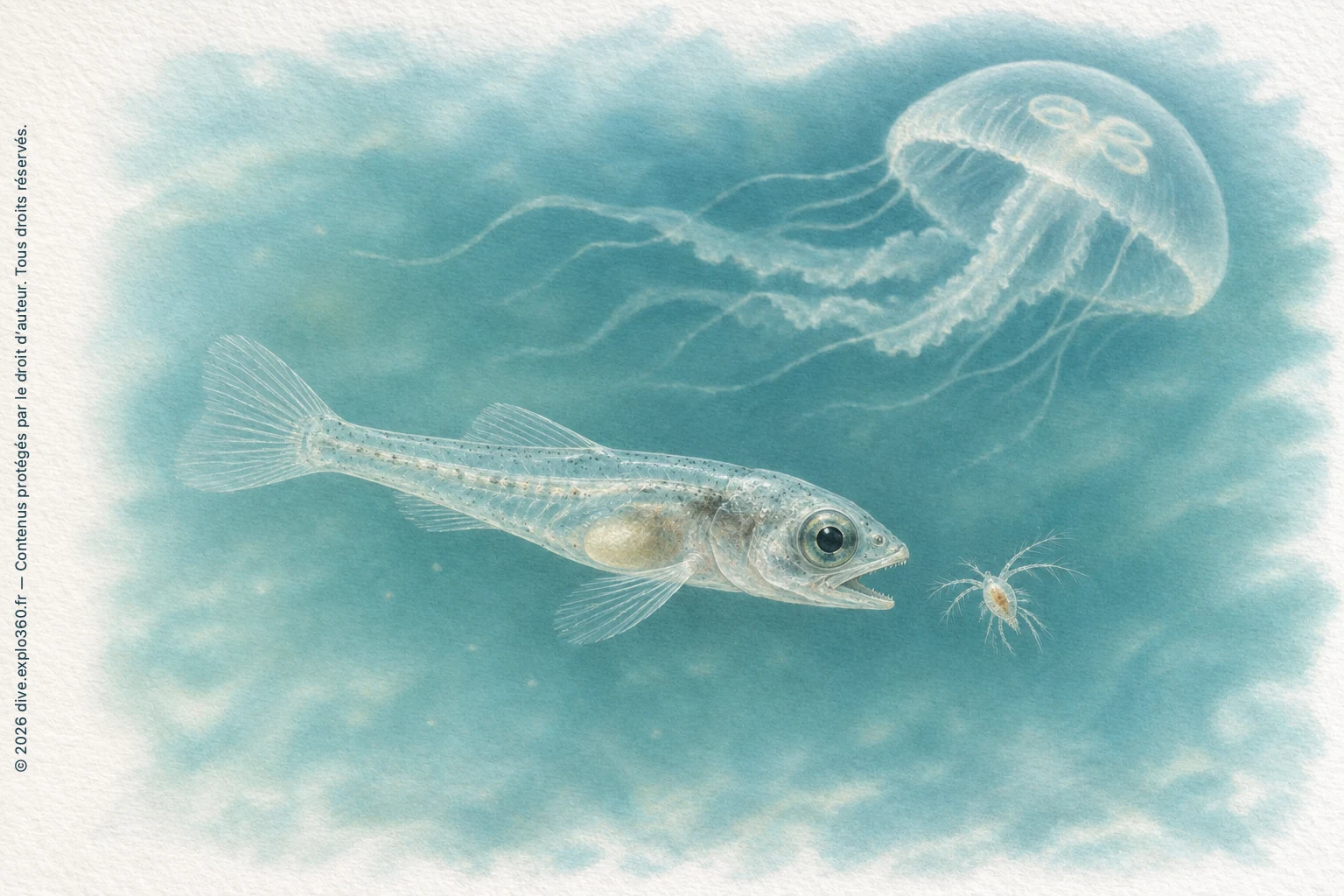
A fish larva and small prey in the plankton.
The larva approaches a young crustacean. The jellyfish in the background represents a potential predator. Sizes are schematic. © dive.explo360.fr — All rights reserved. Reproduction requires permission.

Larvae can influence where they go

A small shift in depth can bring a larva into water moving in a different direction.

Currents carry larvae. By changing depth, some can reach a different current. Experiments also show that some reef larvae respond to sounds or chemicals in the water.

Finding shelter in an unfamiliar habitat

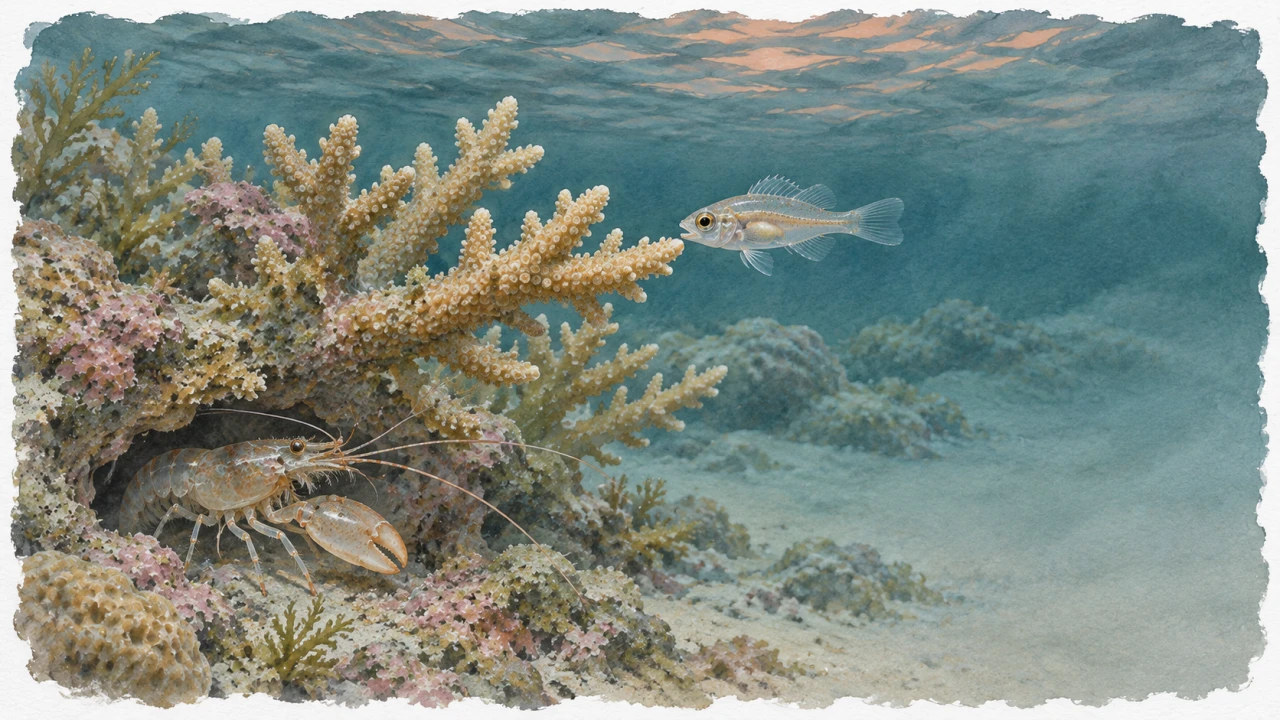
Settlement is the move into the place where a young fish will live. In the picture, look for a spot where it could hide. A young flatfish also goes through metamorphosis. One eye moves across its head as the fish starts to live on its side.
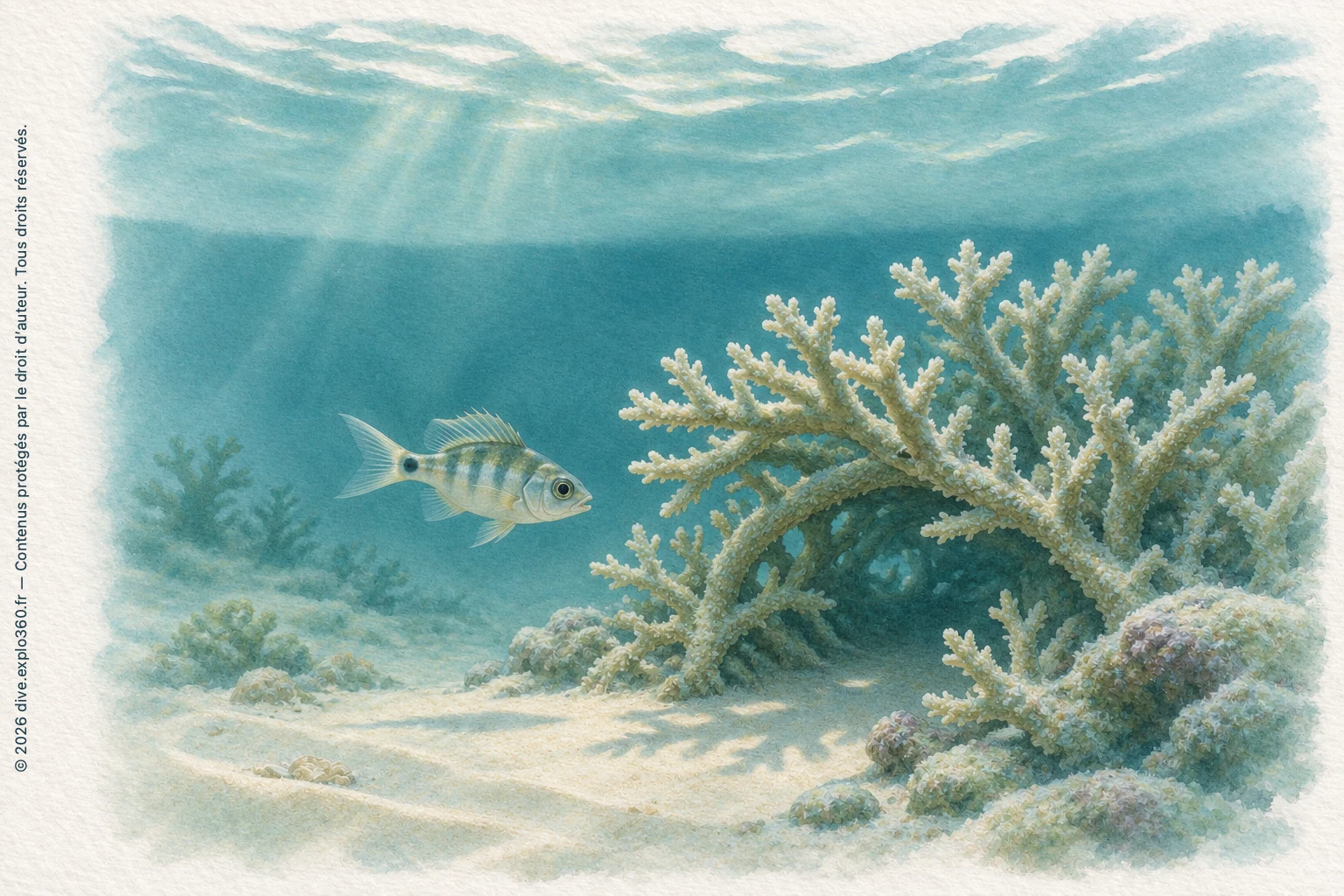
A young fish near branching coral beside exposed sand.
At settlement, a young reef fish may shelter between coral branches. Different species use different refuges. © dive.explo360.fr — All rights reserved. Reproduction requires permission.

Continue reading

AMIGANSEAU CONTENT

The rest of this article is for subscribers

Log in with your AMIGANSEAU licence to continue reading.

All active AMIGANSEAU licences give access to the full article.

Explore the same world

Explore further