Why so many eggs?

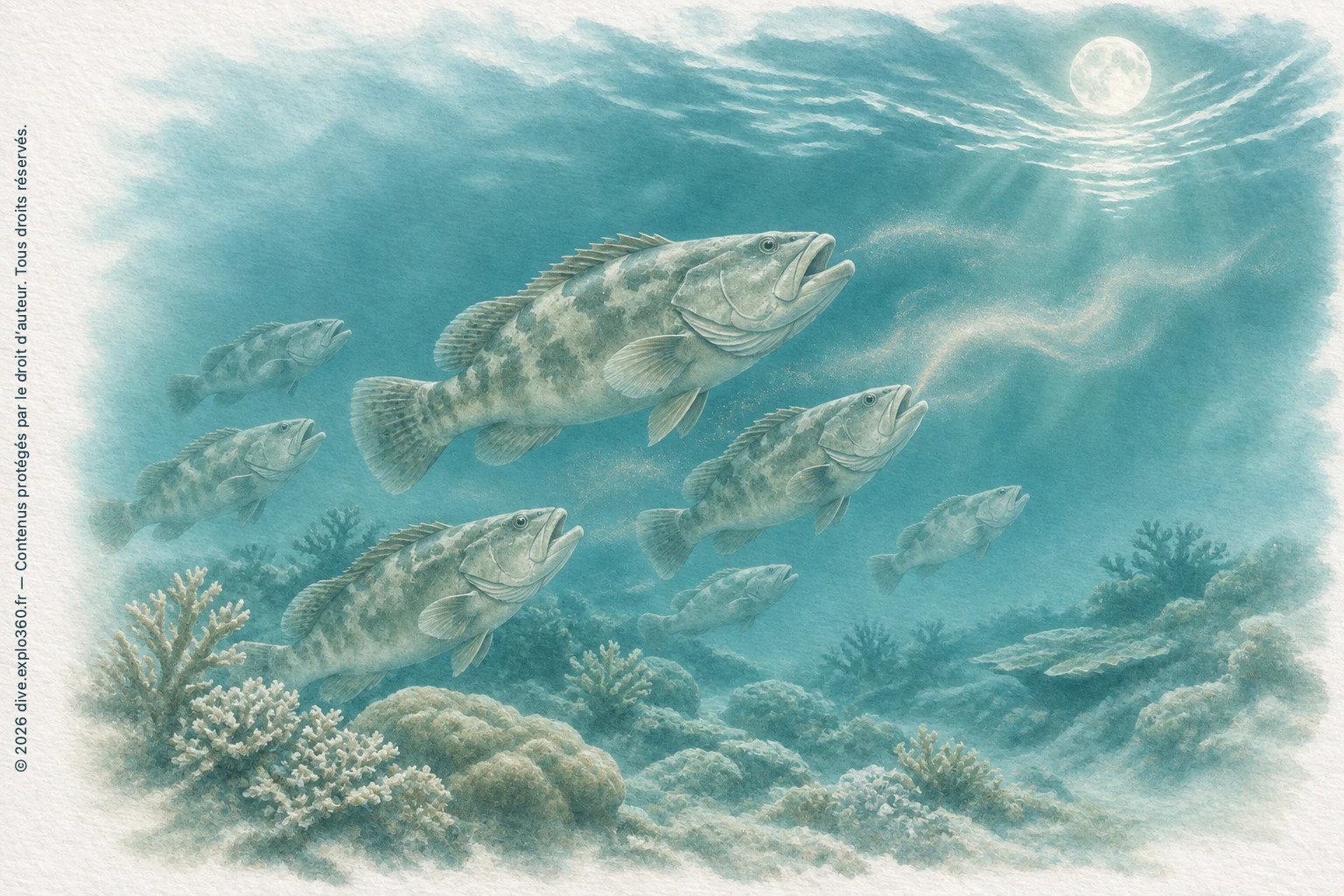
Many fish release eggs into the water. Sperm from the males can join with the eggs so they can develop. Lots of eggs are eaten or carried away. If there are many eggs, a few may survive.

Follow the egg. Its fate depends on what it carries and where the water takes it.
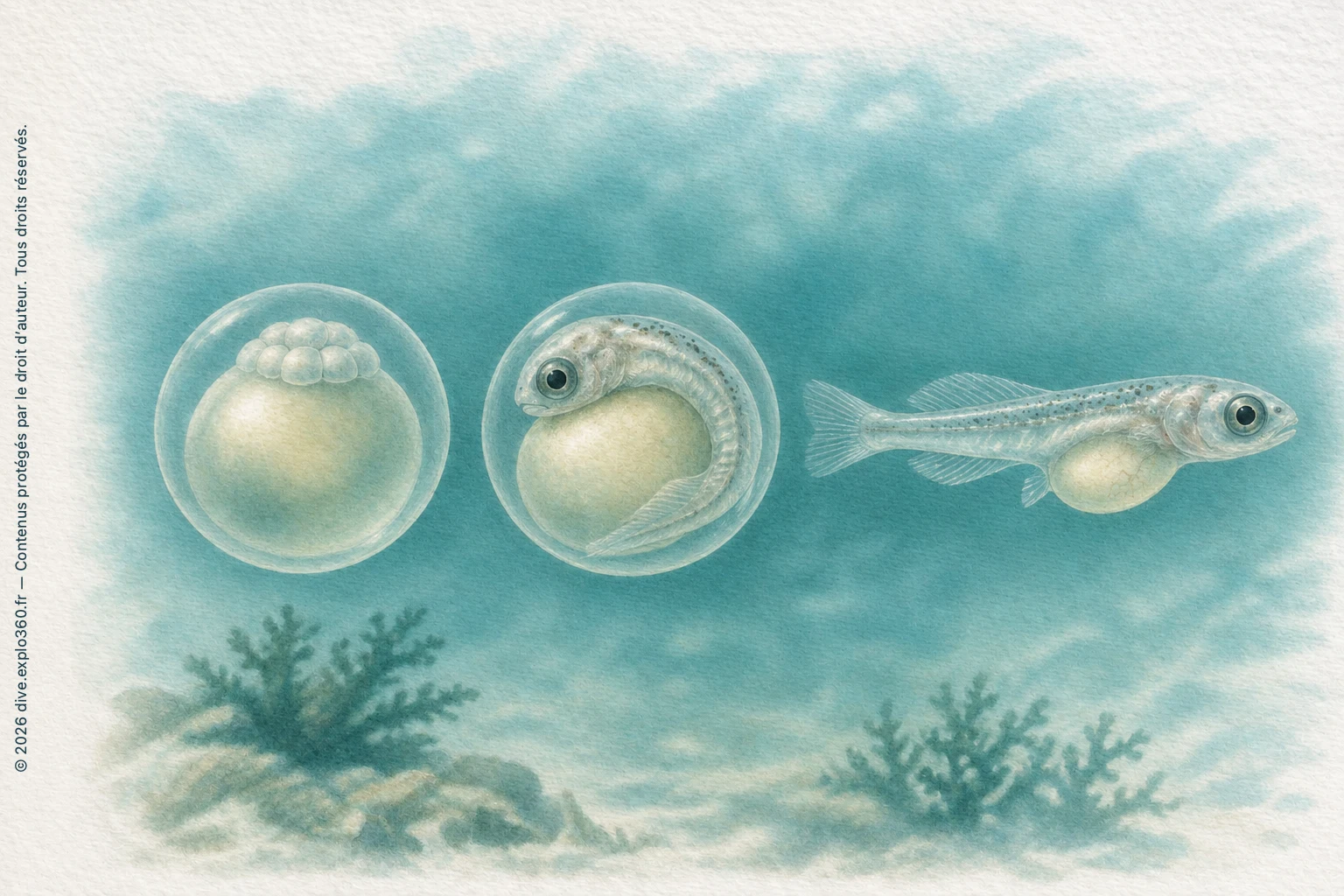
Three stages from fish egg to larva.
The larva grows inside the egg. At hatching, it still carries a food reserve. © dive.explo360.fr — All rights reserved. Reproduction requires permission.

Inside the egg

Look at the three stages in the picture. Inside the egg, the little fish uses a store of food called yolk. It needs oxygen too. When the egg opens, a tiny fish called a larva comes out.

The first meal

The larva may still have a little yolk sac under its belly. As the store shrinks, it needs to catch prey small enough to fit in its mouth.
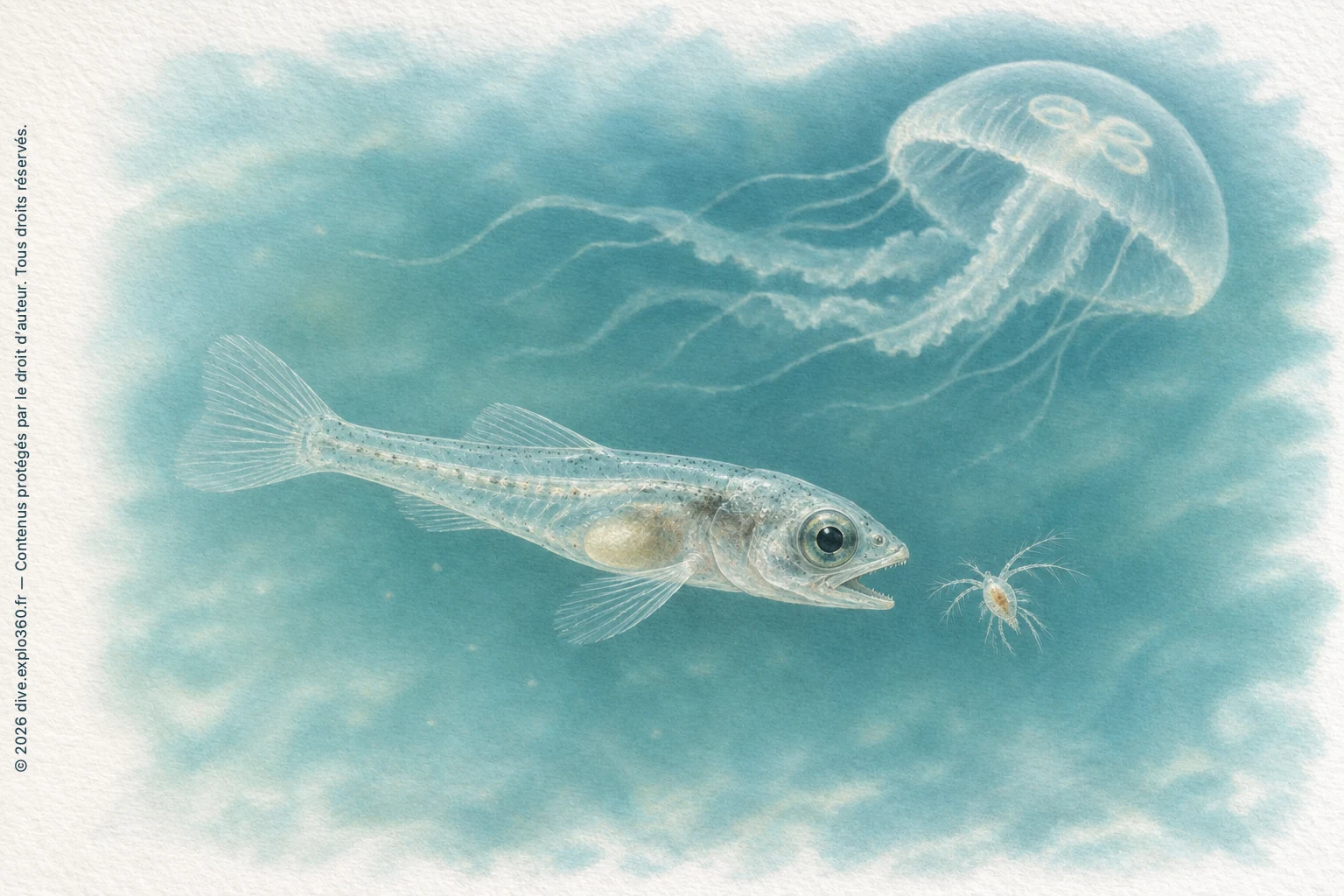
A fish larva and small prey in the plankton.
The larva approaches a young crustacean. The jellyfish in the background represents a potential predator. Sizes are schematic. © dive.explo360.fr — All rights reserved. Reproduction requires permission.

Swimming with currents

A small shift in depth can bring a larva into water moving in a different direction.

As they grow, some larvae swim better. They can move up or down into another current. Near a reef, some respond to sounds or smells in the water.

Finding shelter

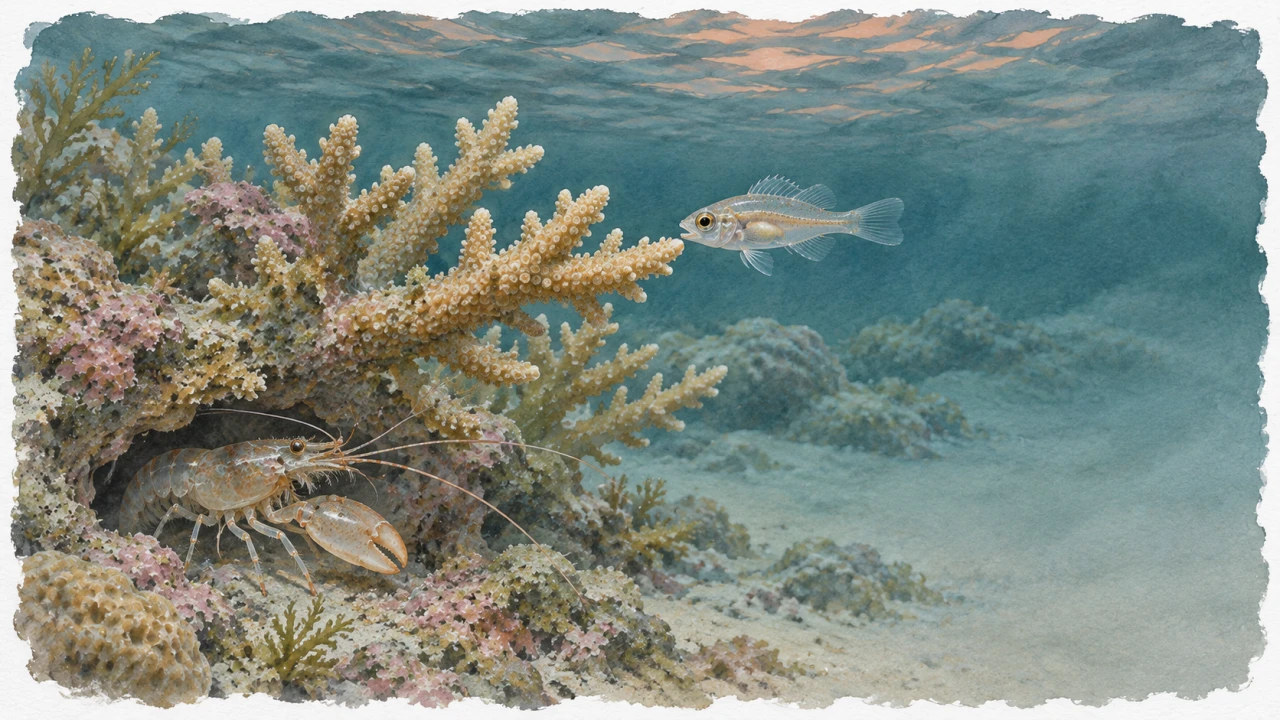
A young reef fish can hide between coral branches. Look at the flatfish too. One eye shifts to the other side as it grows. The fish can then rest on the seabed with both eyes facing up.
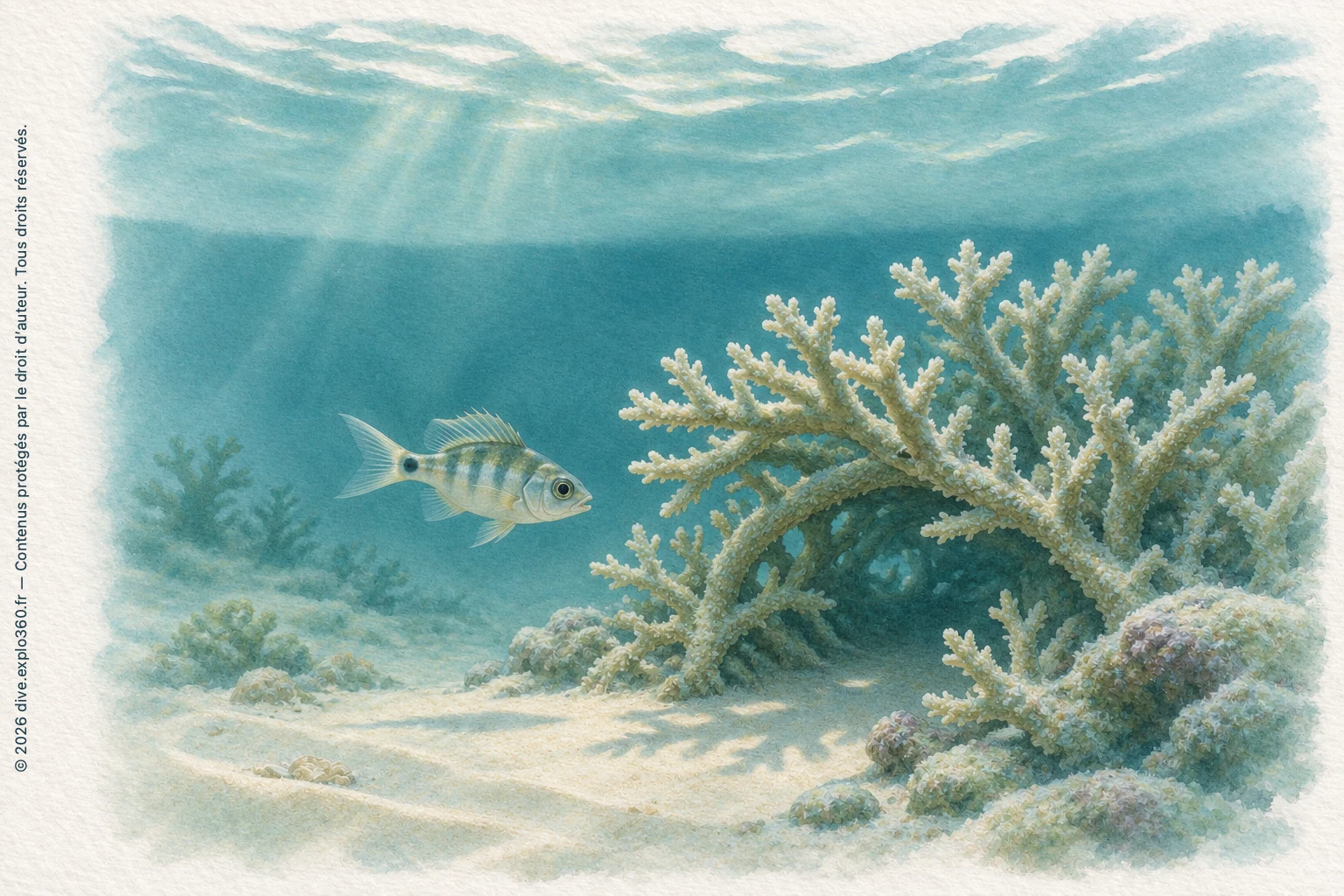
A young fish near branching coral beside exposed sand.
At settlement, a young reef fish may shelter between coral branches. Different species use different refuges. © dive.explo360.fr — All rights reserved. Reproduction requires permission.

Continue reading

AMIGANSEAU CONTENT

The rest of this article is for subscribers

Log in with your AMIGANSEAU licence to continue reading.

All active AMIGANSEAU licences give access to the full article.