How an injury can trigger the regrowth of a body part
An injury can interrupt essential functions in seconds. For an animal that survives, the next challenge is to organise the remaining tissues into a body part that works.
Wound closure, regrowth and autotomy describe different stages or mechanisms. A predator may tear off an appendage, and in some species a viable fragment can form a new individual.
Three processes to tell apart
1
Wound healing
The injury closes and the protective barrier forms again.
2
Regeneration
Living tissues rebuild a lost structure.
3
Autotomy
Part of the body separates through a specialised mechanism within the animal.
How does a body rebuild what it lost?
Regeneration begins with cells and signals from the tissues that survive. Some cells proliferate. Others lose some of their specialisation, a process called dedifferentiation. To rebuild an organ, cells must organise themselves and establish connections.
Picture the missing part. Look first at what stayed alive around the injury.
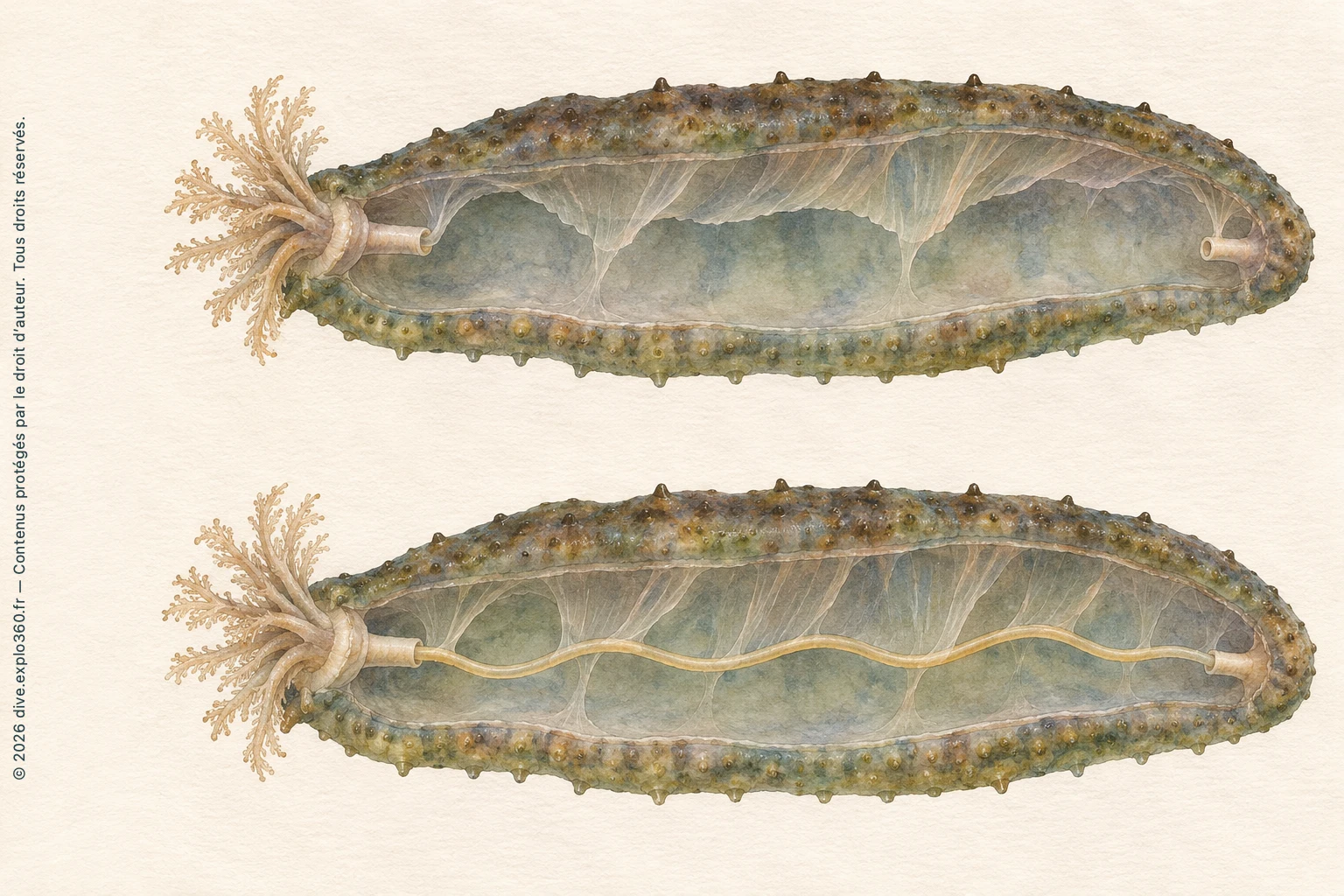
After evisceration in Holothuria glaberrima, the free edge of the remaining mesentery thickens. Cells there change state and the thickening becomes the first stage of a new intestine. Cells from the surviving ends of the digestive tract help form the inner lining as the tube becomes continuous again.
Continue reading
AMIGANSEAU CONTENT
The rest of this article is for subscribers
Log in with your AMIGANSEAU licence to continue reading.
Subscribing to Dive.Explo360 means supporting a different way to discover marine life.
Our independent platform is entirely self-funded and relies solely on subscriptions. Every licence helps us continue our work, create new content, and share what we know about the marine world with as many people as possible.
Starting at €80 per year, your support makes all the difference.