
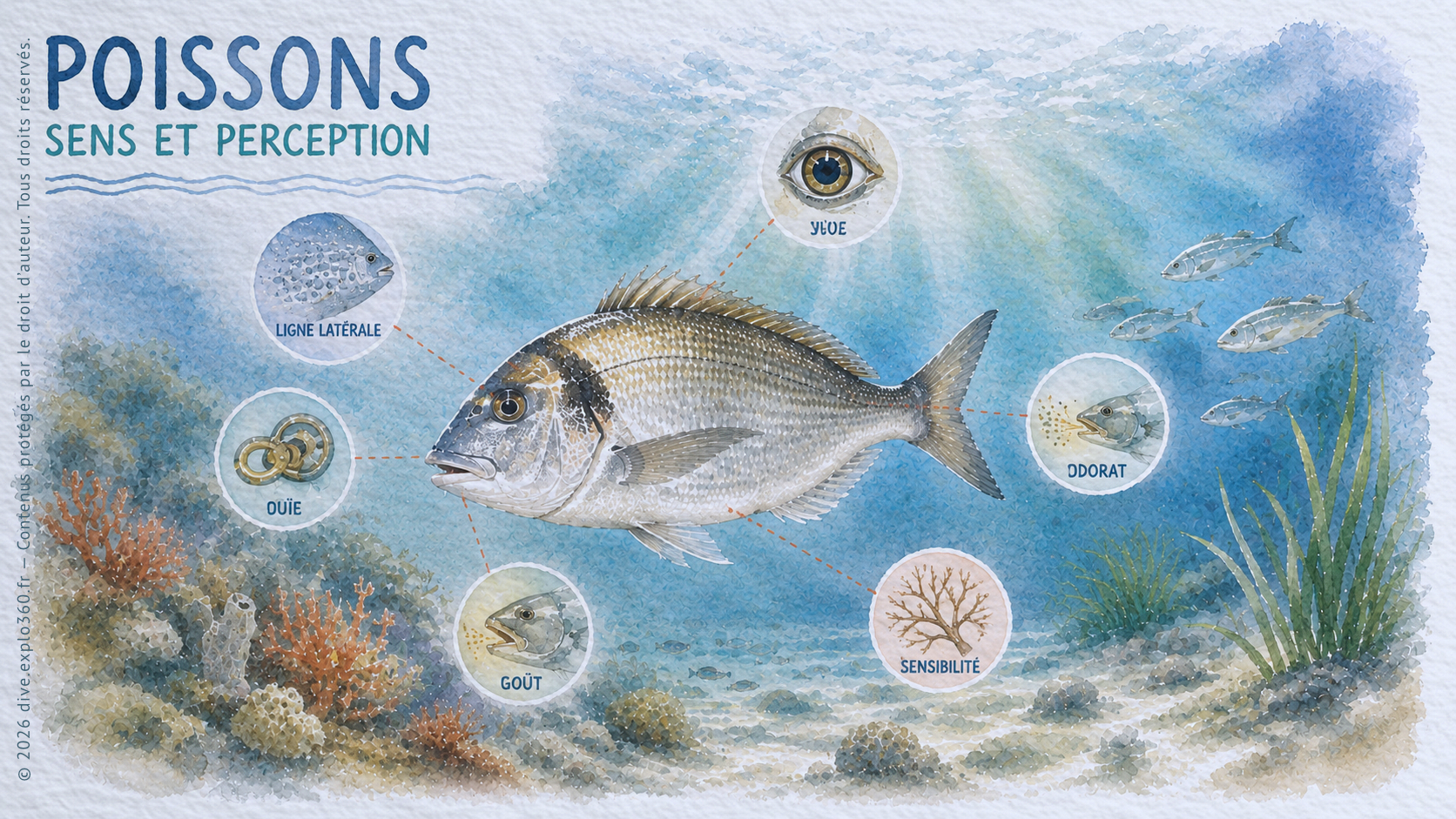
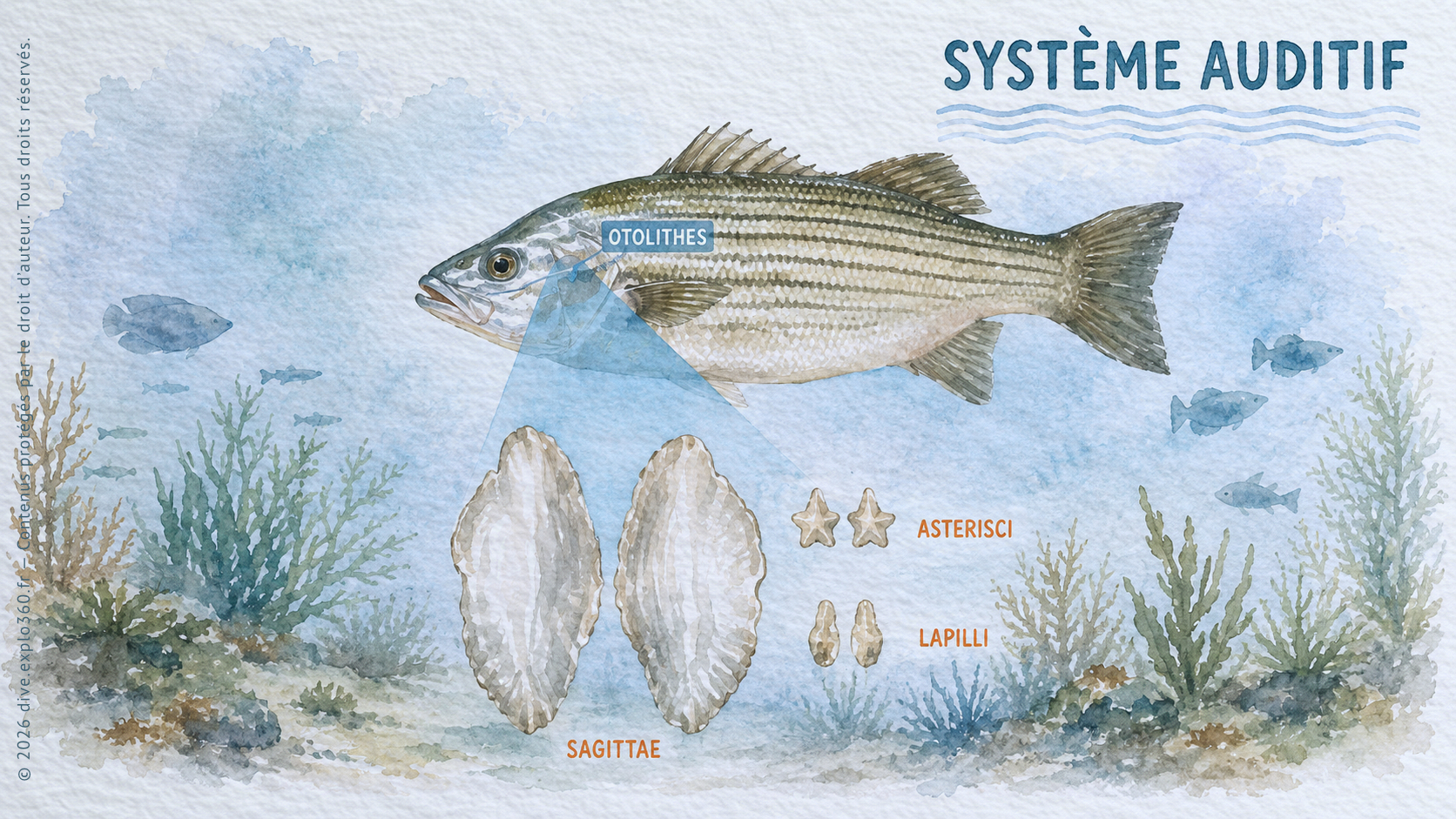
Inside the head is an inner ear containing small calcium carbonate structures called otoliths.
These help detect movements and sound vibrations.
Fish can therefore perceive certain sounds produced by other animals or their surroundings.
In some species, the swim bladder can also contribute to perceiving certain sounds.
Hearing can help a fish detect danger, find prey or communicate with other fish.

Water flows through them and passes over cells that can detect dissolved chemical molecules.
This information is then sent to the brain.
Through smell, fish can detect food, recognise certain substances produced by other animals or perceive signals associated with danger.
Smell is particularly useful when visibility is poor, because molecules remain detectable even when the fish cannot see their source.
AMIGANSEAU CONTENT
The rest of this article is for subscribers
Log in with your AMIGANSEAU licence to continue reading.
All active AMIGANSEAU licences give access to the full article.Explore the same world