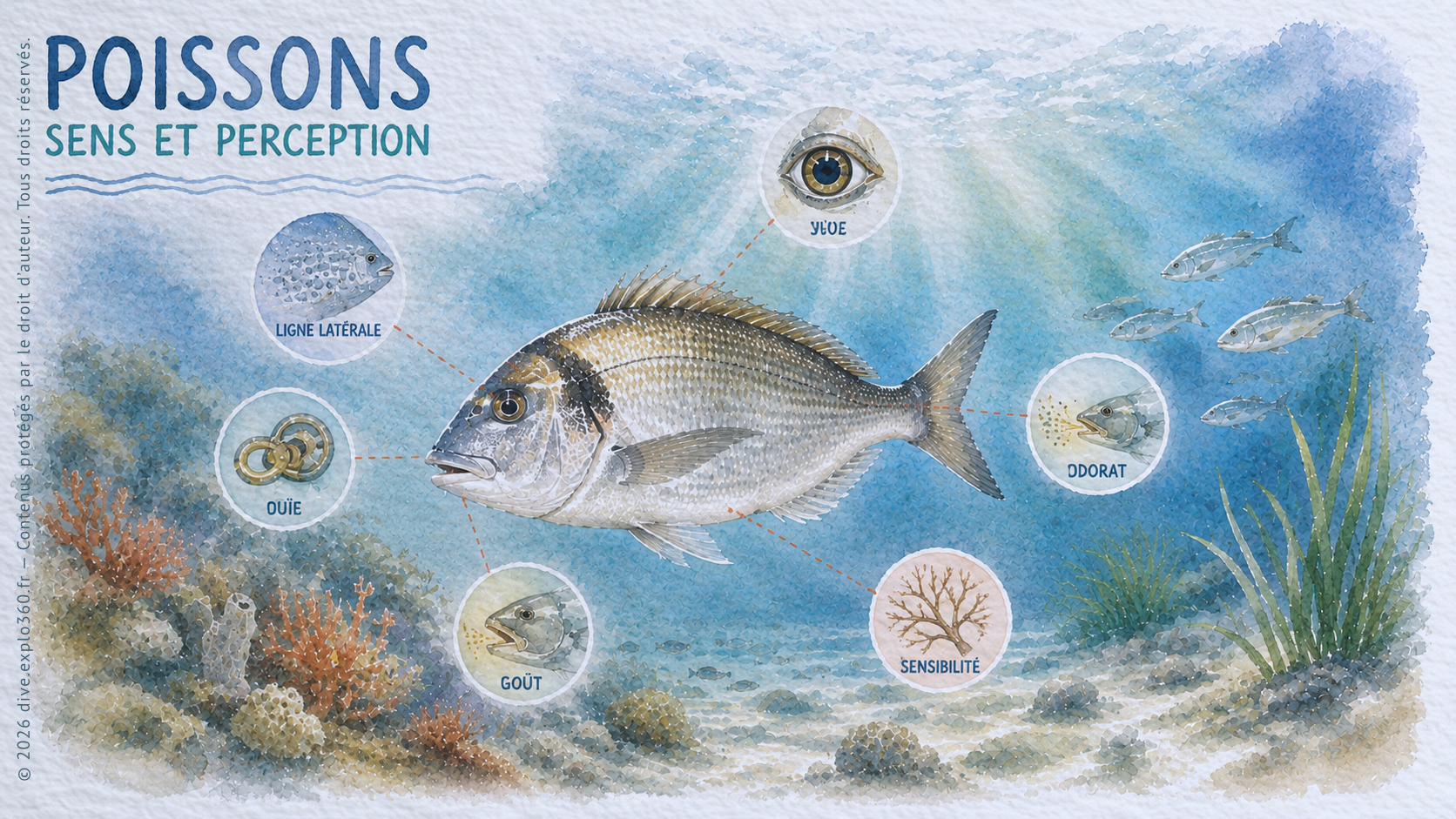
Inner ears for hearing
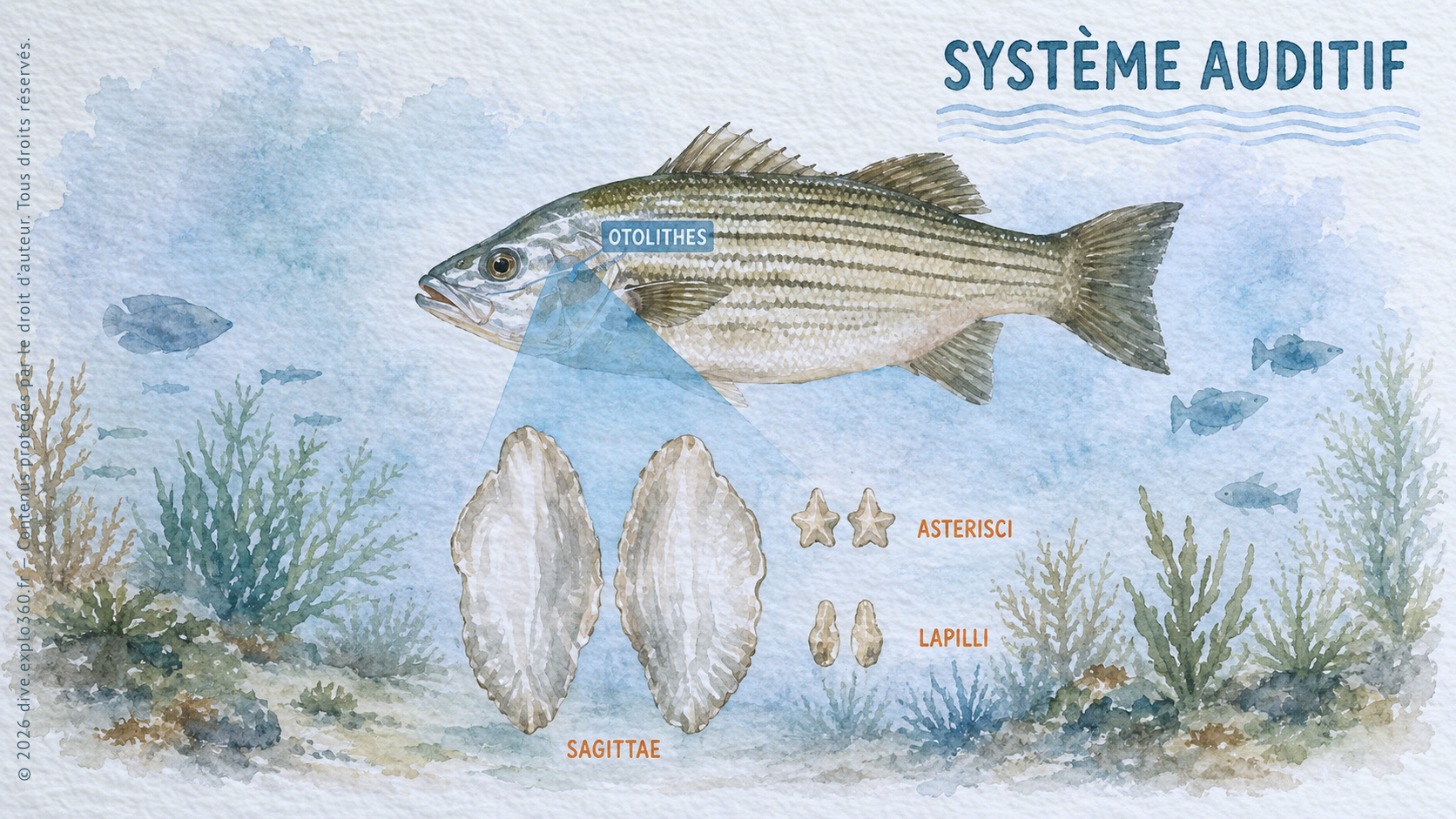
Fish hear through their inner ears despite having no visible external ears. In most bony fish, each inner ear contains three otoliths, small mineral structures: there are three pairs, not three in total.
The otoliths move relative to the tissues around them. Cells detect this movement. The inner ear tells the fish about sounds and the position of its body. In some species, the swim bladder also helps with hearing.
Smelling dissolved substances

Water passing through the olfactory organs on the snout brings dissolved molecules. Sensory cells detect them: this is smell. These openings do not serve for breathing as our nostrils do.
A smell may signal food or other fish nearby. Some species also respond to substances from an injured fish. They do not all use the same signals.
Explore the same world