
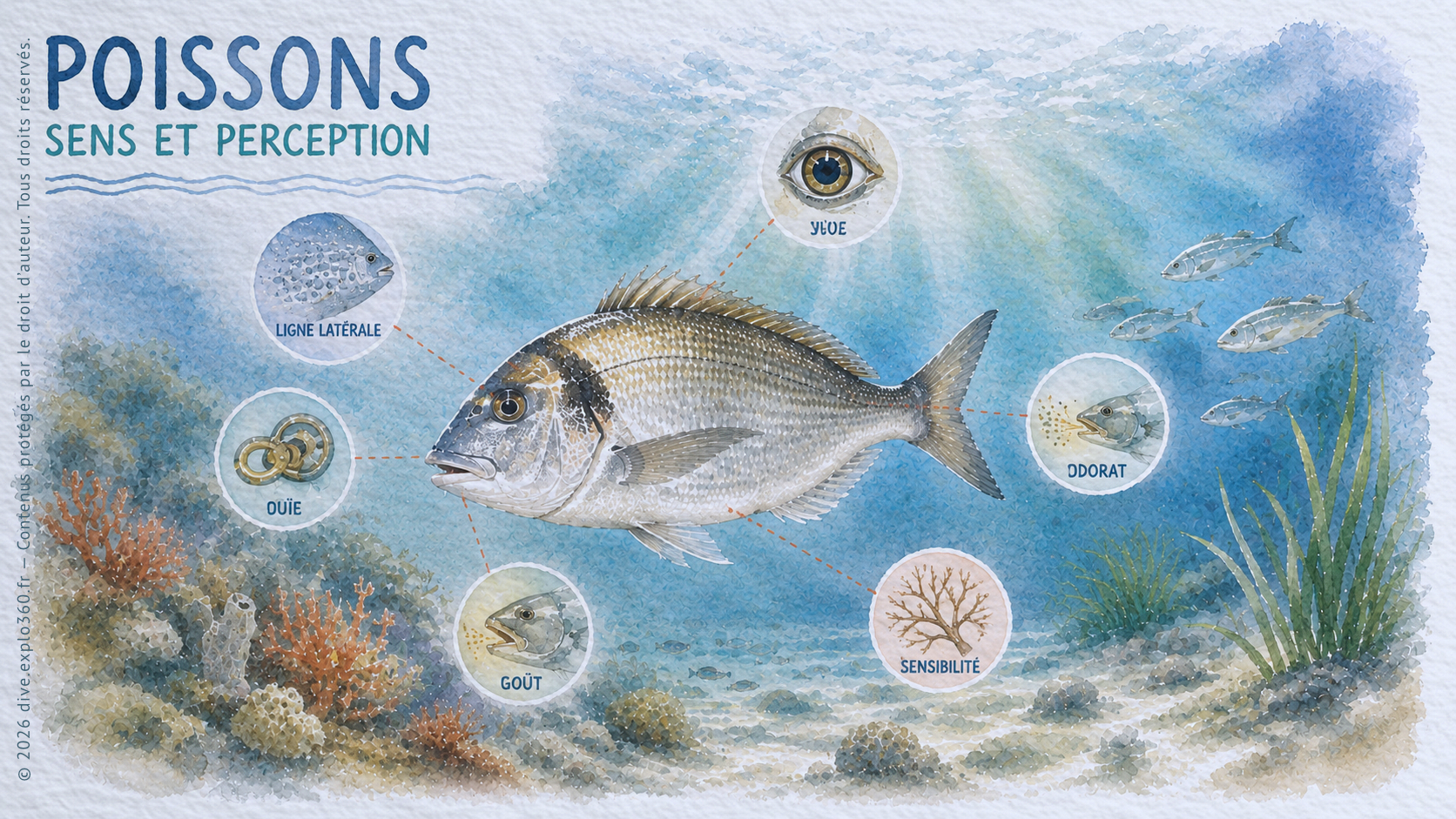
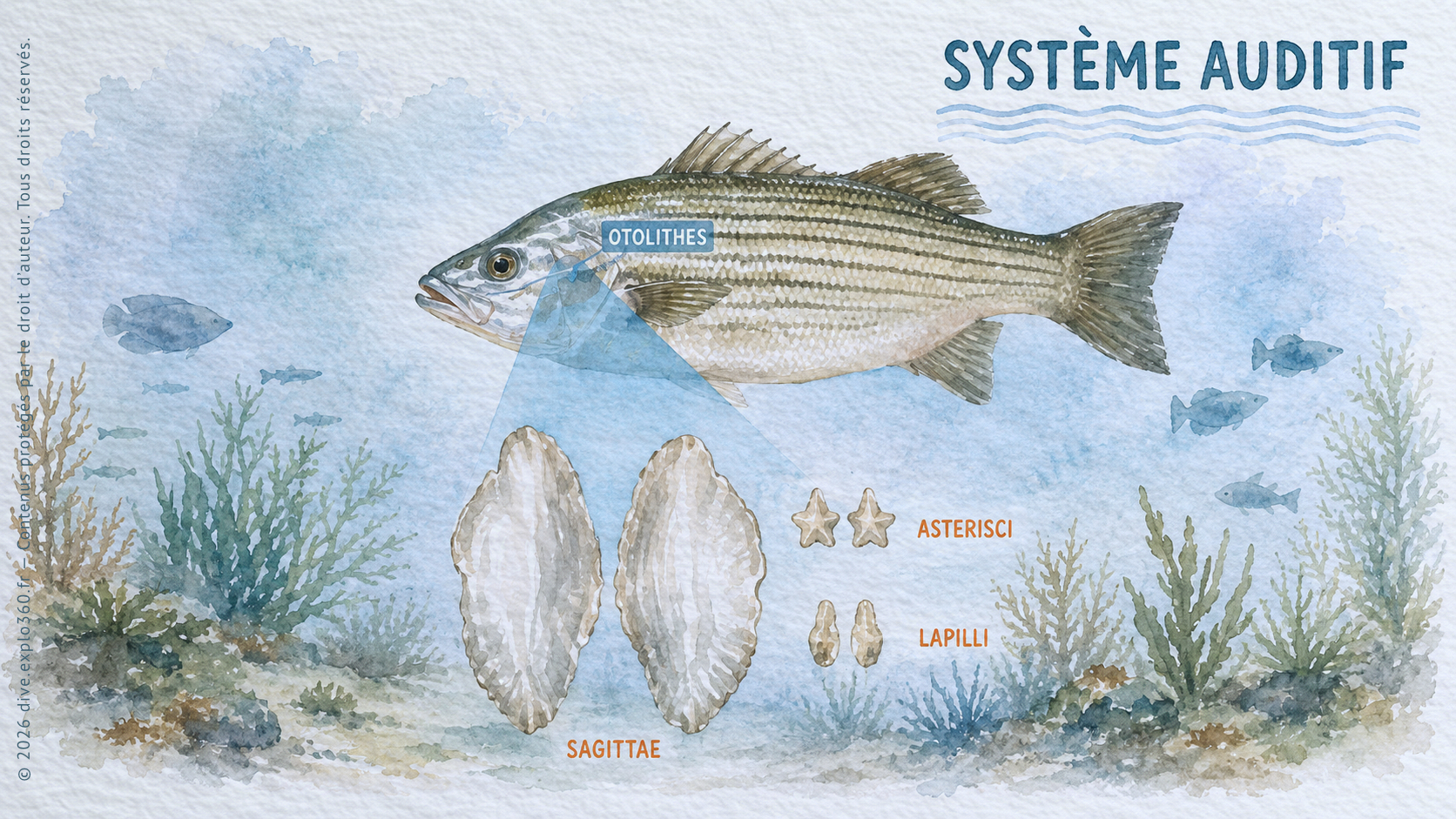
It contains calcium carbonate structures called otoliths. When a sound vibration passes through the fish’s body, the movement of the otoliths relative to the sensory tissues allows sounds and vibrations to be detected.
Fish can therefore perceive information from their surroundings: the movements of other animals, the activities of members of their own species or noises produced in their habitat.
In some species, the swim bladder can also contribute to hearing by transmitting or amplifying certain vibrations towards the inner ear.
The marine soundscape includes natural sounds produced by waves or animals, as well as human-made sounds. Hearing can contribute to predator and prey detection, orientation, social interactions and reproduction.
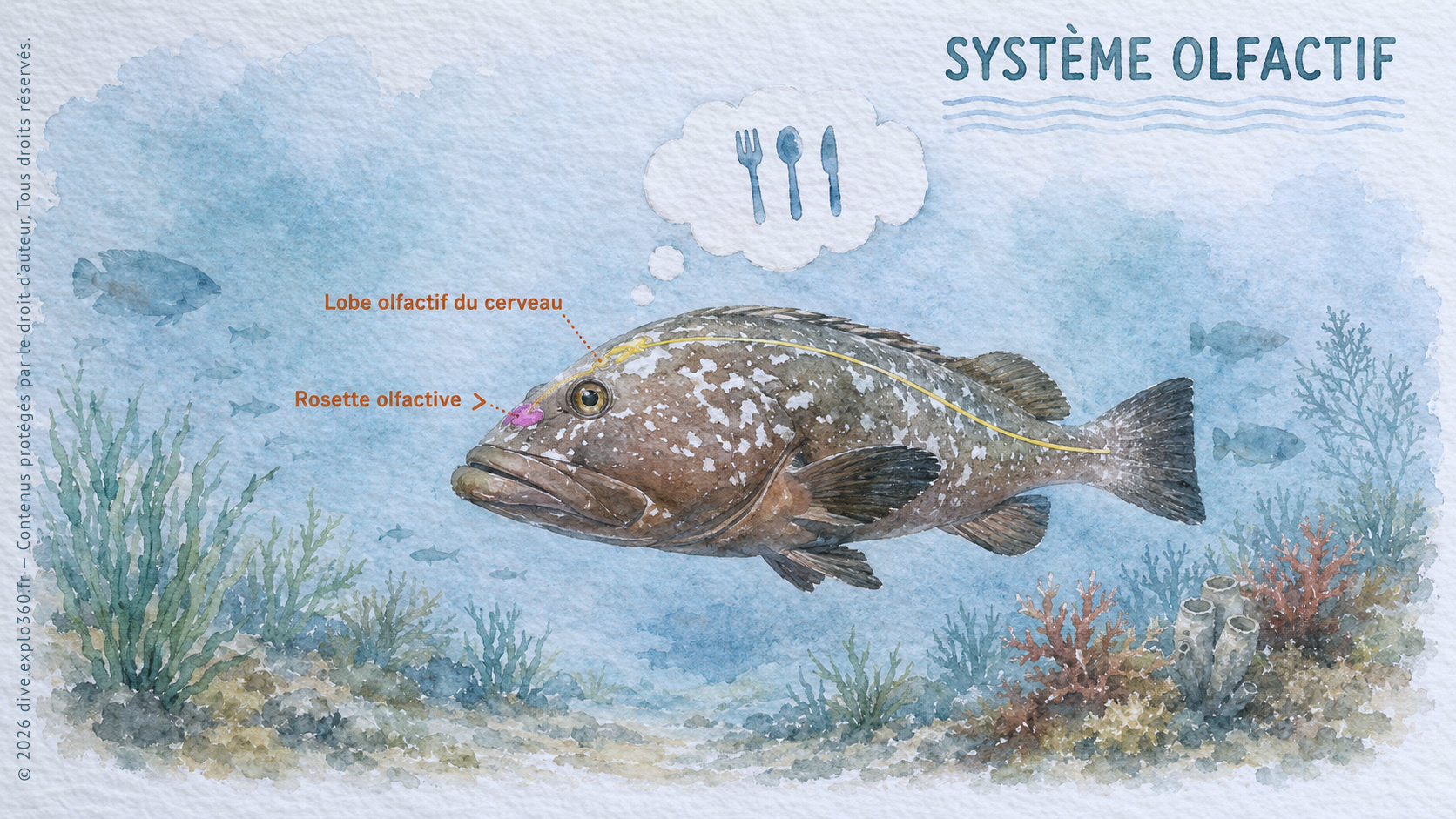
Water enters the nasal openings on the snout and flows over an olfactory epithelium containing specialised receptor cells.
When a molecule is detected, information is sent to the brain through the olfactory pathways.
Smell can help locate a food source, a predator or another member of the same species. Chemical substances also play a role in communication and reproduction.
Unlike our breathing, the passage of water through fish nostrils generally does not supply oxygen to the gills: it mainly serves the sense of smell.
This chemical perception remains particularly useful when the water is dark or murky.
AMIGANSEAU CONTENT
The rest of this article is for subscribers
Log in with your AMIGANSEAU licence to continue reading.
All active AMIGANSEAU licences give access to the full article.Explore the same world