


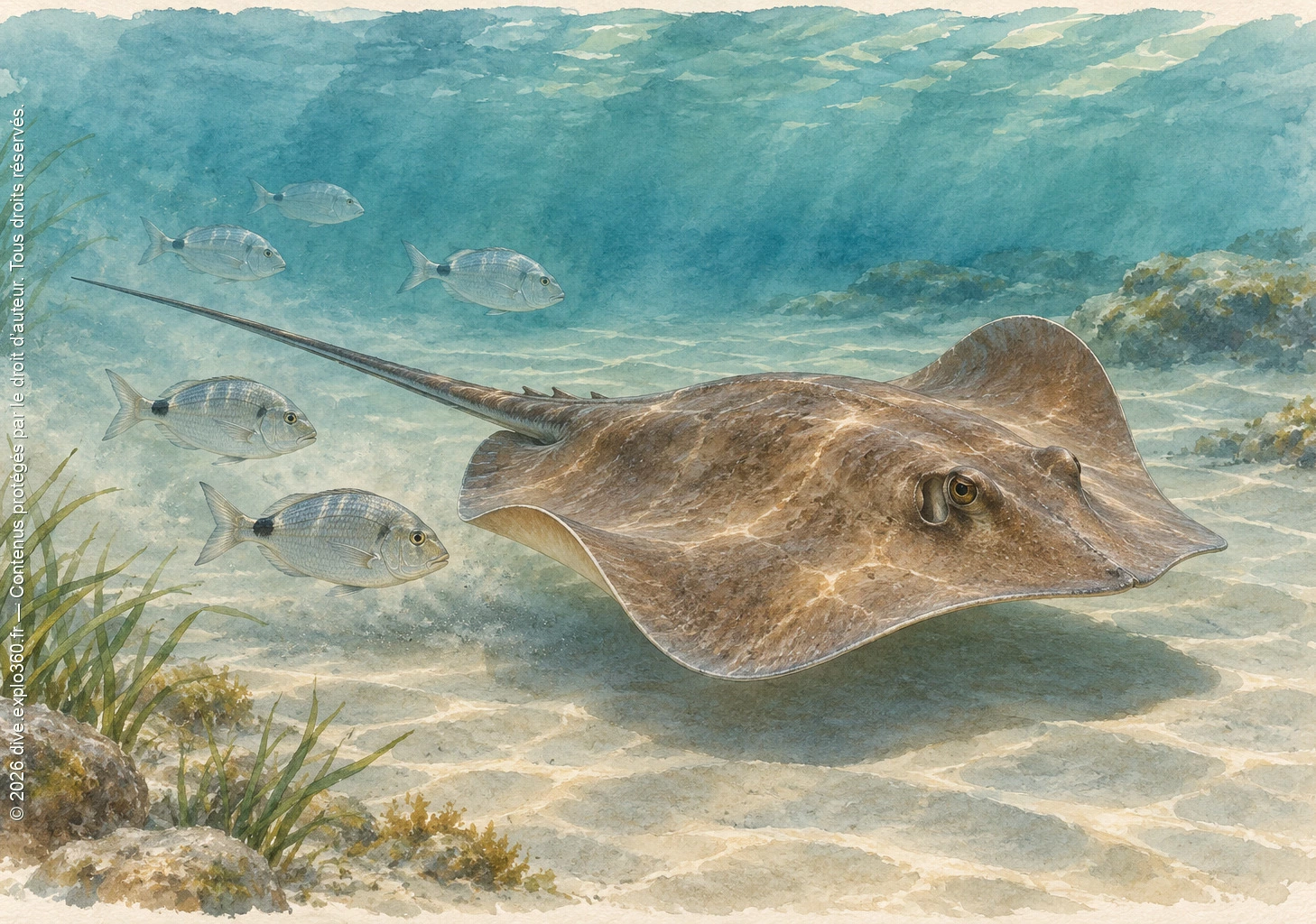
What the ray turns up
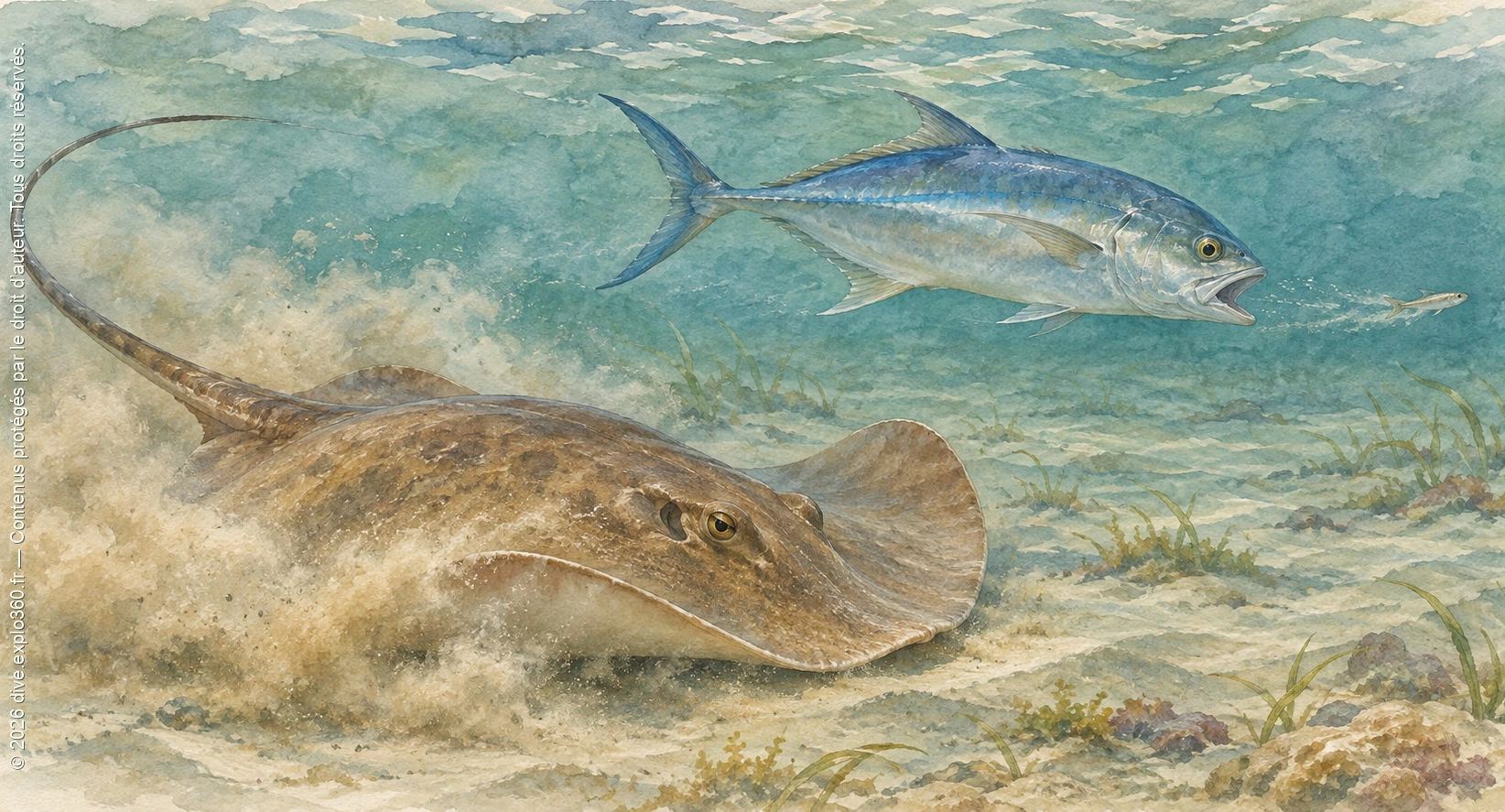
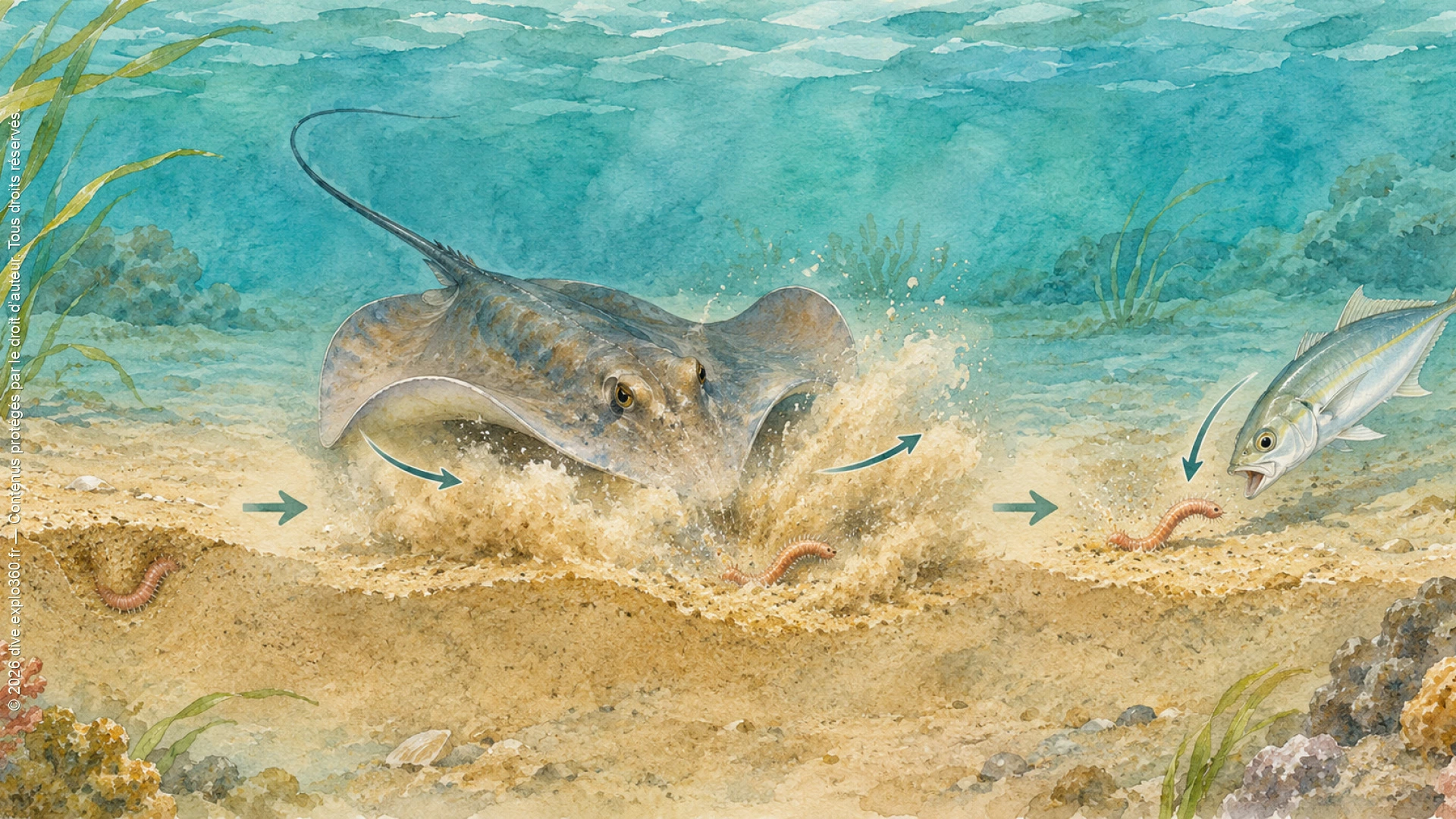
A sandy seabed can look almost empty from above. Look closer and there are worms in burrows, small molluscs in the sediment, and crustaceans and fish tucked into the sand. A predator hunting in open water has little access to them. Some bottom-dwelling rays can sense buried prey and reach it with movements of the fins, body and mouth. As they dig, nearby animals may scramble into the open. For a fish hovering close by, a fleeing animal is suddenly within reach.
Ecologists call this a nuclear–follower association. The ray is the nuclear species: its digging gives the follower a chance to feed. The encounter may last seconds or continue as the ray moves across the bottom. The ray can carry on digging without visibly changing its behaviour. That is consistent with feeding commensalism, where one animal benefits and the other is unaffected, but a follower’s catch alone tells us little about the effect on the ray.
Watch the edge of the plume. A blue runner’s sudden change of direction can draw your eye to a patch of sand where prey may have broken cover.
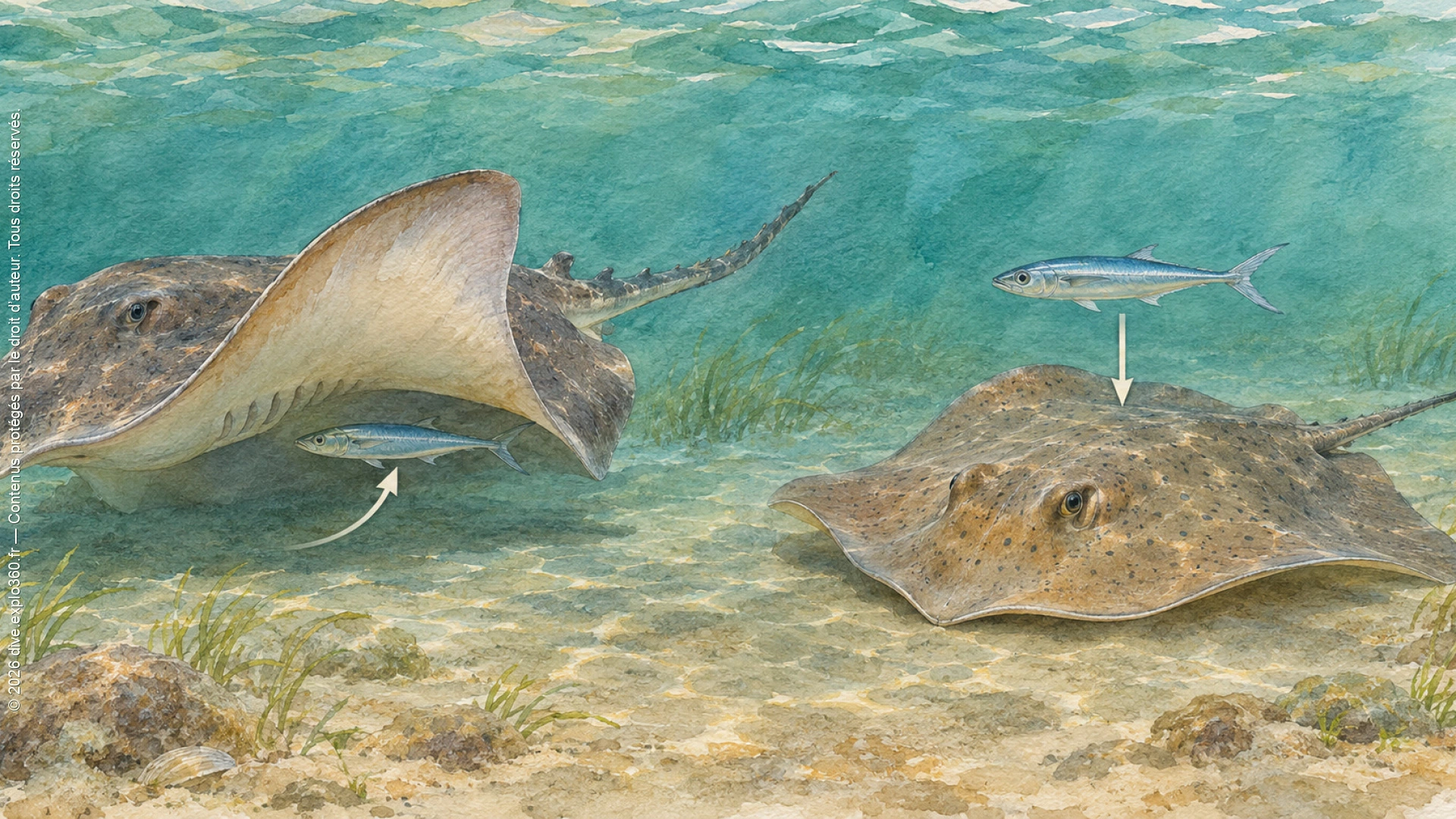
The blue runner (Caranx crysos) has been filmed following two rays in Maltese waters, the common stingray (Dasyatis pastinaca) and the bull ray (Aetomylaeus bovinus). The fish could tuck beneath a bull ray’s pectoral fin or hold close above a common stingray’s back. Others swam higher, darting from side to side.
When a ray disturbed the seabed, a blue runner could rush in after small prey. The animals were often too small to identify from the footage. The footage gives no basis for assuming the prey were always shrimps, gobies or any other particular group. A rival blue runner was easier to spot. Followers sometimes chased members of their own species away and generally tolerated fish of other species. For a blue runner, a place close to the ray could be worth defending. Some positions were recorded with only one ray species. The rays’ shapes or movements may help explain the difference.
Close quarters off Malta
A goatfish works the bottom
A goatfish sweeps the seabed with a pair of sensory barbels hanging from its chin. As it probes and digs, it can uncover animals that other fish are quick to investigate. At Fernando de Noronha, off Brazil, observers recorded a variety of fish following spotted goatfish at work.
A goatfish can work a patch of sand between corals or probe among rubble. The fish keeping close needn’t eat the same things. An animal flushed out while the goatfish searches for buried invertebrates may be just what a hunter that relies on sight can catch.
The grouper’s invitation
On Red Sea reefs, a roving coral grouper (Plectropomus pessuliferus) can approach a giant moray (Gymnothorax javanicus) and give a rapid shake of its head. The moray may leave its shelter and join the search. A grouper can also signal at a crevice where prey has hidden. In a feeding experiment, groupers gave no recruitment signals during the observation period after eating.
A fish escaping a grouper can duck into the reef. A moray can follow it into the gaps, where its long body is an advantage. If the prey bolts into open water, it is back within reach of the grouper. Field observations suggest that both hunters benefit from covering different escape routes. A successful hunter generally swallows its prey whole. Each can make its own catch while the two search together.
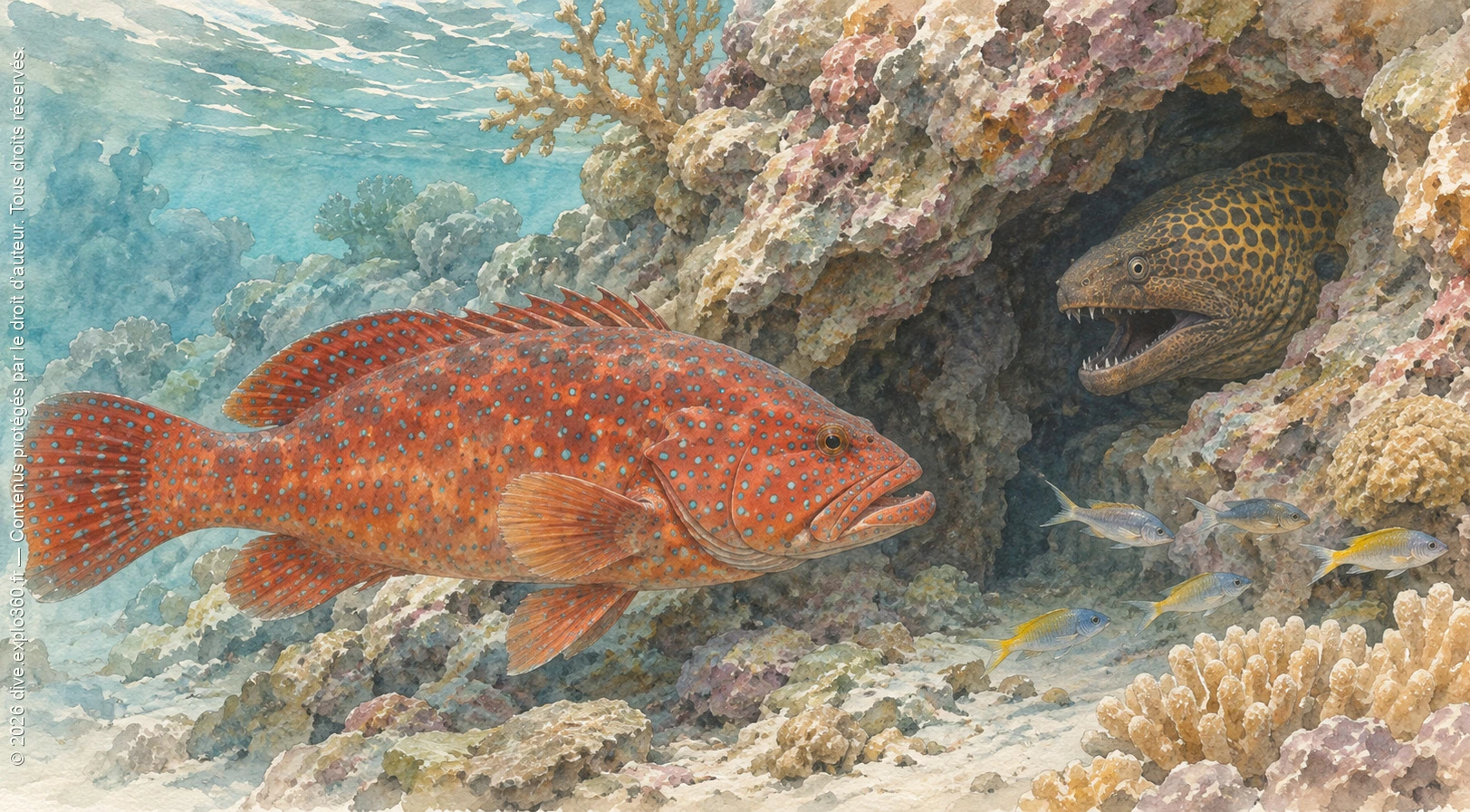
Imagine the reef from above. Follow the path of a fish leaving a crack and see where the grouper might intercept it.