


A meal shaken loose
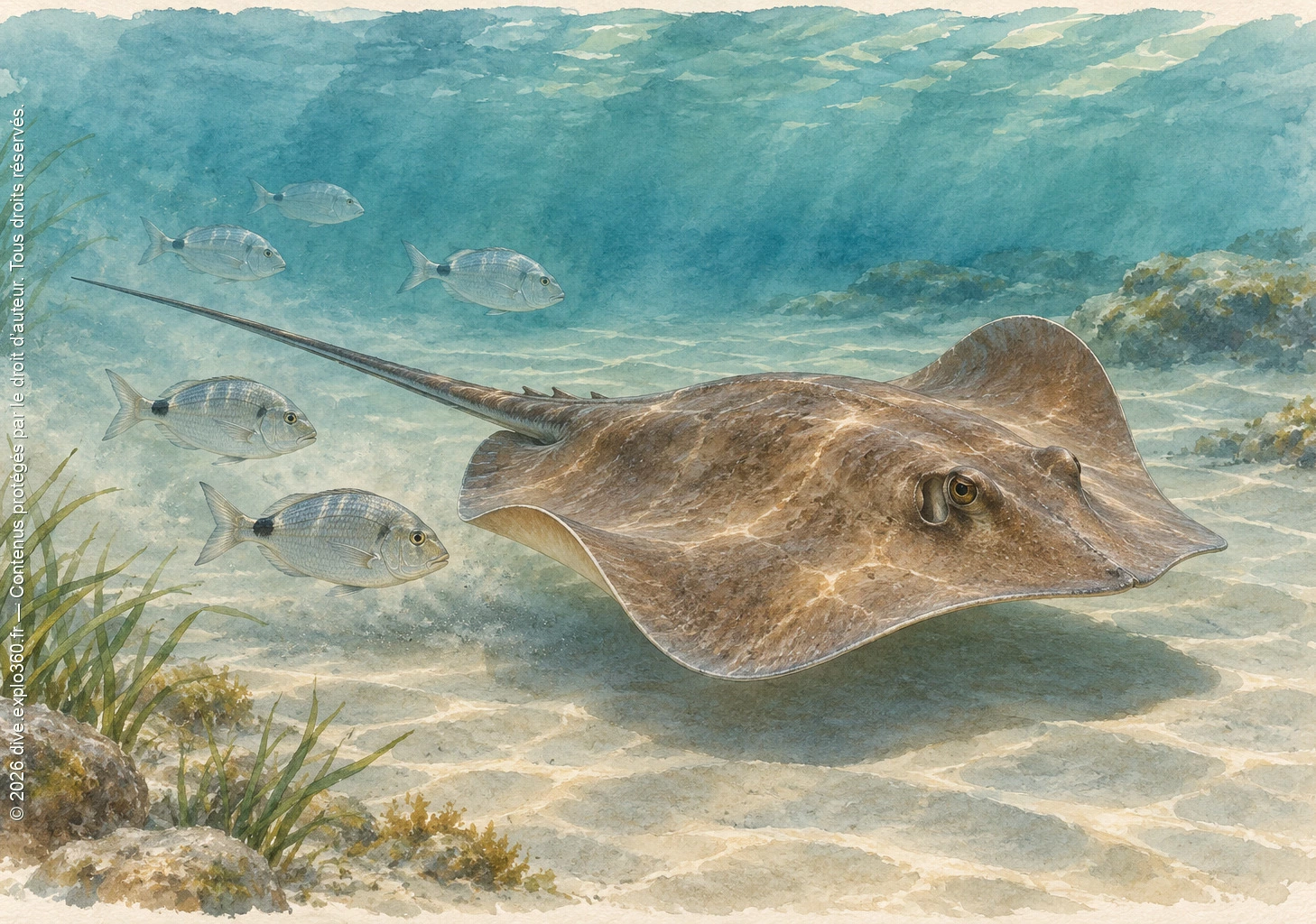
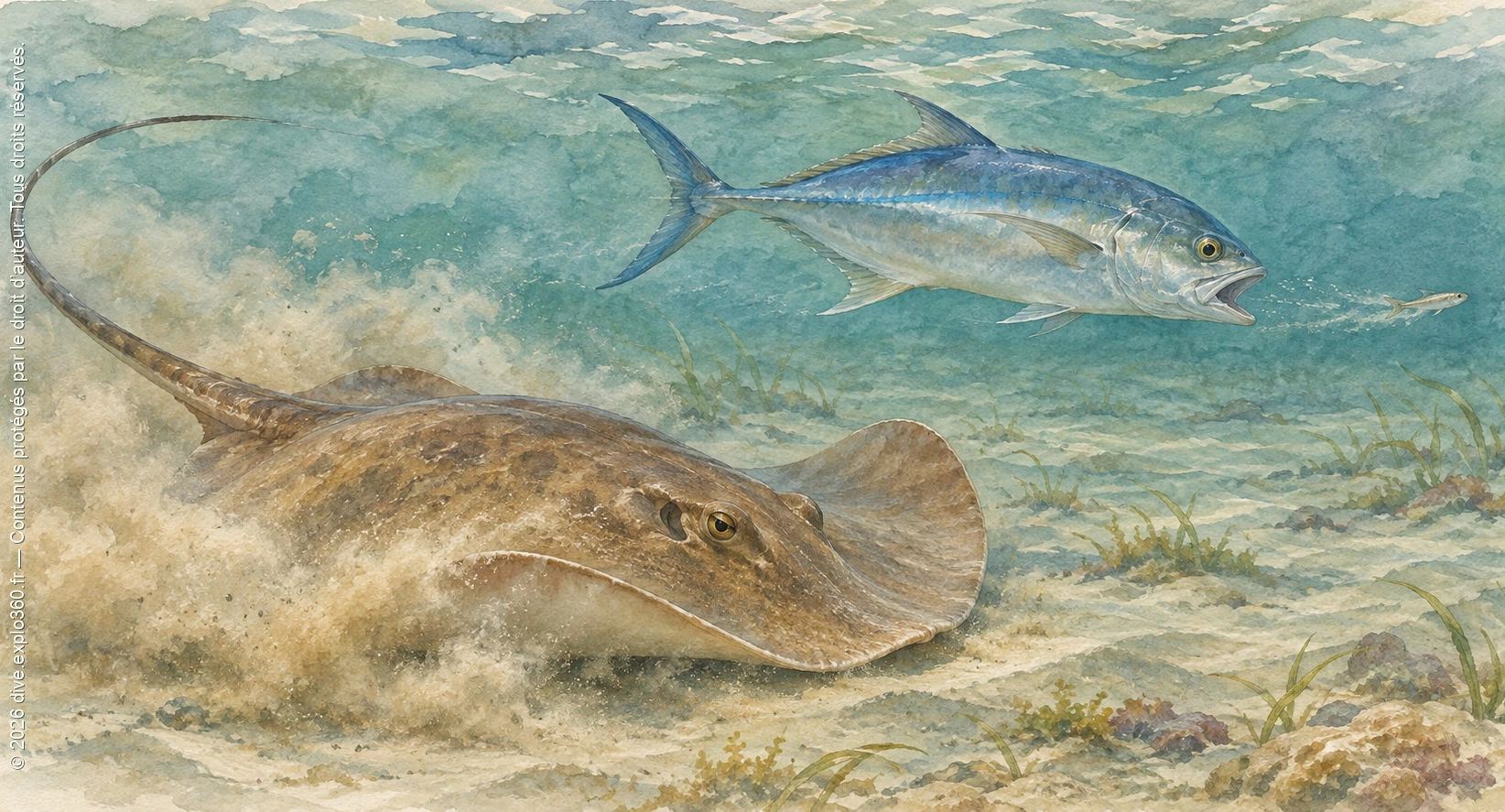
A sandy seabed can look bare until a ray starts digging. Worms and small crustaceans live in the sediment, and a ray hunting for its own meal can flush some of them out. For a fish waiting nearby, the moment they bolt is a chance to feed.
Watch where the sand spreads. A follower’s sudden turn may tell you where to look for escaping prey.
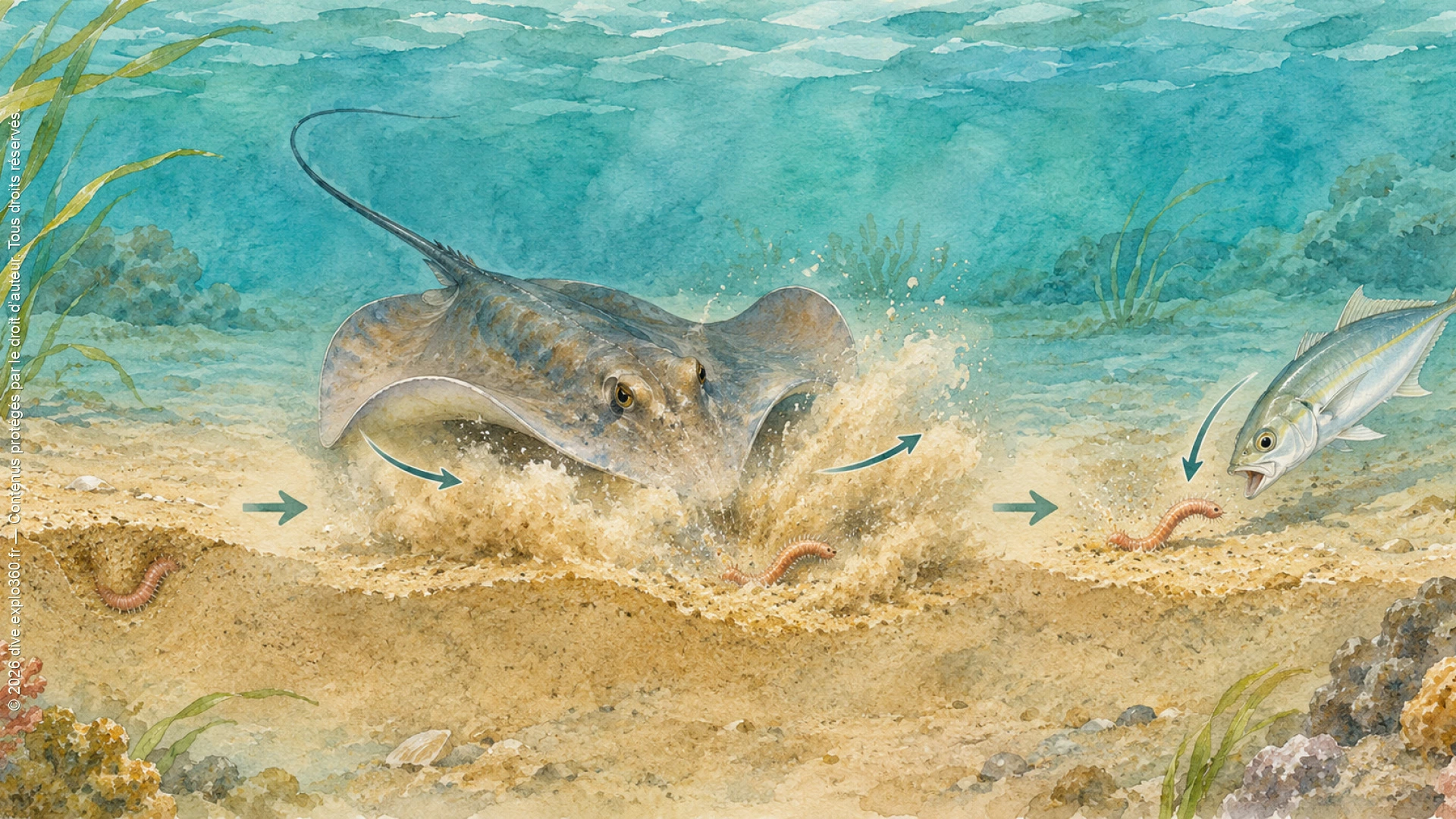
Footage from Malta shows blue runners tucking under a bull ray’s fin or swimming close above a common stingray’s back. You can see a blue runner dart at its prey, though the animal it goes after is often too small to make out.
Where the blue runner swims
A goatfish feels its way
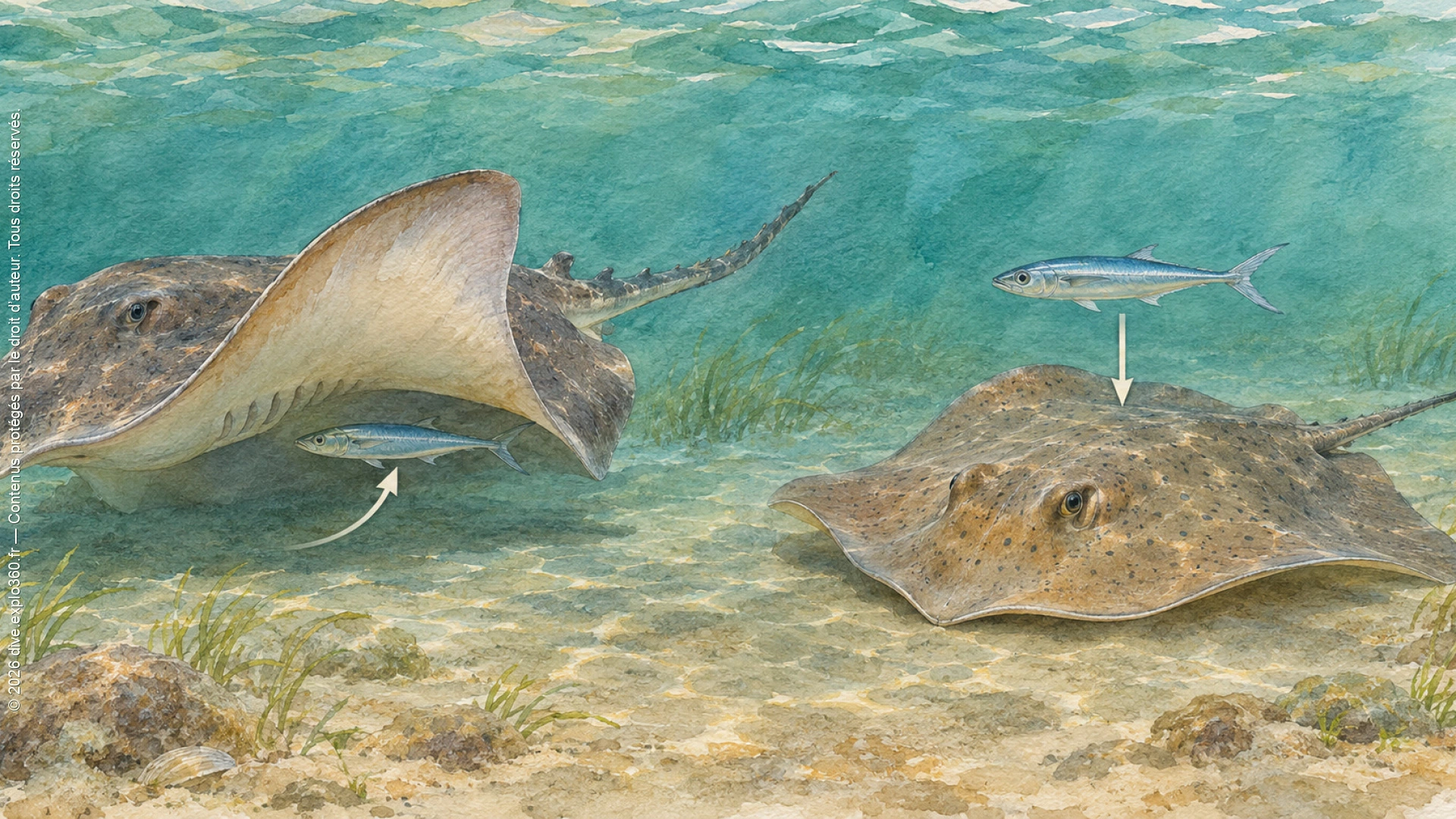
Look beneath a goatfish’s chin and you’ll see two sensitive feelers called barbels. You’ll find the same feelers on red mullets, which belong to the goatfish family. As a goatfish runs its barbels over the seabed and digs for food, it can shake small animals loose. Nearby fish can swoop in before the prey gets away.
A shake of the head
In the Red Sea, a grouper can recruit a giant moray by shaking its head near the eel. The moray can slip into the reef’s cracks, and the grouper can intercept fish that bolt into open water. Whichever hunter makes the catch swallows it whole.
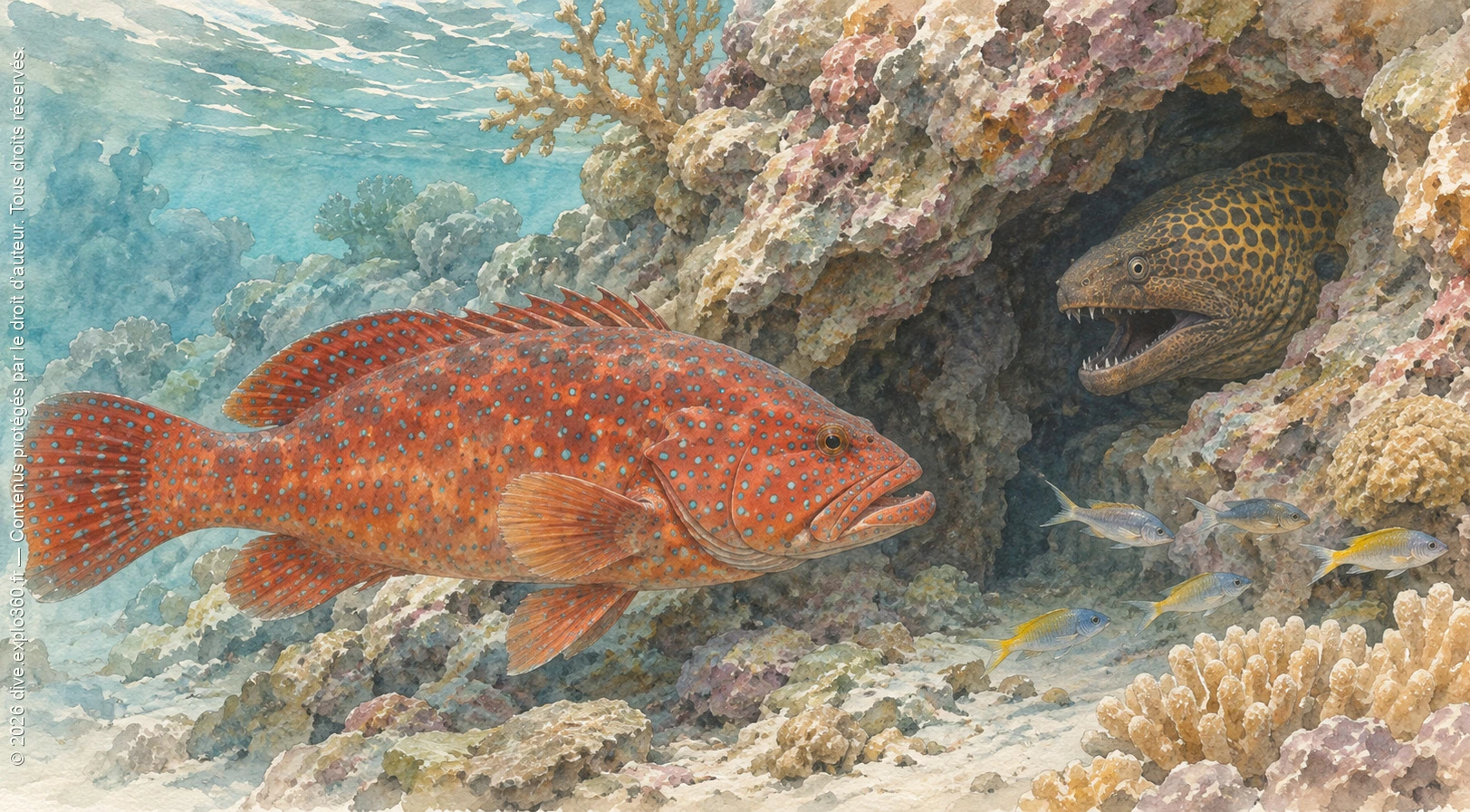
Trace the escape routes from a crack in the reef. Which hunter could reach a fish on each route?