


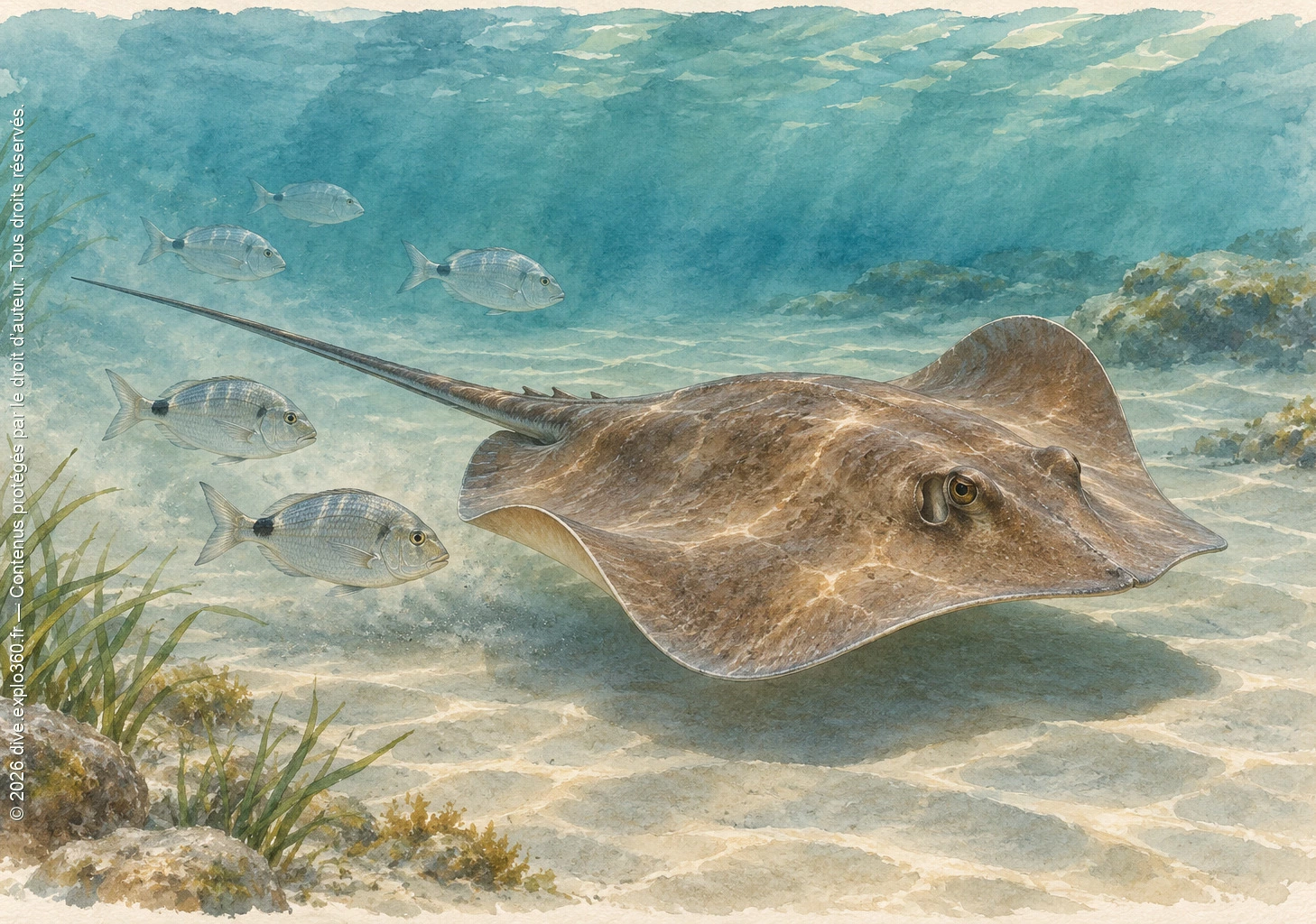
When digging exposes a meal
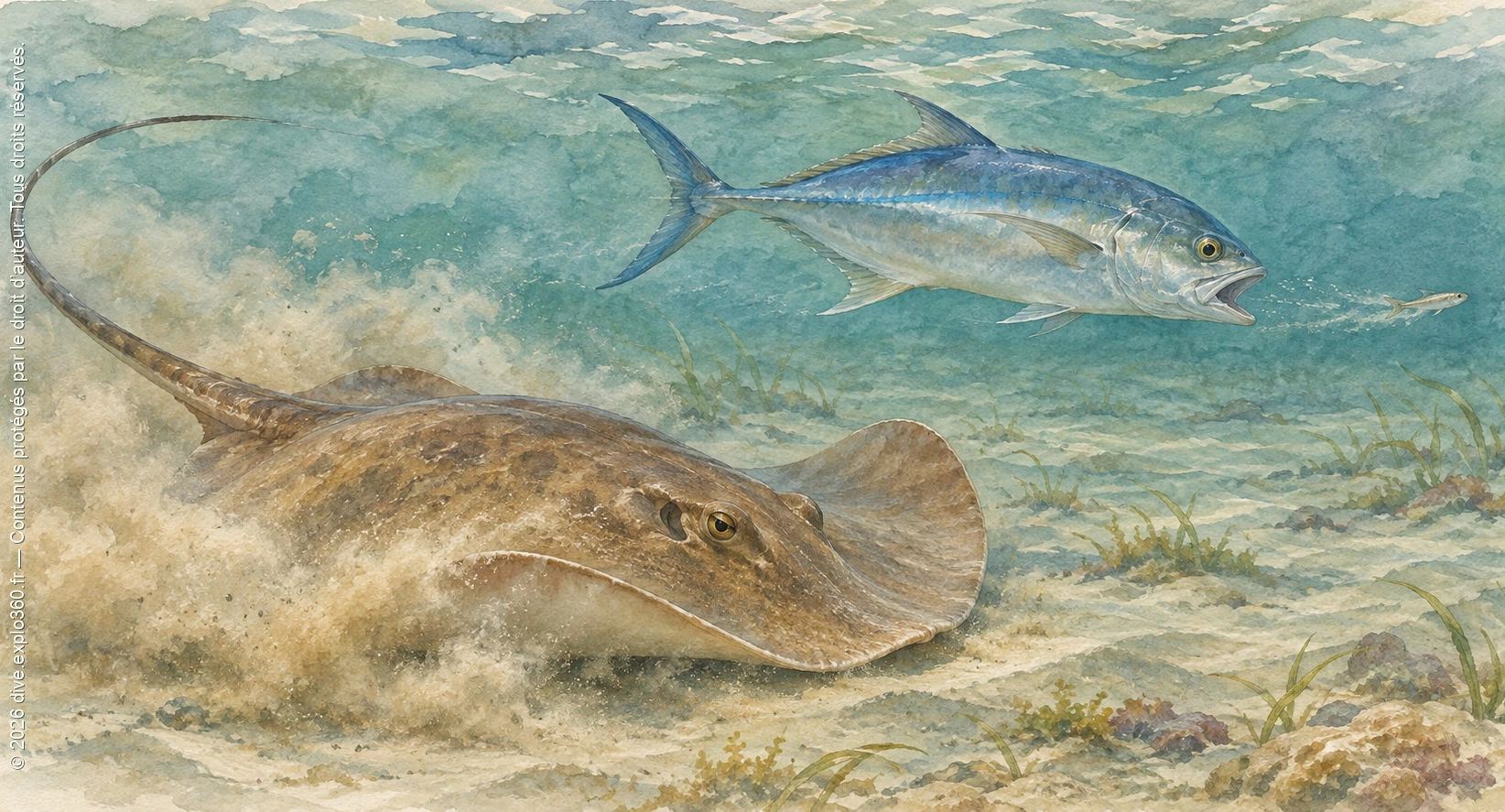
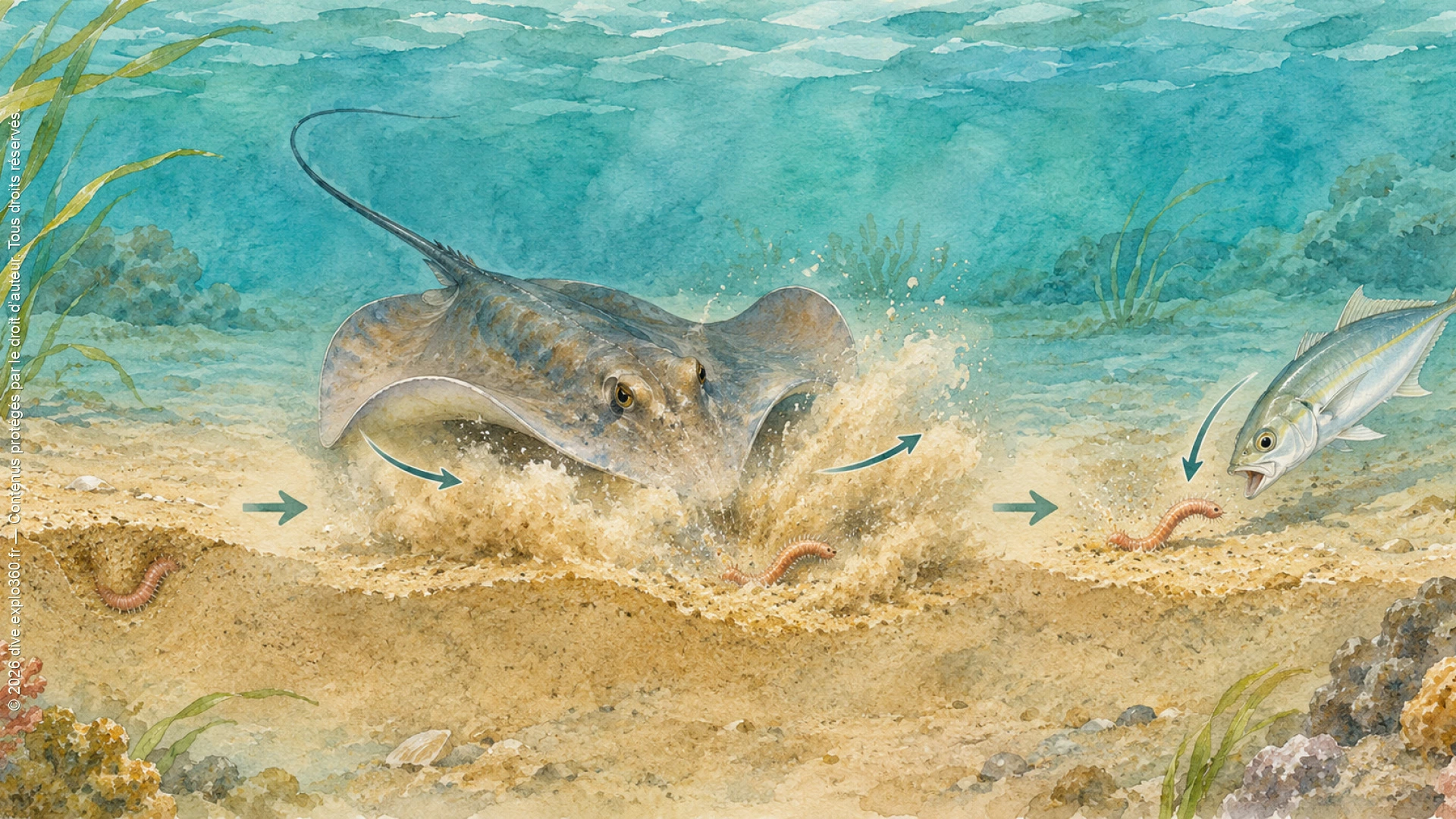
A ray rooting through the sediment can expose prey to a fish that would struggle to reach it. Ecologists call this a nuclear–follower association: the ray is the nuclear species because its digging creates a feeding opportunity for the follower. To call the relationship commensalism, researchers would need to show that the follower benefits and the ray is unaffected.
Track a follower’s dash against the moment the ray disturbs the bottom. Does the timing fit an attempt to intercept prey?
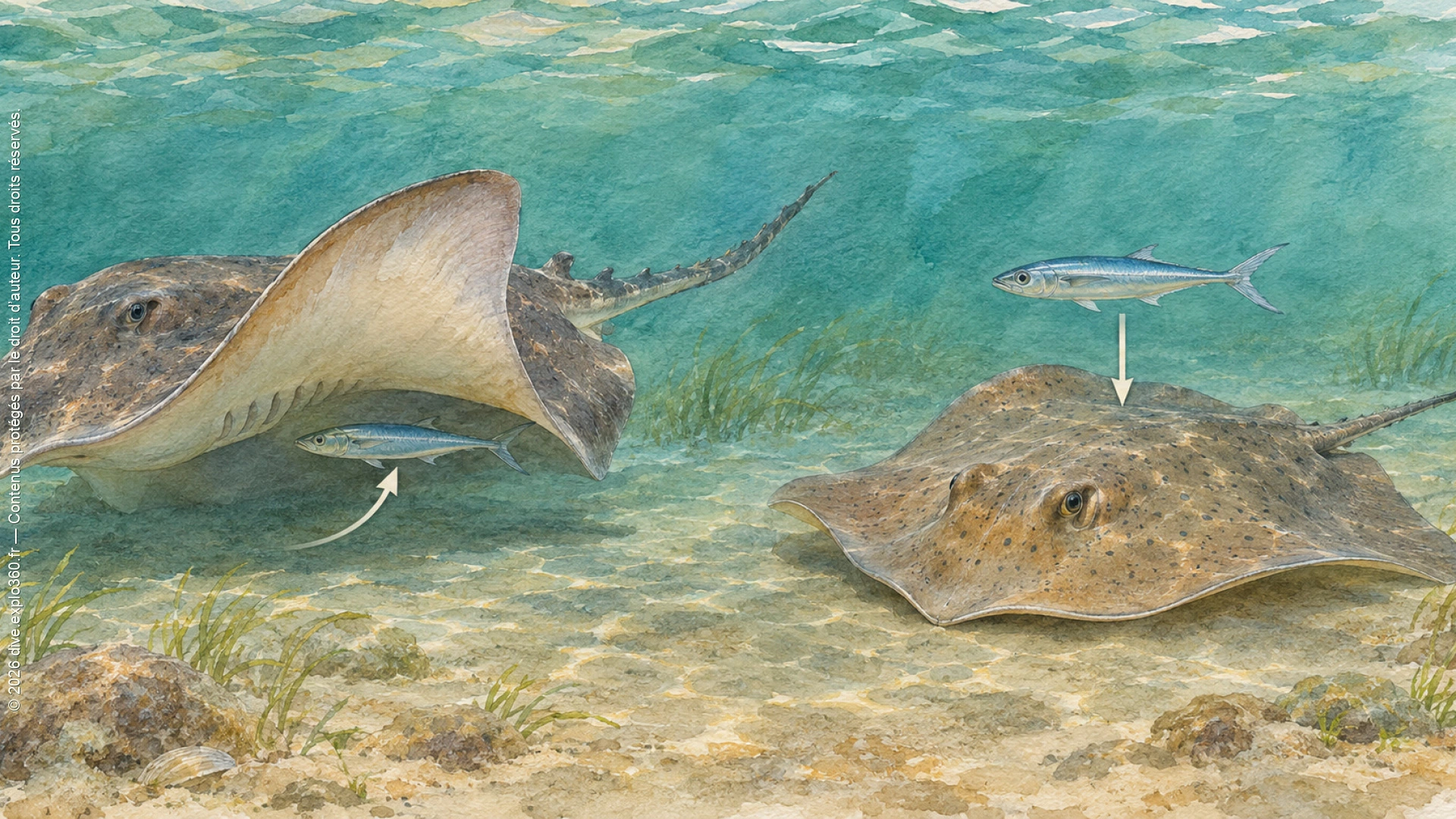
Videos from Malta show blue runners (Caranx crysos) following common stingrays (Dasyatis pastinaca) and bull rays (Aetomylaeus bovinus). A follower might tuck under a fin, hold close above the back, or dart from side to side. Some drove away approaching blue runners, a sign that access to a feeding ray can be contested. Some positions were recorded with only one of the two ray species.
A place at the ray’s side
A goatfish turns up dinner
A goatfish probes the seabed with two sensory barbels. Field observations of spotted goatfish show that their digging attracts other fish, which can feed on material stirred up from the bottom. The same patch can offer different feeding opportunities to animals that search in different ways. A fish that hunts by sight can pick off an animal once it breaks cover.
The signal that starts a hunt
On Red Sea reefs, a grouper (Plectropomus pessuliferus) can recruit a giant moray (Gymnothorax javanicus) with a rapid shake of its head. The two hunters cover different escape routes: the moray can search crevices while the grouper can intercept fish that flee into open water. In one experiment, groupers gave no recruitment signals during the observation period after feeding.
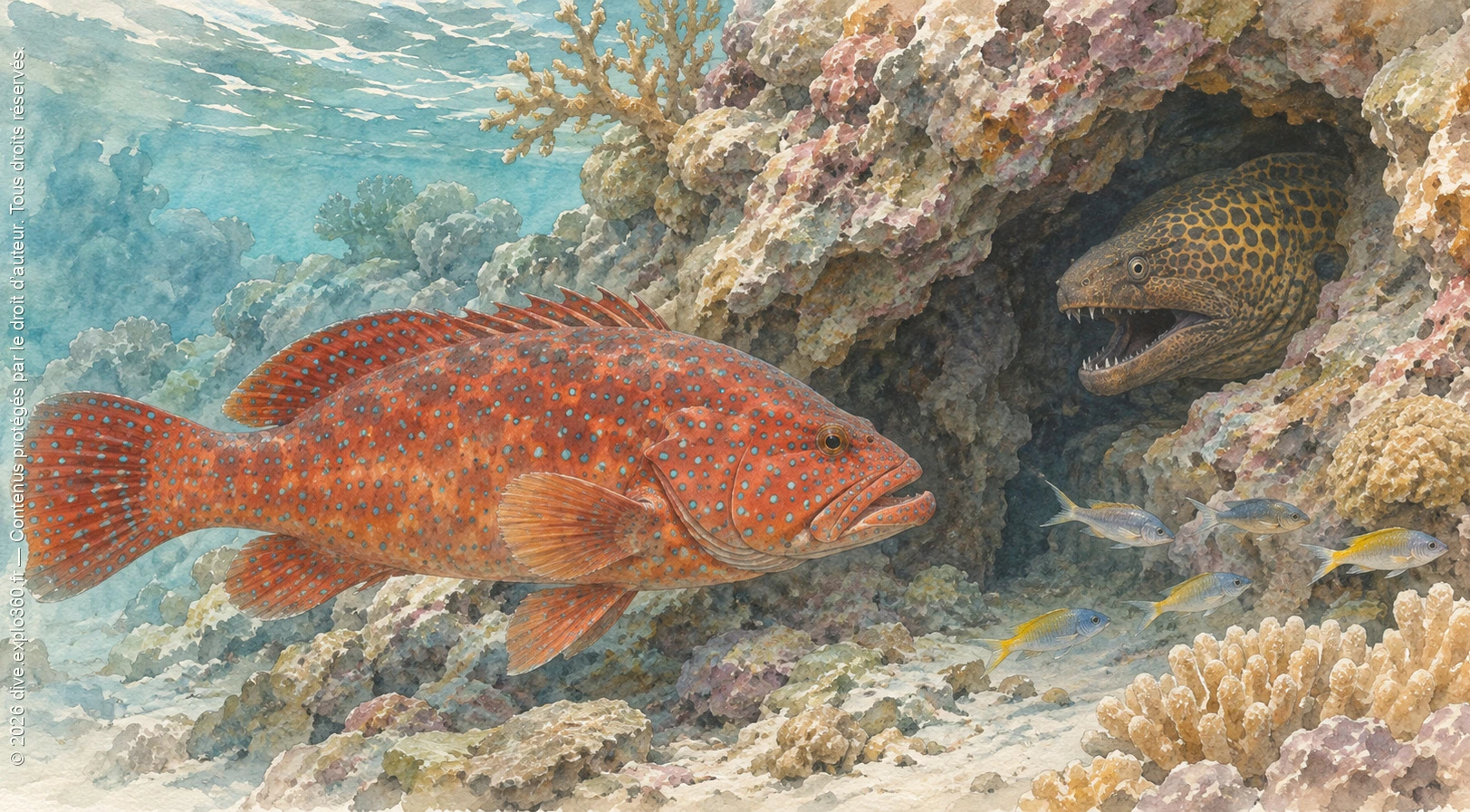
Sketch the positions of both hunters around a crevice. Where could either predator intercept an escaping fish?