Swimming above and below

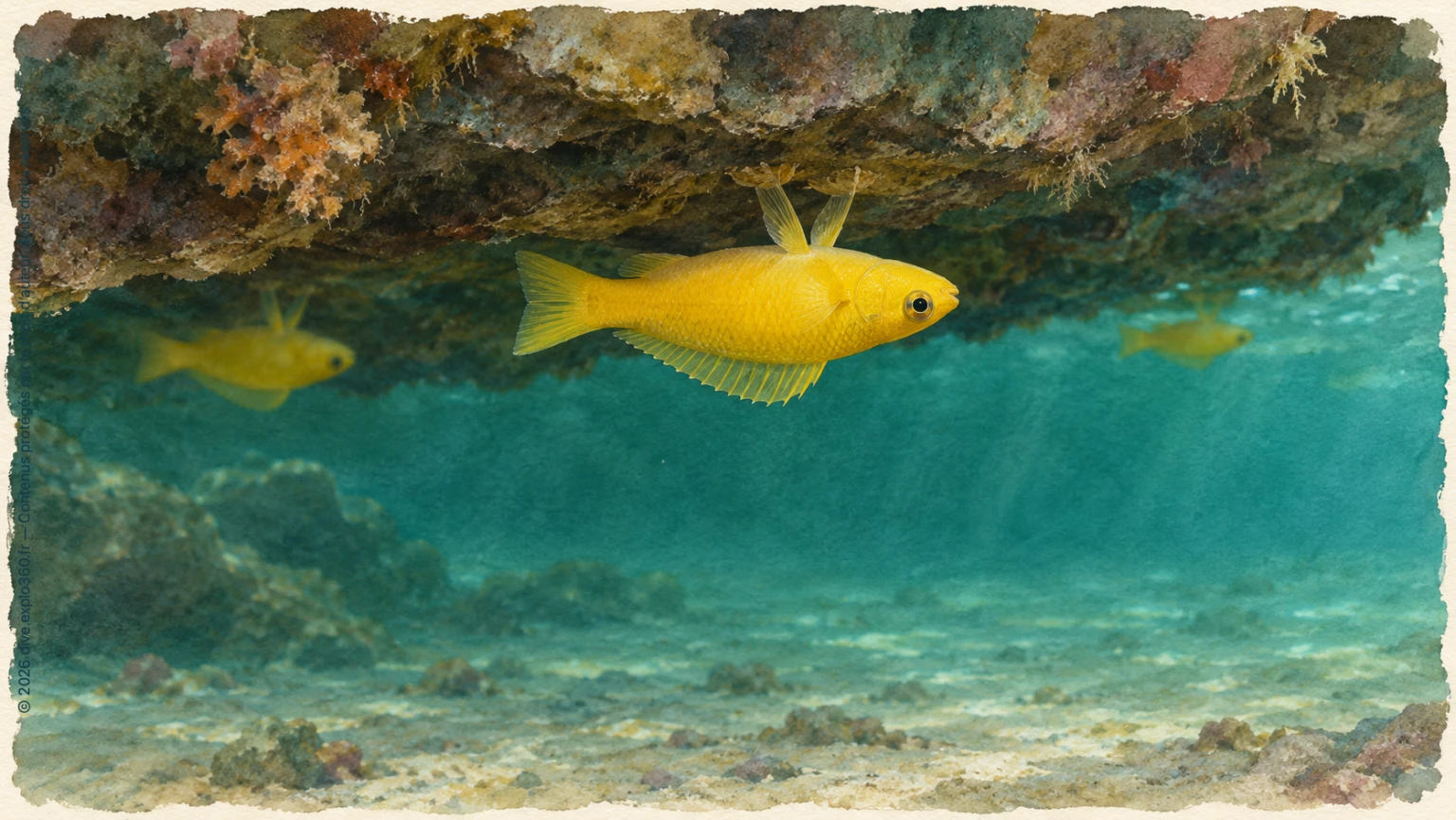
A fish can use the underside of a rock as well as the ground below it. Its fins help it hold position or roll as it passes from a wall to the underside of a ledge.
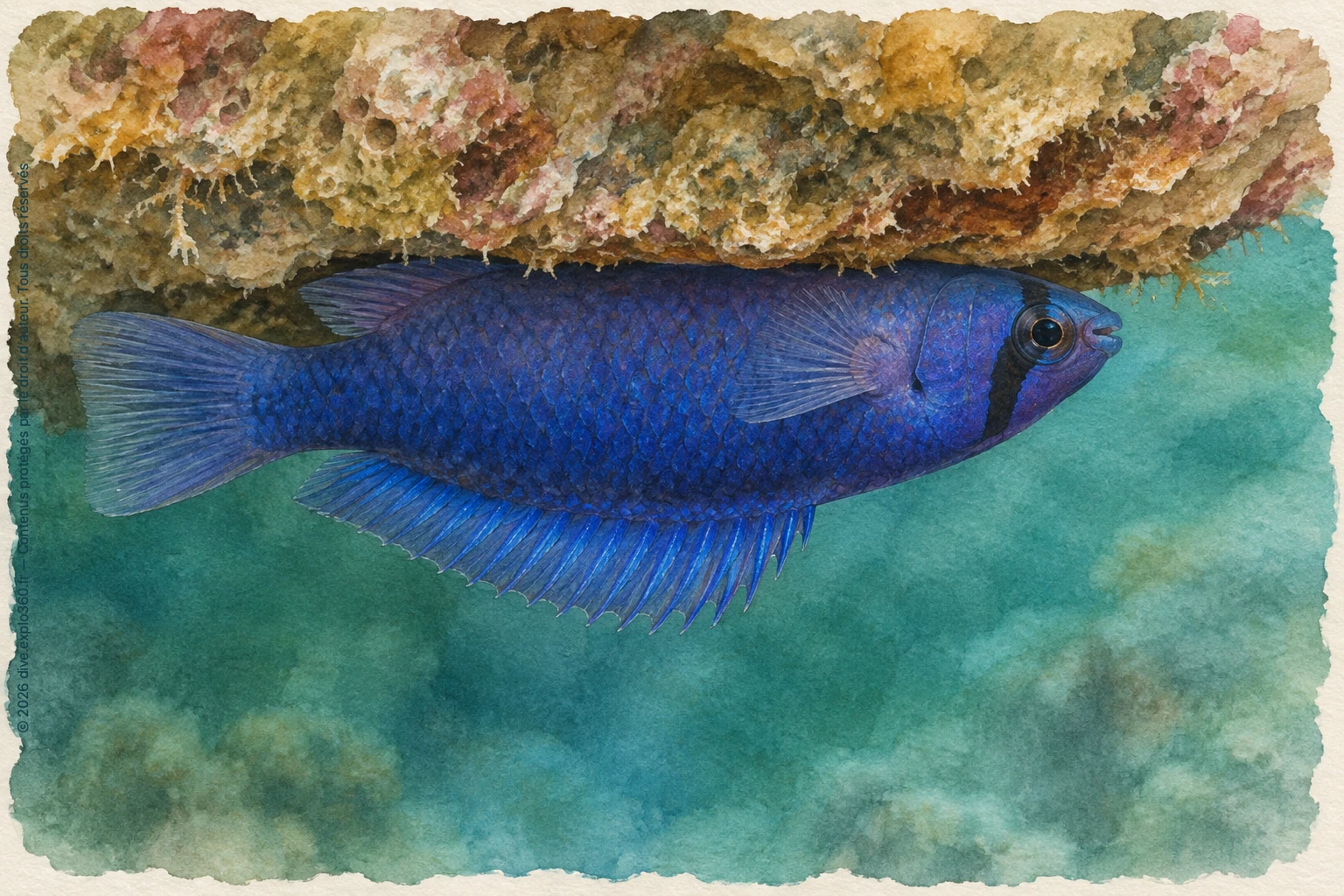
Artist’s view of a blue assessor beneath an overhang. Its belly faces the ceiling, while the dorsal fin points into open water.
The assessor stays horizontal beneath the ledge. © dive.explo360.fr — All rights reserved. Reproduction requires permission.

Shelter under an overhang

On Australian reefs, the blue assessor often swims beneath rocky ceilings. Its body stays roughly horizontal, with its belly towards the rock and its head pointing forwards.

A different community beneath the rock

Sponges and sea squirts can grow on the sheltered underside of a ledge. Cracks and cavities give small fish places to hide, while passing water can bring tiny prey within reach.

Changing shelter as fish grow

In Western Australia, young fish of two species were regularly seen belly-up beneath overhangs. Larger individuals also occupied caves and open reefs, and their posture could differ from that of the young fish.
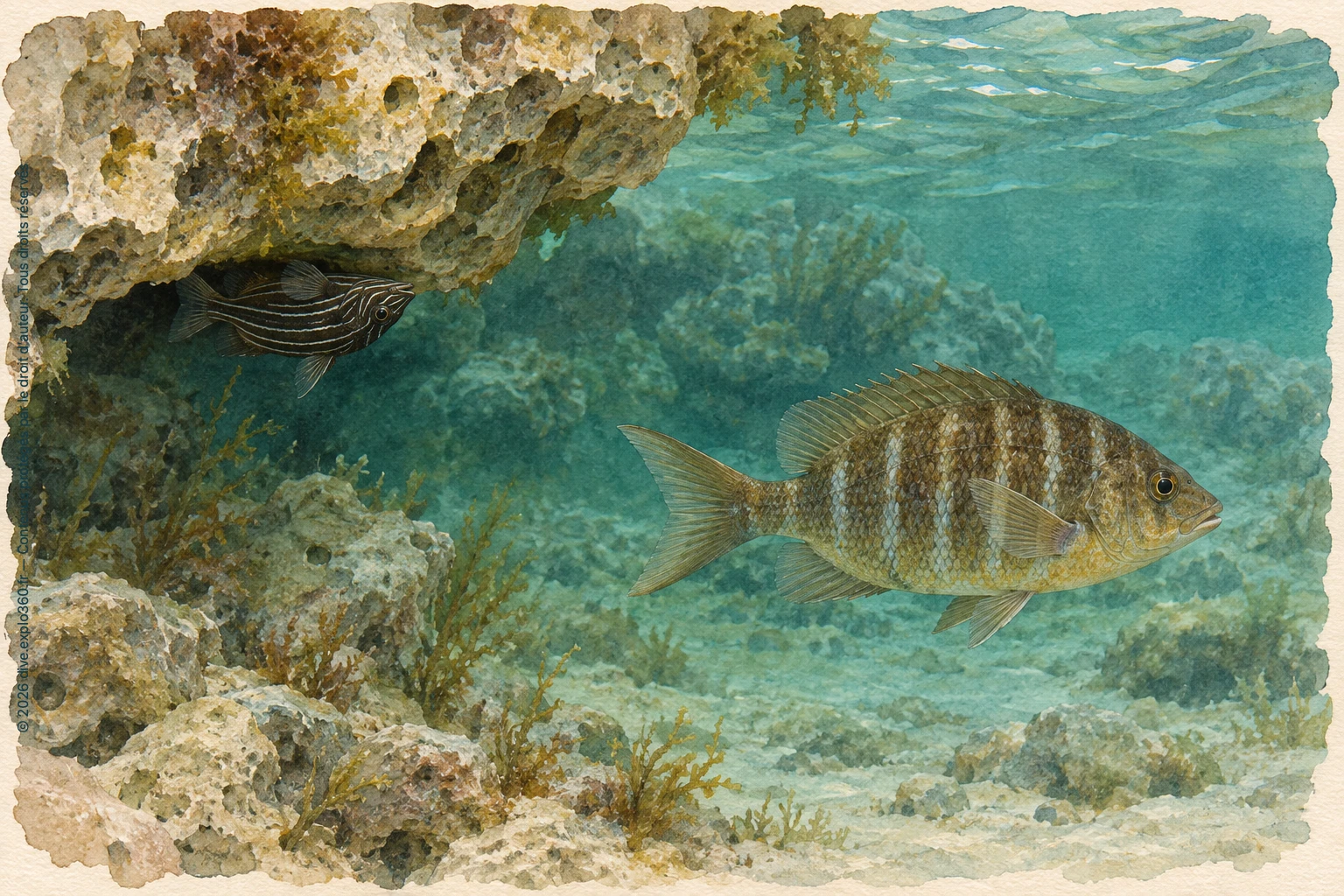
Schematic comparison of positions observed in small juvenile Australian wrasses and larger individuals.
The scene compares the positions of juvenile wrasses and larger fish. © dive.explo360.fr — All rights reserved. Reproduction requires permission.
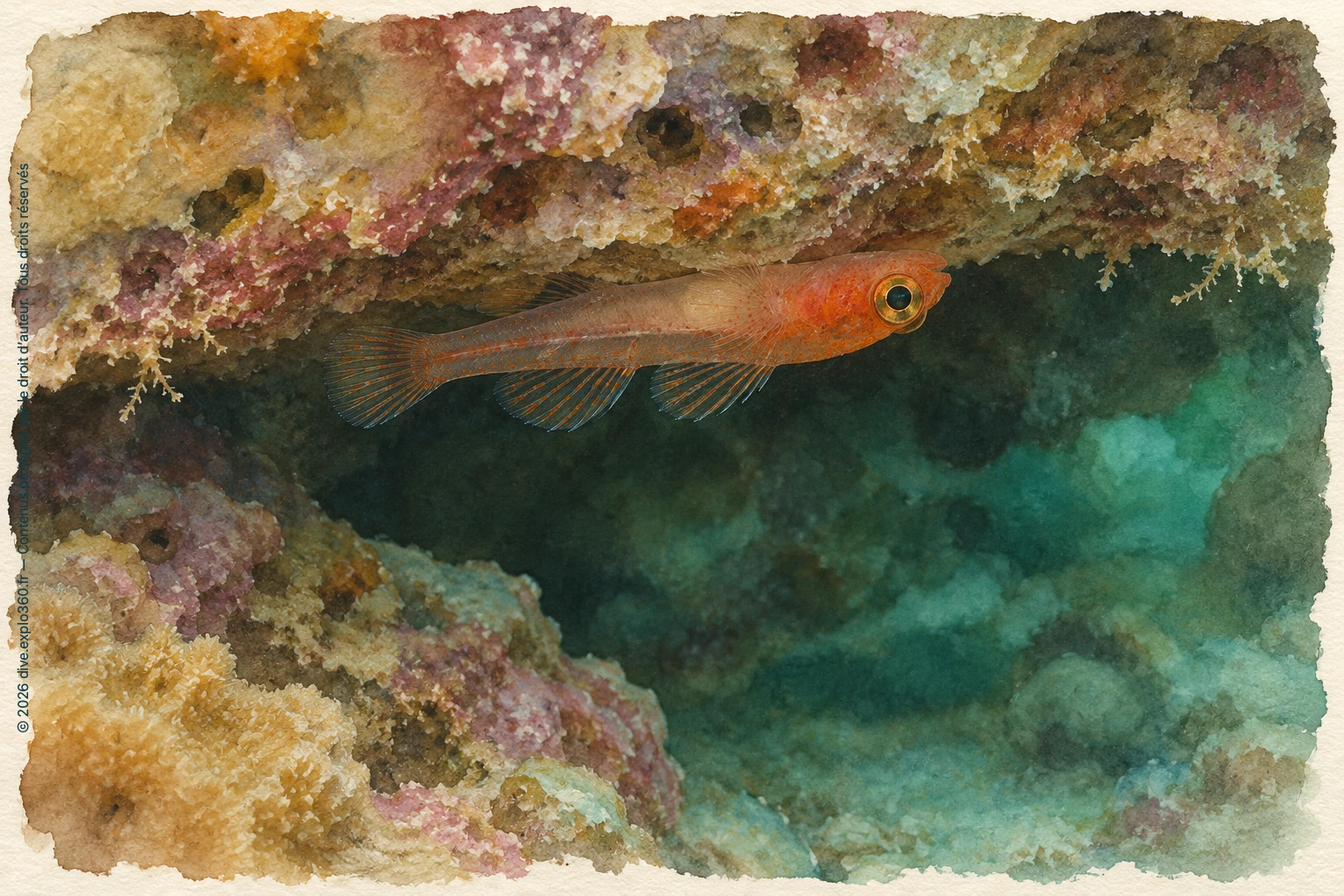
Artist’s view of a small reef goby beneath a rock ceiling. The scene illustrates orientation relative to the substrate.
A goby follows the underside of a rocky ceiling. © dive.explo360.fr — All rights reserved. Reproduction requires permission.

From wall to ceiling

Some gobies keep their bellies close to a rock face. As the surface curves from wall to ceiling, the fish can roll to follow it.
Continue reading

AMIGANSEAU CONTENT

The rest of this article is for subscribers

Log in with your AMIGANSEAU licence to continue reading.

Subscribing to Dive.Explo360 means supporting a different way to discover marine life.

Our independent platform is entirely self-funded and relies solely on subscriptions. Every licence helps us continue our work, create new content, and share what we know about the marine world with as many people as possible.

Starting at €80 per year, your support makes all the difference.

All active AMIGANSEAU licences give access to the full article.

Explore the same world

Explore further