Swimming above and below
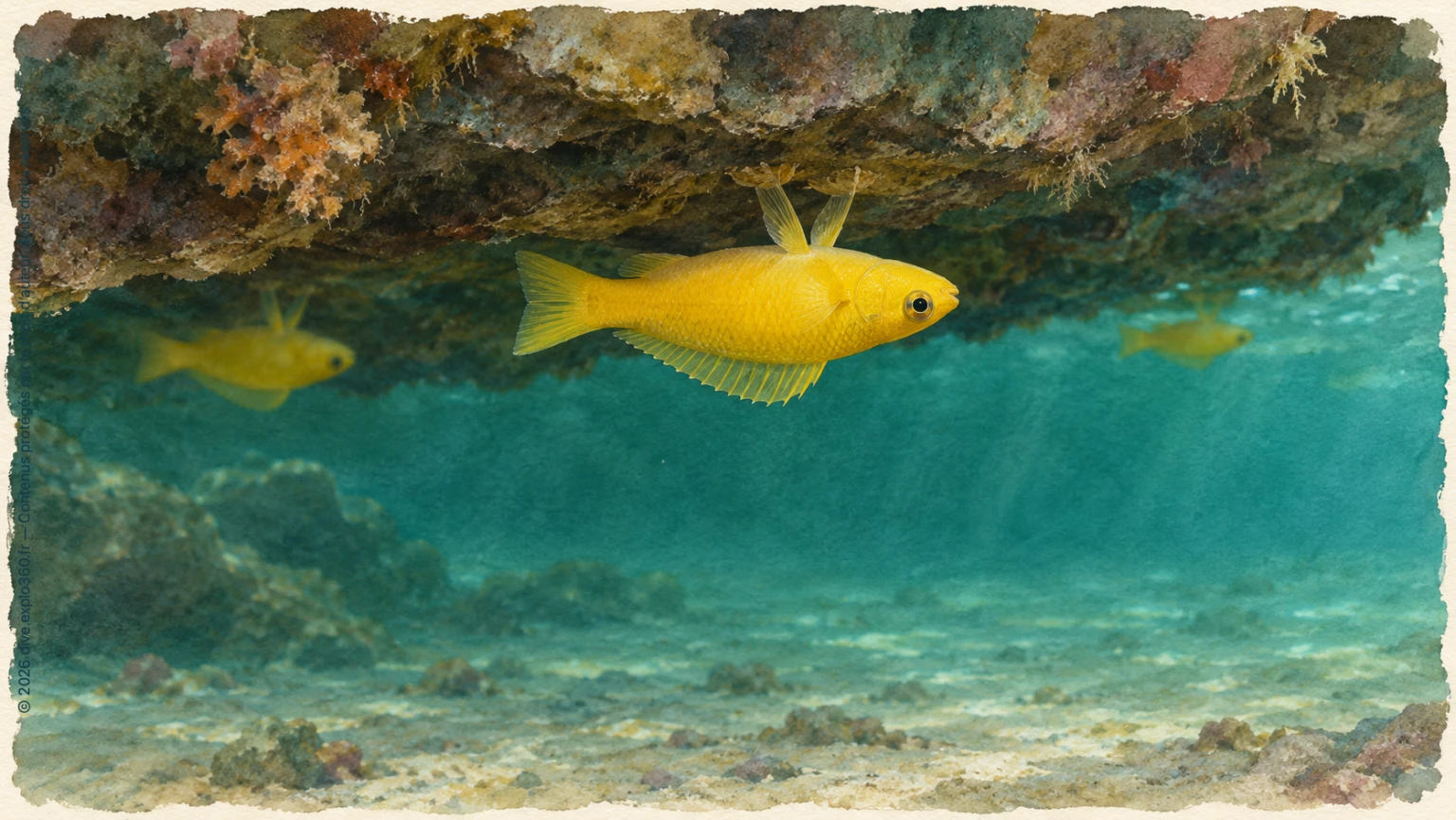
A fish can use the underside of a rock as well as the ground below it. Its fins help it hold position or roll as it passes from a wall to the underside of a ledge.
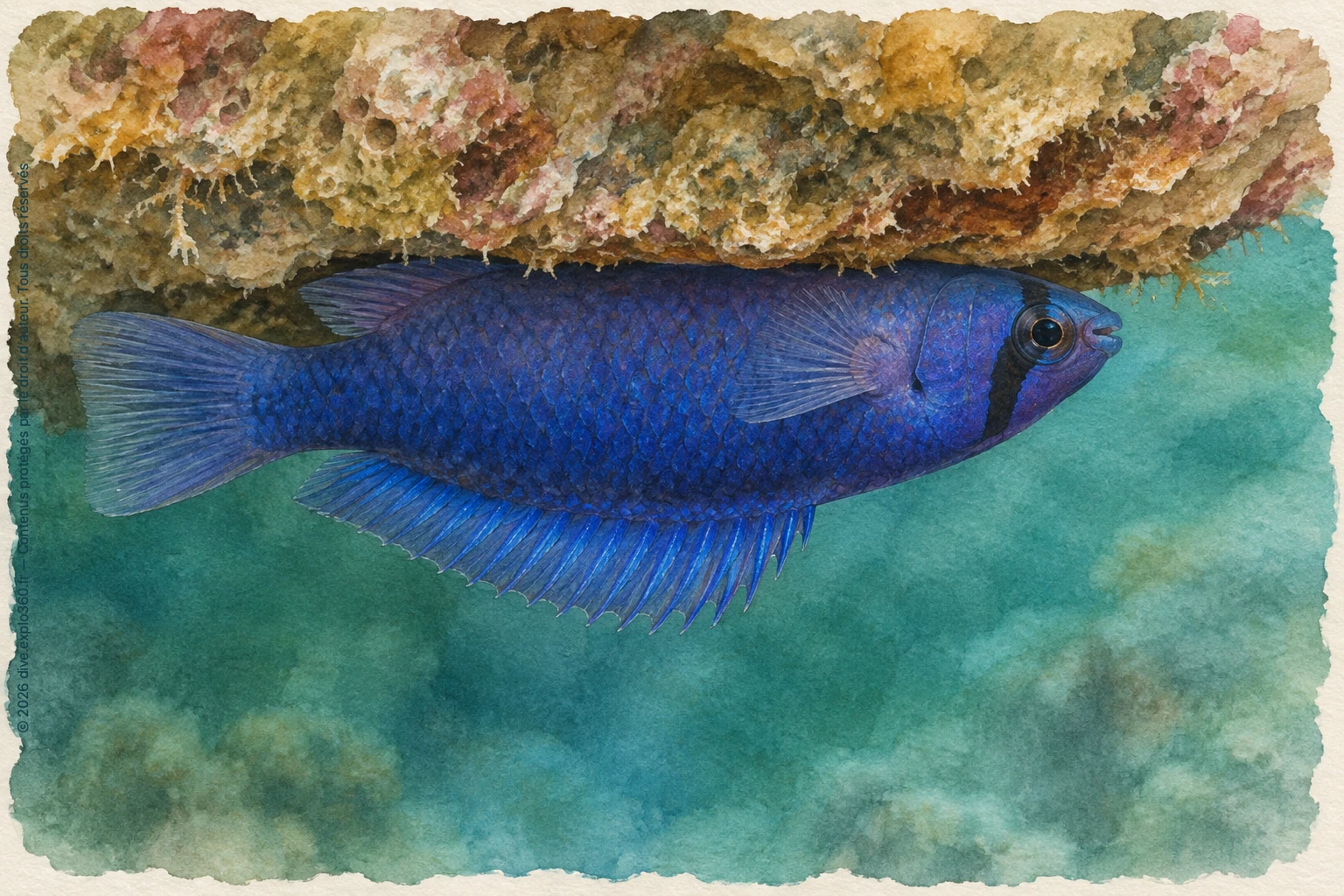
Shelter under an overhang
On Australian reefs, the blue assessor often swims beneath rocky ceilings. Its body stays roughly horizontal, with its belly towards the rock and its head pointing forwards.
A different community beneath the rock
Sponges and sea squirts can grow on the sheltered underside of a ledge. Cracks and cavities give small fish places to hide, while passing water can bring tiny prey within reach.
Changing shelter as fish grow
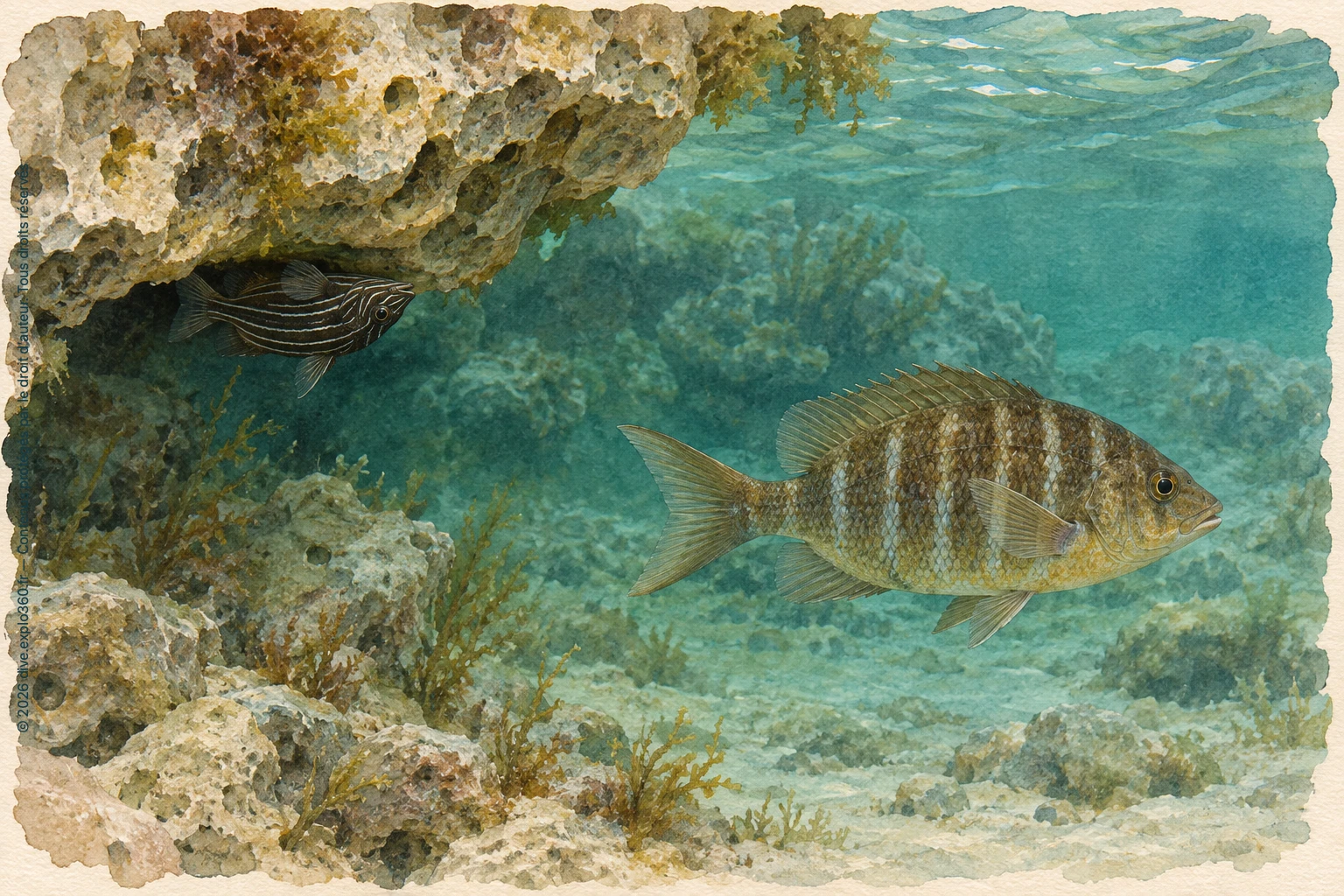
In Western Australia, young fish of two species were regularly seen belly-up beneath overhangs. Larger individuals also occupied caves and open reefs, and their posture could differ from that of the young fish.
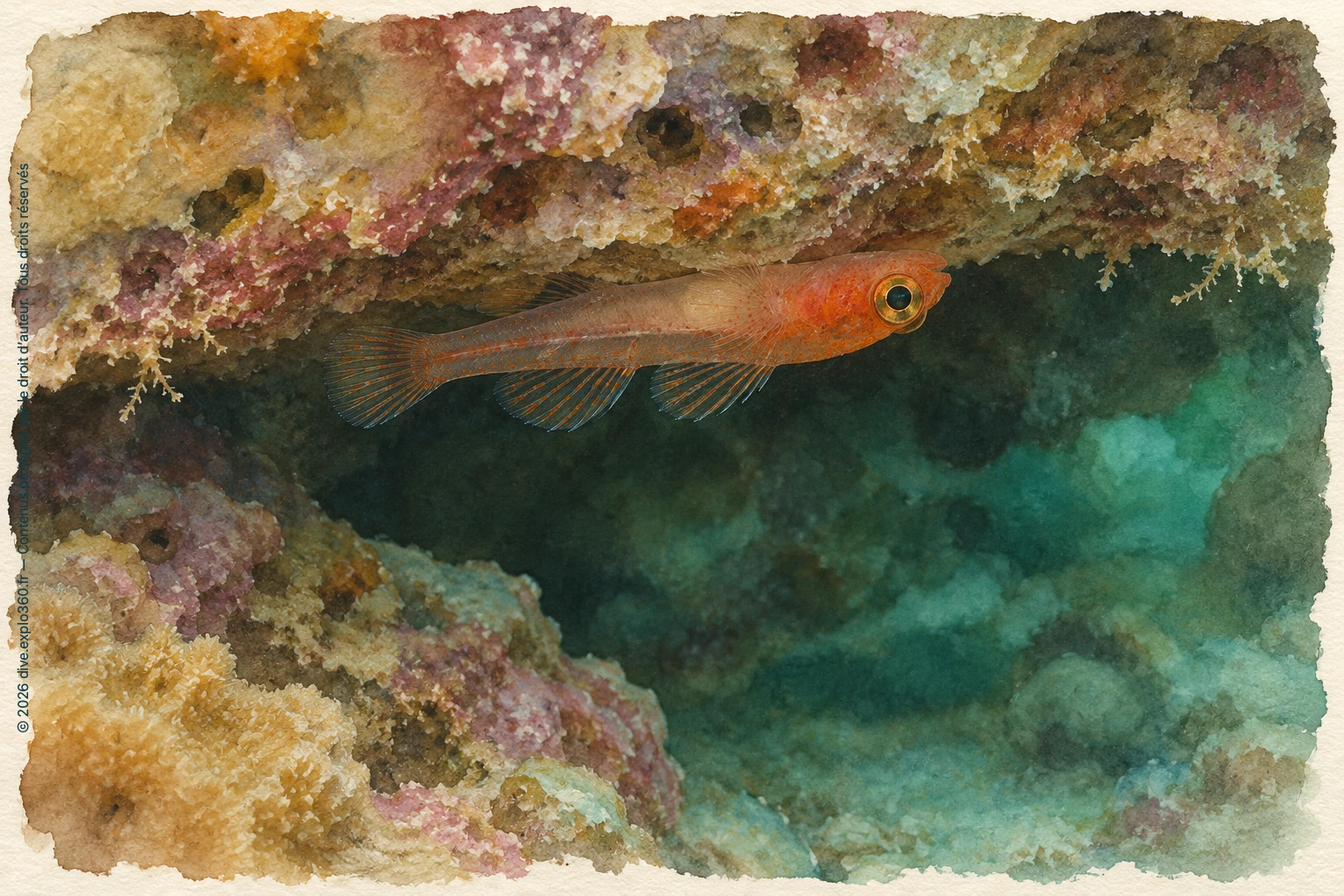
From wall to ceiling
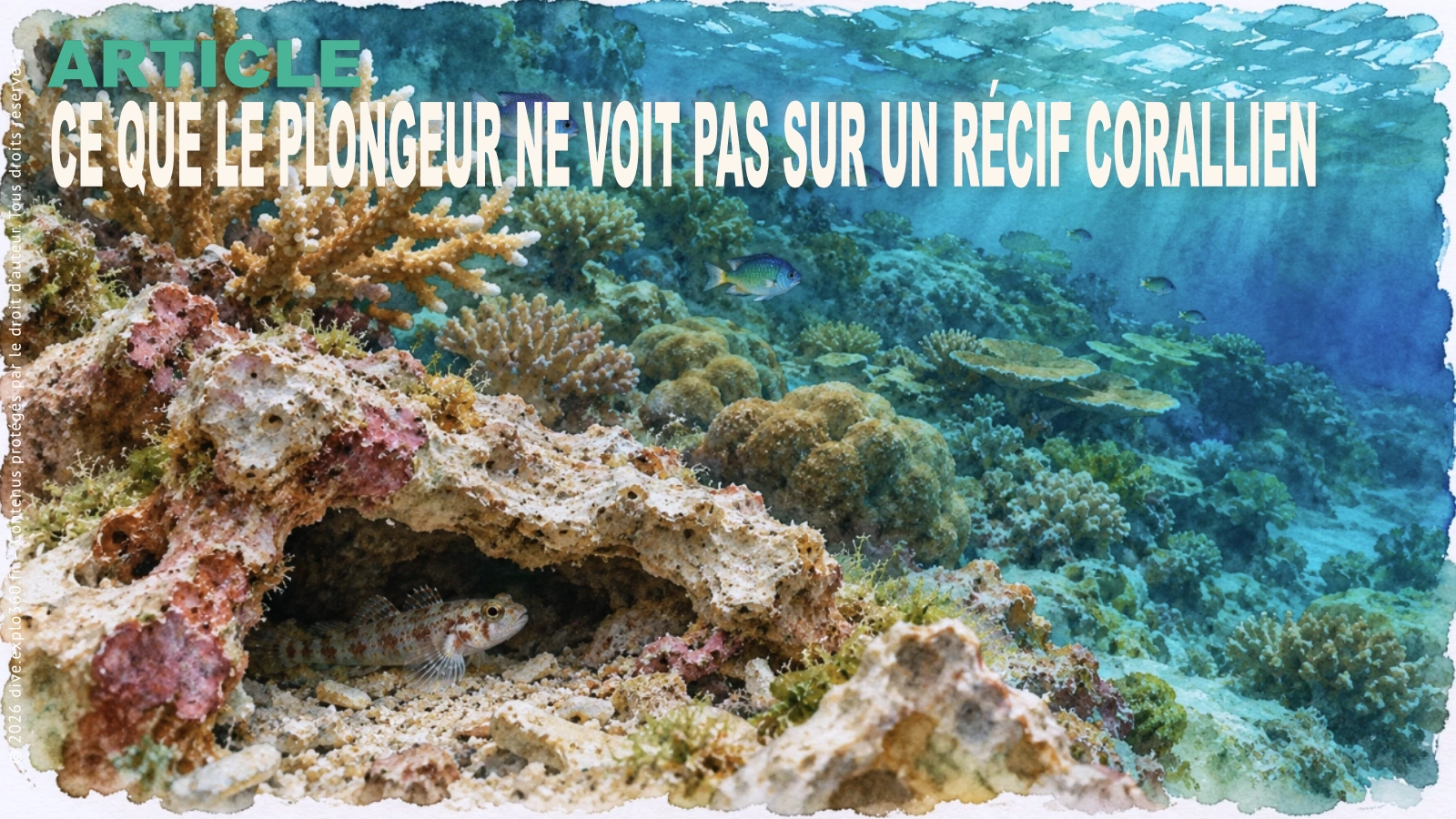
Some gobies keep their bellies close to a rock face. As the surface curves from wall to ceiling, the fish can roll to follow it.