Orientation in three dimensions

Buoyancy supports a fish in the water, while its fins help control its position. Gravity still provides a reference for orientation, and some species also align their bodies with nearby surfaces.
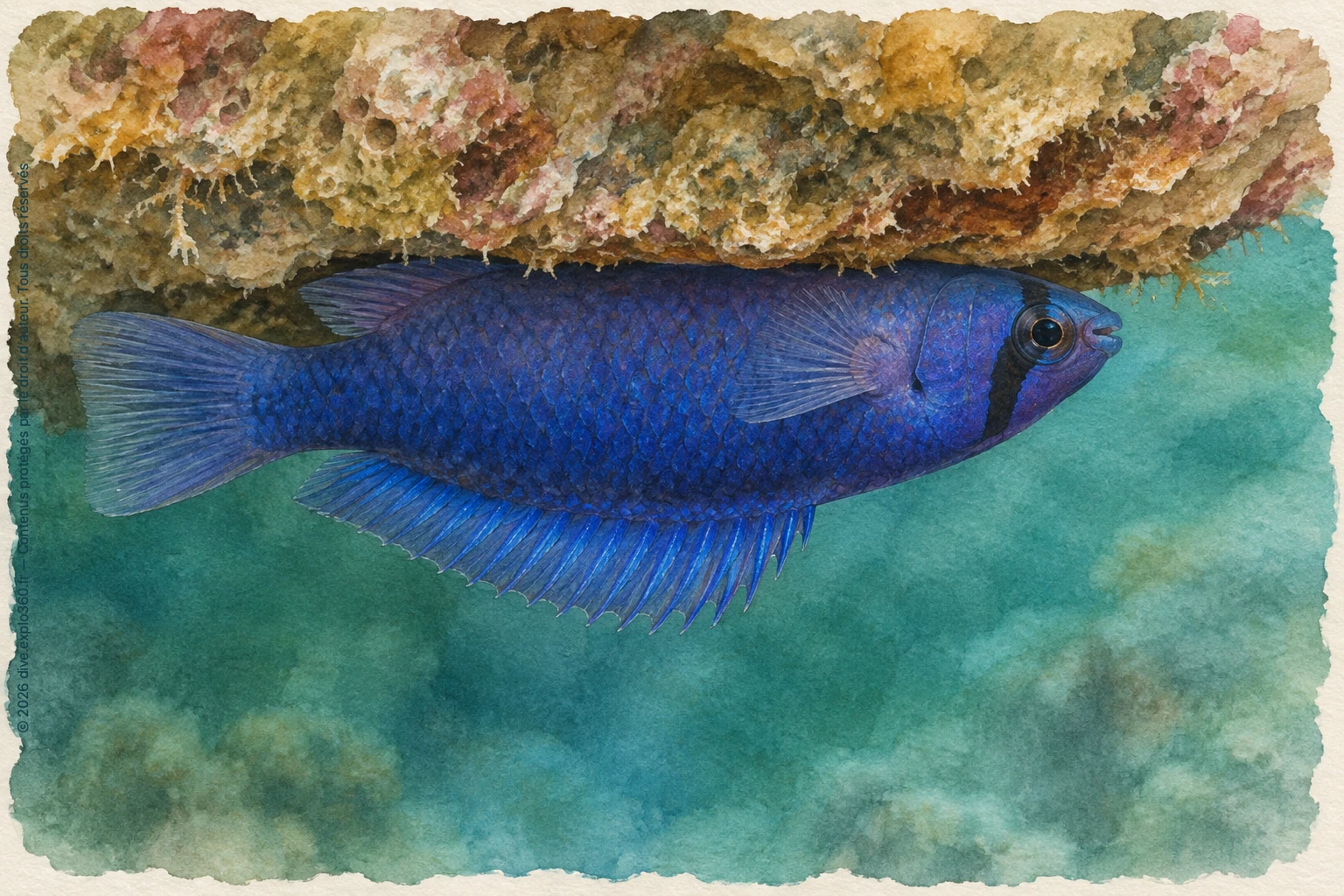
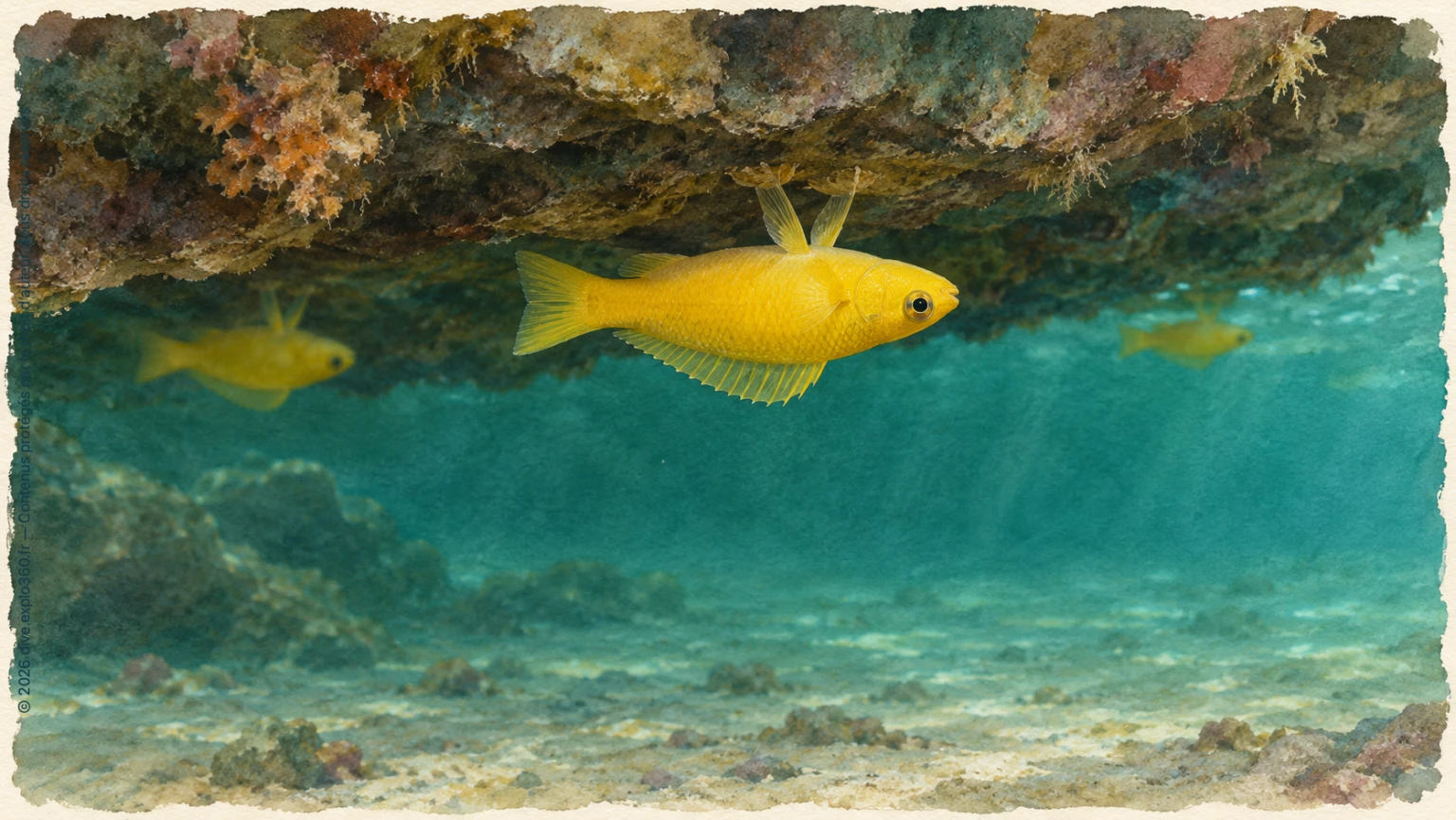
Artist’s view of a blue assessor beneath an overhang. Its belly faces the ceiling, while the dorsal fin points into open water.
The assessor rolls around its head-to-tail axis so its belly faces the rock. © dive.explo360.fr — All rights reserved. Reproduction requires permission.

Inverted swimming in the blue assessor

The blue assessor, Assessor macneilli, can rotate about its longitudinal axis beneath an overhang. Its head-to-tail axis stays nearly horizontal while its ventral surface faces the rock.

A shaded habitat

Under a ledge, light and water flow can differ from conditions on the exposed reef. Sponges and other attached organisms colonise sheltered surfaces, and cracks nearby can offer refuge or access to prey.

Posture and life stage

In Western Australia, juveniles of two distantly related species regularly swam belly-up beneath rock. Larger individuals used caves, overhangs and open reefs. Body size and developmental stage help explain when observers see the posture.
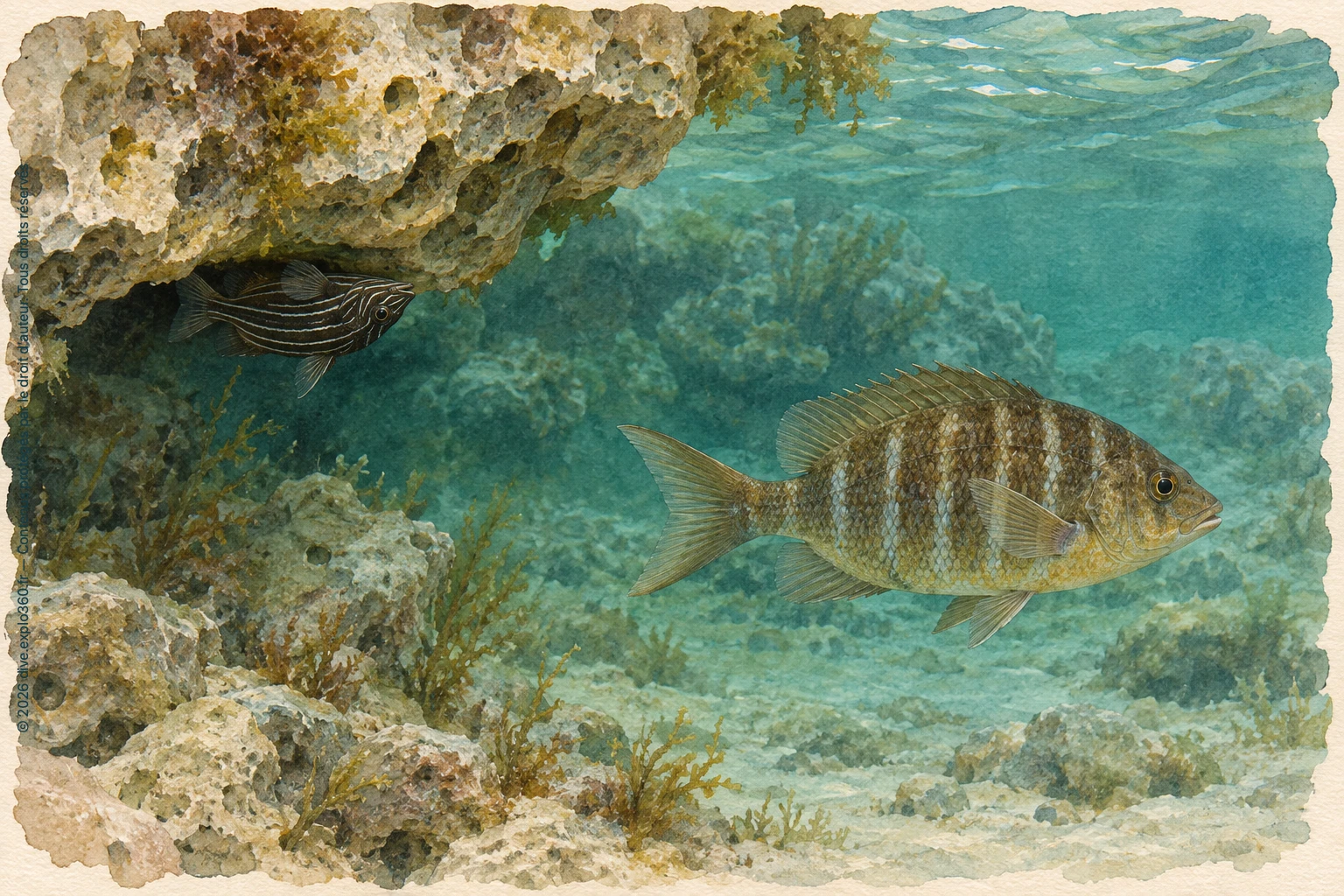
Schematic comparison of positions observed in small juvenile Australian wrasses and larger individuals.
The diagram compares surface use at different stages of development. © dive.explo360.fr — All rights reserved. Reproduction requires permission.
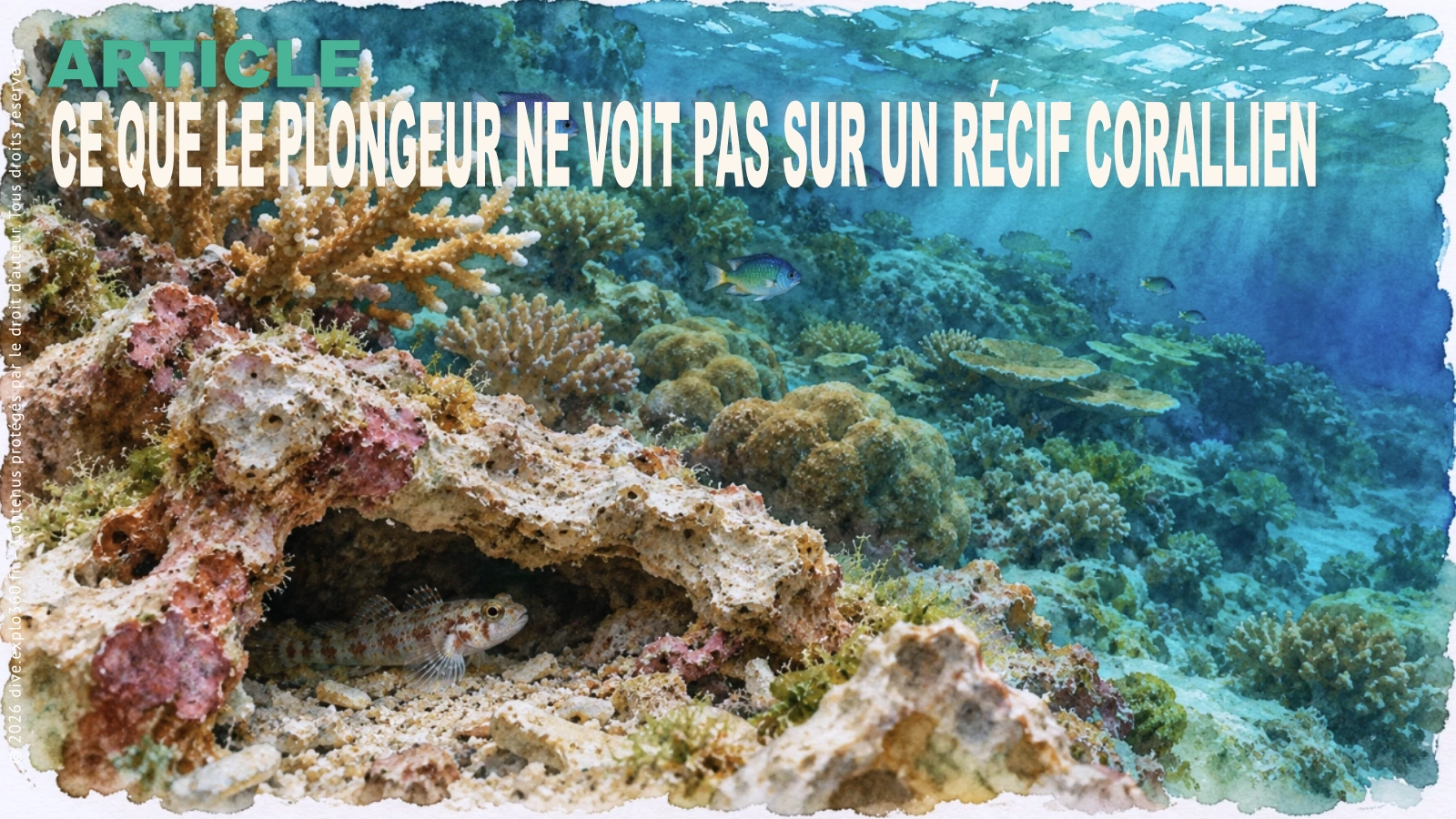
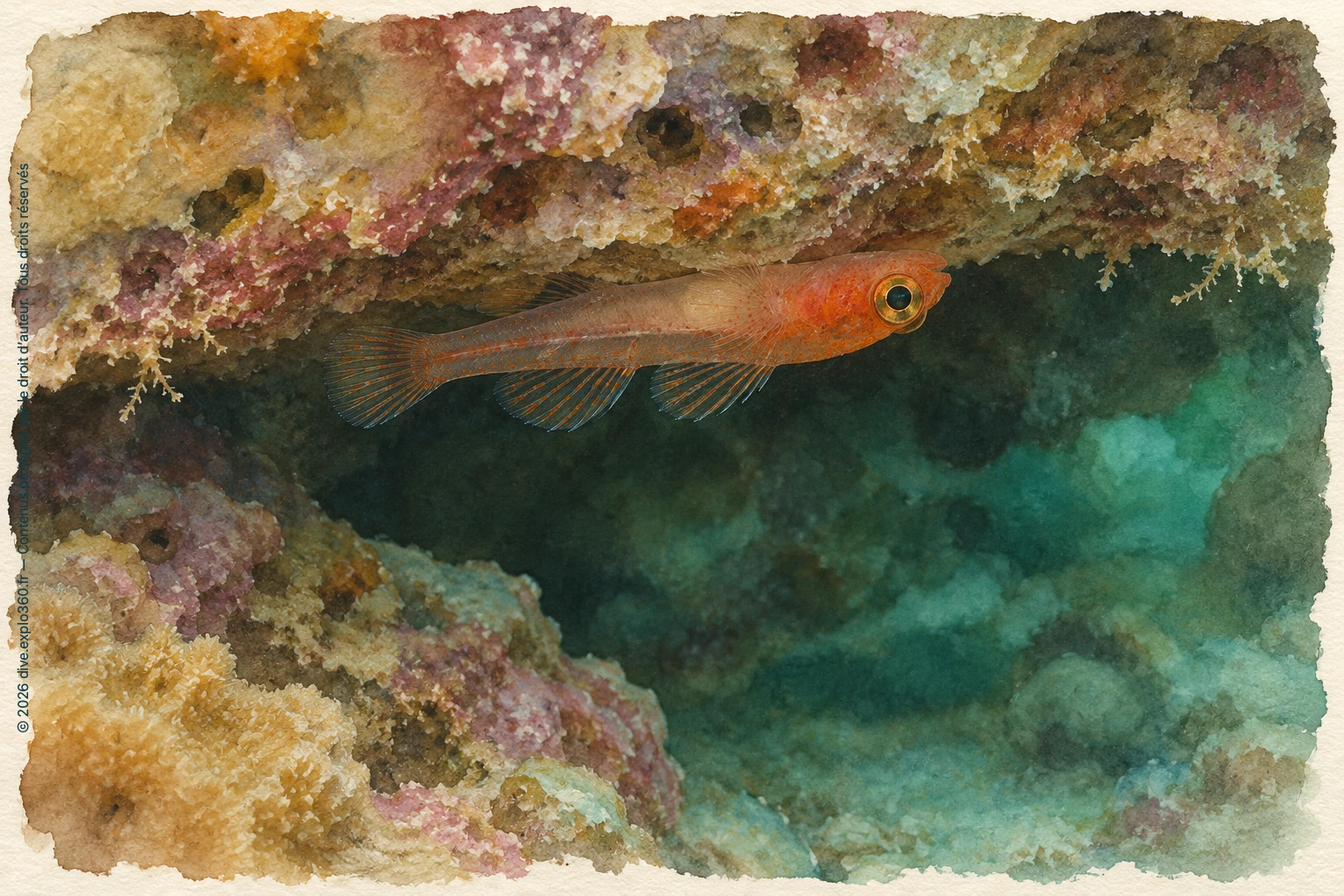
Artist’s view of a small reef goby beneath a rock ceiling. The scene illustrates orientation relative to the substrate.
The goby’s ventral surface is oriented towards the nearest surface. © dive.explo360.fr — All rights reserved. Reproduction requires permission.

Following the substrate

Some gobies orient their ventral surface towards the rock. Following the same individual from a wall to a ceiling shows how its orientation changes with the angle of the substrate.
Continue reading

AMIGANSEAU CONTENT

The rest of this article is for subscribers

Log in with your AMIGANSEAU licence to continue reading.

Subscribing to Dive.Explo360 means supporting a different way to discover marine life.

Our independent platform is entirely self-funded and relies solely on subscriptions. Every licence helps us continue our work, create new content, and share what we know about the marine world with as many people as possible.

Starting at €80 per year, your support makes all the difference.

All active AMIGANSEAU licences give access to the full article.

Explore the same world

Explore further