
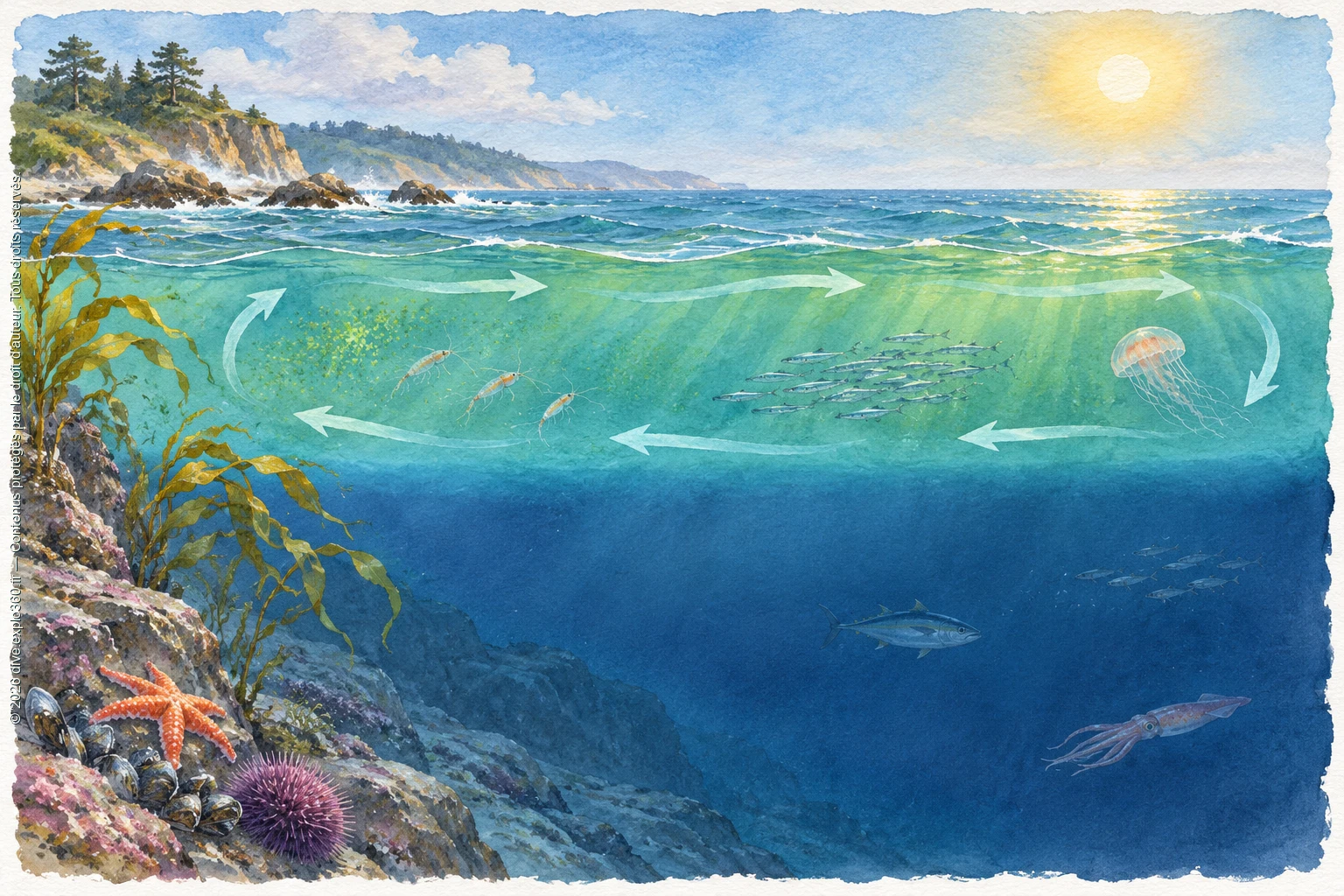
The sun warms the sea from the top down
In spring, the days lengthen and the sun climbs higher in the sky, bringing more sunlight to the sea. Some of that energy is absorbed in the upper few metres, gradually warming the water. Heat takes time to spread through the water column. At the same salinity, warmer seawater is generally less dense and tends to stay above cooler water.
That density difference restricts vertical mixing. Wind and waves stir the upper few metres and mix the warmed water into a surface layer with a fairly even temperature. Below that mixed layer, the water can stay considerably cooler. A transition develops between the warm surface water and the colder water at depth.
This is the seasonal thermocline.
The boundary sharpens in summer
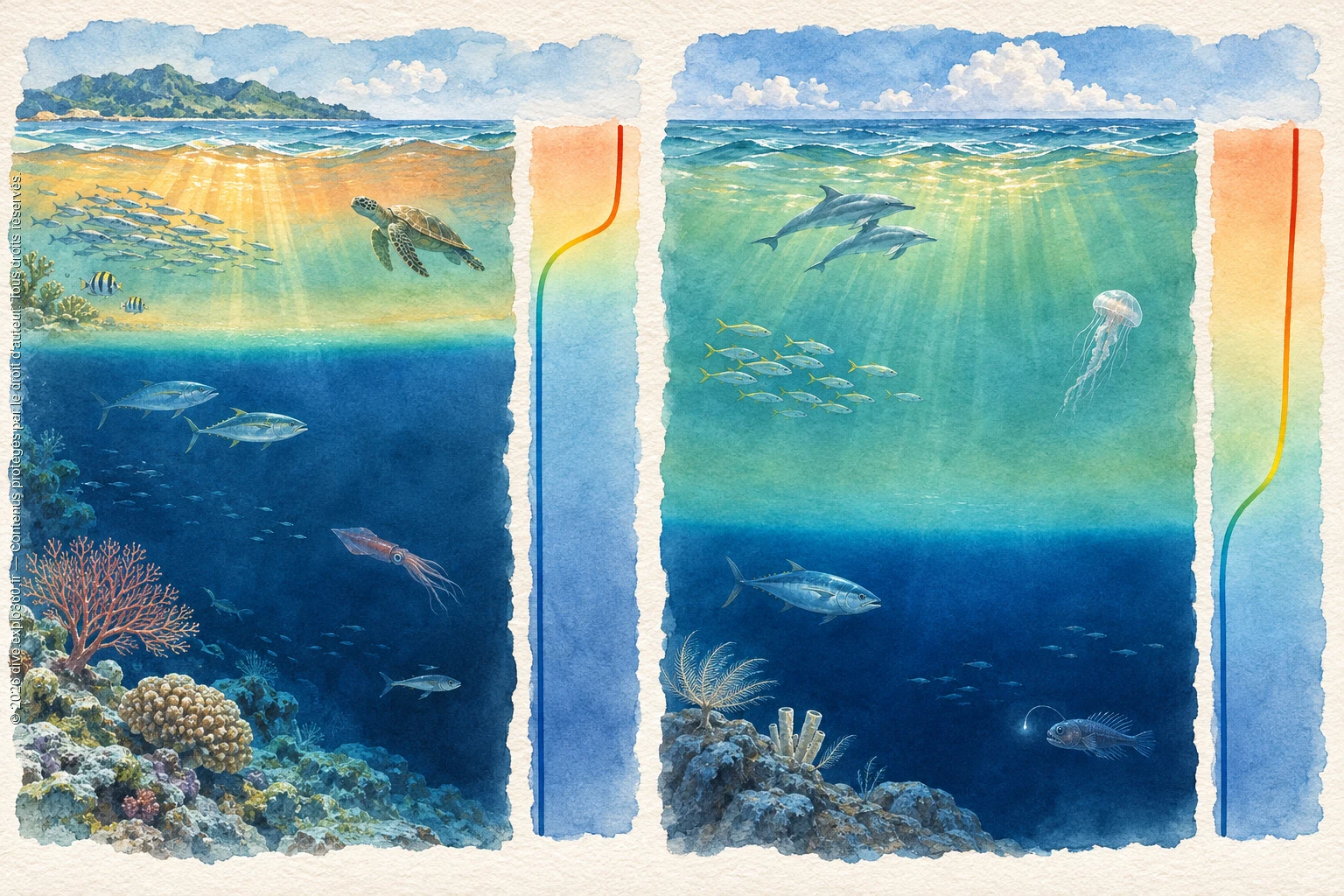
In the Mediterranean, seasonal stratification generally develops in spring and strengthens in summer. Sunshine warms the surface layer. Water further down stays cooler because it receives much less heat directly. Light winds and settled weather can make the separation particularly sharp. Temperature changes little in the upper layer, then drops rapidly over a few metres.
Under some conditions, a diver might pass from water near 25 °C above the thermocline into water around 17 or 18 °C below it. The actual temperatures depend on where and when you dive, the weather and the depth. The thermocline can begin ten metres down or much deeper. It can be hard to pick out after the water has mixed.
Nor does it stay at a fixed depth. At a single site, it can shift in days or even hours. A diver who meets cold water at fifteen metres on one dive might find the thermocline much deeper a few days later. The cold can meet you at a different point on the very same wall.
When the wind shifts the layers
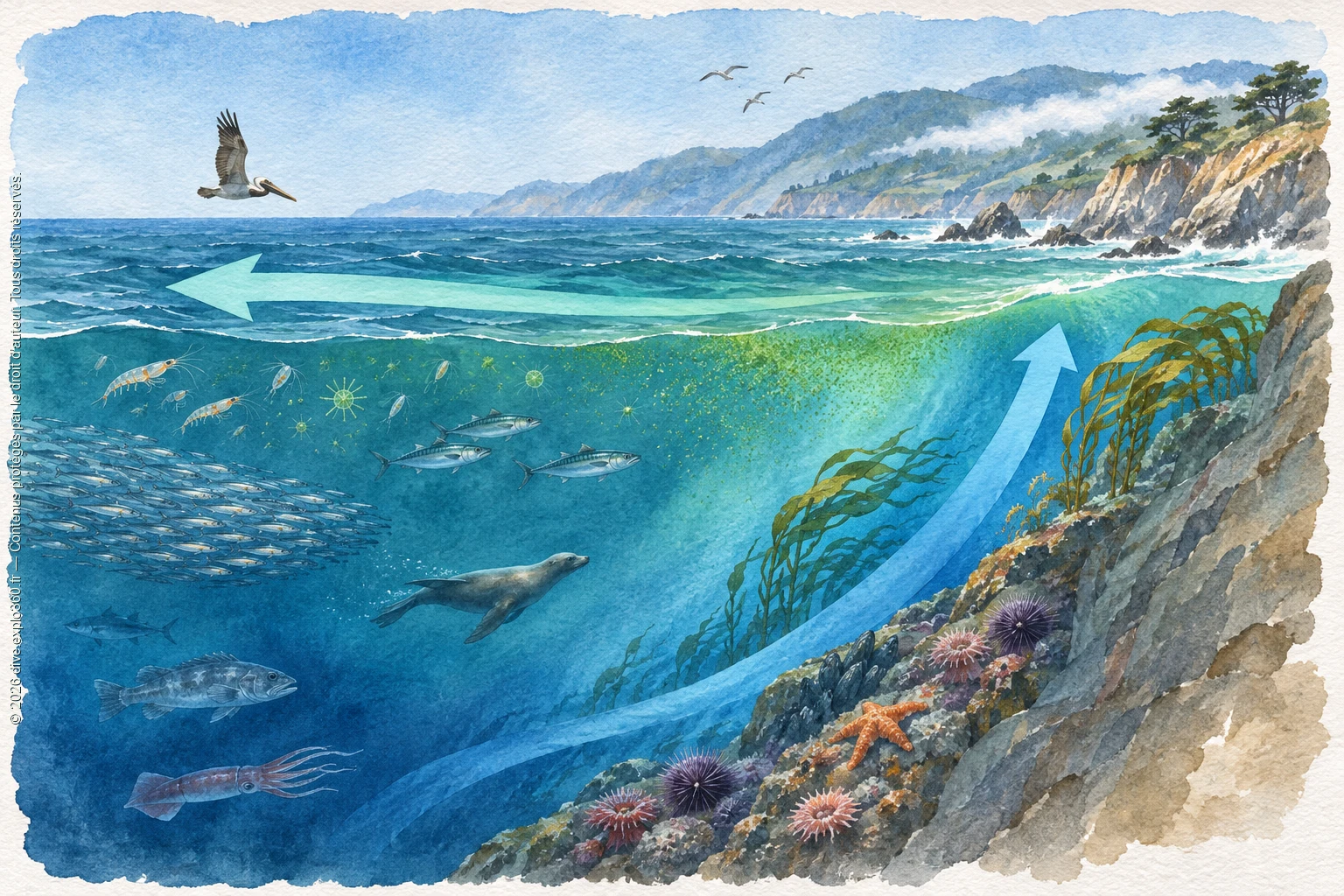
The thermocline moves. Wind exerts a force on the sea surface and can set water in motion over large distances. Under certain conditions, warm surface water moves offshore or towards another stretch of coast. Colder water can rise to take its place.
This is called upwelling. It can bring a striking drop in coastal water temperature, even in midsummer. It depends on the orientation of the coastline, the wind direction and local circulation. Elsewhere, wind can pile up surface water and push the transition between layers down.
Currents can also distort the thermocline. Waves can travel along the boundary between layers without leaving much of a trace at the surface. These internal waves can lift or lower the thermocline as they pass. The thermocline can rise and fall with very little movement visible at the surface.