
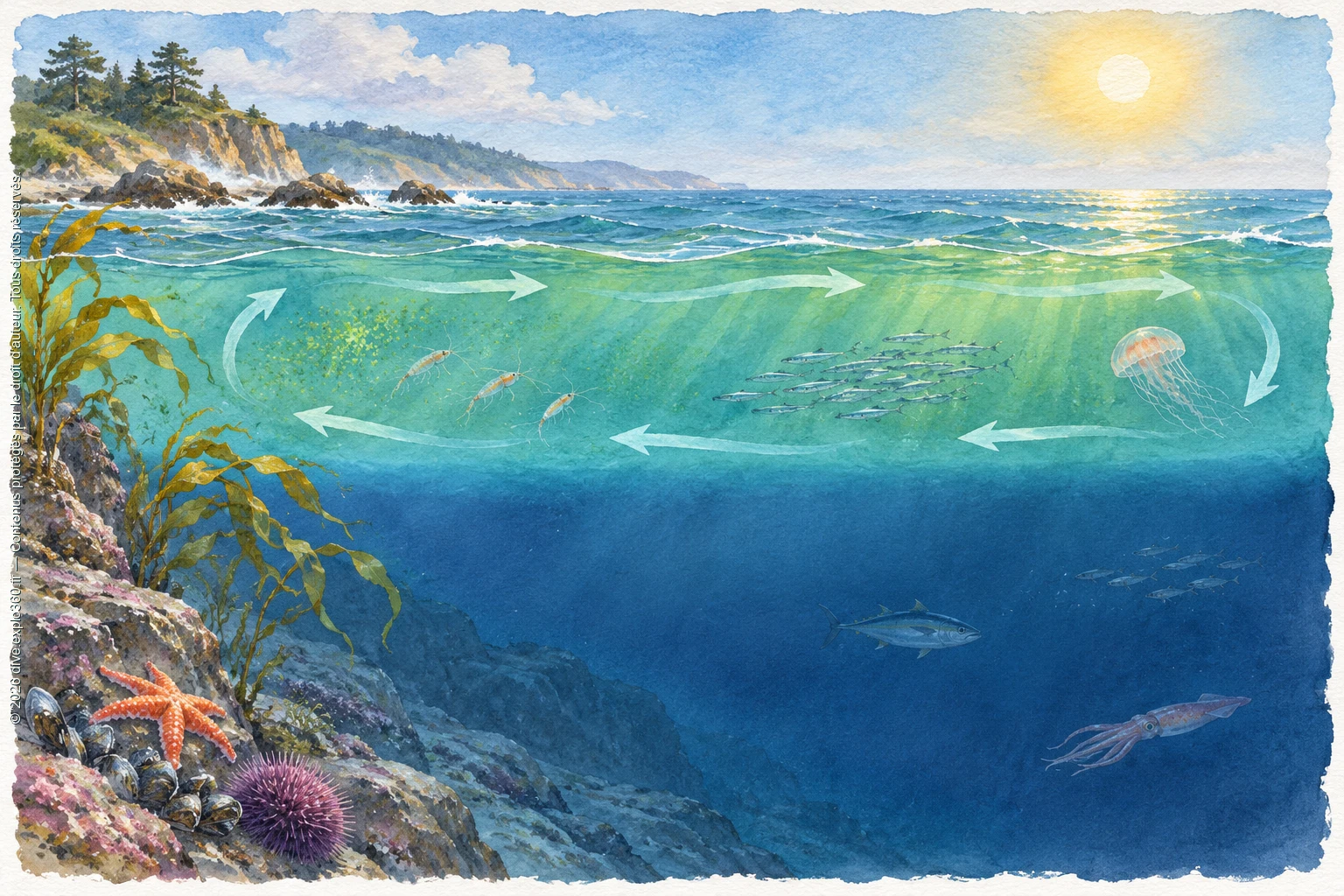
Sunlight warms the surface
Spring sunshine warms the top of the sea. If two samples contain the same amount of salt for their volume, the warmer one is usually less dense. It tends to stay above the cooler water. Wind and waves mix the top layer, keeping it at roughly the same temperature. Beneath it, the temperature can fall quickly.
Layers become more distinct in summer
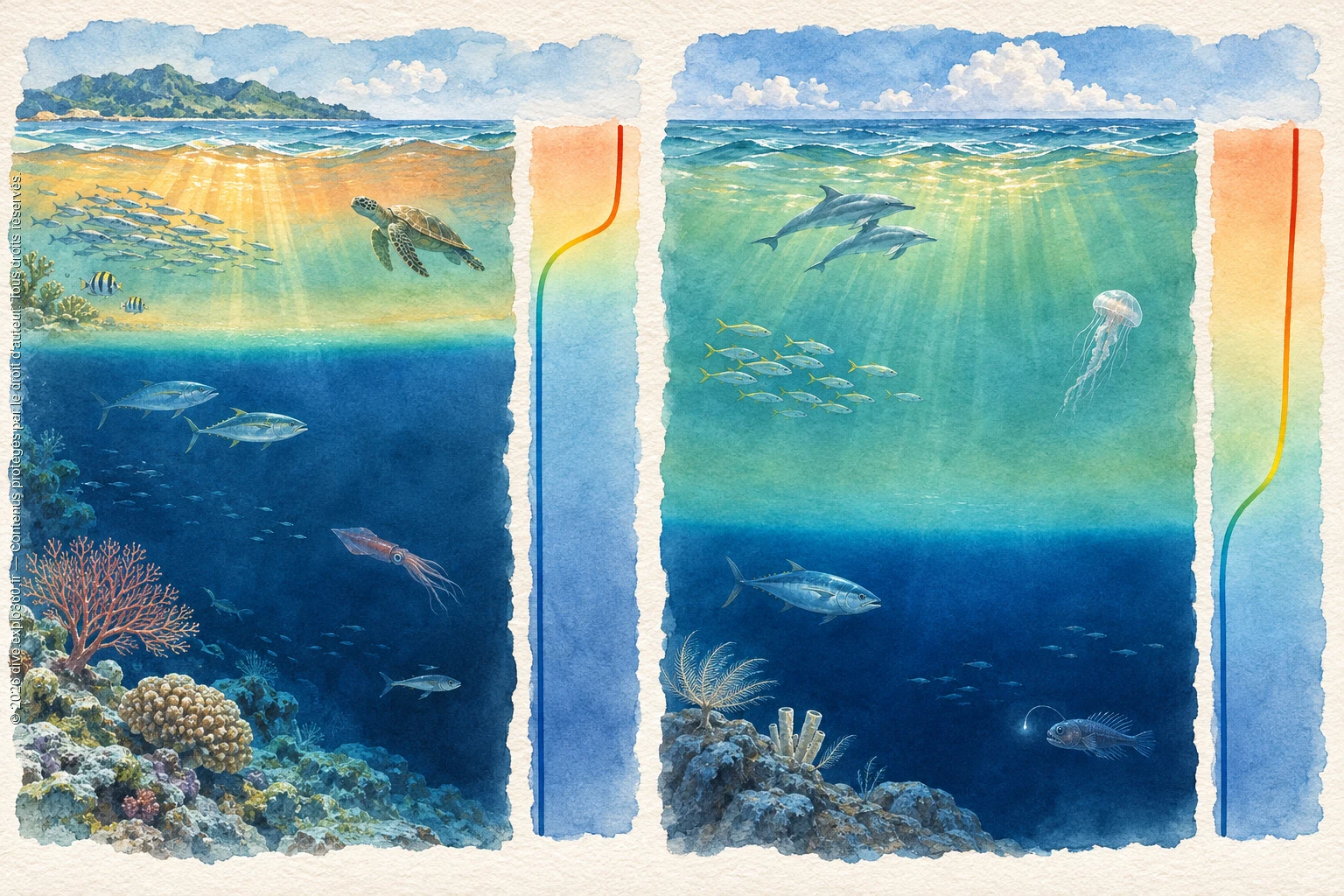
Sunshine and light winds can sharpen the temperature change between layers in the Mediterranean. A diver might swim from water at about 25 °C into water at 17 or 18 °C. Those temperatures are just an example. How far down you feel the change can vary within hours or days.
Wind and waves below the surface move the layers
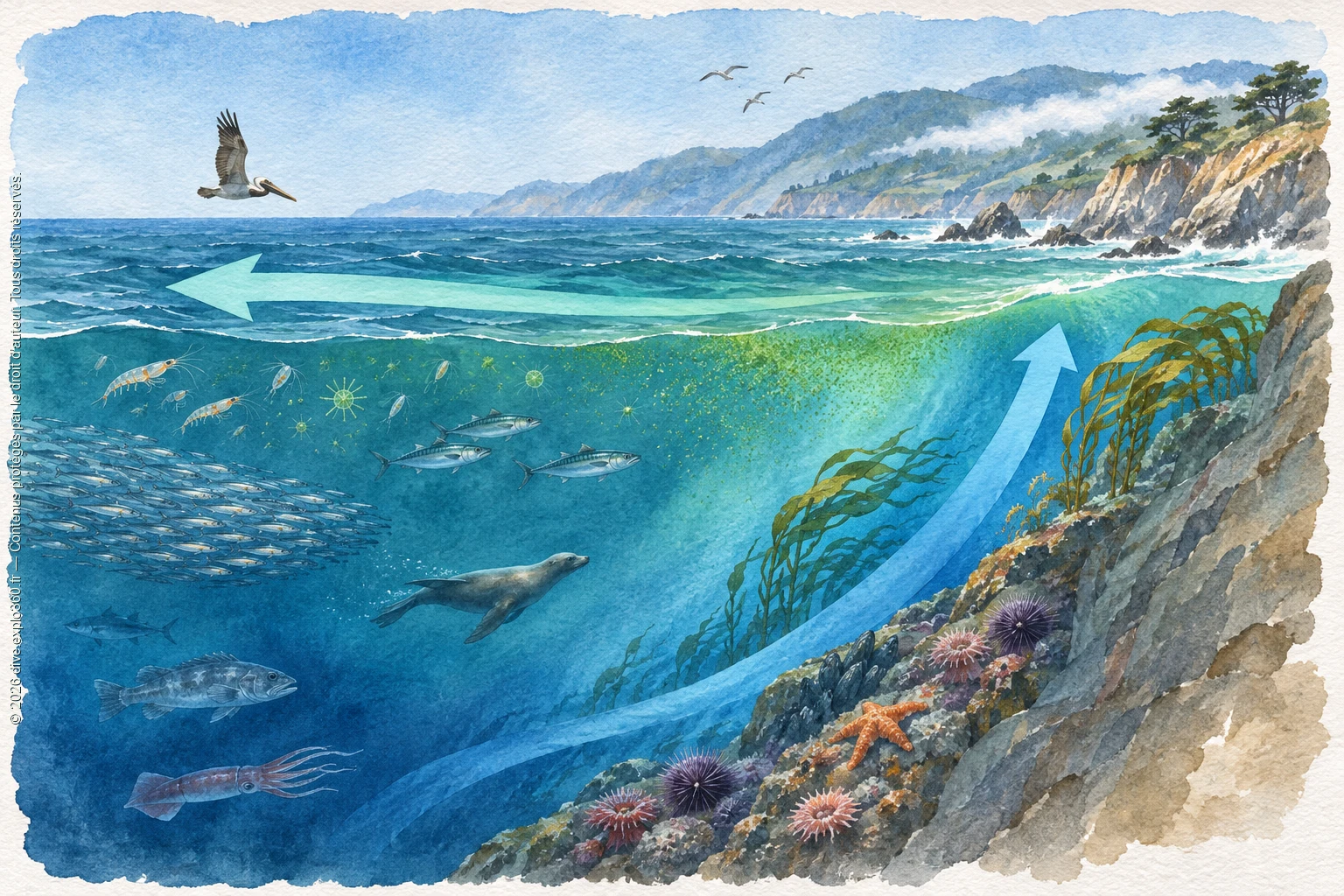
Depending on which way it blows and how the coast lies, wind can drive surface water away from shore. Cold water rises to replace it. This is called upwelling. Wind can also push surface water towards the coast and deepen the thermocline. Waves travelling between the layers can move it up or down too, so a diver can feel a change while staying at the same depth.