


Teeth and speed for catching prey

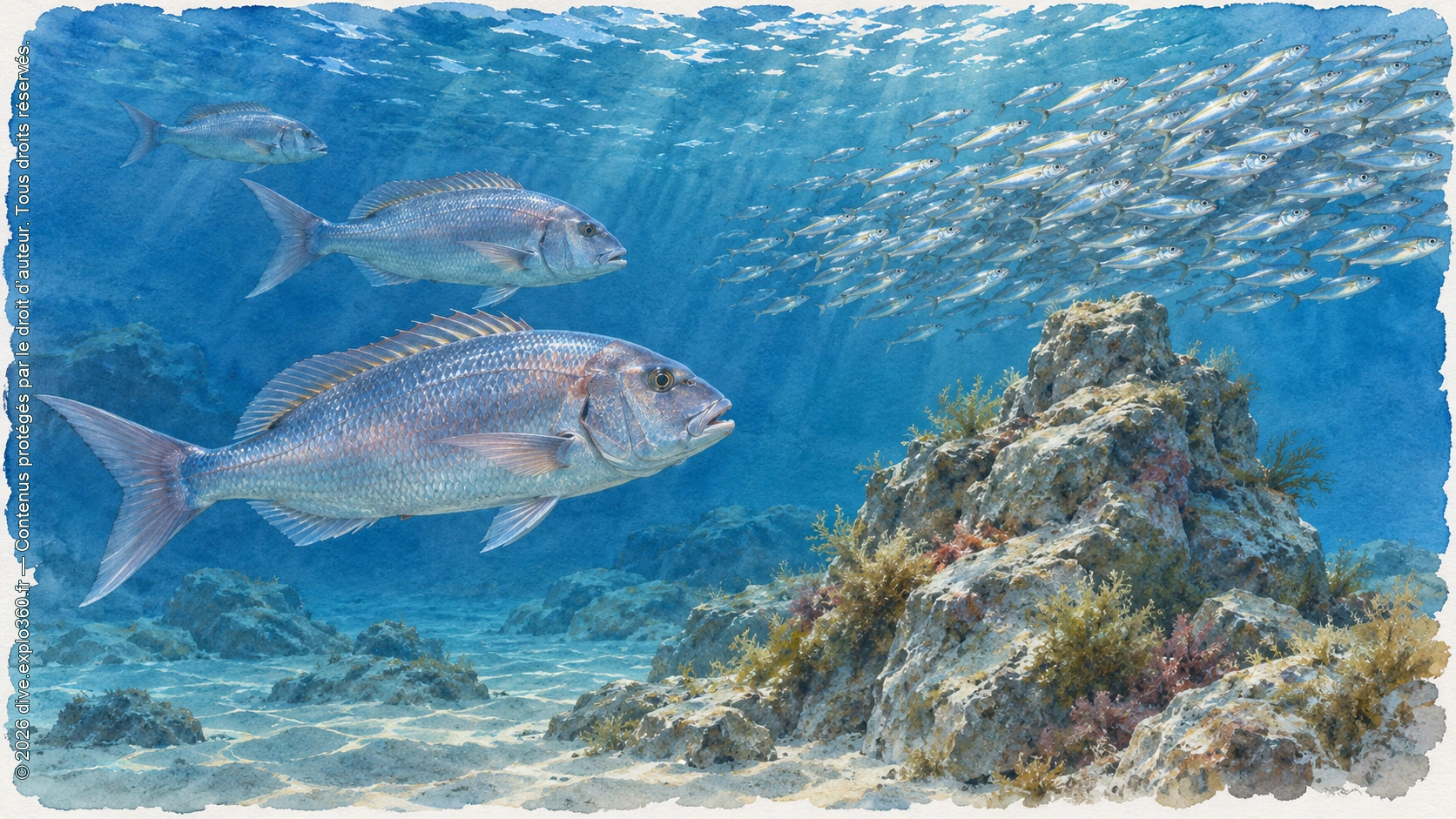
The dentex is a type of sea bream. Its big, pointed front teeth grip prey on the move. It eats mostly fish, but can also catch squid and crustaceans. What it eats depends on its size and what it can find. A quick sweep of its tail gives it a burst of speed. A chase takes energy, so a fish within easy reach can be worth pursuing.
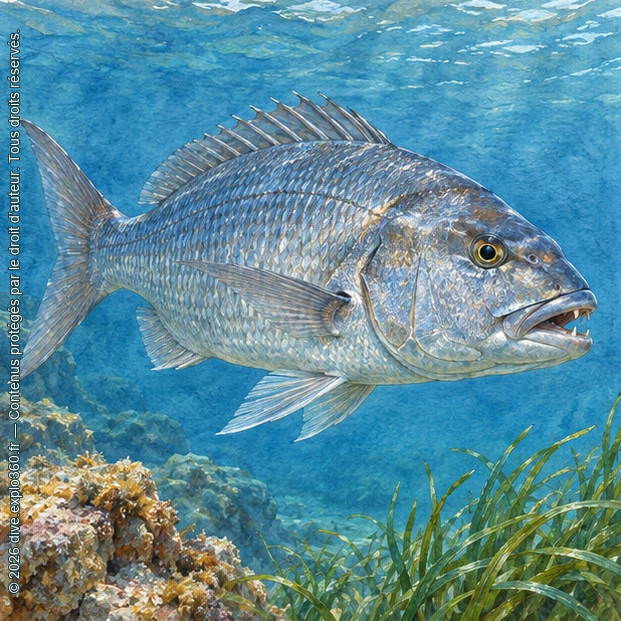
Side view of a dentex with its mouth ajar and large teeth visible. The large front teeth help the dentex grip moving prey.
The large front teeth help the dentex grip moving prey. © 2026 dive.explo360.fr — Contenus protégés par le droit d’auteur. Tous droits réservés.
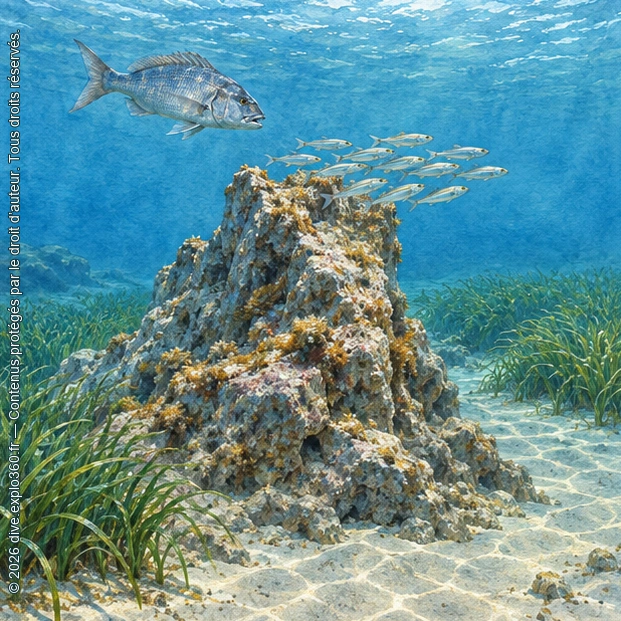
Rocky pinnacle, seagrass and fish above the crest. A dentex and a school of bogue pass over a pinnacle surrounded by sand and Posidonia.
A dentex and a school of bogue pass over a pinnacle surrounded by sand and Posidonia. © 2026 dive.explo360.fr — Contenus protégés par le droit d’auteur. Tous droits réservés.

Pinnacles bring fish together

A rocky pinnacle provides food and shelter and changes the current around it. Dentex also swim along drop-offs and the edges of seagrass meadows. The same rock can draw a shoal of prey and several predators within reach of each other. In some reserves, dentex gather around particular rocky shoals for long periods.

Teamwork or reactions to the same school?

Hunters cooperate when they adjust their movements to one another. Dentex gather more often in daylight, and several can respond to the same shoal. If the bogue turn away from one dentex, a second may spot an opening and dart forward. From a distance, this can look like a coordinated attack.
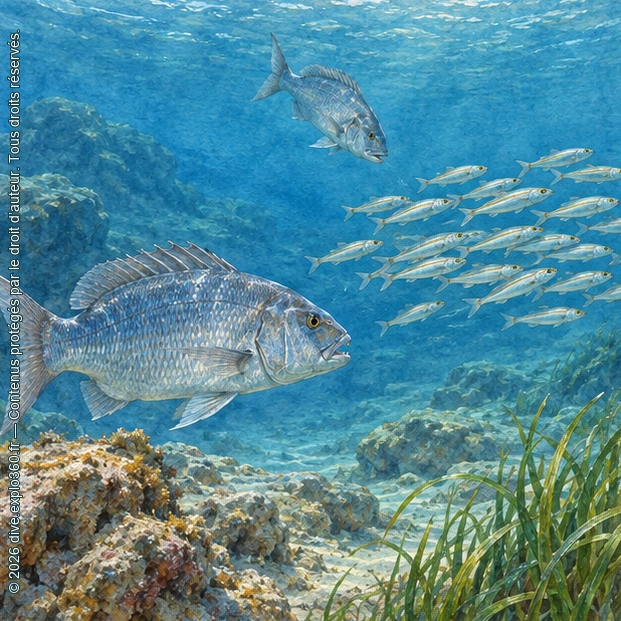
Two dentex near the same school of bogue. Two dentex approach the same school from different starting points.
Two dentex approach the same school from different starting points. © 2026 dive.explo360.fr — Contenus protégés par le droit d’auteur. Tous droits réservés.

Continue reading

AMIGANSEAU CONTENT

The rest of this article is for subscribers

Log in with your AMIGANSEAU licence to continue reading.

All active AMIGANSEAU licences give access to the full article.