Body shape, diet and the cost of pursuit
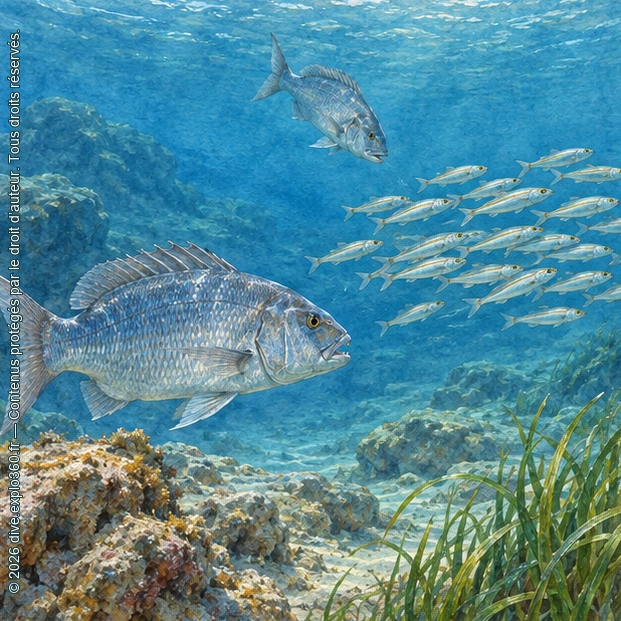
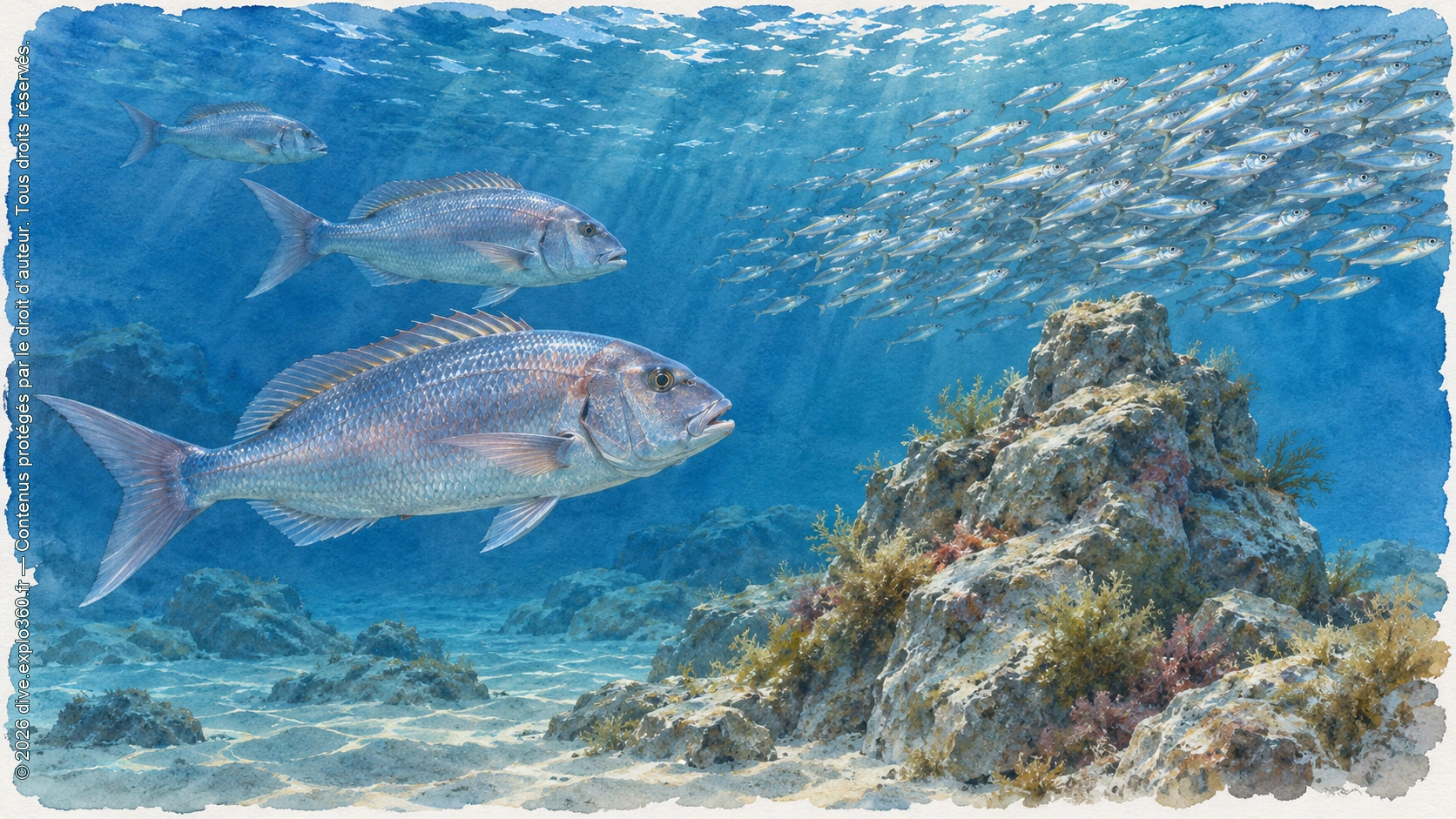
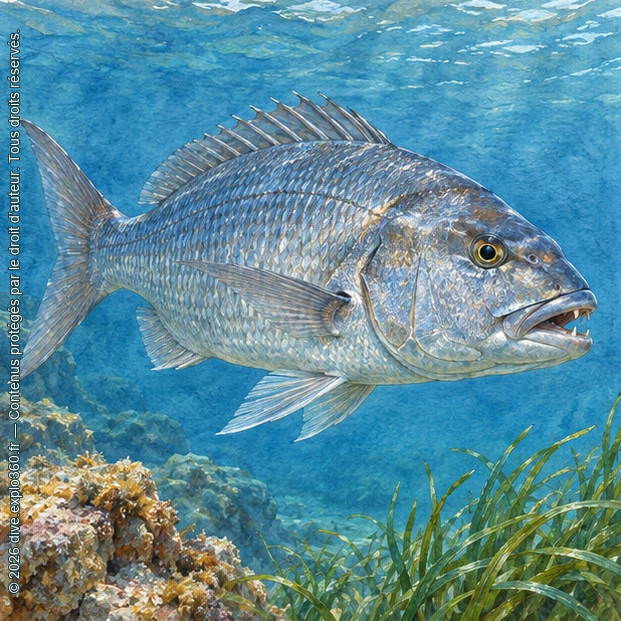
This laterally compressed sparid grips fish and other moving prey with large conical front teeth. Cephalopods and crustaceans supplement a diet that varies with size and available resources. Its muscles and tail give it brief bursts of speed. The energy cost and risk of failure limit the benefits of a long chase.
Rocky features concentrate fish
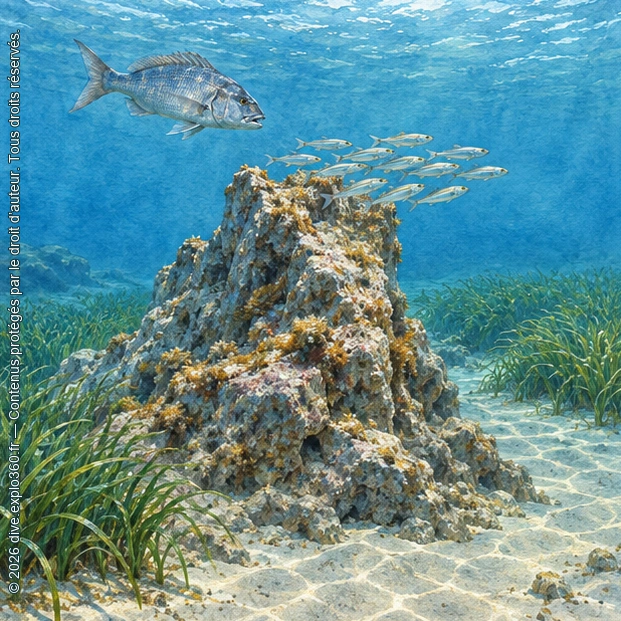
Rocky shoals divert currents and provide shelter. Dentex move between rocky seabeds, drop-offs and the edges of Posidonia meadows. A shoal can bring predators and prey into a small area, increasing their chances of meeting. Persistent groups around a single rock therefore tell us where the fish congregate. The details of an attack would tell us more about their roles.
Coordination or a shared stimulus?
Daytime observations show that dentex are more often seen in groups when there is light. If they cooperate during an attack, they should adjust their movements to those of other hunters. If they hunt independently, two chases could still overlap because both fish are reacting to the same turn in the shoal.