An animal forest in the shade
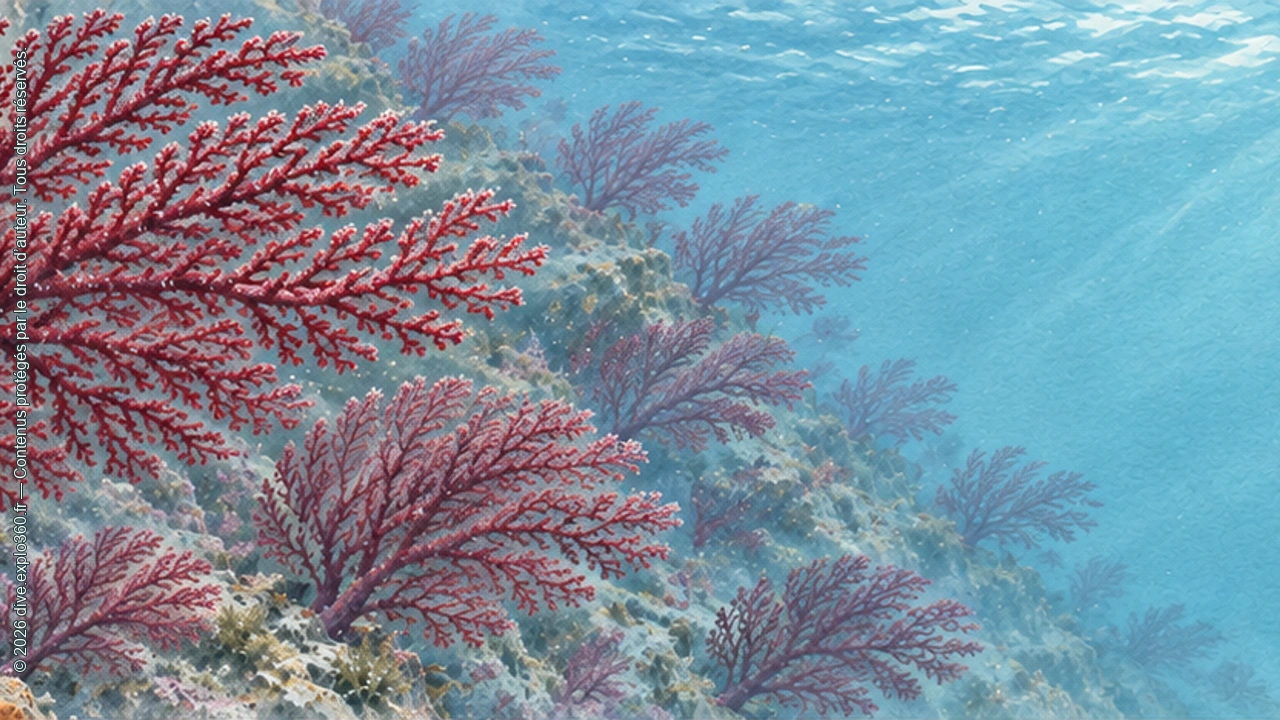
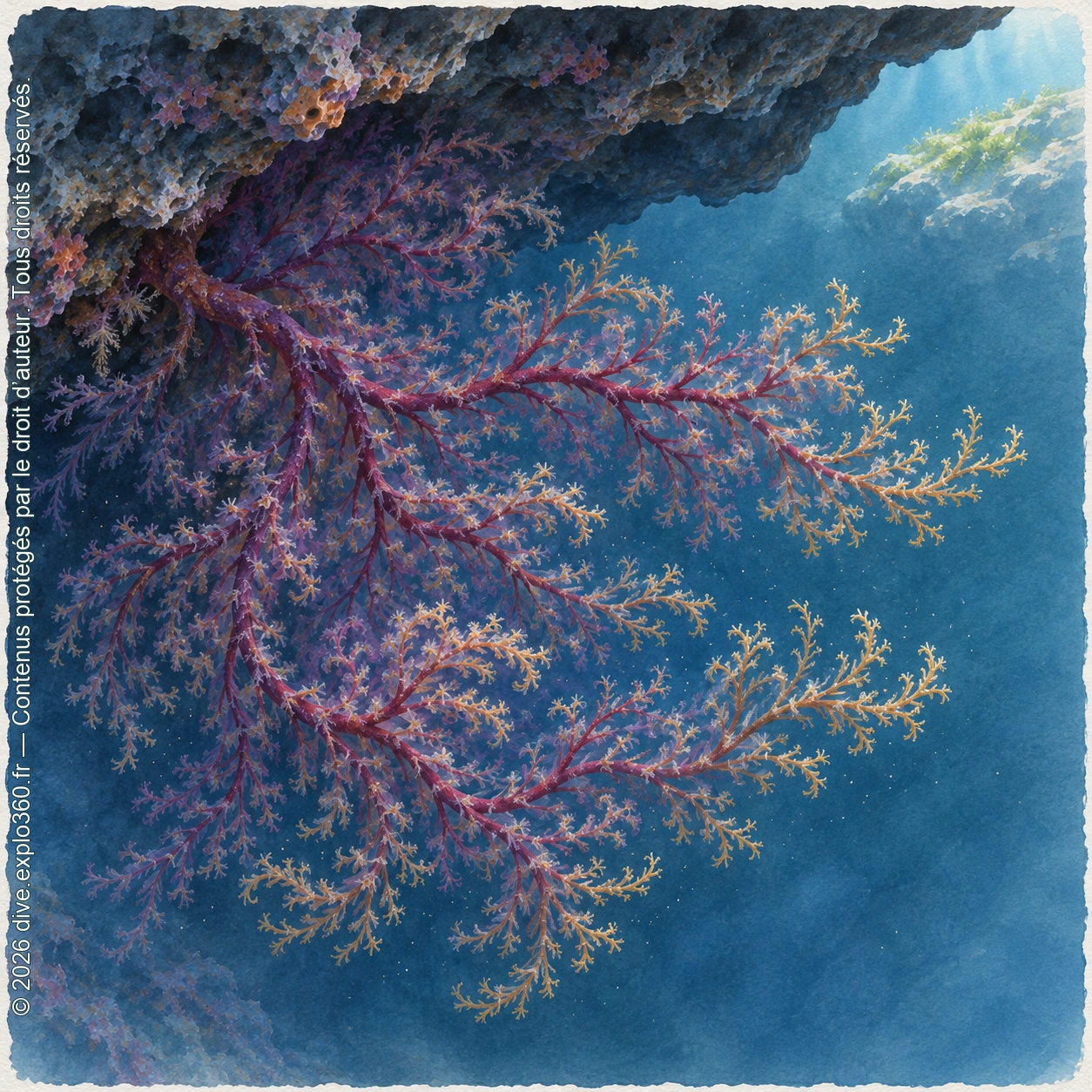
The red sea fan, Paramuricea clavata, is one of the characteristic species of Mediterranean rocky walls. Its colonies can form broad fans of red, purple or yellow. They are especially common on dimly lit rock faces with a regular flow of water. Despite their plant-like appearance, sea fans are animals. Like corals and sea anemones, they are cnidarians.
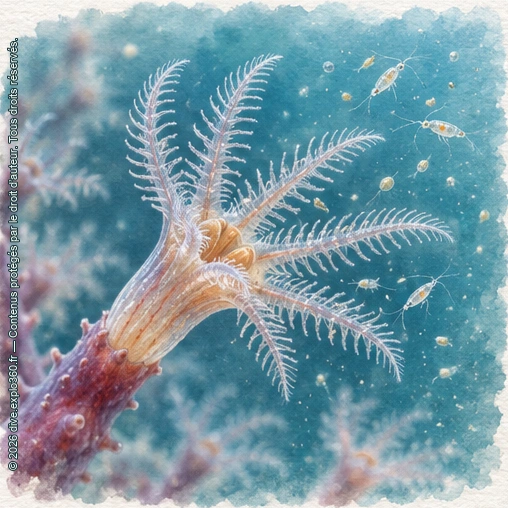
A colony is made up of tiny animals called polyps. Every polyp has a mouth surrounded by eight finely branched tentacles. When the polyps extend, tiny crowns of tentacles appear all along the branches. Red sea fans do not rely on light for food. They feed on small planktonic animals and organic particles carried by the water.
This helps explain why they grow on shaded rock faces. Algae that need light to grow are often less abundant there than on well-lit rocks, so the competition for space can be different. Shade alone, though, does not explain where sea fans grow. Even a deeply shaded wall may be unsuitable if little water flows past it and sediment regularly settles on it.
The colony needs a current that brings food and helps keep sediment from piling up.
The current brings the meal
On the rock face, water flows between the colonies. It carries plankton, including tiny crustaceans, larvae and eggs that can be hard to see with the naked eye. It also holds particles of organic matter from living and dead organisms. Each fresh patch of water can bring food within reach.
When conditions are right, the polyps extend their tentacles. They can use their stinging cells to hold prey that drifts within reach before guiding it towards the mouth. The current continually replaces the water around the polyps, bringing fresh particles within reach. When the flow is weak, food near the colony is replenished more slowly.
Once the flow gets too fast, feeding can become harder. If the water moves too quickly, the tentacles can bend out of shape and prey may become harder to hold. Faster flow also puts more strain on the colony. Feeding is often most effective at an intermediate flow speed, depending on the species and the shape of its polyps.
The volume of water passing a colony tells only part of the story. That water must carry food and move at a speed that lets the polyps catch it.
Why are sea fans shaped like fans?
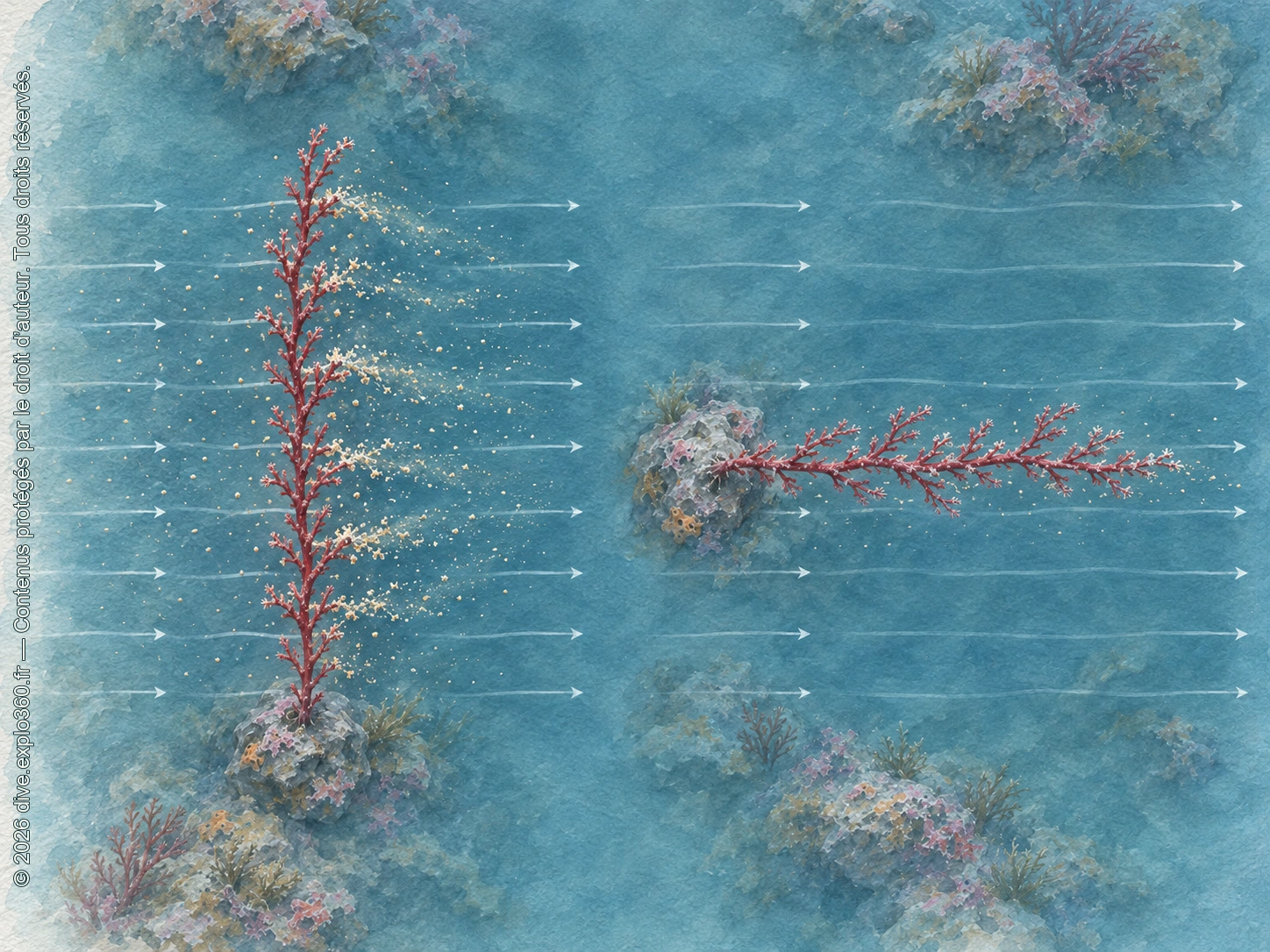
Look closely at some colonies and one detail stands out. Their branches spread mainly in a single plane, forming a kind of living net. This arrangement puts many polyps in the path of the flowing water. Imagine holding a fan in a current. Broadside to the flow, it presents many of its branches to the oncoming water. Turn it edge-on and much less of it is directly exposed.
In several fan-shaped gorgonians, colonies do indeed grow roughly at right angles to the prevailing current. This increases the chances of food particles passing close enough for a polyp to catch them. In a flow tank, colonies of Leptogorgia virgulata caught more prey per unit time when placed broadside to the current than when turned edge-on.
The fan shape helps the colony feed. Sea fans do, however, vary in how they are oriented. Where currents frequently change direction, colonies can develop more complex shapes, with branches less neatly arranged in a single plane. Colony shape also depends on the species and the physical forces it experiences.
A large colony has to withstand the push of the water without breaking. Its branches are flexible enough to bend in the current. A broad fan puts more polyps in the current, where its branches also have to withstand the force of the water.