An animal forest in the shade
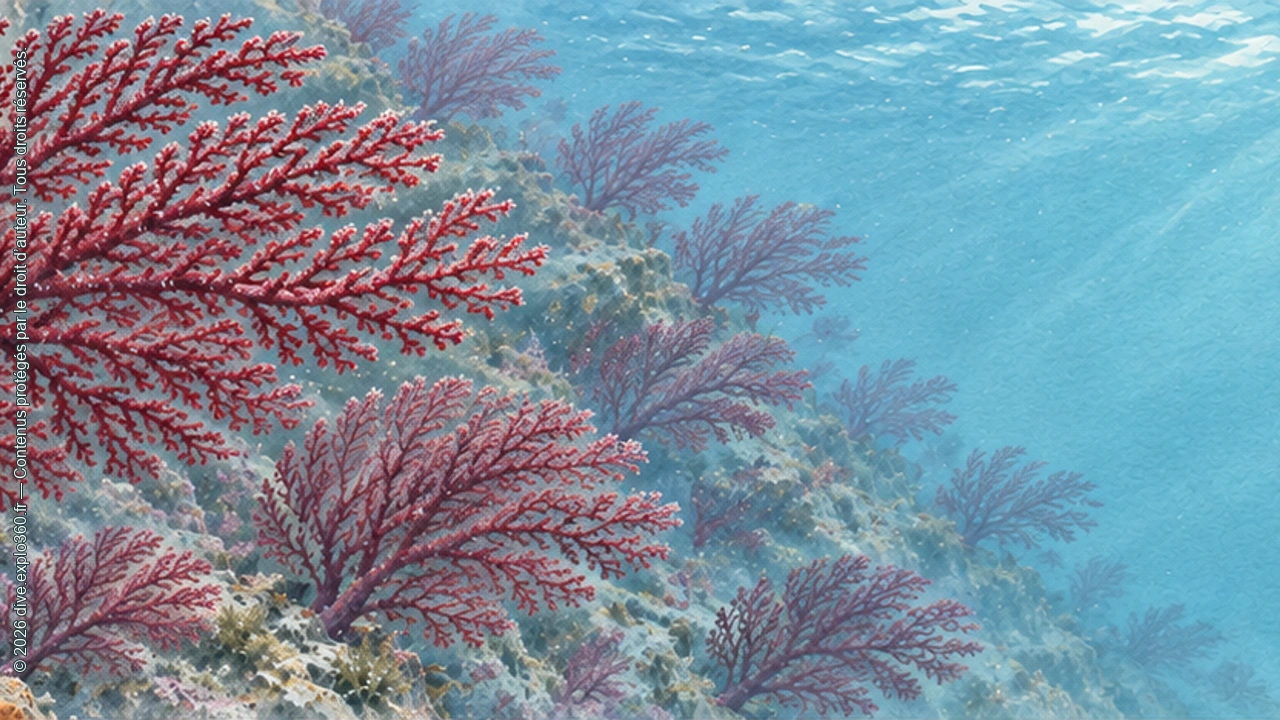
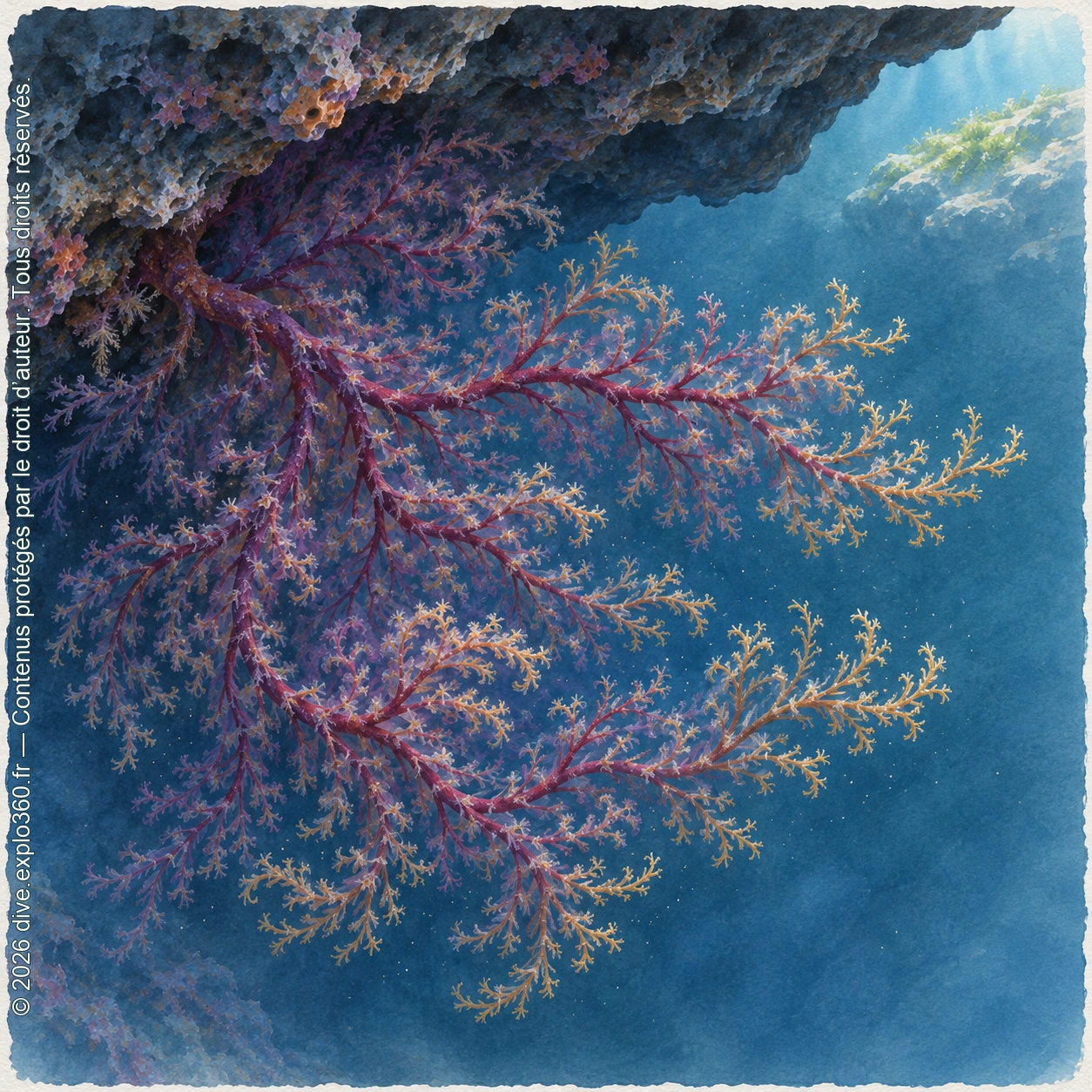
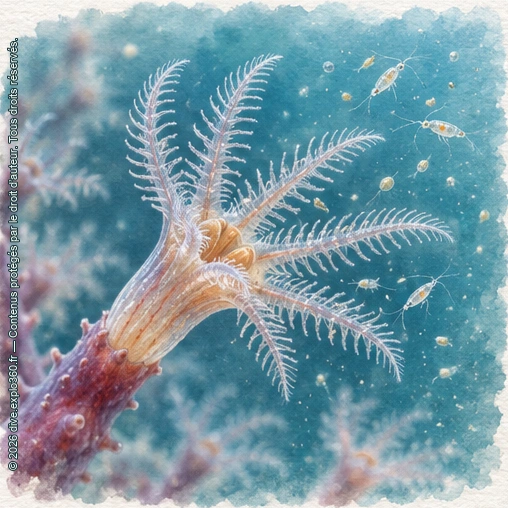
The red sea fan, Paramuricea clavata, grows in red, purple or yellow fans on shady rock faces. A fan is a colony of tiny animals called polyps, related to corals and sea anemones. Each polyp has eight feathery tentacles around its mouth to catch tiny drifting animals and scraps of food. The colony can feed in dim places where there is often less seaweed competing for space.
Why dinner depends on the current
The current carries tiny crustaceans, eggs, larvae and scraps of organic matter. When prey comes within reach, a polyp can hold it with the help of stinging cells and pass it to its mouth. A slow current brings fresh food less often. A very fast current can bend the tentacles and make it harder to hold on to prey.
Branches facing the flow
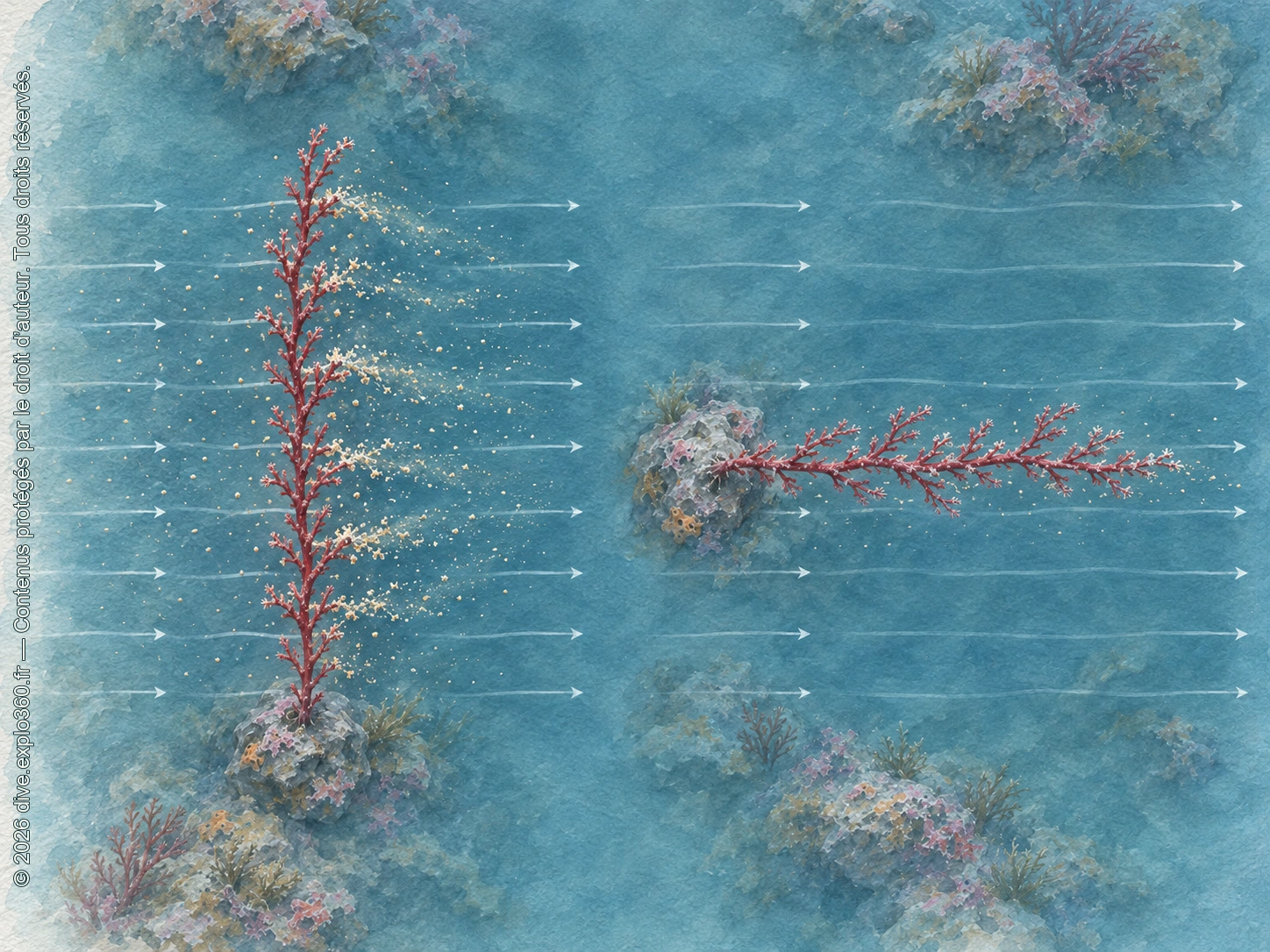
Most of the branches grow in a single plane, like the ribs of a fan. Turn the broad face into the current and more polyps lie in the path of the water. In an experiment, Leptogorgia virgulata caught more prey this way than edge-on. Where currents often change direction, the branches can grow in several directions. They flex as water pushes past.