


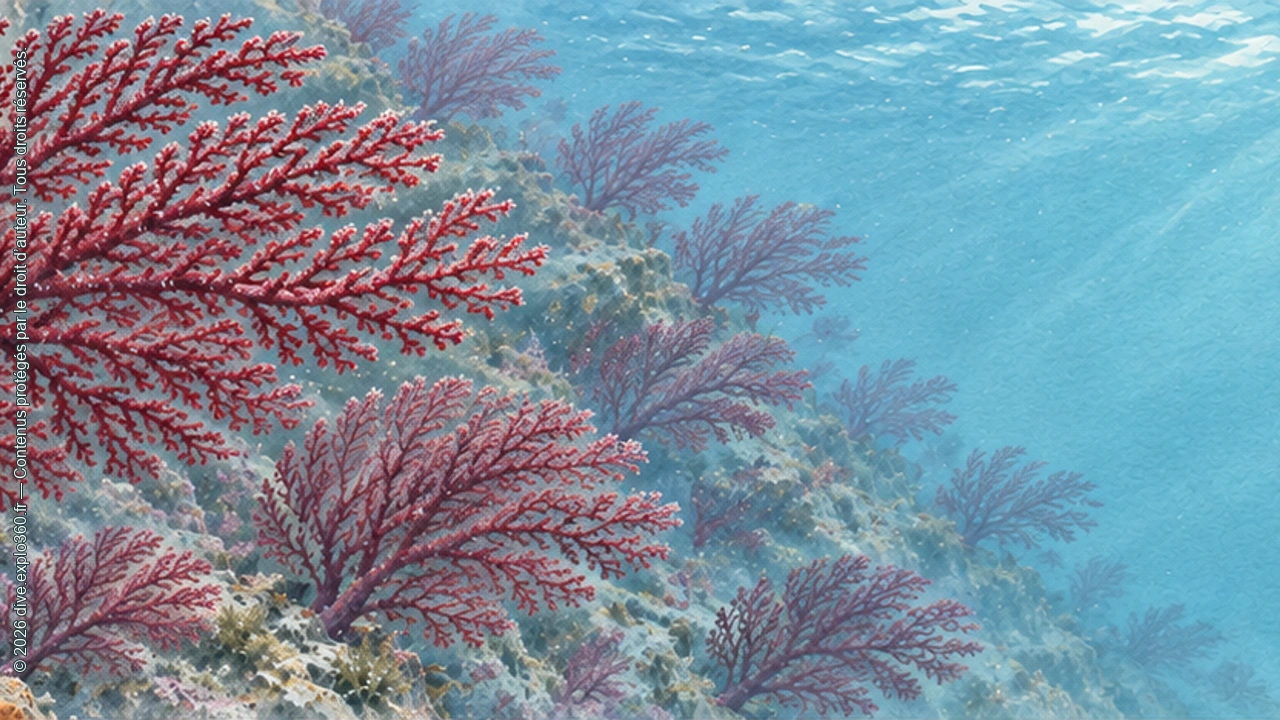
An animal forest that feeds in the shade

The red sea fan, Paramuricea clavata, forms red, purple or yellow colonies on dimly lit rock faces. Each polyp in this colonial cnidarian has eight branching tentacles around its mouth. These capture animal plankton and suspended organic matter. Shade can reduce competition with some algae, provided the site still receives enough food and isn’t smothered by sediment.
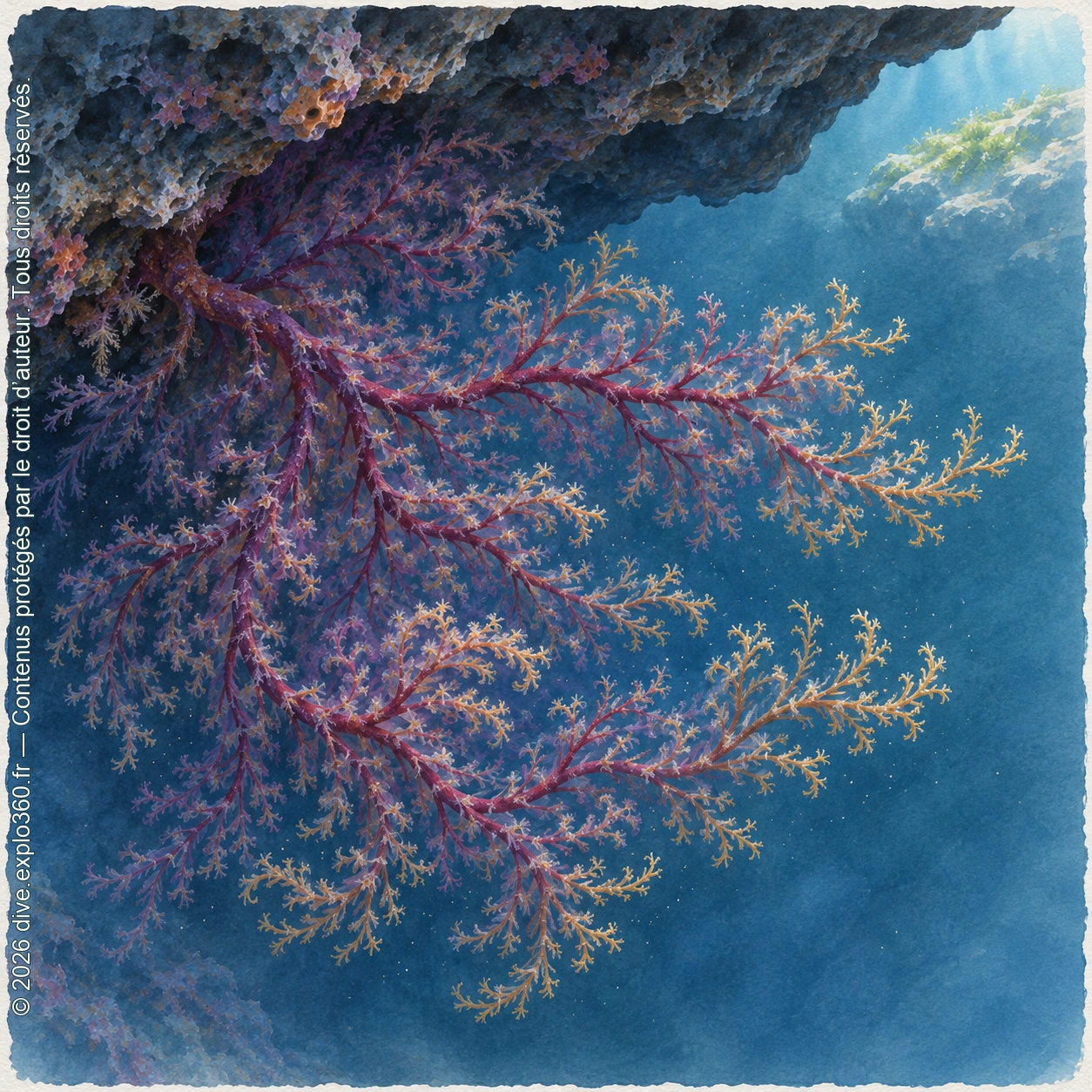
Two-coloured red sea fan beneath a shaded ledge, with sunlit rock in the distance.
The colony is anchored under the ledge and extends into open water. Shade suits this species, which feeds on suspended particles. © 2026 dive.explo360.fr — Contenus protégés par le droit d’auteur. Tous droits réservés.
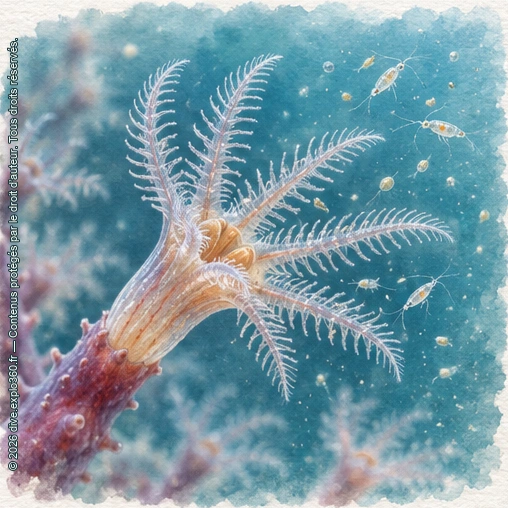
Polyp with branching tentacles surrounded by suspended particles and prey.
The tentacles intercept some of the organisms carried by the flow. The magnification reveals what happens at the scale of a single polyp. © 2026 dive.explo360.fr — Contenus protégés par le droit d’auteur. Tous droits réservés.

A current that favours capture

The current brings planktonic crustaceans, larvae, eggs and organic particles. The tentacles intercept prey and their stinging cells can help hold it. In weak flow, food is replenished slowly. In strong flow, tentacles can deform and lose their grip on prey. The speed at which capture peaks depends on the species and the shape of its polyps.

Fan orientation and exposure to flow

The flat shape puts more polyps in the path of the current when the fan faces it broadside. In a flow tank, Leptogorgia virgulata caught more prey per unit time in this position than when aligned with the flow. Where current direction varies, colonies can branch in several planes. Flexible branches can bend under drag.
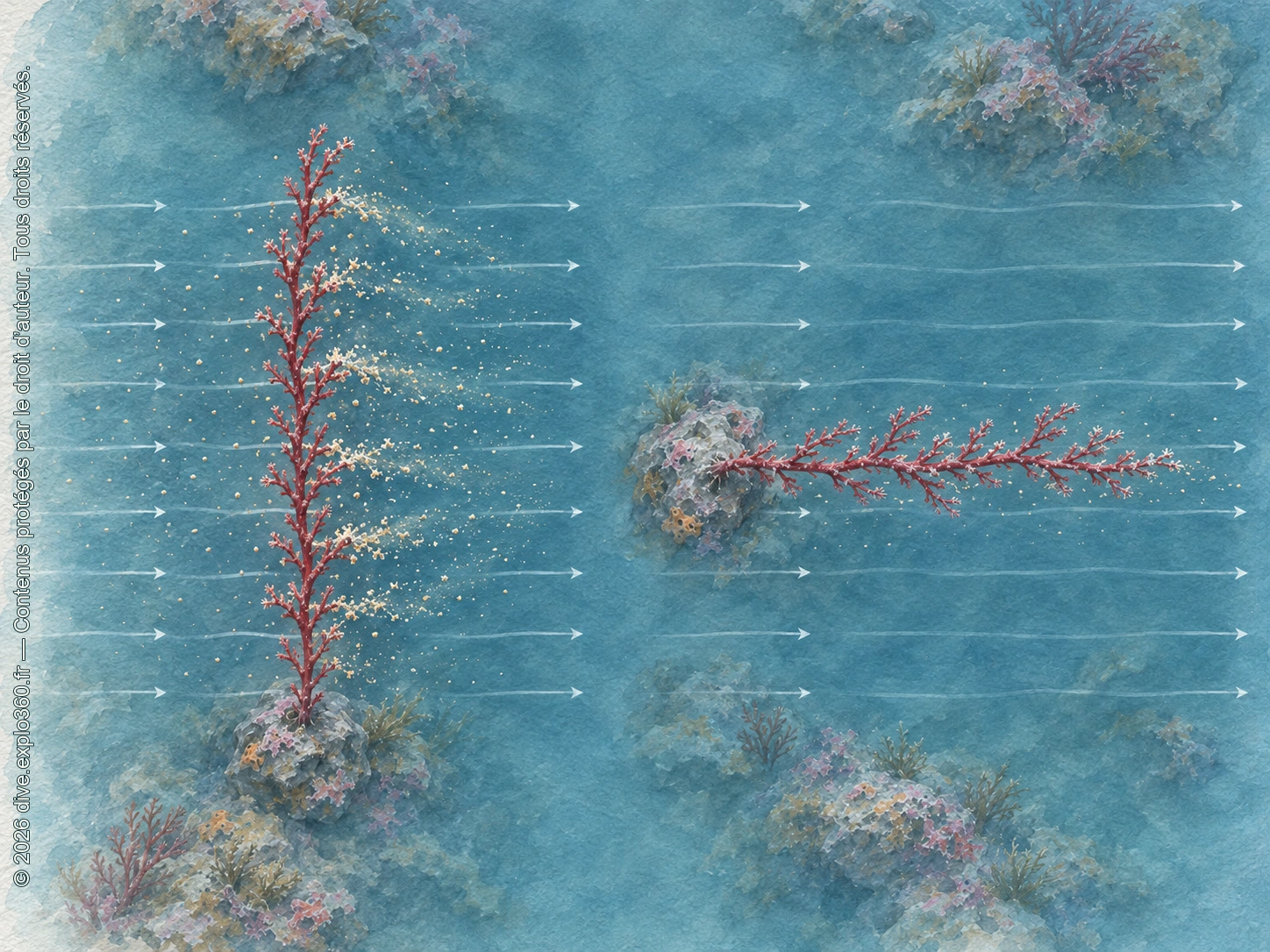
Overhead view of a fan perpendicular to flow arrows on the left and one parallel to them on the right.
Seen from above, the fan on the left crosses the current at right angles and presents a greater area to oncoming water than the parallel fan on the right. © 2026 dive.explo360.fr — Contenus protégés par le droit d’auteur. Tous droits réservés.

Continue reading

AMIGANSEAU CONTENT

The rest of this article is for subscribers

Log in with your AMIGANSEAU licence to continue reading.

All active AMIGANSEAU licences give access to the full article.