


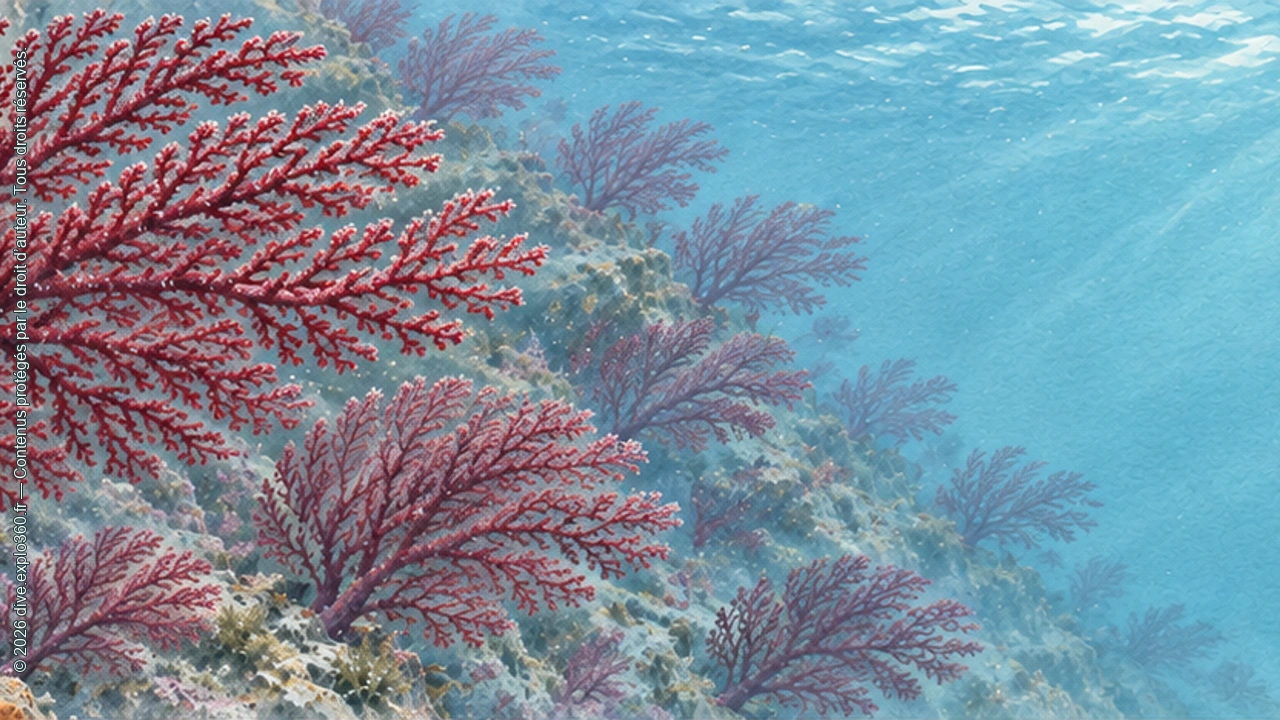
Branches full of tiny animals

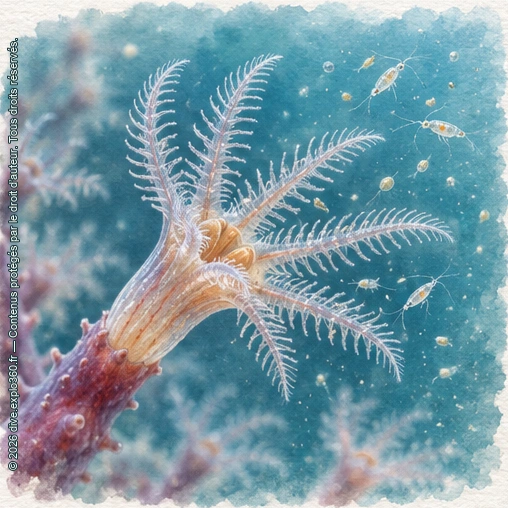
A red sea fan can have red, purple or yellow branches. Look closely and you’ll see tiny animals called polyps. Each has a mouth surrounded by eight feathery tentacles. They catch tiny animals and scraps of food drifting past, even in the shade where fewer seaweeds grow.
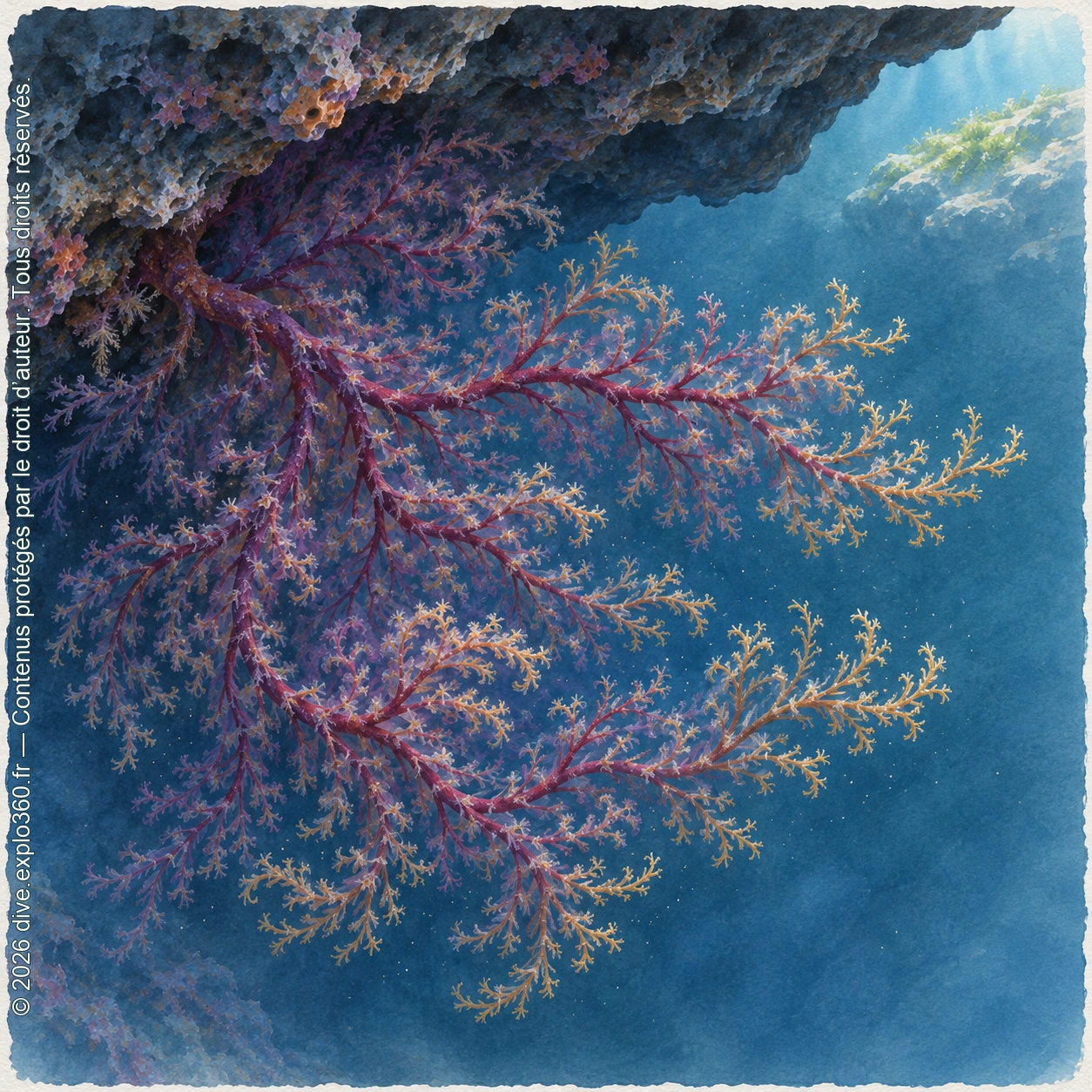
Purple and yellow sea fan under a rock.
This red sea fan grows in the shade beneath a rock. Its branches can be purple or yellow. © 2026 dive.explo360.fr — Contenus protégés par le droit d’auteur. Tous droits réservés.
A small polyp spreads feathery tentacles.
This close-up shows one of the tiny animals on the branches. Plankton drifts past its tentacles. © 2026 dive.explo360.fr — Contenus protégés par le droit d’auteur. Tous droits réservés.

The current brings dinner

Water brings tiny animals, eggs and bits of food. A polyp spreads its tentacles and grabs whatever drifts close enough. Tiny stinging cells help it hold its catch. When the water barely moves, food arrives slowly. When it rushes past, it can be hard to hang on.

A fan facing the current

Think of a sieve under a tap. Hold it flat and water runs through the holes. Turn it on edge and more of the water misses it. A sea fan can face the current with its broad side. Scientists found that one kind caught more food that way. Its branches can bend as the water pushes past.
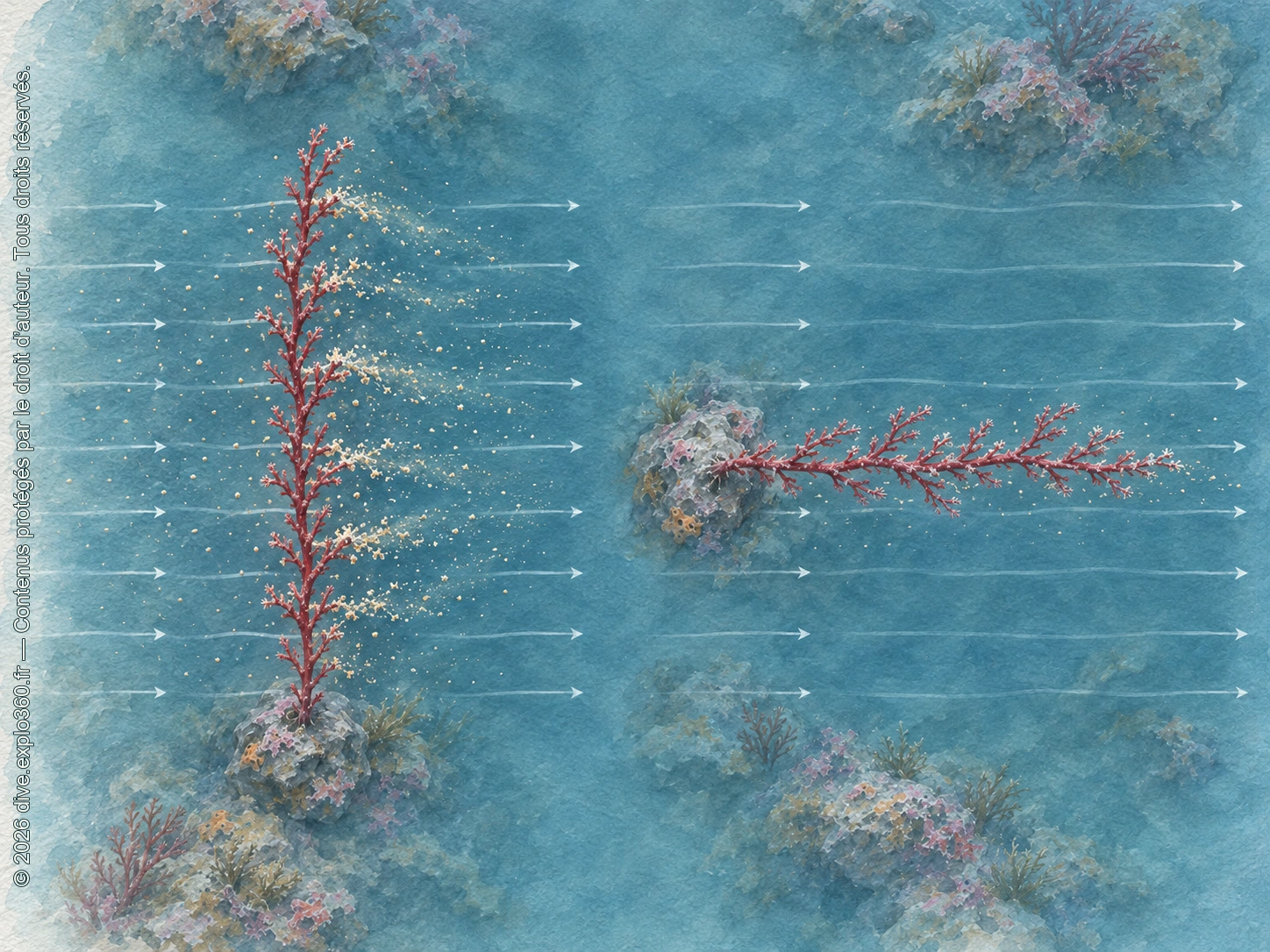
Two sea fans seen from above with arrows pointing right.
The arrows show where the water goes. The fan on the left lies across the current. The one on the right runs in the same direction as the water. © 2026 dive.explo360.fr — Contenus protégés par le droit d’auteur. Tous droits réservés.

Continue reading

AMIGANSEAU CONTENT

The rest of this article is for subscribers

Log in with your AMIGANSEAU licence to continue reading.

All active AMIGANSEAU licences give access to the full article.