How a moray breathes without swimming
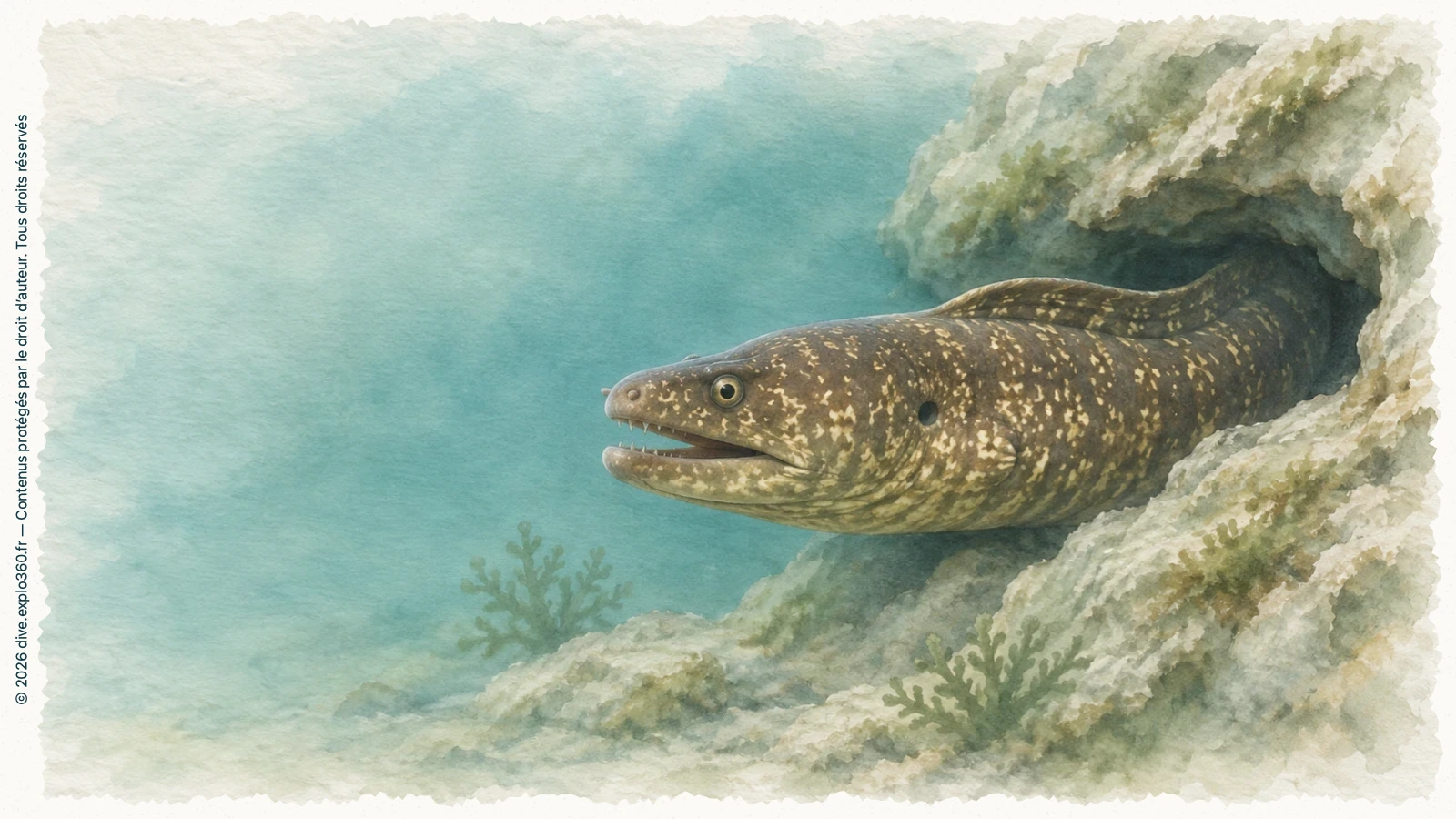
The eel may spend a long time in that crevice, with little more than its head in view. Some sharks rely on swimming to keep water moving over their gills. A moray can keep the current going right where it is.
Water enters the mouth, passes over the gills and leaves through an opening on each side behind the head. As it passes, dissolved oxygen diffuses into the blood and carbon dioxide passes into the water. The mouth and the region around the gills work together to keep that flow going. The teeth come into view with every opening of the jaws, even when the eel is resting quietly.
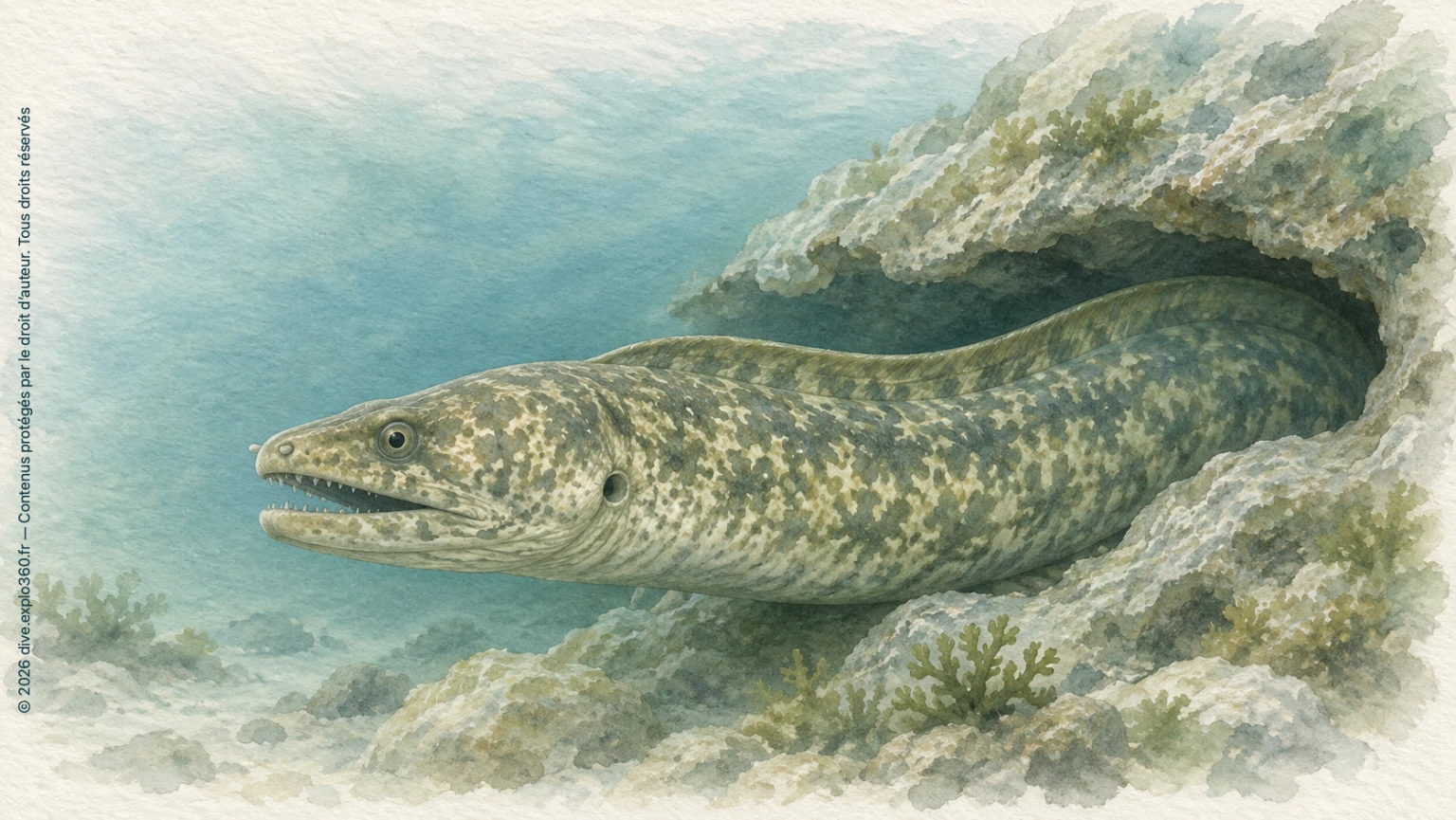
Small gill openings behind the head
On many bony fish, broad, mobile covers protect the gills. A moray has much smaller gill cover structures. From outside, what you see is a small opening on either side just behind the head. It is a different arrangement, found in a long, slender fish that spends much of its time among cracks in rock and coral.
Movements of the mouth and the area around the gills keep water flowing over the gills. Activity, water temperature and the amount of dissolved oxygen can affect how quickly and how deeply fish breathe. Even a conspicuously wide gape can be part of that rhythm.
A head at the entrance to a crevice
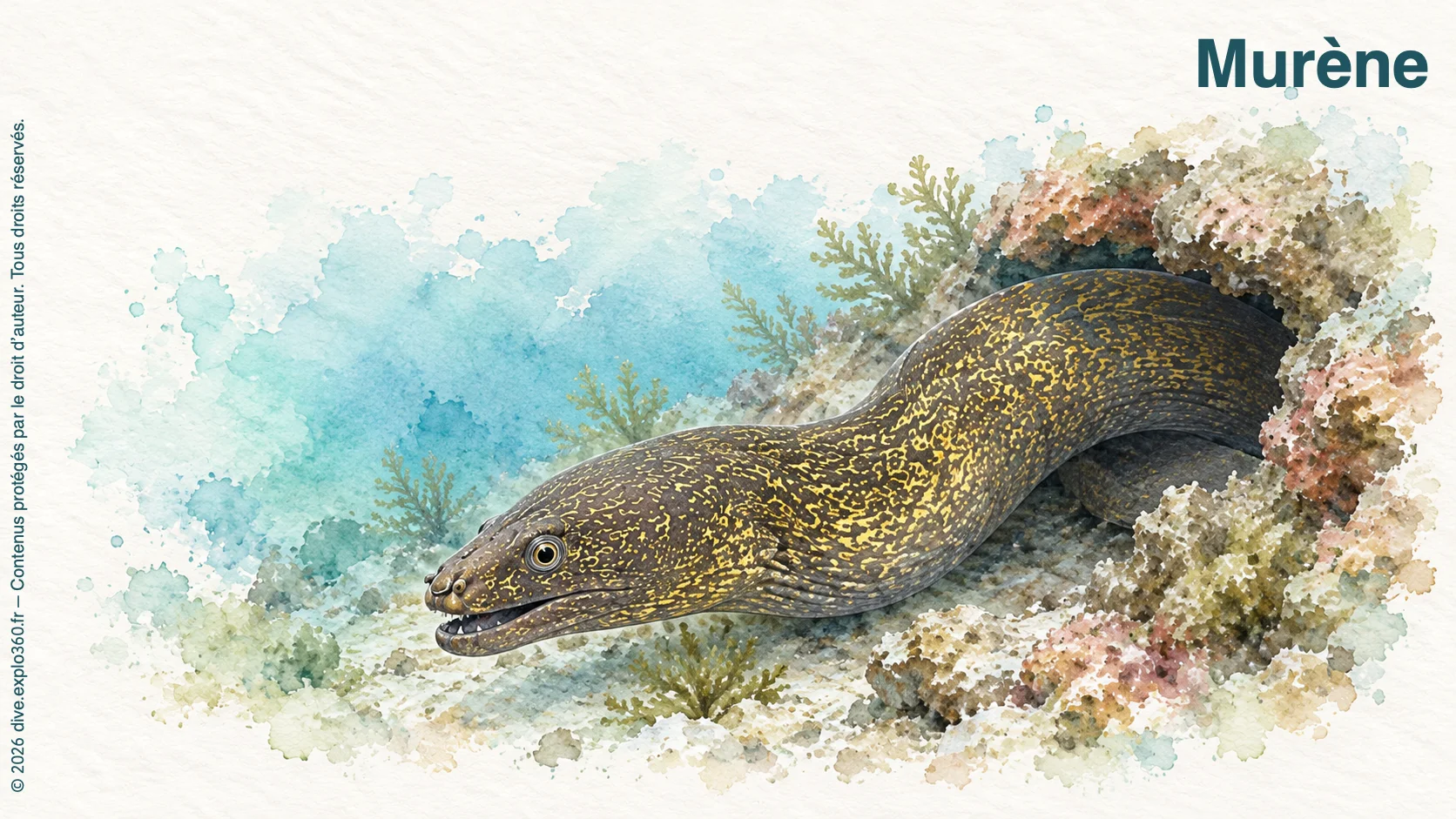
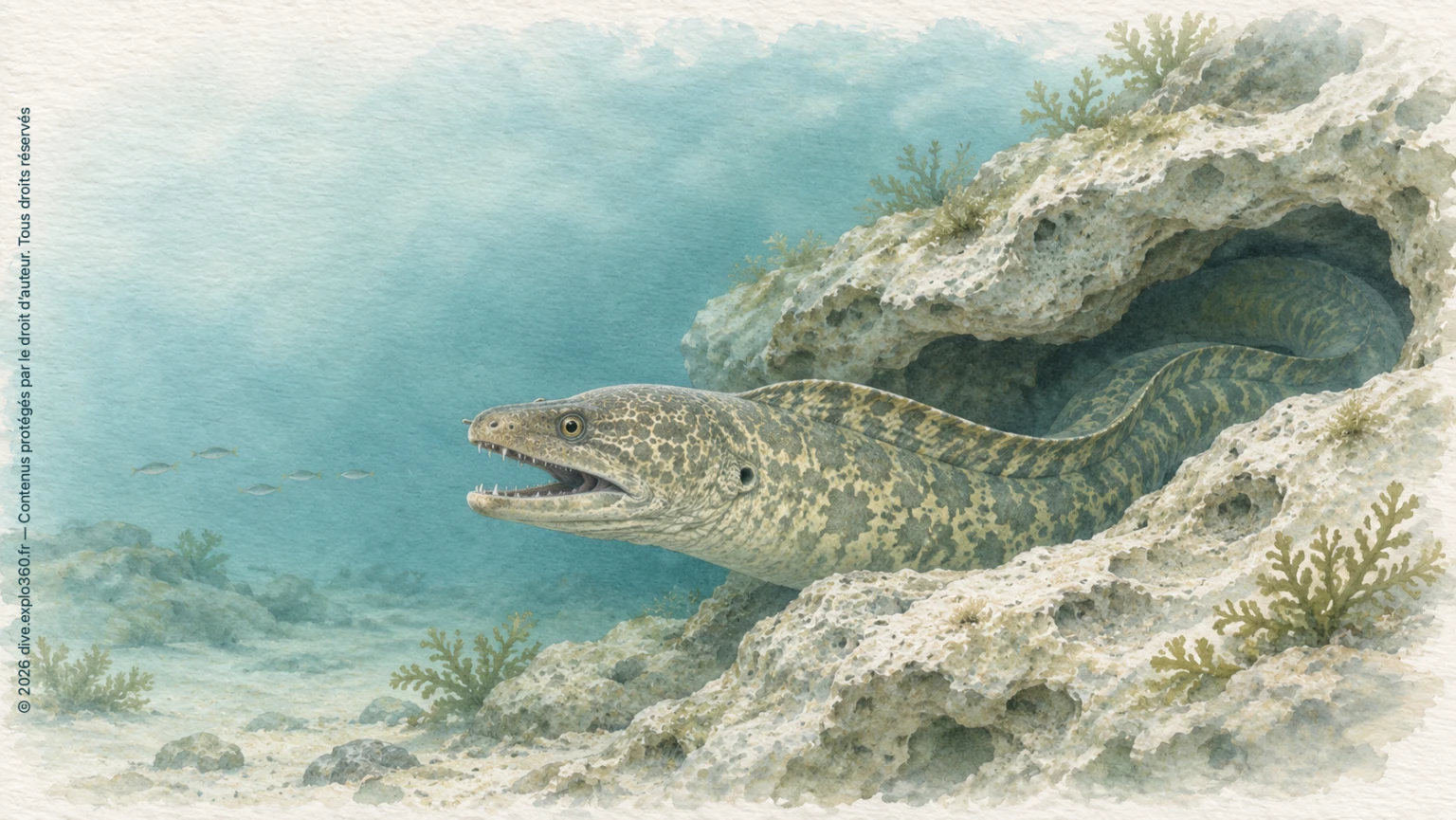
On Mediterranean rocky bottoms, the Mediterranean moray (Muraena helena) shelters in fissures, among loose rocks and inside cavities. Tropical morays find similar hideouts on coral reefs. With a long body and no pectoral fins, a moray can work its way through gaps that deeper-bodied fish would struggle to enter. It can stay there and pump water over its gills with only its head exposed.
A narrow gap makes a good refuge, but it leaves little room for the rapid expansion of the mouth that many fish use to suck in prey. How does a moray get a meal down in such tight quarters? Part of the answer lies deep in its throat.
A second set of jaws
For many bony fish, a strike starts with a quick expansion of the mouth. The incoming water sweeps the prey in, and structures farther back help guide it towards the oesophagus. A moray generates little feeding suction and catches its prey mainly by biting. That solves the first part of the problem. The fish still has to get the meal down.
Many fish have jaws or tooth-bearing structures in the throat derived from the gill arches. What stands out in morays is how far these toothed pharyngeal jaws can travel. In the species studied, they reach into the mouth, grip prey already held by the front jaws and pull back towards the oesophagus. With one set to seize the prey and another to transport it, a moray can swallow a sizeable meal without relying on a strong current of water.
Explore the same world