Buccopharyngeal ventilation
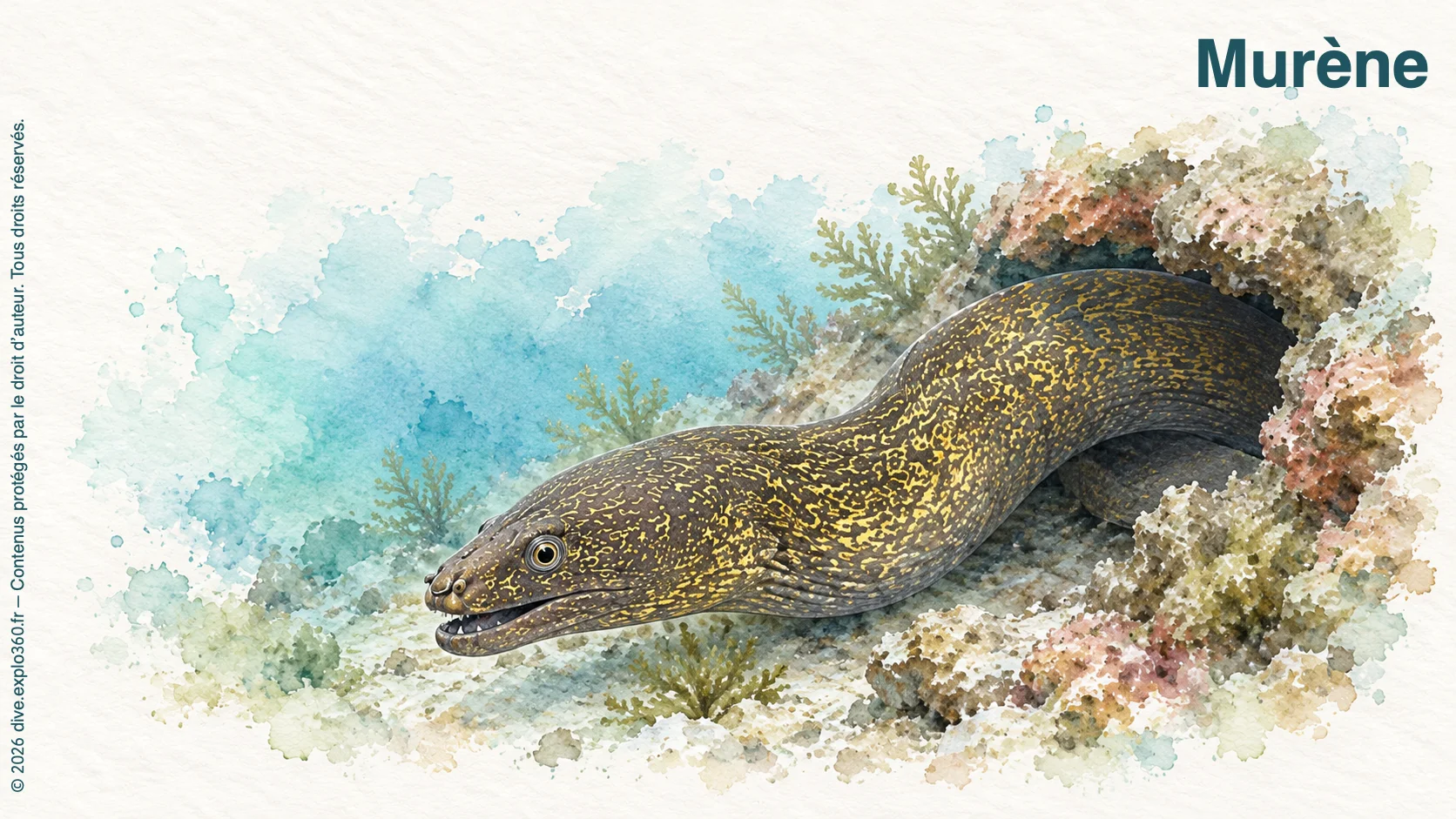
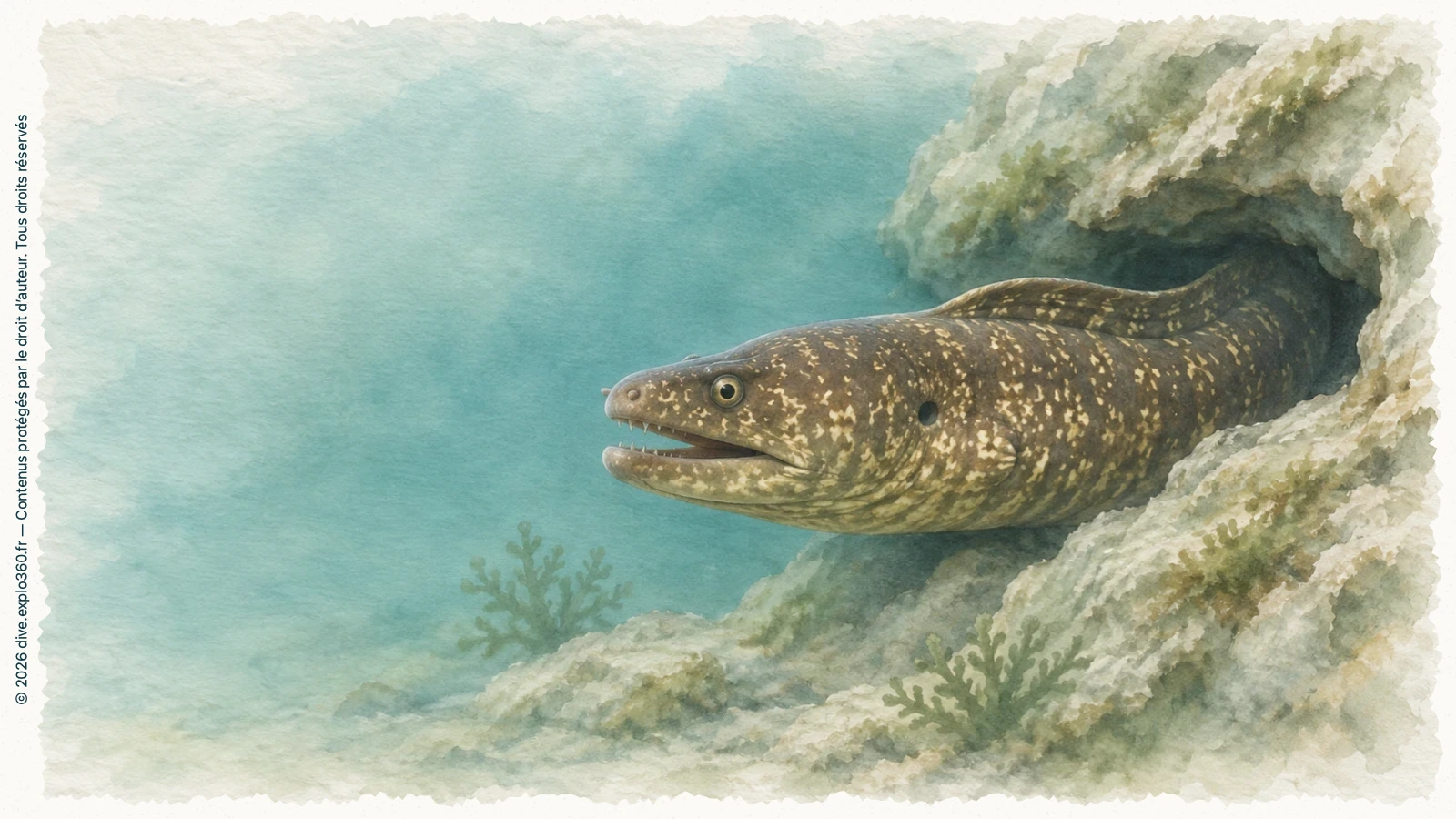
Follow the water through one cycle. Movements of the mouth and pharynx, the passage behind the mouth, help draw water in and pump it over the gills. It leaves through a small opening on each side.
Openings behind the head
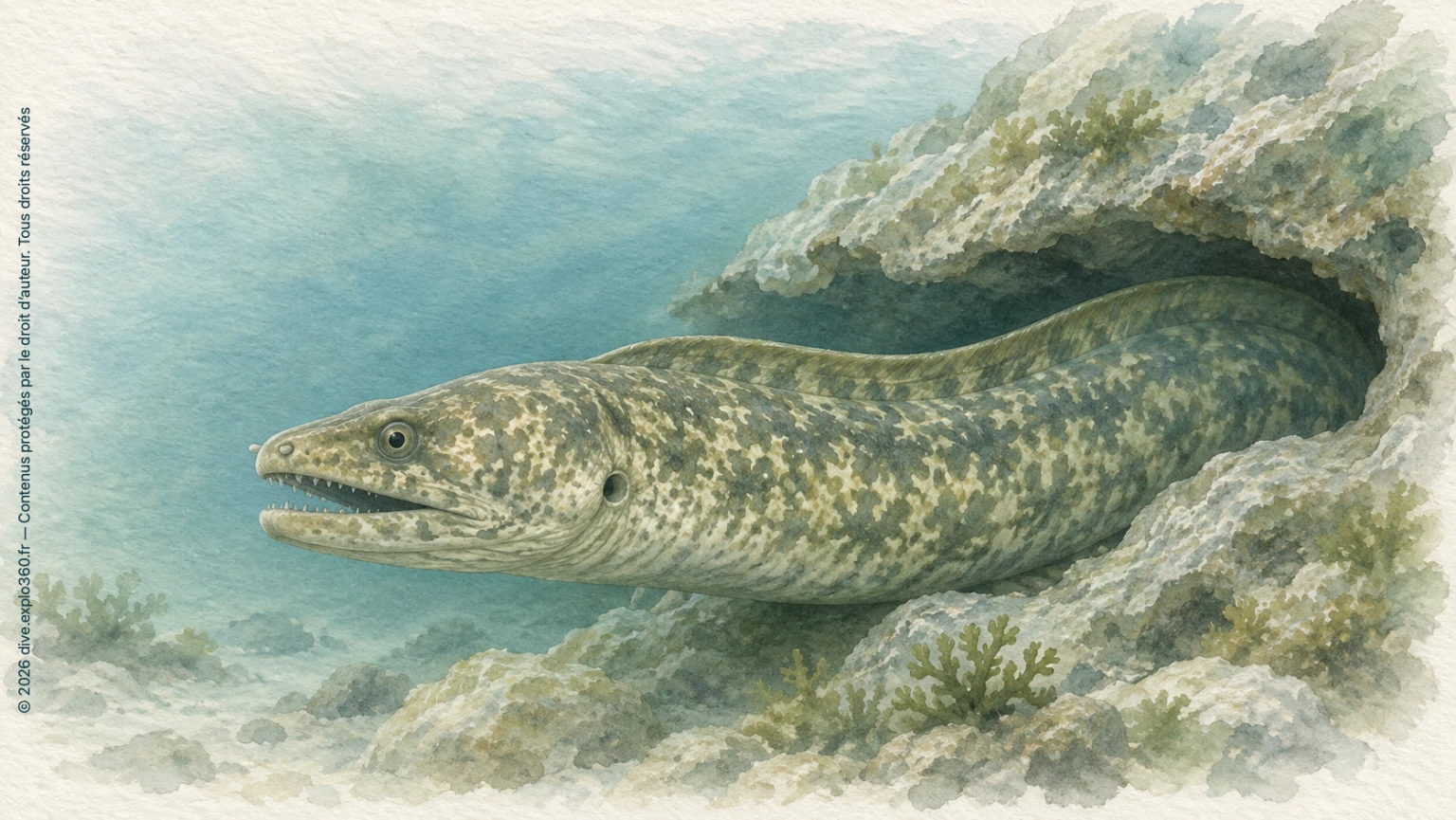
Many bony fish have broad, mobile gill covers called opercula. On a moray, the structures that form those covers are reduced, and all you see from outside are two small gill openings.
Breathing from shelter
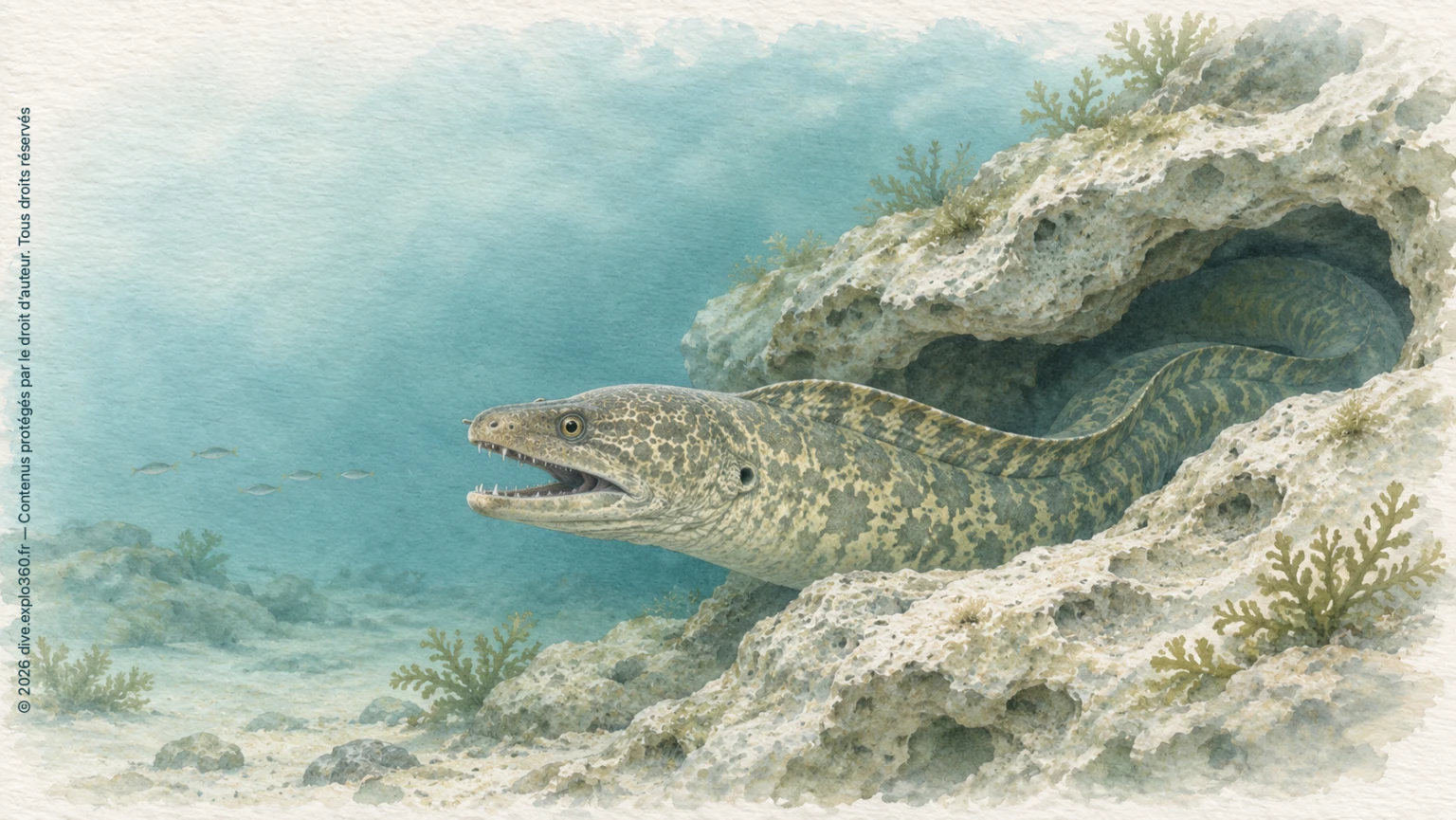
By pumping water over its gills, a moray can keep breathing without swimming. That lets it stay put in a crevice with much of its body hidden.
Moving water and moving prey
During ventilation, the mouth helps keep water moving. During a meal, the crucial movement comes from deeper in the throat. The pharyngeal jaws reach into the mouth, grip the prey and draw it back towards the oesophagus.
Explore the same world