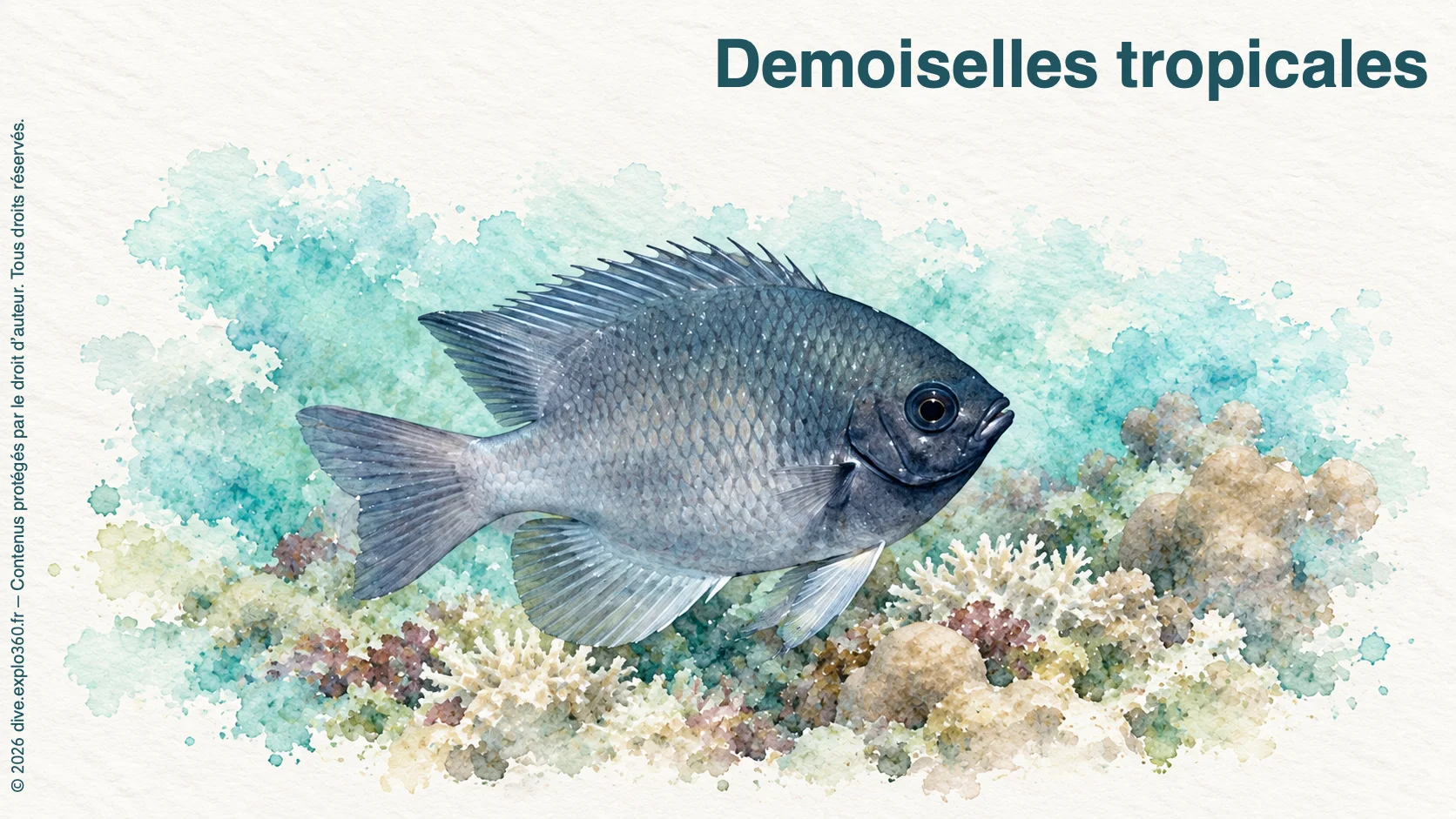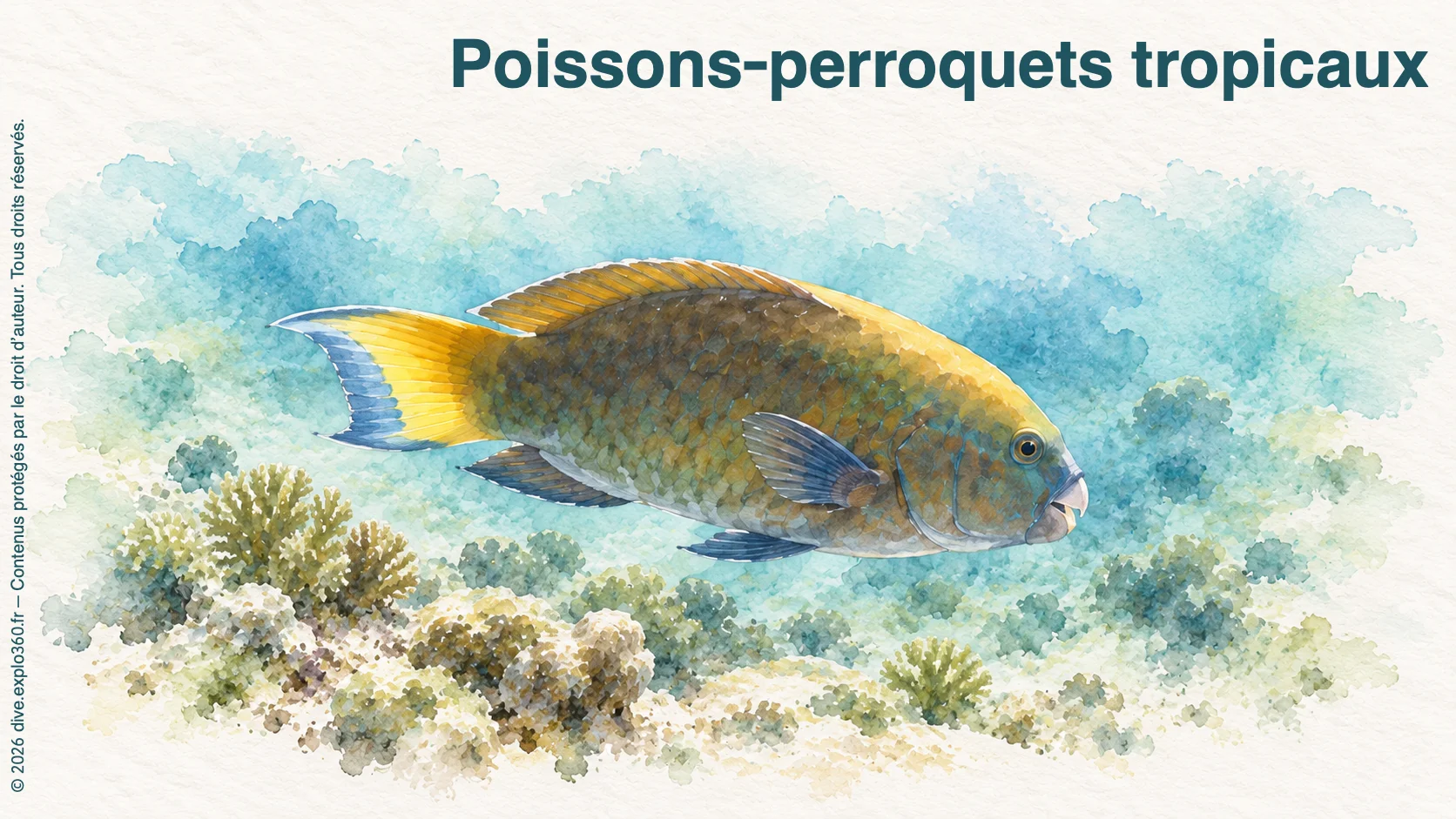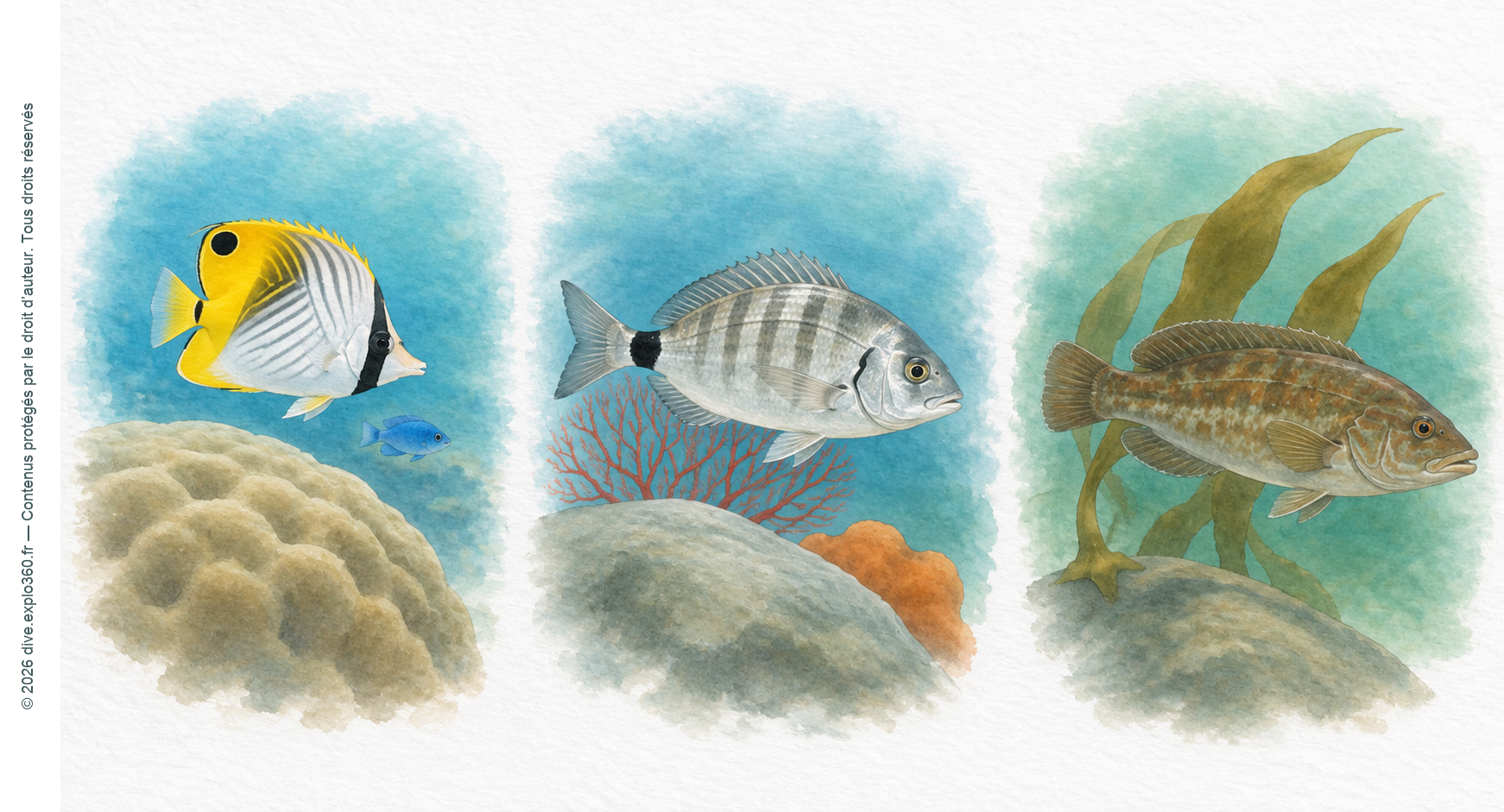
Bright fish against muted corals
Many reef-building corals look brown or beige in natural light. A fish’s markings can help it recognise its own kind, choose a mate or signal to a rival. How conspicuous those markings are depends on who is looking. A pattern that stands out to a diver may be harder for a predator to see, depending on its vision and the light available.
Recognising and attracting mates
Stripes, spots and patches of contrasting colour can help reef fish recognise one another. In some wrasses, the pattern changes as the fish matures or changes sex, so males and females can look strikingly different. During courtship, fish may display their colours as they move or adopt particular postures. A pattern that helps its bearer attract or compete for mates can persist through sexual selection, even if it also draws the attention of predators.

Signals between reef neighbours
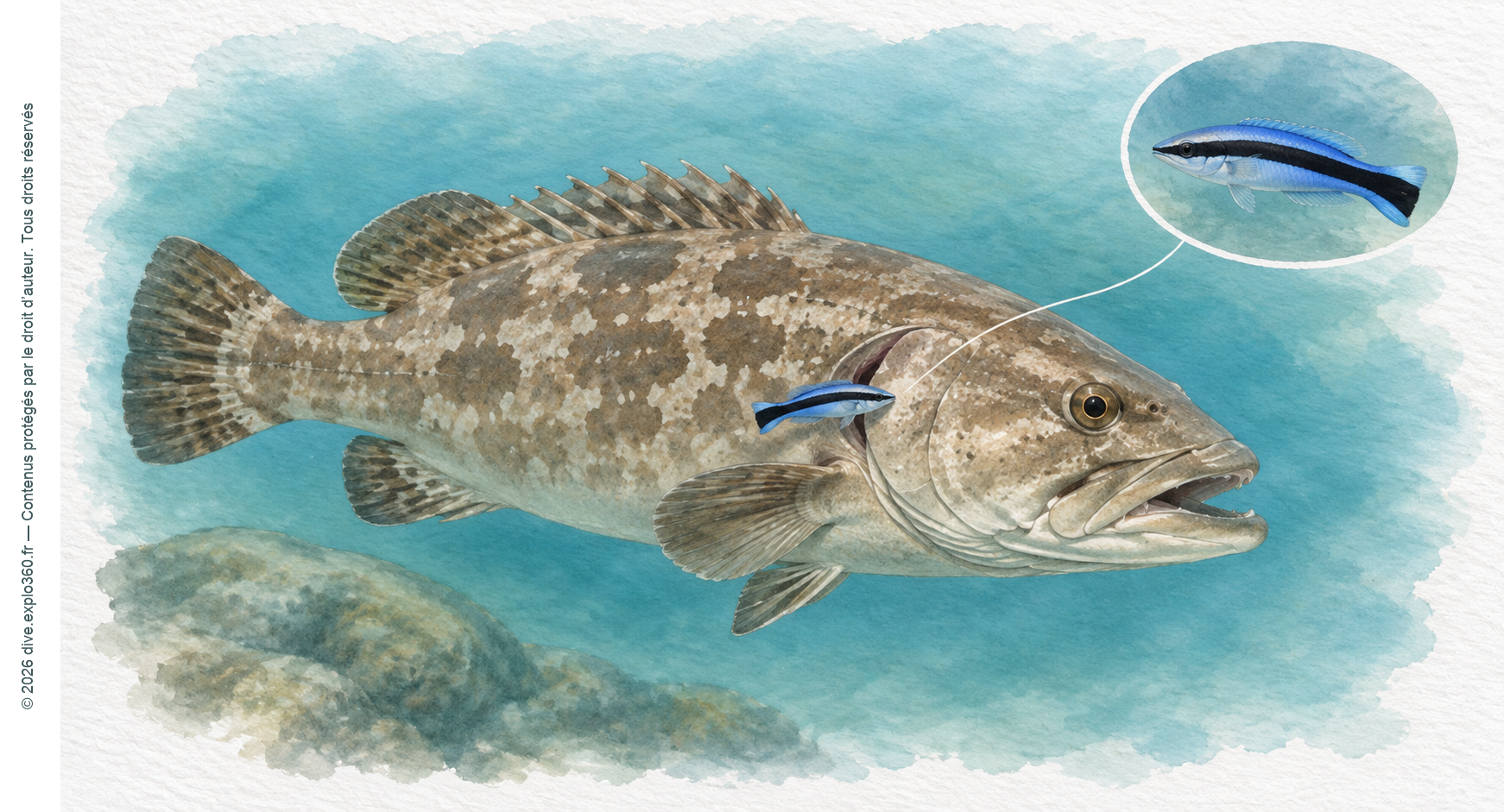
Colours and patterns can accompany courtship, territorial displays and even invitations to be cleaned. A bluestreak cleaner wrasse (Labroides dimidiatus), for example, has a contrasting pattern and moves in a distinctive way. These cues help other fish recognise it and approach to be cleaned. What a pattern signals depends on the encounter and on what the fish watching it can see.
Explore the same world