A vast migration begins each evening
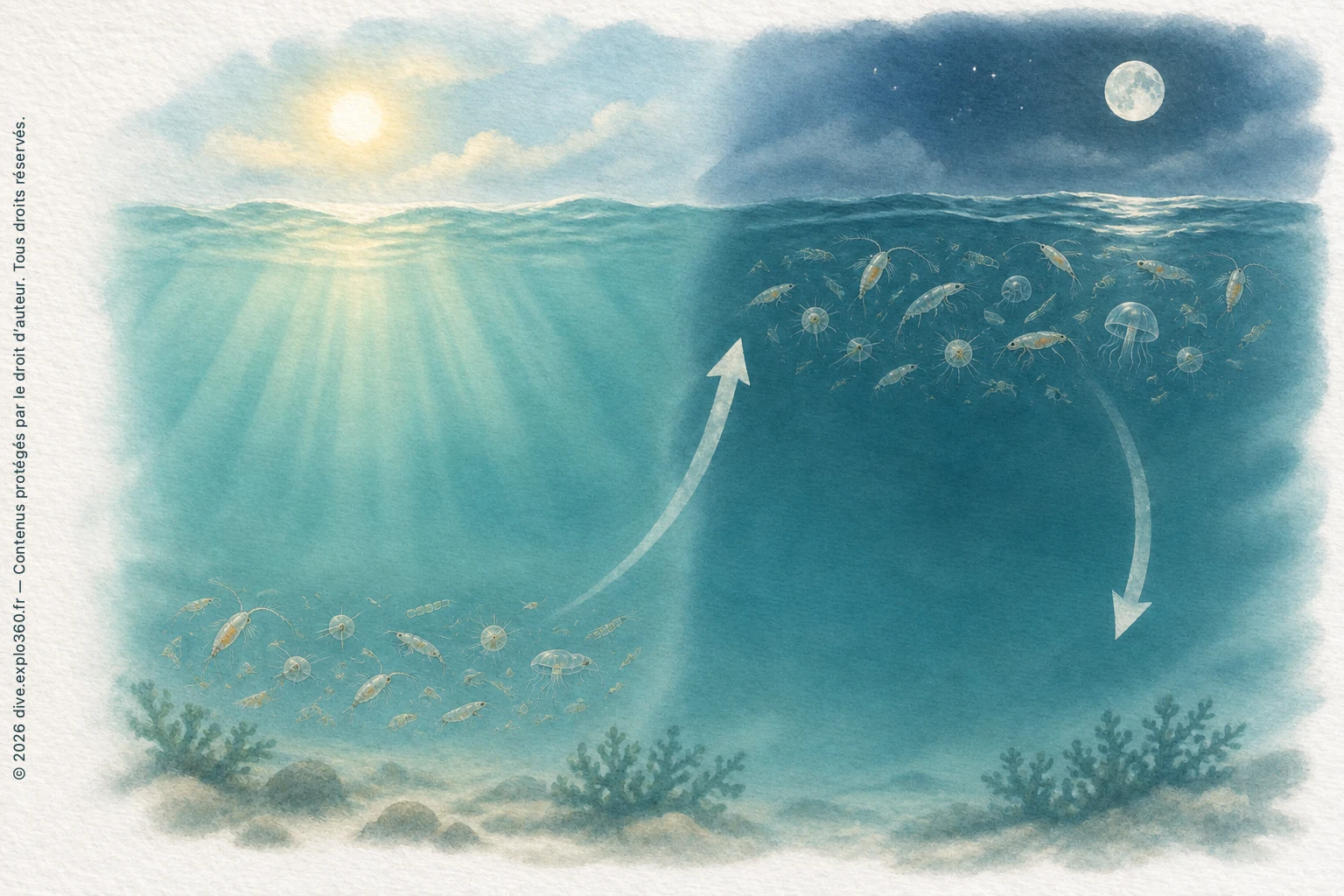
The water column holds copepods, krill, larvae and countless other small drifting or swimming animals. Many spend part of the day at one depth and part at another.
In daylight, some of this zooplankton stays in deeper, dimmer water. Towards evening, the animals begin to rise. Some swim tens of metres, others hundreds.This daily change of depth is called diel vertical migration. For many animals, the climb brings them into reach of a meal.A migration that feeds the depths
A zooplankton animal rising to feed can end up moving carbon from one part of the ocean to another.
Near the surface, phytoplankton use photosynthesis to incorporate dissolved inorganic carbon into organic matter. That carbon enters the food web when the phytoplankton is eaten.A copepod that feeds near the surface and then swims down carries some of the organic carbon from its meal with it.In deeper water, it can release some of that carbon through respiration or waste, or pass it on to another animal that eats it.This is active carbon transport. The animals move the carbon themselves as they swim between depths.Other organic matter sinks as faecal particles, dead organisms or clumps of debris.Those particles descend under gravity. Migrating animals can carry part of a meal down while they are still alive.Researchers estimate the size of this contribution to the ocean’s biological pump. Estimates vary with the region and the animals involved. How long the carbon stays away from the surface is a separate question.Animals only a few millimetres long can contribute to this transport by making the same journey night after night.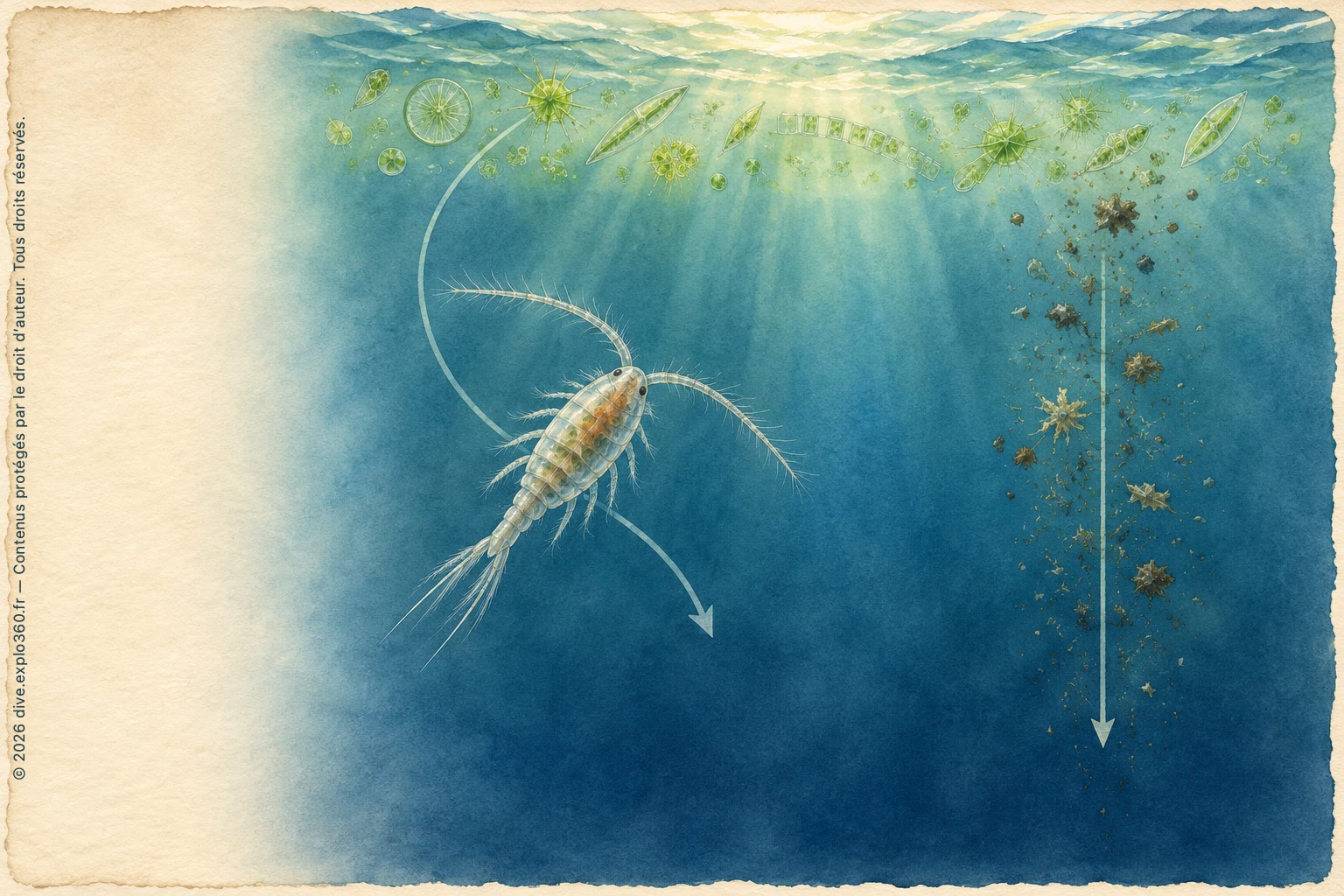
Explore the same world